



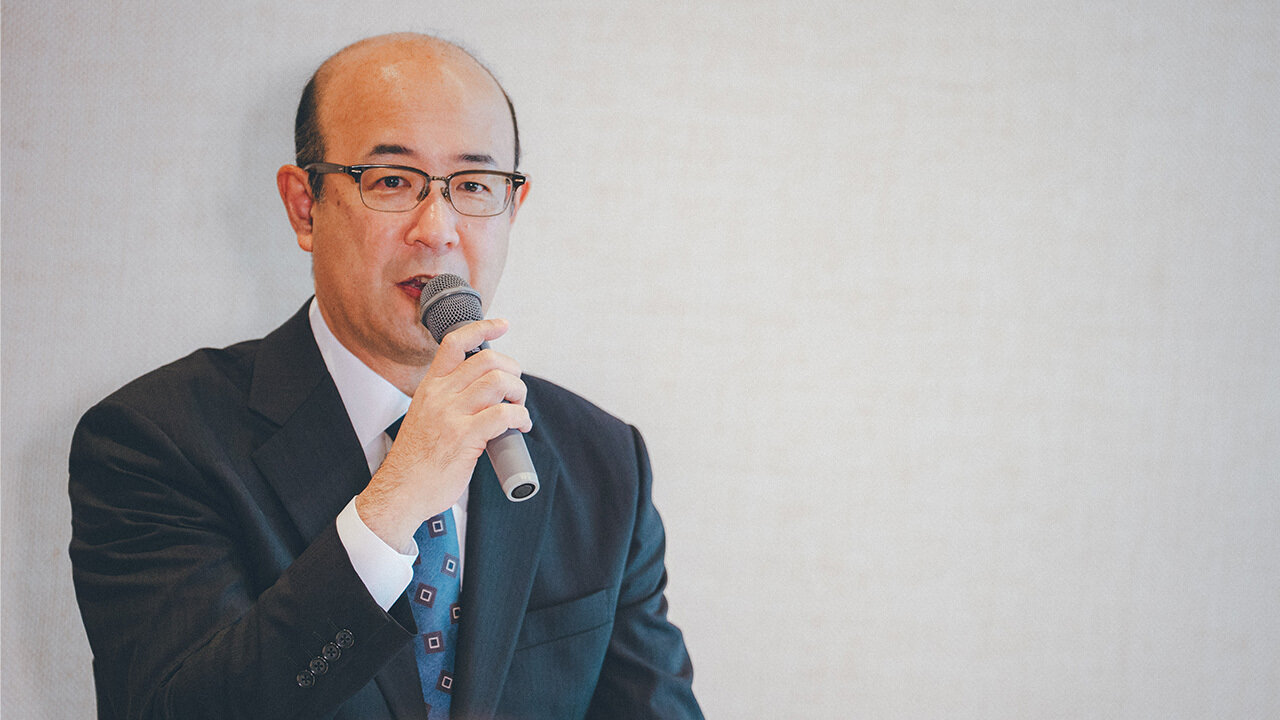
In his first media interview since taking office, President Kenta Kon reflects on what he has learned from visiting the genba over the past three and a half months, and the kind of leader he hopes to become.
IV: Toyota’s revenue structure
――How do you view efforts to improve capital efficiency and optimize production as Toyota seeks to lower its break-even volume?
President Kon
In terms of the significance of our break-even volume, 17 years ago Toyota posted a loss for the first time in company history. Just a year earlier, we had reported record profits, yet within twelve months we were in the red. At the time, our break-even volume had risen significantly. On the surface, thanks to various factors we were turning a profit, but the underlying revenue structure was very weak.
Being in the red presents all kinds of difficulties—you cannot invest, develop new products, run advertising campaigns, or hold events. When you are in the red, your hands are tied. That’s an unnatural state for a company, and it causes a great deal of trouble for stakeholders.
Toyota must never again find itself in that position. No matter what happens, we need a revenue structure that allows us to stand firm, keep things running, and continue working together with our stakeholders, even in the worst of times.
However, I don't think we need to wildly rush to lower our break-even volume. It is currently a little high, and I would simply like to start bringing it down again.
Rather than aiming for a big hit, what we need to do is take care of all the individual improvements that everyone has clearly identified but which we have so far been unable to address.
V: Toward zero traffic accidents
――Some people feel that Japan is lagging in the development and adoption of autonomous driving, while others point to the need for coordination with infrastructure. What is Toyota’s position in this regard?
President Kon
We believe achieving zero traffic accidents will be extremely difficult unless we pursue a three-pronged approach that encompasses people, vehicles, and infrastructure.
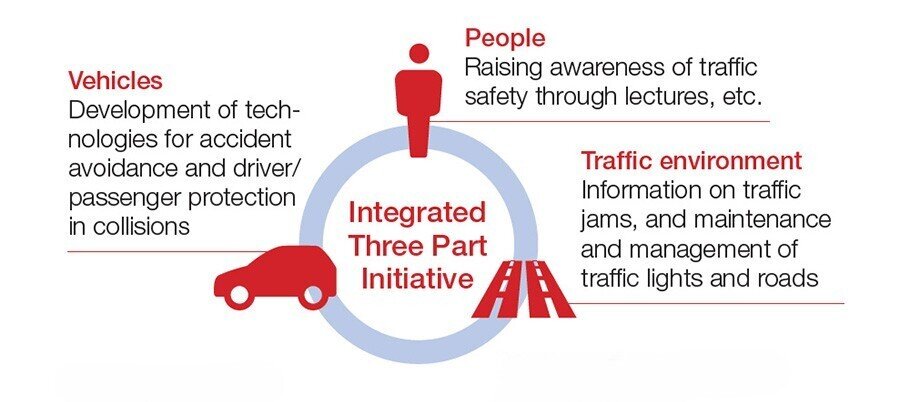
On its own, end-to-end autonomous driving will not eliminate traffic accidents. However, as one example of a realistic solution for the time being, Toyota Safety Sense incorporates technologies developed for end-to-end, AI-based autonomous driving.
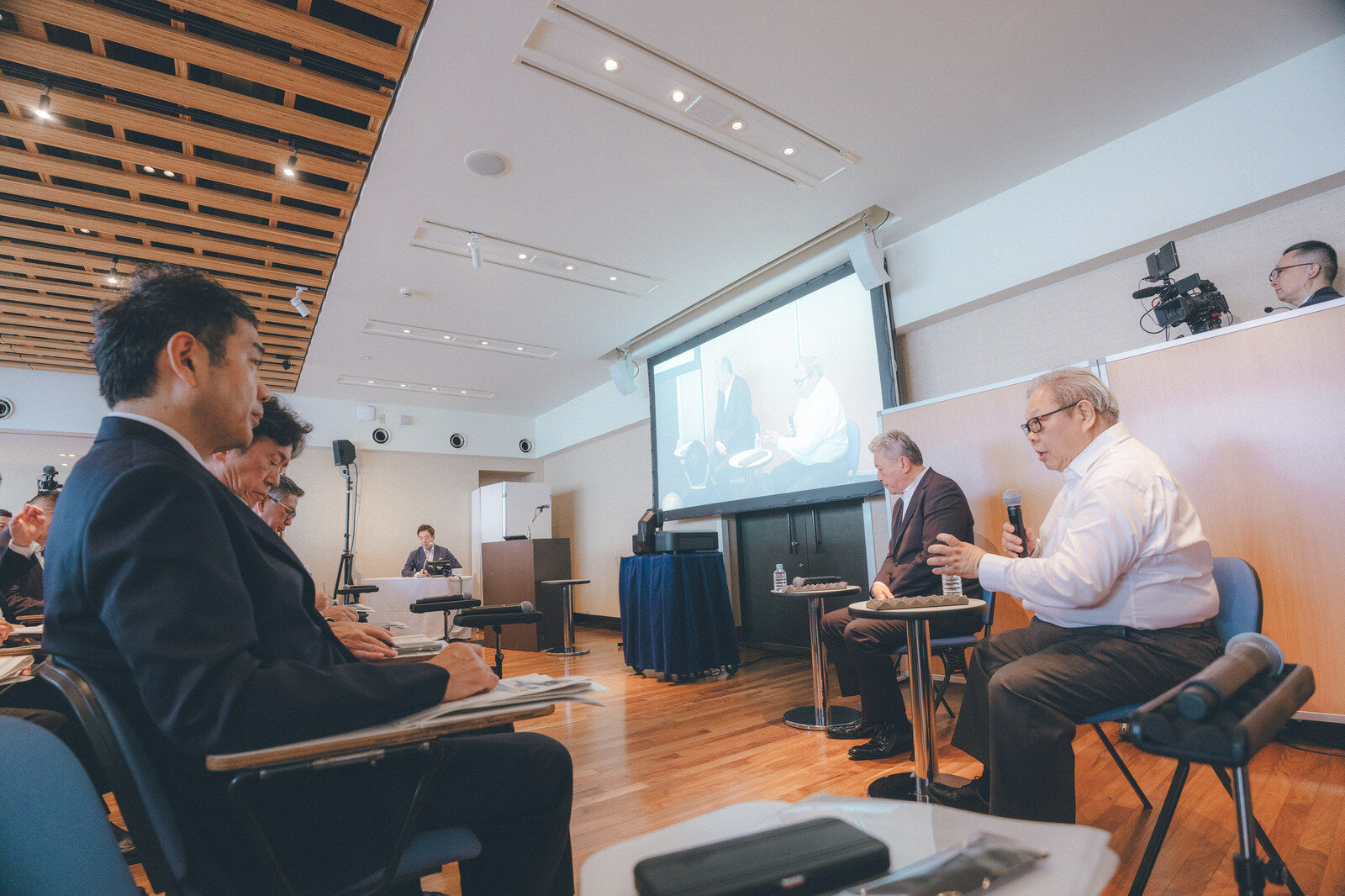
I think we can begin introducing such technologies in today’s vehicles. This will take time, but we are exploring different approaches, which include working hard on end-to-end development. Yet that alone is not enough, and we need infrastructure coordination. As we discussed at today’s Tateshina Meeting, it comes down to detecting risks as early as possible.
That involves more than just cars. Information gathered from outside the vehicle, such as from camera sensors built into infrastructure, must be harnessed to guide the vehicle’s behavior. At Toyota, we are diligently pursuing both end-to-end development and infrastructure coordination.
――At the Tateshina Meeting, you stressed the importance of a three-pronged approach and collaboration across company boundaries to create a safer society. What do you see as Toyota’s role in this context?
President Kon
Toyota cars are not the only vehicles on the road. As such, there are limits to what Toyota alone can accomplish.
One video today introduced a traffic control system jointly developed by Subaru and Toyota, and such initiatives will become increasingly important. In China, trials are already underway on public roads.
As a carmaker, we are committed to reaching zero traffic accidents, and will continue putting forward new proposals, creating forums such as this, and bringing more partners on board. I believe everyone in Japan shares the same goal, and Toyota is perhaps best placed to rally others to tackle the challenge together. This is not simply because of our size; I feel that Toyota has a duty to be the flagbearer and lead the way forward.
VI: Mobility company transformation
――Having noted that businesses beyond the automotive sector will become increasingly important, including areas such as robotics, how do you intend to drive Toyota’s transformation into a mobility company? What is your vision for the future?
President Kon
The question of “What is a mobility company?” is something we often discuss within the company, and for the most part these discussions end without definitive answers. Despite that, right now everyone is engaging deeply with the question: “What is a mobility company? Is the future of mobility about people, goods, energy, or information?” We are exploring various possibilities and pursuing new initiatives. These include our work with Joby*, as well as our committed efforts in areas such as robotics, infrastructure coordination, and autonomous driving.
*In June, Joby Aviation and Toyota announced that they will establish a joint venture to manufacture electric vertical take-off and landing (eVTOL) aircraft, helping usher in the future of air mobility.
Over a decade ago, when Akio Toyoda said, “Let’s make ever-better cars,” the general response within Toyota was to ask, “What do you mean by ever-better cars? If you tell us, we can make them.” By contrast, I don’t think many people at Toyota today are waiting for me to tell them what a mobility company is before they get to work.
Everyone is thinking hard about what it means to be a mobility company.
Personally, I would like us to remain committed to mobility for people. Mobility for All. This does not mean offering a single form of transportation, but rather enhancing the mobility of people who are already mobile while supporting those for whom mobility is a challenge. The best solution may be a car, or a robot. In some cases, it may be a wheelchair, or an aircraft.
Mobility takes many different forms, but ultimately it is about enriching individual lives through movement. Someone once said to me, “Mobility offers people dignity,” and I truly believe that is the case. Being able to move around allows us to see new things and meet new people.
The mobility future I want to create is a world where more people can move more freely.
We plan to feature the summer festival and Tateshina Meeting on a future episode of Toyota Times News. Be sure to check it out.