



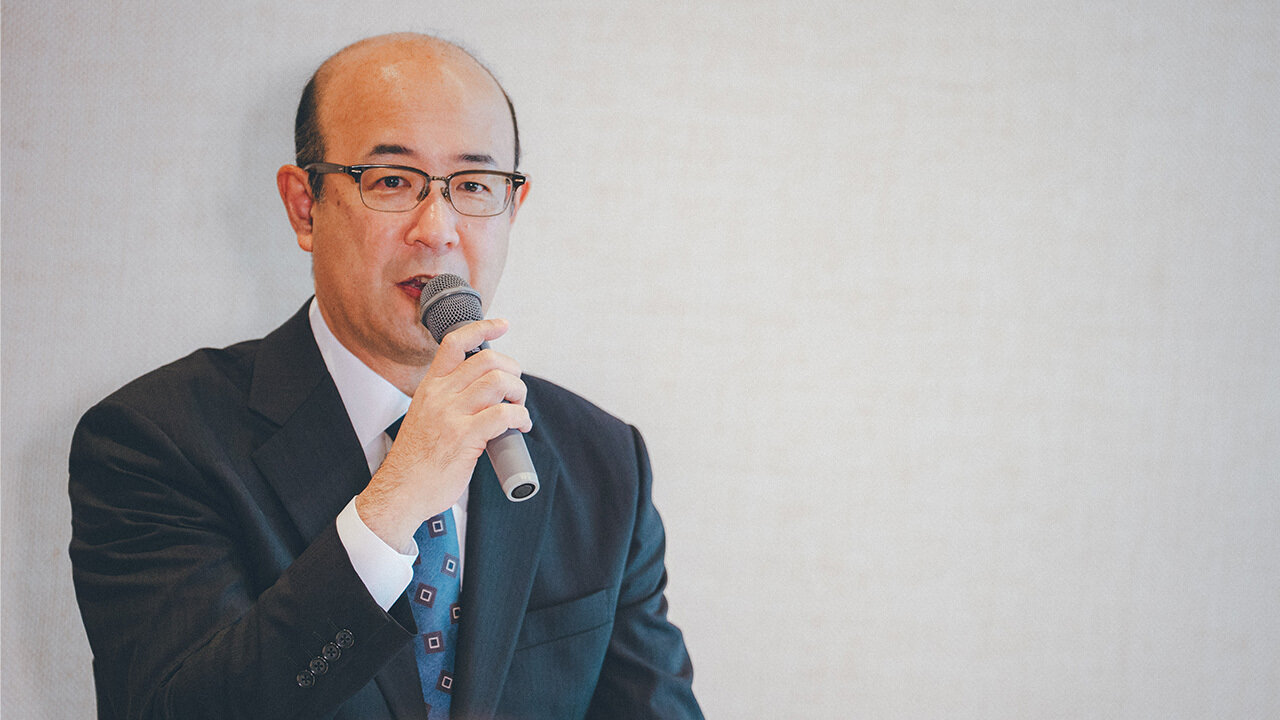
In his first media interview since taking office, President Kenta Kon reflects on what he has learned from visiting the genba over the past three and a half months, and the kind of leader he hopes to become.
II: Working with AI
――Given that Toyota is planning to open a new plant in Teiho in the early 2030s*, what is the direction for future investment in Japan?
*In 2025, Toyota announced that it will acquire land in the Teiho-cho area of Toyota City, Aichi, for the construction of a new vehicle plant.
President Kon
Although the details of the Teiho plant have not yet been finalized, globally, and particularly in Japan, our plants will increasingly be centered around people.
In broad terms, being people-centered is about productivity and a sense of fulfillment, and in that context, I think AI and robots will inevitably play a major role.
Conversely, this will increase the value of work that only people can perform, and that people do better. I believe that’s what the plants of the future will look like. While we are not yet at the stage where we can specify which processes or tasks will be handed over to robots, or the areas in which we can make greater use of human skills, that is the kind of plant we are all working toward.
――Will the extra capacity this creates allow people to take on other high-value work?
President Kon
In this context, does extra capacity refer to work hours or skills? When talking about spare capacity, we tend to think of reassigning people who have been freed up to other areas that are short-staffed, yet some skills cannot be replaced by robots. On the other hand, teaching robots requires skill. In some cases, we will see AI doing the teaching, as well as people learning skills from AI.
I think various approaches will emerge, but then it becomes a question of “how are human capabilities going to be honed at Toyota’s plants?” These are the aspects we are currently discussing.
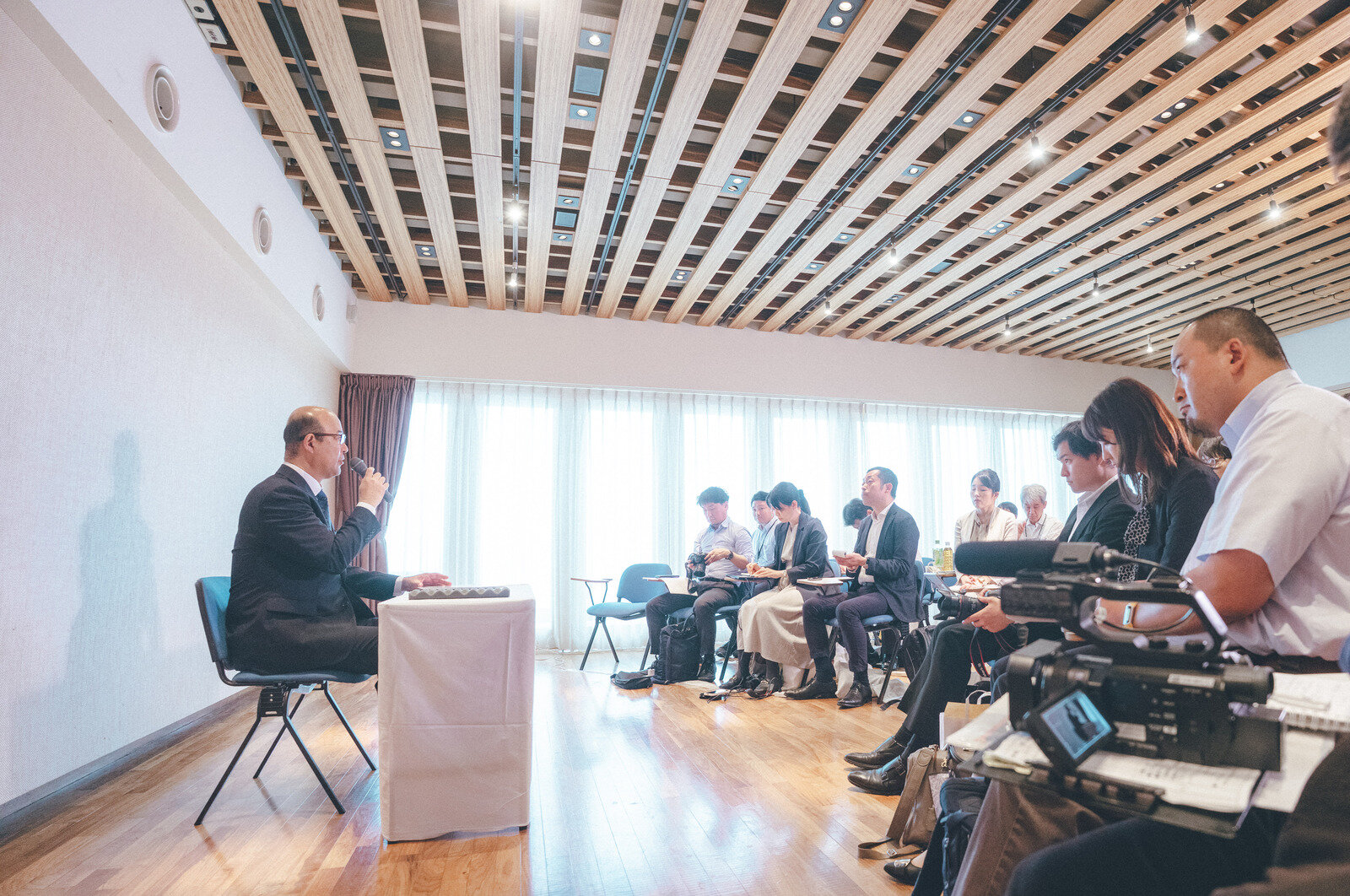
III: Engaging with suppliers
――Amid the rapidly changing international landscape, a strategy of local procurement and production seems to be essential for Toyota’s global full lineup of vehicles, but how will you protect the domestic supply chain?
President Kon
As you rightly note, since we are a mass-market automaker that delivers a full lineup of vehicles globally, we need to make our products where we sell them. This principle of local production for local markets is extremely important for us.
At the same time, Japan’s manufacturing prowess is also vital to Toyota, and we have tremendous confidence in the country’s capabilities. We often hear of the millions of vehicles produced in Japan, but every one of those cars is made up of around 30,000 parts. The reality is that, if a carmaker scales back production, inevitably the rest of the supply chain behind it cannot be easily rebuilt.
I consider Japanese manufacturing capabilities, production, and supply chains to be extremely important, and I want to maintain the current standard.
However, this is only possible because of our customers, and we cannot maintain this level on our own. We must continue to make ever-better cars that are embraced by our customers; only by doing so can we hope to sustain the domestic supply chain. In terms of our priorities, that must be the mindset going forward.
――Are there aspects of the supply chain, such as genba evaluation or resilience, that you want to focus on? Also, how do you plan to navigate this uncertain competitive environment?
President Kon
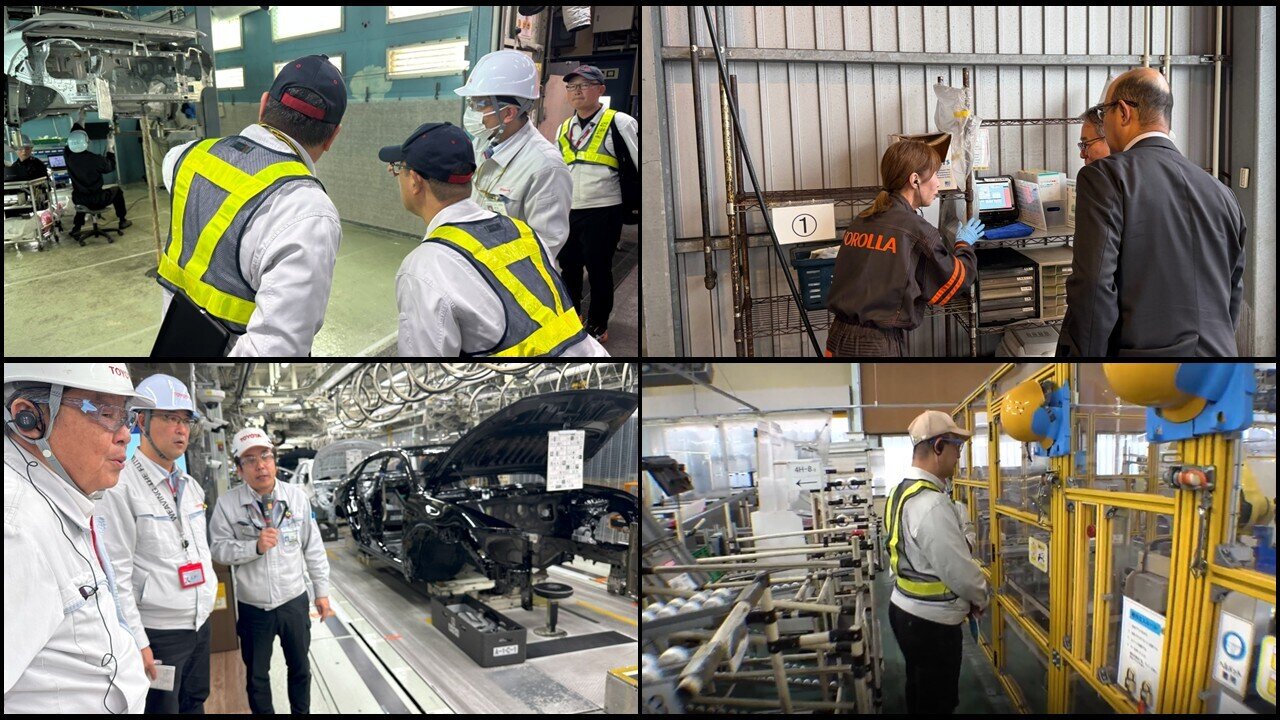
Since April, I have also been visiting a number of our suppliers. Amid the uncertainty, they too are considering various options, and I’m sure they have many concerns.
Meanwhile, I have seen suppliers adopting new methods and making incredible efforts to outdo the competition. Even as some suppliers face various constraints such as staffing and space, they are using those very limitations as a driving force for a wide range of improvements.
Of course, we have the situation in the Middle East and other factors, but our fundamental approach remains unchanged: working closely with suppliers, including both Japanese companies and various global partners, to refine our designs and build quality and cost-competitiveness into our products. These efforts will not change.
――Through your genba visits, have you gained a sense of their frontline capabilities?
President Kon
I have, and the same is true of Toyota’s genba. I am not sure whether “resilience” is the right word, but what I often hear from the supply chain side is that, thanks in large part to coordination with Toyota, we make it easier for suppliers to manufacture our components, including through the way we place orders.
Whether in our designs or ordering processes, I think it’s very important that we make it easy for suppliers to continue carrying out improvements. Resilience does not mean being able to do absolutely anything we ask of them, and from speaking with suppliers I feel that they are doing a great job of communicating how things could be done better.
――Earning power is one area you are expected to focus on as the new president. Based on your own experience, what are the challenges and opportunities for working with business partners to boost Toyota’s earning power?
President Kon
Dealers, Toyota production sites, suppliers, logistics, prototyping, certification—our business has many different genba. I have visited numerous facilities, and each one is full of challenges. Wherever I go, people tell me of the difficulties they face, and I can see they are real. But looking at processes over time offers another perspective. On a recent dealership visit, for example, we discussed how to allocate inventory from the pipeline.
Here in Japan, some customers are still waiting for delivery. Using the J-SLIM system, we can gain a much clearer picture of which inventory in the pipeline should be allocated to which customers, helping reduce delays in the distribution process. That is another opportunity we have identified.
There are also opportunities to streamline our parts selection, for example, and many other areas that still have room for improvement. The same is true of how we allocate our budget.
On recent visits to the genba, I really sense that people are starting to recognize these opportunities. That is very encouraging, while also highlighting how much work remains to be done.
――Having served as CFO, what is your perspective on costs?
President Kon
What we can see in the numbers is, in a sense, only the tip of the iceberg—often, the figures only show what’s happening above the surface.
What lies behind the numbers—below the surface—are the people, their continued efforts, our suppliers, and our history. All these things are not visible above the water. As CFO, I tried to pay attention to these aspects, but I am conscious that since my interests, or my perspective, have now shifted, I am even more keenly aware that what lies below the surface is incredibly important.