



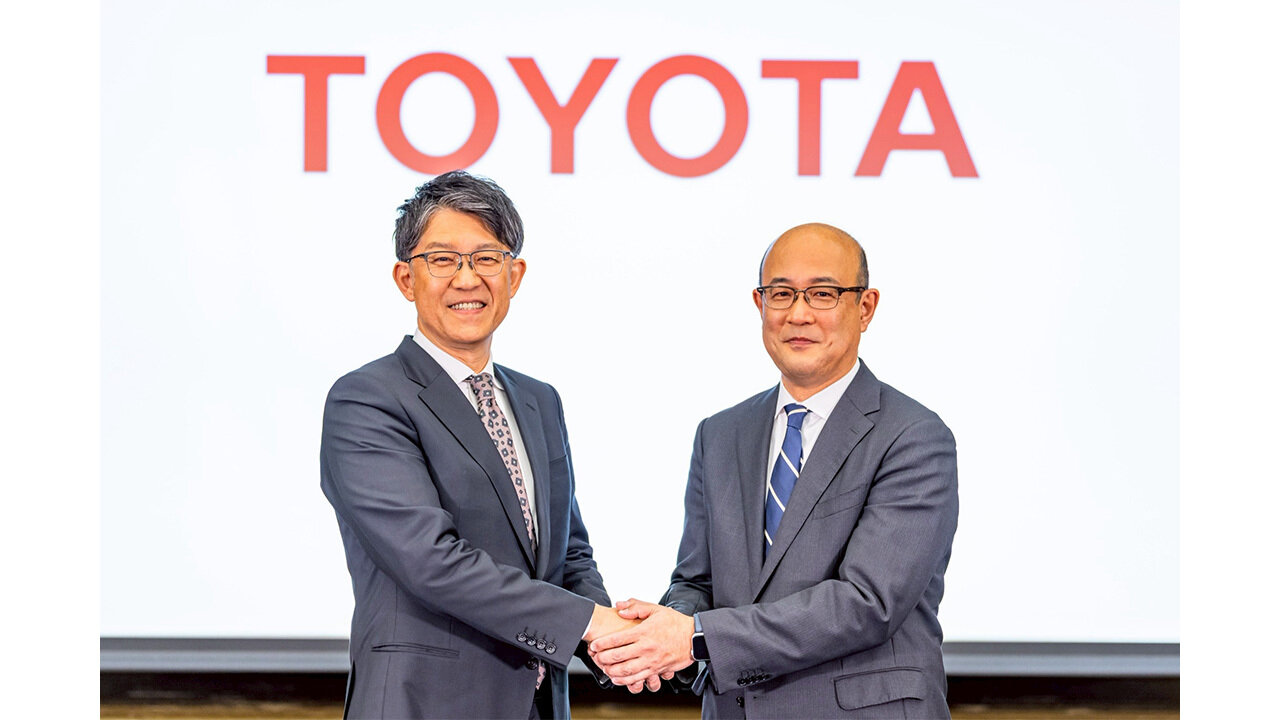
Toyota's management team is making changes to its lineup. Effective April 1, President Koji Sato will move into the position of vice chairman and the newly established role of chief industry officer, with Operating Officer Kenta Kon taking over as the incoming president.
During a Toyota Times News livestream on February 6, Toyota Motor Corporation announced that, as of April 1, President Koji Sato will assume the position of vice chairman and the newly established role of chief industry officer. Operating Officer Kenta Kon will become the company’s president and chief executive officer (CEO).
The changes were based on an Executive Appointment Meeting proposal and approved by the board on the same day.
“A management team formation change is necessary for the future of Toyota and the industry.”
Speaking on Toyota Times News, this is how President Sato described the purpose of this leadership reshuffle, the first in three years.
President Sato, who was appointed vice chair of the Japan Business Federation (Keidanren) in May 2025 and chairman of the Japan Automobile Manufacturers Association (JAMA) in January 2026, has taken on the responsibility of making Japan’s auto industry more competitive.
Within Toyota, meanwhile, immediate priorities include boosting earning power and lowering the break-even volume, both of which urgently require concrete action. As chief financial officer (CFO), Kon has worked to improve the company’s earnings structure while also gaining cross-functional management experience at Woven by Toyota, making him the top choice for tackling the current challenges.
The new arrangement will allow Sato to focus his efforts more broadly on the auto industry, while Kon pays close attention to the management environment within Toyota.
Having served as head of the Accounting Group and executive vice president, incoming President Kon expressed his commitment to the new role, saying, “For the good of the entire auto industry, and for Japan, Toyota must continue to invest. We will build an earnings structure that enables us to do so.”
The Toyota Times News livestream began with the pair answering questions from host Yuta Tomikawa, followed by a Q&A with reporters. Here are the messages they shared.
Changing formation
President Sato
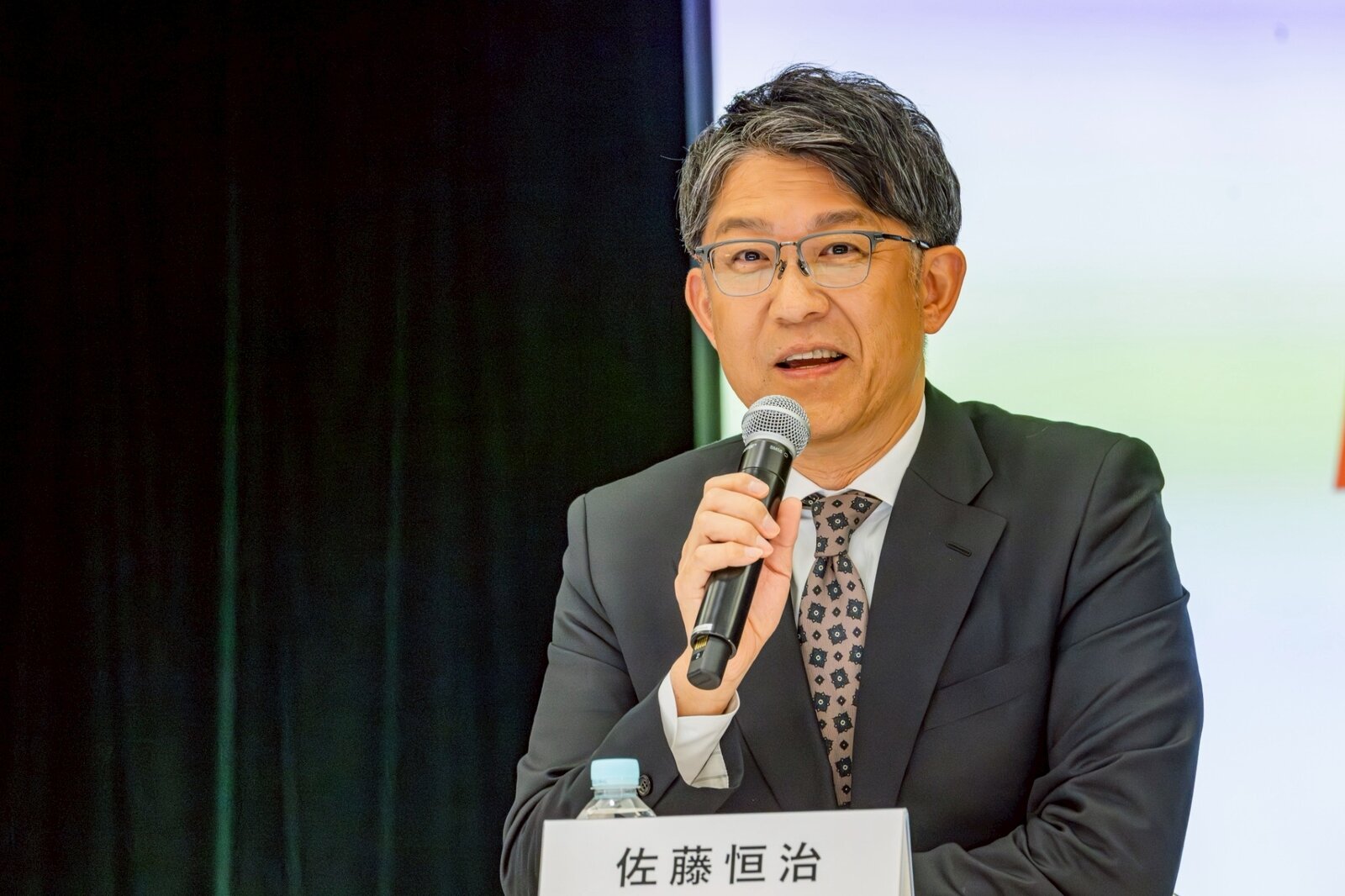
This reorganization is intended as a formation change, one that enables us to dedicate all our energies to tackling the management challenges Toyota will face moving forward.
I believe there are two major challenges.
The first is the earning power that will sustain the company’s future. Enhancing our ability in this regard has become a critical priority.
At Toyota, we have spent the past two years strengthening our foundations. From here, given shifts in the external environment, we are entering a phase where we will pursue improved productivity, and even greater quality and affordability in our carmaking. The fact that we are at this inflection point is one key consideration.
The other is the need to accelerate industry collaboration.
For our auto industry to remain internationally competitive, I believe we need to unite as one, specify concrete areas of collaboration, and identify Japan’s path to success.
As cars evolve to be increasingly integrated into the infrastructure of society, I believe the key lies in collaboration with partners across different industries. In other words, as I see it, Toyota's role within the industry is growing larger than ever.
Against this backdrop, the proposal from the Executive Appointment Meeting spurred us to consider the optimal leadership structure for Toyota in light of the current management challenges.
In doing so, we determined that a management team formation change is necessary for the future of Toyota and the industry. We discussed and approved the role changes in today’s board meeting.
Going forward, Operating Officer Kon will focus on the internal situation as president and CEO, driving initiatives to enhance the earning power I mentioned earlier. Operating Officer Kon is well-versed in accounting and finance and, as you will be aware, has most recently served as CFO of Woven by Toyota, giving him experience viewing Toyota from the outside and pursuing internal reforms across functional lines.
As we turn our initiatives into concrete action, and strive toward optimization that transcends individual functions, I believe Mr. Kon will leverage these strengths to provide effective leadership.
For my part, as vice chairman and chief industry officer, I intend to focus my efforts increasingly on industry-centered activities, including the Japan Automobile Manufacturers Association and Keidanren.
I will continue working on the frontlines to connect Toyota with the industry and accelerate collaboration across the sector. I am dedicated to making this happen and will strive to be a more dynamic presence.
At Toyota, we have always said that our work should revolve around roles, not titles. Since becoming president, I have consistently sought to ensure that the pace of management doesn’t slow, while continuing to take action. I believe this team approach to management has long been championed by Toyota’s leaders.
We want to energize the automotive industry and Japan. To contribute to this goal, we will focus on fulfilling our respective roles within the new formation. Once again, we ask for your continued understanding and support.
Personal conflict
Tomikawa
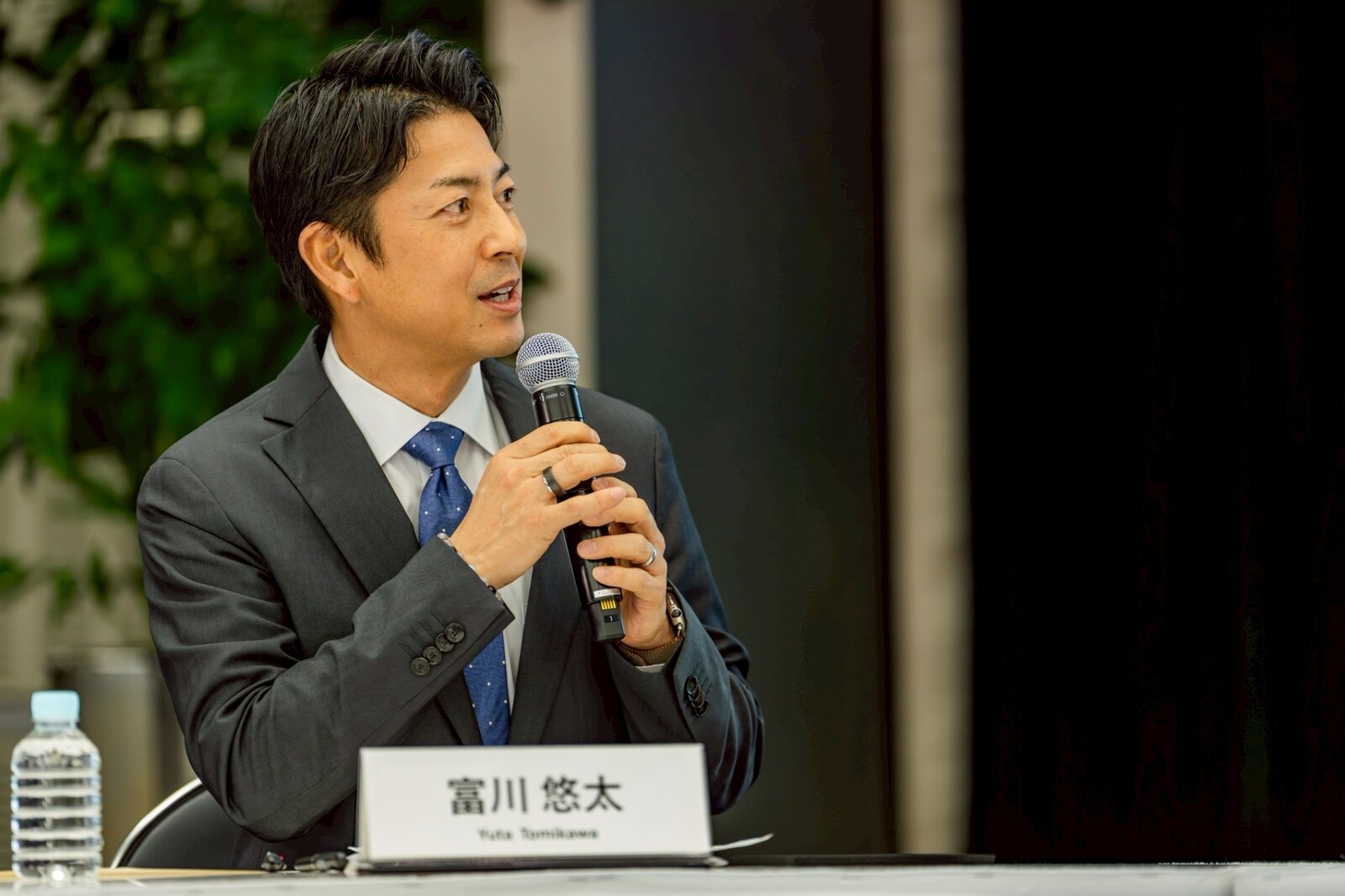
What was your honest reaction when you heard the proposed changes from the Executive Appointment Meeting?
President Sato
In that moment, I had very conflicted feelings.
The discussions around appointing the Japan Automobile Manufacturers Association chairman had begun in early autumn, and we deliberated among the heads of the member companies. Due to various circumstances, there were growing calls for Toyota to take the lead, and I started asking myself whether I would be able to give my all to both the JAMA activities and my responsibilities overseeing Toyota’s executive side.
But in my human weakness, I couldn’t bring myself to raise the issue, and as I struggled with that personal conflict, the Executive Appointment Meeting asked whether the current arrangement would allow me to tackle these two important roles. I was taken by surprise.
In a sense, it made me realize that our governance is really effective. The Executive Appointment Meeting pointed out that, objectively, in the current situation, I am quite overloaded. Thanks to that, I was able to step back a bit and assess things more calmly, and I remember thinking this was something I needed to consider.
Tomikawa
While you’re giving your all as JAMA chairman, Keidanren vice chair, and in other responsibilities at the national level, a part of you also wanted to continue serving as president for a little while longer.
President Sato
That’s right. Having come up from the genba, and doing this because I love making cars, I’ve been constantly asking myself, “What exactly is the president’s role?” I truly believe that carmaking is something worth dedicating your life to, and because of that, part of me also wants to just focus on this aspect. That’s why I felt very conflicted.
Tomikawa
Chairman Toyoda served as president for 14 years. Your term has been three years—isn’t that a bit short?
President Sato
I knew this question would come up (laughs).
Honestly, I do think it’s short. But there are two things I want to say.
It’s only three years, but it’s also three whole years.
The pace of the auto industry doesn’t ease up. Three years today means something completely different from the past.
Also, when Chairman Toyoda, who was president at the time, asked me to take over, he told me that his decade-long carmaking effort remained unfinished. He asked me to help him finish the job, to work together on the finale. That was the starting point.
Around the end of January, the two of us took some time to talk together, and Chairman Toyoda spoke earnestly about wanting to help make Japan a better place.
Those words resonated with the conversation in which the chairman told me he wanted to make great cars together, dispelling any doubt and solidifying my resolve about where I need to be right now.
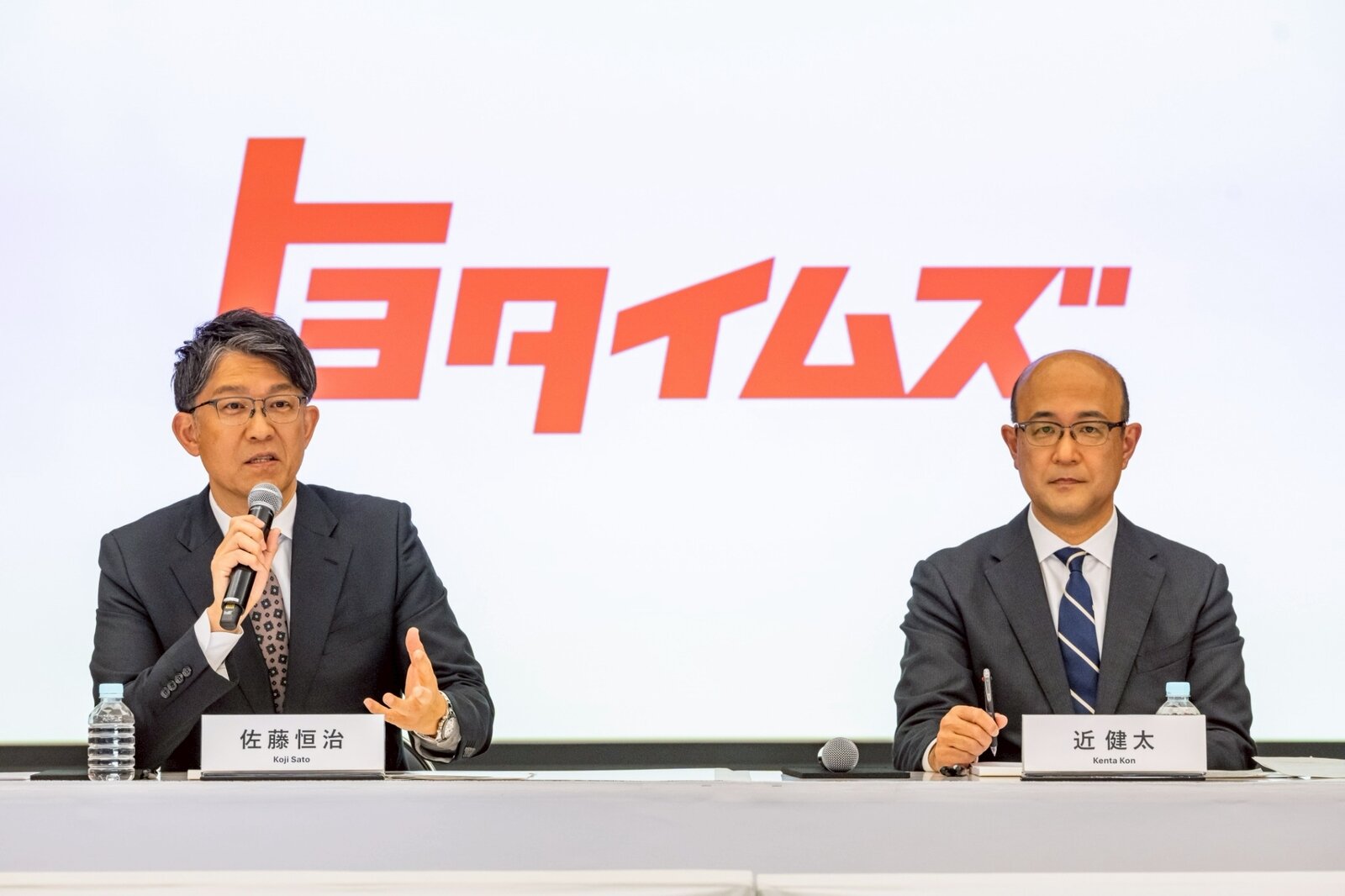
The other point is the need to make the first move. Despite my limited experience in management, I feel that in the current situation, I must not make this about me.
Putting “me” at the center clouds your judgment, as you start thinking, “I haven’t done this yet” or “I want to do that.” In this situation, I absolutely must not make myself the subject of the discussion.
Instead, if I consider this from the perspective of us—we—then the JAMA chairman appointment this year signals that the timing is right to take certain actions. In that sense, I don’t think it’s a question of whether three years is too short.
Tomikawa
At this press conference, it seems quite a few people felt that three years is a relatively short period, so they’re wondering whether you’ve done something wrong.
President Sato
Just now I’ve been receiving messages from friends on social media, and everyone’s saying, “What on earth did you do?” To avoid any misunderstanding, let me make it clear: absolutely nothing. As I’ve described, this has very much been a positive and forward-looking discussion, so I want people to understand that first and foremost. Then my friends can stop sending me weird messages.