



Equipped with a superconducting liquid hydrogen pump, Toyota's hydrogen-engine Corolla took on the Super Taikyu Fuji 24 Hours. Trackside, Executive Vice President Hiroki Nakajima and colleagues spoke to the media about their plans for a hydrogen-powered future.
From June 5 to 7, Fuji Motorsports Forest hosted Round 3 of the Super Taikyu Series, the Fuji 24 Hours. Much of the excitement was centered on the hydrogen-engine Corolla, the world’s first vehicle equipped with a superconducting liquid hydrogen pump.
During the event, Executive Vice President Hiroki Nakajima and his colleagues held a media briefing covering the past five years of hydrogen initiatives.
Hydrogen efforts continue to grow
Before checking out the briefing, let us briefly recap Toyota’s hydrogen-related activities.
The company’s hydrogen engine made its first motorsport appearance in 2021, with then-President Akio Toyoda (aka Morizo) stating, “I believe it is through purposeful passion and action that we will create a future of carbon neutrality.”
Since 2023, the team has switched from gaseous hydrogen fuel to liquid, drastically improving the car’s range between refuels. With the use of superconducting technology for the pump, this time the Corolla notched up a record-high 483 laps.
Over the past five years, Morizo has personally taken the wheel to transform hydrogen’s dangerous image into one of future potential.
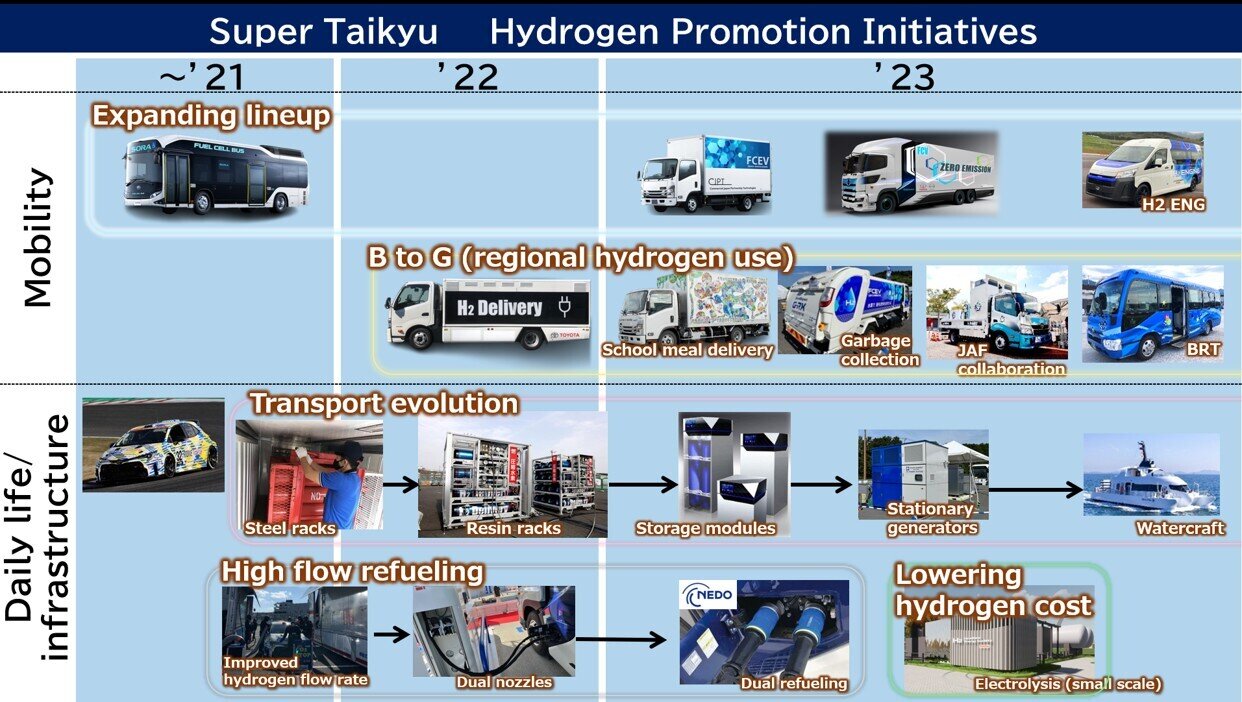
Racing has also spurred efforts to transport and use hydrogen.
On the transportation front, replacing conventional steel racks with lightweight automotive resin tanks helped to raise efficiency. Refueling has also improved, with higher flow rates and dual nozzles reducing filling times for future heavy-duty trucks.
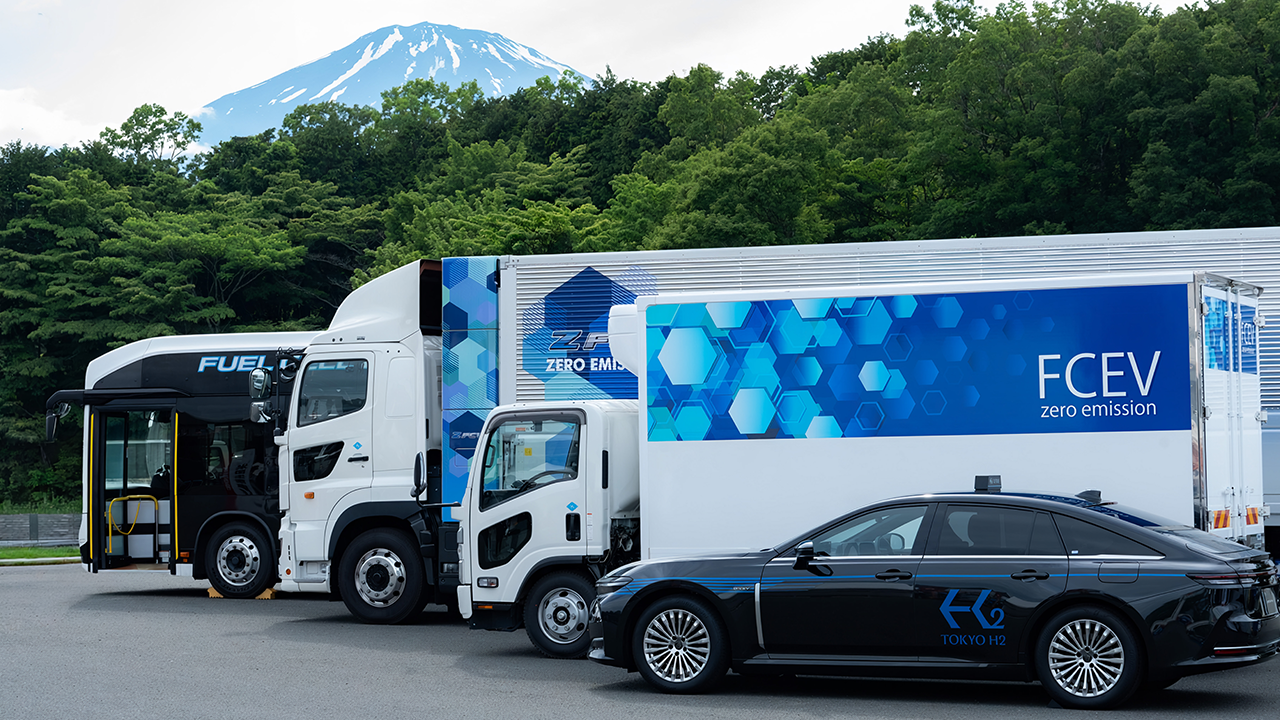
In terms of hydrogen usage, we have seen the rollout of fuel cell-powered trucks for everything from school meal delivery to garbage collection. With new partners getting involved, hydrogen has also spread beyond mobility to areas such as grills and saunas.
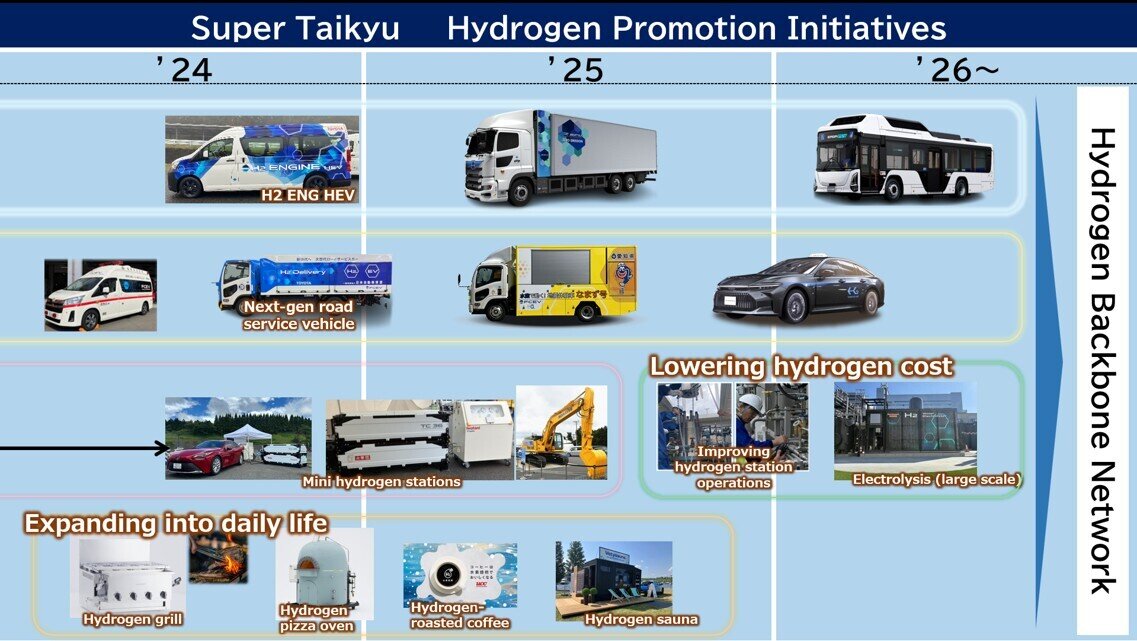
These efforts are bearing fruit, with the Japanese government also starting to take action.
Since February, the Agency for Natural Resources and Energy has played a central role in exploring the potential of a Hydrogen Backbone Network. This cross-industry initiative is supported by organizations such as the Japan Hydrogen Association (JH2A) and the Japan Automobile Manufacturers Association (JAMA). Efforts to roll out hydrogen projects in society are accelerating, with the Ministry of Economy, Trade and Industry convening the Hydrogen Backbone Network Implementation Council on June 4.
Hydrogen Backbone Network
An initiative that seeks to generate sustainable demand for hydrogen by installing refueling stations and operating heavy-duty fuel cell electric vehicle (FCEV) trucks along major transport routes between Fukushima and Fukuoka, passing through Tokyo, Kanagawa, Aichi, and Hyogo. For the next decade, JAMA has set a benchmark of hydrogen demand equivalent to 1,500 trucks (7,500 tonnes/year), 30 new fuel stations, and a hydrogen price of 1,000 yen per kilogram.
Road to the Hydrogen Backbone Network Council
With these developments in mind, let’s go back to the briefing at the Fuji 24 Hours.
On the day, Vice President Nakajima fielded the media’s questions together with Hydrogen Factory President Mitsumasa Yamagata, CV Company President Takanori Kimata, and Chief Engineer Hirofumi Ota.
President Kimata, who also heads JAMA’s Hydrogen Adoption Task Force, recounted the path that led to the Hydrogen Backbone Network Implementation Council.
President Kimata
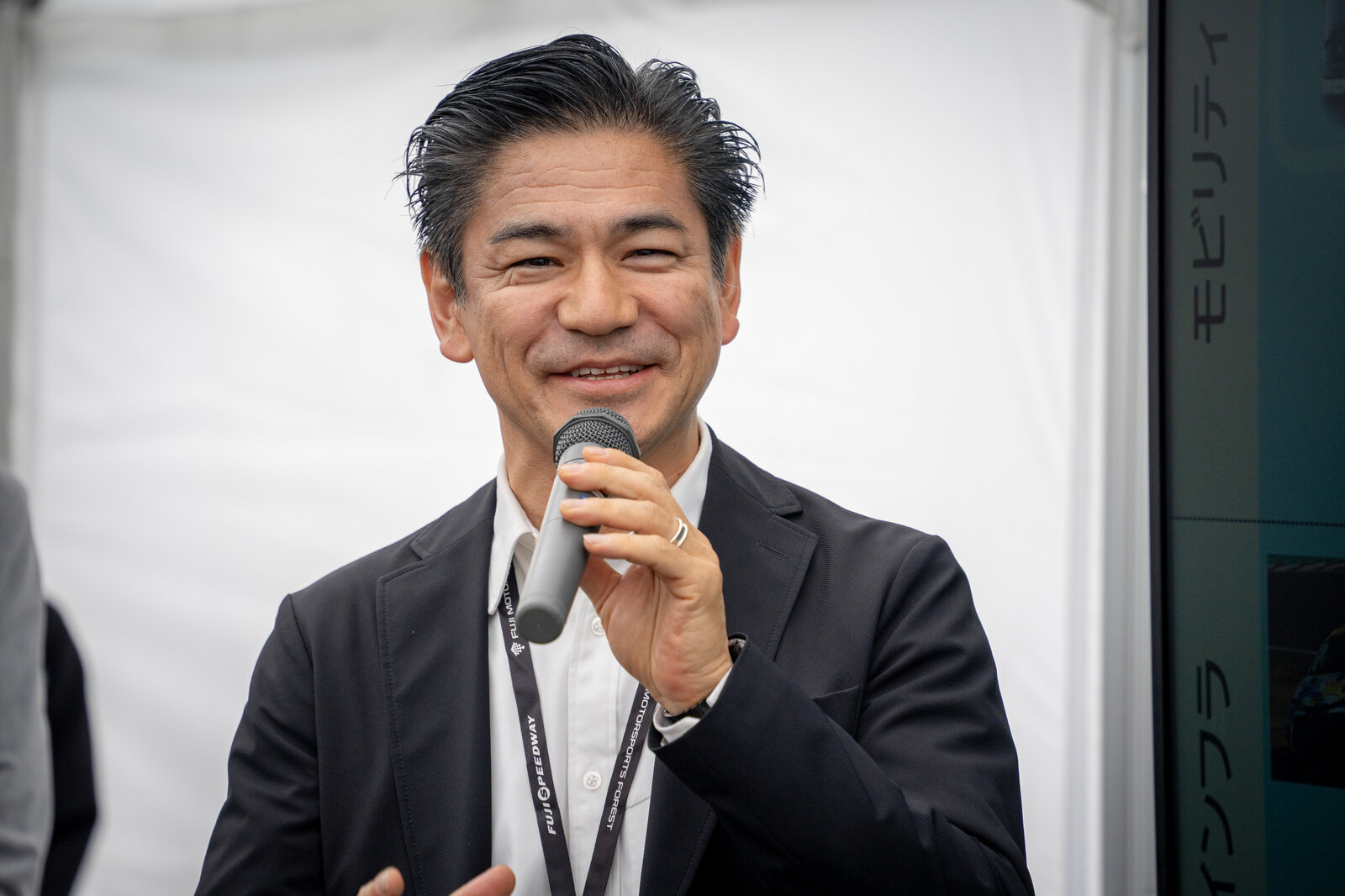
Although everyone was eager to make things happen, as automakers, logistics companies, and hydrogen station operators we each grappled with our own challenges, so for a long time the situation was deadlocked.
Cars are expensive, as is hydrogen. That makes people reluctant to use it. Without demand for hydrogen, refueling stations don’t get built. And unless consumption increases, the price of hydrogen won’t go down.
To break this deadlock, we need collaboration not just within the auto industry, but also across different sectors.
Now, the Ministry of Economy, Trade and Industry has established the Hydrogen Backbone Network Implementation Council, providing a boost to cross-industry collaboration. With China, Europe, and other countries rapidly progressing towards hydrogen-based societies, Japan must also move forward as one.
Realizing the vision of a hydrogen society will involve input from beyond the auto sector, including infrastructure and regulation.
President Yamagata himself noted that “the pursuit of hydrogen will transform society,” acknowledging that Toyota cannot achieve this on its own.
Chief Engineer Ota drew on his own experience in calling for cooperation.
Chief Engineer Ota
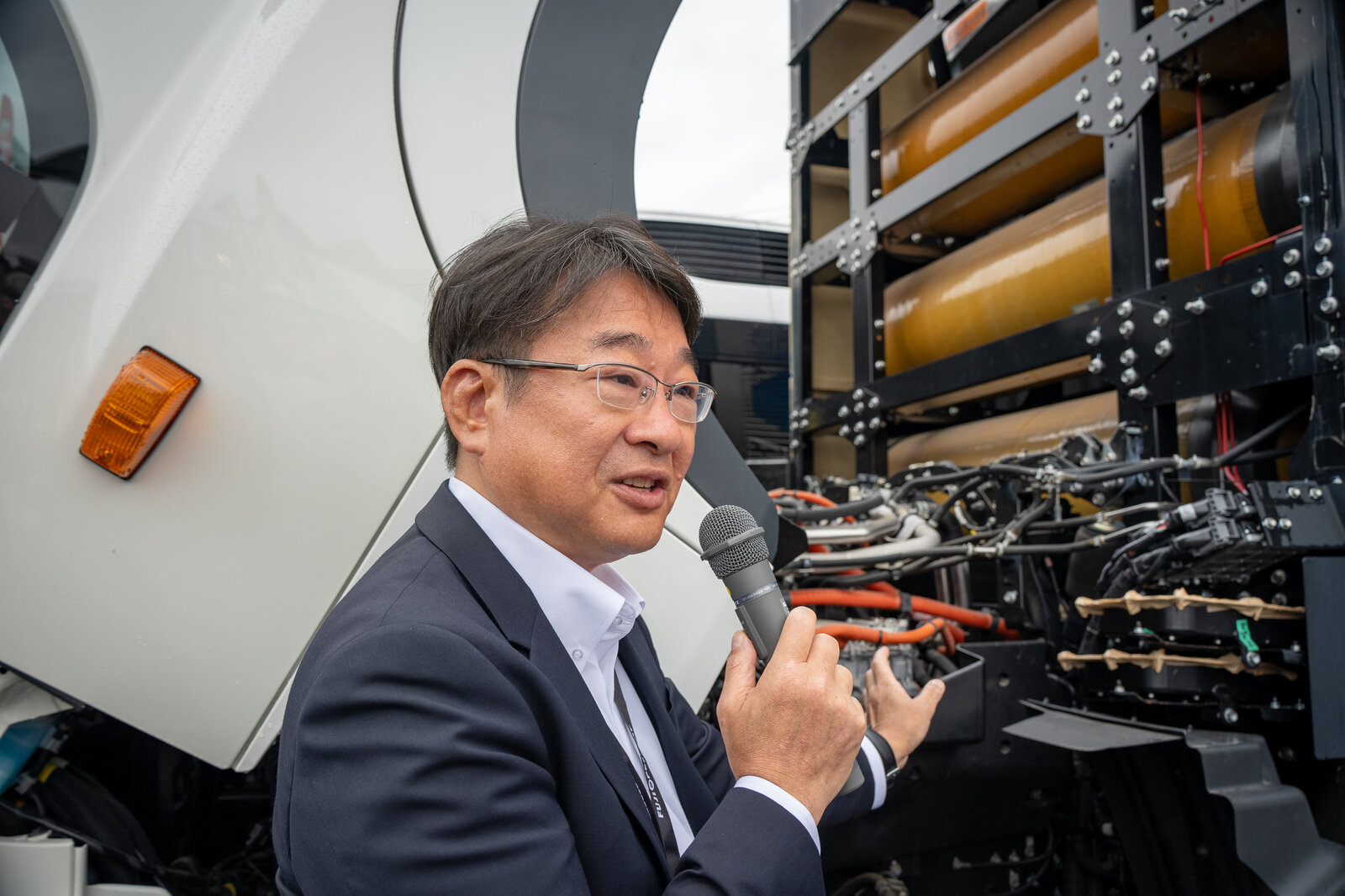
Alongside developing FC vehicles, I have been involved in many tests and listened to feedback from many different people. One moment that has stayed with me was when the truck we were driving ran out of hydrogen on the road, and we had to be towed.
Although this happened early on, using hydrogen vehicles on a wide scale still poses difficulties. I’ve experienced it myself.
However, one of the key points to remember is that we are developing hydrogen as an energy source for the future. We need to continue improving our vehicles as products, while also putting the necessary hydrogen infrastructure in place on a society-wide scale.Our biggest challenge over the past five years has been to keep both of these wheels turning, as we try to figure out the way forward.
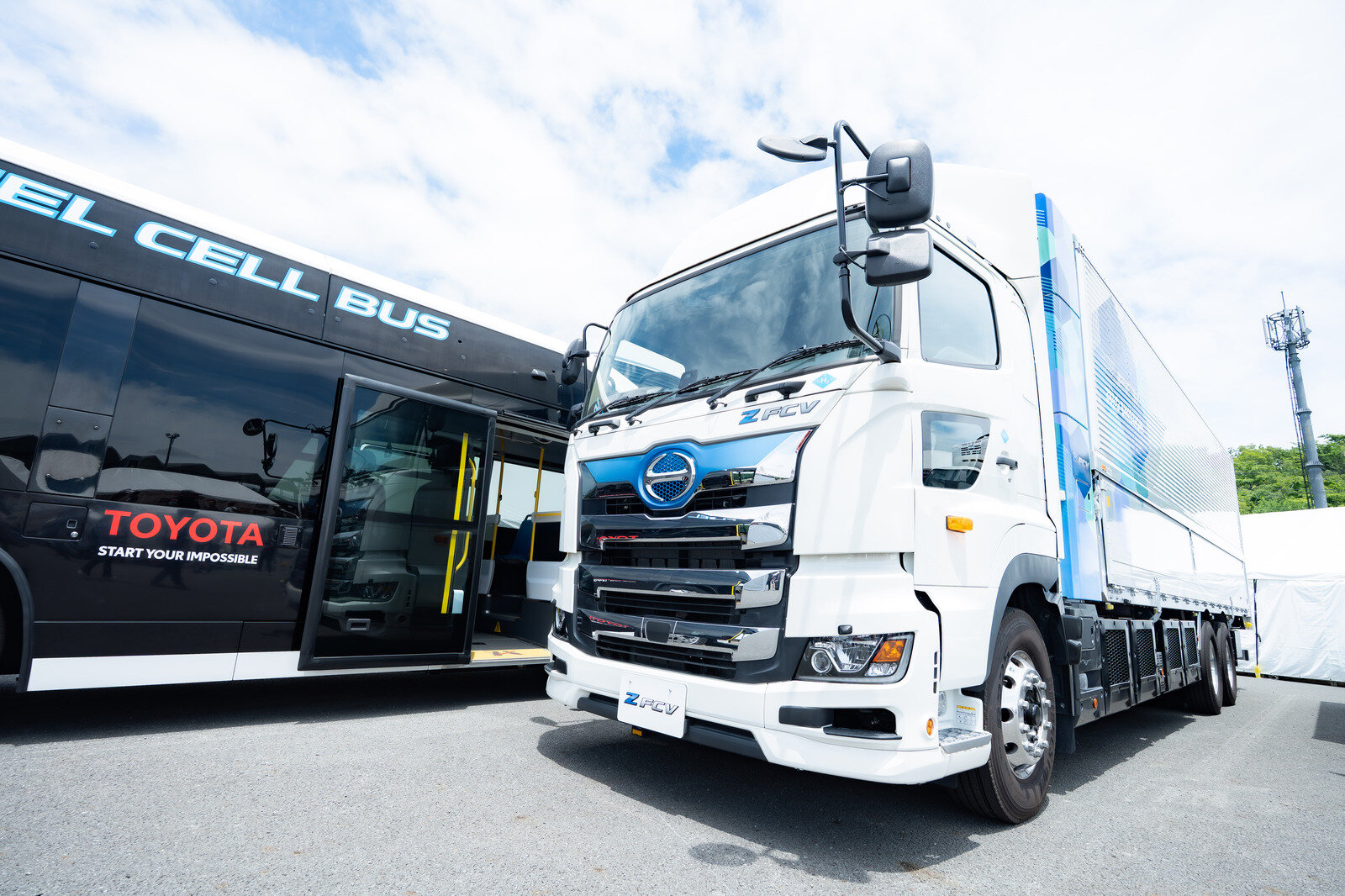
Today, we’ve brought a range of different FC vehicles, including trucks, buses, and passenger cars. Focusing on specific applications has gradually given us a better understanding of the way forward. Through the Hydrogen Backbone Network initiative, we hope to continue the challenge not just as manufacturers, but by working to find solutions together with users and society as a whole.
The culmination of Japanese technology
Japan does enjoy some advantages over other countries. President Yamagata pointed to the durability of Japanese fuel cells as one example.
President Yamagata
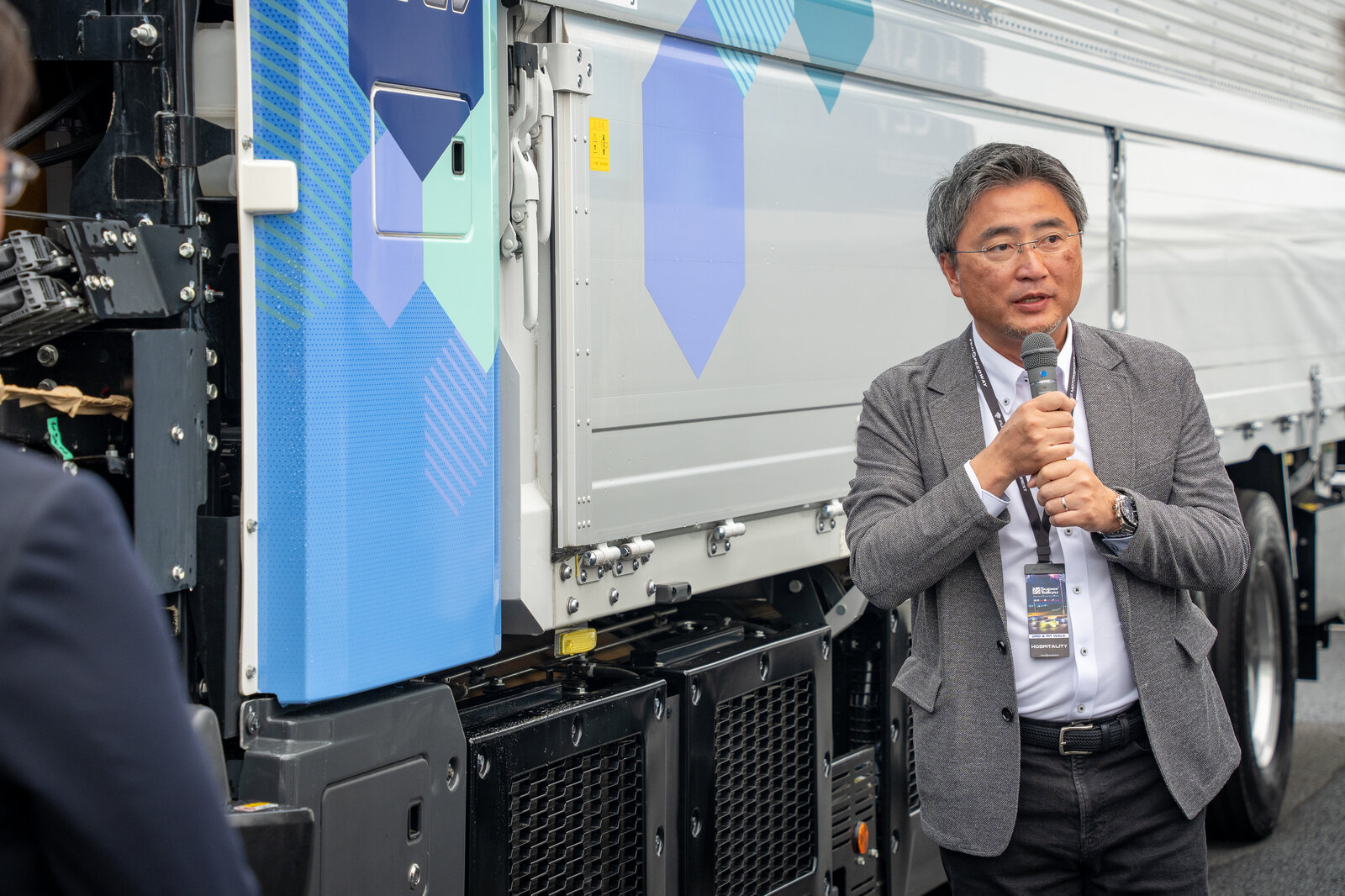
Fuel cell technology has been built up over a span of 30 years by people from some 50 Japanese companies. This is not something Toyota did single-handedly. It is truly the culmination of Japanese technology.
If you want to use this technology in commercial vehicles, durability becomes incredibly important. Fuel cells made with Japanese technology are globally recognized for having very high durability.
According to President Yamagata, Toyota is exploring a potential collaboration with cellcentric*, which develops, manufactures, and sells fuel cell systems for heavy-duty commercial vehicles. “I see this collaboration as a great opportunity for Japanese fuel cell technology to contribute to the world,” he said. “We want to get everything ready, to ensure that Japanese technology is able to shine on the global stage.”
*A joint venture established by Daimler Truck and Volvo. Along with these two companies, in late March Toyota invested in cellcentric and signed a Memorandum of Understanding to collaborate on fuel cells for heavy-duty commercial applications.
Meanwhile, Vice President Nakajima regards China, which has a large number of FCEV trucks on its roads, as “a place where we can hone our technology.” He explained Toyota’s strategy, saying, “We are looking to raise the overall standard by leveraging the unique aspects of each region (Europe, China, etc.).”