



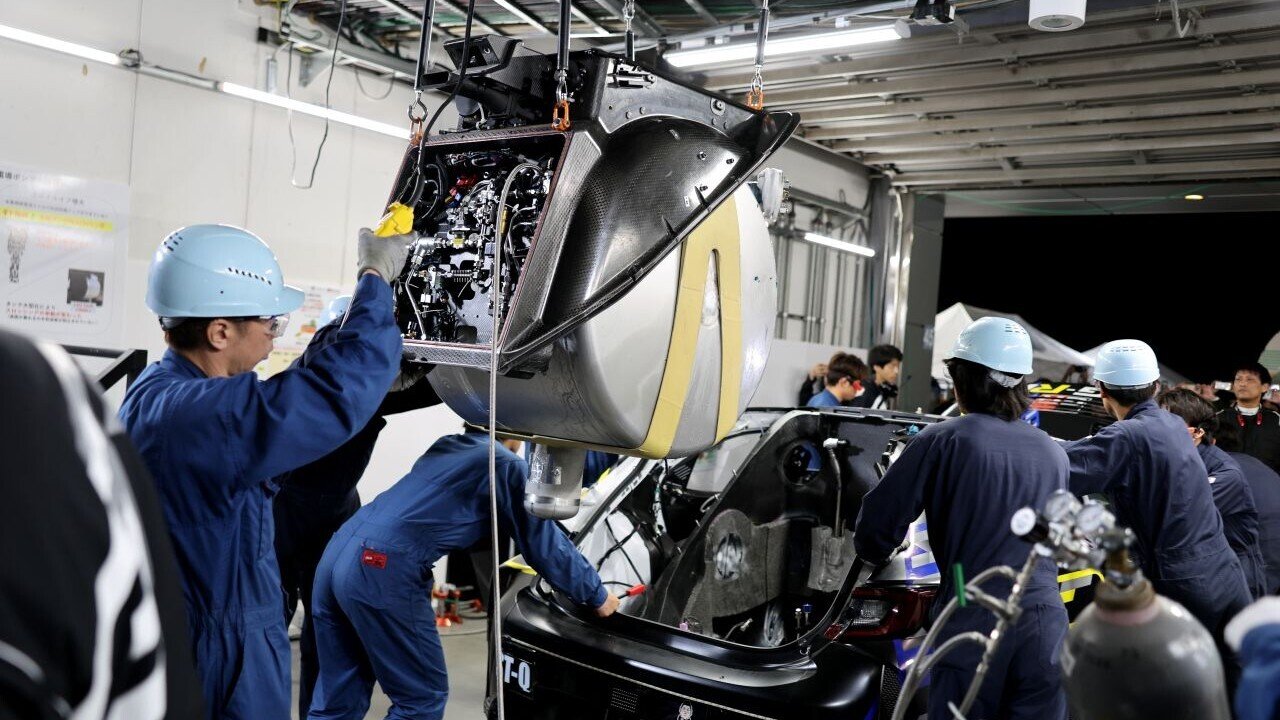
The 2026 Super Taikyu Fuji 24-hour race saw Toyota competing with a hydrogen engine for the sixth straight year. This time, the team took on the world's first challenge using superconducting technology.
Two hurdles for superconducting pumps
As Project General Manager Ito noted, two key challenges remain for Toyota’s superconducting liquid hydrogen pump.
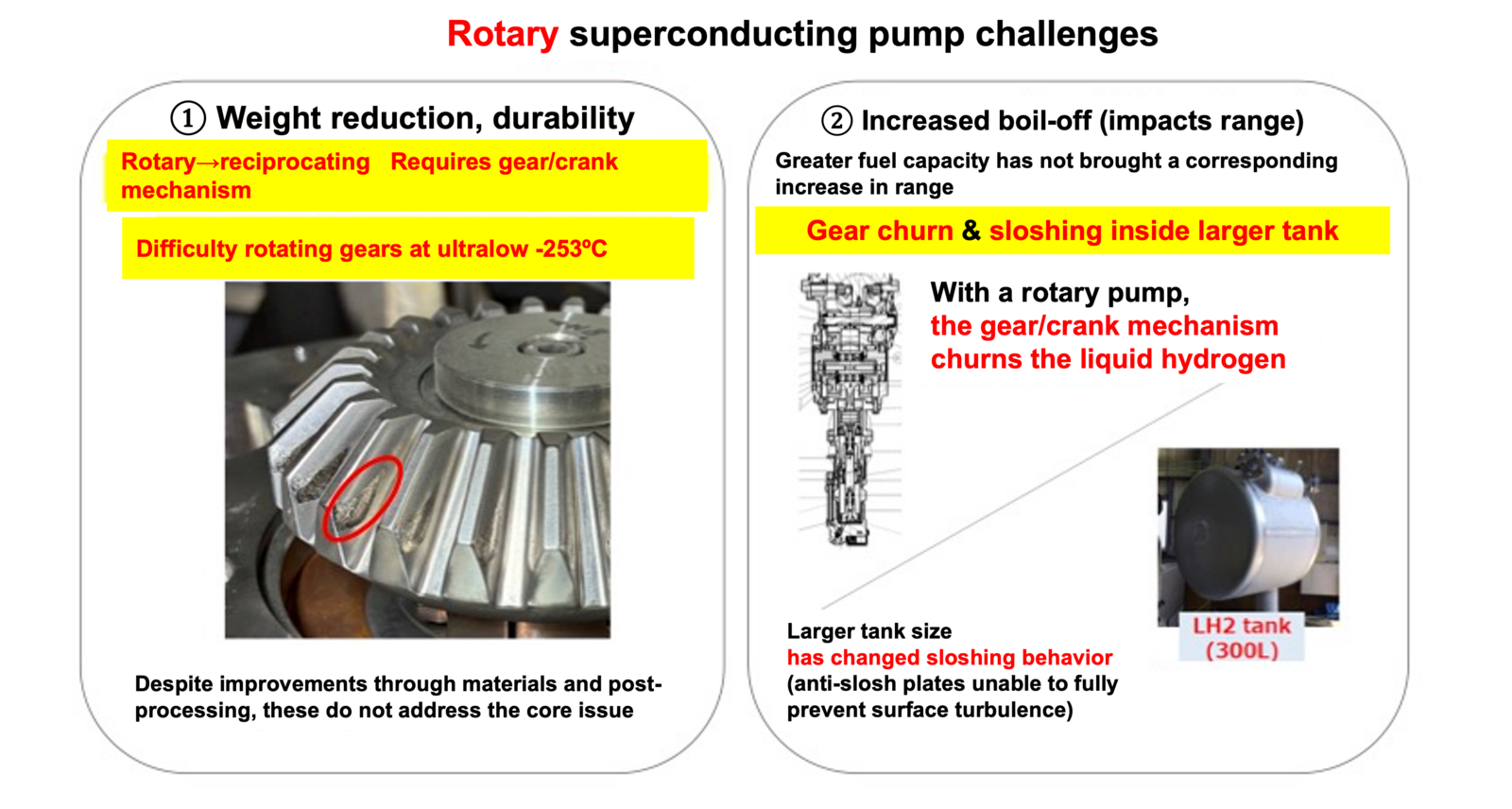
First is the issue of durability.
Superconducting technologies are used in a wide range of fields, from transportation to energy and medicine. In most of these cases, however, they operate in stable environments without significant vibration; conditions as demanding as a racing vehicle are very rare.
The enormity of this challenge led Taketsune Nakamura, a professor at Kyoto University who is collaborating on the development, to remark, “The idea of using a superconducting pump in a race car almost defies logic.”
In reality, the load on the pump’s gears proved too great to achieve the durability needed to last a 24-hour race.
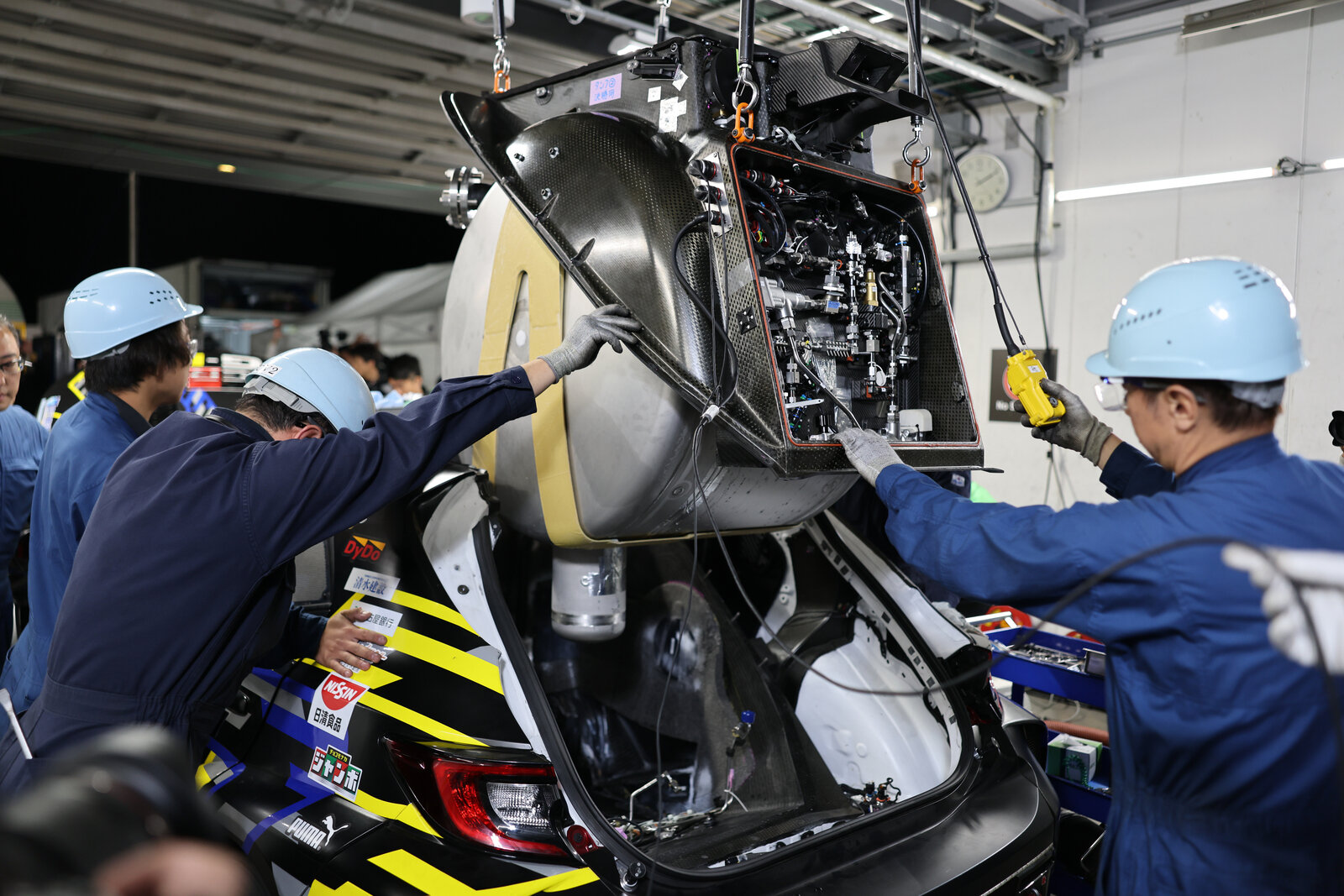
To complicate things further, placing the pump inside the tank means that the team cannot simply replace the parts that are subject to heavy loads. About four hours of the race were spent swapping out the entire tank.
The other issue is increased boil-off.
Not only is the liquid hydrogen churned by the movement of the superconducting pump’s gears and crank, but the jump in tank size has also made it more difficult to stop the fuel from sloshing around, which raises the temperature of the hydrogen and causes vaporization.
As a result, despite being able to carry more liquid hydrogen, the car’s range has not increased.
“Toyota cannot solve these issues on its own,” says Project General Manager Ito. “For the next challenge, we have called on our partners to help with development.”
Collaborating on a linear-drive motor
To solve these issues, the team is taking on a new challenge: developing a linear-drive superconducting motor.
The aim is to upgrade the existing rotary motor, which requires a gear and crank mechanism, to a linear motor driven by magnetic forces.
Accomplishing this would do away with the gears that are a key factor in both the durability and boil-off issues, likely bringing significant improvements.
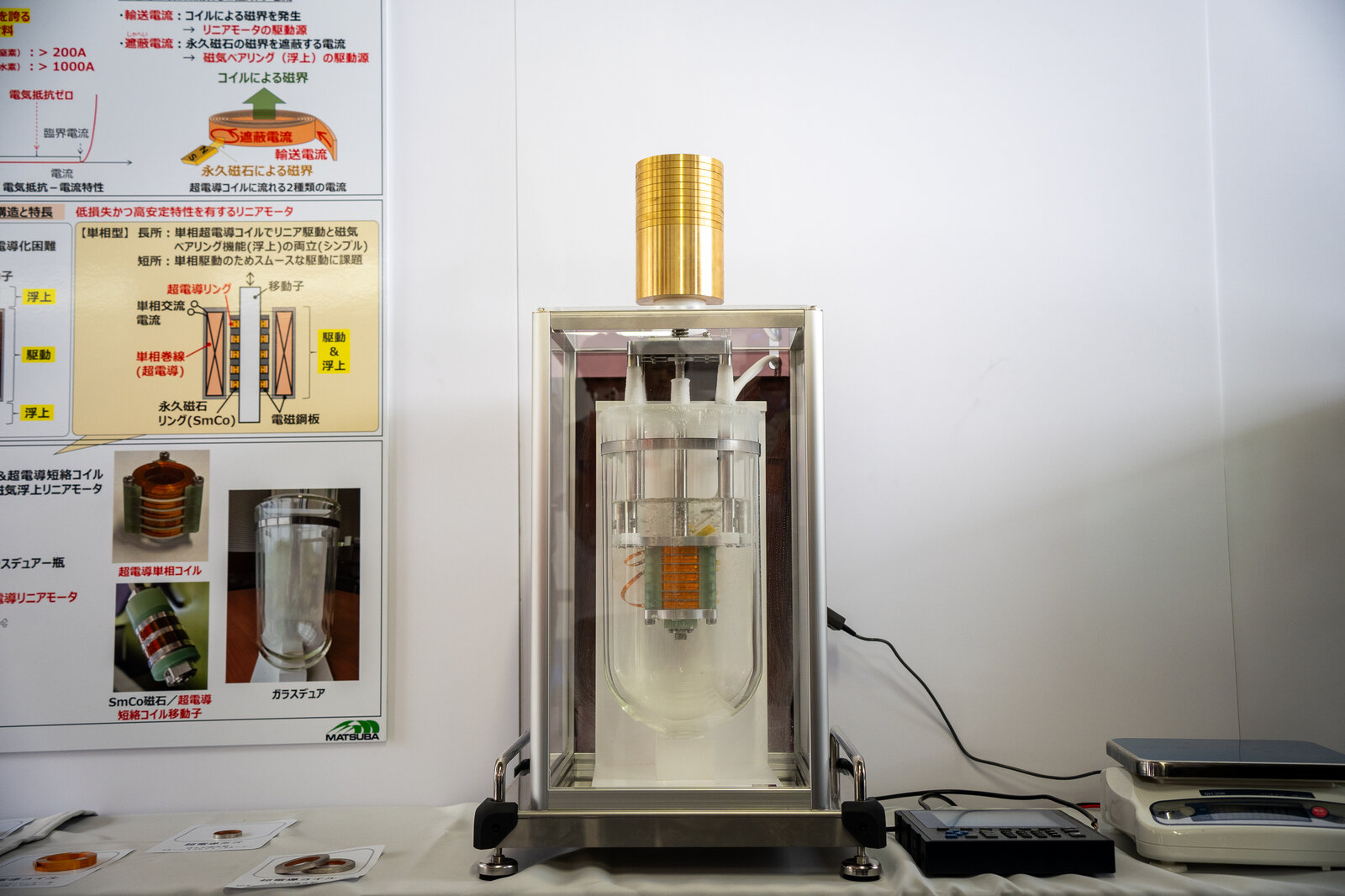
Professor Nakamura explained the impact of the linear drive system.
Professor Nakamura
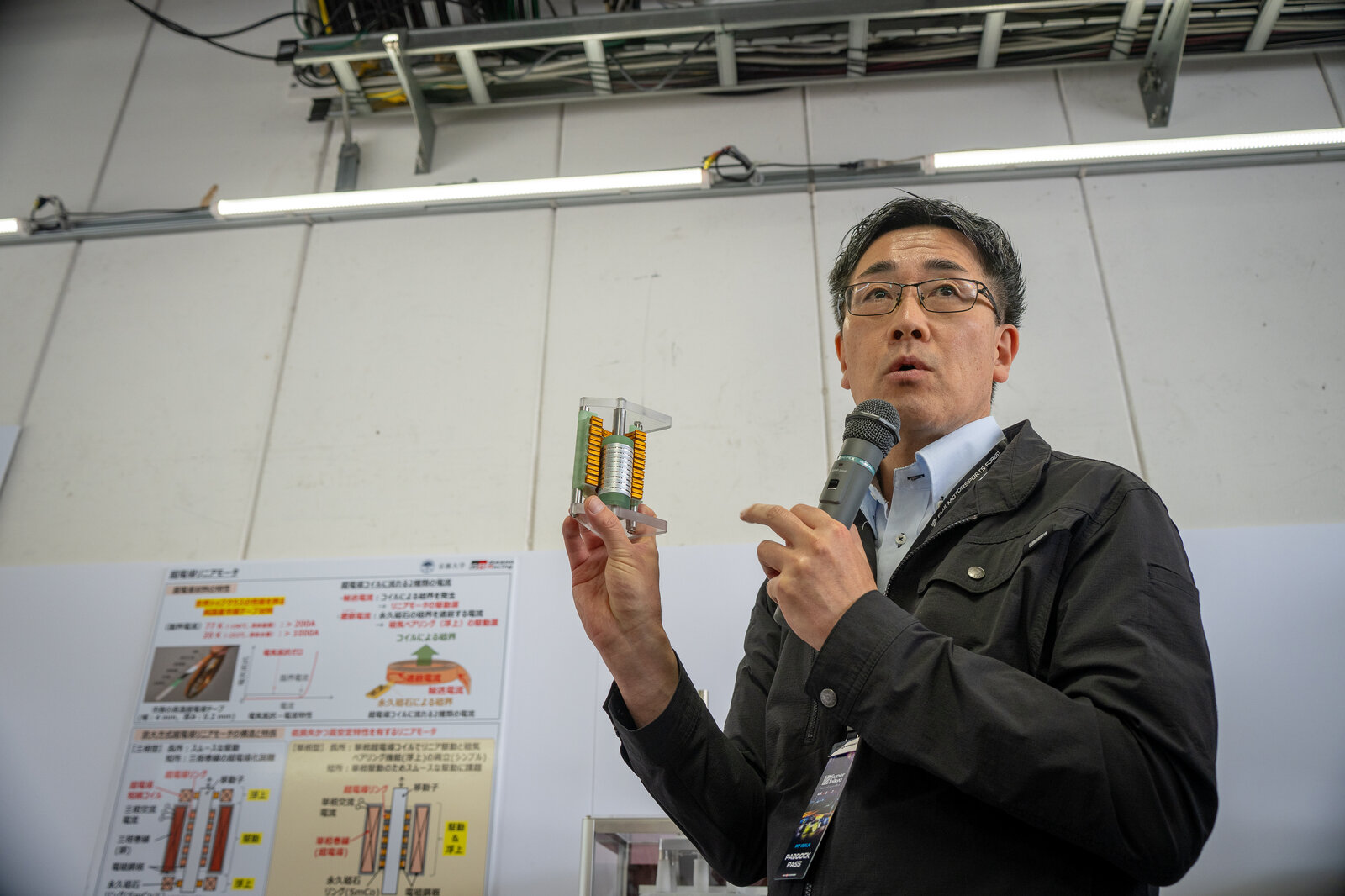
A linear-drive motor would not only solve the durability and boil-off issues, but also be capable of delivering more power than before.
Many challenges stand in the way, and we are currently exploring various approaches, with the goal of creating a system that can fully harness the power of superconductivity.
Also contributing to the development of the linear-drive system is the Railway Technical Research Institute.
Having researched superconducting technologies for more than 60 years, the institute is a pioneer in the field, with a wealth of linear system expertise gained through the development of maglev trains.
Division Manager Masaru Tomita shared his commitment to the project.
Division Manager Tomita
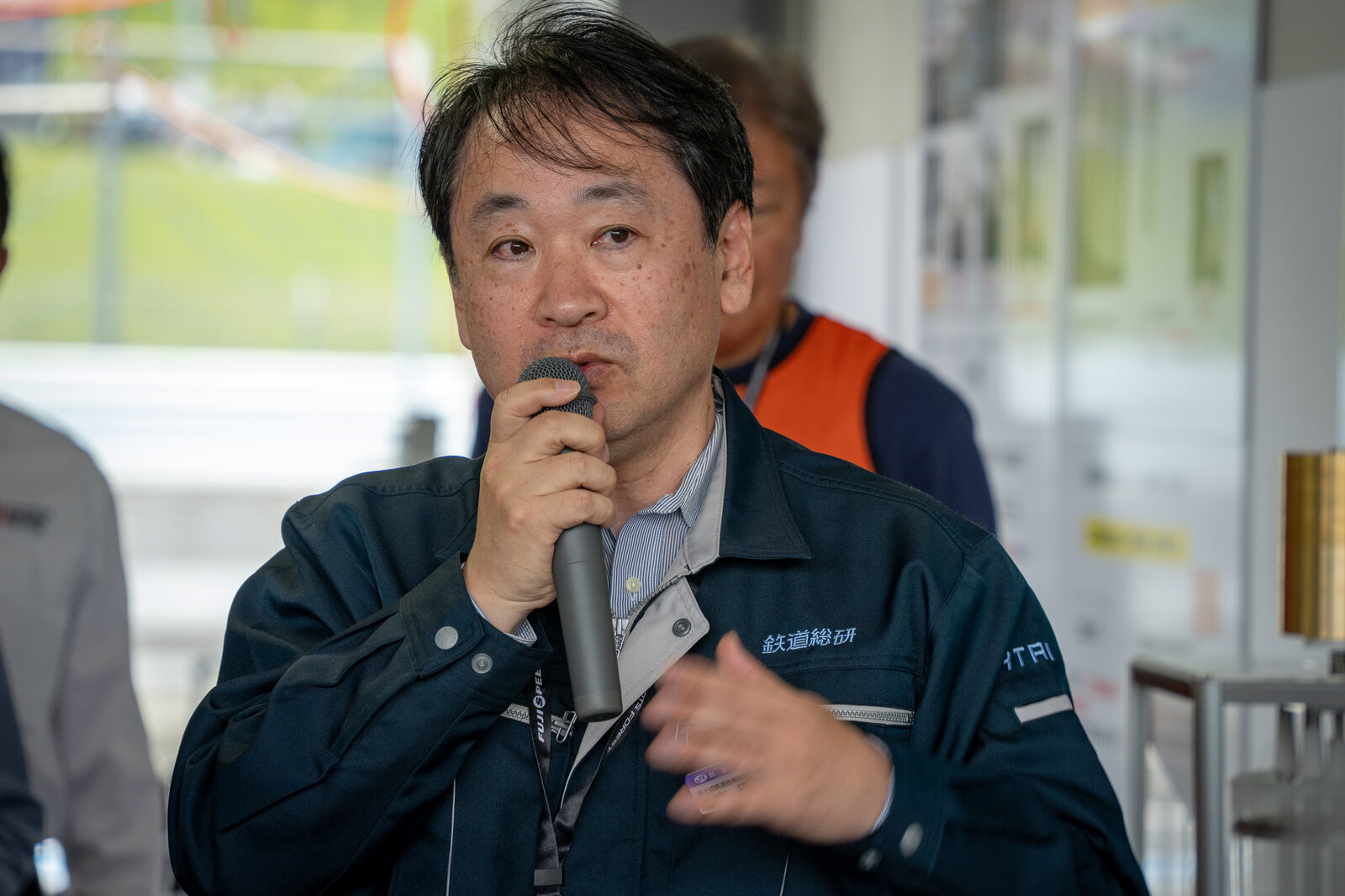
When the collaboration was first suggested I was taken aback. However, knowing full well the difficulty of implementing superconducting technologies, I felt that our know-how could be of assistance, and we decided to get involved.
We have real-world experience not just with maglev trains but also power transmission lines and other applications, so I hope we can provide wide-ranging support for the development of this new technology.
At the same time, by being exposed to Toyota’s bold, fearless technological development on the racetrack, our team has also discovered approaches we had never encountered while working with railways, so this is a valuable learning opportunity for us as well.
With new partners coming on board, the next challenge is underway.
The development of the linear-drive motor may hold the key to the evolution of hydrogen-engine vehicles. Project General Manager Ito has shown confidence in his colleagues, saying, “With Japan’s technical expertise coming together like this, I have a feeling we are going to do something incredible with this car.”
Chairman Akio Toyoda, who as Morizo completed 75 laps at this year’s 24-hour race, is also optimistic: “Next year, I hope our partners and I can share in the progress of this hydrogen technology, and I hope many people will feel excited about the future.”
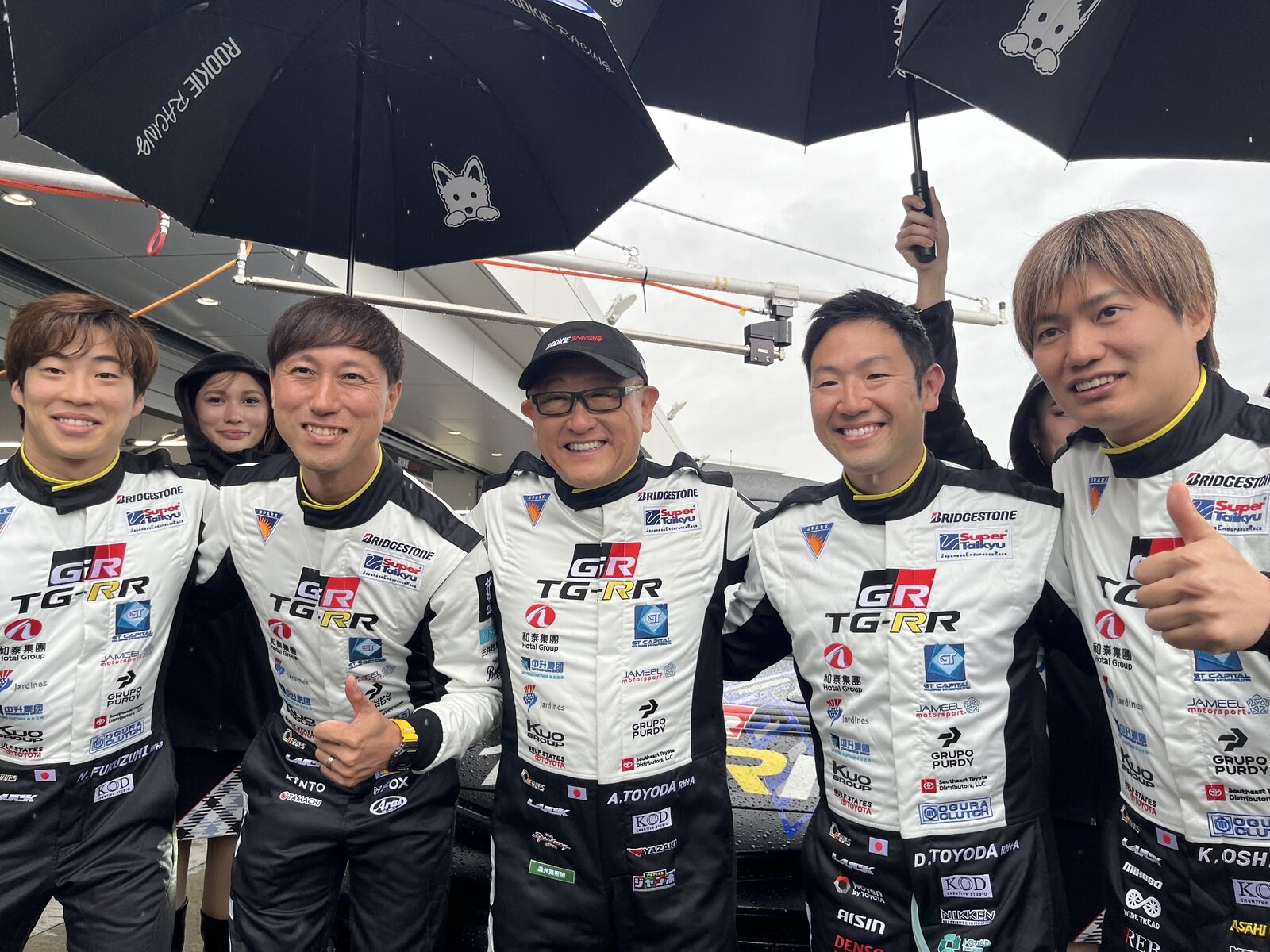
What advances will the hydrogen-engine GR Corolla showcase at next year’s Fuji 24 Hours?
We can’t wait to find out.