



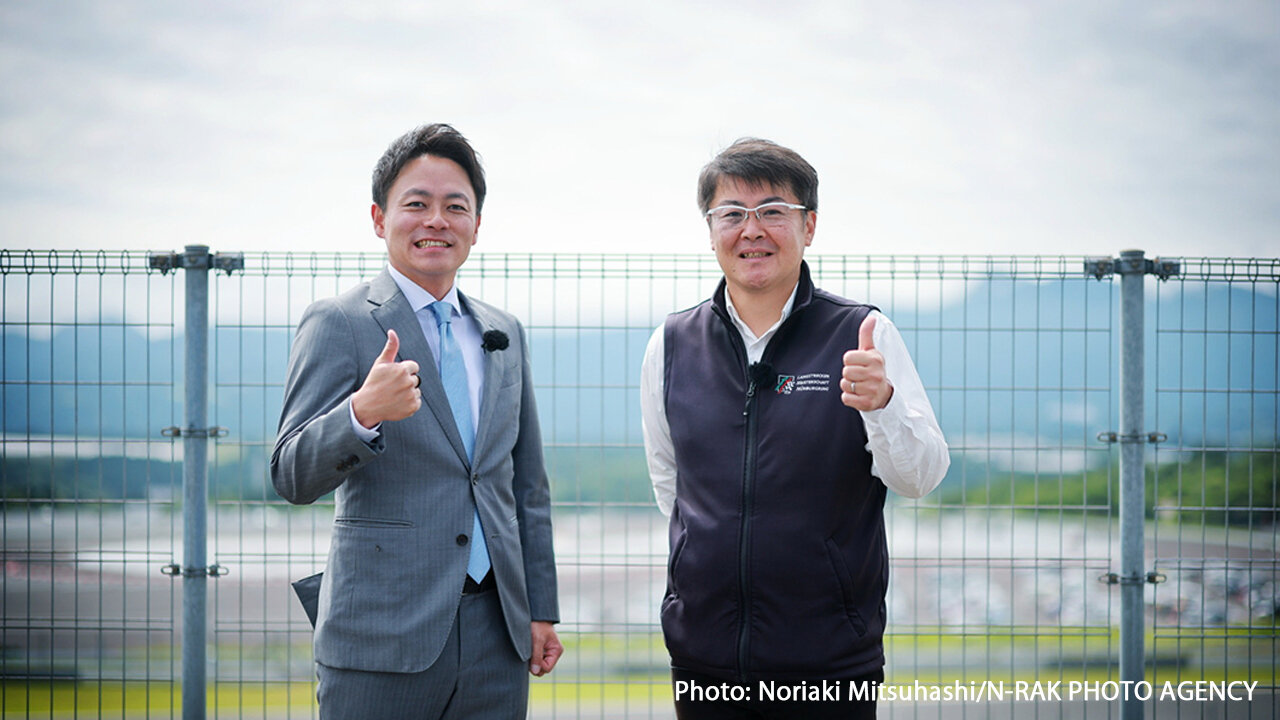
For the sixth straight year, Toyota's hydrogen-engine Corolla tackled the 24-hour endurance race at Fuji Speedway. As usual, we asked automotive analyst Shinya Yamamoto to offer his take on where things stand.
In 2026, the hydrogen-powered Corolla enters its sixth year of 24-hour endurance racing—a journey that has become the history of Toyota’s hydrogen engine challenge.
Automotive analyst Shinya Yamamoto has been following this challenge from the front lines since day one. Every year, Toyota Times catches up with Yamamoto for an interview, at the same time and place, and every year he offers another memorable insight, capturing the moment with words only he could choose. This annual check-in also marks its sixth year.
In the first year, Yamamoto described the engine’s impact as “a catalyst that unleashed our dreams.”
In year two, in light of the shift in public sentiment toward electric vehicles, Yamamoto emphasized that internal combustion engines are “our allies in achieving carbon neutrality.”
By the third year, Toyota had taken on the challenge of liquid hydrogen, and these efforts were increasingly being recognized as an option for pursuing carbon neutrality. Speaking about the growing number of partners across different industries working together in Super Taikyu, Yamamoto noted that “everyone can now speak openly.”
That year, the event was attended by Pierre Fillon, president of the Automobile Club de l'Ouest (ACO), which organizes the 24 Hours of Le Mans, hinting at a future in which hydrogen-powered cars compete in that legendary endurance race.
In the fourth year, as improvements to the pump and tank extended range by 50% and allowed the Corolla to compete head-to-head with the other cars, Yamamoto remarked that “the summit is in sight.”
Then at last year’s Fuji 24 Hours, seeing how engineers based their decisions solely on data rather than checking things with their own eyes prompted him to speak of “a return to the ‘ivory tower’ days.”
Now in the sixth year of hydrogen-powered racing, Shinya Yamamoto has decided to jump behind the wheel himself and enter the Fuji 24 Hours as a gentleman driver.
Before sharing the track with the hydrogen-engine Corolla, what words did he offer to describe the car’s progress?
As always, on the morning of the 24-hour race Kyonosuke Morita—once again wearing that very same suit—caught up with Yamamoto in his usual spot overlooking Fuji Speedway.
Racing like a regular car
Morita
We’re back again for our annual appraisal. Shinya Yamamoto, good morning.
Yamamoto
Good morning.
Thanks for having me back every year.
Morita
Do you know how many years we’ve done?
Yamamoto
Is this year five?
Morita
Ah, close. It’s our sixth year.
Getting hard to keep track.
Yamamoto
It’s been a long run.
Morita
Every year, we meet here at around 9 a.m. on race day to talk about the hydrogen engine, and this is now our sixth annual update. Last year, although the team completed the race, the fog and thunderstorms meant that the cars were effectively only out on the track for about 15 to 16 hours.
Because of that, we didn’t see much of an increase in the number of laps, but looking back on last year’s race, what did you think of the hydrogen engine?
Yamamoto
Last year, it kind of just became normal. Up to that point, the car had been running its own race, but last year it really began to compete. It feels like it can actually do battle with the rest of the field, so in that sense it’s now like a regular car.
Morita
In the beginning, last place was a given and simply finishing the race earned applause, but now the car is really taking on the higher classes and even passing others.
Yamamoto
Even the qualifying is watched with much excitement. The race itself is a real back-and-forth contest, and with refueling now pretty much on par with gasoline-powered rivals, the hydrogen Corolla is really just a regular car.
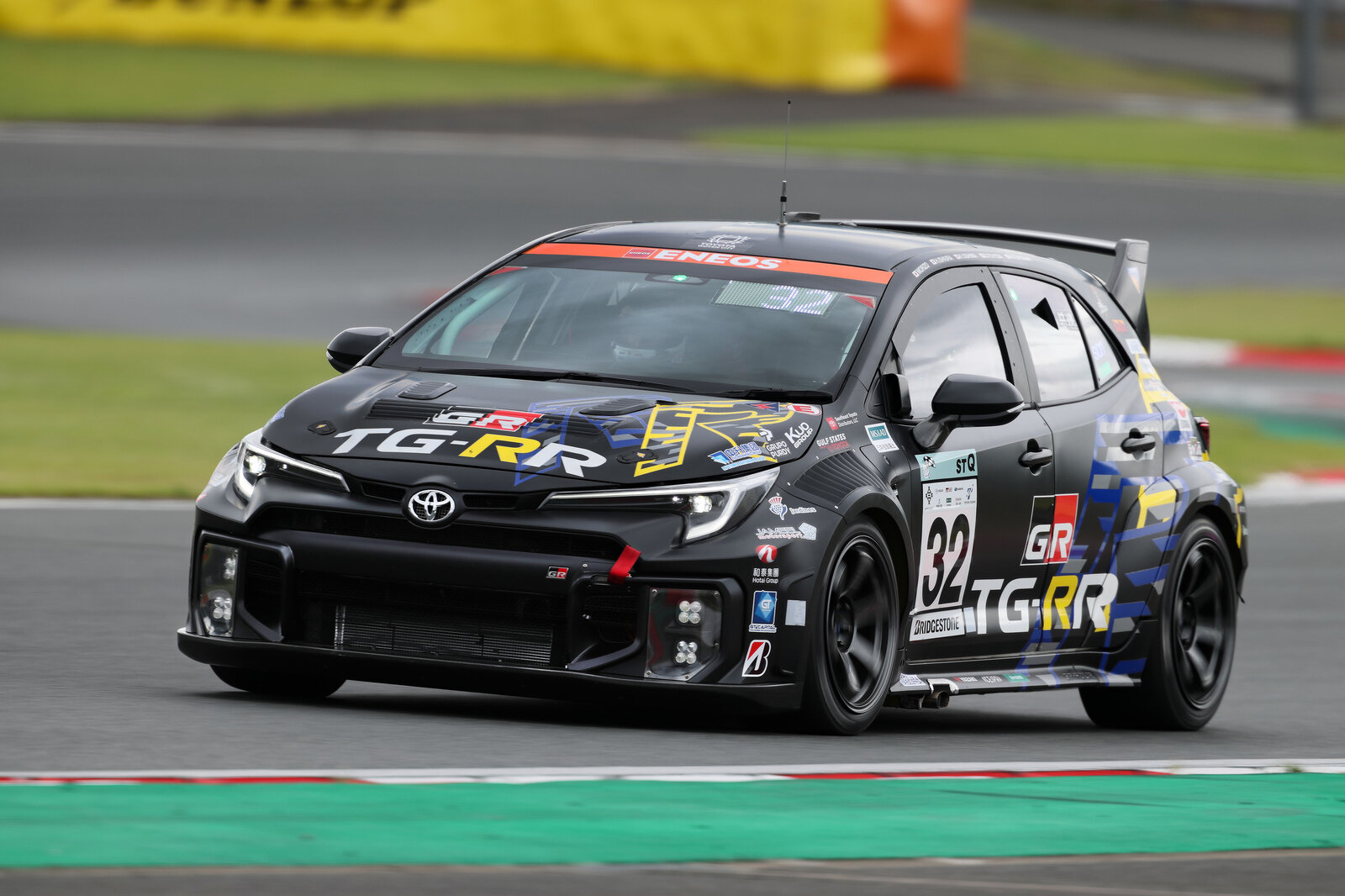
The ST-Q class, in which the #32 hydrogen Corolla competes, was set up so that manufacturers could enter their latest development vehicles in Super Taikyu races. Although ST-Q cars are not included in the rankings and cannot earn prizes, on the track they battle head-to-head with the other classes.
The shifting summit
Tracking the hydrogen Corolla’s development through Super Taikyu since 2021, Yamamoto and Morita have likened commercialization to reaching the summit of a mountain. Their conversation touched on the team’s current progress as it ventures further into the unknown.
Morita
I see. When I re-watched last year’s interview, you said something along the lines of, although the first half was behind us, it turned out “the summit wasn’t really the summit.” Considering that, how are things looking this year?
Yamamoto
The summit has gotten higher again.
Morita
It has risen?
Yamamoto
Well, another world-first technology has entered the mix. Previously, the pump was simply too big, which meant the car couldn’t carry much fuel. While looking for ways to solve this problem, the team hit on using superconductivity.
Superconductivity has been used in applications such as maglev trains, but in those cases, you need to deliberately create environments with extremely low temperatures.
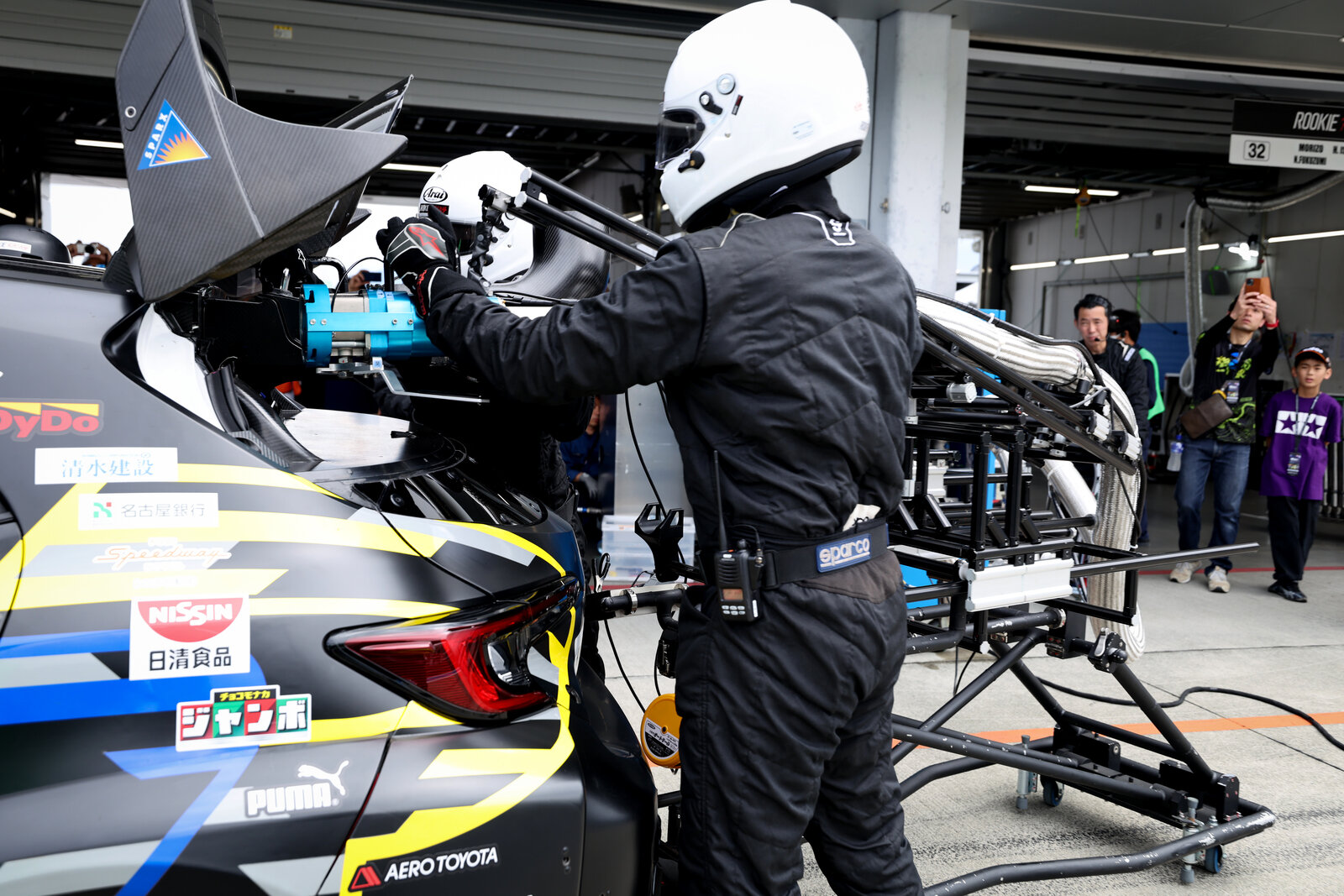
But with a hydrogen engine, the hydrogen in the fuel tank is already at an ultralow temperature, making it a natural fit. That idea was the spark, and so this year the team has taken on another incredibly difficult challenge that no one has ever attempted.
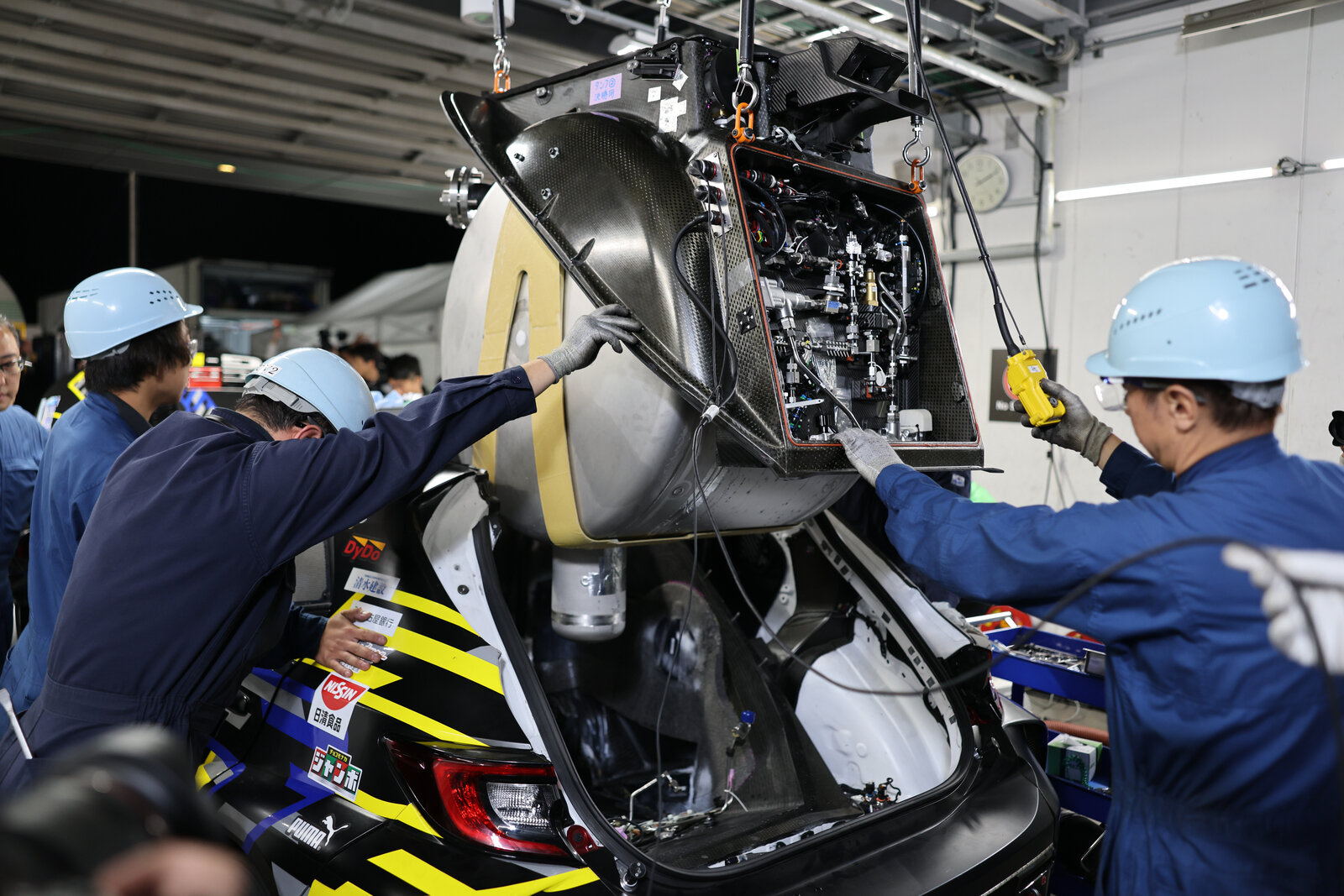
From this year, Toyota has incorporated superconducting technology into the fuel pump, utilizing the ultralow temperature of the liquid hydrogen (-253°C) to eliminate electrical resistance.
With this technology, the fuel pump motor can be housed inside the tank, generating the same output with smaller components and a lower current. The result is a dramatic increase in tank capacity, from 150 liters at the start of development to 300.
Morita
And from what I’ve heard, superconducting technologies are meant to be used in quieter places with little vibration.
Yamamoto
Quiet, with no vibration, or at least suppressed as much as possible.
Morita
Yet here we have an environment where you’re driving around 200 km/h, slamming on the brakes, and subjecting the car to massive G-forces. That’s a huge challenge.
Yamamoto
Which is why I say, since they’re taking on another task no one has ever attempted, the summit has once again disappeared from view. But somehow, you can still make out its outline.
Morita
But with the smaller tank delivering a maximum of 30 laps here at Fuji Speedway, weren’t we quite far from commercialization?
Yamamoto
That’s the way media questions usually lean, isn’t it: “What about driving range?” or “What about the rear seats?” But if this technology is fully established, it might actually become a reality.
Nürburgring, the new starting line
In 2025, Super Taikyu’s 24-hour race was held on May 31, followed by the Nürburgring 24 Hours in Germany on June 21. This year, the order was reversed, with the Nürburgring race taking place on May 16 and Super Taikyu on June 6.
Morita
Last year, this race came before the Nürburgring, which the car then successfully completed, but this year the order is reversed. The team has returned to Fuji for this 24-hour race on the back of a disappointing run at the Nürburgring.
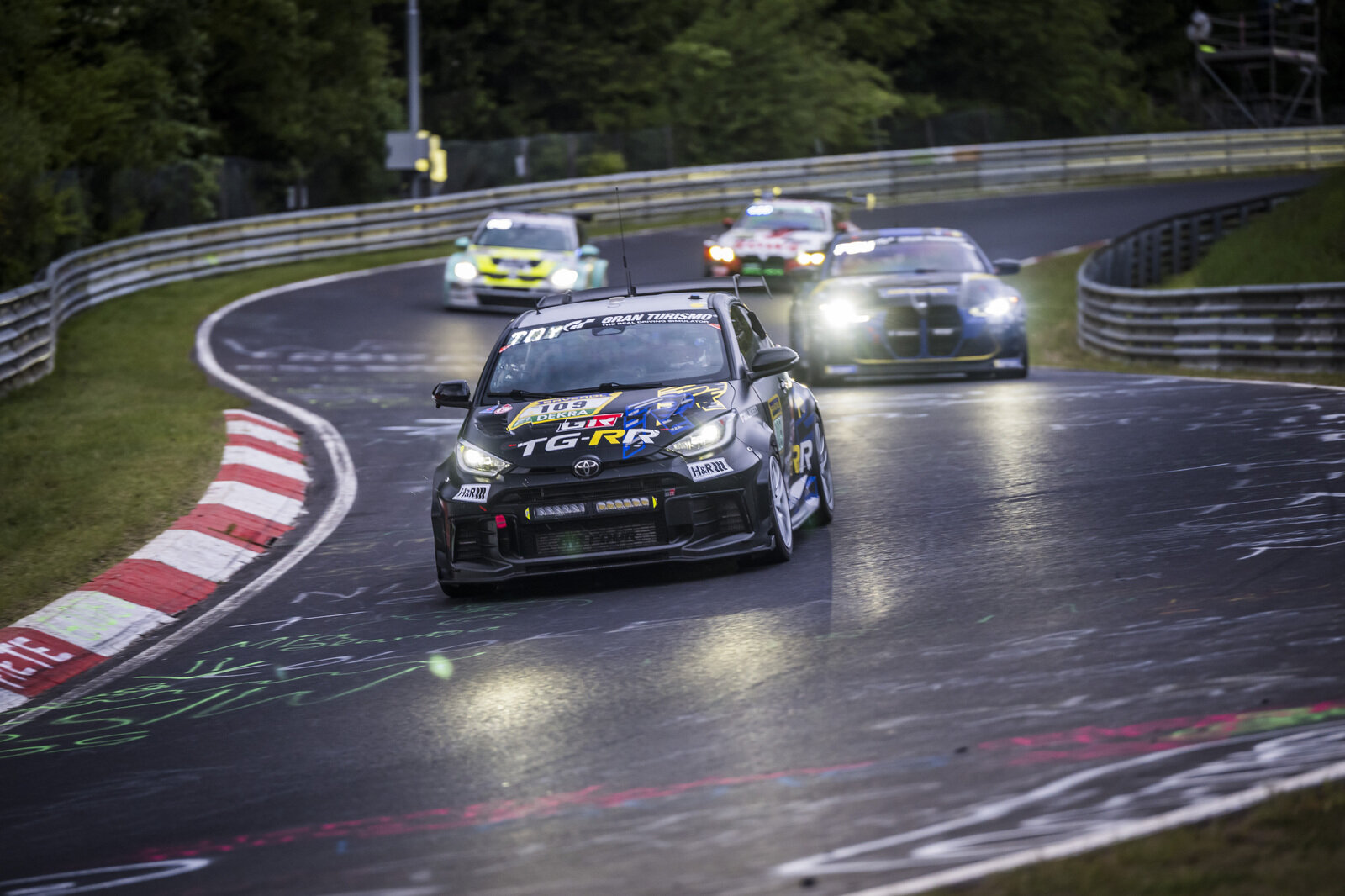
It seems the disappointment of not finishing the Nürburgring is fueling all kinds of efforts.
Yamamoto
That’s because Nürburgring is no longer the final exam. You could even say it has become the new starting line. The idea is to keep moving between Super Taikyu and the Nürburgring. As we have heard, making ever-better cars is a never-ending process. I feel like we can see this working in real time through the cycle of Super Taikyu and Nürburgring.
Morita
Oh really? When we were here last year you said the hydrogen engine probably hadn’t even taken the entrance exam, and if the Nürburgring is the final test I thought it was a one-way process.
Yamamoto
You go there and that’s the end?
Morita
But that’s not right.
Yamamoto
They’ve come back now to see if the things that worked at the Nürburgring will translate to Japan, and then what goes well here will be tested again over there—that’s the cycle, the virtuous cycle.
Morita
A virtuous cycle.
Yamamoto
Yes.
Morita
Previously we spoke about the Nürburgring and Super Taikyu as two sides working in tandem, but you’re suggesting it may be more of a cycle?
Yamamoto
Yes.
Morita
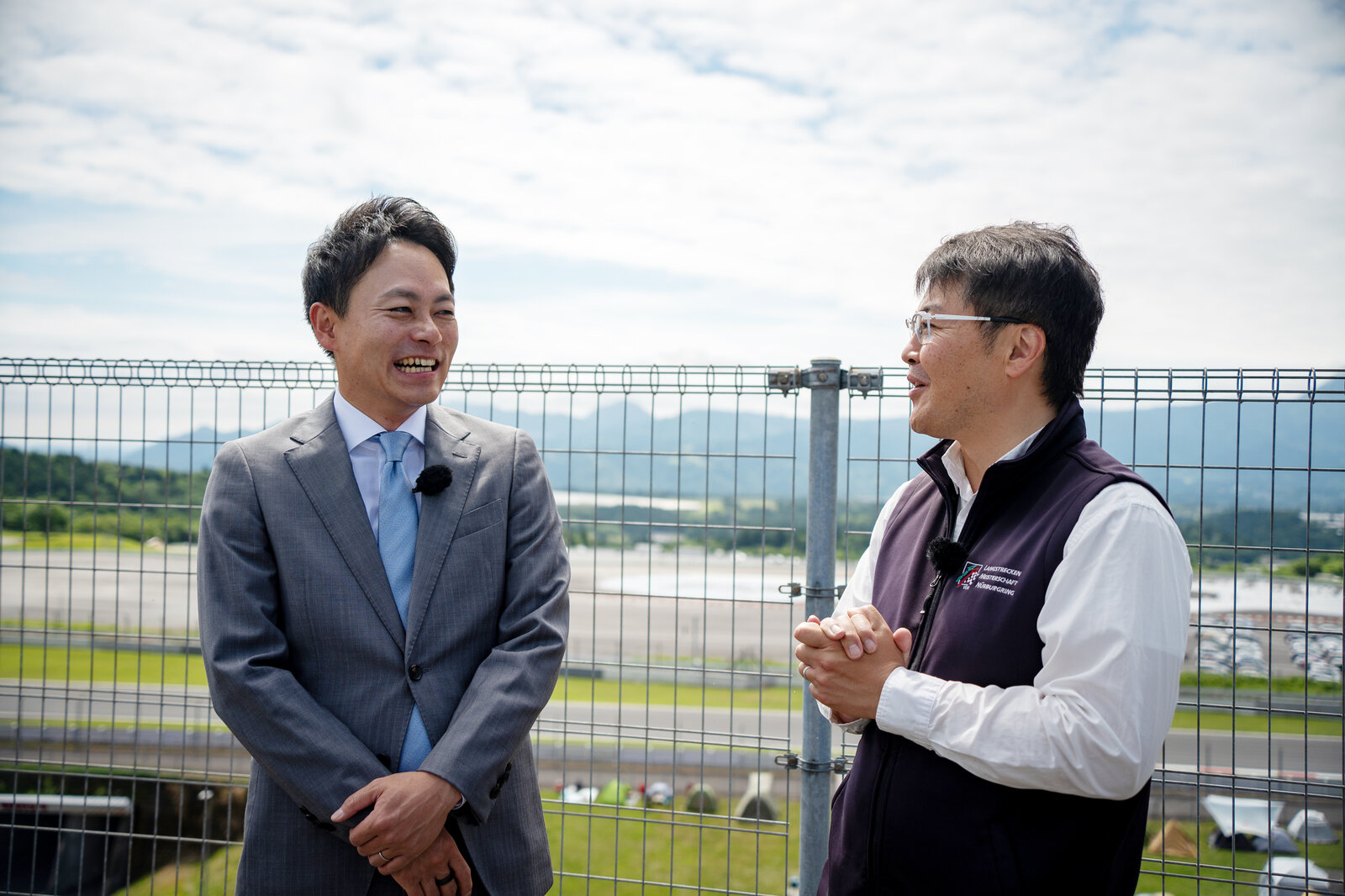
Taking that perspective, you’re dressed the same as always, and your glasses—have they changed?
Yamamoto
I’ve made some minor updates.
Morita
Just minor updates.
Yamamoto
Yes.
Morita
But I’ve also heard about another change this year, one that’s not exactly minor, related to this Super Taikyu race.
From reporter to racer
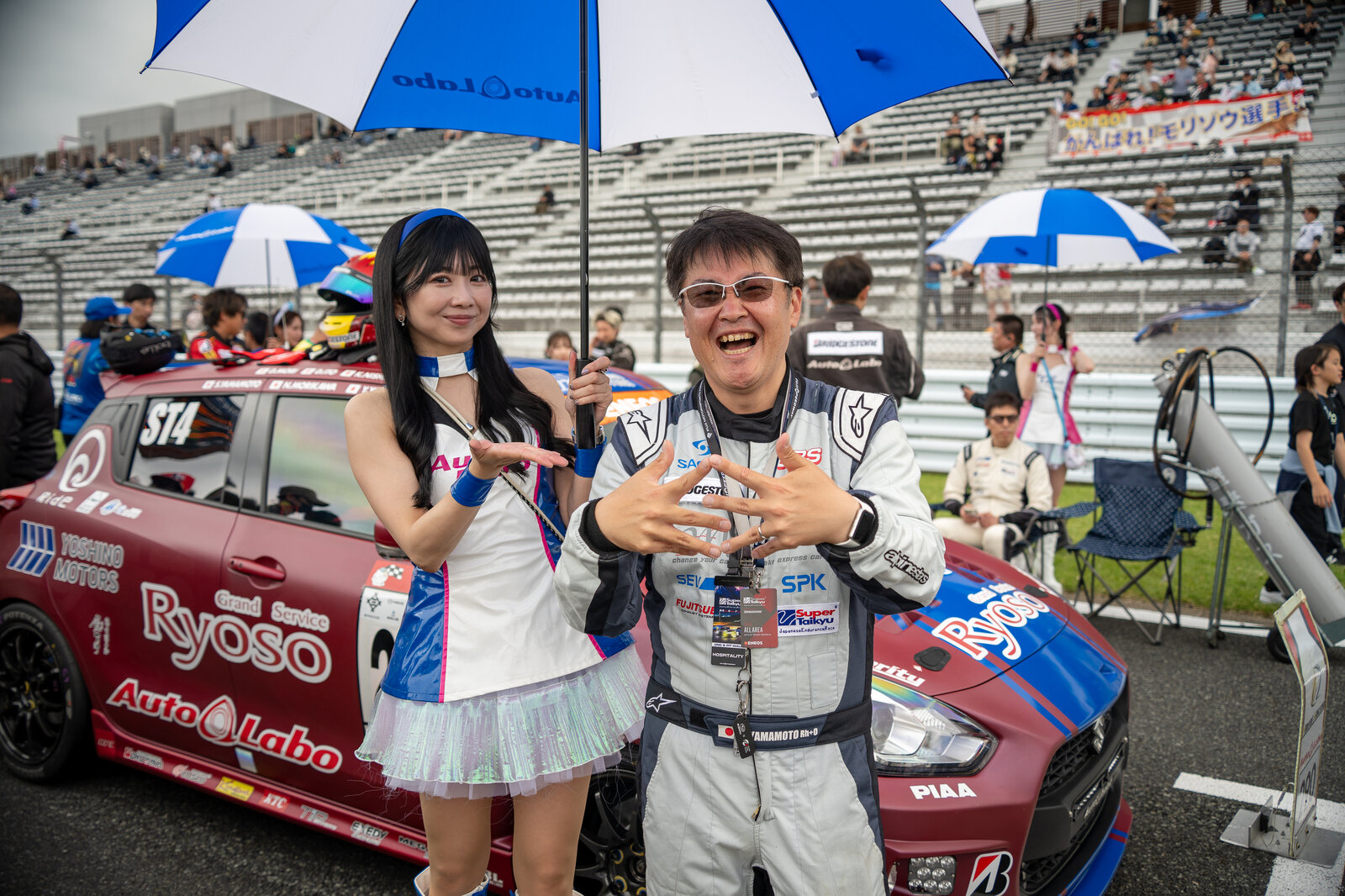
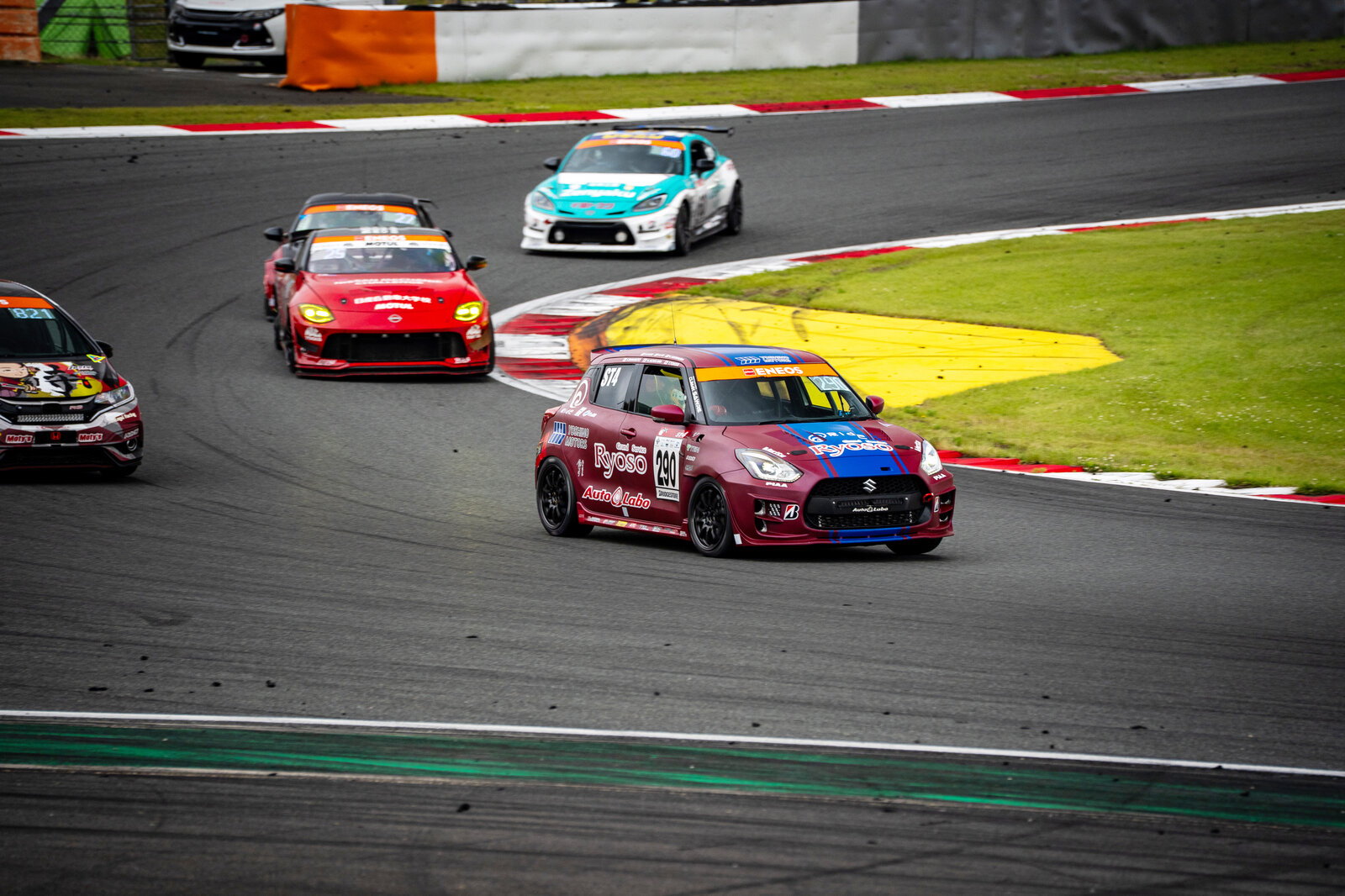
For the 2026 Super Taikyu season, Shinya Yamamoto is taking part as a gentleman driver, behind the wheel of the ST-4 class #290 Suzuki Swift Sport.
Yamamoto
I’ll also be competing as a driver.
Morita
We’ve talked a lot about the role that Super Taikyu serves, as a testing ground for example, and this time you’re taking part on the driving side as well?
Yamamoto
That’s right. Until now, I’ve been reporting on what I have seen and heard, but without experiencing it, I had no way of knowing what it’s really like.
This time, participating as a driver, I will be racing alongside the hydrogen GR Corolla, which should give me a better idea of the reality on the ground. I want to get up close and personal to show the importance of firsthand experience.
Morita
What will you be driving?
Yamamoto
A Suzuki Swift Sport.
Morita
The Swift Sport can probably go neck and neck with the liquid hydrogen Corolla.
Yamamoto
I happened to check the qualifying times yesterday, and there was only a half-second difference between myself and Morizo.
Morita
Who was faster?
Yamamoto
He beat me (laughs).
Morita
He got you! No one can keep up with Morizo.
Yamamoto
He did beat me. But now I can clearly see that this is the reality when you’re driving at more or less the same pace.
There are 65 cars out on the track, and of those 65, some are going to do the passing while others get passed. You're right in that tricky middle ground.
For Morizo to have found his place in that mix and to be putting down the times that he is, I think he’s really incredible.
Morita
That’s true.
Yamamoto
That’s not just someone going for a joy ride.
Morita
(Laughs)
Yamamoto
I got my first taste of it during practice.
Morita
So like you said, now it’s just like any other race car.
Yamamoto
Exactly.
The first-ever lap target
Until now, although the team had set lap targets for each stint on the track between pit stops, the hydrogen Corolla had never been given a specific number of laps to aim for over the 24-hour race.
Morita
When I asked driver Morizo, he told me, “This year, for the first time, we’ve set a concrete goal,” and he gave me a number: 500 laps.
What does setting a target mean at this point?
Yamamoto
Setting a target means giving the team a challenge. Naturally, that might end in disappointment.
Morita
That’s true.
Yamamoto
Having said that, until now the media has always been hung up on the issue of range.
“How far can it drive?” Now that the tank has been upgraded, and the fuel has evolved, how much further can the car go—how much more, how much more? With this target, I feel like they’re trying to answer that question with concrete facts.
Morita
In that sense, you might say the development team has also adjusted its communication approach.
Given all that, how do you view this undertaking, the liquid hydrogen engine, in 2026?
Yamamoto
Well, I really don’t know what to think. On the one hand the fuel tank has been replaced, but in terms of speed, the car is basically on par with ST2, 3, or 4. Just going by qualifying, it doesn’t look like all that much is happening, right?
Morita
You’re right. In a way, the fact that it has become so normal is a little scary.
Yamamoto
Even this place, I feel like everyone has sort of gotten used to seeing all this by now, but out of sight the team is attempting something that has never been done before. That’s what I want people to see.
Morita
To get a look at what is happening out of sight.
Yamamoto
Right.
Morita
Watch very closely.
Yamamoto
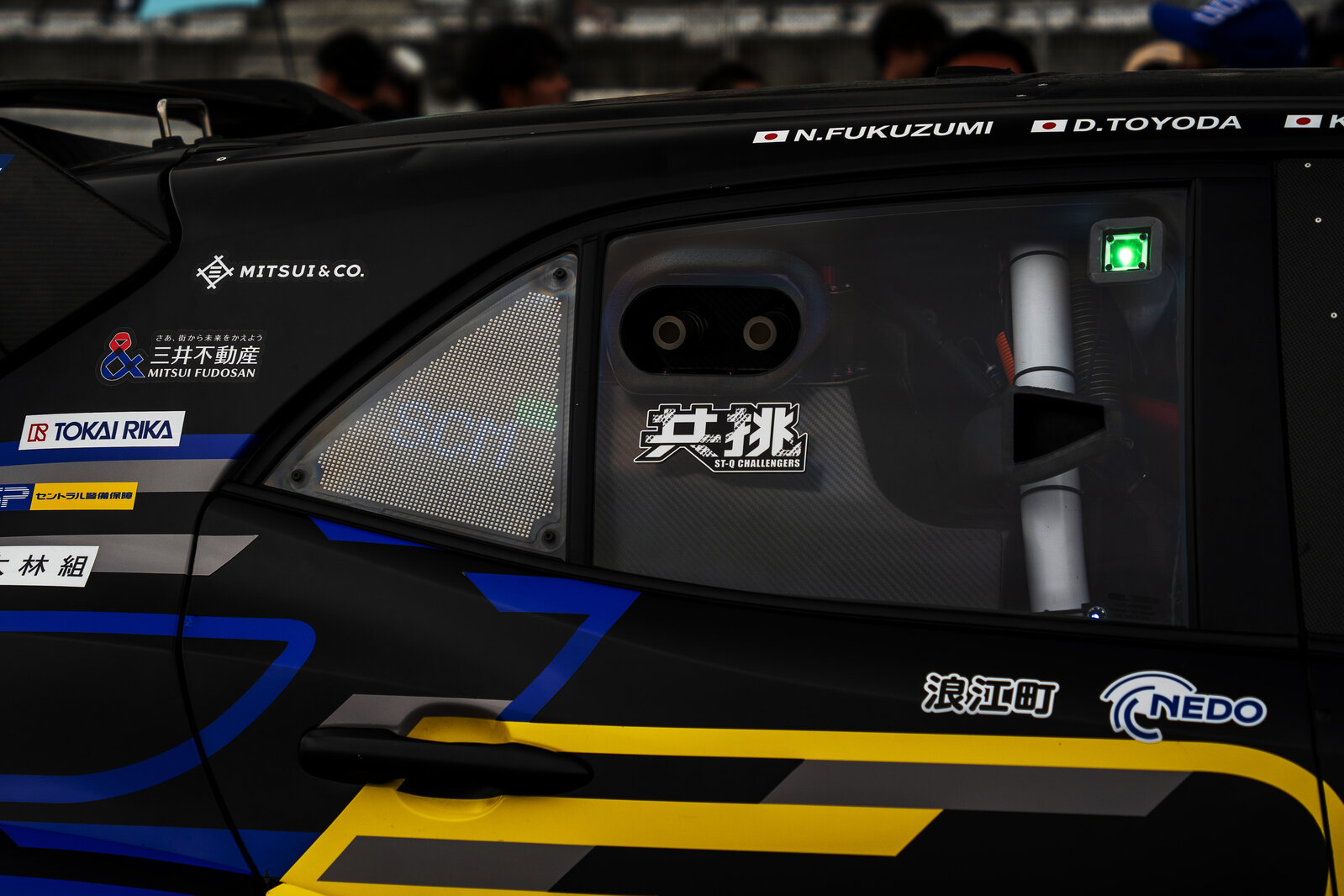
Watch closely. For this race, there’s the indicator light.
The fact that everyone trackside will be watching to make sure it stays lit, I think that will give a strong sense of being in this fight together.
Morita
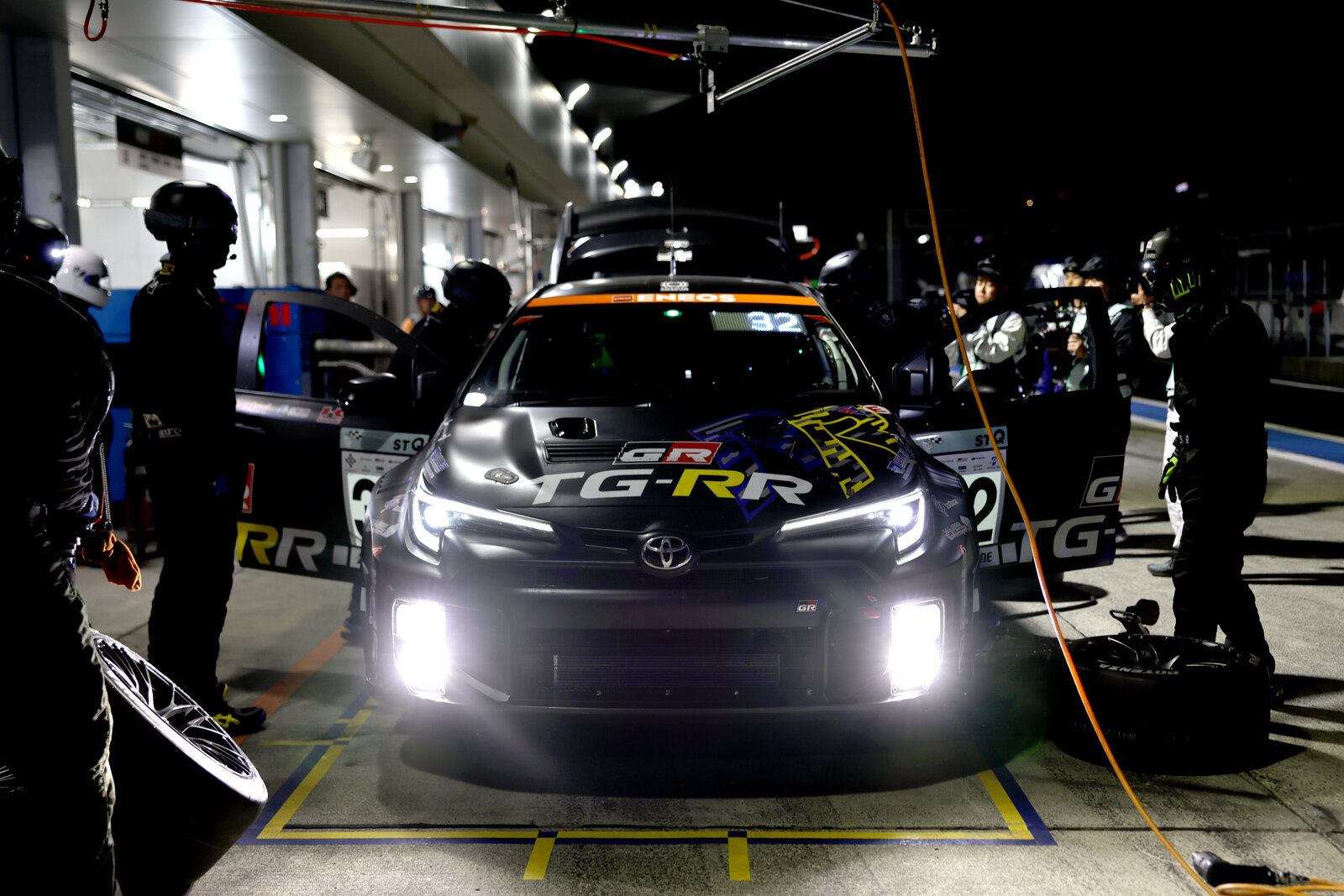
A light has been installed on the car to indicate when the superconducting motor is running, which makes the new technology a bit more visible.
Yamamoto
When that light is on, you know the car’s running well, and if a warning flashes, you can see that something’s wrong.
Morita
With that, finally, how are you spending the 24 hours this year?
Yamamoto
I won’t be sleeping. I mean, I’m going to be multitasking.
Morita
That’s true.
Yamamoto
I’ll be covering the race while driving as well. But you know, with 70-year-old Morizo out there doing what he does, I can’t complain at 50.
Morita
You can do it. We’ll be cheering you on.
Yamamoto
Thank you.
Morita
You might be out there at the same time as Morizo.
Yamamoto
Perhaps.
Morita
That’s exciting.
Yamamoto
That would put me as close to the action as possible, and I can provide all kinds of feedback.
Morita
Reporting while racing side by side—that’s how far we’ve come. Things are always evolving.
The ongoing evolution of Toyota’s hydrogen engine. Although electrical system issues caused the liquid hydrogen-fueled Corolla to fall short of its 500-lap target, the team managed to complete 483, its highest-ever total.
As for Morizo, he went into the 24-hour race aiming for 70 laps to match his age, and ended up doing an extra run that put his total at 75.
And so the liquid hydrogen Corolla challenge continues.