



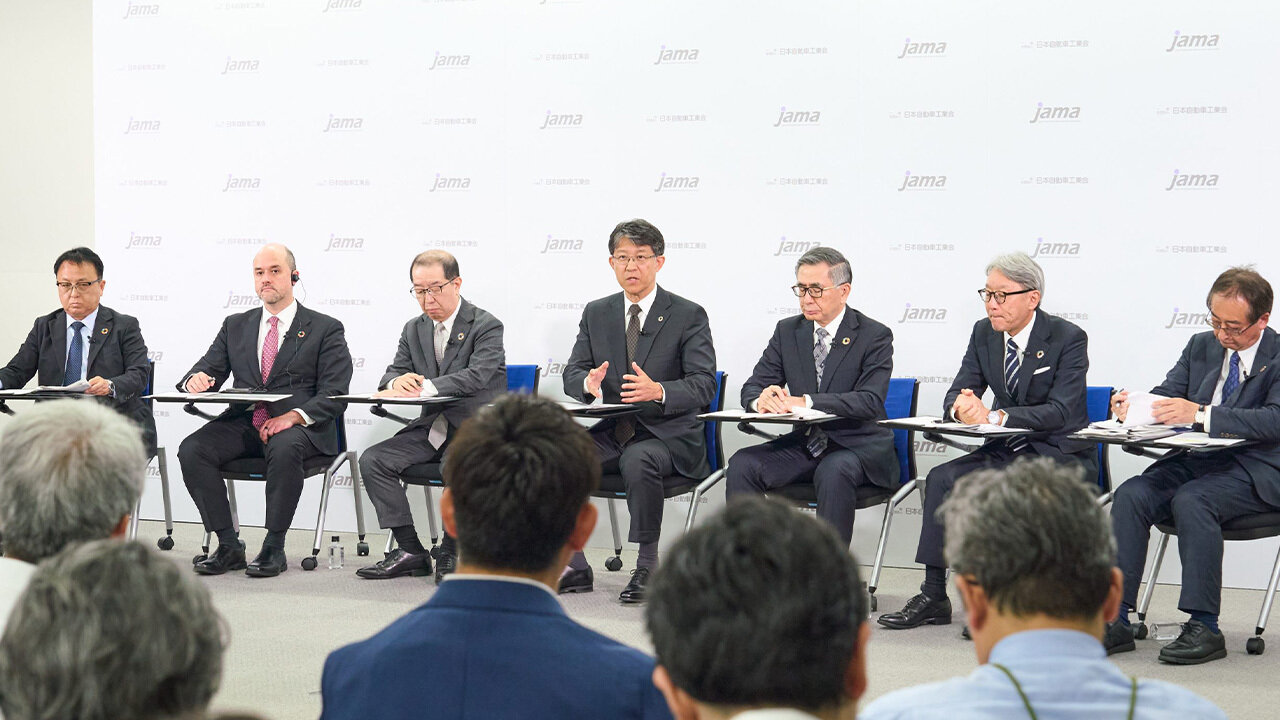
Seeking to fuel the country's economic growth and boost the appeal of a key national industry, the Japan Automobile Manufacturers Association has set out its "New Seven Priority Challenges." Many of these initiatives are now shifting into the implementation phase.
Sustaining Japan’s economy
The second priority challenge addressed in the press conference was enhancing competitiveness across the entire supply chain. JAMA Logistics Subcommittee Chair Takehito Nagano (Honda) and Vice-Chair Teruo Yoshida (Toyota) provided an update on efforts to establish standardized platforms for shared logistics.
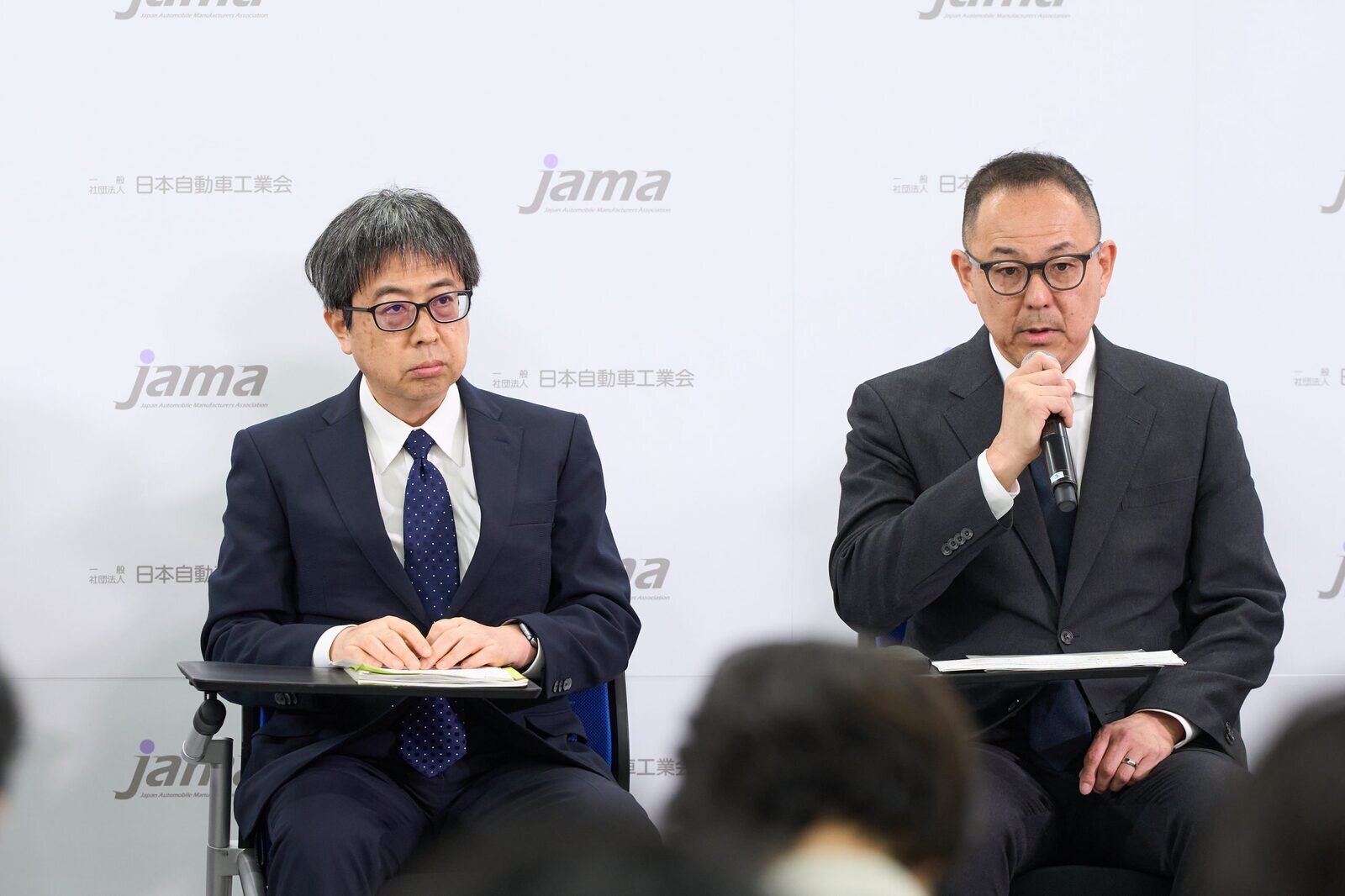
Vice-Chair Yoshida stressed the need to build logistics systems that can underpin economic growth despite Japan’s limited natural resources, frequent natural disasters, and shrinking workforce.
He addressed the topic of shared logistics for finished vehicles, which was raised at the association’s board meeting in March. The issue at present is that trucks delivering Company A’s vehicles to dealerships and warehouses run their return trips empty, resulting in wasted transportation capacity.
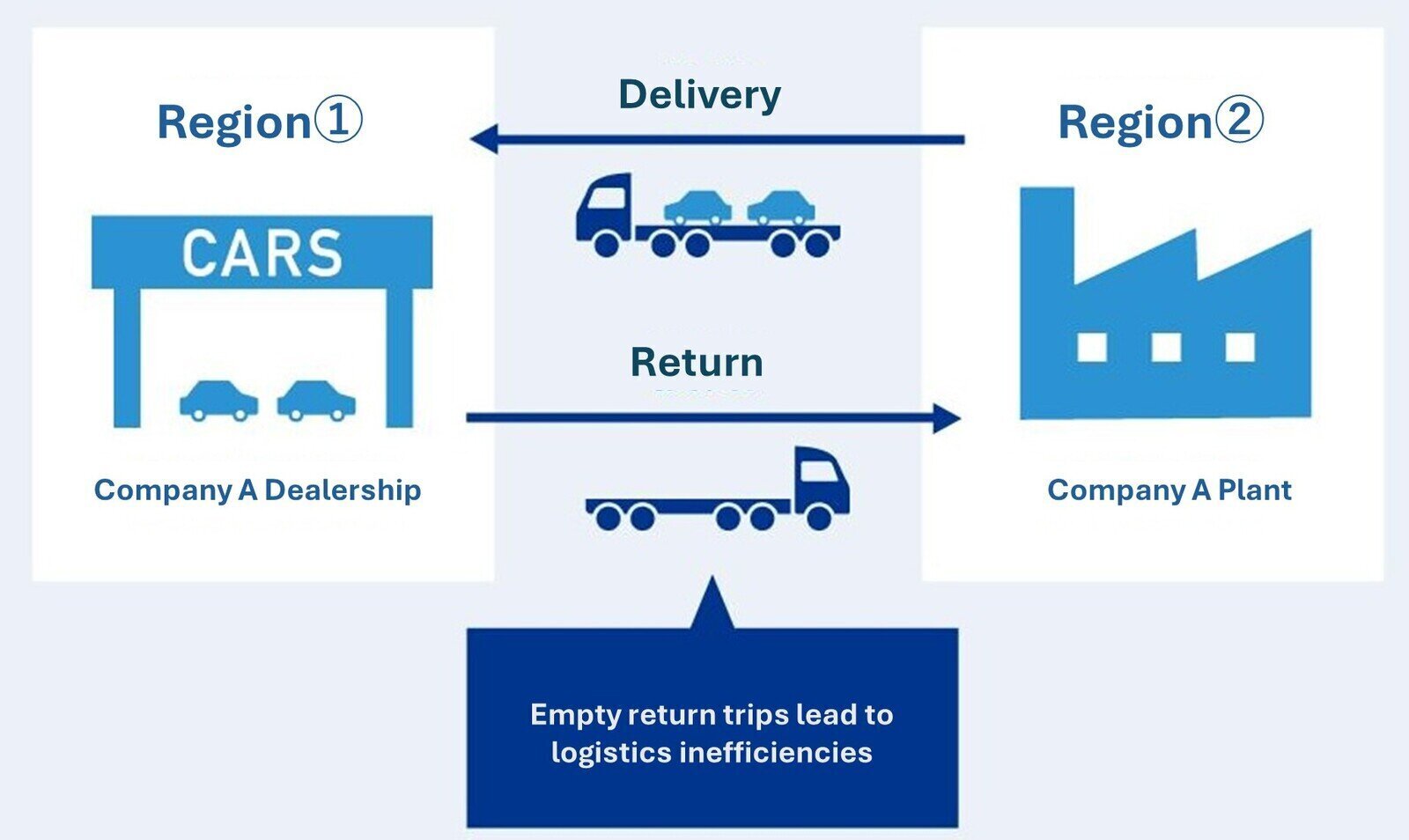
Shared logistics would allow these trucks to be loaded with Company B’s cars for the return trip, thereby making full use of both journeys.
To establish a system of shared logistics, the most pressing task is coordinating data, including the locations of each company’s plants and dealerships, as well as truck delivery routes, and real-time positions.
As Subcommittee Vice-Chair Yoshida explained, “Through finished vehicle logistics, we want to showcase how empty reverse journeys can be utilized by other manufacturers.” His team is currently conducting simulations using logistics data from various automakers, and expects to finalize the scope and process of collaboration sometime this summer.
Responding to questions from reporters, Vice Chairman Toshihiro Mibe (Honda) made the following comments:
Vice Chairman Mibe
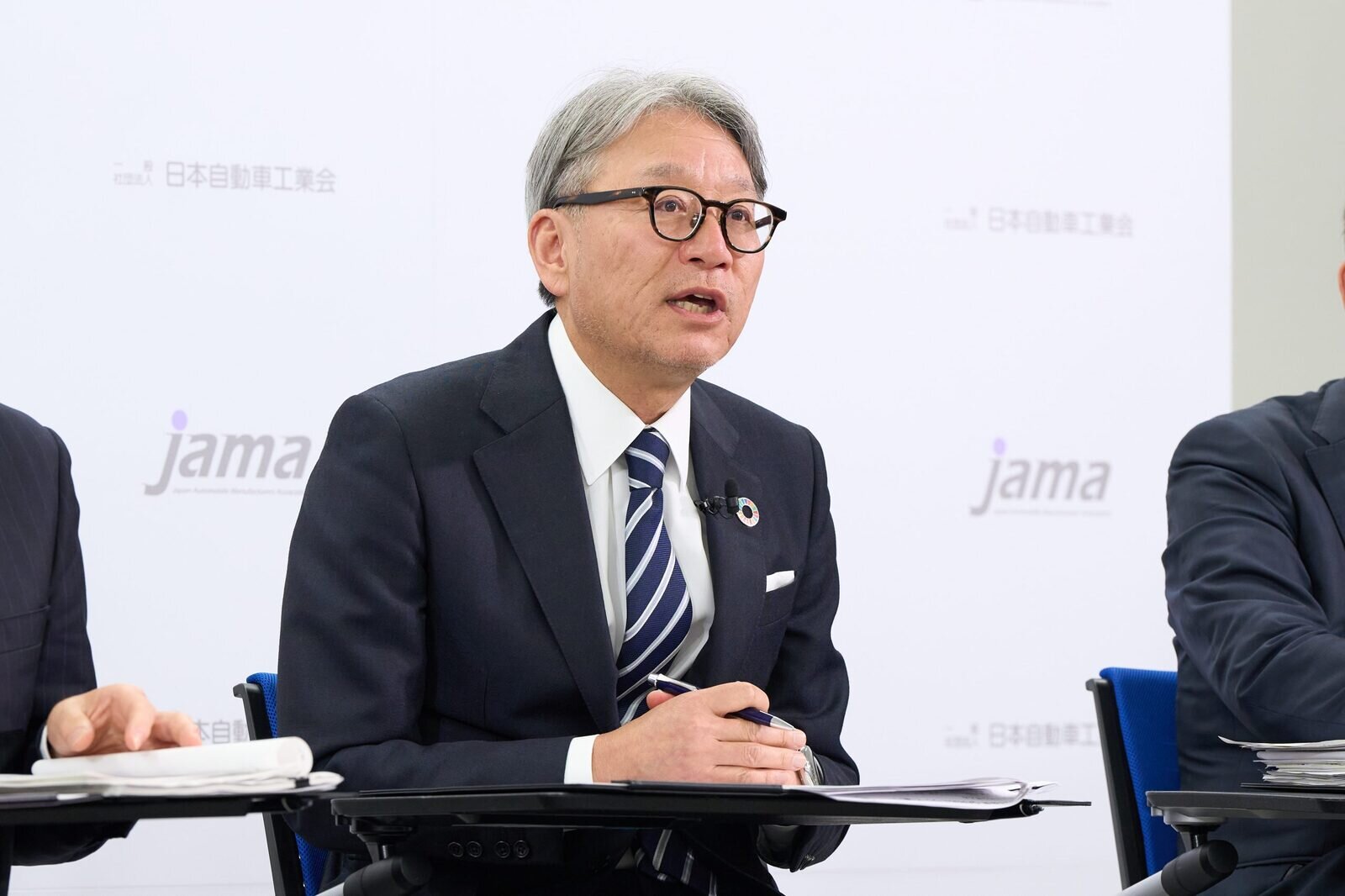
At the genba level, even the methods of securing vehicles to truck trailers vary from company to company. To begin with, the immediate task is to standardize such aspects to ensure that the same trucks can carry vehicles from any manufacturer.
As explained earlier, simulations based on past data will show us the extent of the improvement in finished vehicle logistics efficiency. Given the time required to gather data and develop the system, we hope to have it ready by the end of 2028.
As for the standardization of parts and materials—JAMA’s other initiative aimed at improving supply chain competitiveness—Vice Chairman Mibe noted that “discussions are underway.”
Alongside finished cars, JAMA has also begun trialing shared logistics for replacement parts, with Isuzu’s return trips being used to transport components for Toyota.
A more attractive industry for workers
The third initiative, aimed at strengthening human resource foundations, seeks to make the auto industry more appealing to workers by revising its calendar.
Here, the “calendar” in question is the standard operating schedule adopted by the manufacturing sector.
In exchange for working on public holidays, employees receive additional days off around major holiday periods such as Japan’s Golden Week or New Year’s.
Traditionally, plants would shut down during these extended breaks, which could then be used to install large-scale equipment or conduct line upgrades.
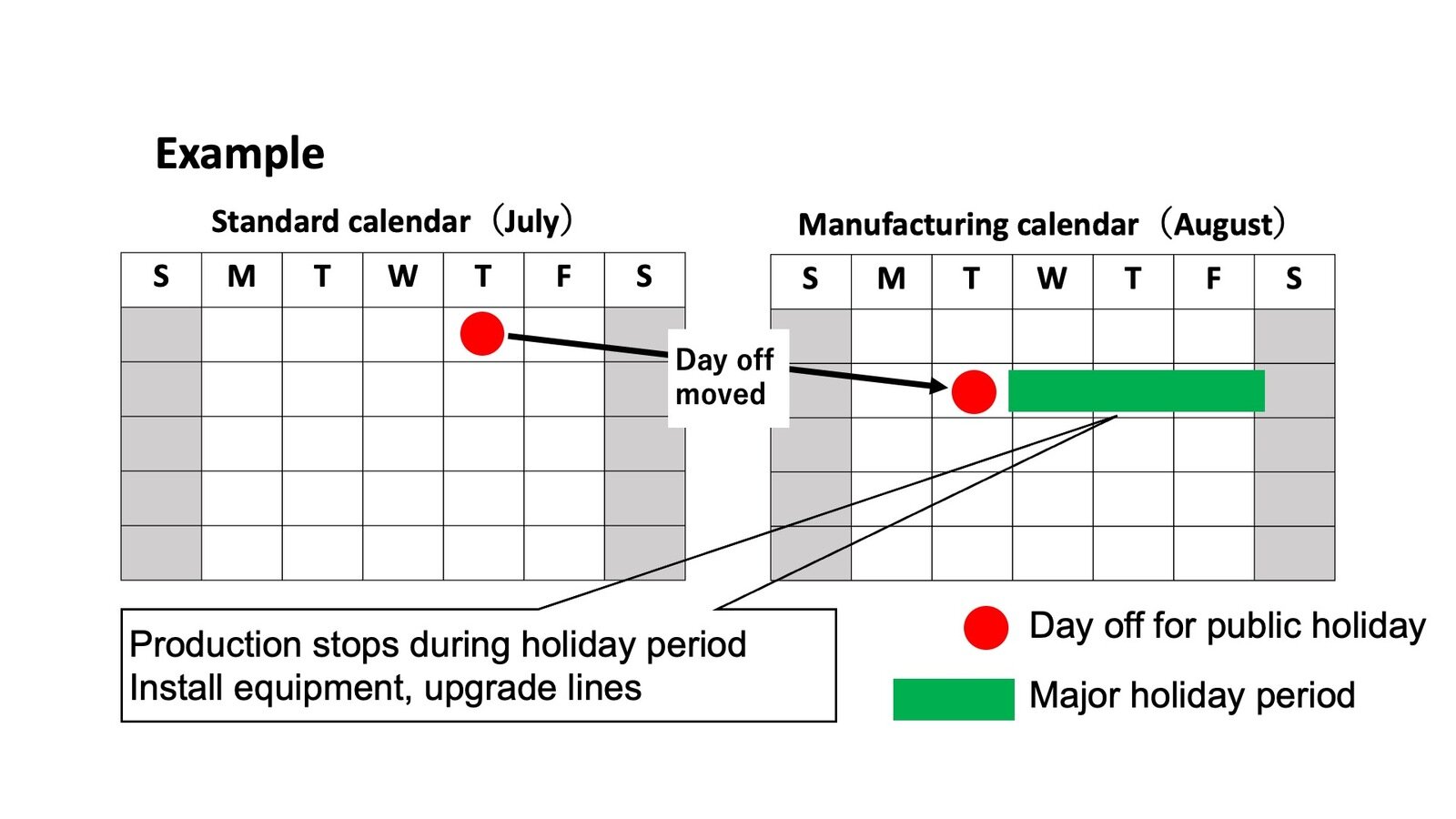
Such work arrangements make it difficult to balance family commitments and, in a world of increasingly diverse values and lifestyles, have become a factor driving people away from manufacturing jobs.
At the press conference, JAMA announced plans to revise the current calendar. From fiscal 2027, weekdays around Golden Week in May and during other major holiday periods will be treated as workdays. Meanwhile, some Happy Mondays* will be turned into days off.
*A system which moved certain Japanese national holidays to Mondays, creating three-day weekends. These holidays include Coming of Age Day (January), Marine Day (July), Respect for the Aged Day (September), and Sports Day (October).

While these measures are intended to boost motivation for working in the auto industry, Human Resources Subcommittee Chair Hiroyuki Sukegawa (Honda) insists that they must be pursued alongside improvements in productivity.
Subcommittee Chair Sukegawa (Honda)
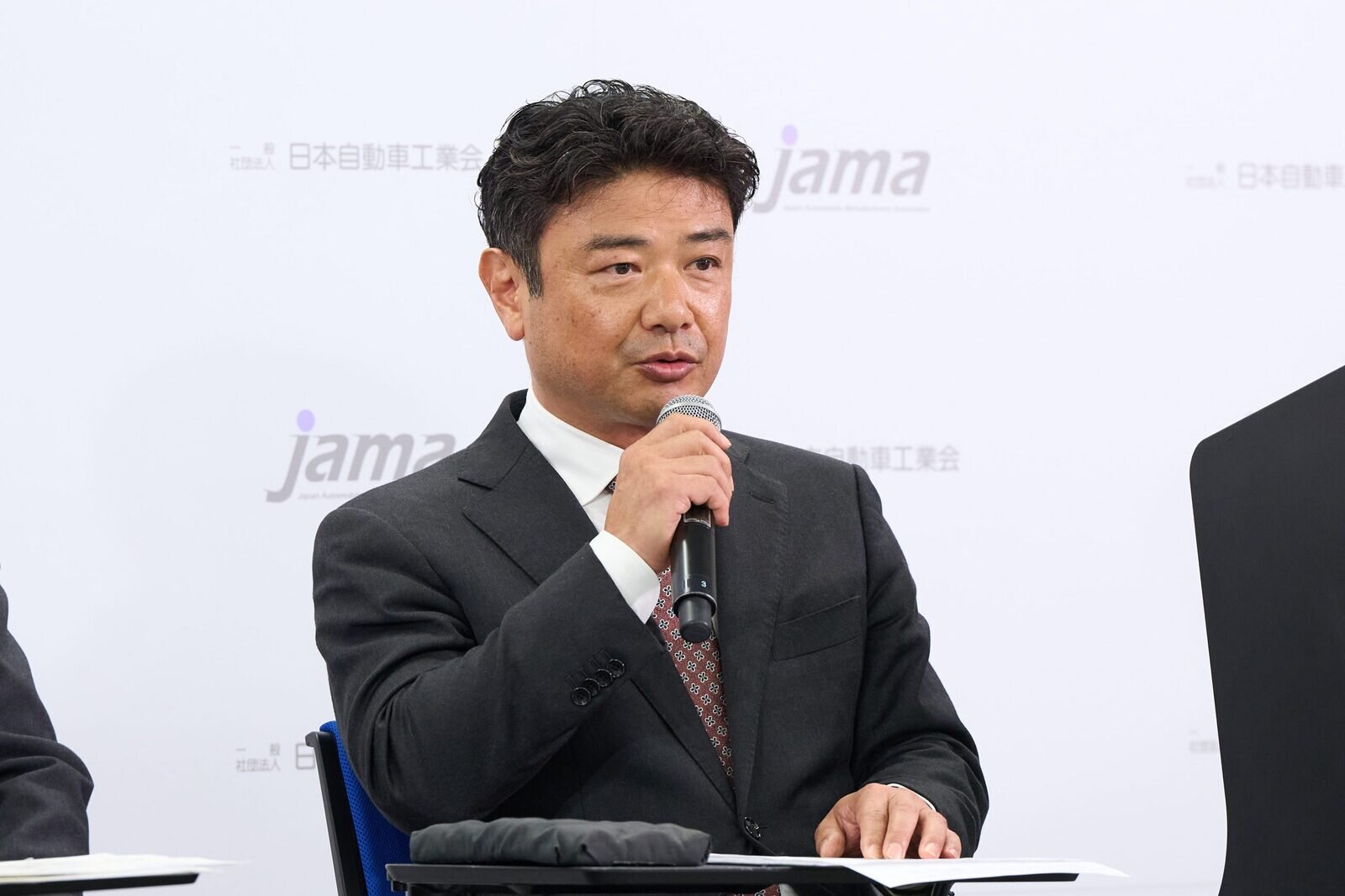
As one of Japan’s core industries, we must make the automotive sector more attractive, and keep evolving to ensure we remain the industry of choice into the future. In addition to addressing the industry’s fundamental issues through initiatives related to the New Seven Priority Challenges, I believe we need to promote workstyle reforms across the sector alongside improvements in productivity.
In pursing these reforms, as an industry we want to spur a shift toward more diverse workstyles, in line with changes among the workforce and the increasingly diverse values being embraced by society.
As a first step, for fiscal 2027 we will work to more evenly spread the construction, equipment maintenance, and changeover tasks that have until now been concentrated around the Golden Week holidays. We hope these efforts will give construction and equipment-related partners greater stability in their project planning, streamline personnel allocation, and help us retain and develop talent over the medium to long term.
Subcommittee Chair Sukegawa also noted that JAMA is already in discussions with the Confederation of Japan Automobile Workers’ Unions (JAW) about the impact of calendar revisions on suppliers and related companies, and plans to engage in close dialogue with stakeholder organizations to establish a shared understanding.
One reporter noted that the total number of days off did not seem to have increased, and asked whether JAMA foresaw such an increase in the coming years.
Vice Chairman Toshihiro Suzuki (Suzuki) gave the following response:
Vice Chairman Suzuki
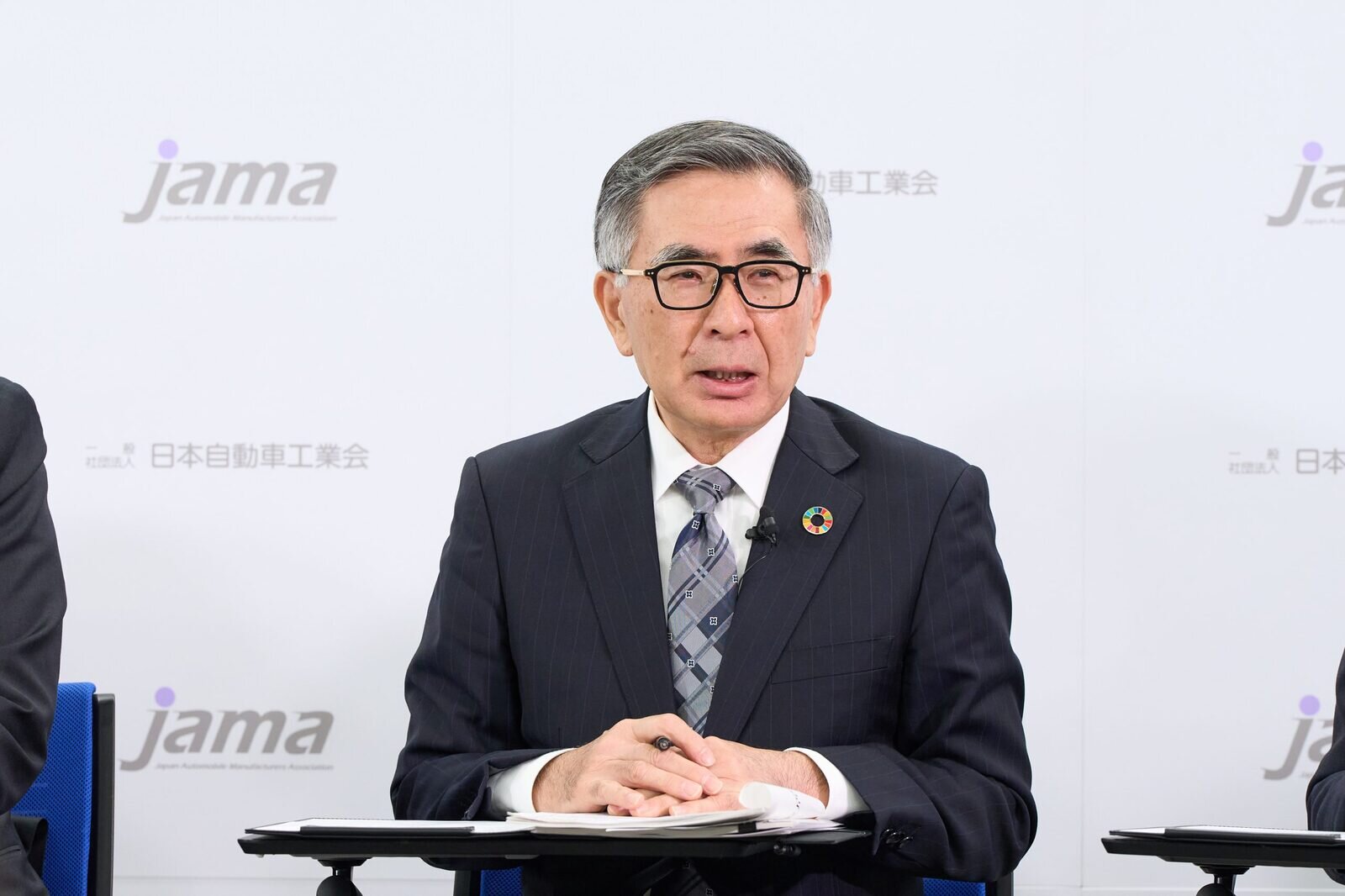
The number of days off will not increase in fiscal 2027. Further discussions will be necessary to explore the possibility of future increases.
Although some companies increased their holidays following the spring labor negotiations, we have also heard from employees that, as a result, they feel more pressure to raise productivity. Such factors have to be taken into account as each company tackles this issue.
To consider how we might increase the number of days off, it is important that we engage in thorough dialogue with employees and the labor unions. Separate from setting concrete figures for future increases, we need to continue moving forward with revisions to the calendar itself.
A focus on action and implementation
During the latter half of the session, Chairman Sato reiterated JAMA’s approach to tackling the New Seven Priority Challenges.
Chairman Sato
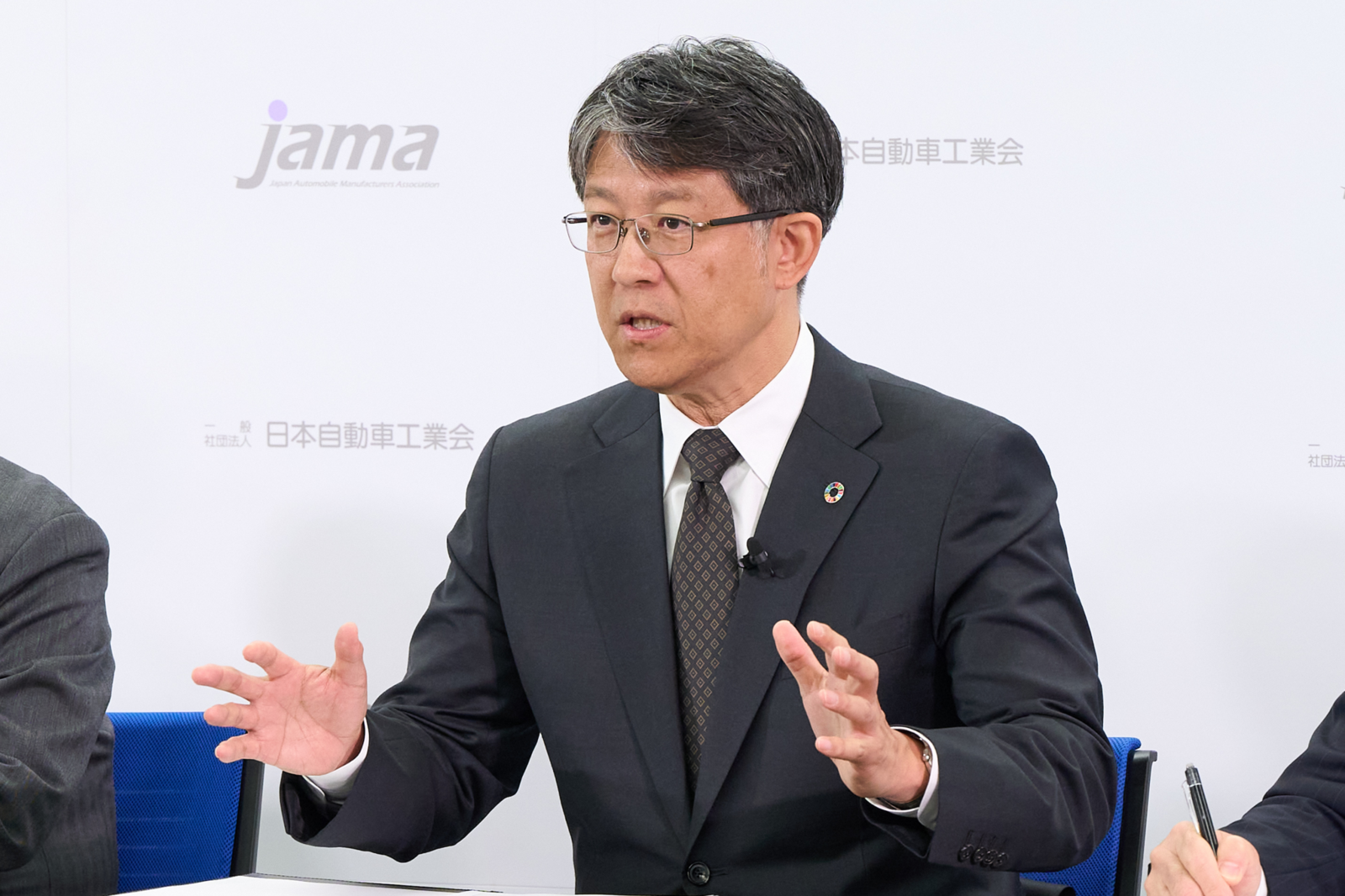
The automotive industry is facing an increasingly challenging environment, not least due to the situation in the Middle East. More than ever before, we must pursue initiatives with a broader perspective, including maintaining stable supply chains, developing solutions to meet diversifying energy needs, and establishing pathways for effective resource utilization.
As an association, we want to establish clear areas of cooperation that enable individual companies to further enhance their international competitiveness and productivity. Rather than getting lost in discussion, our efforts are structured as a series of projects focused on taking action, starting with the areas that are ready for concrete implementation.
Are we confusing means with objectives? Are we settling for less than our ambitious goals? These are the questions we need to keep asking ourselves as we move forward. We must translate our ideas into concrete action without losing sight of our broader vision for Japanese mobility.
Japan Mobility Show Bizweek 2026
At the press conference, JAMA also provided an overview of this year’s Japan Mobility Show Bizweek, scheduled for October.
Each year, the Japan Mobility Show alternates between a future mobility showcase for the general public and a gathering for companies seeking collaborative business opportunities. This year will mark the return of Bizweek, following the first iteration in 2024.
Japan Mobility Show Bizweek 2026 will be held at Makuhari Messe (Chiba Prefecture) from October 13 to 16, with the theme “Your move moves the world.” In collaboration with startups, the event will serve as a platform for discussing ways to tackle the New Seven Priority Challenges.
Through collaboration and concrete action, the New Seven Priority Challenges have given rise to various initiatives aimed at making Japan’s automotive industry more competitive on the global stage.