



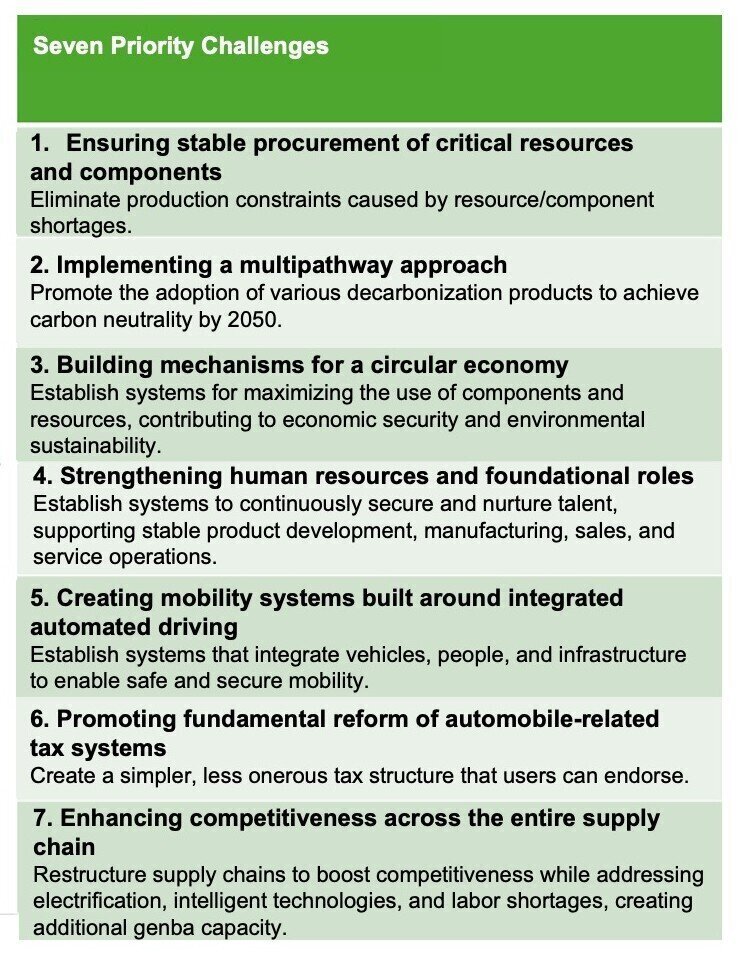
Seeking to fuel the country's economic growth and boost the appeal of a key national industry, the Japan Automobile Manufacturers Association has set out its "New Seven Priority Challenges." Many of these initiatives are now shifting into the implementation phase.
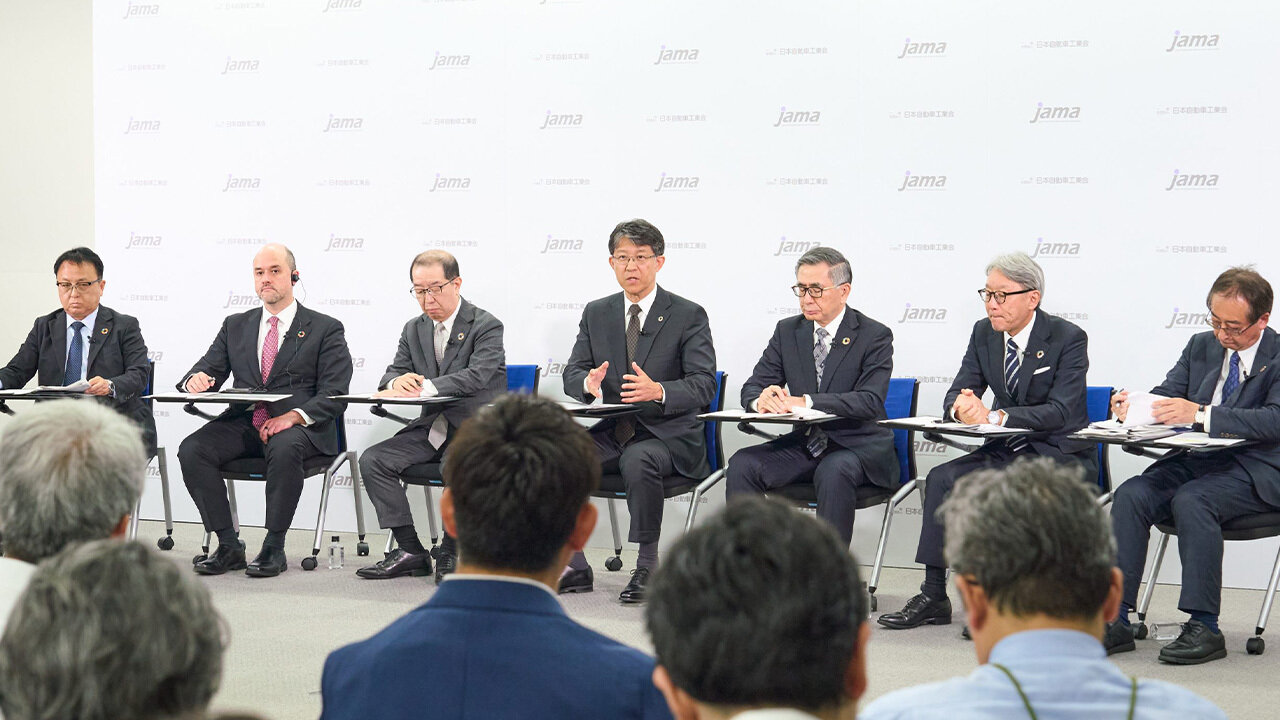
On May 21, the Japan Automobile Manufacturers Association (JAMA) held a scheduled press conference to provide an update on its New Seven Priority Challenges. Afterward, the chairman and vice chairmen responded to questions from reporters.
In this article, we look at the progress reported in three areas: 2.implementing a multi-pathway approach (hydrogen), 7.enhancing competitiveness across the entire supply chain (shared logistics), and 4.strengthening human resource foundations (changes to the operating calendar*).
*The working schedule typically adopted by the manufacturing sector.
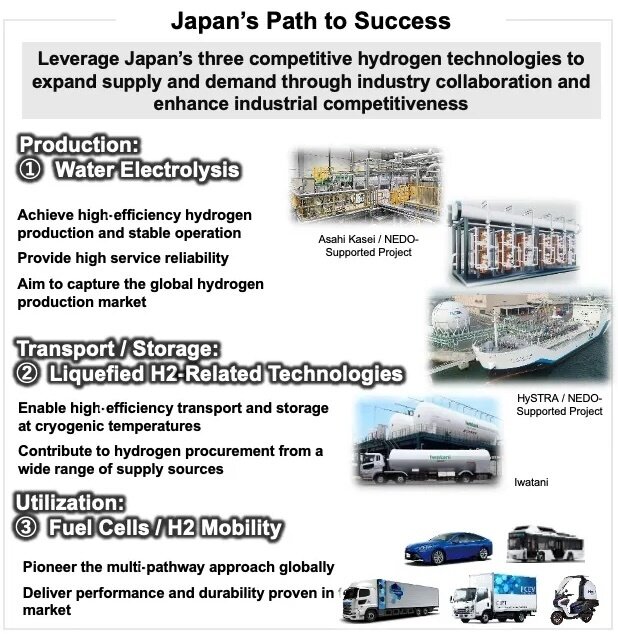
Japan’s hydrogen path to success
First, as part of implementing a multi-pathway approach, JAMA is driving the deployment of hydrogen trucks for long-haul transport.
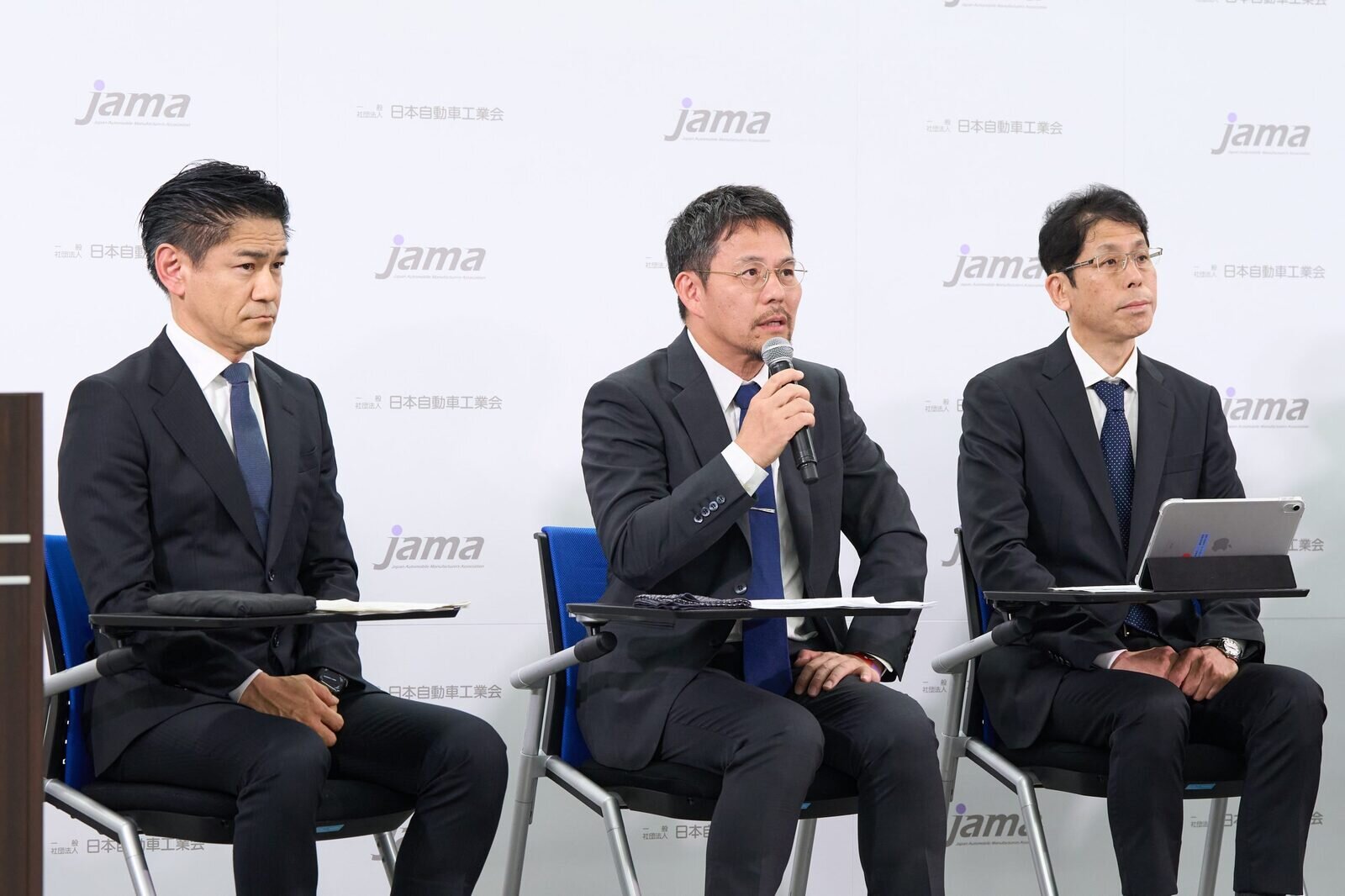
These efforts are being led by the association’s Hydrogen Adoption Task Force. An overview was provided by task force members Takanori Kimata (Toyota), Hironobu Ando (Mitsubishi Fuso), and Koichi Ohata (Hino).
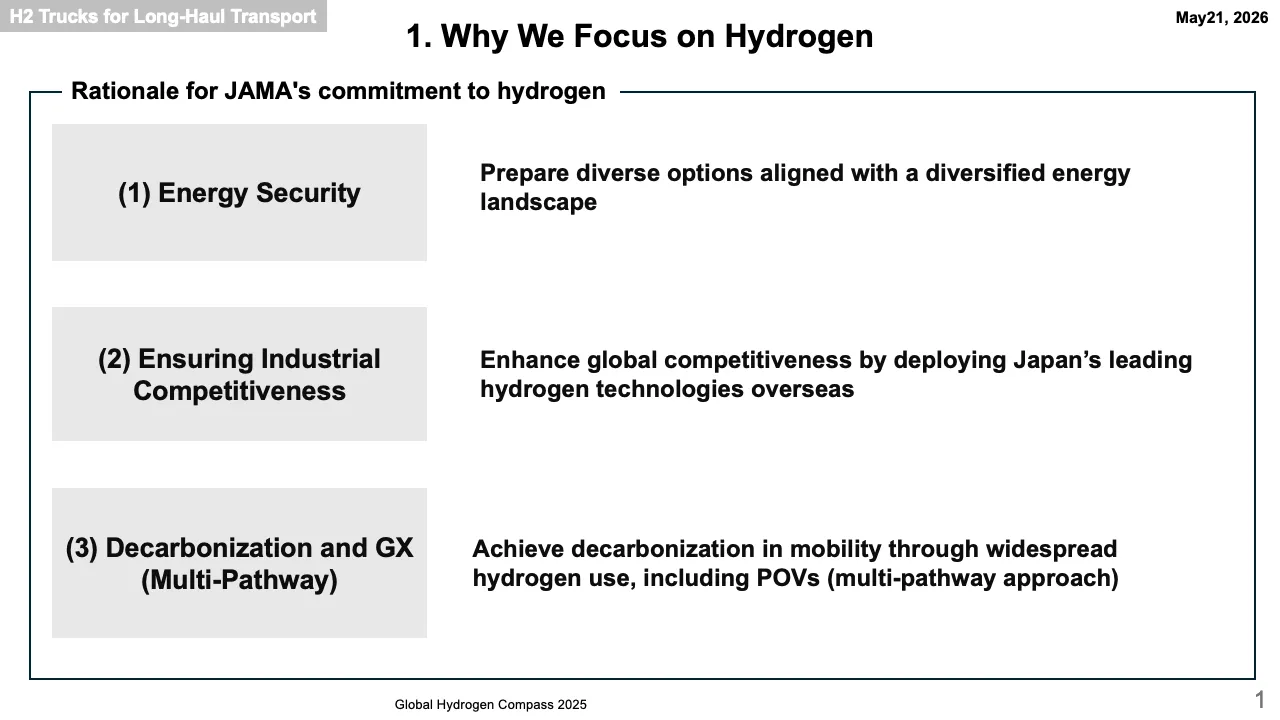
Kimata outlined the rationale for JAMA’s commitment to hydrogen, citing 1) Energy security, 2) Ensuring industrial competitiveness, and 3) Decarbonization and GX (multi-pathway).
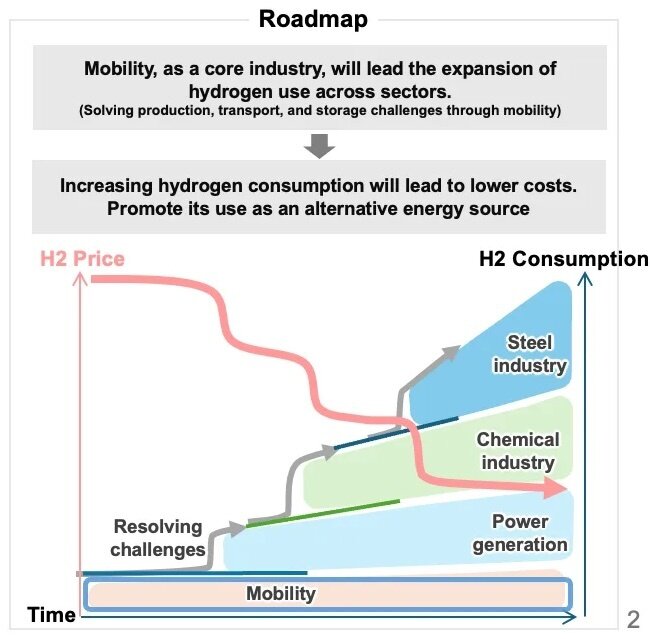
He also emphasized that widespread adoption of hydrogen will strengthen industrial competitiveness and help pave Japan’s path to success, presenting a roadmap toward this reality.
Kimata
The roadmap for realizing this path to success begins with expanding hydrogen consumption, with the mobility sector taking the lead to address challenges in production, transportation/storage, and utilization.
Increased consumption will drive down the cost of hydrogen, allowing it to serve as an energy alternative in other industries.
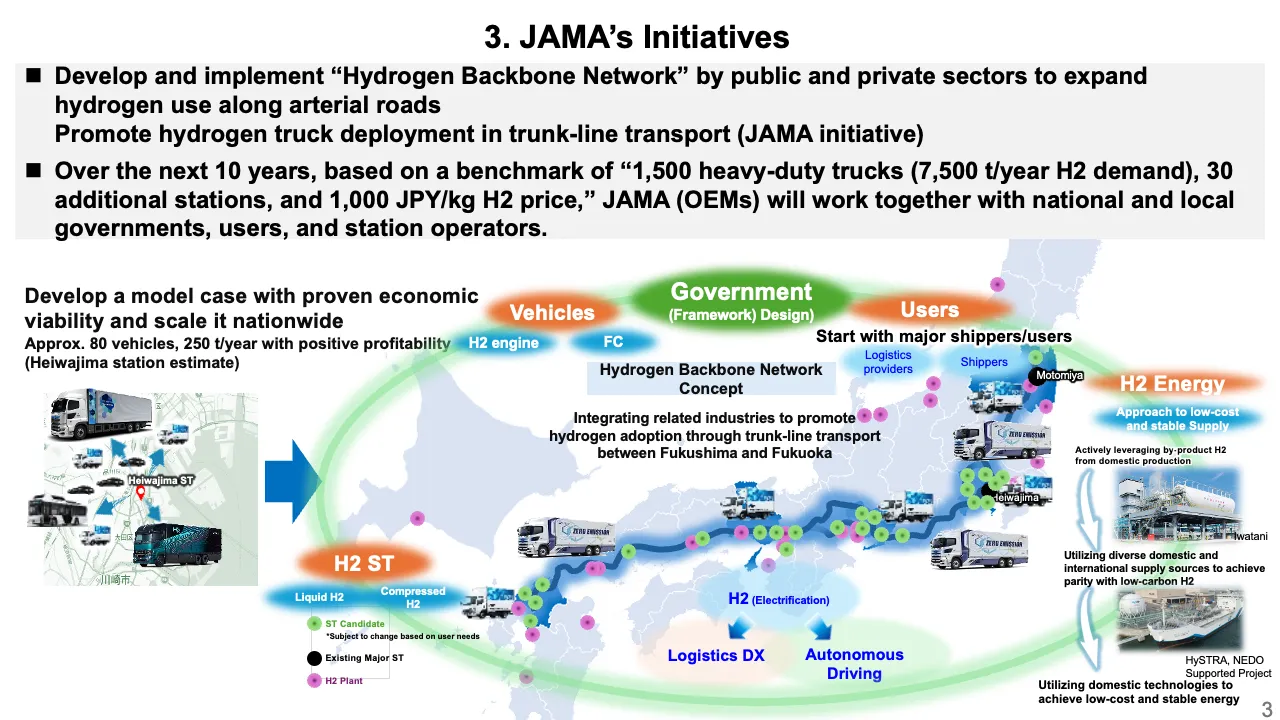
Kimata also unveiled the Hydrogen Backbone Network initiative, through which JAMA aims to use commercial vehicles as the basis for realizing a hydrogen society.The plan is to deploy hydrogen trucks on Japan’s major transport routes (trunk roads), increasing demand for hydrogen and accelerating the construction of infrastructure such as fuel stations.
JAMA has set the following benchmarks for the next decade: hydrogen demand equivalent to 1,500 trucks (7,500 tonnes/year), 30 new fuel stations, and a hydrogen price of around 1,000 yen per kilogram.
The association is looking to work with national and local governments, users, and station operators to promote hydrogen adoption for trunk-line transport spanning the country from Fukushima to Fukuoka.
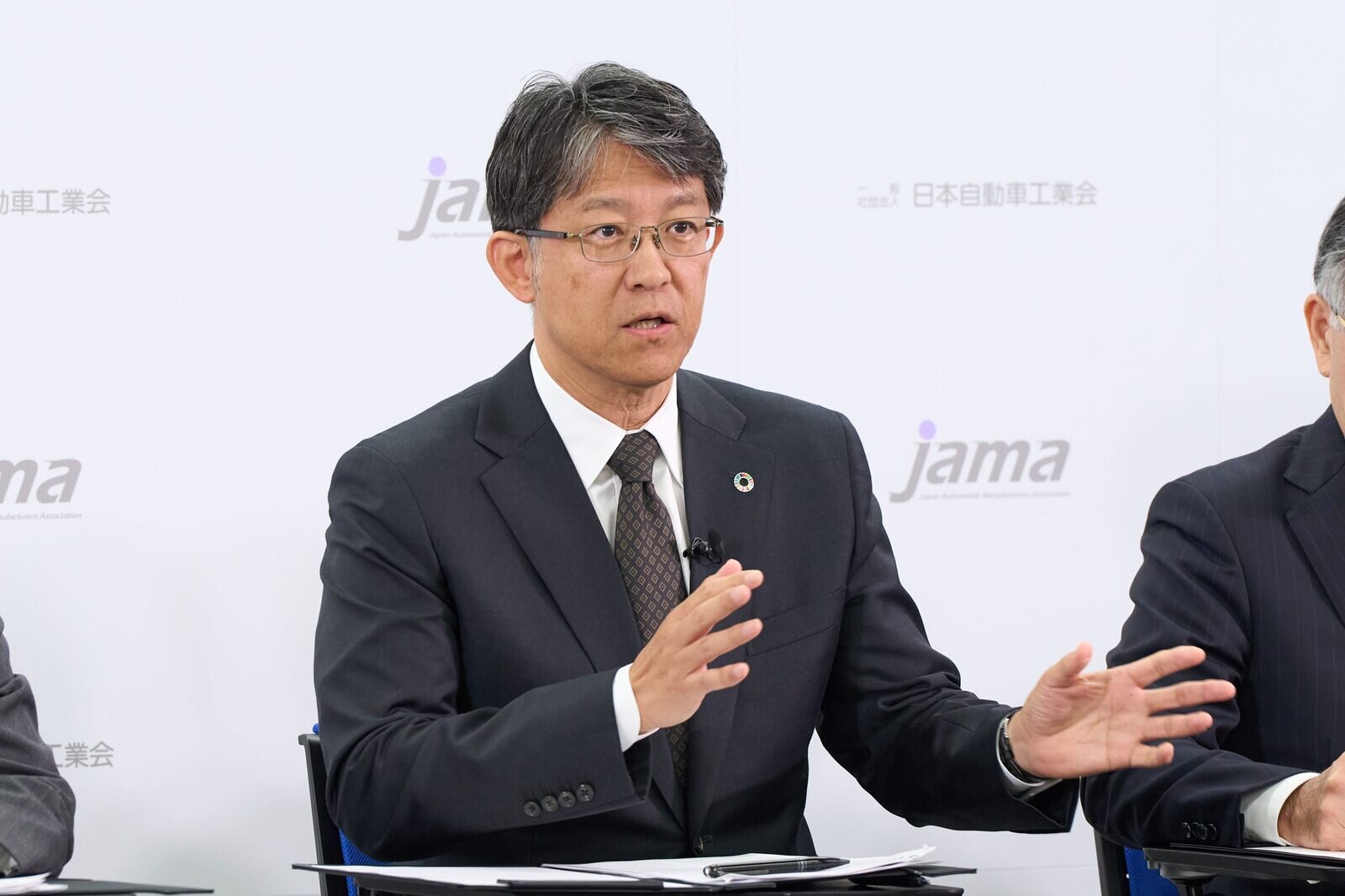
During the Q&A session, reporters raised the question of economic viability in the hydrogen business, to which Chairman Koji Sato (Toyota) gave the following response:
Chairman Sato
The current hydrogen price relies on substantial support from the national government. We recognize that the government cannot sustainably continue to bear this financial burden, and as such the new scheme is about establishing a viable base cost for the hydrogen business, drawing on the expertise we have gained over the past decade or more.
For a single hydrogen station, we know that demand of around 250 tonnes per year brings economic viability within reach. We want to create a business model that allows this to be scaled up.
Since this cannot be achieved through the efforts of the mobility sector or vehicle manufacturers alone, we need to collaborate with offtakers (users purchasing hydrogen) and those on the hydrogen supply side to build a comprehensive framework.
In our current work with national and local governments, we have been able to identify various areas where adequate systems are still lacking, or where existing systems create roadblocks.
For example, we are collaborating with authorities to closely monitor the reality on the ground, with a view to relaxing standards related to infrastructure construction and rules around quality control.
As part of these activities, we are in discussions with offtakers and mobility operators about the kinds of support that would help guarantee long-term sustainability for the hydrogen business.