



Toyota President Koji Sato has been appointed chairman of the Japan Automobile Manufacturers Association (JAMA). He will lead the organization in tackling seven priority challenges.
On January 1, Toyota President Koji Sato became chairman of the Japan Automobile Manufacturers Association (JAMA), heading a new leadership team.
Former Chairman Masanori Katayama (Isuzu), who now serves as a vice chairman, made the following remarks when the new team was finalized last December:
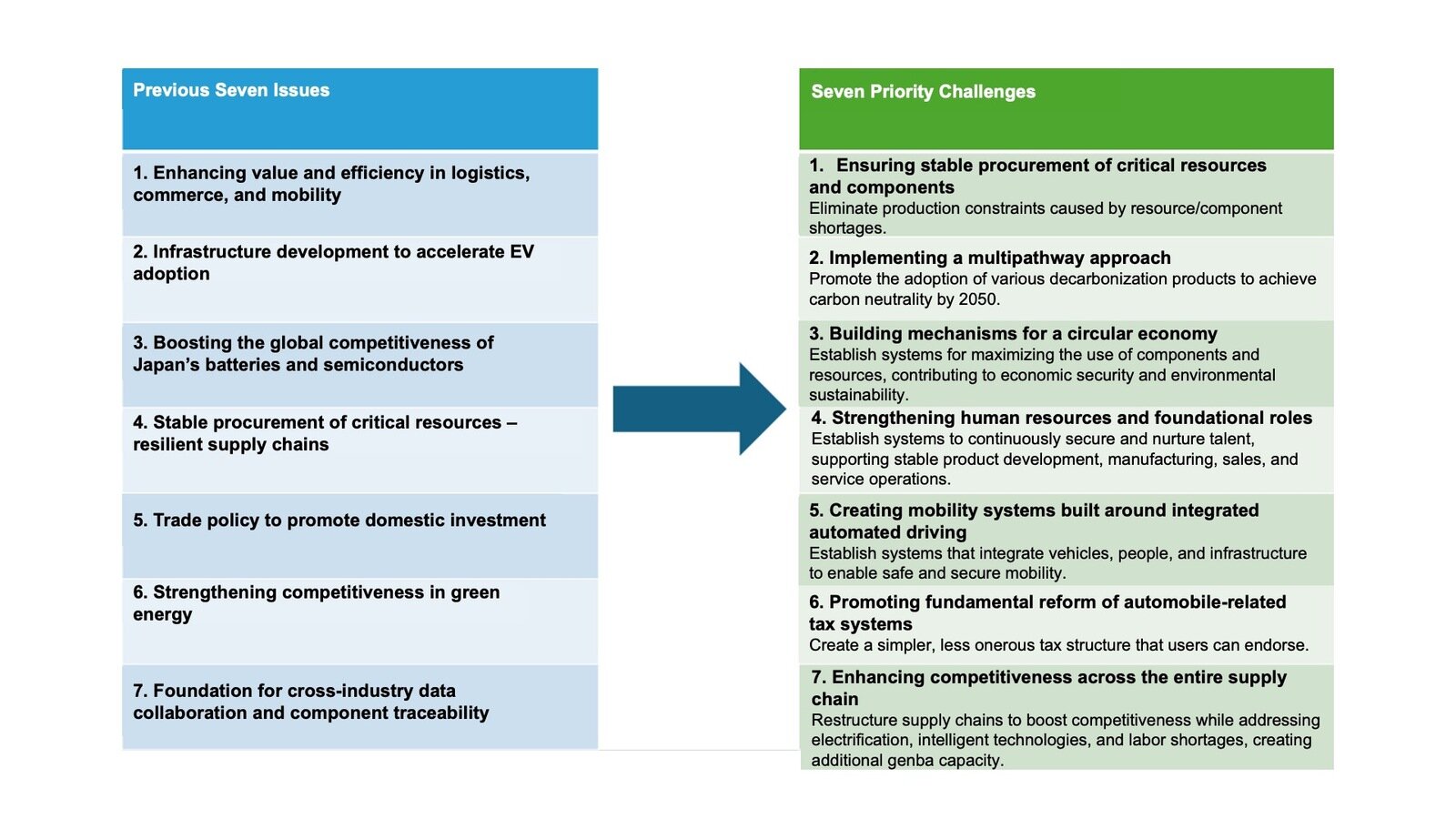
As our first agenda item, we deliberated on JAMA’s key themes for the next year and beyond. In the process, we decided on seven priority challenges. Then, having identified these priorities, we were able to discuss the leadership structure going forward, which resulted in the unanimous decision to appoint Toyota Motor Corporation as the chair company, with Vice Chairman Sato assuming the role of chairman.
I firmly believe that we must be increasingly active across various fields to ensure the auto industry’s survival. We have discussed these activities extensively within the board of directors, which led us to identify the seven priority challenges. As part of this process, we also considered which company should chair the organization to serve as a powerful driving force for these matters, resulting in this new leadership team.
The seven priority challenges reflect areas in which JAMA has long been engaged, albeit with a stronger emphasis on real-world implementation.
Based on these decisions, Chairman Sato outlined his intent during a New Year’s gathering of five major automotive organizations* on January 6.
*Japan Automobile Manufacturers Association (JAMA), Japan Auto Parts Industries Association (JAPIA), Japan Auto-Body Industries Association (JABIA), Japan Automotive Machinery & Tool Manufacturers Association (JAMTA), Japan Automobile Dealers Association (JADA)
Seven actions to strengthen international competitiveness
Chairman Sato
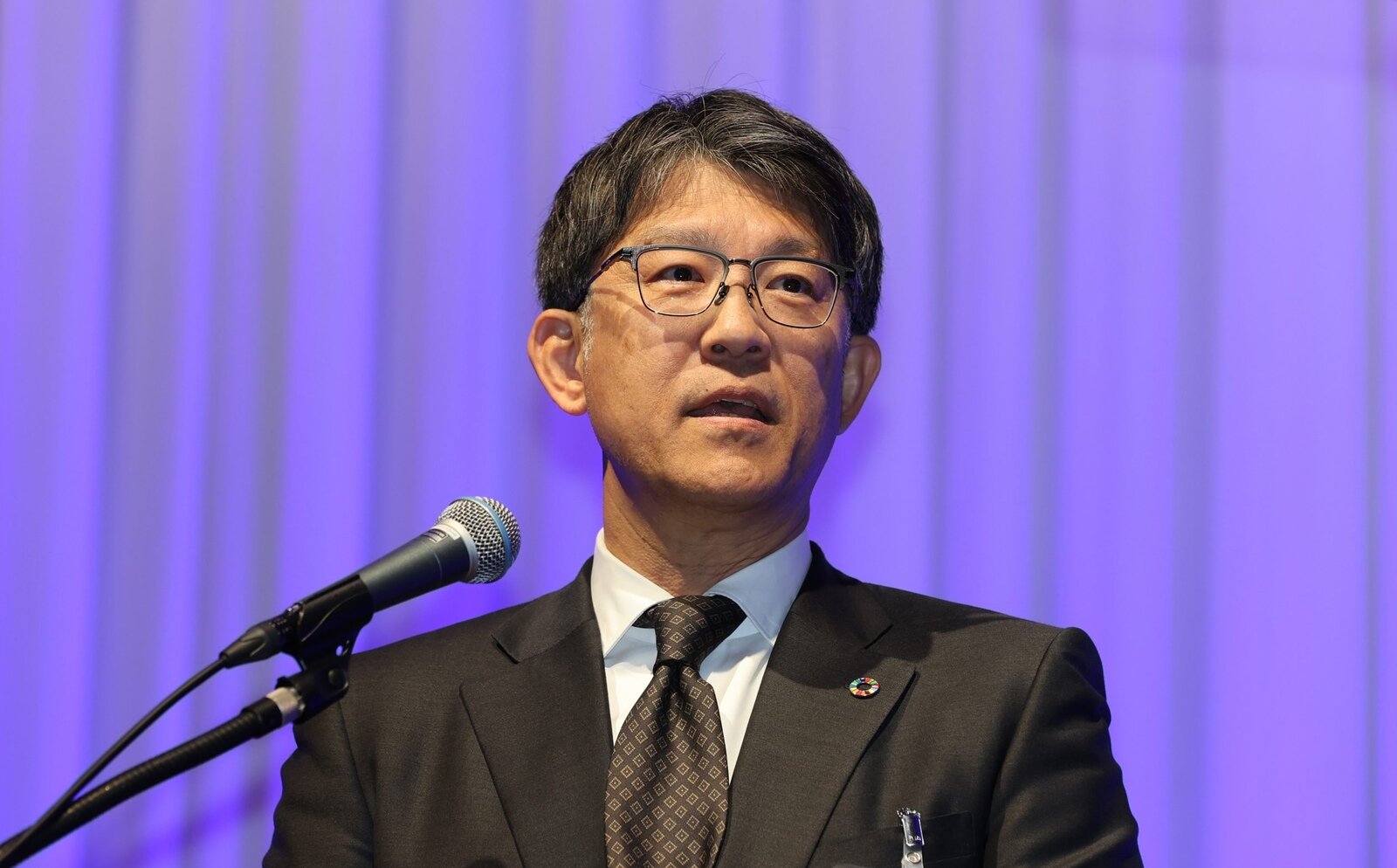
This year, I have been entrusted to serve as chairman of JAMA, taking up the baton from former Chairman Katayama.
From the outset, we have been confronted with a rapidly changing global situation. In times like these, we must ensure that we fulfill our role as one of Japan’s core industries.
To that end, as JAMA’s new leadership team, we will seek to build upon the foundations of industry collaboration forged under former Chairman Katayama, while also accelerating the pace of implementation. We will dedicate our energies to taking action and look forward to your continued support.
(…)
At the end of last year, JAMA set out seven new priority challenges for the automotive industry. The key theme is “international competitiveness.”
To survive in the current challenging environment and to continue growing as a mobility industry, I believe our entire sector must work together to improve international competitiveness.
Strengthening human resources and their foundational role.
Enhancing competitiveness across the entire supply chain.
Accelerating the implementation of a multipathway approach.
Focusing on these key topics, we will delve deeper, clarifying specific areas of collaboration and continuing to put ideas into practice.
Another important element in boosting international competitiveness is to leverage the auto industry’s strengths through the application of AI. In the field of information processing, particularly AI, there is a concept known as “garbage in, garbage out.”
Garbage, meaning low-quality information, will never yield good results. In other words, only high-quality data leads to good output.
Our frontline operations are underpinned by our people, and the skills and techniques they have cultivated over many years, in everything from production to logistics, sales, and maintenance.
Having personally been engaged in monozukuri for much of my career, I believe this aspect is the source of our competitiveness, and one that must never be lost. Now is the time for all of us to work together to develop these capabilities further.
By translating these strengths, our genba skills, into data and adopting a monozukuri approach that combines them with AI and robotics, we can gain a new competitive advantage that will pave the way for Japan’s success.
I hope we can harness the collective expertise of our five organizations in pursuing these initiatives.
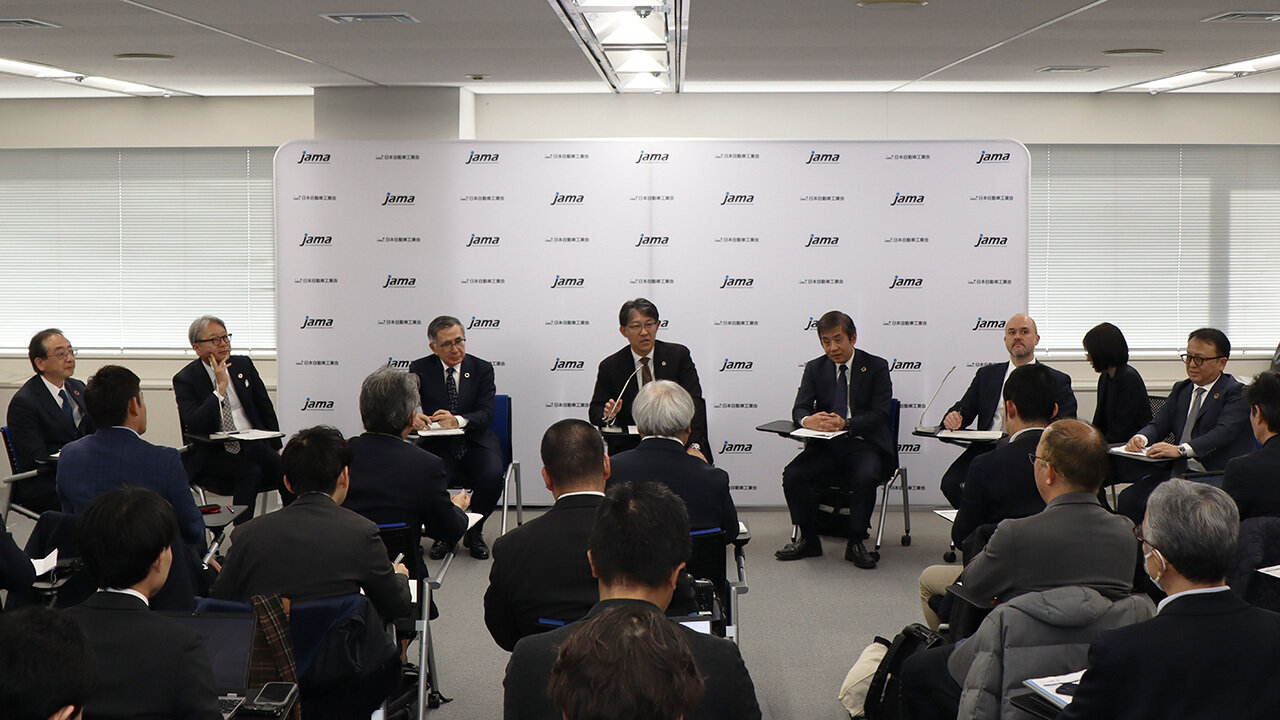
Some two weeks after Chairman Sato made this statement, the new JAMA leadership team held a media briefing focused on the seven priority challenges.