




Engine sounds enchant car enthusiasts. In this article, we explore how those sounds are experienced by race car drivers who hear them all the time in racing and development settings.
Engine sound as emotional value
Sound is one of the most important elements of how your body engages with a car through the senses.
“If the base engine note sounds good, then of course it makes you feel good,” Sasaki says.
What kind of sound does Sasaki find most satisfying?
Sasaki
I like all engine sounds, but the one I really love is that of the Lexus LFA.

When a large-displacement, naturally aspirated engine revs to high RPM, its note becomes high-pitched.
I think that kind of sound is one everyone would agree sounds good.
Sasaki also spoke about an engine whose sound he would like to work on developing in the future.
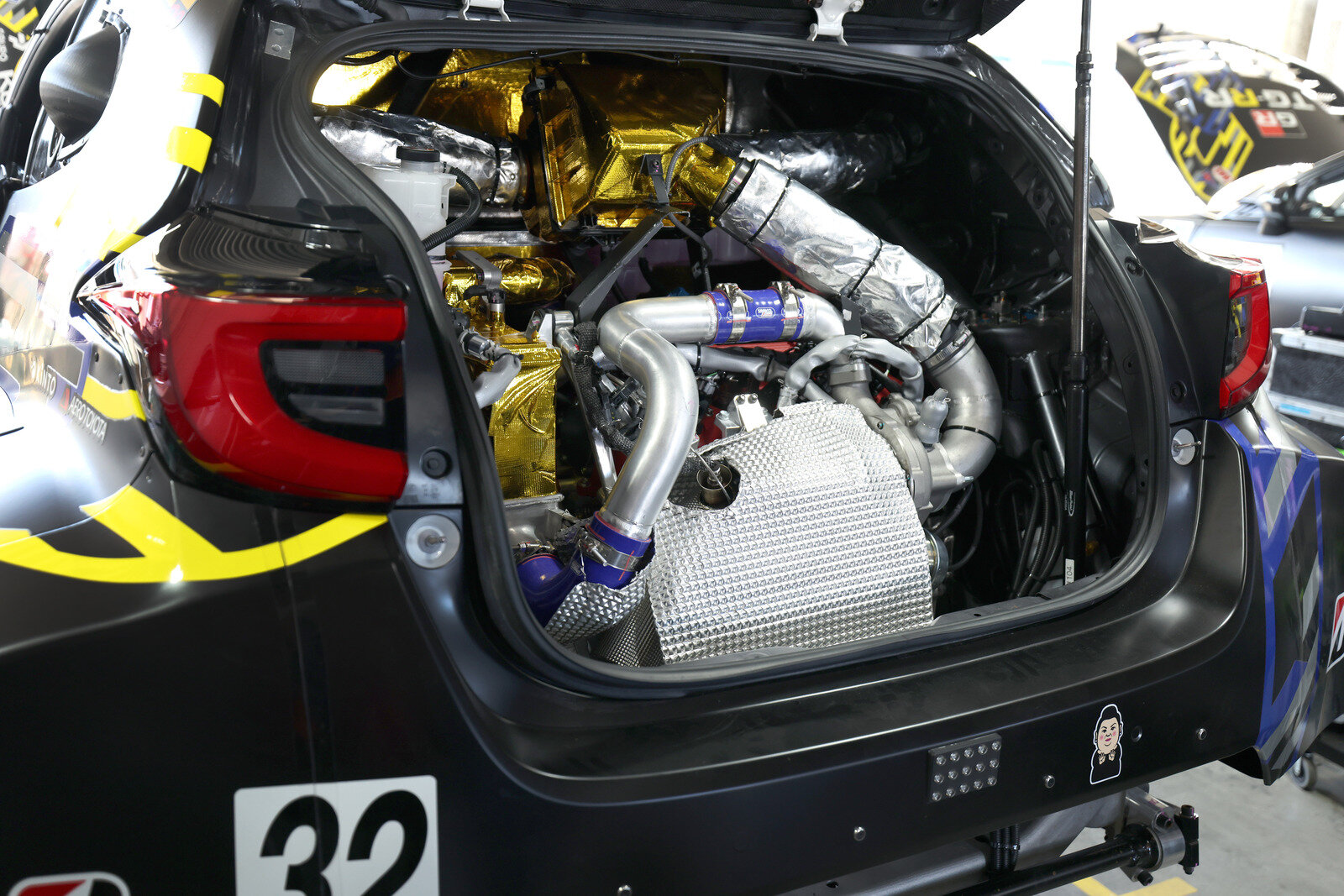
That would be the engine in the GR Yaris M Concept, which made its debut at Round 6 of the Super Taikyu Series held at Okayama International Circuit (Mimasaka) on October 25, 2025.

The middle-mounted engine is the G20E, a turbocharged 2.0-liter inline 4-cylinder that caught the spotlight for its red head when it was unveiled at the Multipathway Workshop in May 2024.
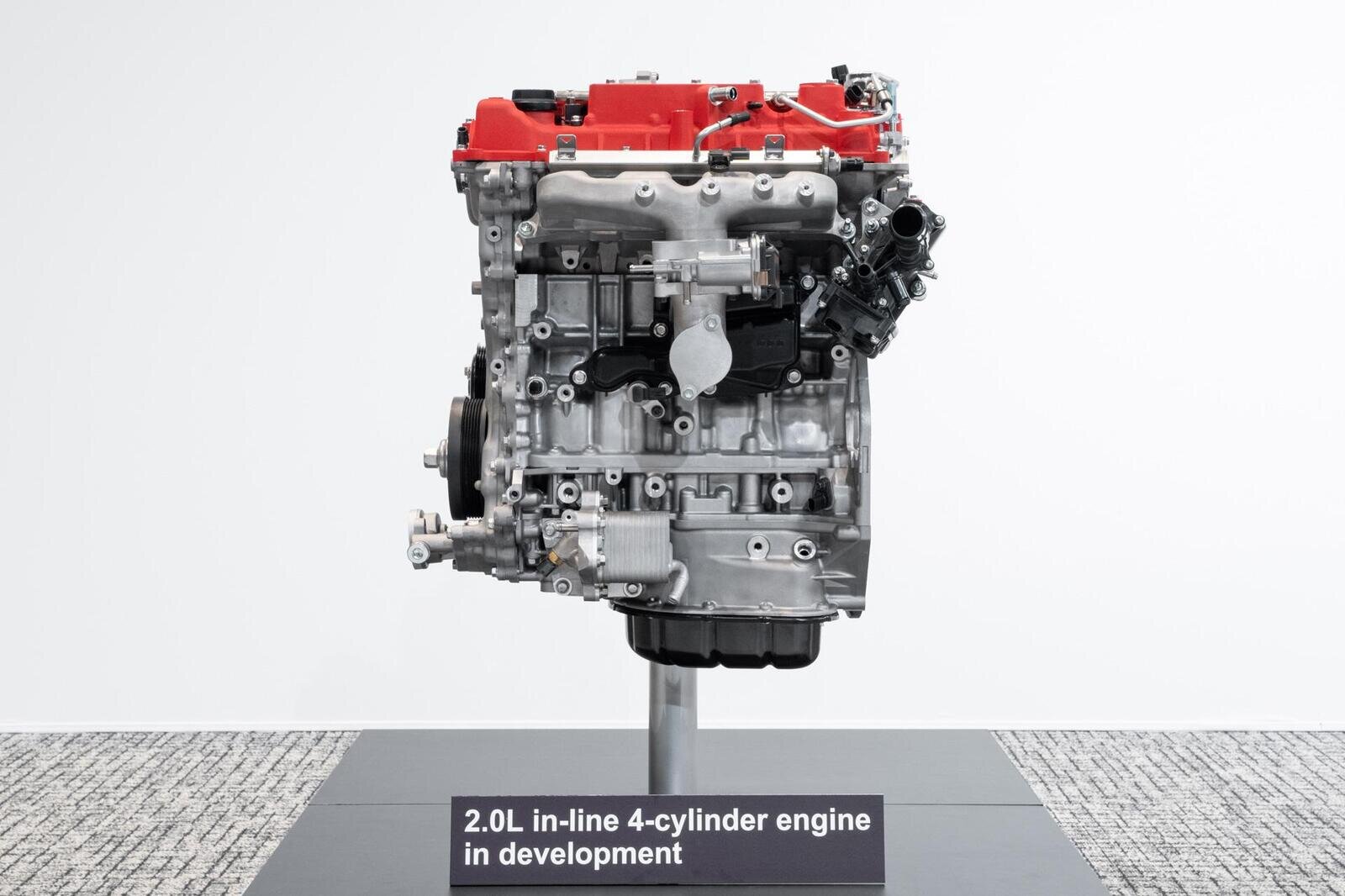
Since its initial unveiling, this engine has been made more compact, with ongoing development aimed at delivering even greater power.
Sasaki
With the G20E, the exhaust note hits the turbo and you hear the whooshing sound of the turbo spinning. That is, you end up hearing this operating noise rather than the exhaust note.
This isn’t ideal, and going forward I’d like to fix that.
We haven’t yet reached the sound development stage, so this is where the work begins.
At the Super Taikyu race in Okayama, Mitsuto Sakai, Project General Manager for ICE Development Division, said, “There is a trade-off where improving an engine’s performance can make it sound worse.”
Given this tension between performance and sound, pursuing good sound requires controlling combustion speed and, at the same time, properly controlling the vibrations and airflow that are the source of the sound transmitted from the engine itself.
From here on, further analysis and control, drawing fully on the driver’s physical senses, will be required.
Finally, when asked whether he can tell cars apart by engine sound alone, Sasaki replied with just a quick “Yes,” wearing an expression that suggested it went without saying.
When asked how he makes the distinction, he thought for a moment and began explaining in a measured tone.
Sasaki

Whether the sound is high or low, the balance between low and high tones, and as the revs climb, whether the sound is full-bodied or more finely tuned.
Then there is also the punch you get from each individual cylinder. For example, the sounds of V6, V8, and V10 engines are all different.
I think that’s probably how I tell them apart. I can tell motorcycles apart too, of course.
It’s the same as with human voices! They’re all human voices, you can tell, “That is Morizo’s voice” or “That is how Daisuke (Toyoda) talks,” right?
Cars are exactly the same. They each have their own individuality and character.
It’s the same with music—whether you can tell the difference really comes down to whether you’re interested or not (laughs).
For all you car enthusiasts who have read this article to the end, why not first try listening to cars on the street, then head to Super Taikyu and enjoy comparing engine sounds from the diverse mix of hydrogen-powered and other types of cars there?
Once you truly feel the cars’ pulse as they race past you, they are sure to seem all the more alive.