



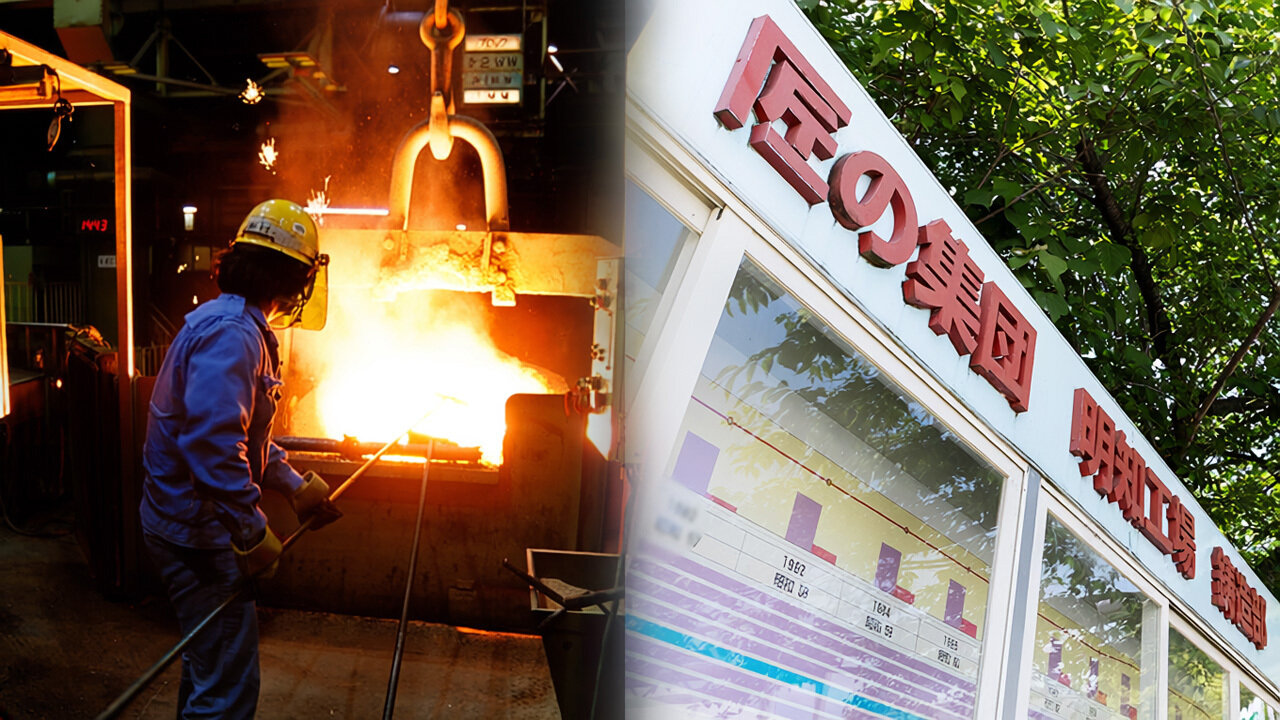
Toyota's Plants: Inheritance & Evolution explores the past and future of Toyota's production sites. This edition traces the history of the Myochi Plant, where more than 50 years of cast iron production came to an end in 2025.
The Foundry Fires Fade, but the Spirit Lives On
As times changed, the Myochi Plant’s Foundry Division underwent a sweeping transformation. In the 2000s, amid the consolidation and restructuring of unit production, the division’s lines were gradually transferred to group and partner companies, leading to downsizing.
In 2010, the cupola furnace that had kept the casting lines supplied with molten iron for many years ended its service. At the decommissioning ceremony, the attendees shared a pledge: “Even if the cupola’s fire goes out, let the spirit of Myochi casting burn on.”
True to these words, the cast iron lines were kept running for nearly half a century, sustaining the Myochi Plant’s foundry operations. Then in 2025, the facility’s last cast iron line was shut down. In that moment, Myochi’s iron casting flame was finally extinguished.
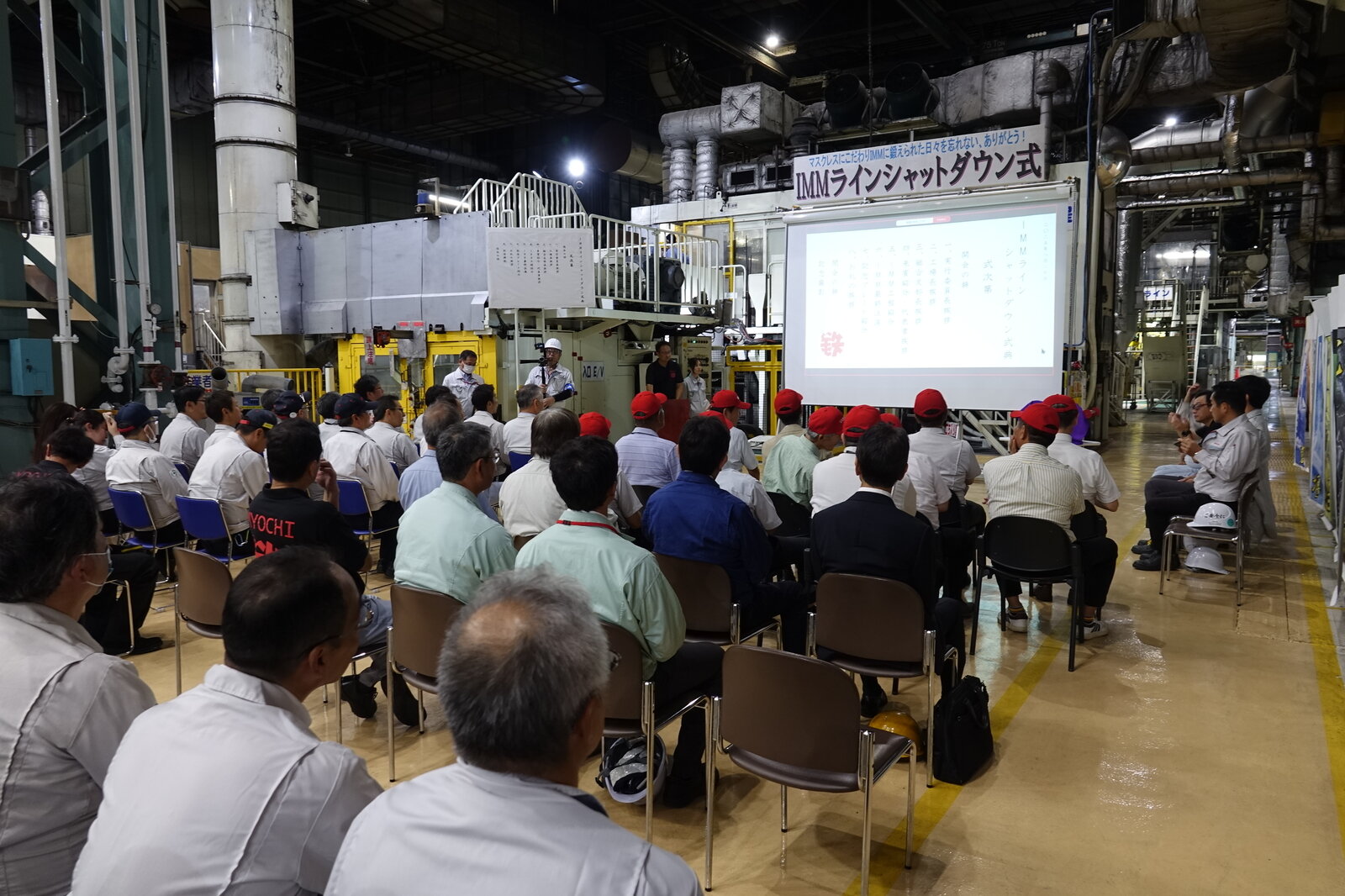
At the ceremony commemorating the shutdown, the section manager who had led the genba team right until the end told Murai, “We worked hard to make sure it looked its finest on the final day.” Hearing these words, Murai was deeply moved to see that, a quarter-century on from the plant’s efforts to create a maskless environment, the spirit of constant refinement had been passed down.
Although the foundry fires have gone out, the skills and spirit forged there live on in new forms. That legacy can still be seen in two areas of the plant where production continues today.
Handing over the best line ever
In the early 1990s, the differential production lines that had been spread across multiple plants, including Tsutsumi, Miyoshi, and Motomachi, were consolidated at Myochi. For the next 30-plus years, the No. 1 Driveline (DL) Manufacturing Division specialized in producing differentials.
Around 2023, however, as Toyota sought to make its driveline business more competitive, differential production was re-consolidated at the Miyoshi Plant. All that remained at Myochi was a line dedicated to models requiring high torque, such as the Land Cruiser 250.
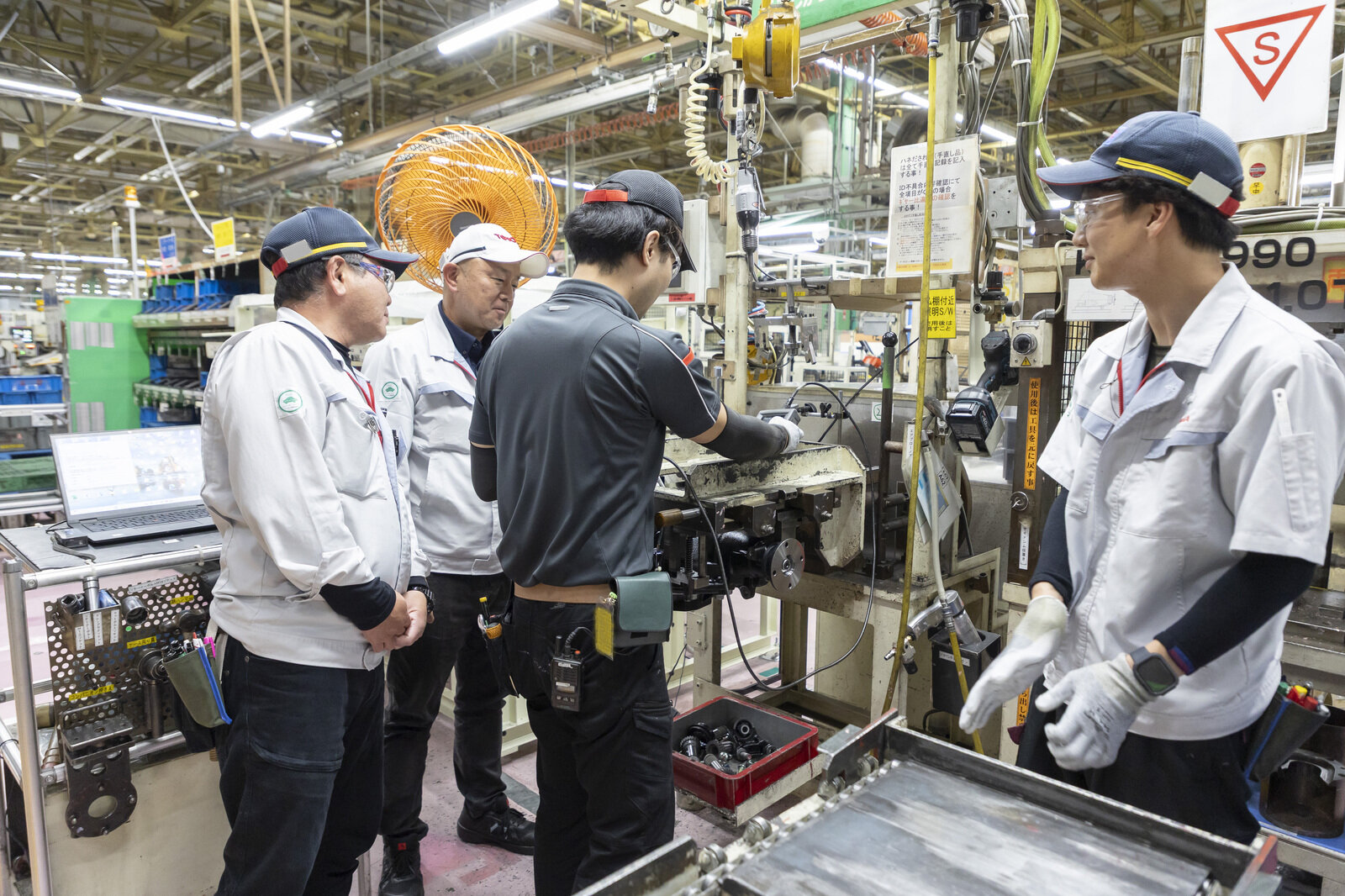
For many years, differential production was overseen by Katsumi Yamamoto, a section manager in charge of assembly, and Kiyoshi Kawaoka, a plant assistant manager responsible for machining. Having joined the company in 1991 and 1992, respectively, the pair have continued to push and motivate each other throughout their careers.
The differential is a critical drivetrain component that allows a vehicle’s left and right wheels to spin at different speeds. Even the slightest lapse in precision can lead to noise and other issues. As Assistant Manager Kawaoka explains, gear machining requires an especially high degree of skill.
Kiyoshi Kawaoka, Assistant Manager
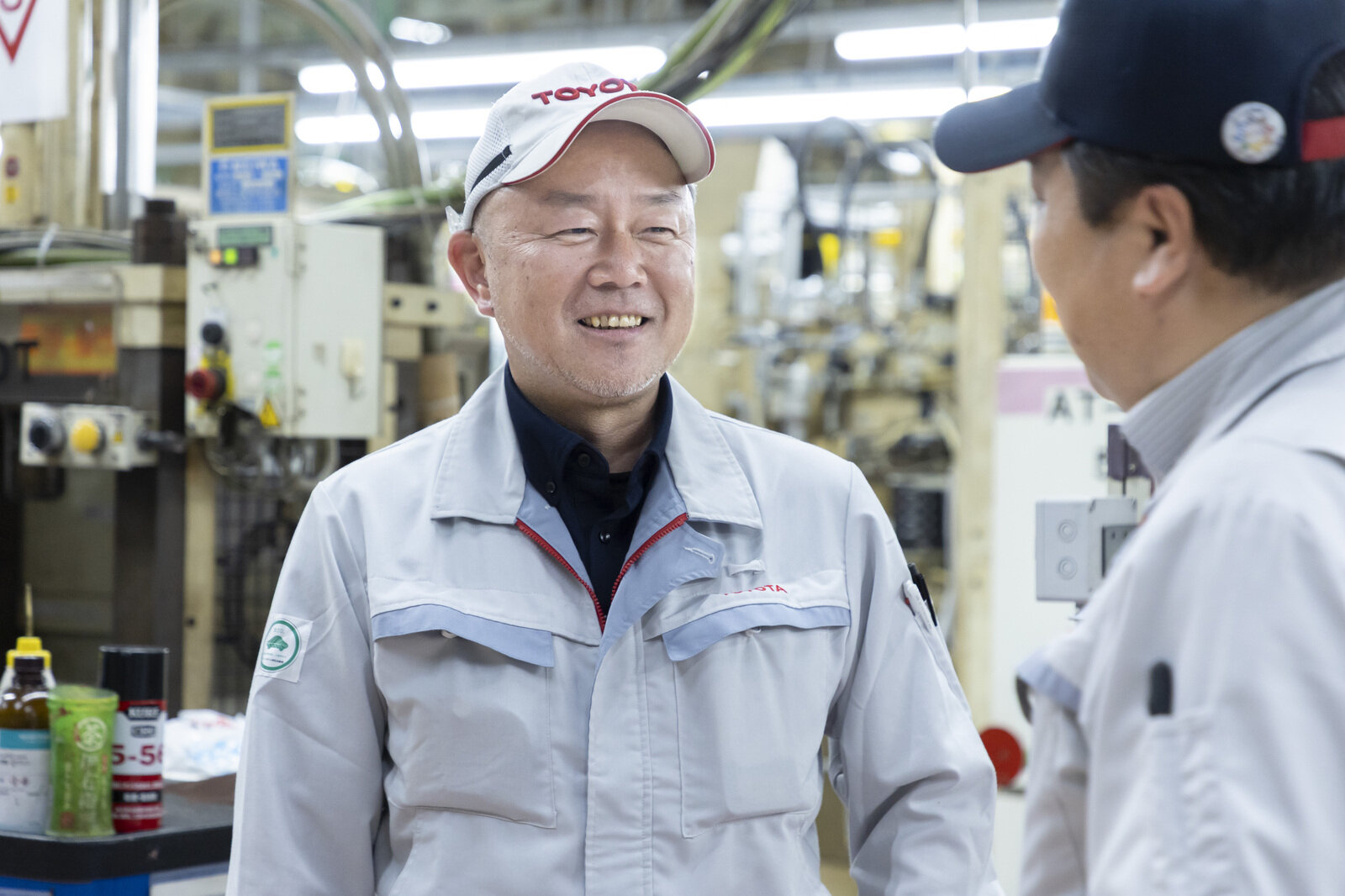
Differential gears are curved, so the machining process is complex. In the past, this task relied heavily on individual instincts and intuition—using specialized measuring devices, you checked the dimensions with a dial gauge and had to trust your senses to make adjustments. Becoming fully proficient takes about three years.
Over time, the process became increasingly digitized, and the advent of NC machining made the work much easier. Even so, the old instinct-based techniques have been passed down, forming part of the No. 1 DL Manufacturing Division’s culture.
In recent years, the shift to hybrid and fully electric vehicles further narrowed the types of differentials produced at the Myochi Plant. And now, 2026 brings another major milestone: as the differential production line wraps up its duties, the equipment is being transferred to a partner company, JTEKT Gear Systems. Before the handover, Manager Yamamoto and his team have set a goal of making the line “better than ever.”
Katsumi Yamamoto, Manager
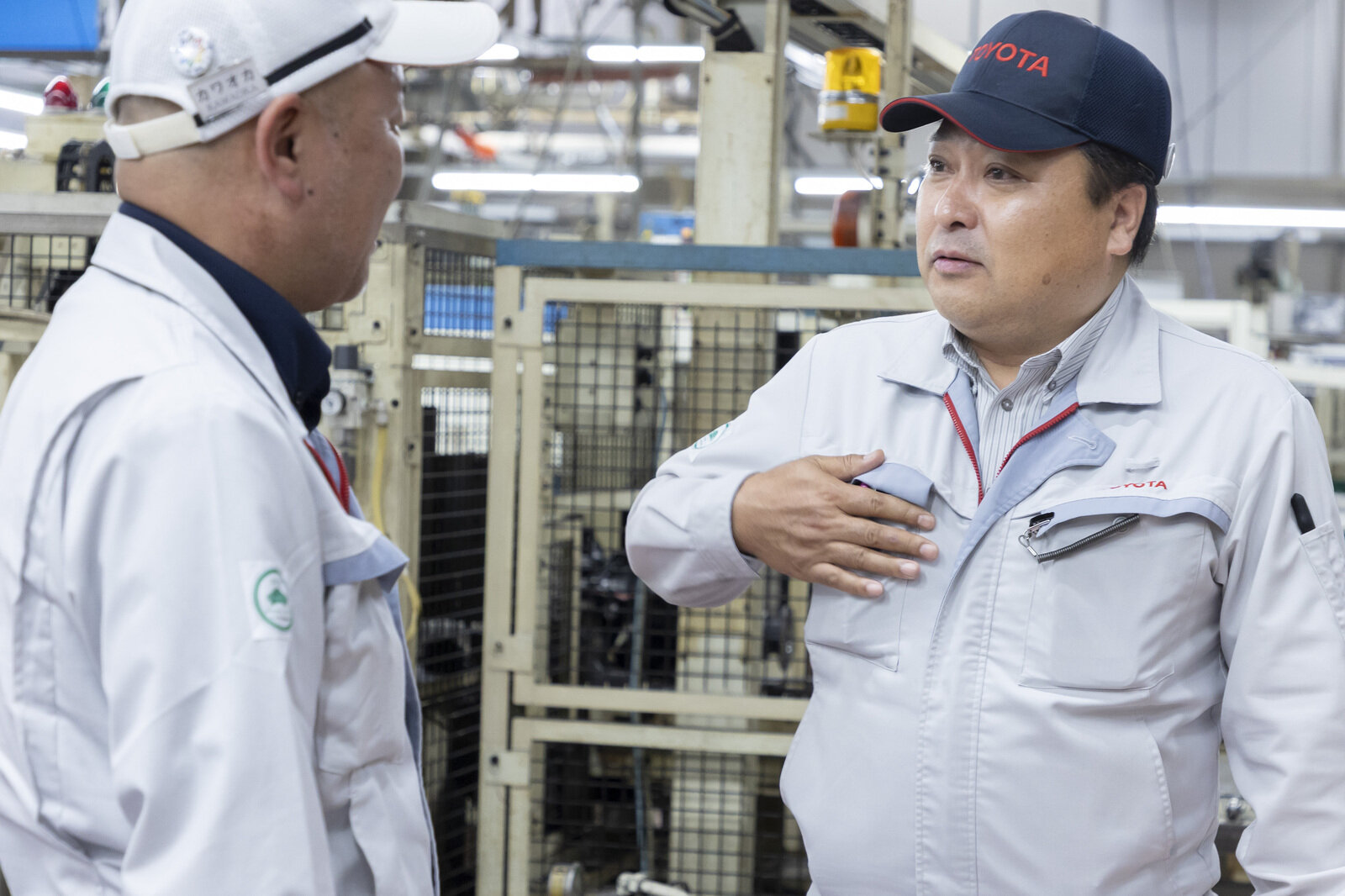
As we prepare to send this equipment off to JTEKT Gear Systems, our aim is to ensure that the line has fewer stoppages and breakdowns, and is cleaner than ever before. Our yield rate (the percentage of finished products that are of acceptable quality) is already at 98%, and that last 2% is incredibly difficult. But we are determined to raise that by even 1%, and to deliver a production line that embodies our DNA unlike any that has come before.
One difficulty with the Myochi Plant’s line is the aging equipment, but even as we work to keep it running, we must also continue raising output and the skill levels of our staff. Ultimately, the most important factor is personnel development.
For a team that has built up and continuously refined the line with their own hands, the parting is bittersweet. Even so, these improvement efforts are sure to continue until the moment they entrust it to the next custodians. Standing beside the line, Assistant Manager Kawaoka emphasized, “We will keep making improvements to the last minute. There is a lot we can learn through this process, and we will put that knowledge and experience to good use in our next roles.”
Pushing the Boundaries of Aluminum Casting
Myochi’s casting expertise lives on in another part of the plant. As the facility transitions toward battery production, the GR Foundry Section remains its sole aluminum casting operation, carrying forward the skills developed over decades.
As Deputy Manager Toshio Nishiyama explains, the section produces components for the GR GT, a symbol of Toyota’s motorsports activities.
Toshio Nishiyama, Deputy Manager, GR Foundry Section
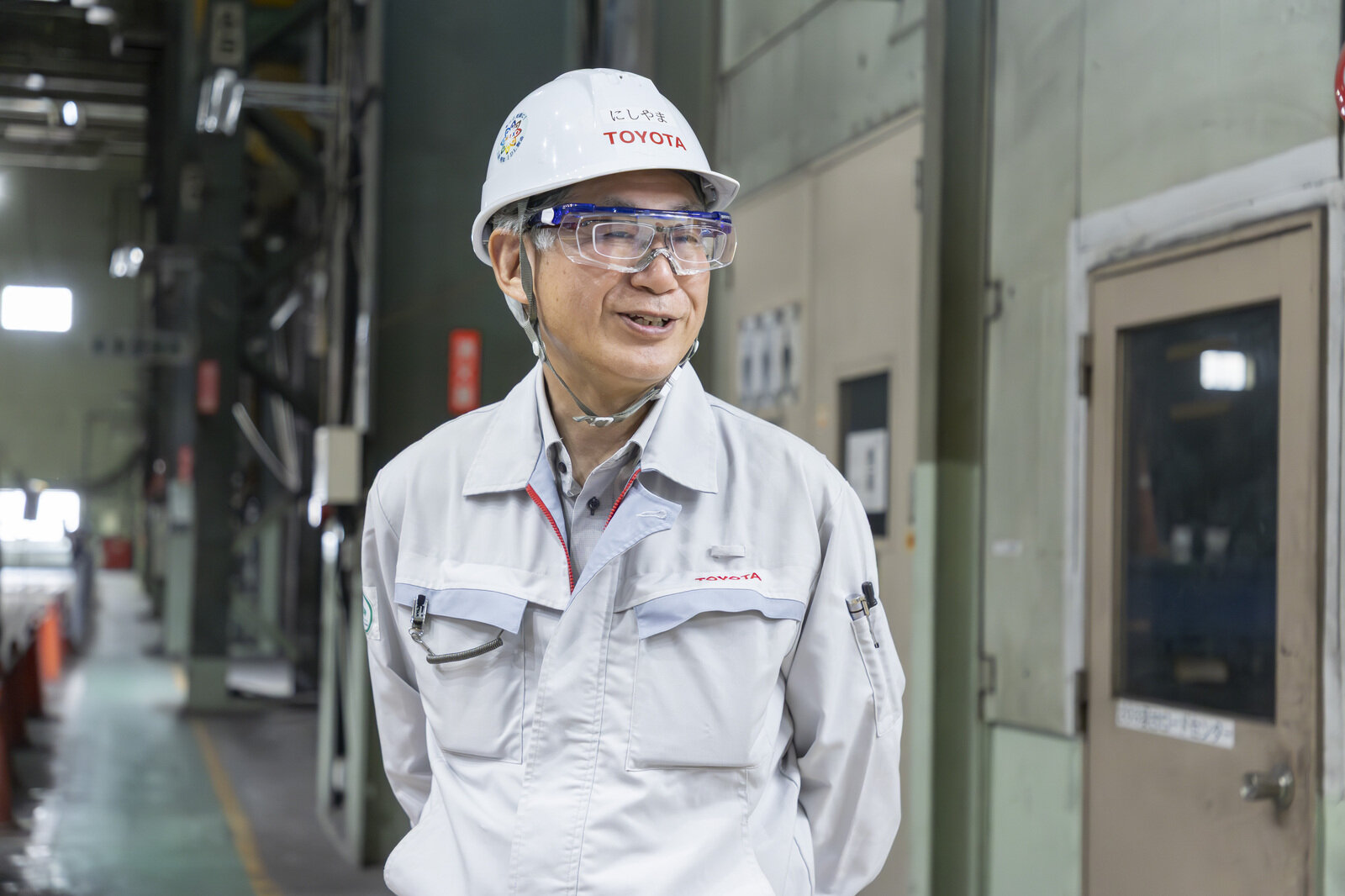
We are responsible for the V8 engine block and cylinder head, along with nine different aluminum parts for the body. These nine parts make up the car’s frame.
The specialized technique that enables casting to deliver the precision needed for racing cars is known as “mold coating.” It involves spraying the surface of a metal mold with a ceramic coating, which prevents it from adhering to the molten metal. Although the coating requires a thickness of approximately 100 to 260 microns, applying it in a single pass can create flaws, and so must be done in layers of around 30 to 40 microns each.
In developing parts for the GR GT, Toyota is also trying out new methods that break with conventional wisdom. A cylinder head’s combustion chambers, critical in shaping engine performance, are one area where achieving both weight reduction and strength has proven difficult. Toyota is approaching this problem by adopting a process called “inverted low-pressure casting,” which is performed with the part’s standard casting orientation turned upside down.
Deputy Manager Nishiyama
For a cylinder head, the molten metal is typically poured in from the bottom of the part and solidifies from the top down, which means that the combustion chambers at the base are the last to harden. The sections that solidify last tend to have a coarser internal structure, impacting their strength. By inverting the process, we can ensure that the combustion chambers solidify first and produce a high-density structure. It may seem like we simply turned the part upside down, but this is actually extremely difficult to do.
In the end, it’s about creating better products. I believe we must keep applying our skills and expertise to the development of new components, while working as a team to ensure they are passed on to the next generation.
Unchanged after 50 years
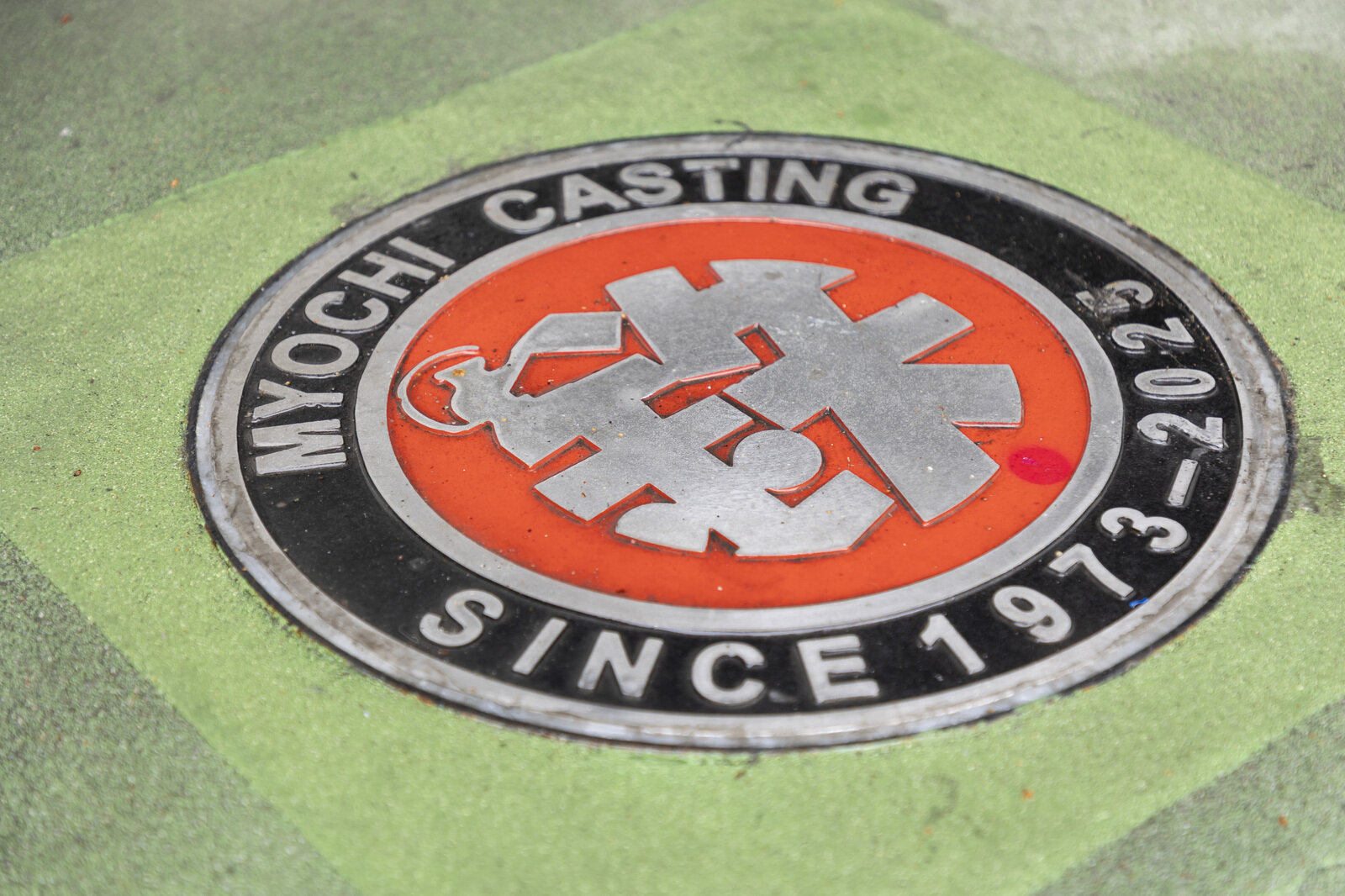
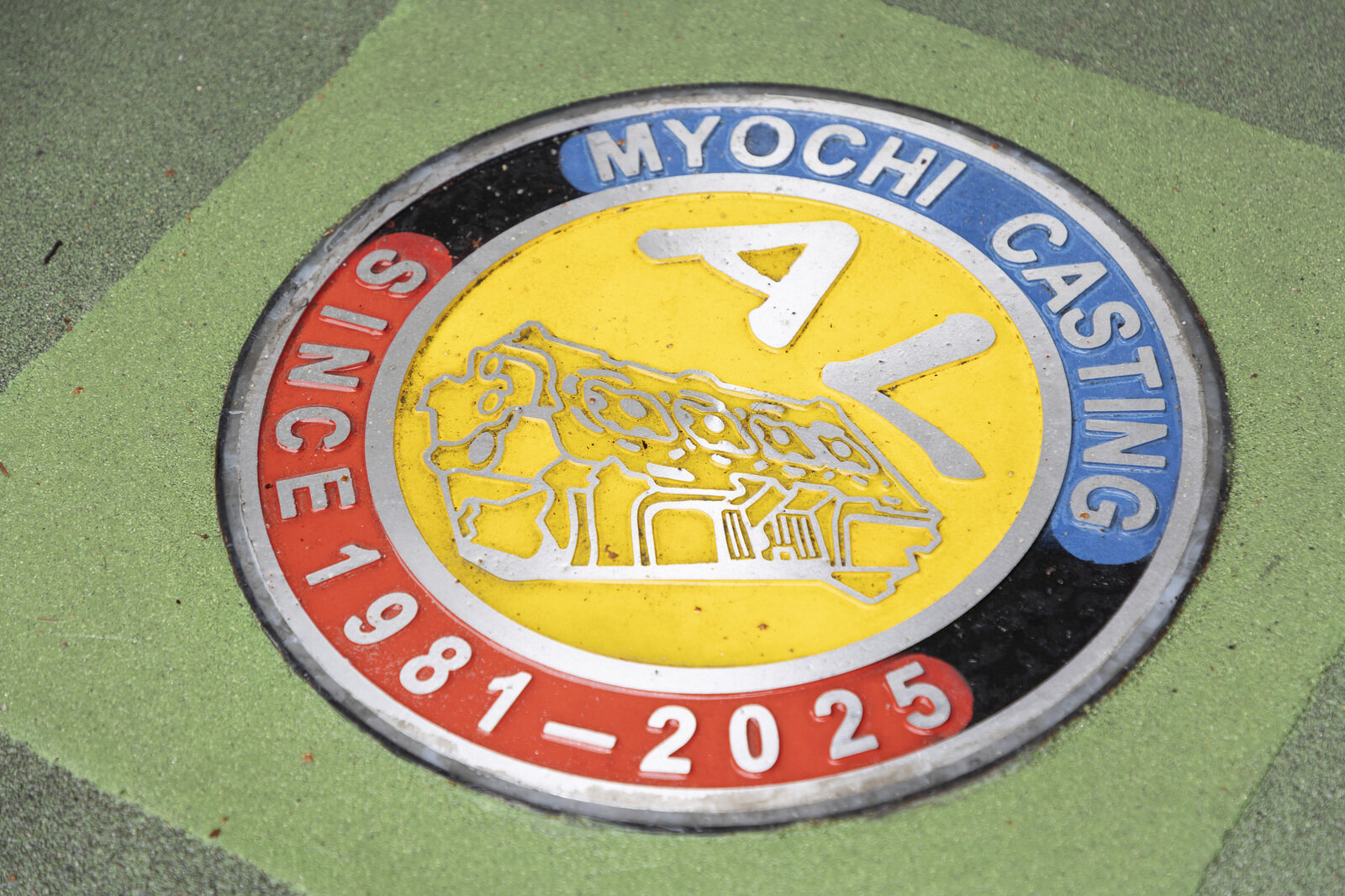
Established in 1973 amid growing concerns about industrial pollution, the Myochi Plant has undergone profound changes over the past half-century. Yet its core commitment to continuous improvement has been passed down through generations of frontline workers. Plant General Manager Takahashi reflects on what has remained unchanged:
Plant General Manager Takahashi
I feel as though the Myochi Plant has not changed all that much since opening its doors more than 50 years ago. Constantly improving and adapting to the times, serving as a development hub that advances Toyota’s production technologies—these things remain the same. What makes that possible is ultimately people, and I believe that people grow through training and development.
Even as Myochi’s role as a major foundry comes to an end, its commitment to valuing people and its culture of continually honing skills on the factory floor remain unchanged.
In Part 2, we explore how Myochi is carrying that legacy forward as it takes on a new challenge: battery production.