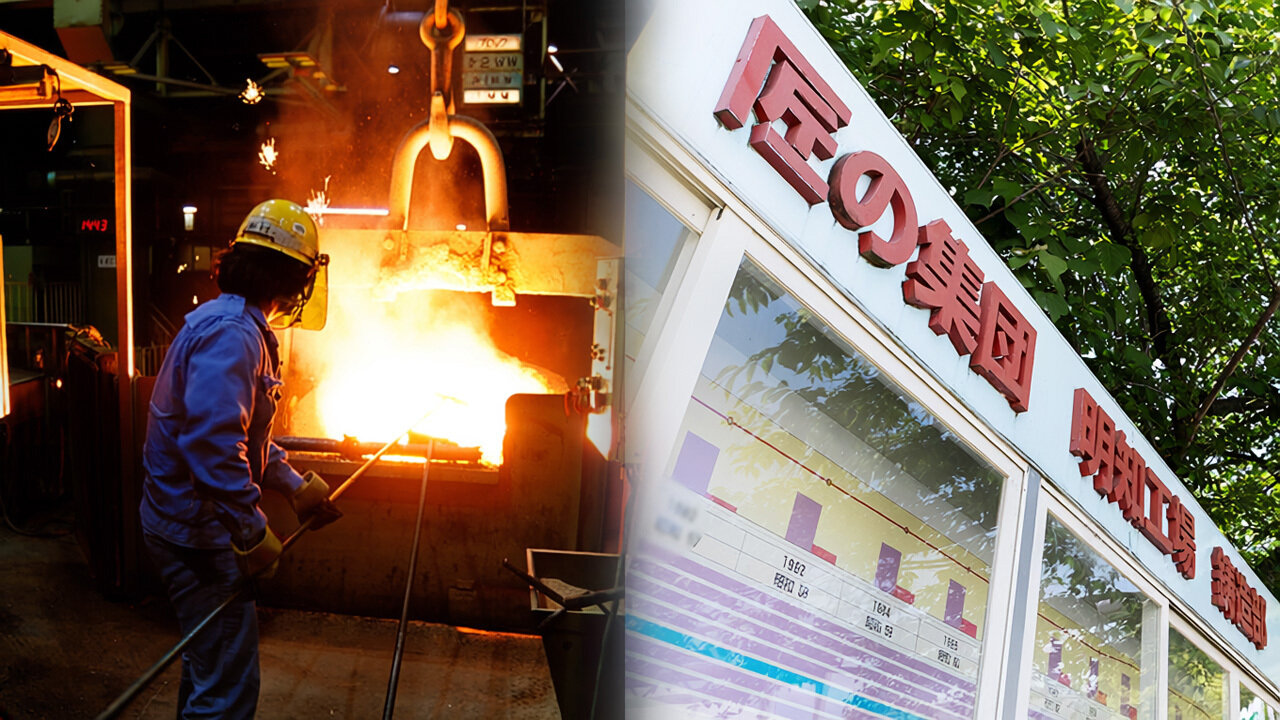
Toyota's Plants: Inheritance & Evolution explores the past and future of Toyota's production sites. This edition traces the history of the Myochi Plant, where more than 50 years of cast iron production came to an end in 2025.
Taking the Weight Off Workers
Alongside efforts to make the foundry cleaner and safer, Myochi also sought to reduce the physical burden on workers. Toshio Kashima, a project manager in the Manufacturing Engineering Division who joined Toyota in 1983, explains that much of this burden came from handling heavy cast parts.
All cast parts underwent a final visual inspection. Those made from iron can weigh anywhere from 5 kg to upwards of 20 kg. At the time, Toyota’s rules stipulated a maximum lifting weight of less than 12 kg for female workers and 20 kg for men, but lifting hundreds of these parts a day exerted a significant toll.
The Myochi Plant addressed this by setting its own benchmark: no lifting of parts weighing 7 kg or more. Unfortunately, more than half of the parts handled by the plant exceeded 7 kg.
Project Manager Kashima
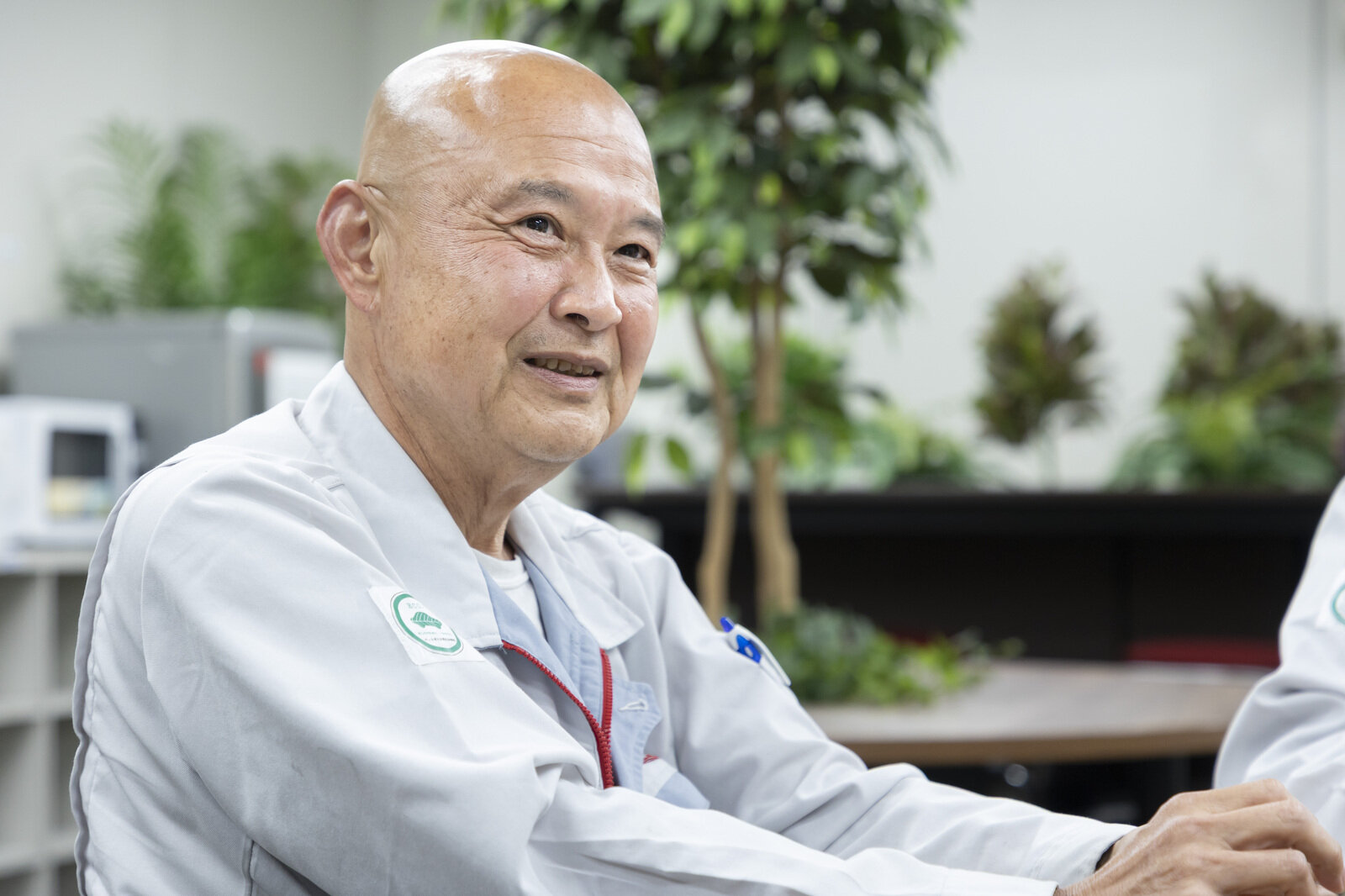
If you want to avoid lifting 7 kg or more, your options are to automate the task with robots, use hoists or similar equipment, or slide instead of lifting the part. Given that you can slide a 10 kg part with a force of 2-3 kg, we gradually moved in that direction.
Amid the equipment improvements, Project Manager Kashima recalls that robot-centered automation presented considerable challenges. Whereas a person can make judgments at a glance, a robot completing the same task relies on time-consuming camera recognition and computation.
Despite this drawback, the accuracy of picking software improved through the 2000s, and by the 2010s a robot could autonomously retrieve parts from random stacks of cast components. Thanks to these continued improvements, nearly 90% of the entire process, from casting to final dispatch, had been automated.
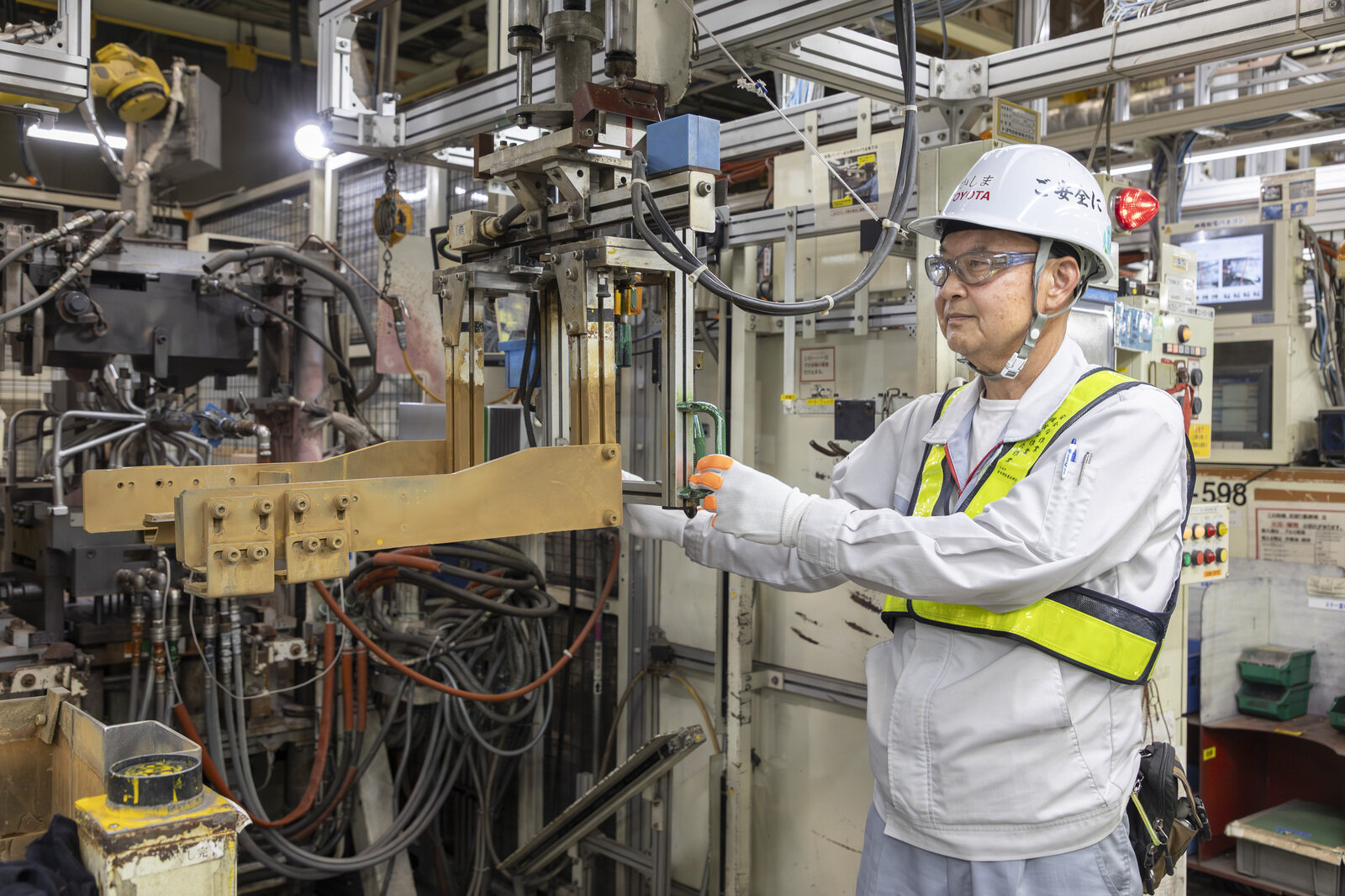
Reducing the physical demands of the work also opened up new opportunities for women at Myochi. As Kashima explains, their roles gradually expanded from less physically demanding tasks to a wider range of operations as multi-skilled workers. Women are now a familiar presence on a production floor once dominated by men.
Earning the Community's Trust
Despite Myochi's ambition to be a “pollution-free” plant, its early dust extraction systems did not always perform as intended, allowing dust to escape on occasion. Former Foundry Division head Shigeru Murai recalls the challenges.
Murai
The equipment we installed to remove dust and odors was sufficient, but it didn’t perform as expected. Iron particles would sometimes end up on employee cars in the parking lot.
Local partner company Hosei Kogyo has supported Myochi since its establishment in November 1973, maintaining the plant's dust and odor extraction systems. Its president, Masahiko Ito, and director, Hirofumi Ito, have both served as leaders of the local Myochishimo community, giving them firsthand perspectives as both business partners and residents. President Ito recalls:
Masahiko Ito, President, Hosei Kogyo (Local Partner Company)
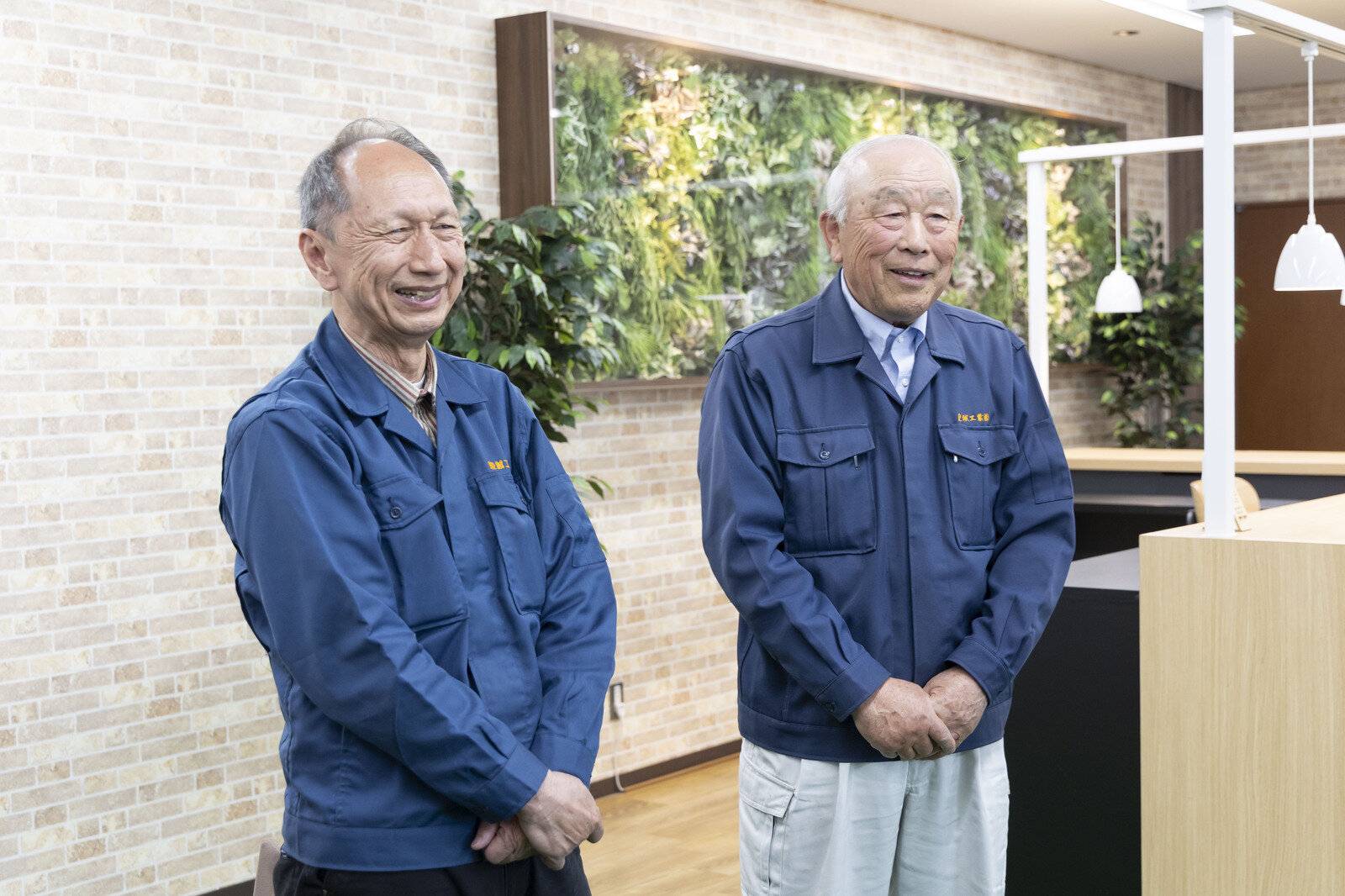
On rare occasions, dust would collect in our parking lot. When the north wind blows, it carries dust over from the plant toward our office.
These are the kinds of issues that Hata has grappled with in his 40-plus years overseeing the Myochi Plant’s environmental measures.
Hata
Whenever we received complaints about laundry getting dirty or the impact on crops, for example, I would go out to explain and apologize. The technical challenge was that the causes of dust leaks were difficult to pin down immediately. Ultimately, we installed advanced monitors, the kind used in power plants, in our extractor chimneys to enable constant tracking. Along with improvements in filter performance, the switch to these monitors marked a key turning point.
Our responsibility to the local community never changes, no matter what we produce.
In 1985, the Regional Environmental Conservation Council was set up, bringing together local residents, authorities, and plant staff. Hata personally worked with community representatives to conduct regular measurements of dust, odors, noise, and vibration near the plant, reporting his findings as part of an ongoing dialogue.
These sustained efforts bore fruit in 1998, when Myochi obtained ISO 14001 certification for its environmental management system. Since then, the plant has maintained a record of zero environmental complaints or reported adverse impacts on the local community.
President Ito
As soon as we reported something, staff would rush over to take care of it. I think establishing the council helped to build trust in the plant. It gives a human face to the operations.
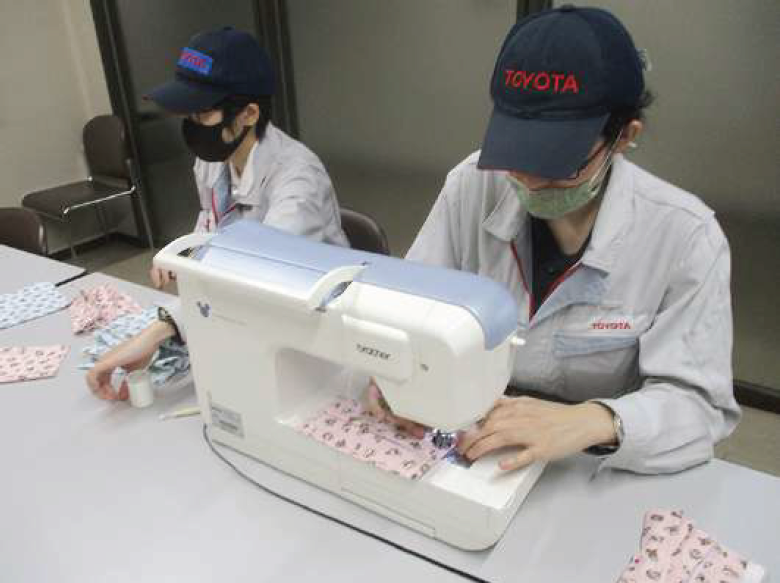
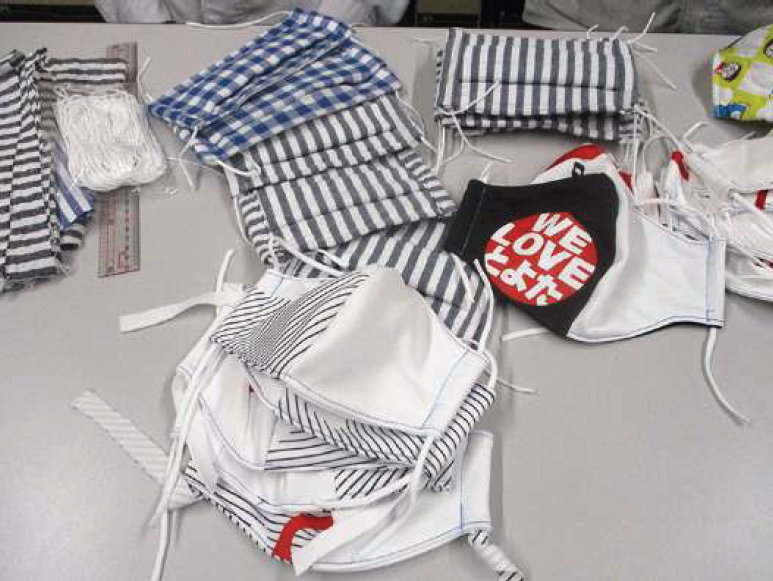
The plant’s community-focused initiatives have carried on in various forms, from organizing visits for local elementary schools to volunteer activities, which have included removing an invasive tickseed species growing along nearby irrigation canals. During the pandemic, staff even repurposed the uniforms of Toyota Verblitz rugby players who were based at the Myochi Plant, turning them into handcrafted masks that were given out to local residents.