



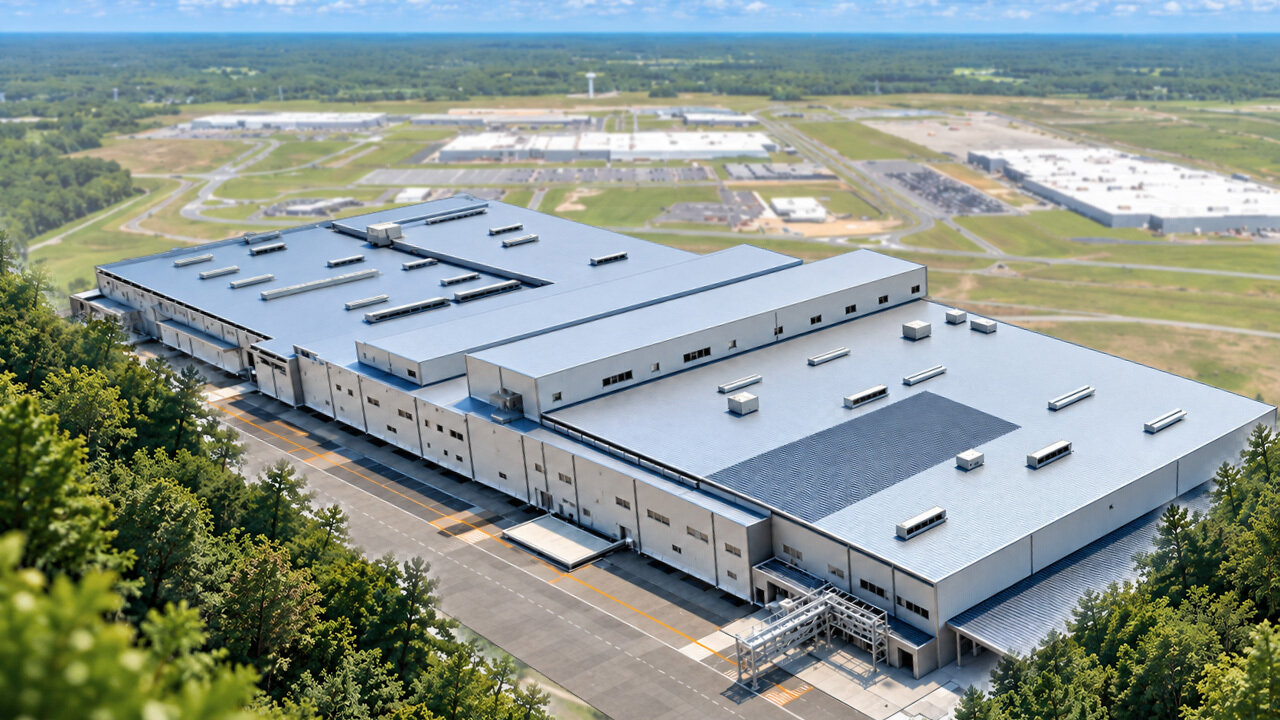
In 2025, cast iron production ended at Toyota's Myochi Plant after more than half a century. As the plant shifts to battery production, a culture of embracing change and caring for colleagues, nurtured on the foundry floor, lives on.
Restructuring Opens New Possibilities
Myochi reached a major turning point around 2020. As Toyota consolidated its driveline production to strengthen competitiveness, CV joints and other components made at sister plant Miyoshi were transferred to JTEKT, while Miyoshi was reorganized as a hub specializing in driveline production.
As part of this consolidation, differentials and other components produced at Myochi were moved to Miyoshi. The remaining production lines, including those for the Land Cruiser 250, are scheduled to be transferred to JTEKT Gear Systems by the end of 2028. Plant General Manager Kazuaki Takahashi recalls the growing sense of urgency as work at Myochi declined.
Kazuaki Takahashi, Plant General Manager
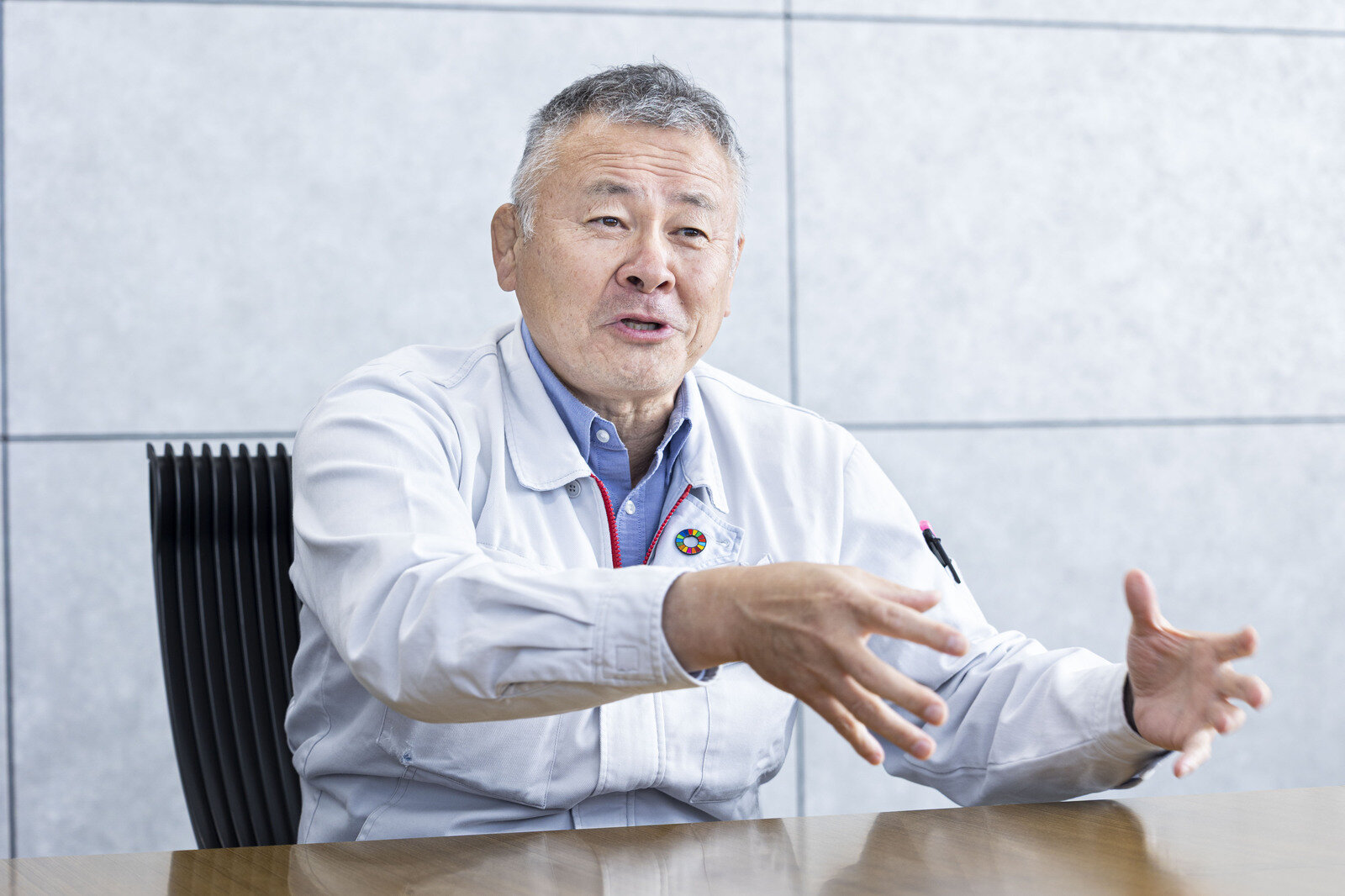
Losing the production lines means losing the ability to manufacture anything at all. The people who worked on those production lines are inevitably transferred to busier plants. The remaining teams inevitably lose their dynamism. This only strengthened our desire to take on new work.
As production was consolidated, empty spaces began to appear throughout the plant. Takahashi realized that these scattered pockets of vacant floor space would make it difficult to respond quickly when new work arrived. Therefore, he consolidated the remaining lines into one area, creating a large, continuous space for future production.
Despite their uncertain future, Takahashi continued to reassure his Genba employees.
Kazuaki Takahashi, Plant General Manager
Nothing had been decided yet. I kept telling the team that even if new work doesn't come right away, our TPS (Toyota Production System) skills will be an asset no matter where we go, so there is no need to worry. So there was no need to worry.
Then came the opportunity to produce batteries for BEVs.
Masahiro Yamamoto, the former head of the Miyoshi/Myochi Manufacturing Engineering Division and current general manager of the Global Battery Manufacturing Division, played a key role in planning the new battery operation. According to Yamamoto, Myochi’s strength lies in the wide range of manufacturing technologies it has accumulated over the decades.
Masahiro Yamamoto, Head of Global Battery Manufacturing Division
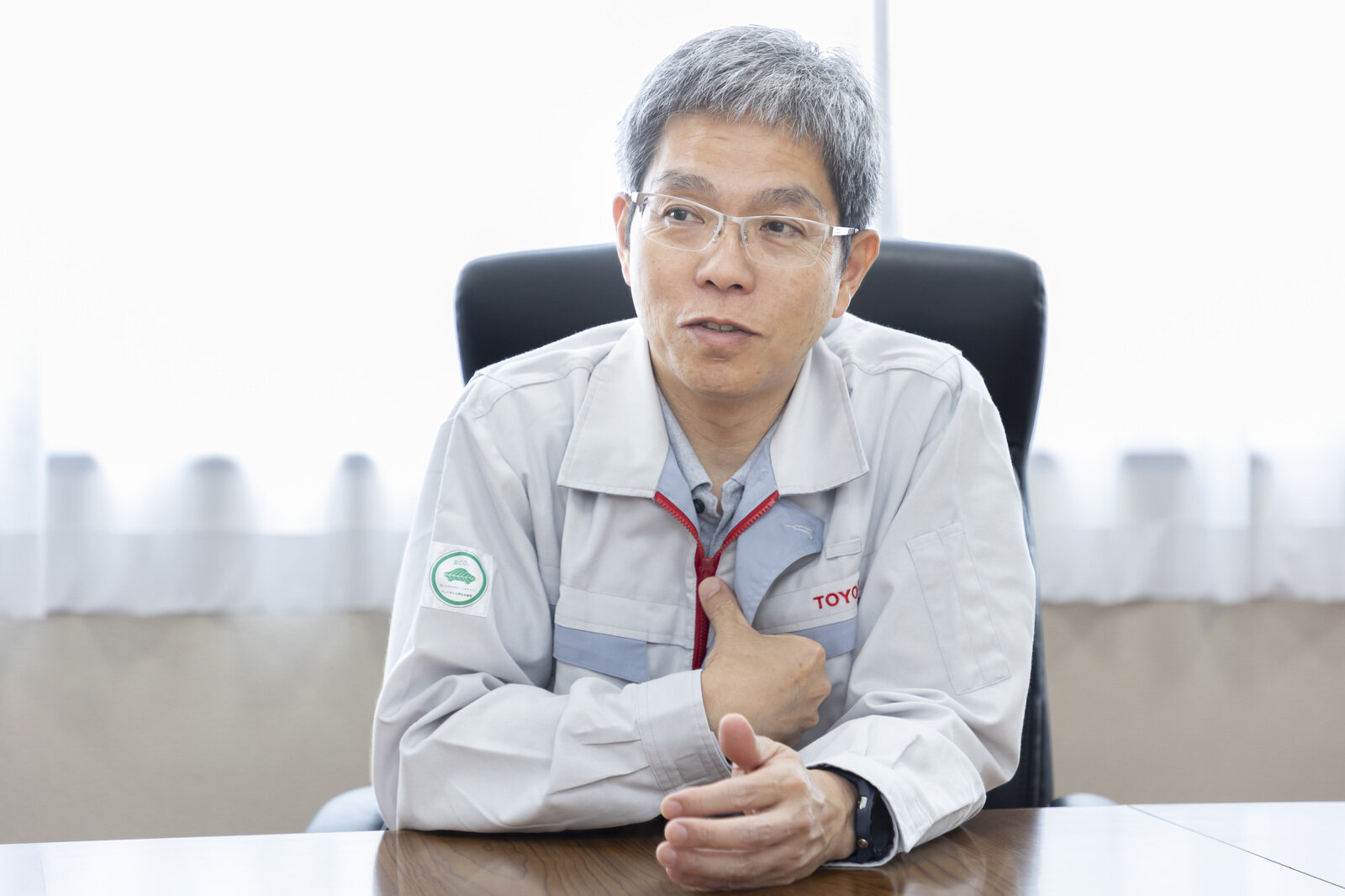
Together, the Miyoshi and Myochi plants handled not only machining and assembly but also the full range of production methods, including casting, forging, sintering, and heat treatment. Few plants have such a diverse range of capabilities. We spent many years competing against group and partner companies to continue producing parts, so we always needed to remain competitive. The spirit of embracing new challenges was deeply rooted in the plants, and I believe it helped us venture into battery production.
Just as the shift toward electrification was accelerating, Myochi was freeing up space. As Toyota expanded its in-house production of battery electric vehicle (BEV) batteries, the company needed a new site capable of mass production.
Through repeated changes, such as driveline transfers and the consolidation of casting operations, Myochi strengthened its people and production capabilities, preparing itself for whatever came next.
From fire and dust to micron-level cleanliness
Toyota set out to standardize battery production technologies and equipment specifications across the Toyota Motor Corporation, Toyota Battery, and Prime Planet Energy & Solutions (PPES)—its joint venture with Panasonic—and to roll out production lines based on these common specifications worldwide.
PPES’s Himeji Plant, already in operation, served as the model. Its equipment specifications became the basis for Myochi’s battery line.
However, translating the Himeji specifications to Myochi involved a big decision. Constructing a new building on vacant land would offer freedom in arranging the layout. Instead, Myochi chose to repurpose an existing foundry building whose operations were winding down. In essence, he built a battery plant inside it.
Masahiro Yamamoto, Head of Global Battery Manufacturing Division
We are in an era where competitiveness is essential for survival. Cost and speed are both critical factors. Setting up a battery plant inside an existing structure is faster than building one from scratch, which was our top priority at the time. However, we were forced to adapt the layout to existing constraints, such as the positions of pillars and the height of the building.
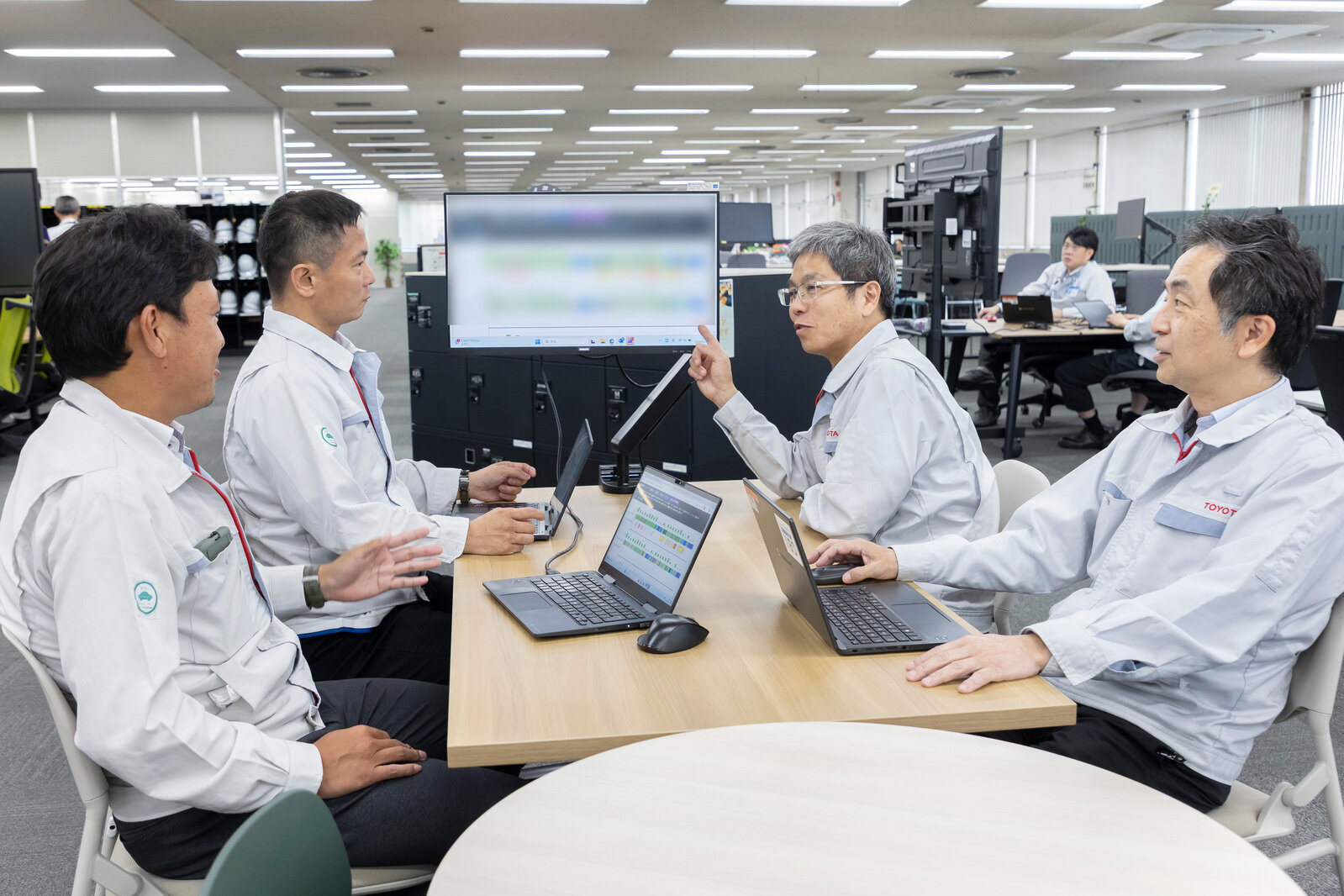
The task of carrying out this “plant within a plant” approach fell to Global Battery Manufacturing Division GM Yoshikazu Kato, who began his career as a Foundry Division technician and had chiefly worked on automation equipment within the Myochi Plant.
One Saturday in May 2022, GM Kato was at work on a day off when his supervisor suddenly informed him of the assignment: “Within three years, a battery line will start up at either Myochi or Shimoyama, and we want you to play a key role there.” The assembled team had fewer than ten members. Only two were from the Myochi Plant, with the rest having been gathered from Shimoyama and other facilities throughout the company. None had any experience working with batteries.
Kato’s job was to design a layout that managed to incorporate the PPES Himeji Plant’s equipment specifications within the confines of the Myochi building. Previously used as a foundry, the structure’s footprint was 30% smaller than the Himeji Plant, and its existing pillars could not be moved. He also found pillars that were irregularly spaced, as well as walls and pipes that did not show up in the drawings.
Kato recalls those early days:
Yoshikazu Kato, Group Manager, Global Battery Manufacturing Division
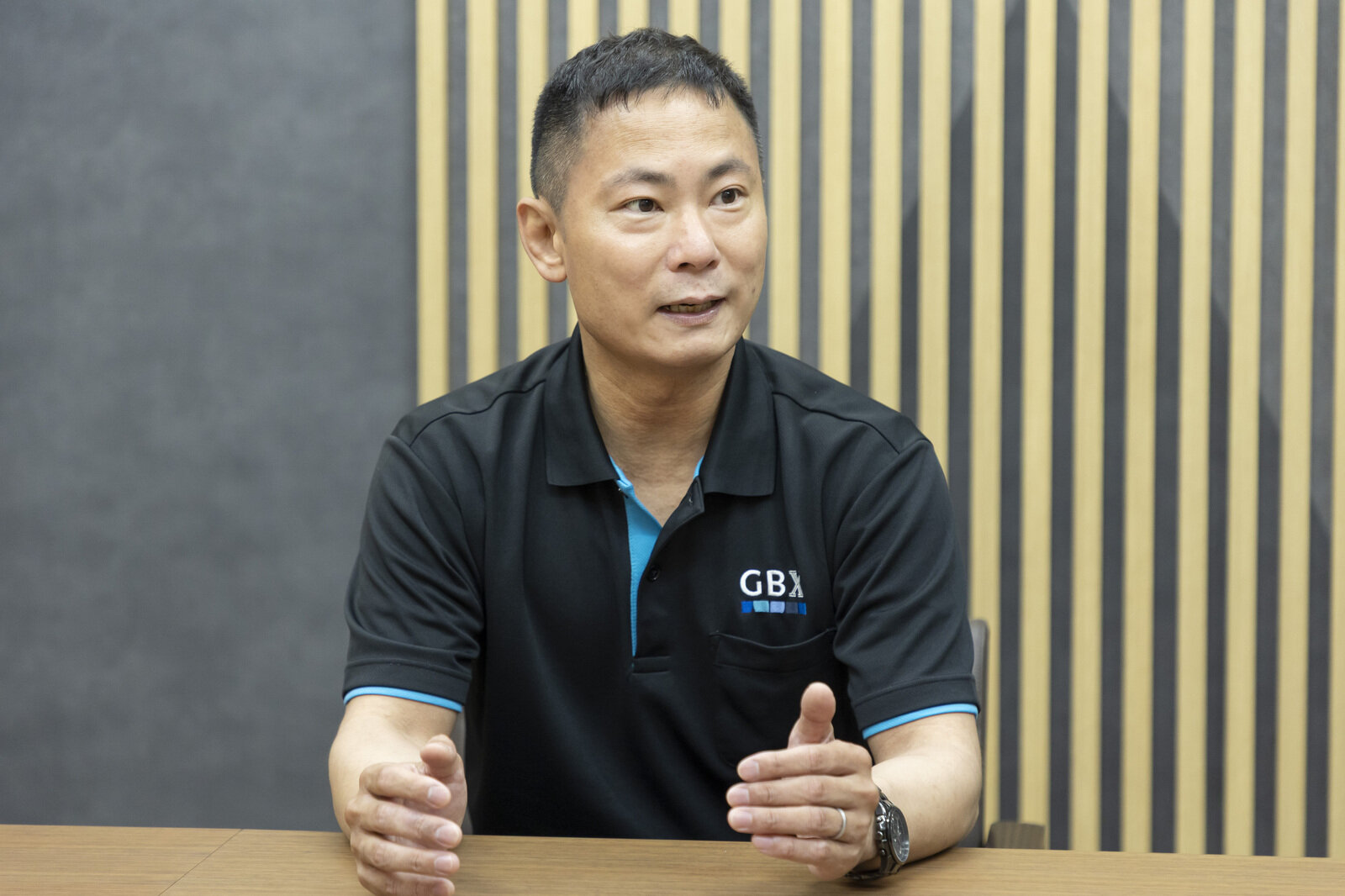
We started completely from square one, with all of us trying to figure out what we could do. In a battery plant, each stage in the production process is walled off from the others. Since there isn’t much room between the equipment and the walls, you have to bring in the equipment in order, starting with those furthest from the entrance. That order can’t be changed. We needed to coordinate everything simultaneously, checking the contractors’ work schedules, the layout, and the progress on site. Before the equipment specifications were even set, within two months we needed to have the positions of the building’s walls finalized.
For certain production steps, the equipment required a height of nearly 12 meters. Where there was not enough vertical clearance, even newly finished floors had to be dug up.
To determine the position of every pillar and every door, GM Kato and his team made countless visits to the site and ran many simulations using design software. After much painstaking deliberation, GM Kato presented his layout proposal to Plant General Manager Takahashi.
Yoshikazu Kato, General Manager, Global Battery Manufacturing Division
“If you think you can do it, go ahead.” Those words really moved me. I was determined to find a way to fit everything in this space, and after drawing dozens of different layouts over the course of three days, the logistics flow still hadn’t fully clicked into place. But hearing those words from the plant manager gave me a great deal of reassurance.
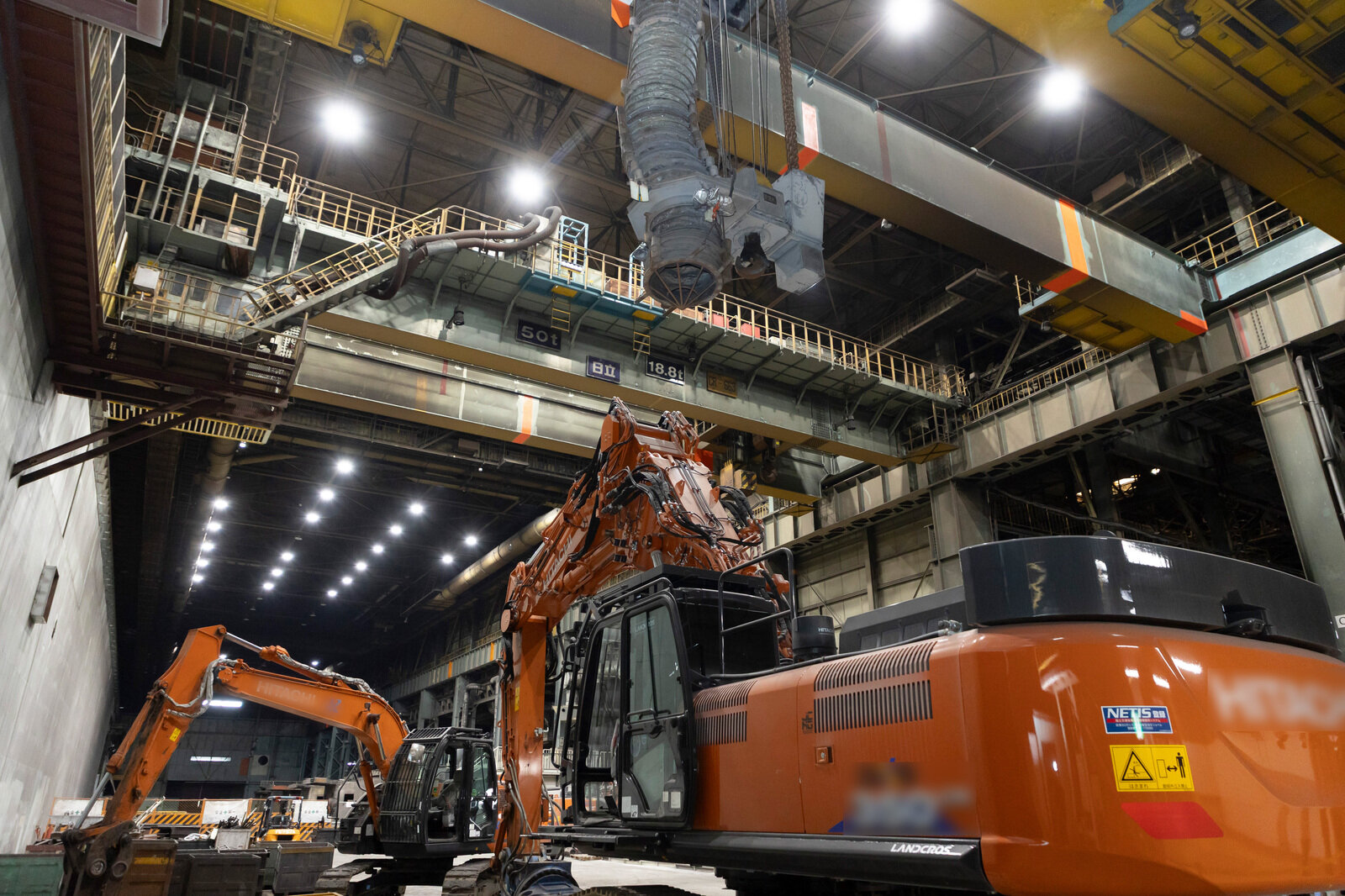
Once coated in layers of sand and dust from casting molds, the building was now stripped of all walls and interior fixtures, transforming into a vast, empty space whose only features were the exposed steel beams. Workers repaired the leaky roof, and one by one dug up the old pipes and metal frames missing from the blueprints, diligently stripping away half a century of grime as they went.
Three years after construction began, the building began operating as a battery plant.
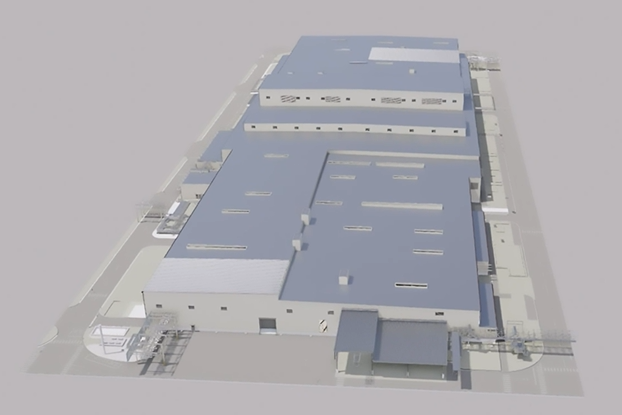
Inside the transformed building lay the polar opposite of a foundry, a world where everything must be meticulously controlled. Foreign particles are controlled down to just a few dozen microns—roughly half the thickness of a human hair.
The temperature and humidity are tightly controlled, and employees cannot even drink water while working because introducing moisture can affect the environment. Covered head to toe in dust-proof suits and masks, employees are barely recognizable to their colleagues. The shift to a battery plant also meant big changes for those who work there.