



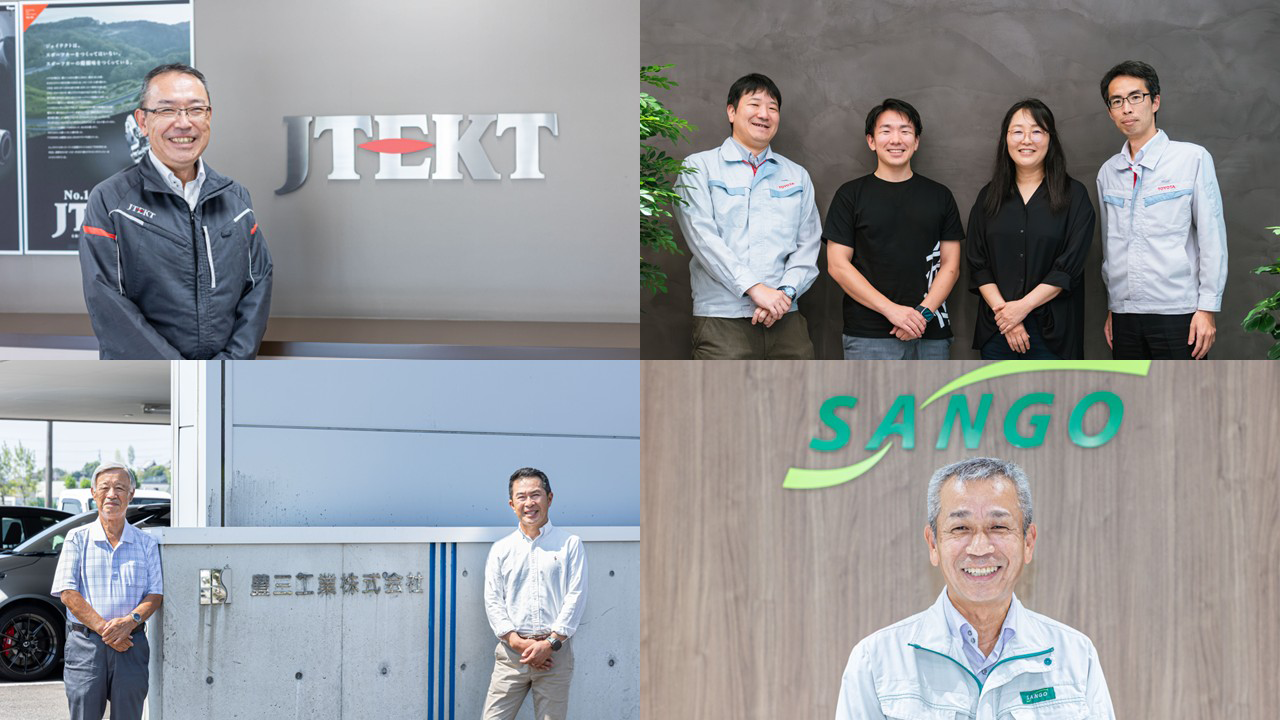
Miyoshi Plant has long faced fierce competition as a specialist in chassis components. As major suppliers expand and emerging suppliers in China gain strength, we look at how people across the plant are staying united in spirit and evolving to keep moving forward.
Recurring newcomers: Working to relieve employee burdens
You can transfer operations outside the plant and change the plant's layout, but people’s hearts do not change so easily. Each shift in products or production methods forces employees to let go of hard-earned skills and start over from scratch.
Miyoshi Plant has begun collaborating with Woven by Toyota (WbyT) on ways to relieve that burden.
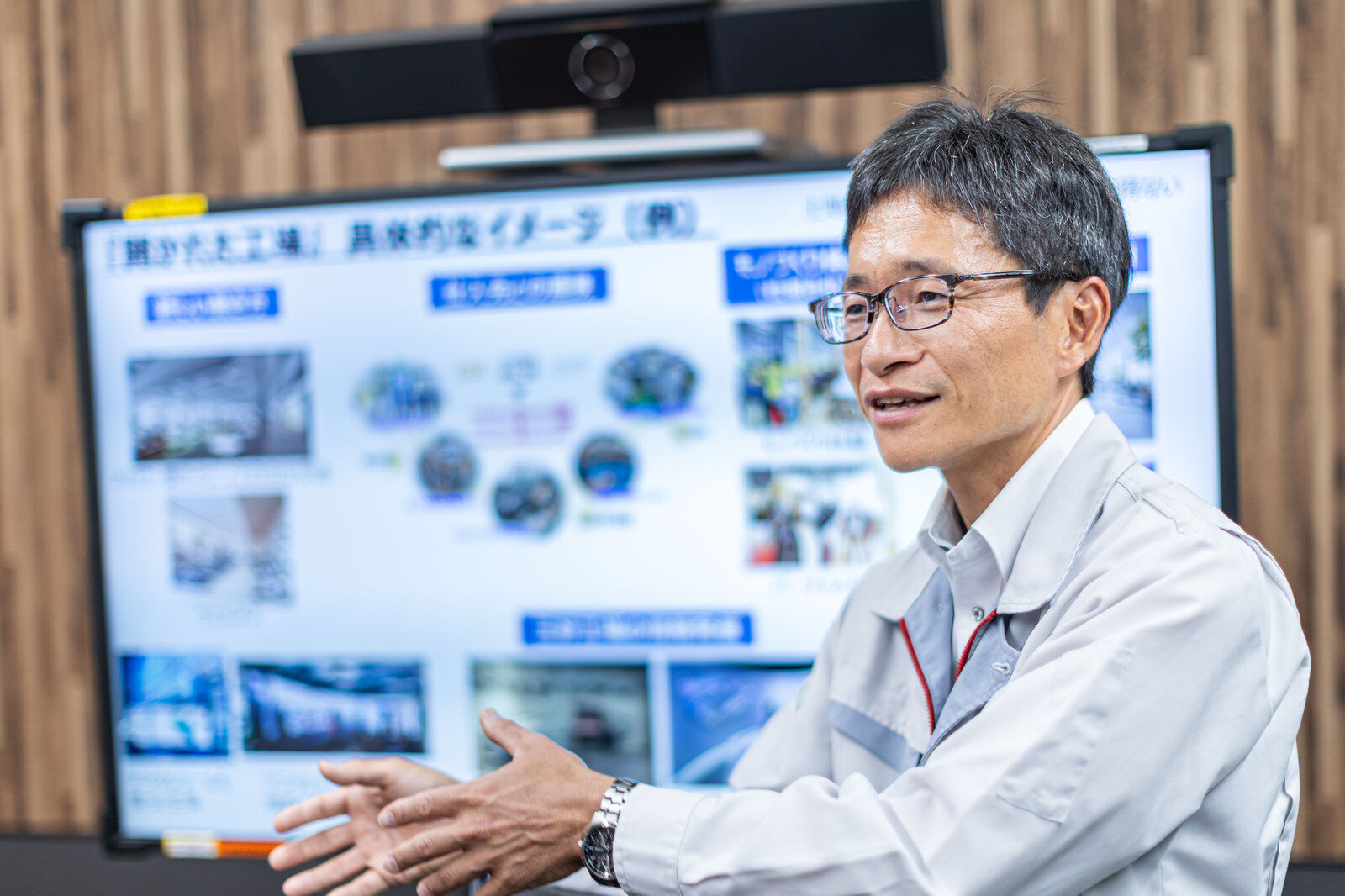
The demonstration trials are being conducted on the driveshaft line launched in 2022. Yusuke Mototake, Assistant Manager of the Plant Support Dept. at Miyoshi Plant, tasked with building a production line with an eye to the future, describes the collaboration as follows:
Assistant Manager Mototake, Plant Support Dept.
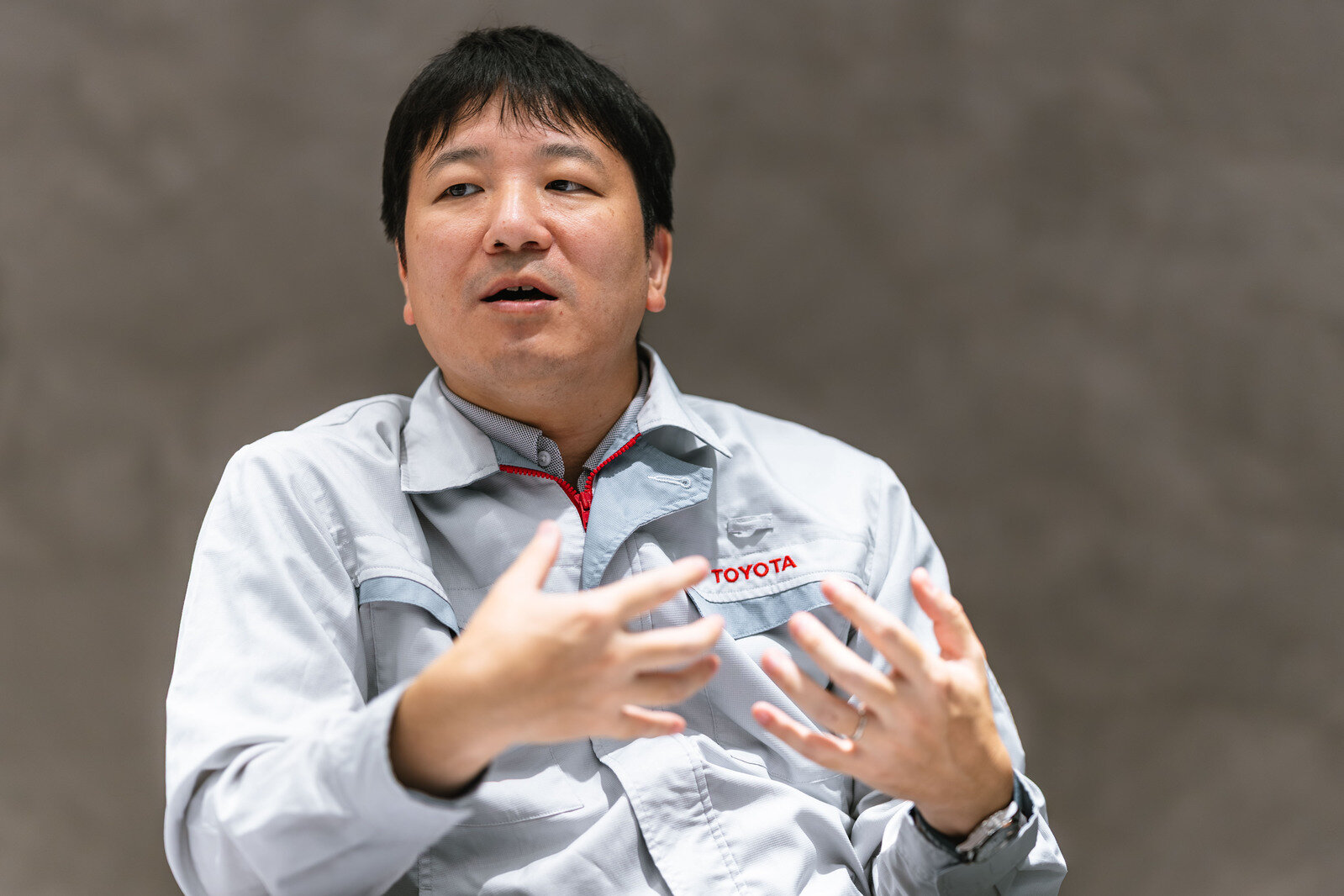
Factories are often described as smelly, dirty, and dangerous—and the reality is, they do have their own distinctive smells and hazards. Work starts early in the morning and runs late into the evening. The people on the plant floor put up with a lot in their day-to-day lives.
With that in mind, our collaboration is guided by a shared goal: to move toward a future where working at a plant enriches people’s lives.
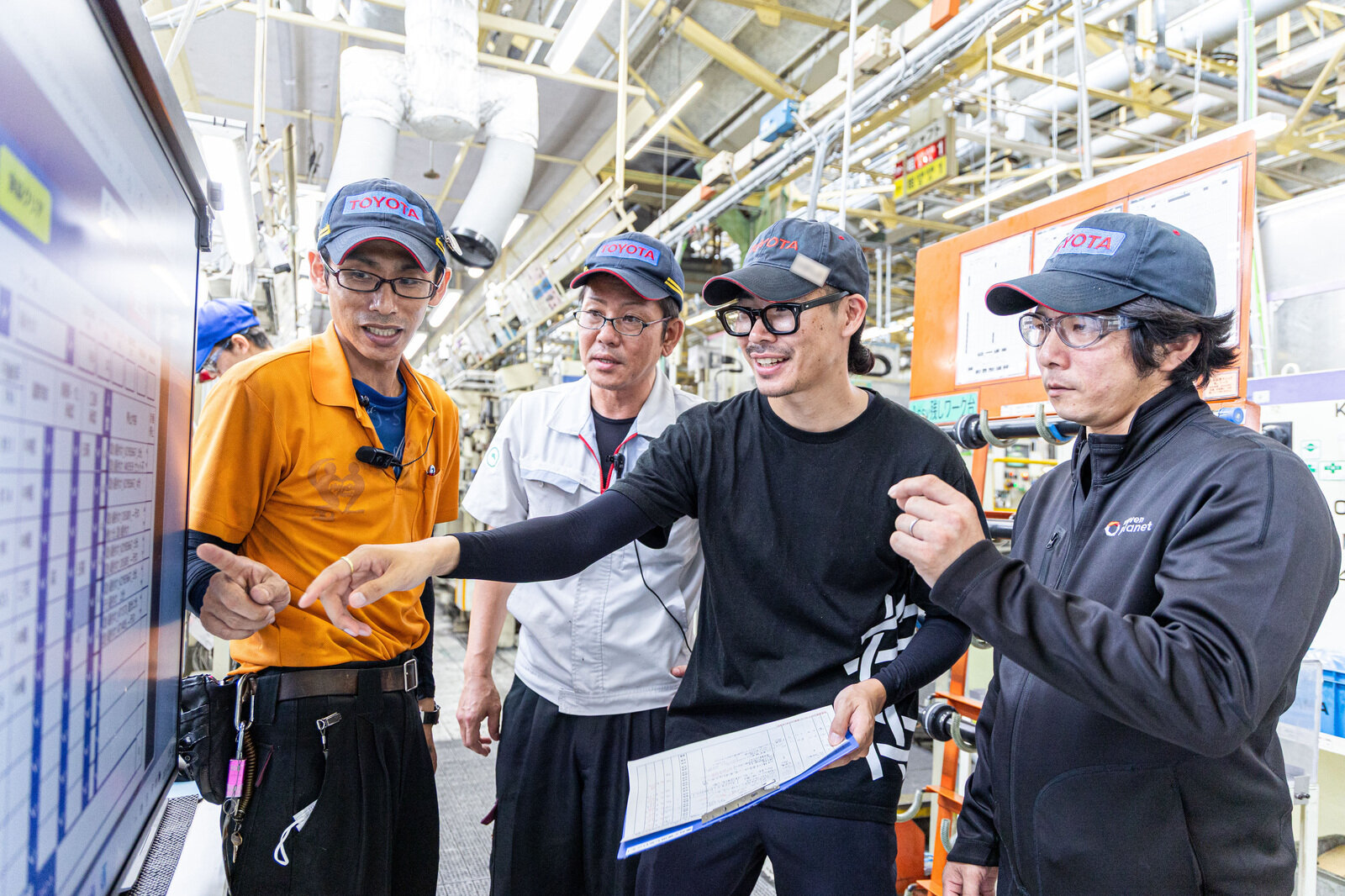
When the new line was launched, plant workers noted how time-consuming it was to compile equipment issues. Previously, they had to visually check each machine, memorize the details, and record them by hand or through manual input. The process was labor-intensive and prone to error. They also had to create their own tables and graphs for analysis.
In this project, equipment problems occurring on the line are automatically aggregated on the server. The project team is developing a system based on feedback from the plant floor that displays all problem information and analysis results on a single screen without requiring any manual input.
Satoshi Tanabe, WbyT
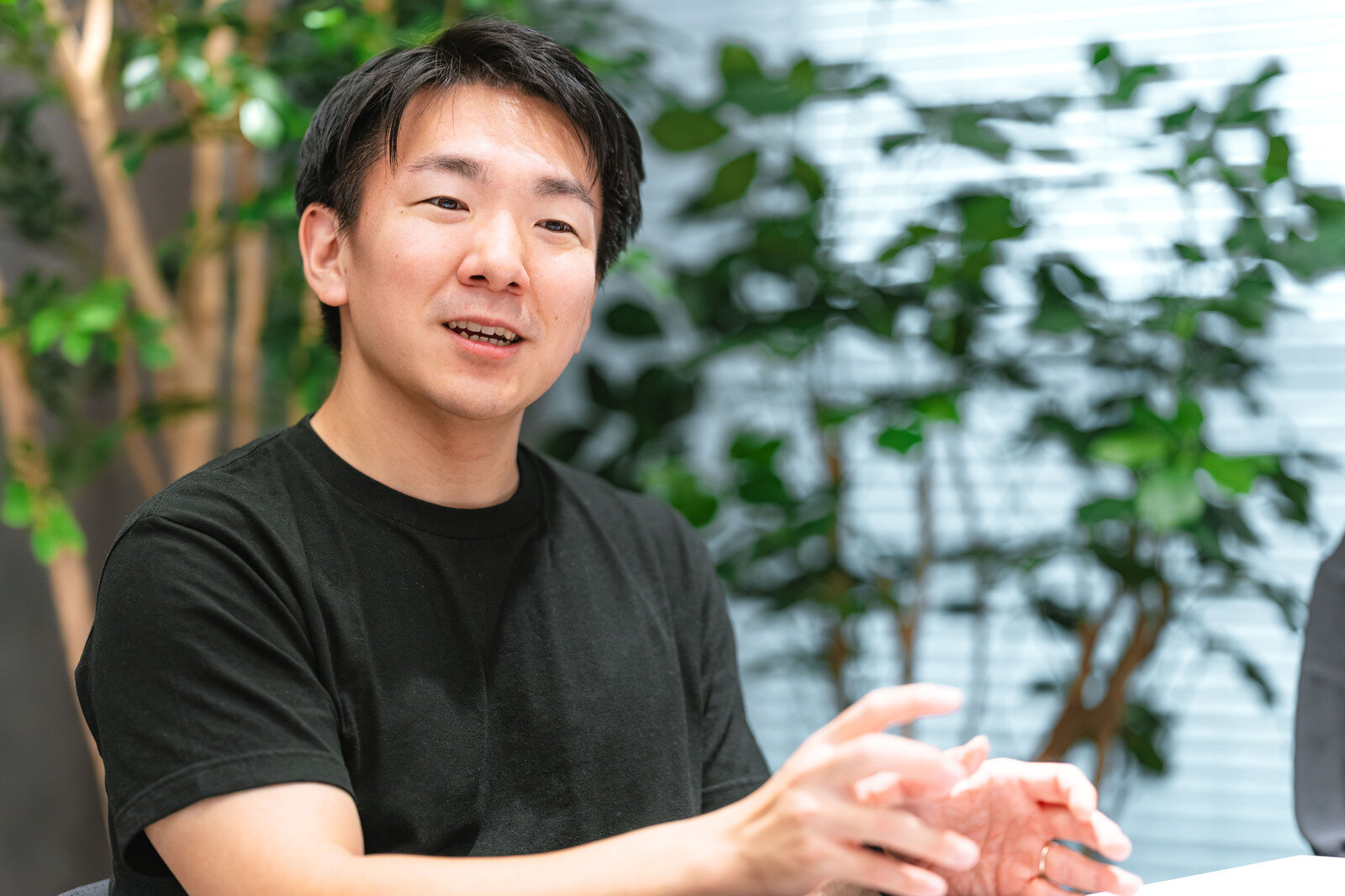
Even in demonstration trials, there are usually restrictions on the range of data that can be disclosed to collaborators. However, everyone at Miyoshi Plant gave us the data we needed for proof-of-concept.
Seeing the site in person is for sure important, but if you’re there for two hours, you can only gather two hours’ worth of information. Thanks to Miyoshi Plant's cooperation in providing data, we can obtain a lot more information—two or three months’ worth. Having that allows our engineers to try new things.
Right now, we’re not limiting ourselves to conducting the demonstration trials on a single line. We’re looking to extend the initiative to other lines as well. What we’re aiming for is a future where this initiative is expanded to other plants, too.
Ian Kim, WbyT
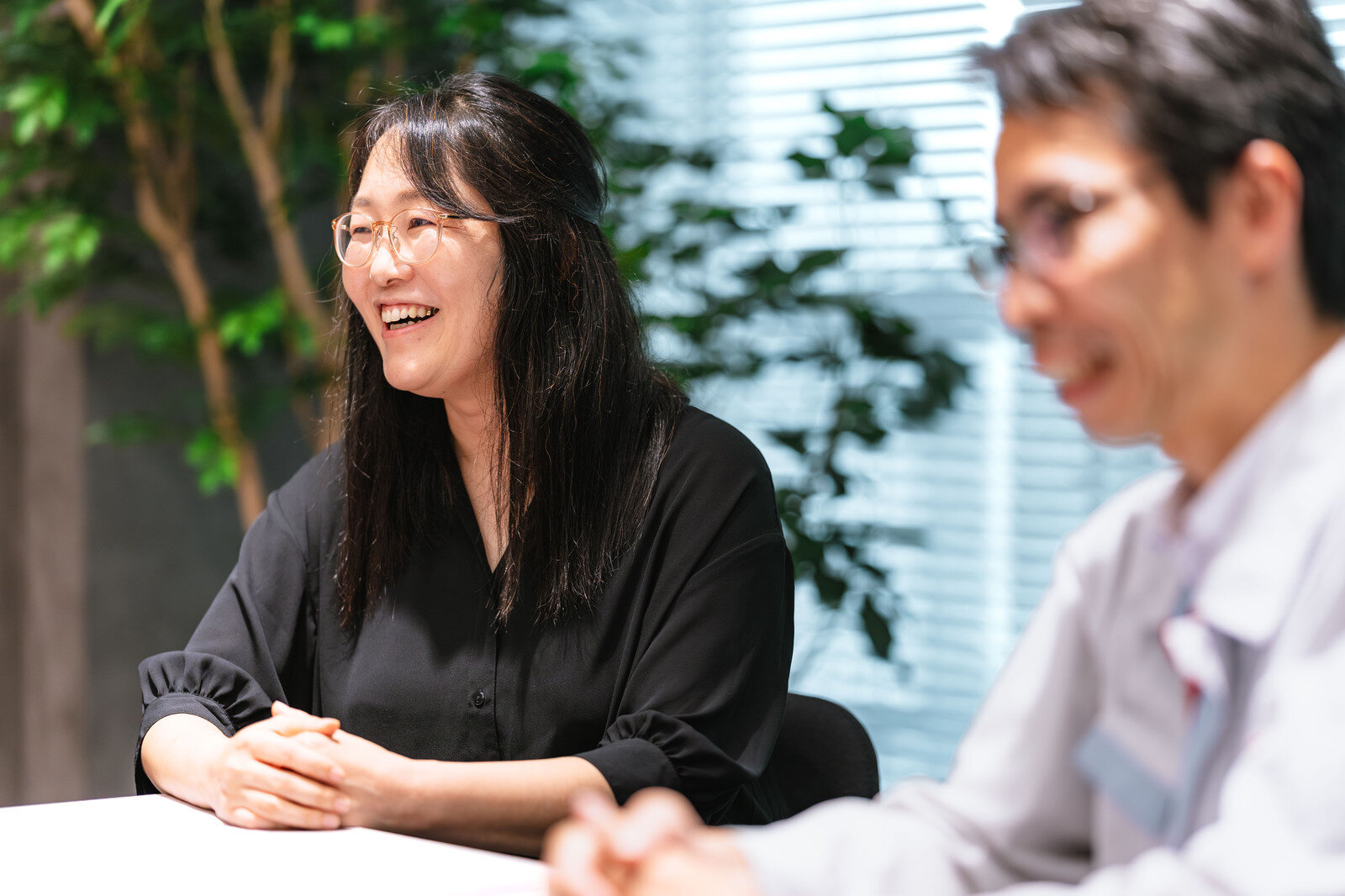
Everyone at Miyoshi Plant understands that, with the future uncertain, it’s important not to lock things down too rigidly from the start. They recognize the need to remain flexible. Rather than insisting that every objective be fully defined before taking action, they allow us to come to the plant, actively gather information, and make proposals.
We’ve been able to build a very close working relationship. This collaboration genuinely feels exciting to me.
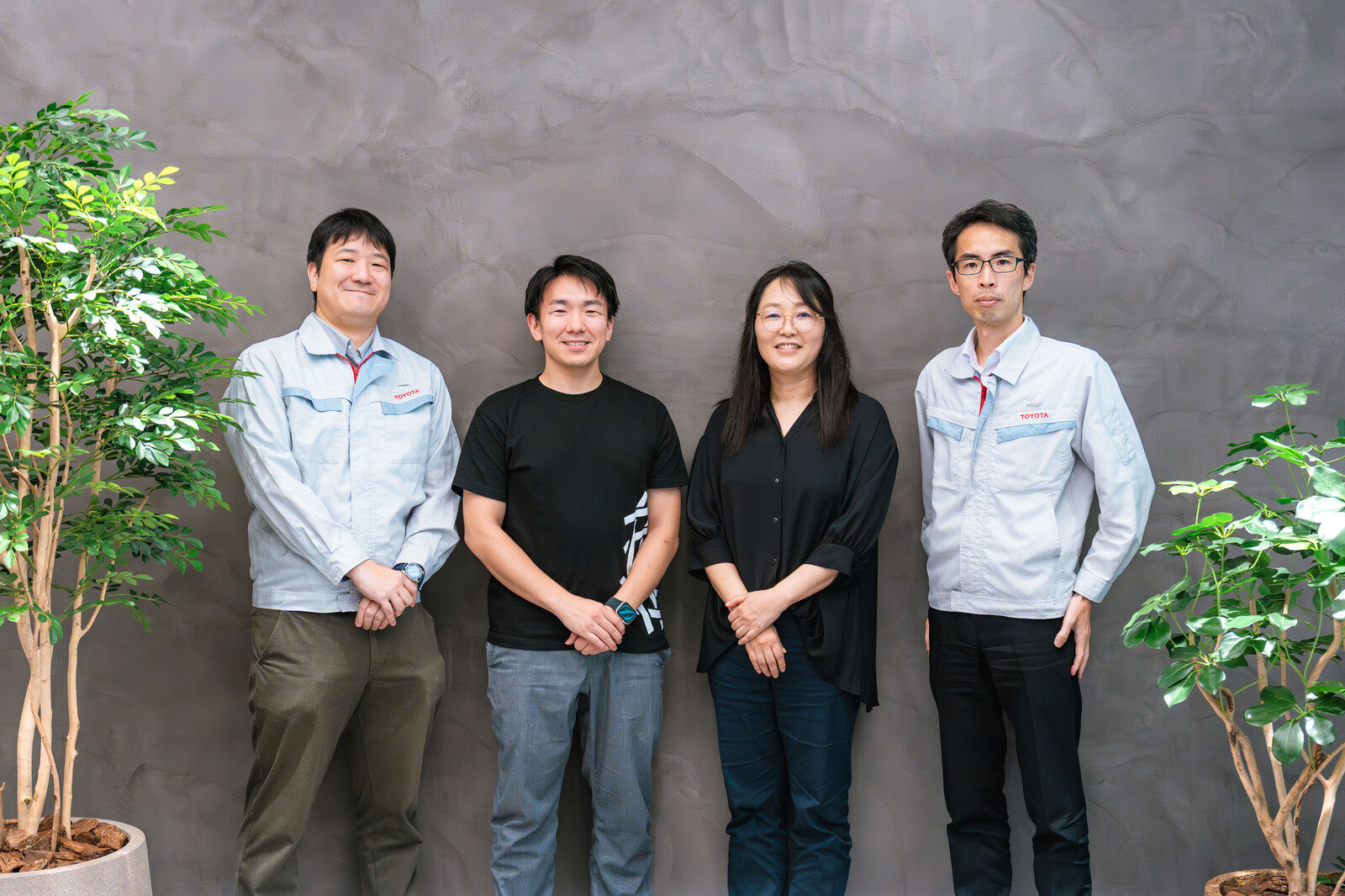
We’ve highlighted improvements to the crew stations used for meetings and breaks several times in this series. Of these, the one that truly stands out at Miyoshi Plant is the added greenery.
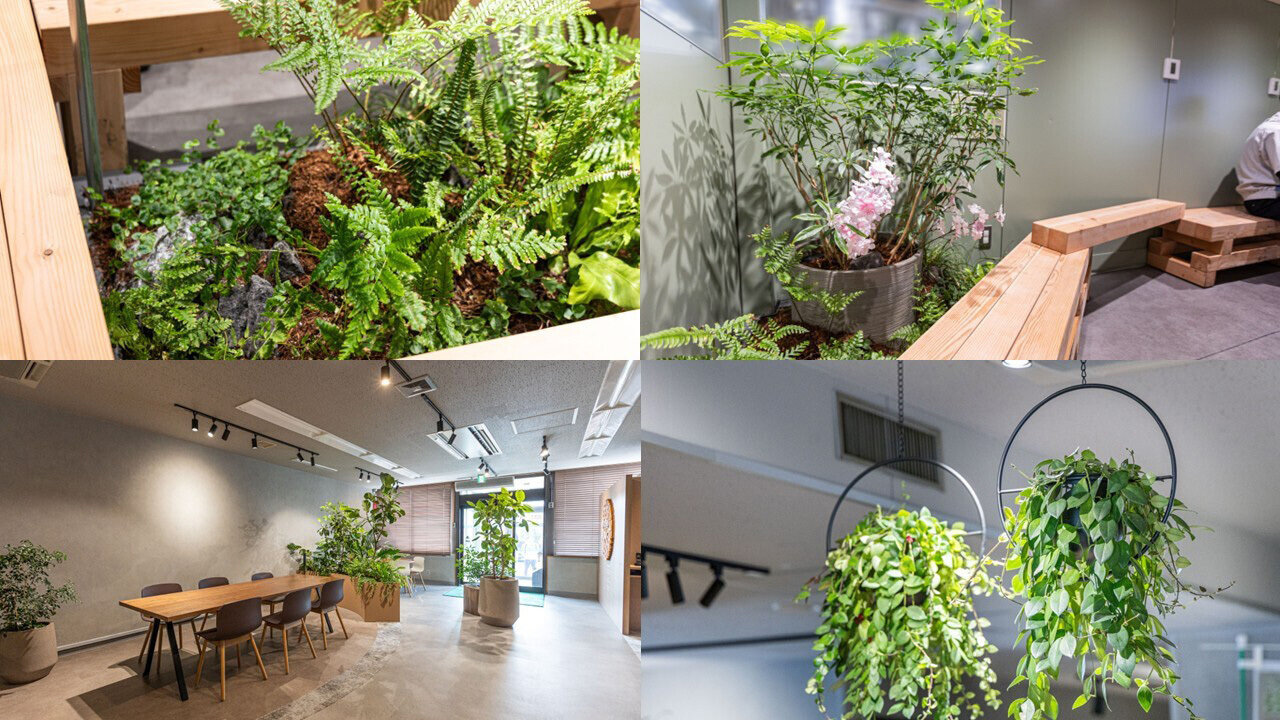
This use of greenery incorporates the Genki-Kûkan® concept being studied by Toyota's Frontier Research Center and Toyota Central R&D Labs to explore whether it may have a soothing effect on people working at the plant. Although the concept has been tested in various other environments, this is the first attempt to incorporate it into a plant.
General Manager Yuji Kimura, Plant Support Dept.
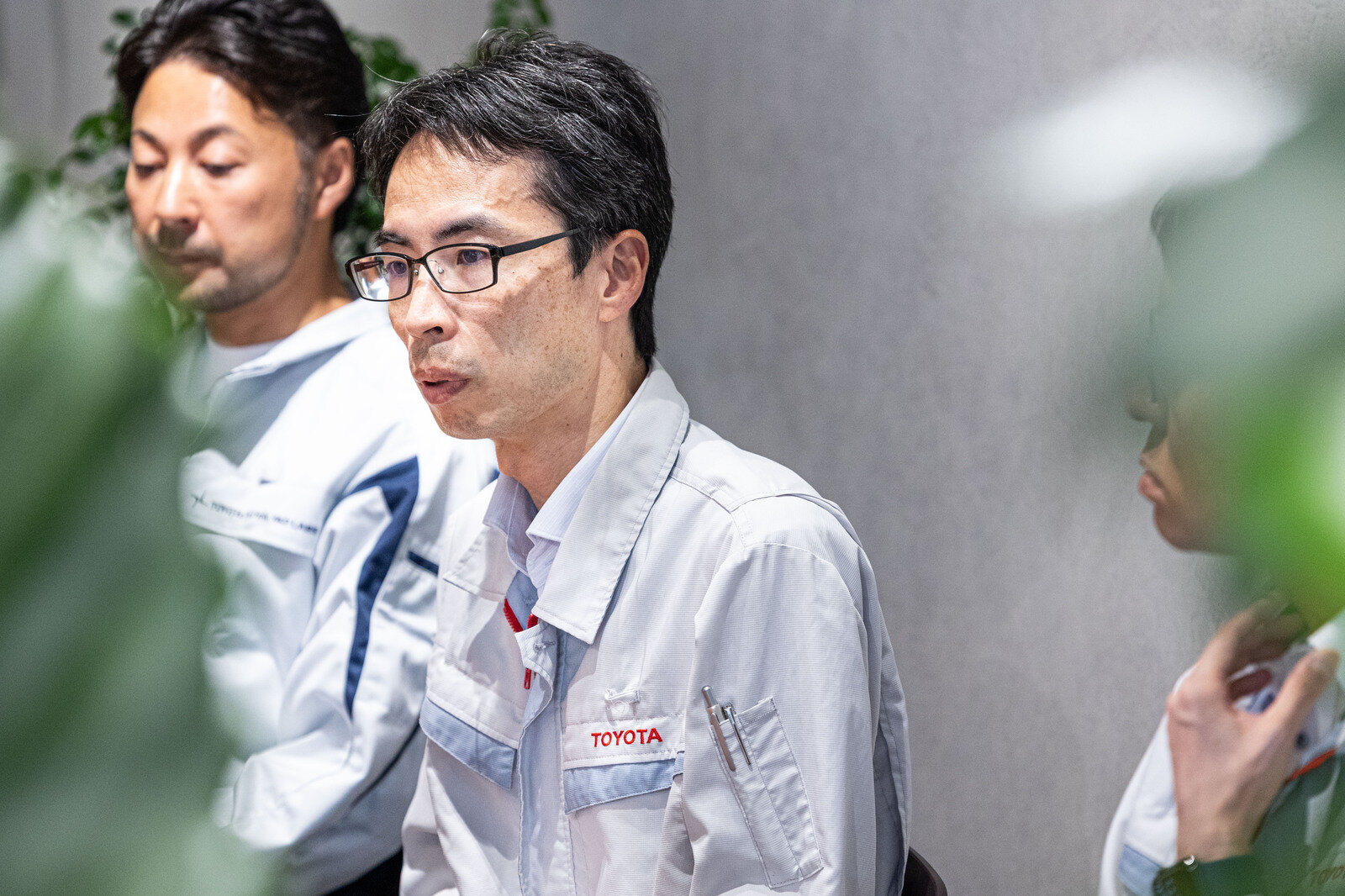
Plants are often dominated by rows of impersonal machinery, making them seem far removed from greenery. Yet we want the people who work there—the very people who support Toyota—to have a space where they can recharge.
Having endured so many changes, Miyoshi Plant seemed uniquely capable of taking on an untested initiative like this. That’s why we went ahead with it.
At present, biophilic design* has been introduced in two locations: the entrance of the administration building and the central break area inside the plant building.
* A design approach that aims to improve health and wellbeing by incorporating elements of nature into a space to satisfy the human instinct to connect with nature.
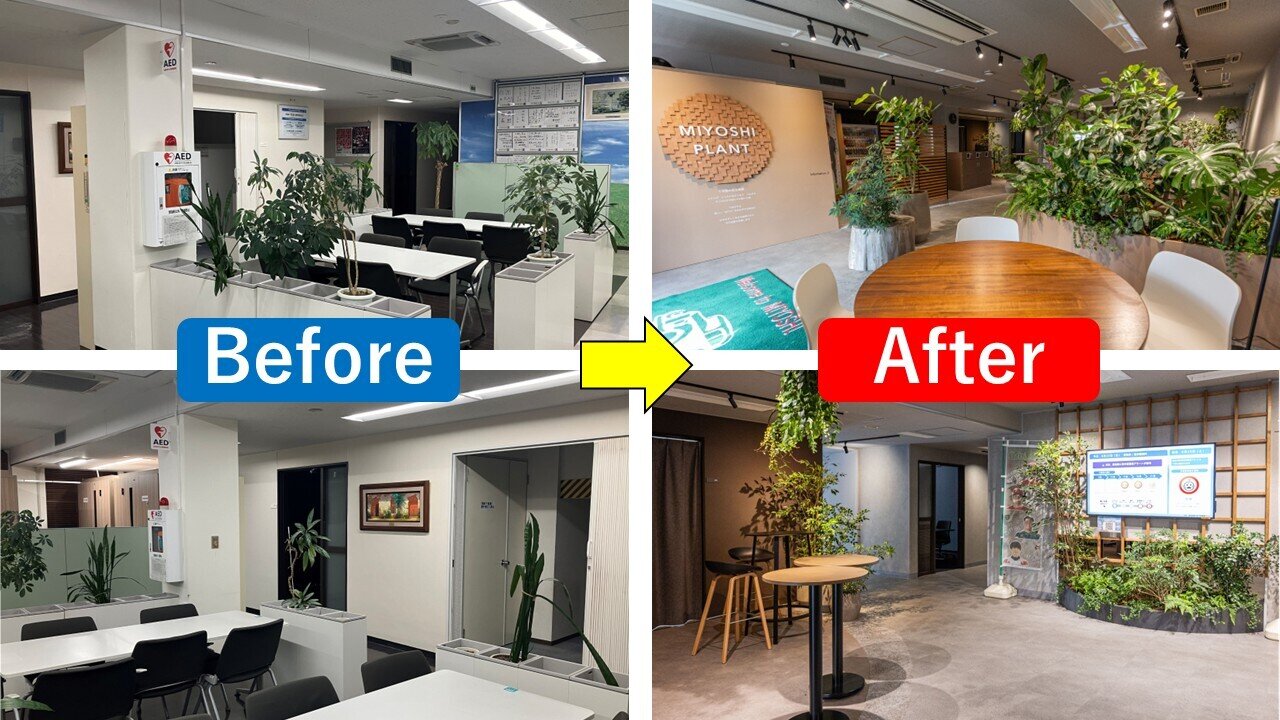
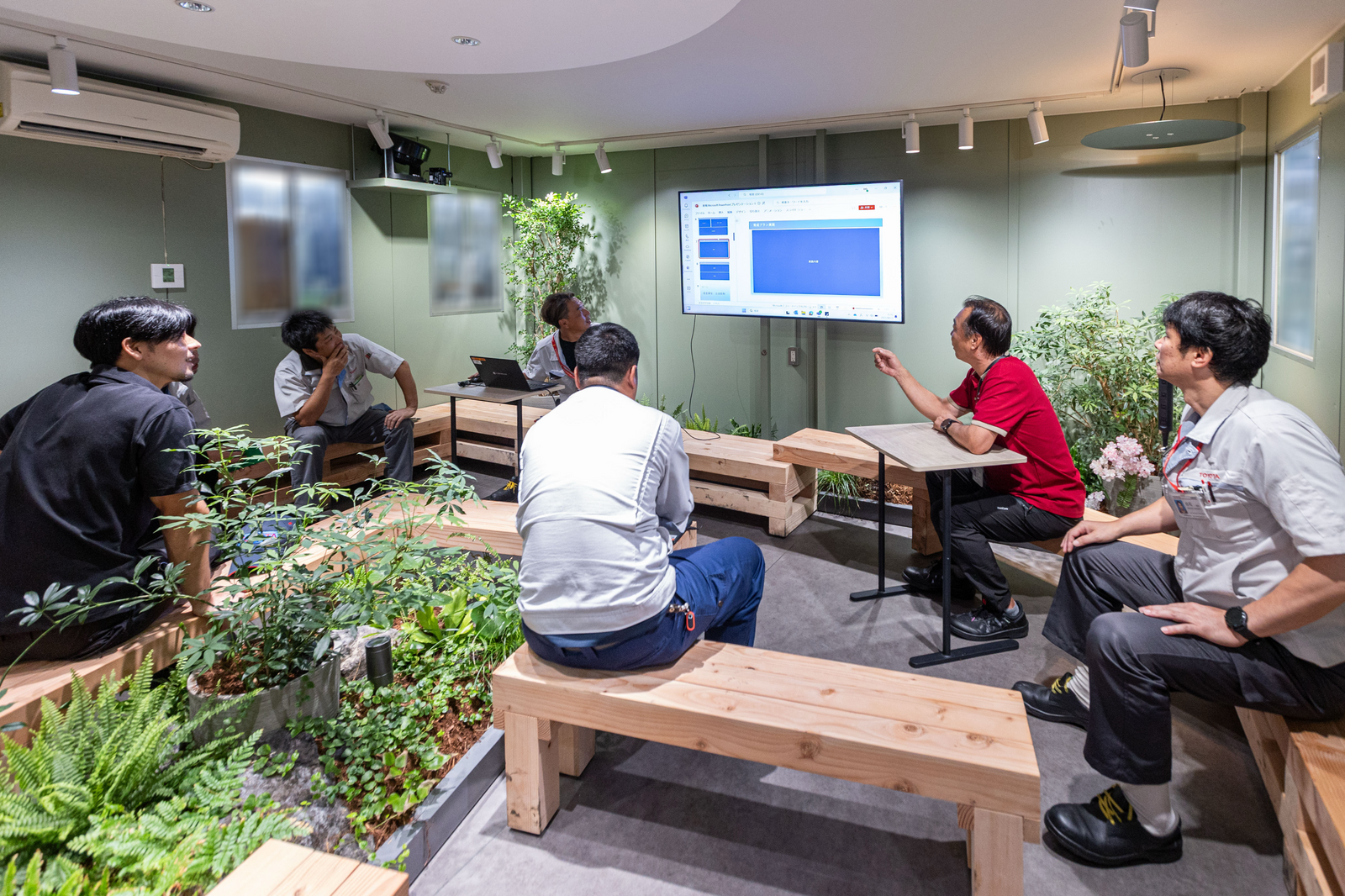
In a break area inside the plant building, a space filled with the scent of wood was created, offering workers a place to relax and recharge.
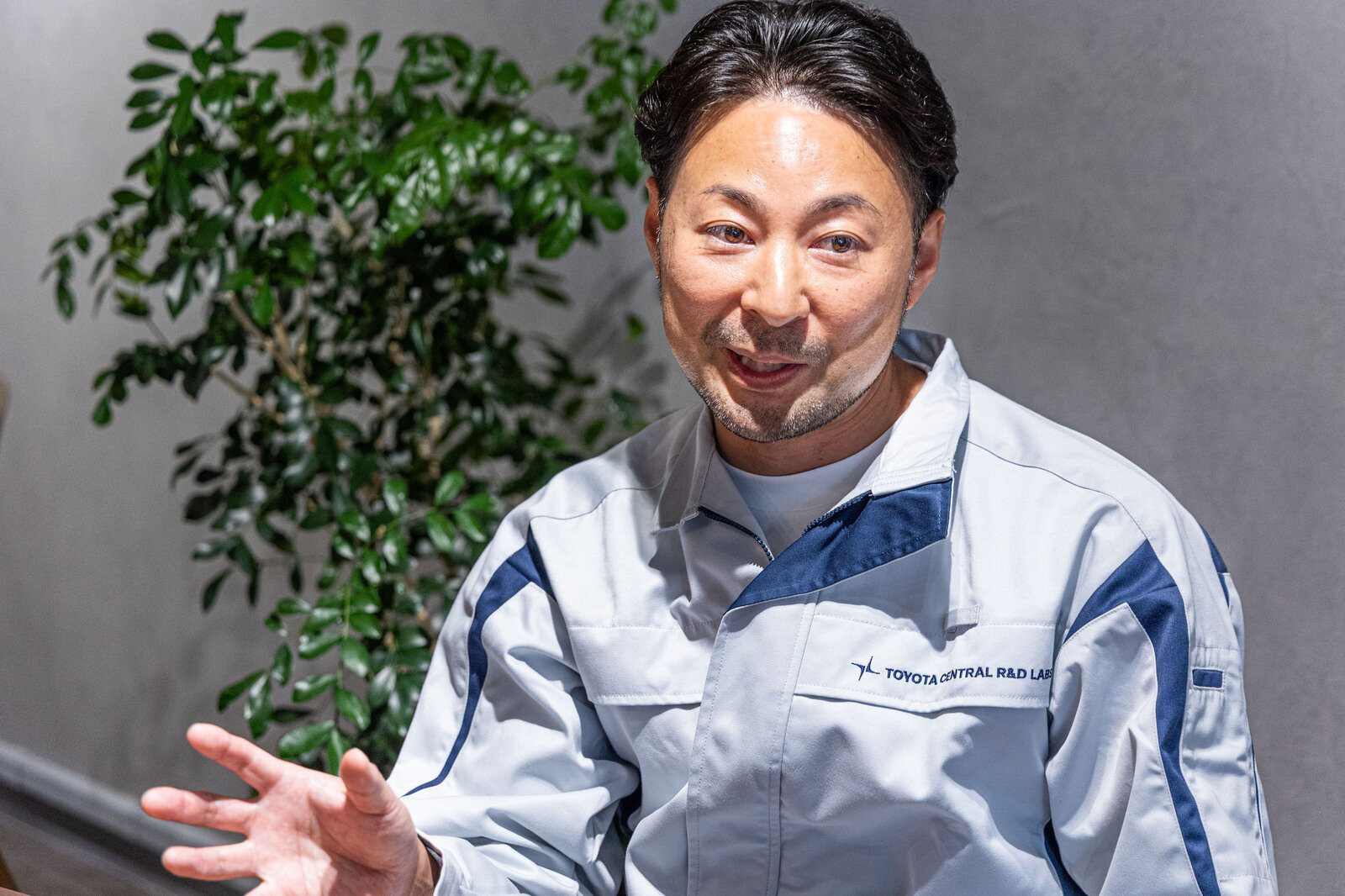
Akinori Ikeuchi, Toyota Central R&D Labs
Until now, our research has focused mainly on office spaces, so we're both excited and a little anxious about how plant employees will receive it.
Until now, our surveys have centered on emotional responses such as relaxation, vitality, and concentration. Going forward, we plan to incorporate plant-specific perspectives as well, asking whether greenery can help reduce operational errors or strengthen safety awareness, as part of our ongoing effort to better understand its effects.
Research Leader Masakazu Ito, R-Frontier Div.
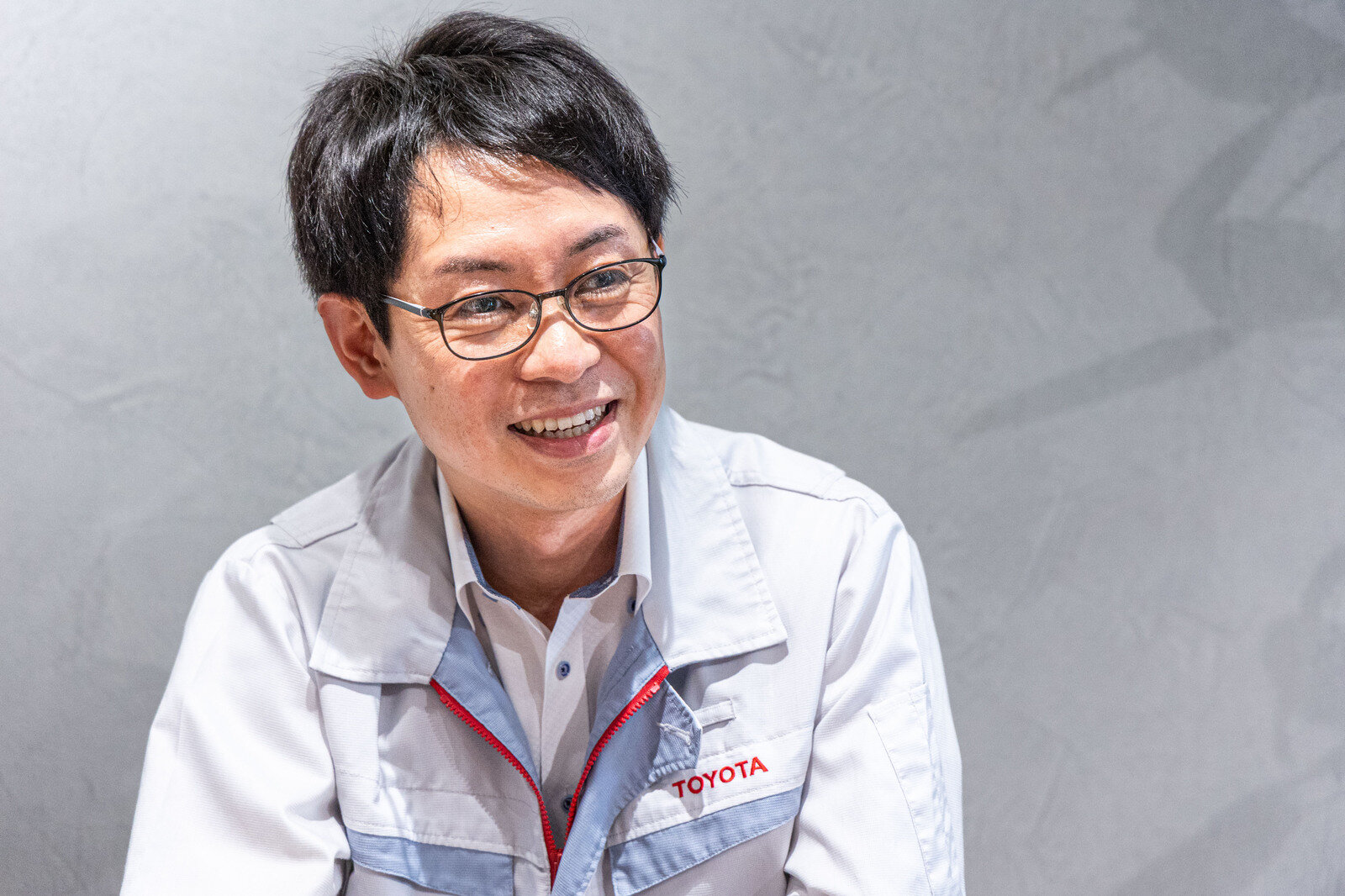
Our goal goes beyond wellbeing within the company. We want to give back to society by spreading happiness. To make that possible, we believe it is essential to first conduct thorough verification at the Miyoshi Plant and carefully evaluate both the benefits and the challenges. Drawing on insights gained on the ground, we will continue refining our approach as we steadily expand this circle of happiness into society.
Through collaboration with WbyT and the introduction of the Genki-Kûkan® concept, the Miyoshi Plant is actively incorporating outside perspectives and taking on new challenges together with external partners. Perhaps this first-of-its-kind initiative for a Toyota plant has been made possible by the Miyoshi Plant’s many experiences with business transfers and its long-standing commitment to seeking coexistence with partner companies.
Even now, part of the plant landscape continues to evolve: the clock tower rising above the main gate.
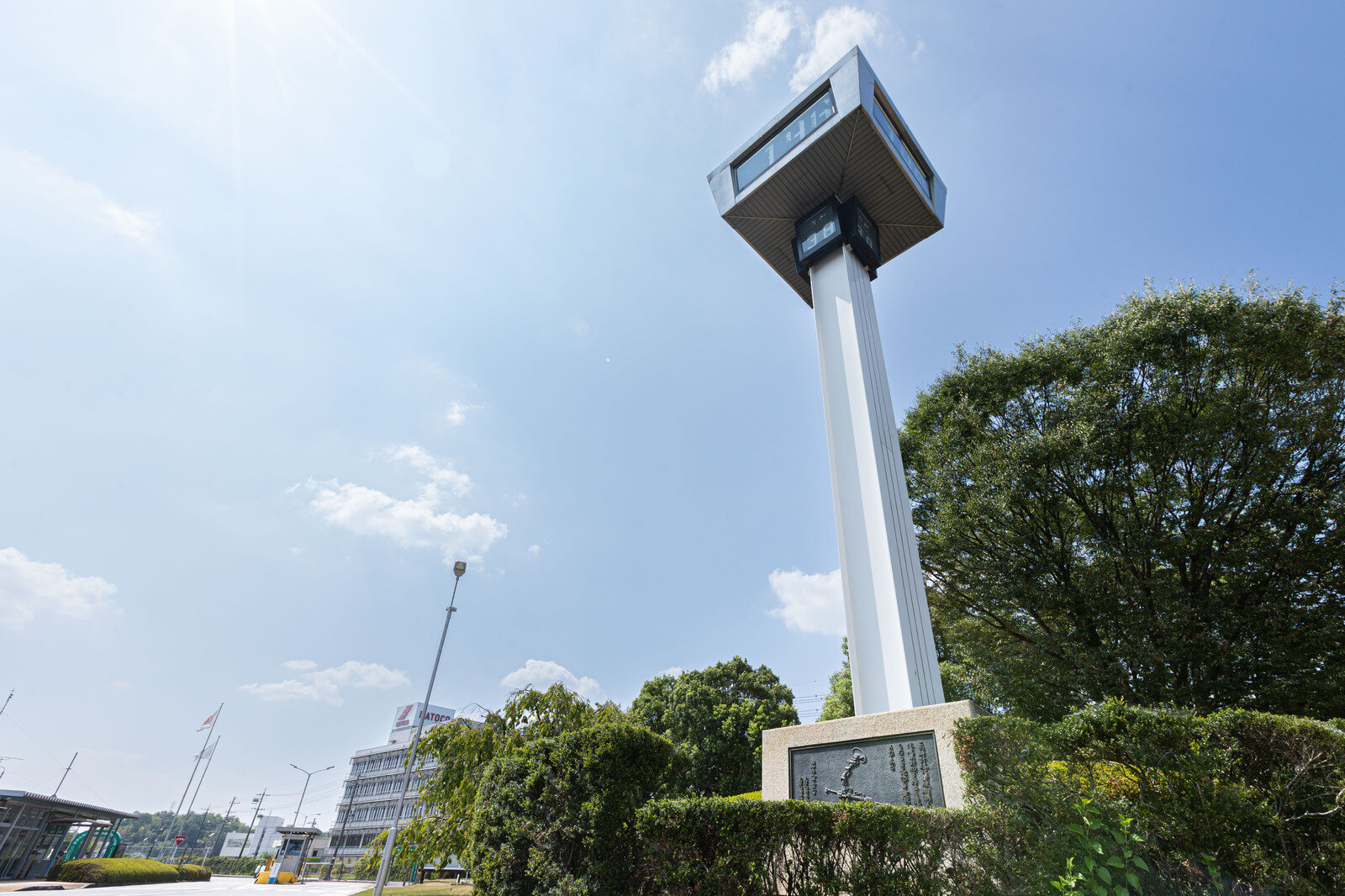
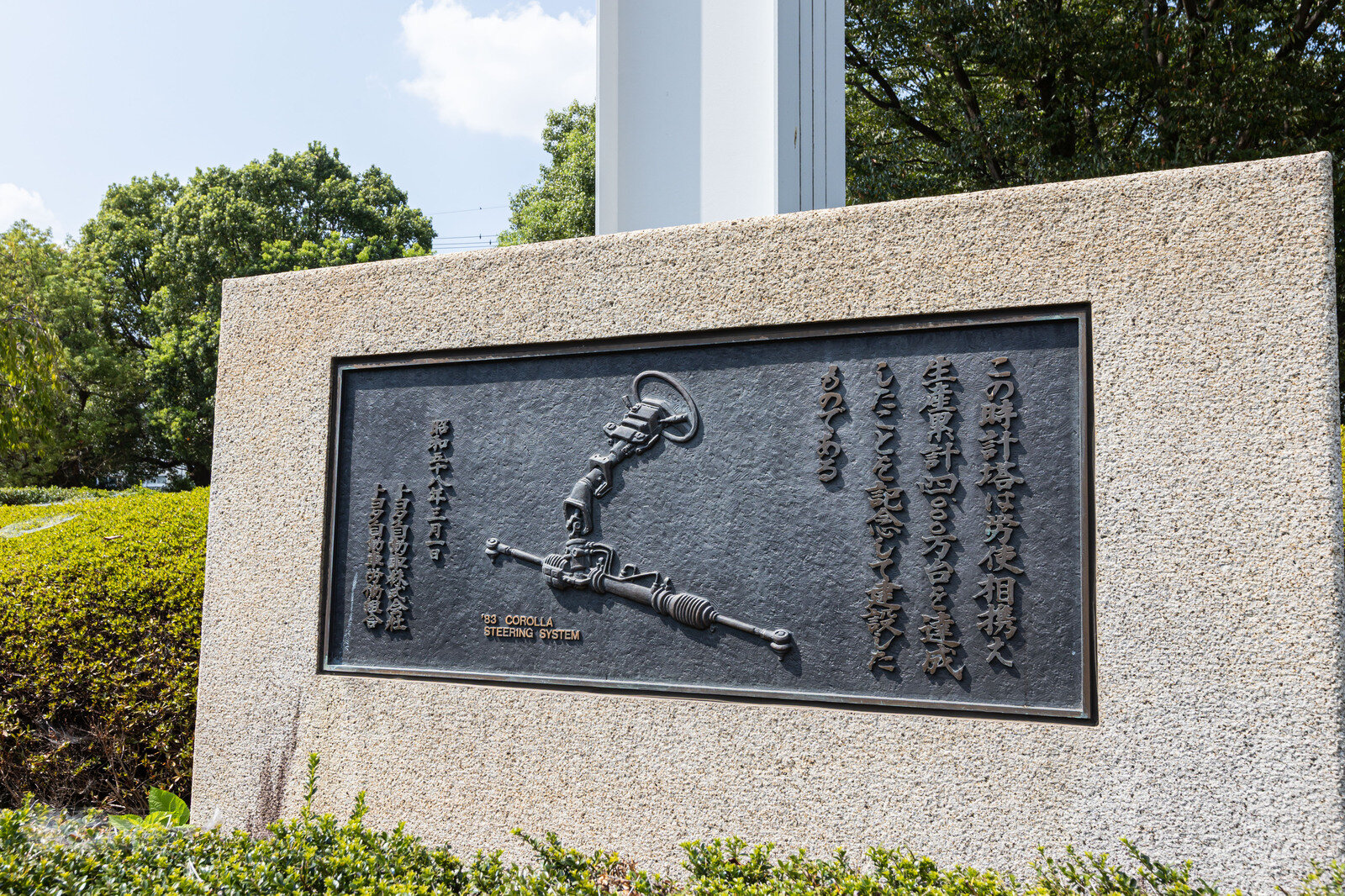
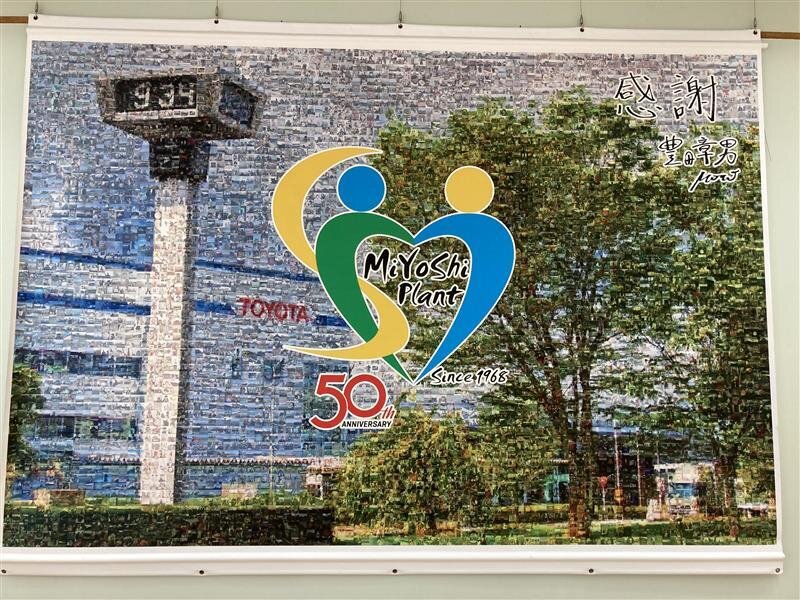
This clock tower has come to symbolize the Miyoshi Plant. It is also depicted in the mosaic art created when the plant marked its 50th anniversary.
JTEKT, Sango, Housan Kogyo, WbyT—the Miyoshi Plant brings together a diverse range of partners. Precisely because of this, we want to create a plant where colleagues can understand one another, connect comfortably, and work with ease while taking pride and joy in what they do. Members who share this vision joined forces to launch a mural project that will transform the clock tower—standing since 1983—into a symbol of connection for the Miyoshi Plant’s future.
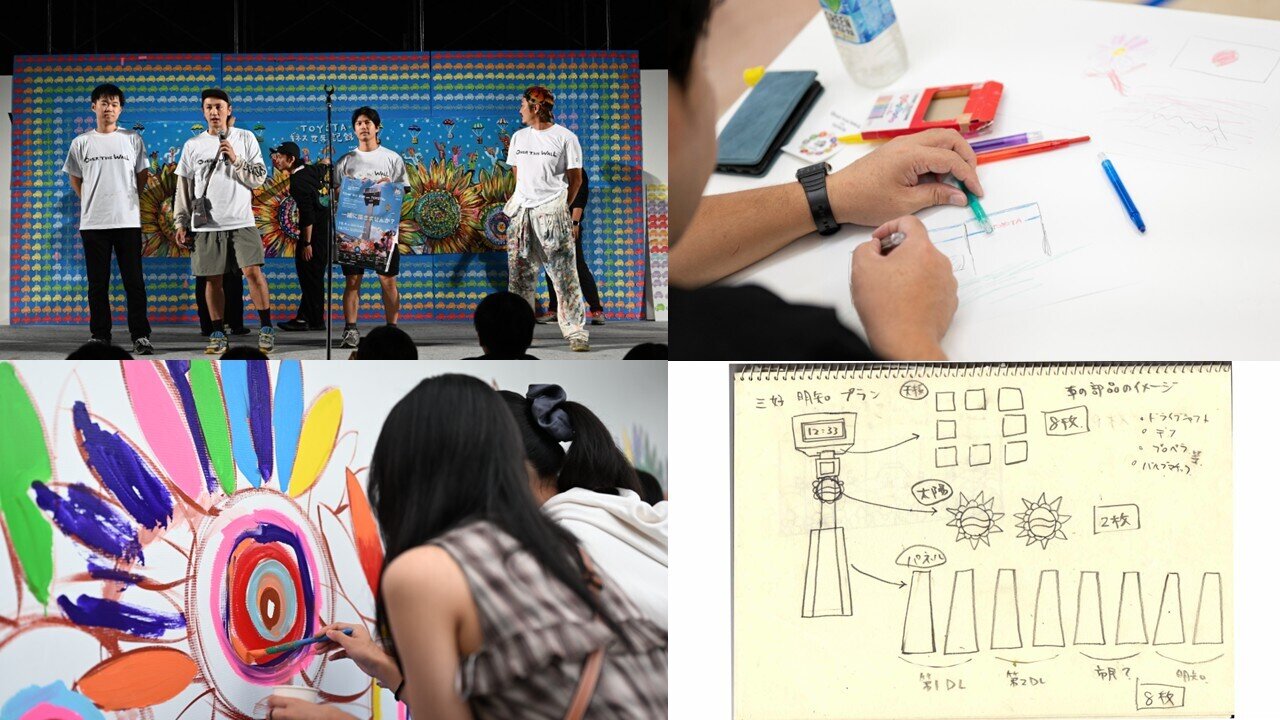
The project is being carried out together with the Myochi Plant, which is managed in close integration with the Miyoshi Plant. Emphasizing the creative process itself—bringing together colleagues, families, and members of the local community to express the two plants through art—it aims to become an initiative that connects to a shared future.
The mural is scheduled to be completed in February.
Connecting with the local community and partners to create happiness for all
The aim is to create a vibrant plant where employees and partner companies alike can thrive. To that end, efforts have begun to make the plant a more open and welcoming place.
General Manager Yu Hashimoto previously served in Machining Division No. 1, Machining Section No. 13 and is now assigned to the Future Creation Group. He has witnessed firsthand the sense of uncertainty at the plant after dramatic changes to its production. “I want to create a symbolic thing, or a space, that can serve as a catalyst to energize the Miyoshi Plant,” he says.
After consulting with Plant General Manager Kazuaki Takahashi, it was decided to proceed with the construction of a new building.
The building’s name: A Common Space for Everyone.
General Manager Hashimoto, Future Creation Group
The companywide “Plant of the Future” project incorporates the concept of making plants into more open spaces. “A Common Space for Everyone” is the spearhead of efforts to make this concept a reality.
There were initially some who questioned why the Miyoshi Plant would be the first to do this.
However, the Miyoshi Plant has experienced numerous business transfers and now needs to further strengthen collaboration with partners such as JTEKT and Sango. We must make communication with our partners more open and seamless, coming together as one team that transcends company boundaries.
We felt it was essential to create an environment where our partners could visit freely and work alongside us without hesitation, so that together we could enhance competitiveness.
For that very reason, the Miyoshi Plant is well positioned to take this on.
In the end, President Koji Sato also encouraged us, saying, “I definitely want the Miyoshi Plant to break free of Toyota’s conventional way of doing things.”
“A Common Space for Everyone” is scheduled to begin operating in early 2029. The use of “everyone” reflects the many different people it is meant to bring together—employees, partner companies, and members of the local community—while “common” conveys the idea of a shared space that can be used in many different ways, depending on the needs of the moment.
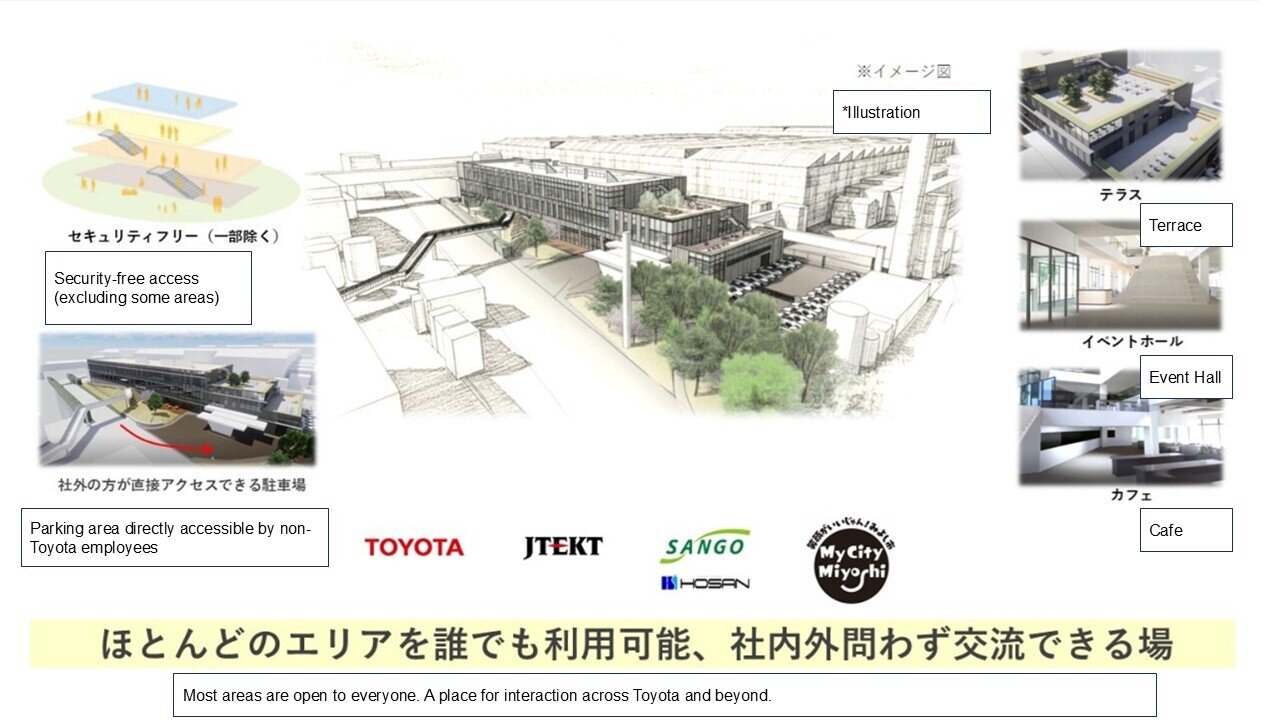
The area with shared desks and meeting spaces will be largely open, with minimal security restrictions. It is envisioned as a place where partners, students, and startups can work together and connect. Another area, featuring an event hall and café, will foster new encounters and communication. Weekend open-house events, not currently offered, are also planned.
“A Common Space for Everyone” will help motivate employees, foster a shared sense of mutual prosperity with partner companies, and allow closer collaboration with the local community.
“We want to make this a place that brings people from many different backgrounds into closer connection, crossing the boundaries between companies and organizations as well as the traditional divide between employees and members of the local community. If this ultimately contributes to the future of monozukuri and helps grow the community of monozukuri enthusiasts, so much the better,” adds General Manager Hashimoto.
Local governments also have high expectations that initiatives such as “A Common Space for Everyone” will strengthen ties between the Miyoshi Plant and the local community. Yuji Tanaka, a city council member who once worked at the Miyoshi Plant, said, “Local residents have been asking us to keep activities such as elementary-school plant tours, karakuri experiences, and neighborhood cleanups going.” Councilor Tanaka also said that serving as a bridge between the Miyoshi Plant and the local community is his way of repaying the Miyoshi Plant for its support.
Through a wide range of initiatives, the Miyoshi Plant strives to be the best in town. Its strong ties with the community have even led the city to seek its help in addressing local challenges.
One example is the fireworks festival held at Miyoshi Pond, located approximately 4 km from the plant. It is a major event for the city that reportedly draws about 30,000 visitors each year, but the shuttle buses operated for the general public had been getting caught in traffic.
Remarkably, the solution involved leveraging the TPS (Toyota Production System).
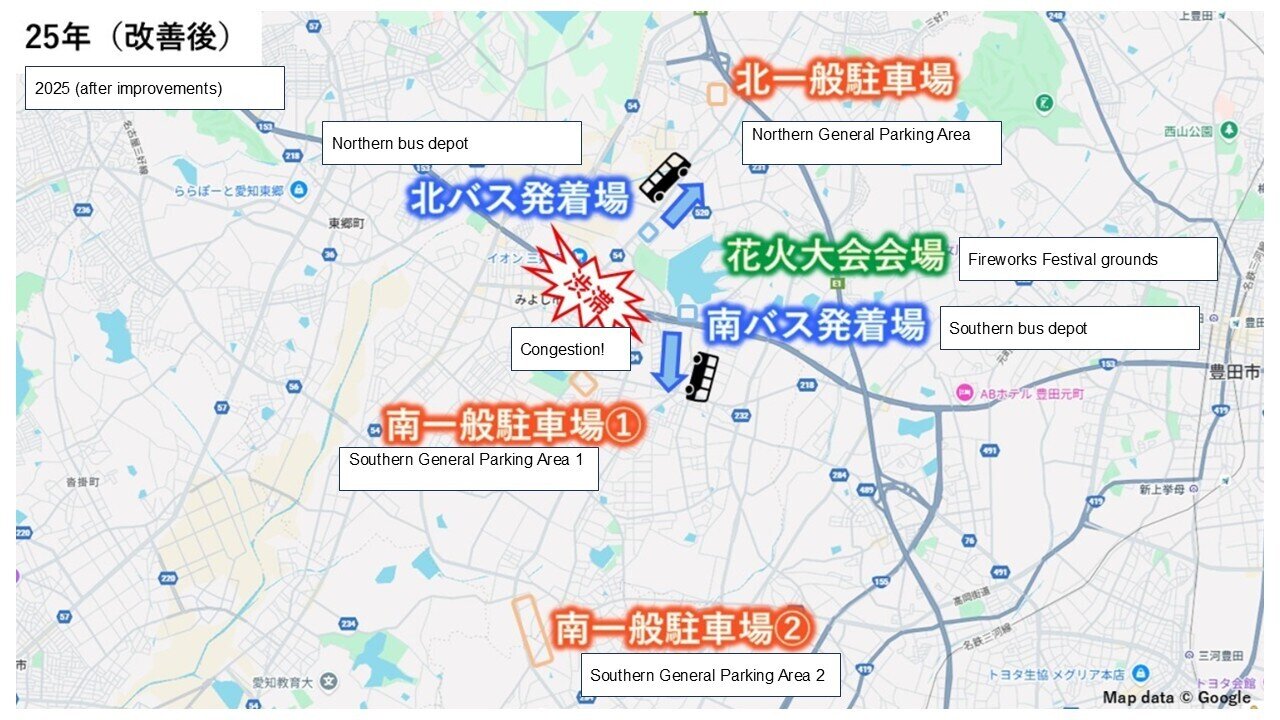
The solution focused on the layout of the shuttle buses and the various parking lots, as well as the operating routes. Until 2024, all general parking had been located to the south of Miyoshi Pond, opposite the shuttle bus terminal (see “South General Parking Areas 1–3” in the figure below).
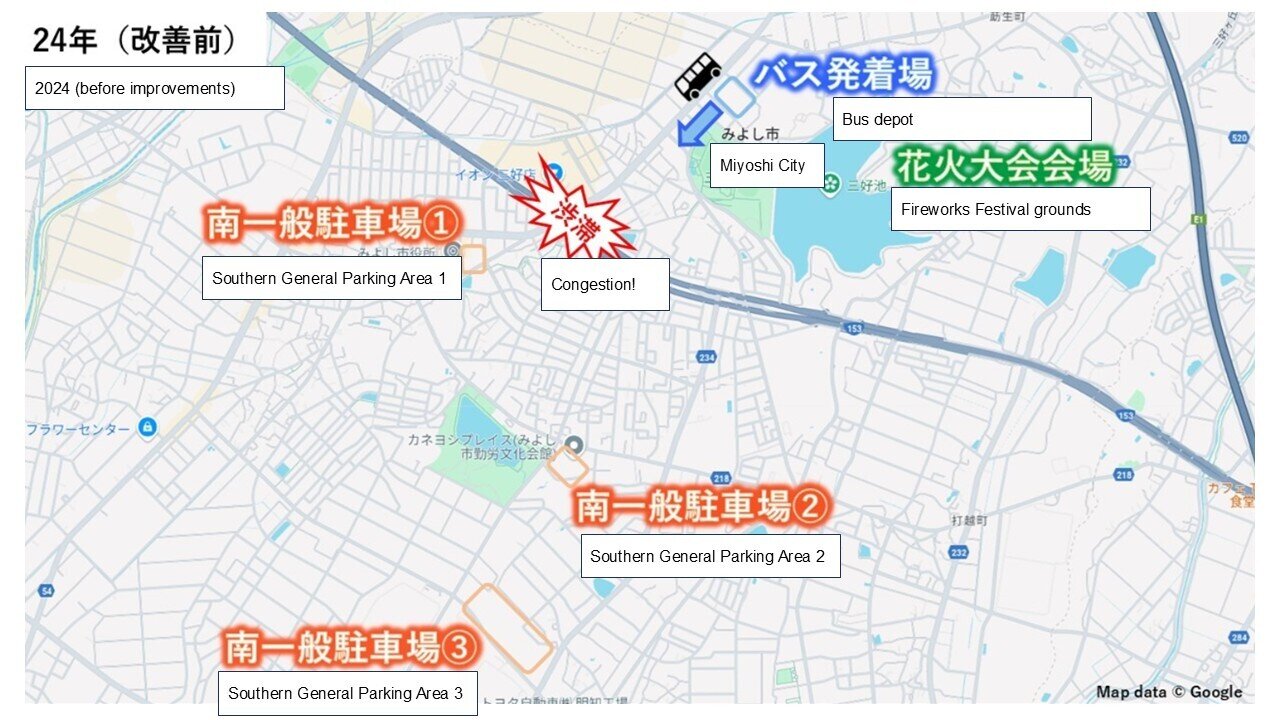
This was the basis for improvements that established general parking on the north side of Miyoshi Pond (see “North General Parking” in the figure below). The shuttle bus terminal was also split between two locations, and routes were revised to avoid areas prone to congestion. This allowed the shuttle buses to run smoothly.
Work was also done to address pedestrian congestion near the Miyoshi Pond embankment by allocating a wider pedestrian area relative to the viewing area and the emergency access route.
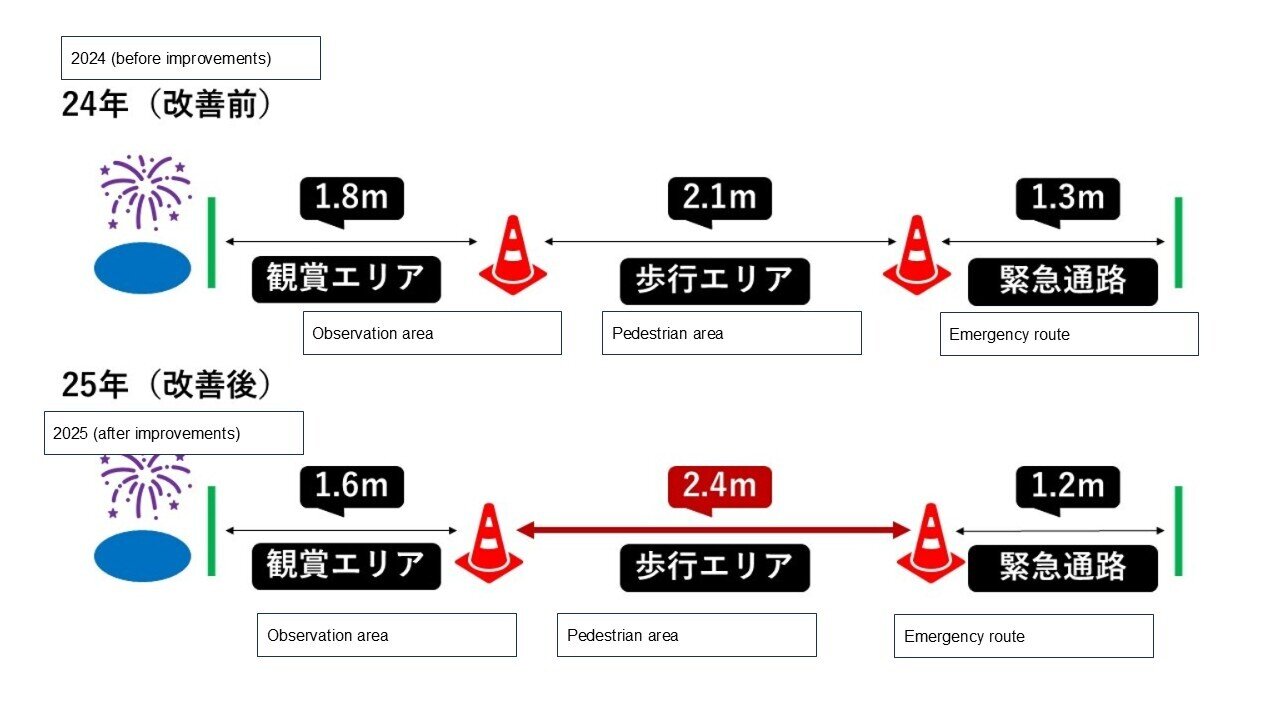
These improvements were, in essence, an application of plant-floor process flow thinking. In 2025, the final shuttle bus departed at 9:27 p.m., about one hour earlier than in 2024.
General Manager Shingo Omori of the TPS Group says this was the first time TPS had been applied to improve vehicle congestion. He reflected on the improvement initiative as follows.
General Manager Shingo Omori, Plant Support Dept., TPS Group
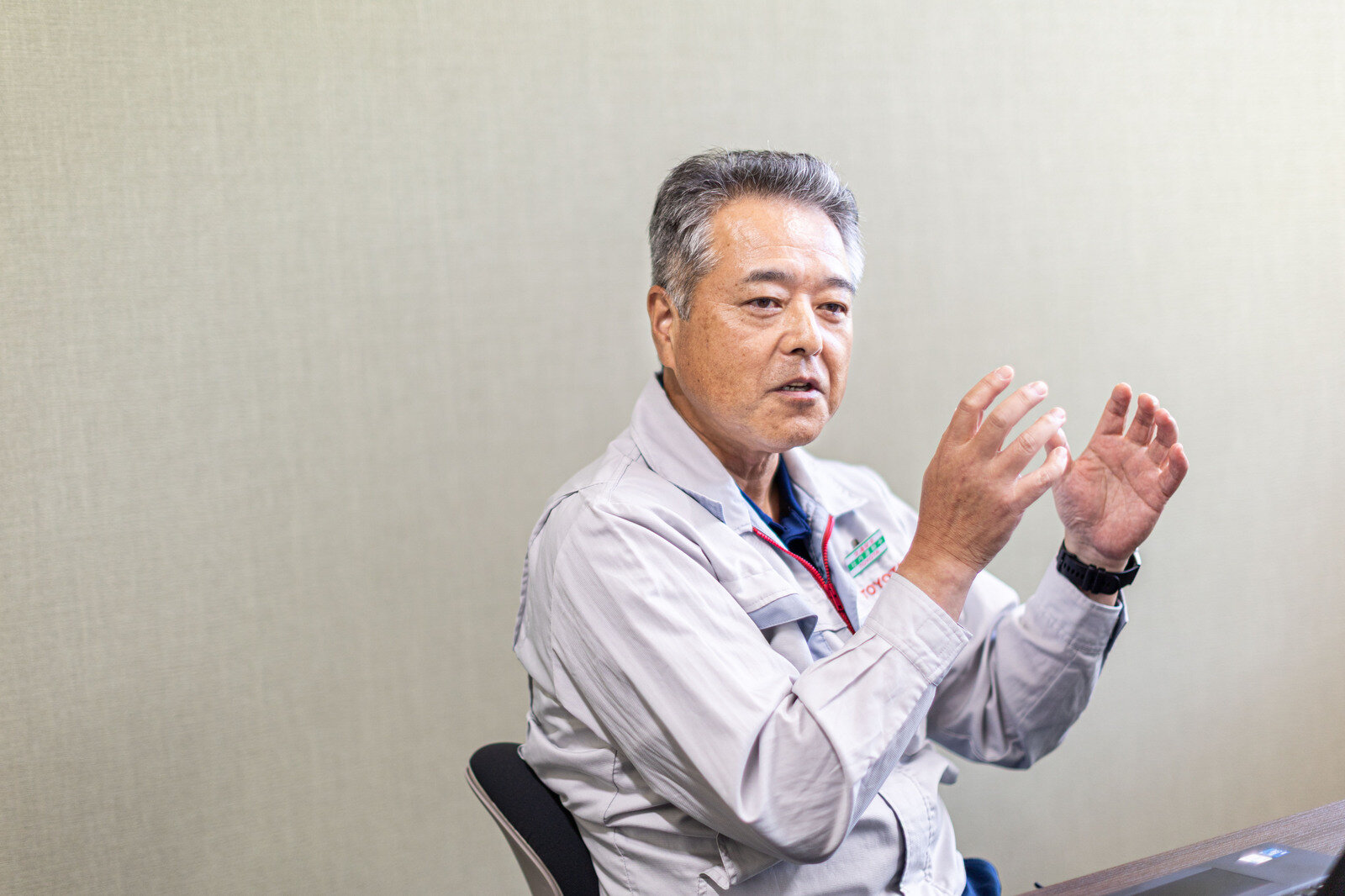
We managed to shave about an hour off the schedule, but we still see room for improvement. For instance, buses return to the terminal quickly, yet with only one boarding point, several are forced to wait.
We believe that kaizen or making things better is a never-ending process, and in 2026, we aim to achieve further reductions.
I want to tear down the fences!
Beginning in April 2025, the Miyoshi Plant introduced a free-location system that allows each employee to work wherever they would like. Plant General Manager Takahashi sensed that things had somehow changed.
After assuming the role of Plant General Manager, he at times felt there was some distance between himself and employees, but recently young employees have been sitting by his side with confidence.
Takahashi was pleased with what he took to be his newfound popularity, but behind the scenes a certain game was actually being played: Miyoshi-Myochi Free Location Bingo. The bingo card for this game was filled with prompts designed to encourage communication among employees, such as “sit next to someone from a different group” and “ask about someone’s plans for their day off.” At its center was the square “sit next to Plant General Manager Takahashi.”
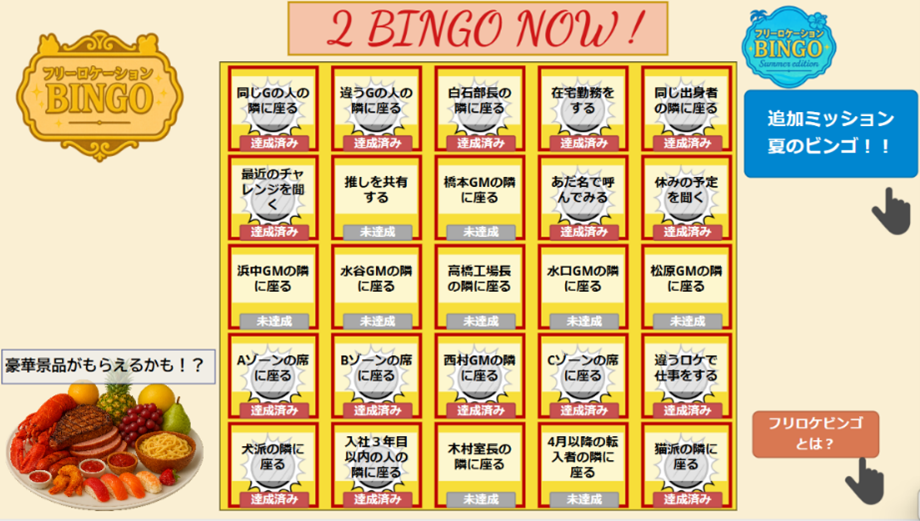
Employees are required to address a wide range of challenges at the ever-changing Miyoshi Plant. However, it was not a sense of grim resolve that prevailed at the plant, but rather a cheerful and positive atmosphere.
Plant General Manager Takahashi
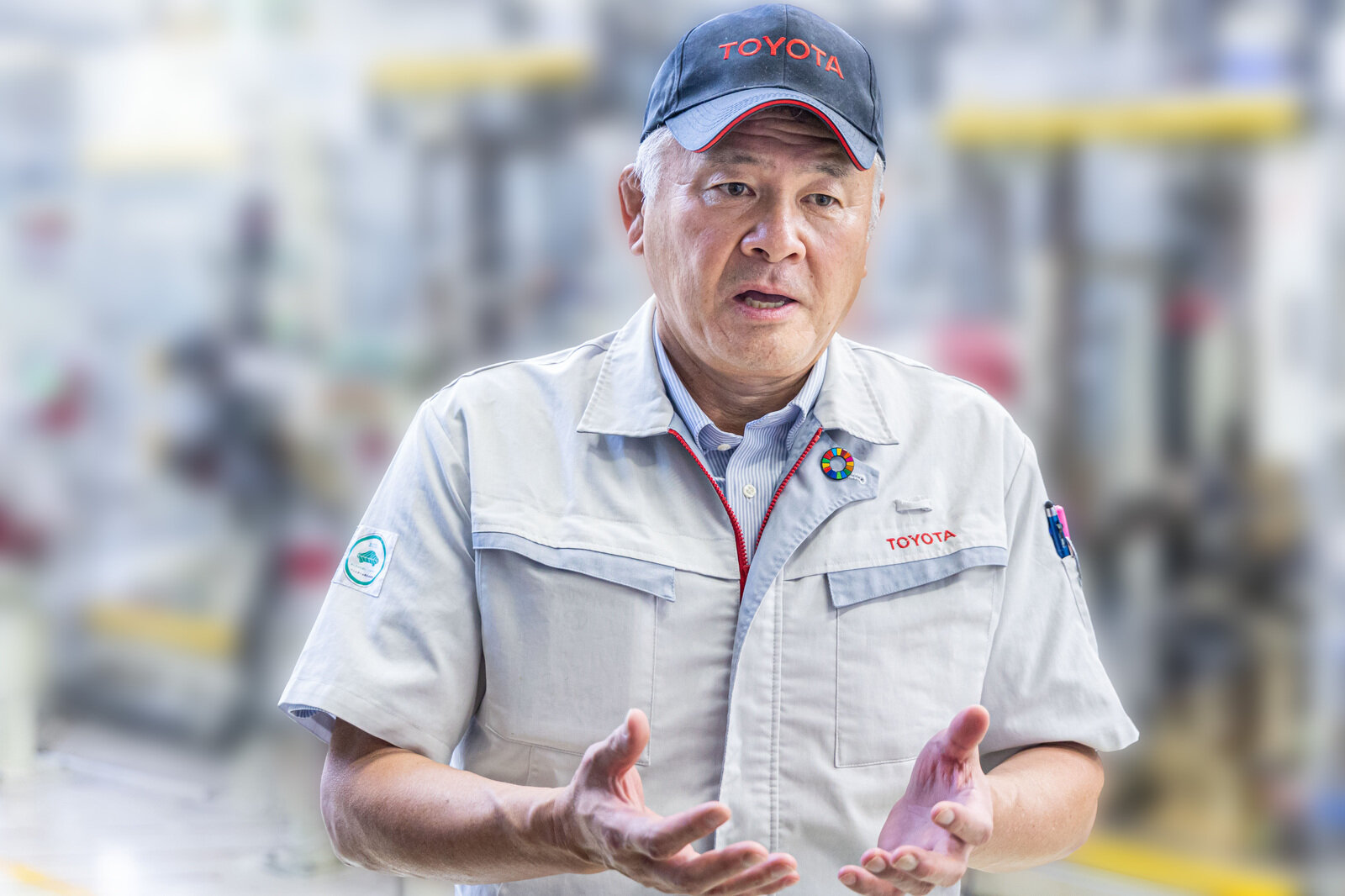
What we want to value most at the Miyoshi Plant right now is “co-creation” and “co-challenges.” We want to make it a place where people from JTEKT, Sango, the city of Miyoshi, and many others can come together with a common shared vision. We believe that sustaining monozukuri in Japan as the population declines will require becoming an open plant that both supports and is supported by the local community, rather than trying to do everything on our own.
I work on the same floor as everyone else, not in the plant manager’s office. This is because I want to communicate freely with everyone, no matter their position or department. It doesn’t matter how much we say we want to create an open plant, nothing changes unless those at the top change.
I feel that the free-location system and the bingo initiative are helping team members have a more positive mindset, and I want to continue striving toward creating an open plant that people enjoy coming to.
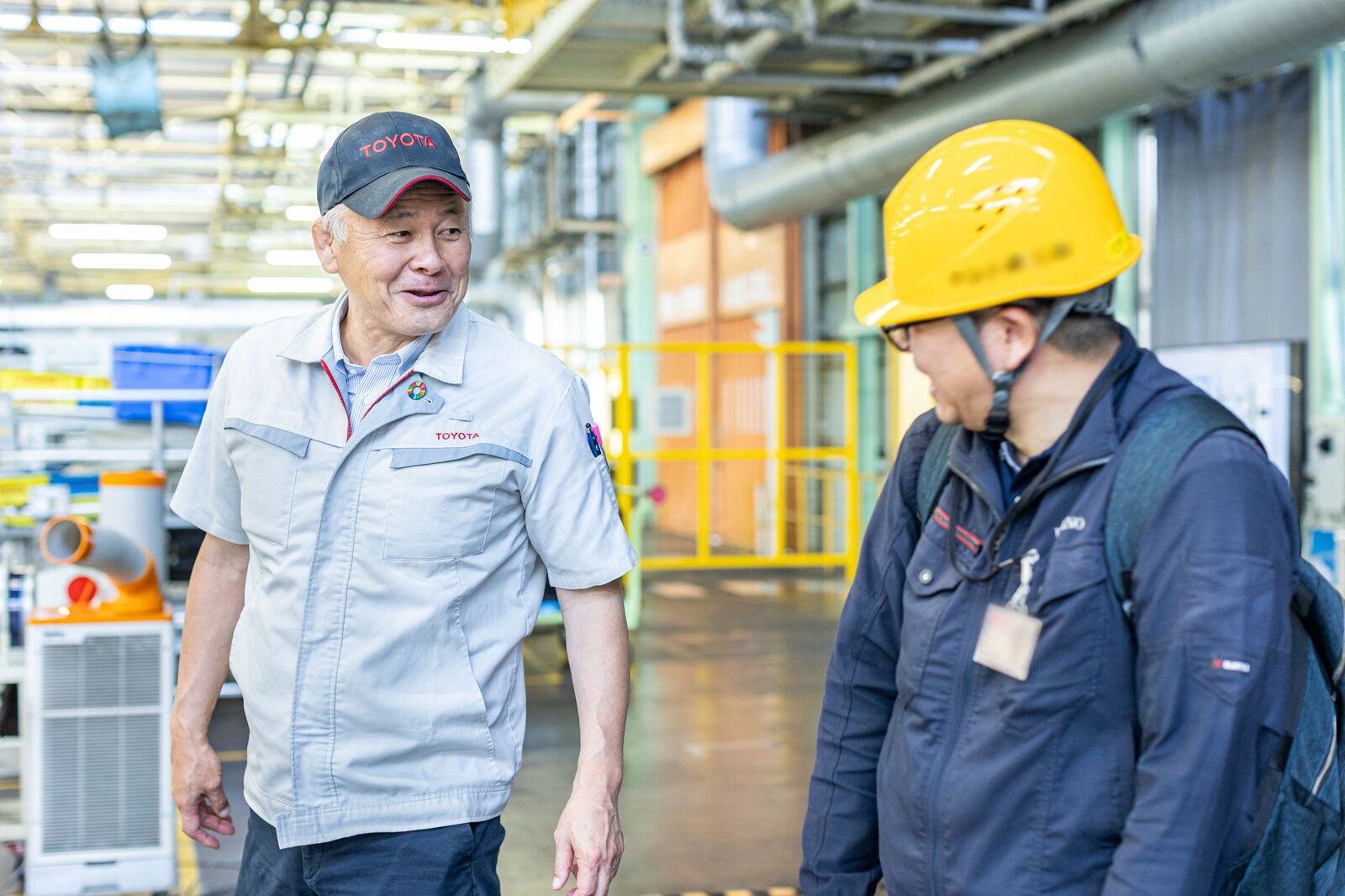
Finally, Plant General Manager Takahashi says with a smile, “I might catch some heat for saying this, but I’d like to tear down the fences around the plant, too!”
The information in this article was accurate as of August 2025.