Toyota's Plants: Inheritance & Evolution is a series introducing the history and future vision of individual production facilities. This time, we trace the history of Miyoshi Plant, founded as a machine plant specializing in sub-assemblies for suspension parts and small components, and long exposed to fierce competition.
No more Toyota parts from a Toyota plant?!
It may sound hard to believe, but it actually happened. Since beginning operations in 1968, Miyoshi Plant in Miyoshi City, Aichi Prefecture, has fought relentlessly to stay in business, doing whatever it took to keep going. Let’s look back on its story.
A cutting-edge parts plant is born
From the mid-1950s to the early 1970s, Japan enjoyed rapid economic growth unmatched anywhere in the world. As household incomes rose, personal consumption expanded rapidly.
After mass adoption of the so-called “Three Sacred Treasures” (a term borrowed from Japan’s imperial regalia)—namely, black-and-white televisions, refrigerators, and electric washing machines—had become common in households, the 1960s saw a second group of major durable consumer goods come to be prized: the “New Three Sacred Treasures” or “3C” of air conditioners (often referred to as “coolers” in Japan), color televisions, and cars. Among these, cars became the centerpiece of popular aspiration.
The Meishin Expressway was completed in 1965, and the Tomei Expressway opened along its full length in 1969. As cars spread among self-employed and wage-earning households, they underwent a shift from something that symbolized economic value to a convenient tool for everyday mobility.
In response to this surge in automobile demand—termed “motorization,” the mass adoption of cars—domestic passenger-car production climbed to approximately 3.18 million vehicles in 1970. Automakers were under pressure to push mass production even further.
At Toyota, the company set a goal of producing 100,000 vehicles each month. It established Takaoka Plant as a dedicated passenger-car plant and Higashi-Fuji Plant as both an automotive proving ground and a passenger-car assembly plant. It also moved to specialize its existing plants.
As Toyota redefined the roles of individual plants, it decided to build a new one with a focus on producing sub-assemblies for passenger-car chassis parts and small components.
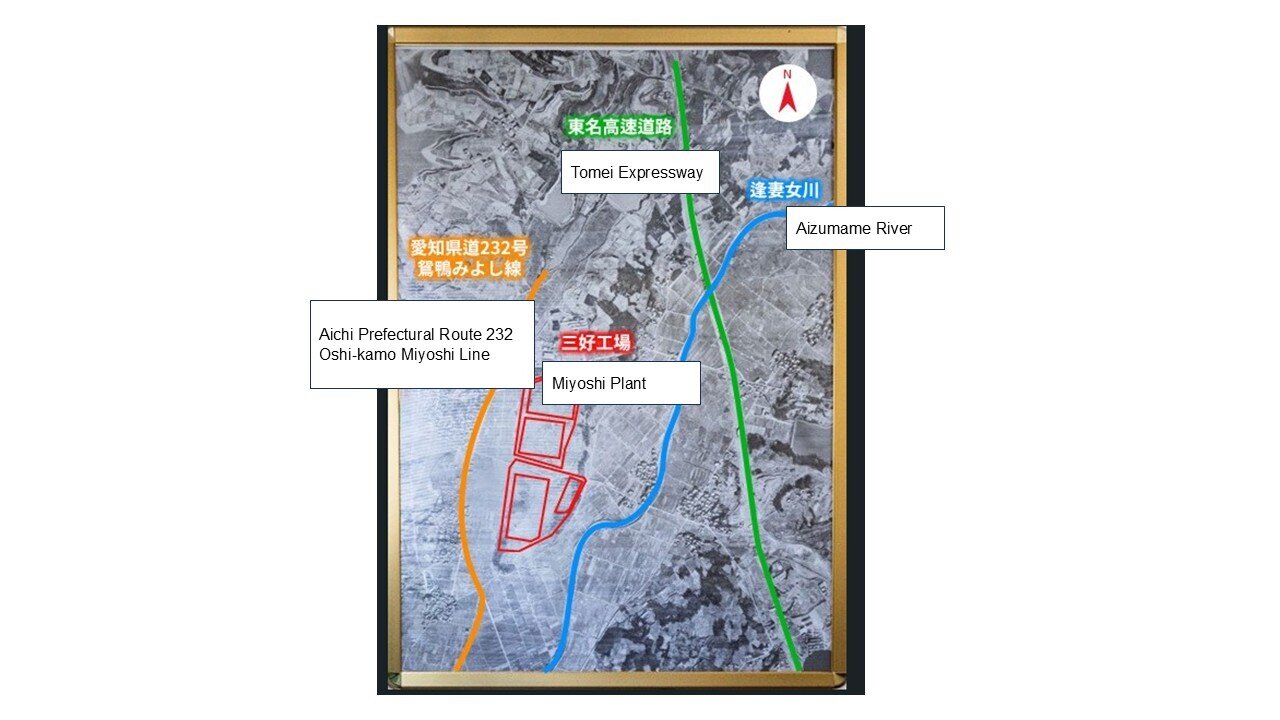
At that time, local authorities in the town of Miyoshi were moving aggressively to attract factories in order to secure revenue sources beyond agriculture. They offered Toyota a plot of land of roughly 300,000 square meters.
The land was long and narrow from north to south and lay within 10 kilometers of four of the existing plants—Honsha, Motomachi, Kamigo, and Takaoka—with Higashi-Fuji Plant in Shizuoka Prefecture being the only one farther away. The site offered an ideal location for coordinating with the other plants and for the flow of parts in and out.
Kato Tadanori is the son of Tsukio Kato, a Miyoshi Town assembly member who served as chairman of the town’s construction committee, and is now chairman of Housan Kogyo KK, which handles cleaning of facilities and offices at Miyoshi Plant. He looks back on those days:
Chairman Kato, Housan Kogyo
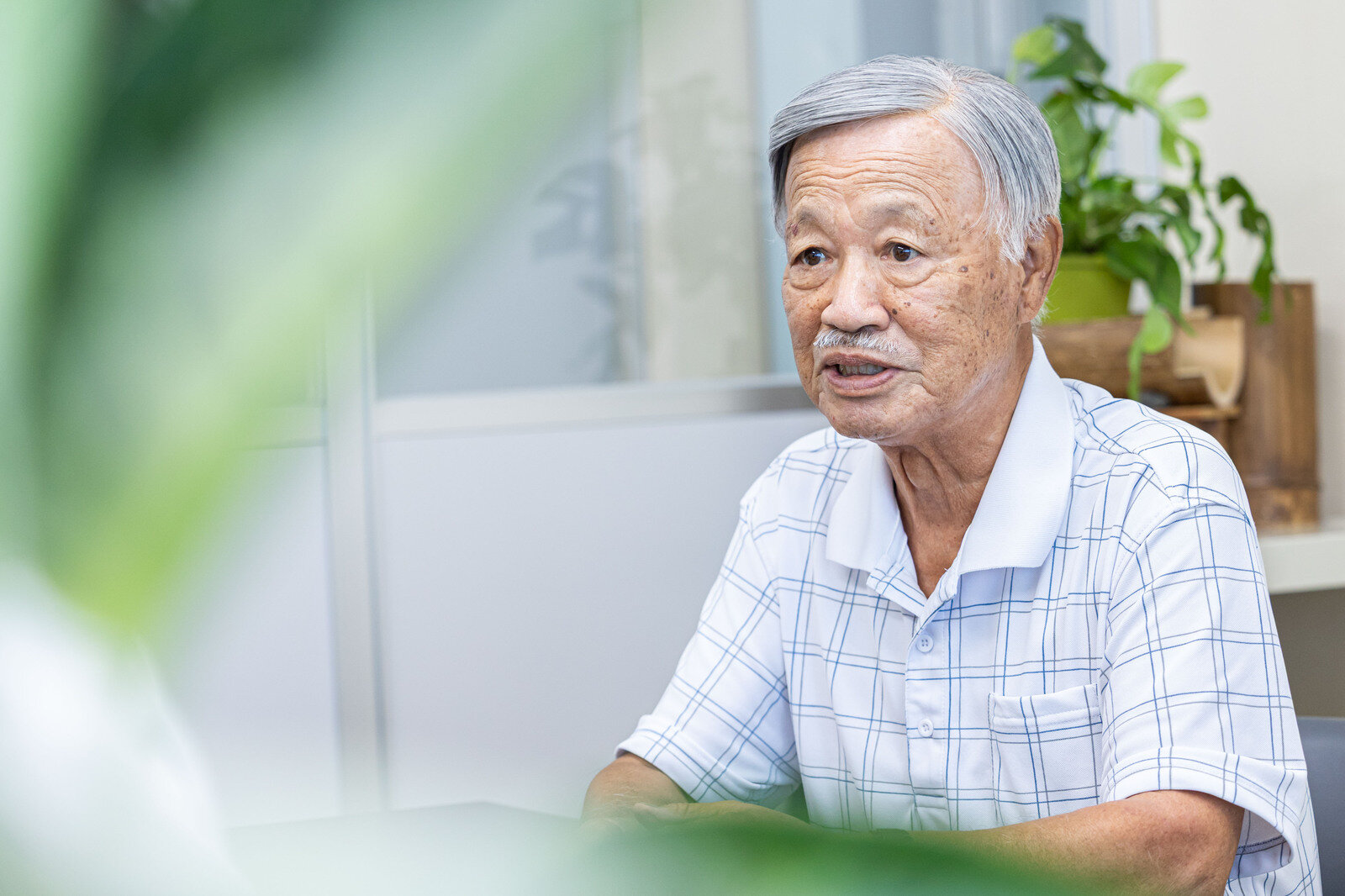
Miyoshi had a thriving agricultural base then, and the land where the plant now stands was originally farmland. Some farmers worried that it would spoil the town’s rural scenery, but attracting industries beyond agriculture, I believe, ultimately brought major advantages for the community.
And so the Miyoshi Plant was born. What set it apart was its adoption of a then-unusual integrated production line.
For example, in the No. 1 Machine Plant, the materials receiving, machining, assembly, and finished-product shipping area were laid out in production-line sequence, cutting the time and labor needed for transport.
In addition, the cold forging* operations that had been carried out at Honsha Plant and Motomachi Plant were consolidated at the Miyoshi South Plant (the No. 2 Machine Plant).
*A metal forming technique performed at room temperature without heating the metal.
The plant also introduced around 200 groundbreaking machines, including equipment for mass-producing bolts, and cold formers—machines used in cold forging to manufacture nuts and piston pins.
Among them, the cold former boasted phenomenal speed for its time, producing roughly 3.3 parts per second. It stayed in service for 55 years before being retired in 2023.
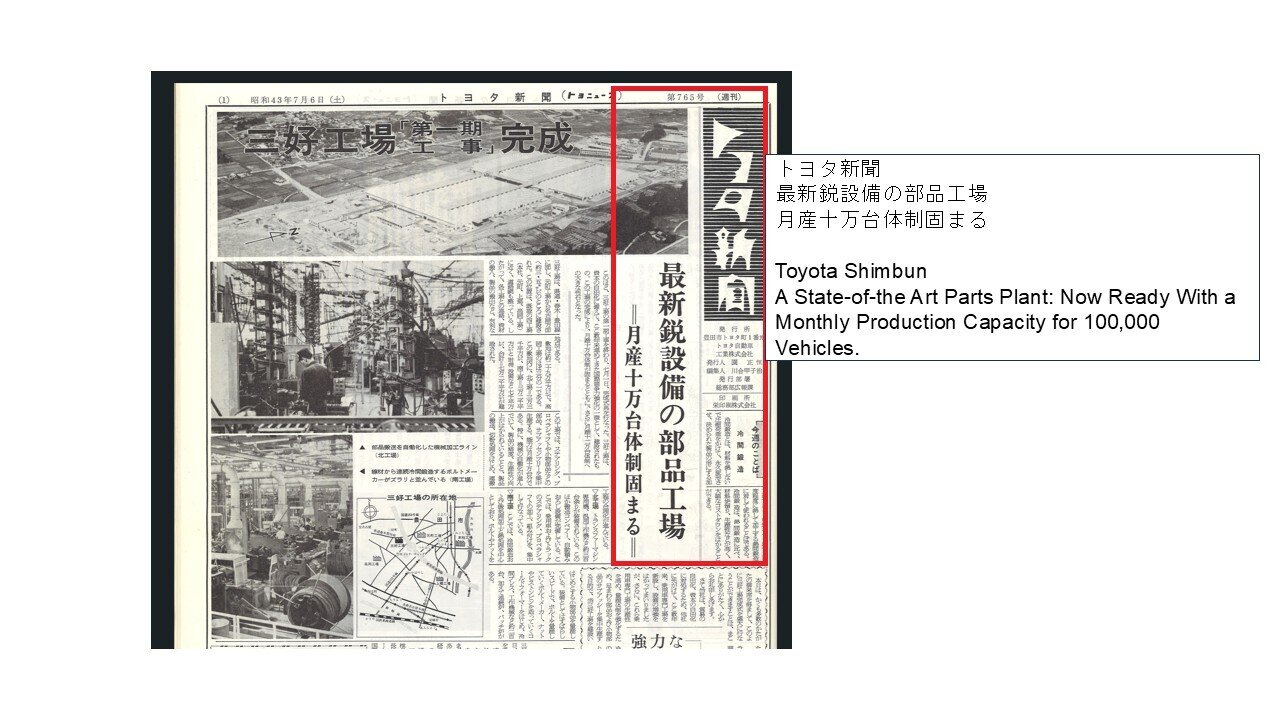
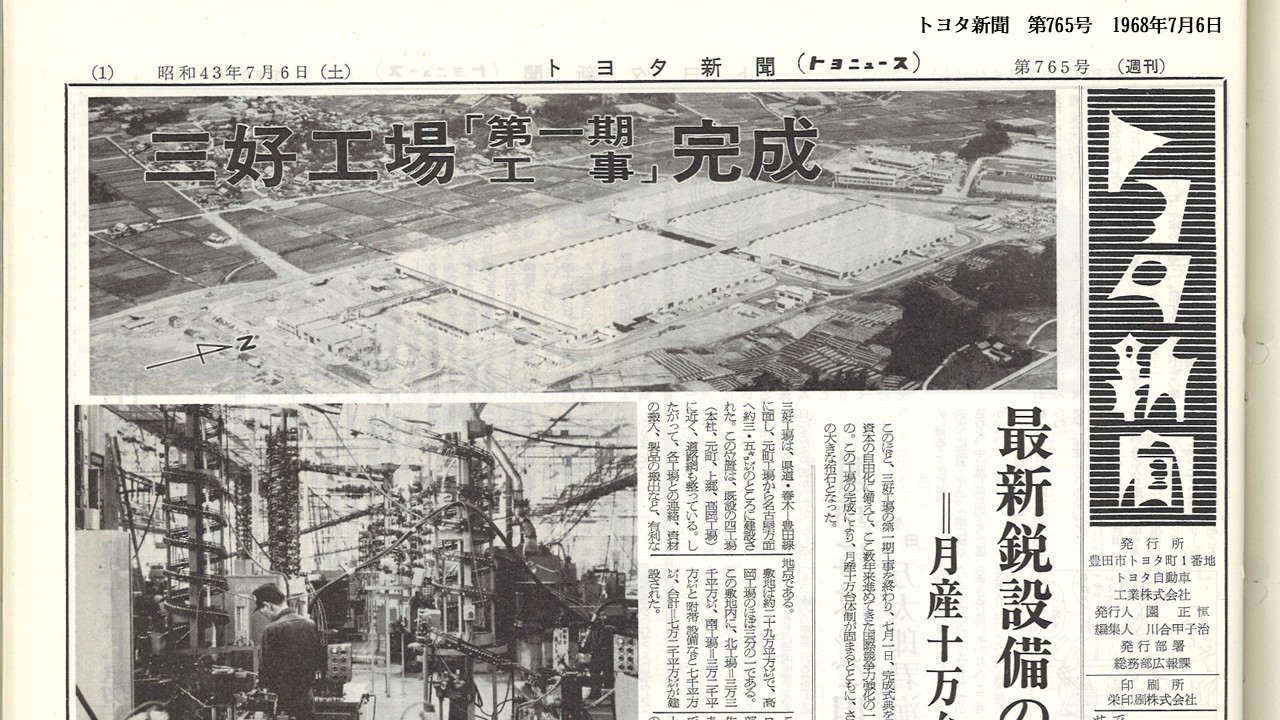
Toyota’s in-house newspaper, Toyota Shimbun, reported on the completion of the first construction phase at the Miyoshi Plant in Issue 765. It featured the plant under the headline “A State-of-the Art Parts Plant: Now Ready With a Monthly Production Capacity for 100,000 Vehicles.”