



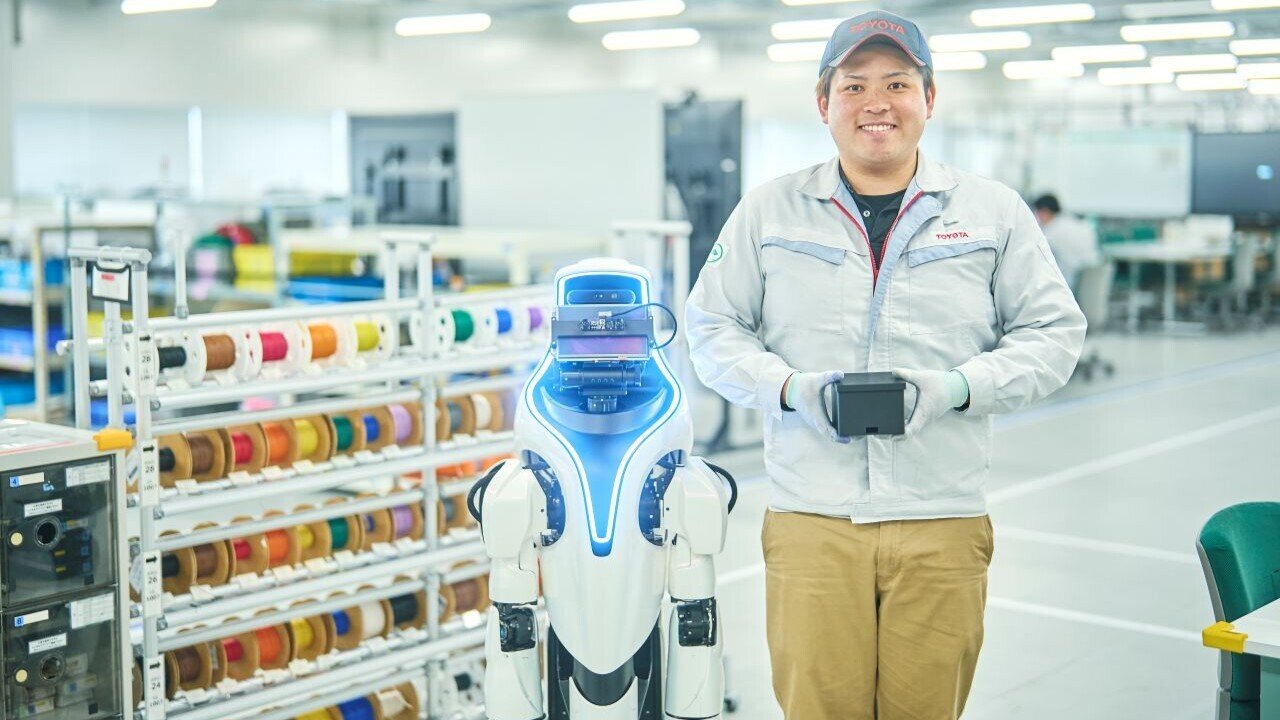
Toyota's Creative Idea Suggestion System makes work more fun and interesting. This time, we look at a team improvement effort aimed at creating a workplace where everyone can play an active role.
What was inside the black box?
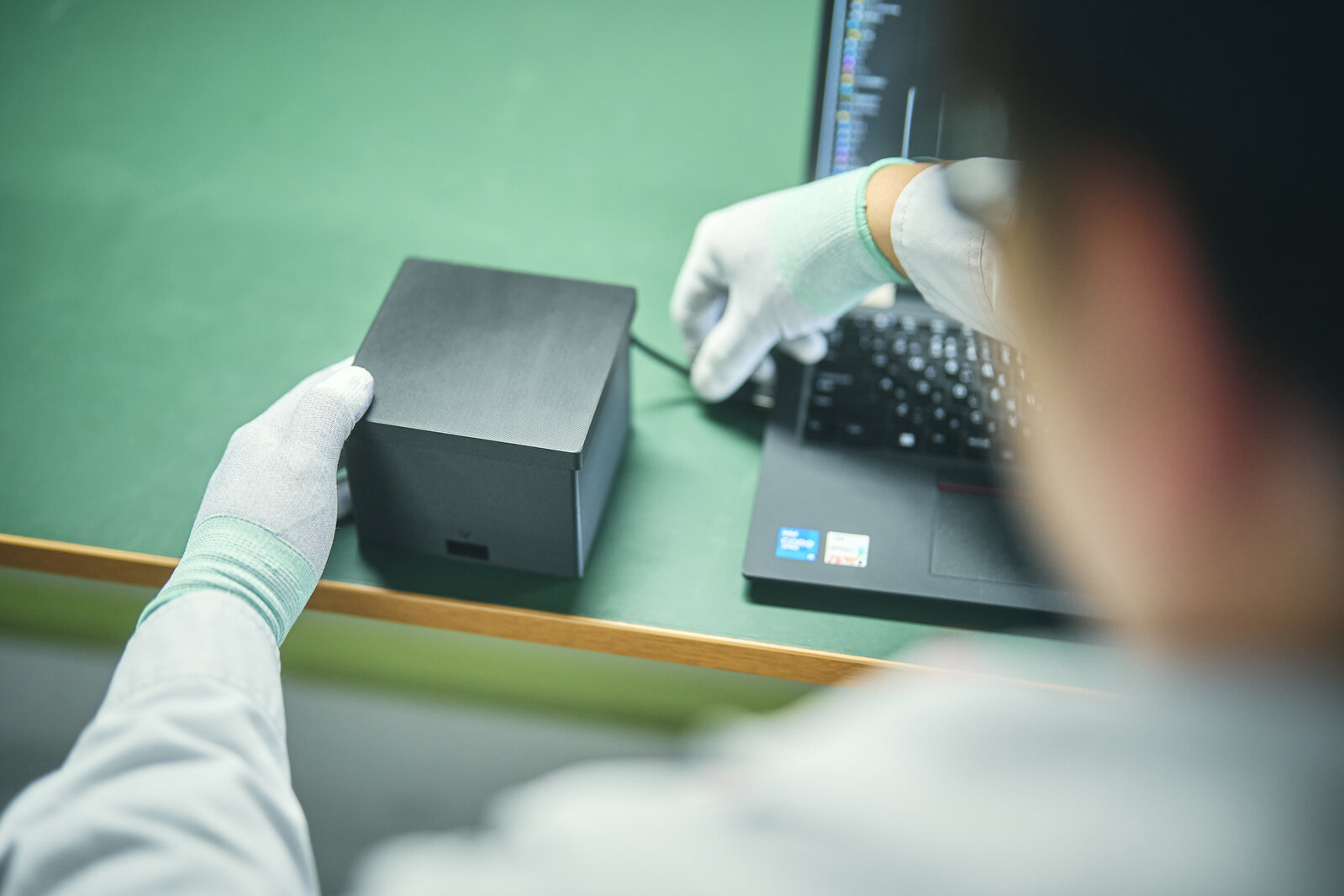
The black box, connected to a computer, has a narrow slot on one side.
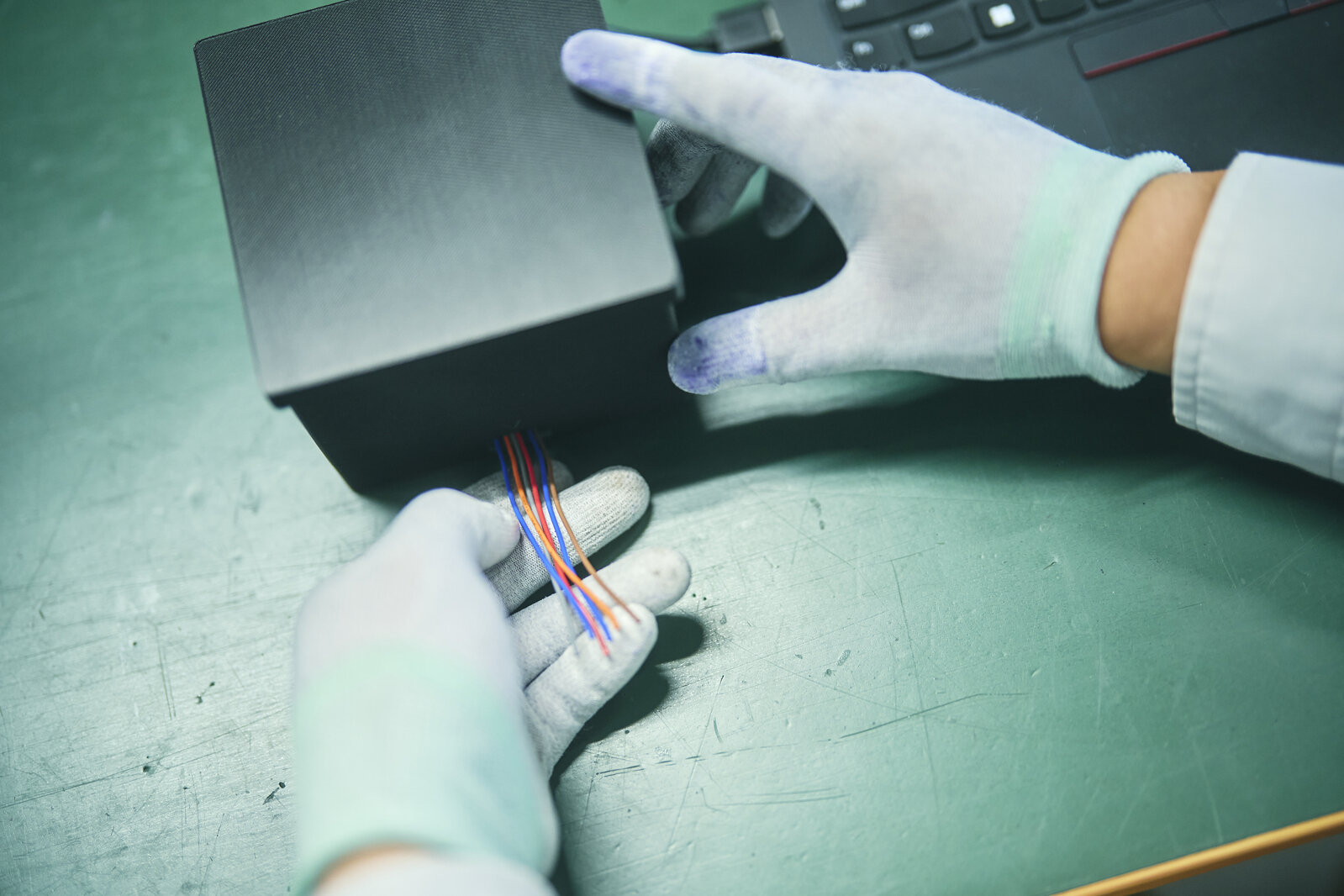
Insert a harness into the slot…
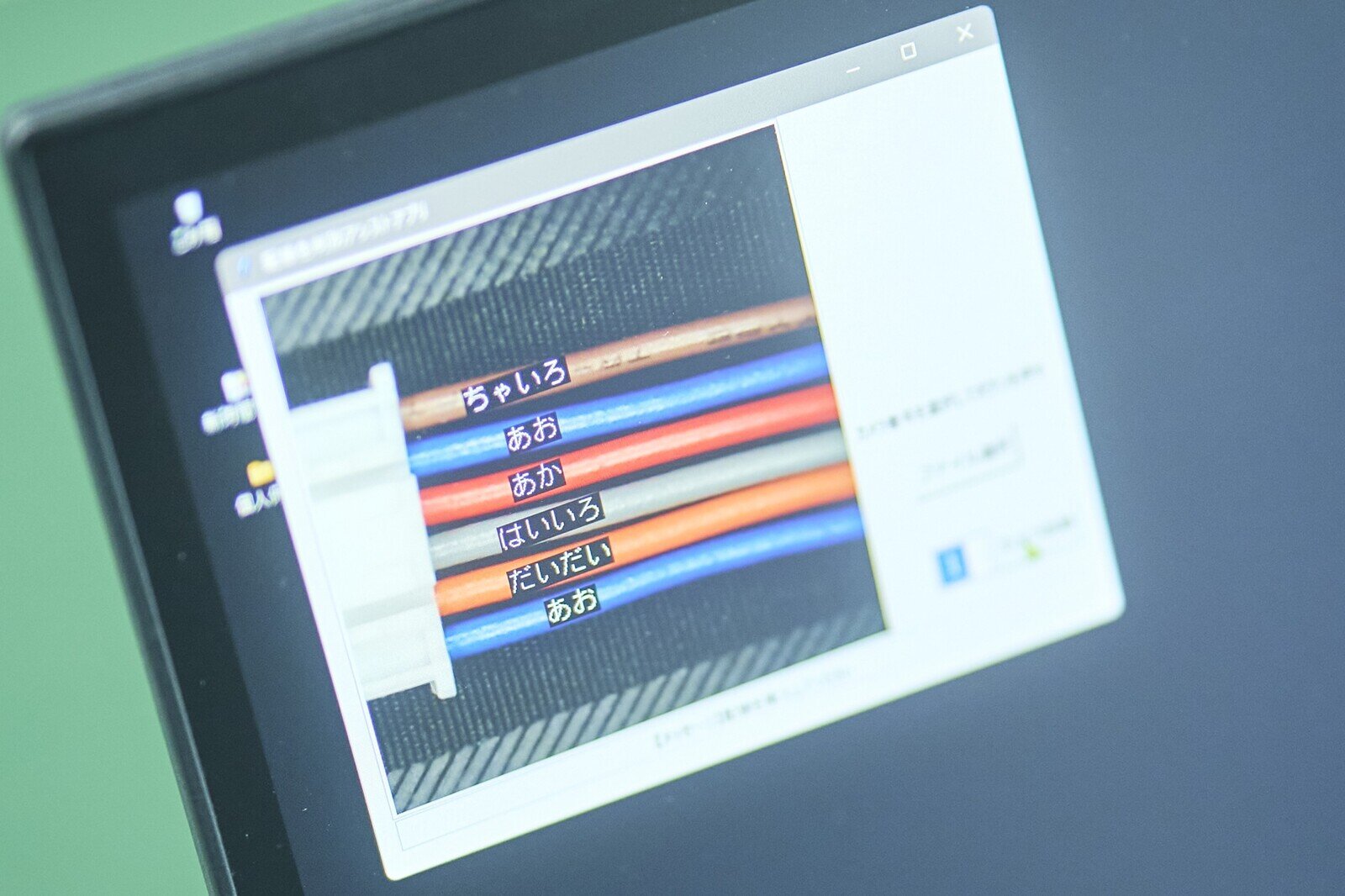
On the screen, the color names—such as “brown,” “blue,” and “red”—appear in hiragana above the wires.
The structure inside the box is simple: a general-purpose web camera at the center, LEDs to light the interior, and a control board. But the details mattered. Shining the LEDs directly on the wires made the light too harsh and caused halation*, leaving parts of the image washed out. So, the team placed a sheet of white paper inside to soften and evenly diffuse the light.
*Halation: a phenomenon in which strong light causes part of an image to appear white and blurred.
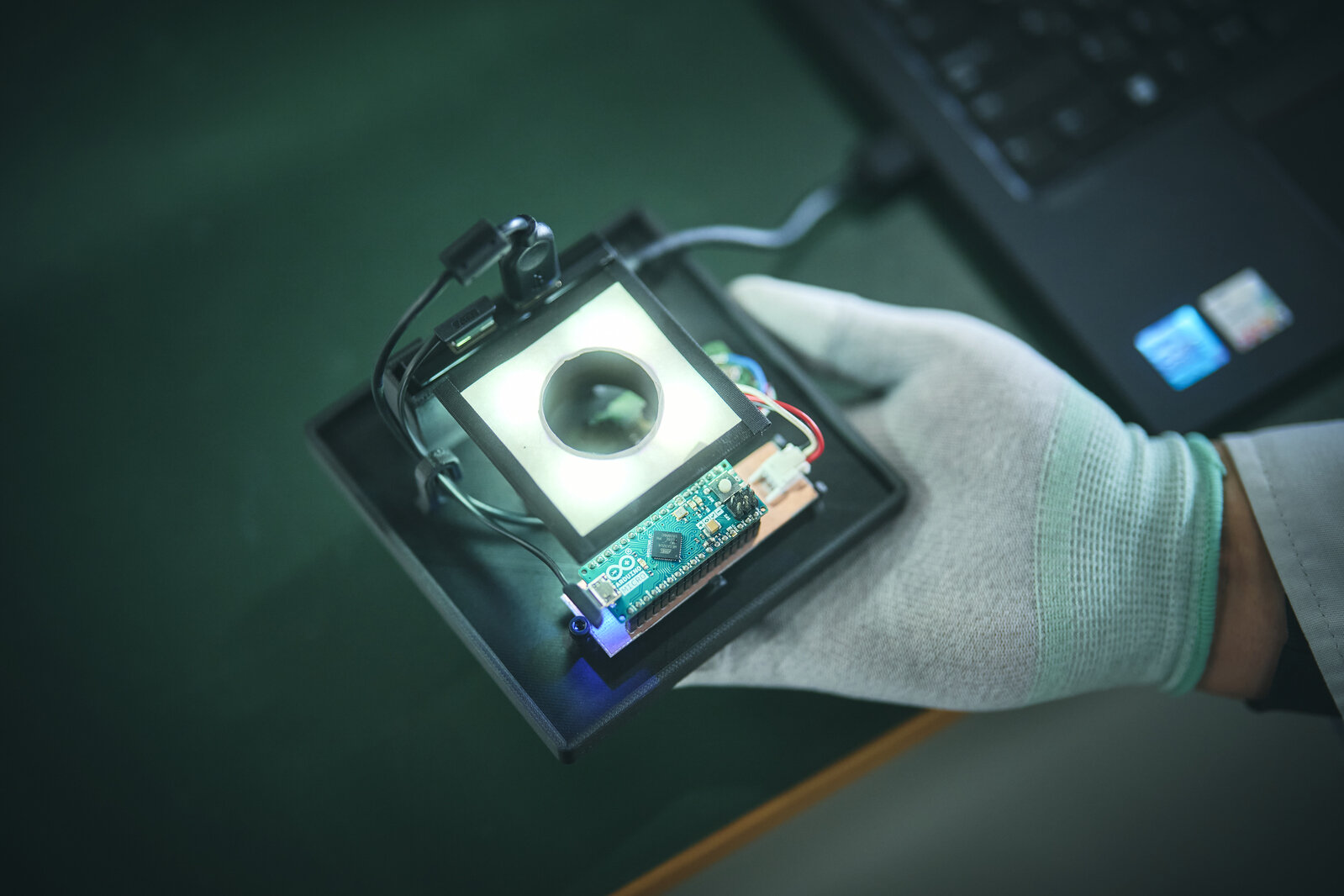
The box itself is black to reduce reflections and visual noise inside it.
The idea of showing color as text came to Ano while he was working on something else entirely.
Ano
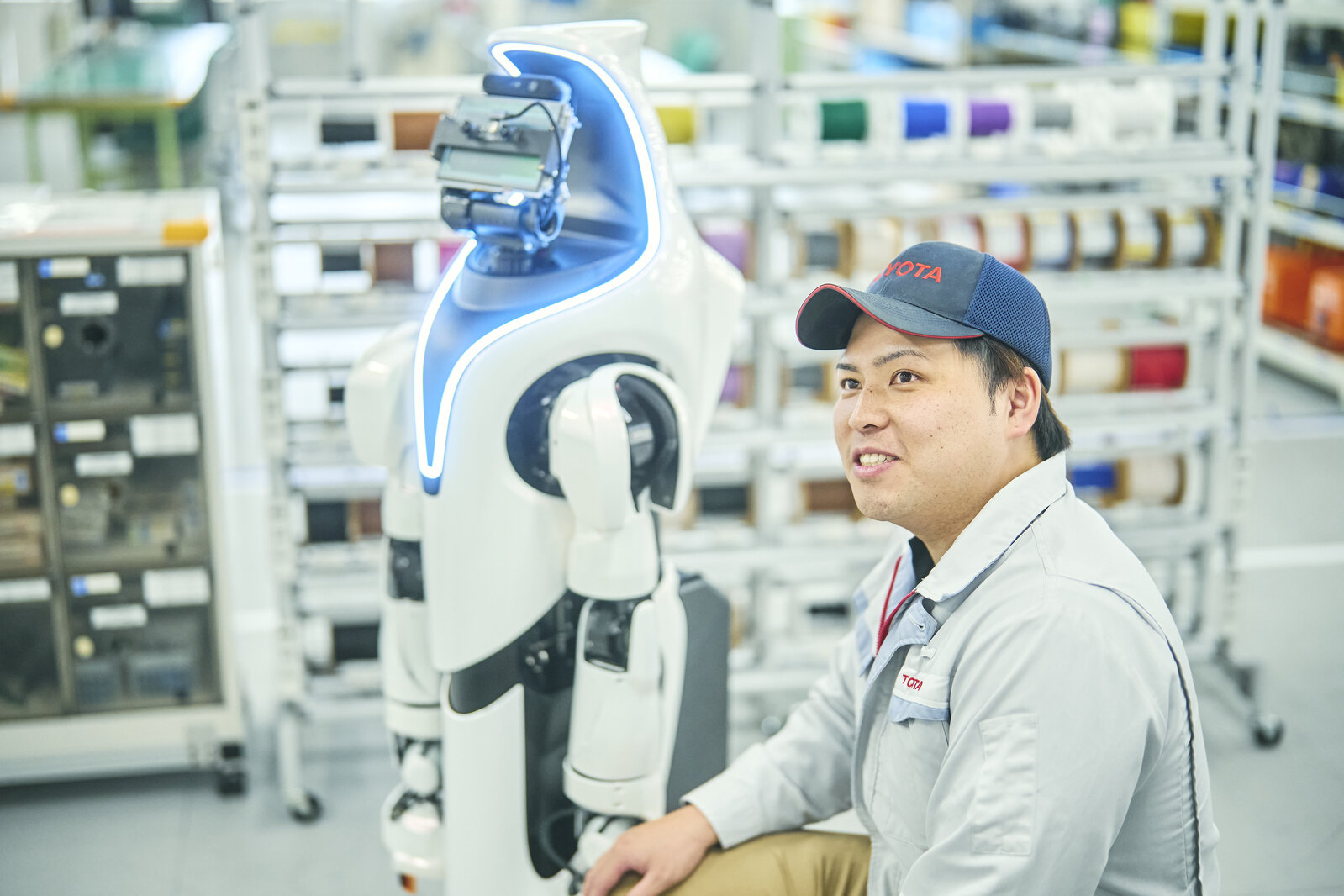
When I was preparing materials on my computer, I mostly stuck to gray and black.
But one day I needed to use red. Two similar-looking colors were side by side, and I found myself thinking, ‘Which one is red?’ When I hovered the pointer over it, the text ‘dark red’ appeared. That was when I realized the idea might actually work.
I specifically wanted it shown in hiragana. Colored pencils are often labeled that way, and anyone in Japan can read it.
Once they had the idea, the team split in two: one group built the box, while the other developed software to identify wire colors from the images it captured.
For the software, they adopted the HSV color model, which determines color based on combinations of hue, saturation, and value.
“The hardest part was adjusting the thresholds,” Ano says. “There are many shades that count as red, so it took a lot of work to decide what numerical range should qualify.”
Because it uses image processing rather than AI-based recognition, the system also requires less effort and maintenance.
That was how the wire color visualization tool took shape.
“What made me happiest,” Ano says, “was no longer having to wonder what color I was looking at.”
“This is the kind of effort that helps everyone contribute”
With the wire color visualization tool, both Ano and Morimoto were able to work on harness production with greater confidence. Presented as the result of QC Circle activities, the project was highly praised inside the company for helping create a workplace where everyone could contribute.
QC Circle activities bring teams together to take on quality-control challenges and grow through the process. They differ from the Creative Idea Suggestion System, which mainly focuses on improvements proposed by individuals, but in the context of Toyota’s long-standing tradition of kaizen, the two share a similar underlying purpose.
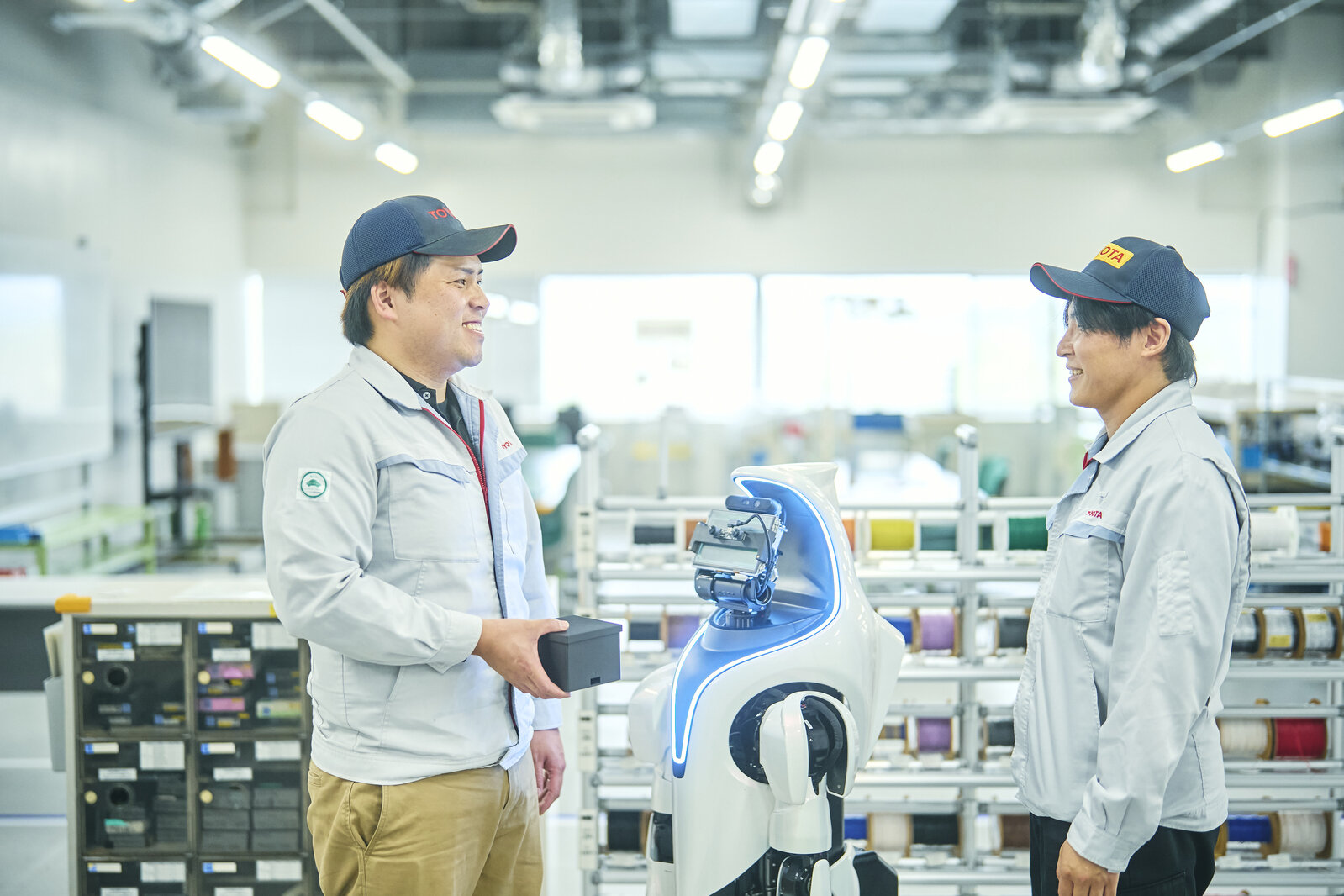
Looking back, Ano says, “At an exhibition of kaizen case studies, Oyaji Kawai told us, ‘This is exactly the kind of effort that matters if we want everyone to be able to contribute! There must be others in the company dealing with the same issue, and with some adaptation, this could be used on the manufacturing floor too.’”
The wire color visualization tool later received both the Most-impressive Award and the Outstanding Case Study Award at FY2025 QC Circle National Convention hosted by the Union of Japanese Scientists and Engineers. It also received The Award for Creativity in 2026 under the Commendation for Science and Technology by the Minister of Education, Culture, Sports, Science and Technology.
“We built it together with the goal of making sure everyone could contribute,” Ano says. “So, it meant a lot when people outside the company told us they wanted to use it as a reference.”
Finally, we asked Ano about Toyota’s culture of kaizen.
“Since joining the company, I’ve been taught to think in terms of kaizen. So when something feels difficult, unsafe, or simply like more trouble than it should be, it feels natural to start thinking about how to solve it. But it’s not just about making things easier for yourself. What matters is making the work safer and easier for the people around you as well. That is why I want us to keep sharing ideas and using them to make our monozukuri even better.”