



This series showcases Toyota's activities in non-automotive fields. This time, we head to Thailand--for farming and coffee.
Krung Thep Maha Nakhon Amon Rattanakosin Mahinthara Yuthaya Mahadilok Phop Noppharat Ratchathani Burirom Udomratchaniwet Mahasathan Amon Piman Awatan Sathit Sakkathattiya Witsanukam Prasit
Sounds almost like a spell, doesn't it? In fact, it's the official full name of Bangkok, Thailand, said to be listed in the Guinness World Records as the longest place name in the world.
And Bangkok is exactly where our story begins, because Toyota has been doing something rather unexpected in Thailand.

Our journey took us to Phu Phayak village in Nan Province, near Thailand's northern border, about an hour's flight from Bangkok, followed by a four-hour drive up into mountainous terrain at roughly 1,500 meters above sea level.
In this area, where electricity only became available about 20 years ago, nearly all of its 900 residents make their living from farming.
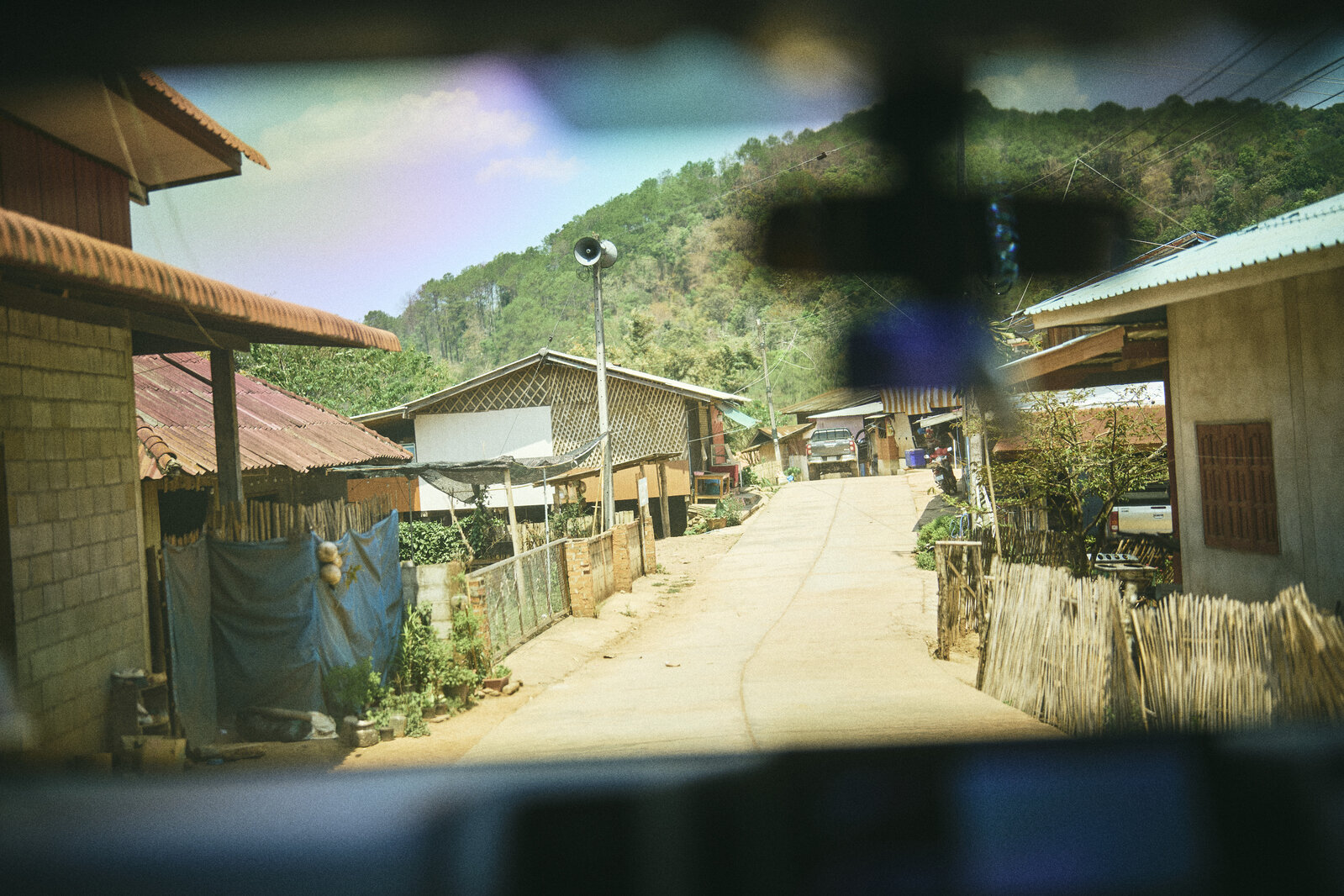
In 2003, the village received exciting news: it had been selected as a Royal Project site.
From rice paddies to coffee plants
The Royal Project is a national initiative aimed at improving life in rural communities. By supporting everything from cultivation to processing, it seeks to solve poverty issues while protecting the forests. One government official described the shift this way:
Watcharapong S., Head of Phu Phayak Highland Agricultural Development Project
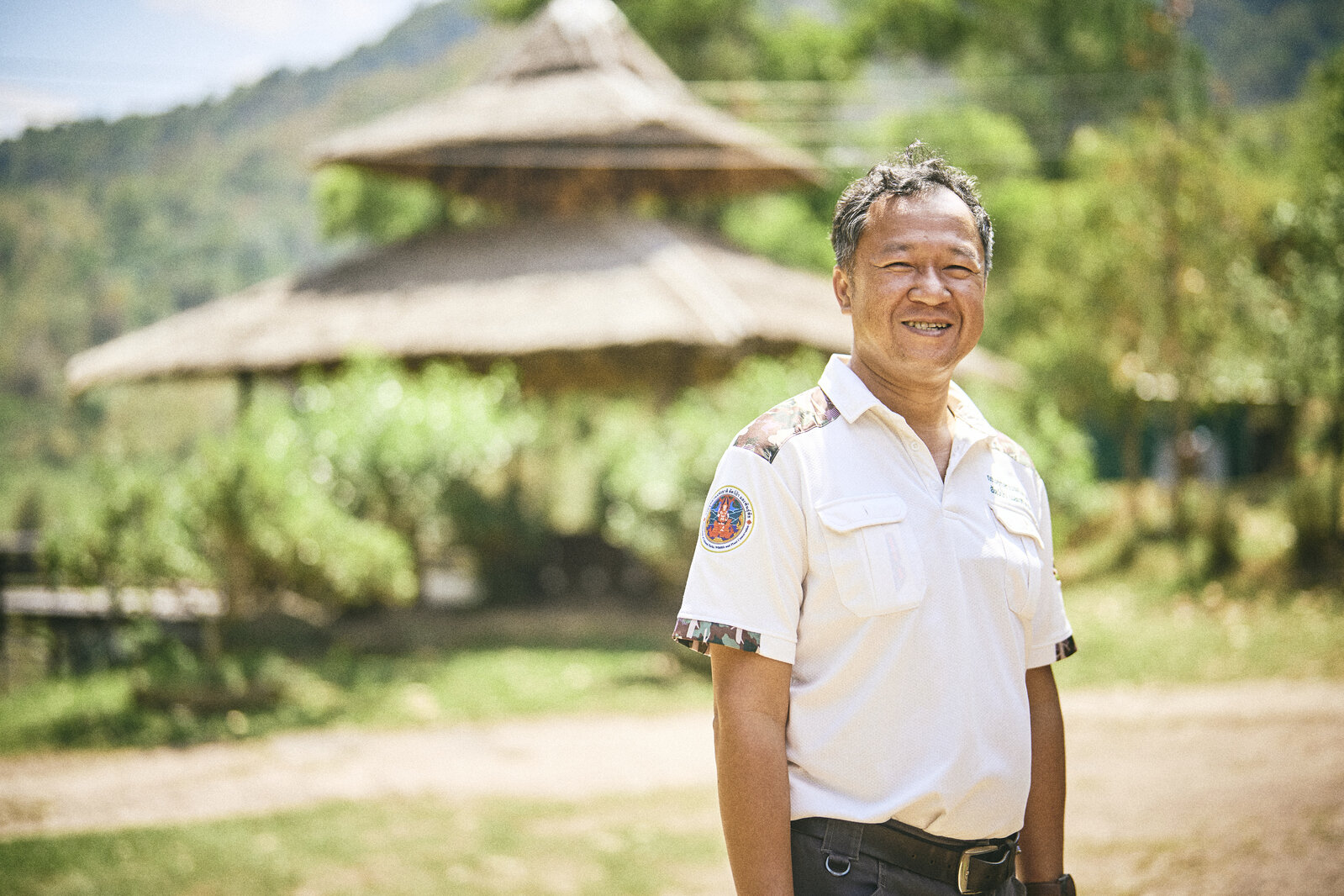
We shifted the community away from rice farming and toward higher-value coffee cultivation. Coffee grows on trees, which means it simultaneously boosts income and supports forest regeneration.
In 2003, Her Majesty Queen Sirikit, the Queen Mother herself visited the village. Following royal research into what would grow best in Thailand's climate and soil conditions, Arabica coffee was chosen as the variety to cultivate. But a major challenge remained: production efficiency.
That's when Toyota joined the team to help drive improvements. At first, we were all a little taken aback. Why would a car company get involved in coffee? (laughs)
We'll come back to the 'why Toyota' question shortly—but first, how exactly did the company improve productivity? The answer lies in the photos below. Take a close look.
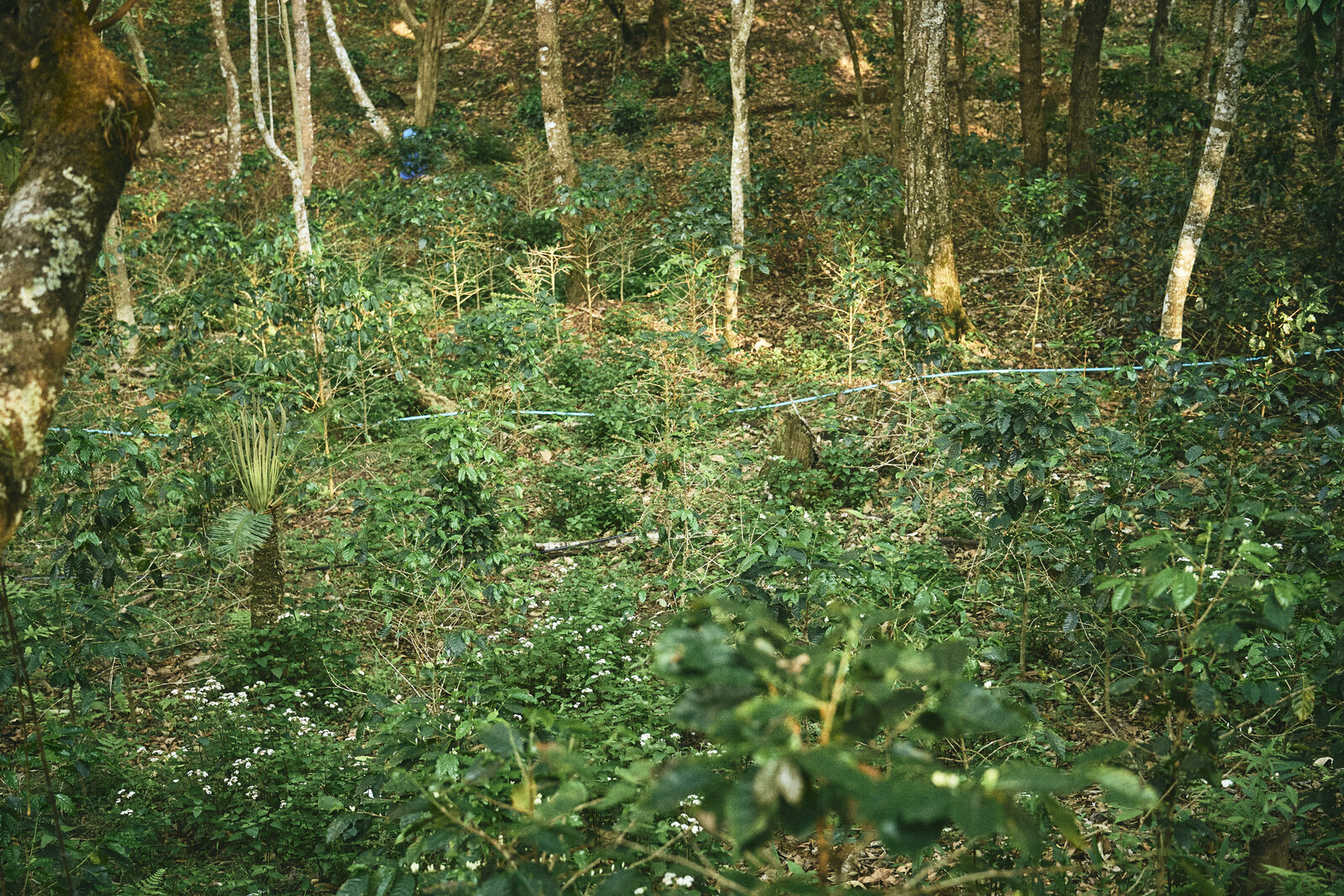
The first change was deliberate shade cultivation. Because Arabica coffee thrives in cooler conditions, farmers were encouraged to stop clearing trees and to let the trees grow to create natural shade. The land itself is provided free of charge by the Bureau of the Royal Household.
The second change? Look for the light-blue hose running across the center of the plantation image.
Water shortages were a constant challenge in the area, so Toyota helped design an automated irrigation system that circulates water from mountain sources down to farms three kilometers below, ensuring that no farmers are left struggling with water shortages.
Harvesting methods were also improved.
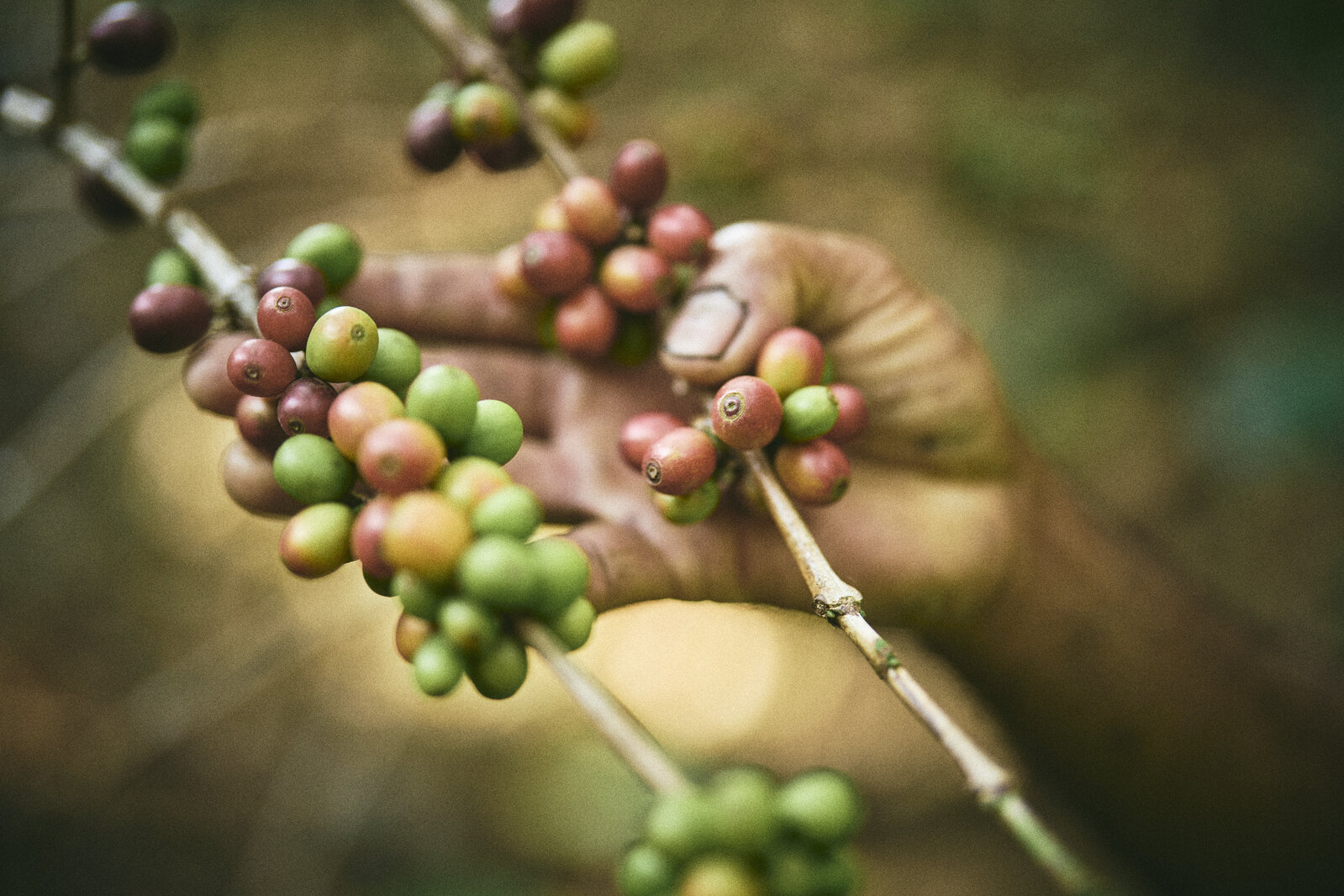
In the past, farmers harvested everything in one go and discarded unripe green coffee cherries—a clear waste of yield. The team went around teaching the proper way to harvest.
Farmers were also taken on study tours to visit successful operations elsewhere in Thailand, reflecting Toyota’s belief that, just as in car manufacturing, developing people is essential.
Dad’s photo in a city café
When we asked one of the farmers how much his income had grown since the improvements, his face broke into a wide grin. “Oh… quite a lot,” he said with a laugh.
Wi I. and his daughter, Phu Phayak village
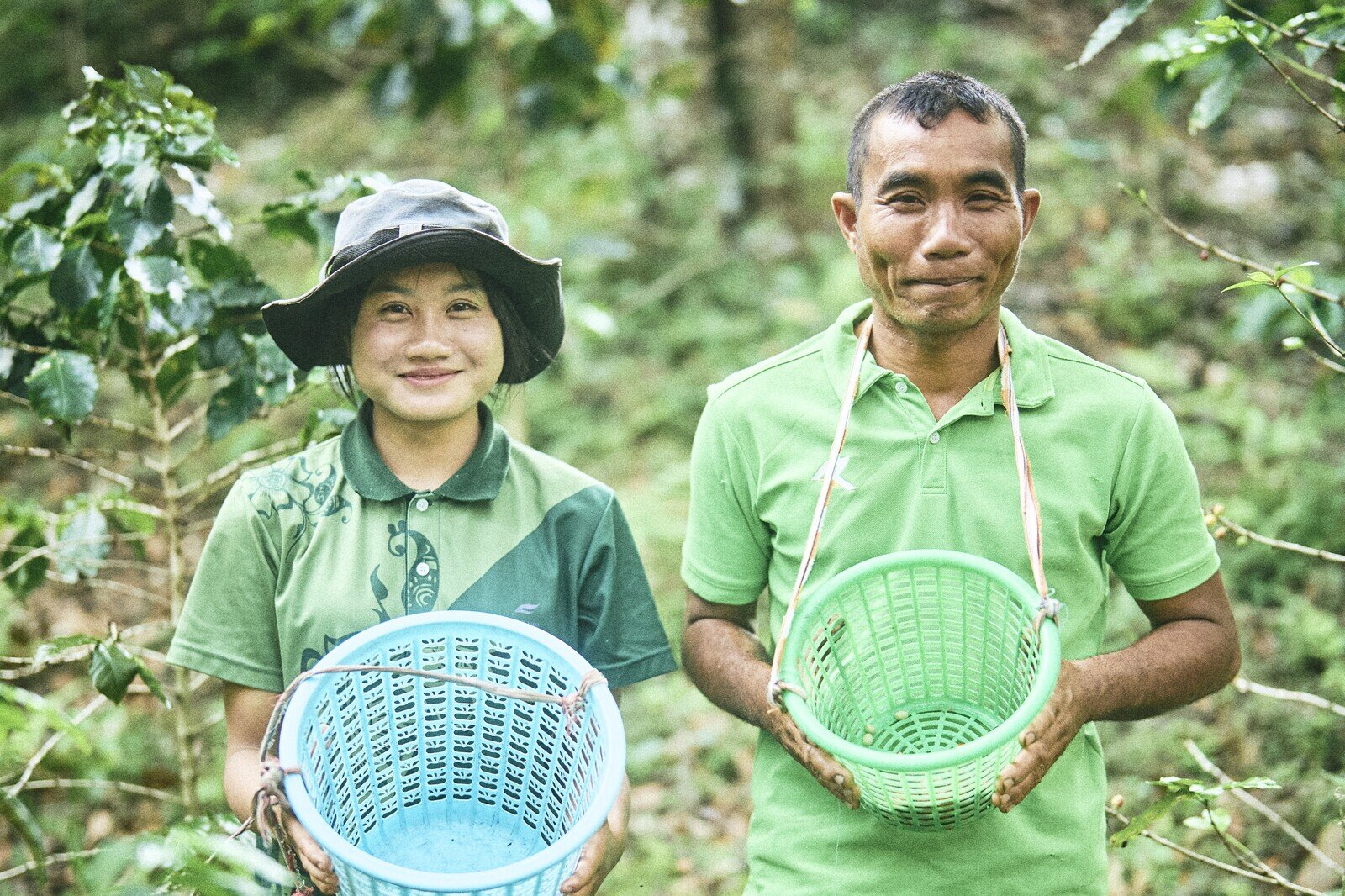
The Royal Project has taught us so much, and it's kept us motivated. Toyota's kaizen approach gave us the habit of really thinking about quality and flavor—that's been huge for us.
Better quality means a better life. Right now, we're experimenting with new flavor profiles to grow our market. And my daughter is taking on the work. It makes me very happy that we can continue to grow together as a family.
His 18-year-old daughter beamed as she told us: “There's a really stylish café in the city, and they have a photo of my dad on the wall!”
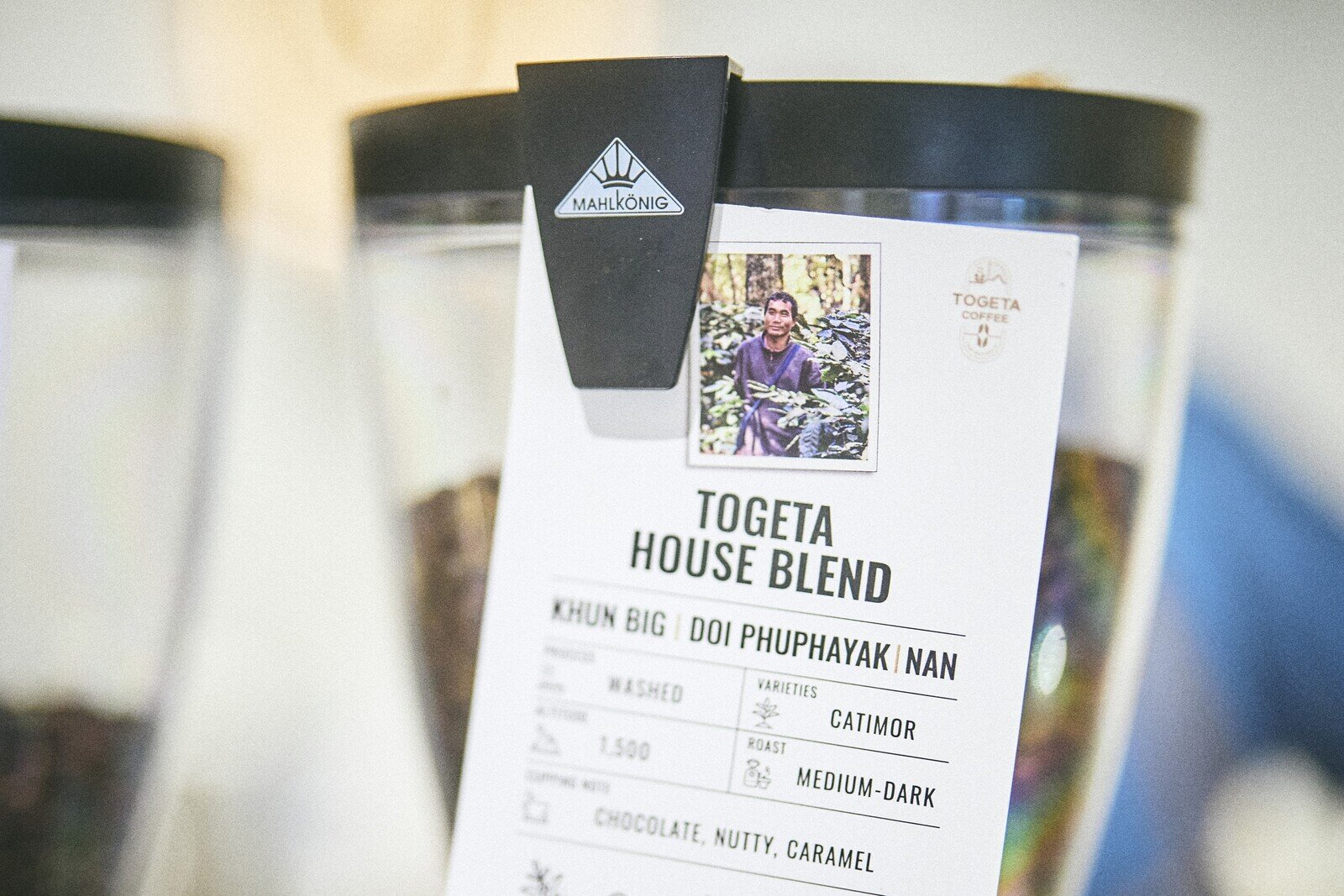
Seeing her pure joy, her father couldn't help but smile too. Being part of the Royal Project has given them a profound sense of pride in their work.
The kaizen didn't stop after harvest. In the old days, farmers removed the husks of coffee cherries entirely by hand.
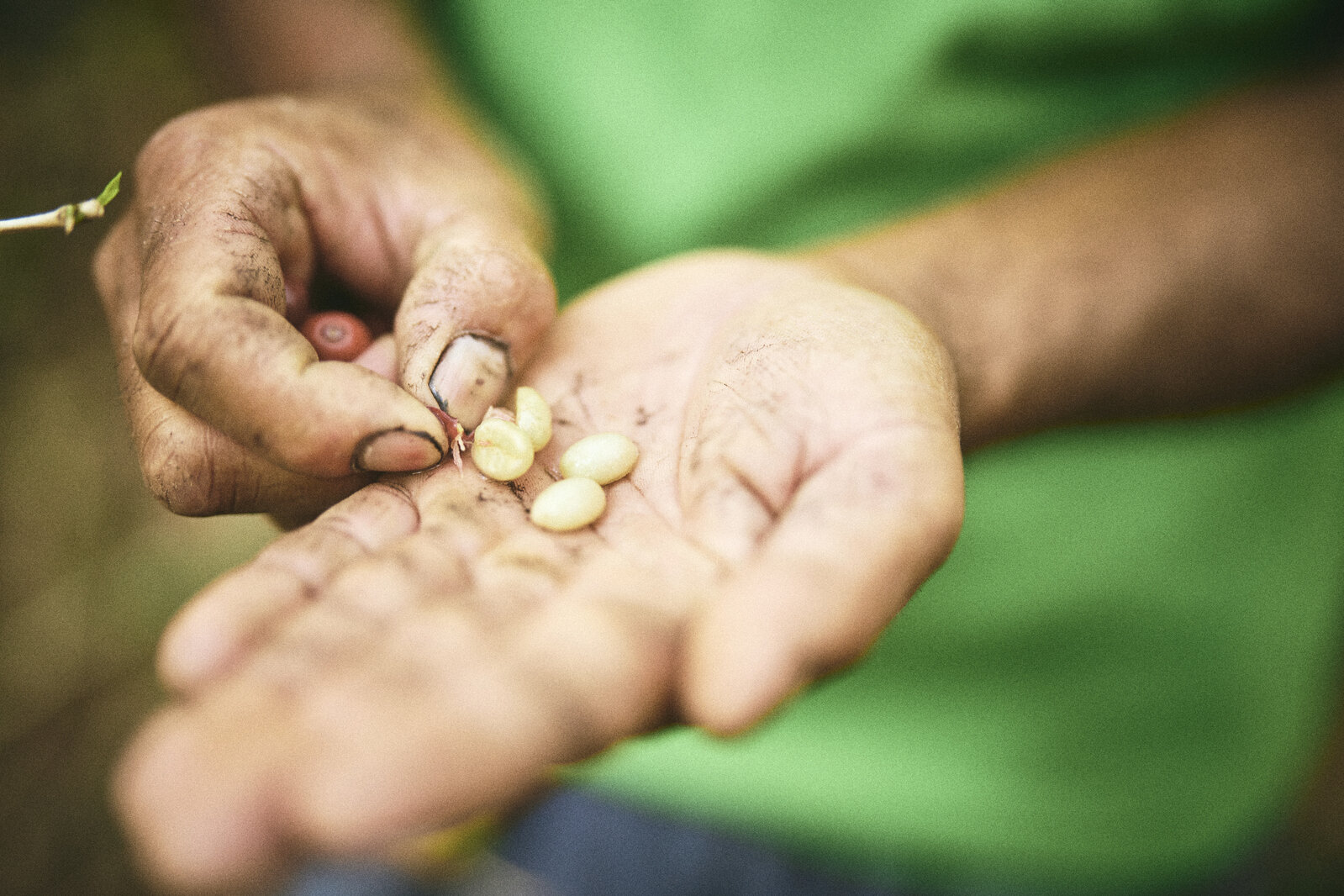
So, Toyota provided hulling machines and improved the drying process as well. Recognizing the limits of a car company's coffee expertise, Toyota also partnered with the Specialty Coffee Association of Thailand (SCATH). In the first year alone, the quality score rose from 76 to 82 points, clearing the threshold for “specialty coffee” designation.
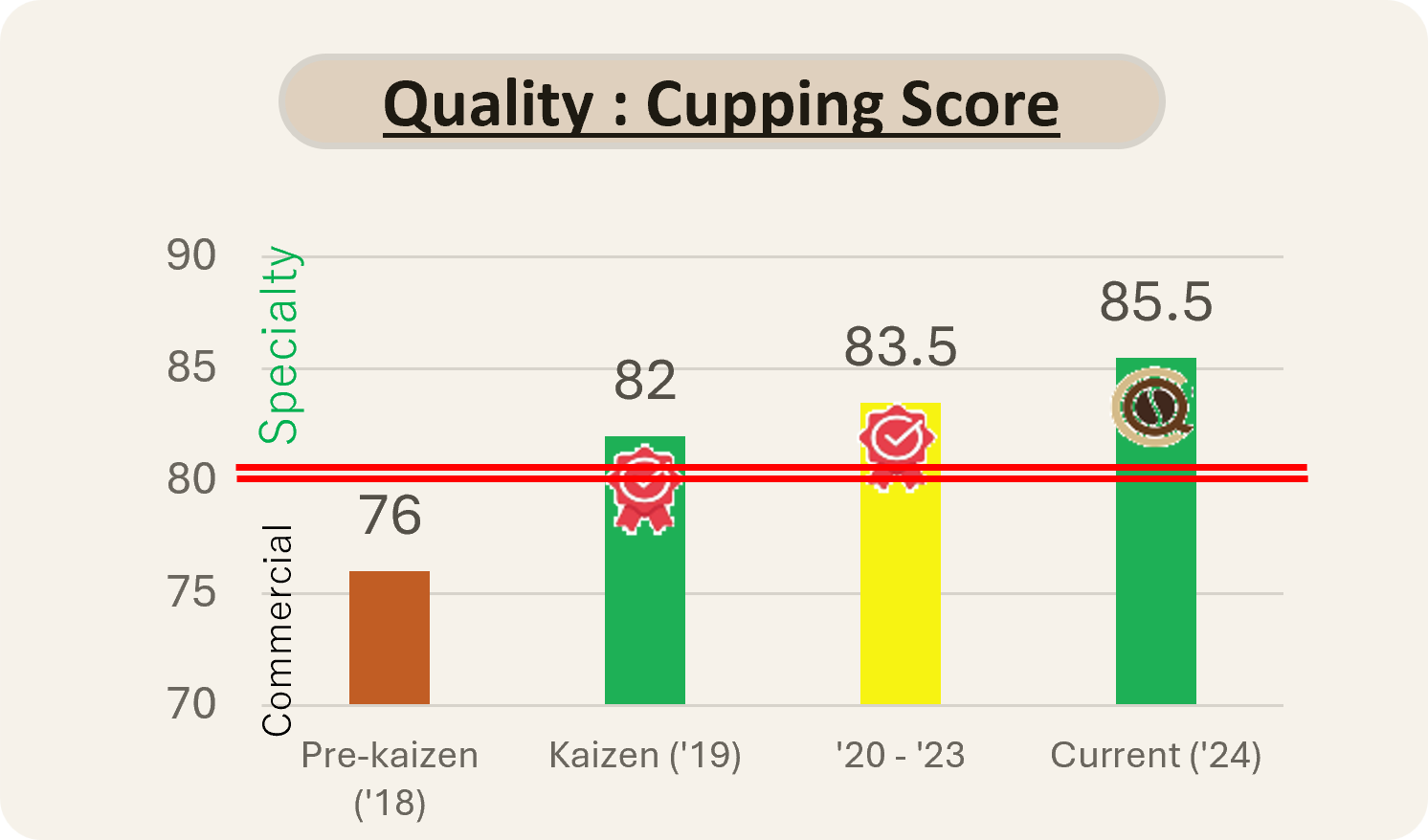
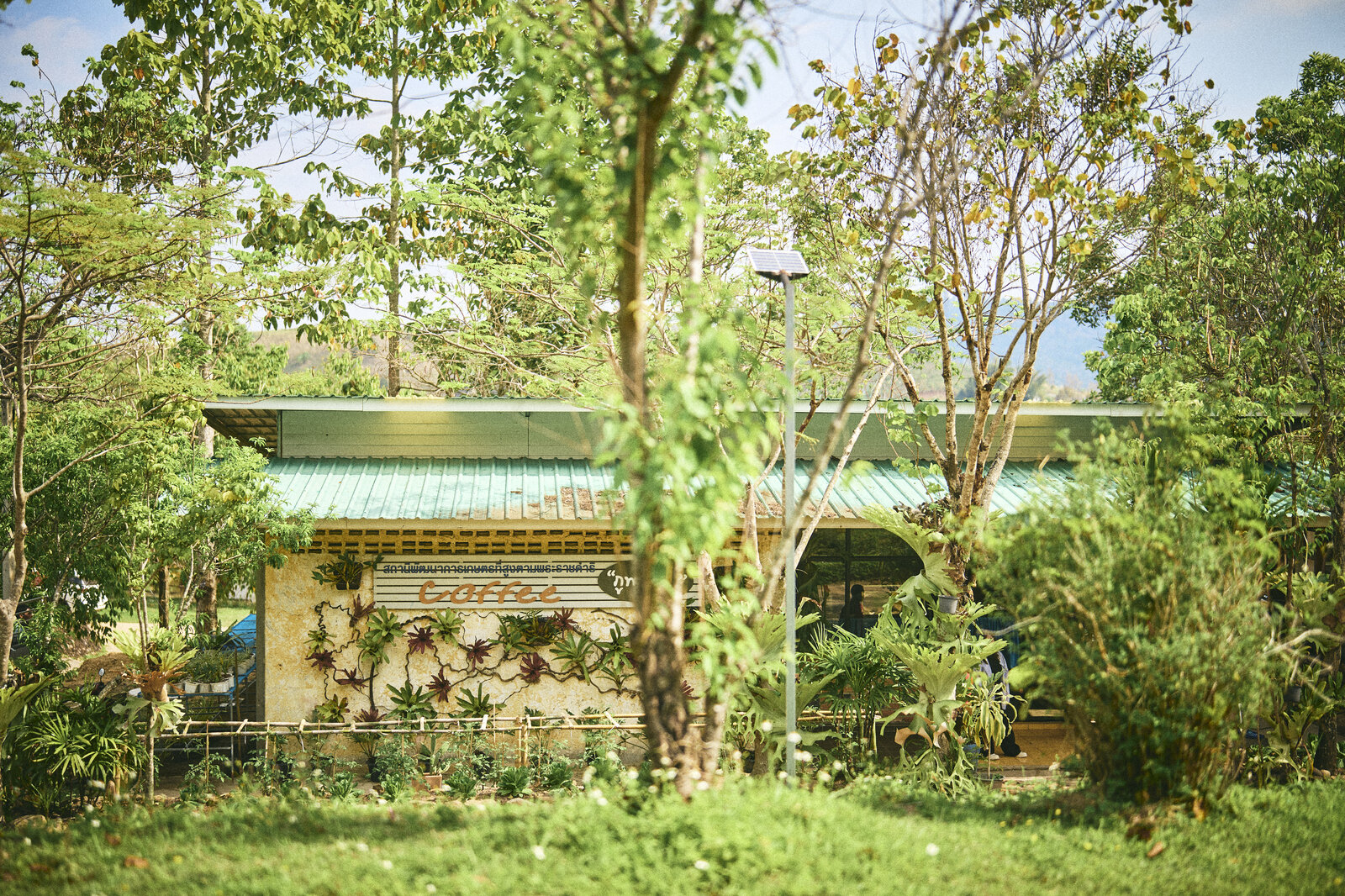
Today, the village's coffee earns good score in the national coffee evaluations, and a cafe has even been built in the village to welcome visitors.
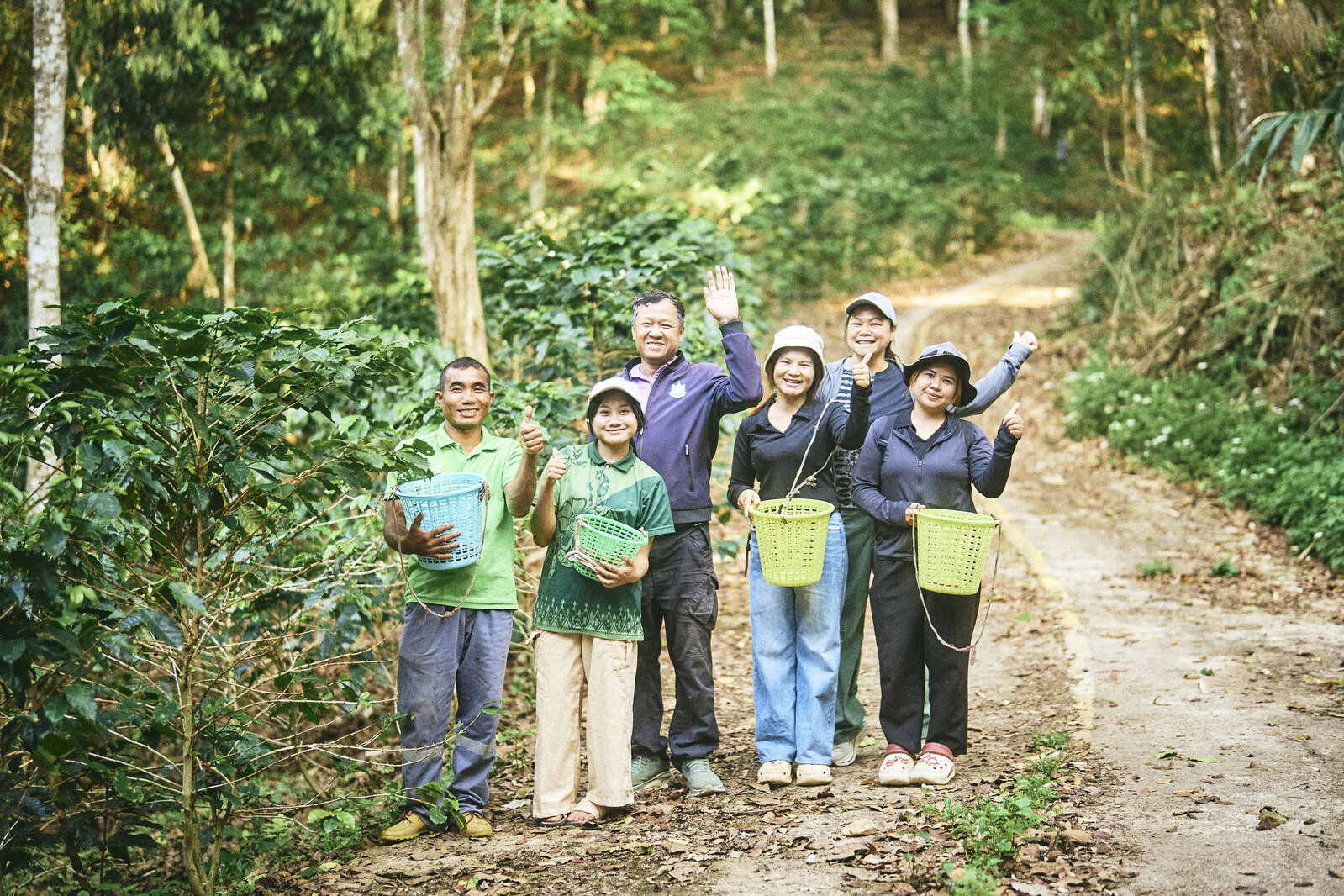
Future plans also include harvesting the premium Geisha variety—beans that can fetch over 1,500 yen a cup in Japan. And did you know the name doesn’t actually come from “geisha” ?