



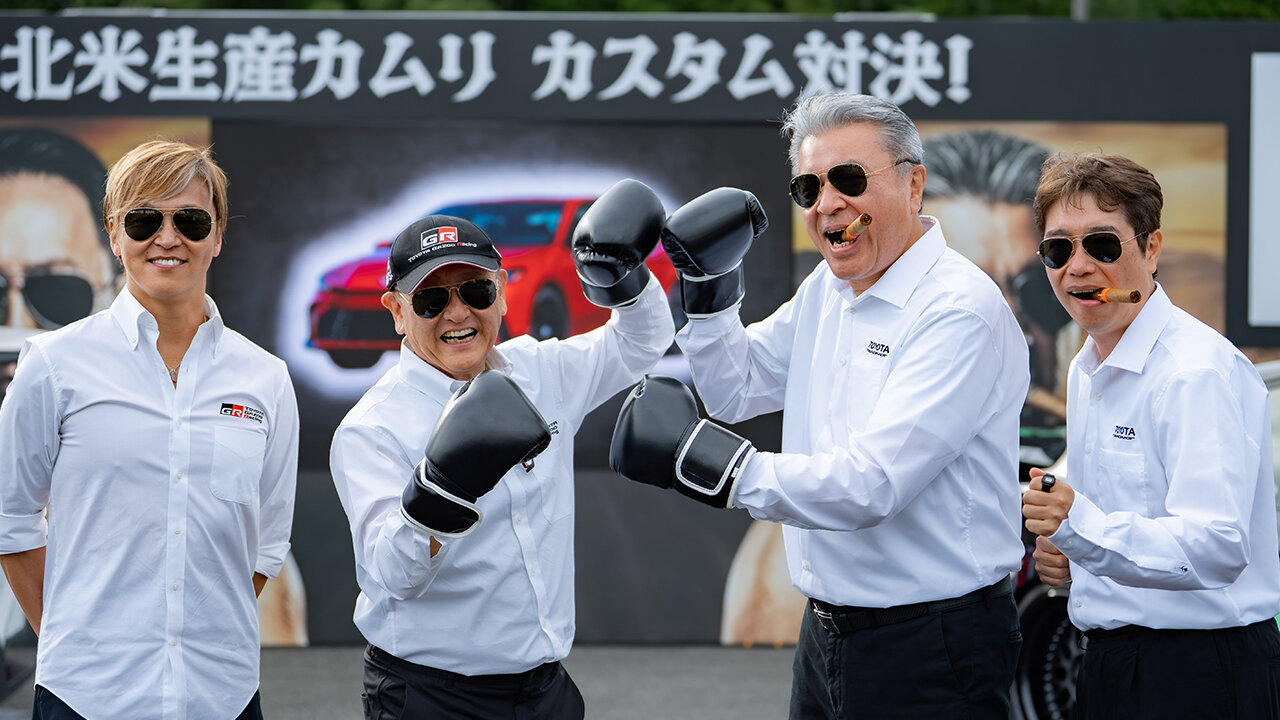
The U.S. Camry Customization Showdown, one of three contests that kicked off at this year's Tokyo Auto Salon, was decided at the Super Taikyu 24-hour race. We look at what this matchup means to Morizo.
Round 3 of the Super Taikyu Series, the Fuji 24 Hours, was held at Fuji Motorsports Forest from June 5 to 7. The festivities included a cultural exchange between the United States and Japan, centered on motorsports.
The initiative began at last season’s final event, where a NASCAR demo run was held with U.S. Ambassador to Japan George Glass as a special guest.
Super Taikyu sets the stage for a showdown
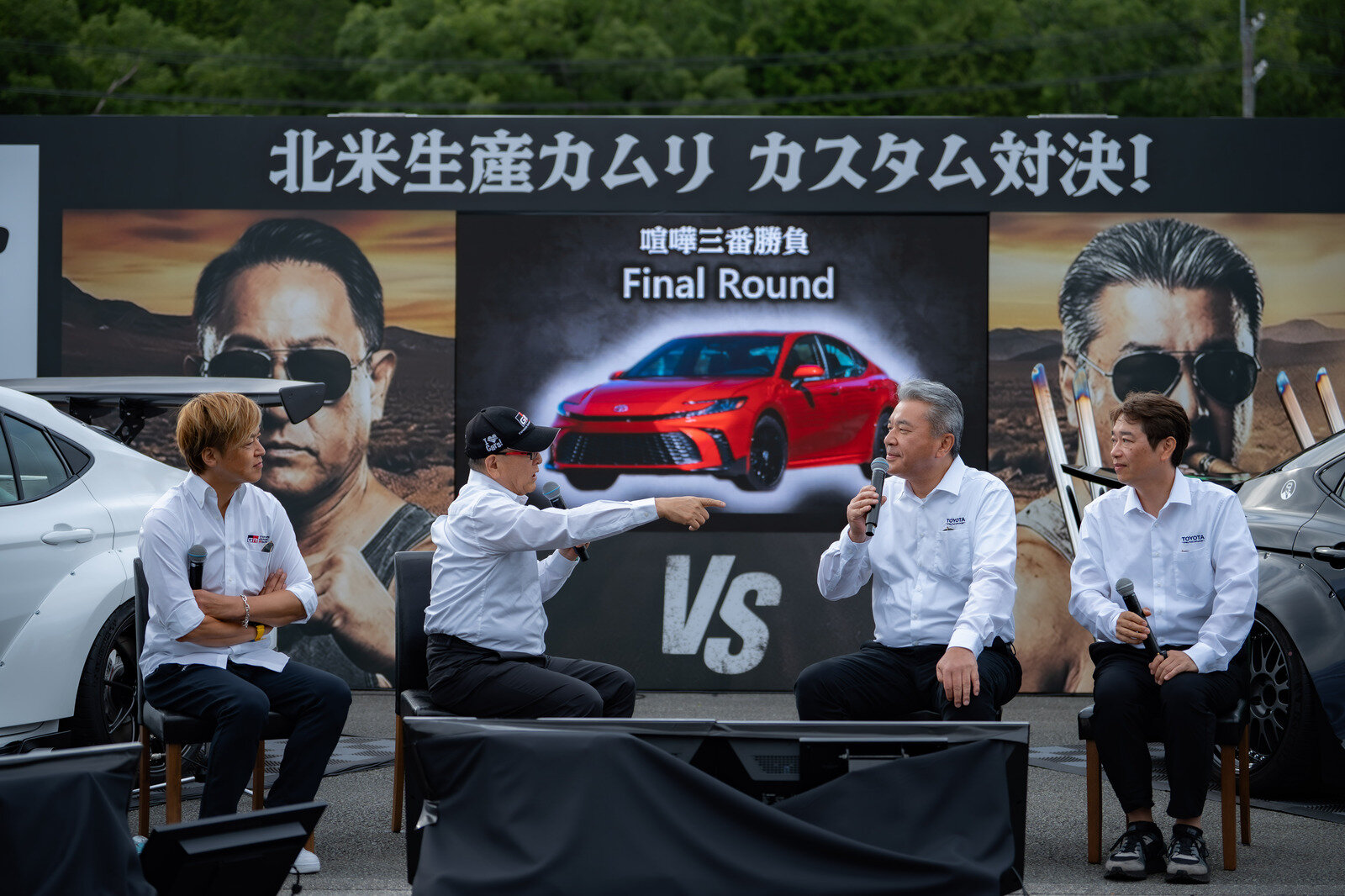
This time, the cultural exchange featured some added excitement—the U.S. Camry Customization Showdown between Akio Toyoda (aka Morizo), representing Team GAZOO Racing (GR), and Executive Vice President Hiroki Nakajima, who goes by “Giaiano,” as the face of Team TOYOTA Racing (TR).
The Camry showdown was one of the three contests announced at this year’s Tokyo Auto Salon in January.
At the press briefing on June 5, Team GR’s Morizo was joined by racing driver Masahiro Sasaki.
They faced off against Giaiano and Team TR’s secret weapon, Mid-size Vehicle Company Project Manager Toru Izumiya, who had previously clashed with Morizo over the development of the Prius.
After introductions by Toyota Times anchor Yuta Tomikawa, Morizo and Masahiro Sasaki strode out looking clean-cut and composed.
For their part, Team TR entered sporting aviator sunglasses, looking like wrestling villains.
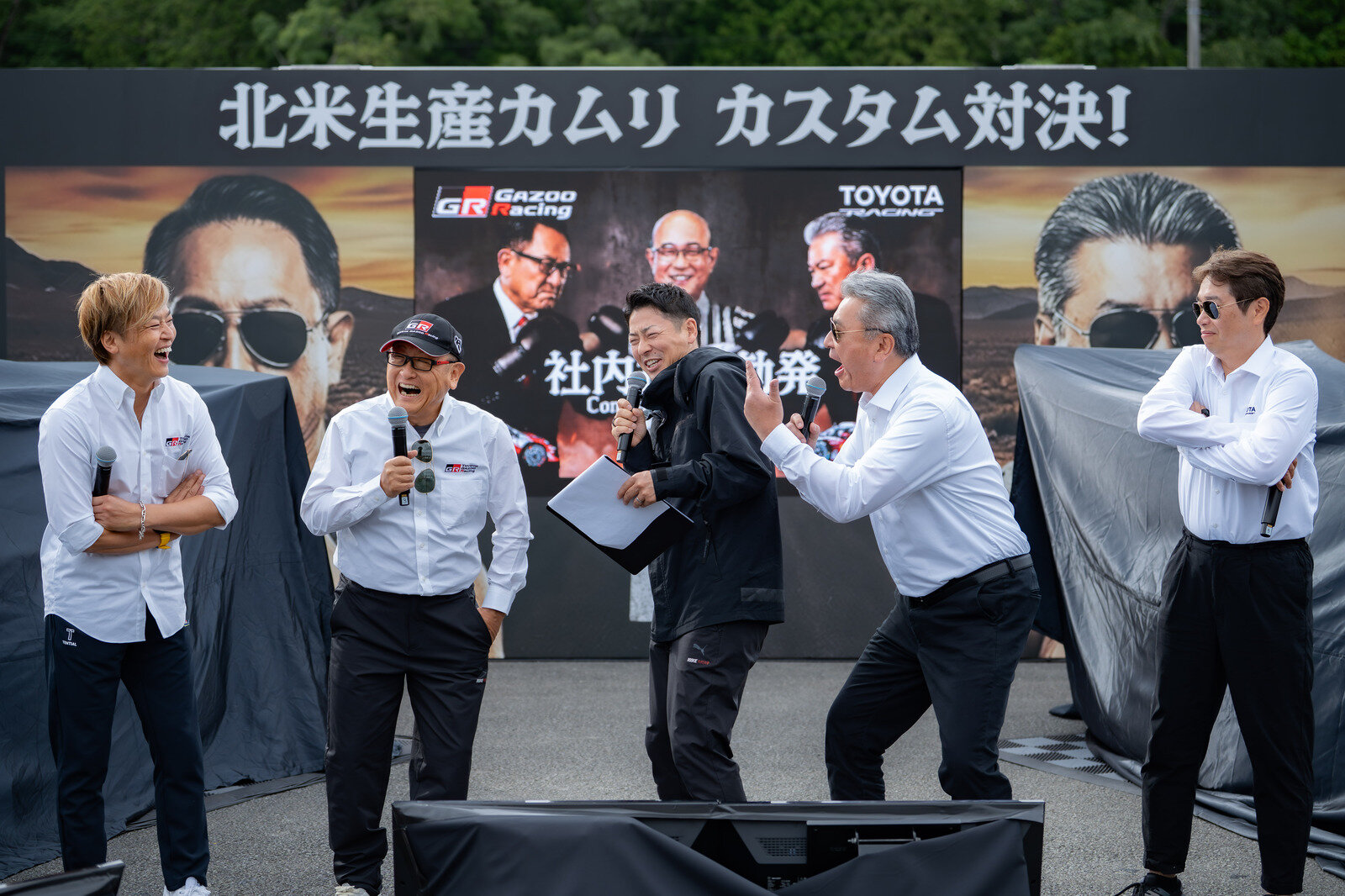
Giaiano offered the following backstory for the duel:
Giaiano
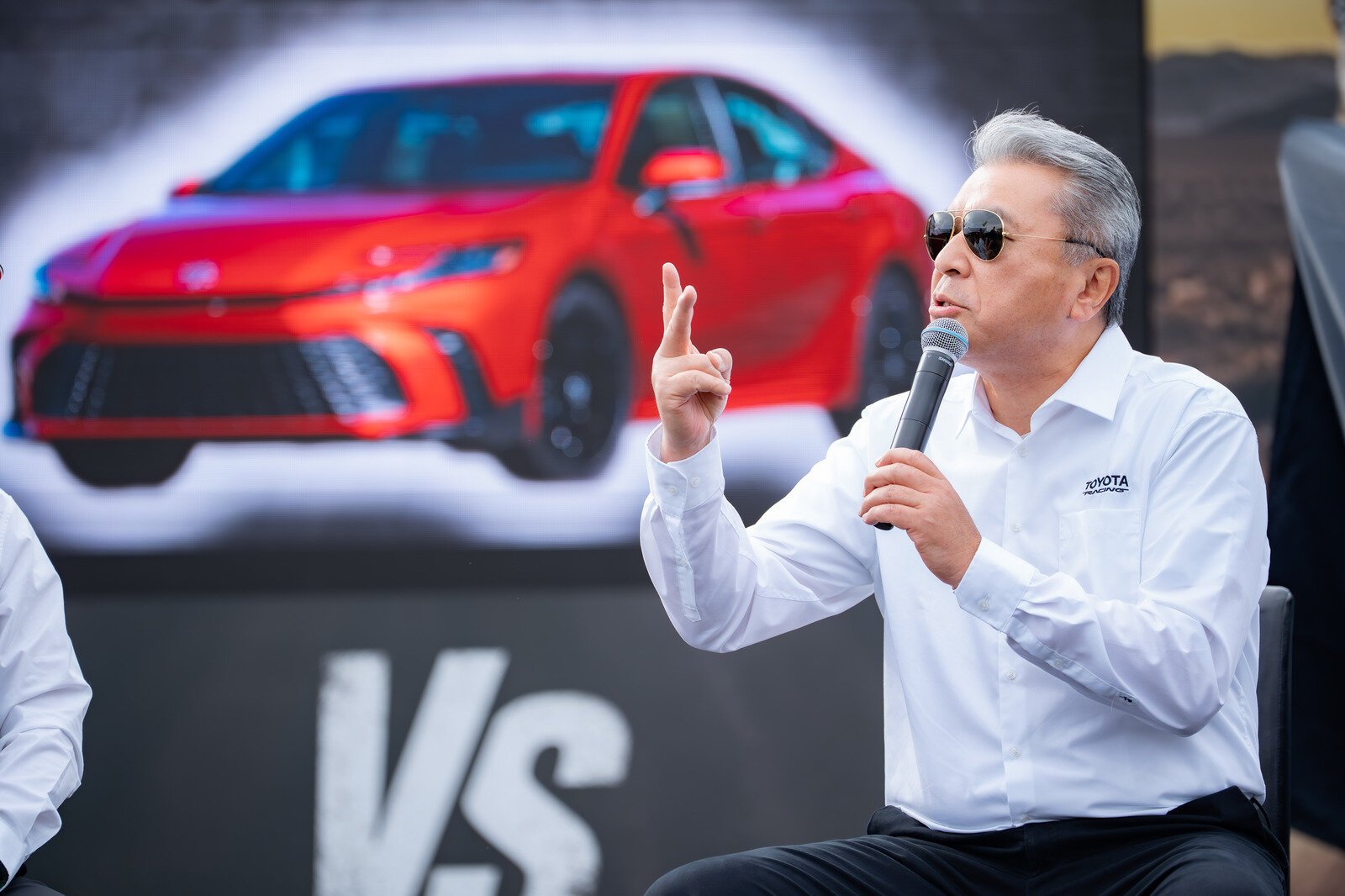
Unfortunately, the Camry is not currently sold in Japan. The model is big in America, and when I visited the United States last year, young people told me that the Camry is incredibly popular over there.
In my mind, America was all about SUVs, but to young people these are the cars of their parents’ generation, while sedans are seen as cool.
When I shared this with Morizo, before I knew it, he had turned what was supposed to be a two-round battle into three rounds by adding in this Camry showdown. I wasn’t the one picking a fight—he started it.
Seeing Giaiano declare confidently, “There’s no way we’ll be beaten,” Morizo rose to the challenge.
Morizo
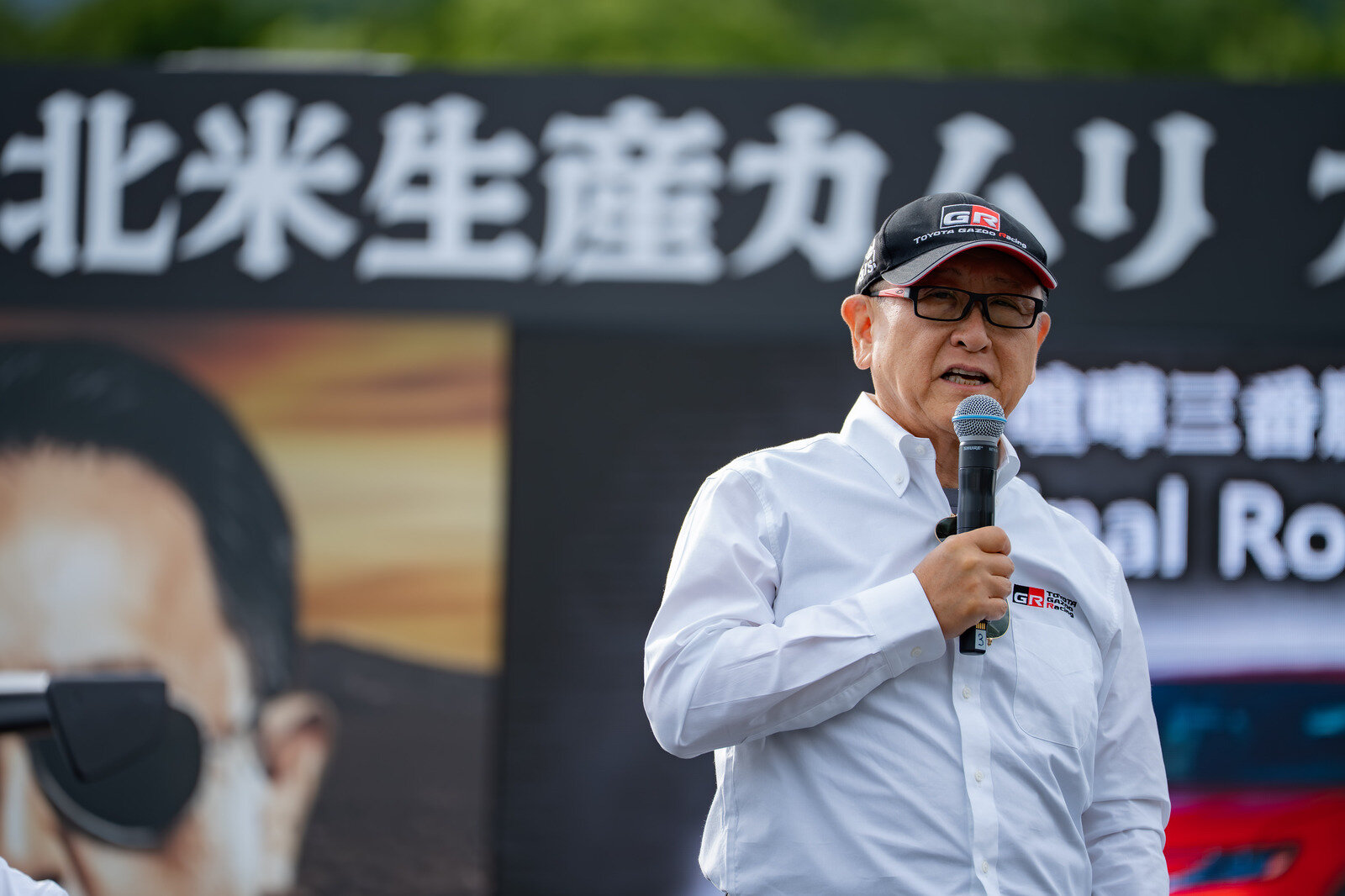
You should know that I don’t lose. I never lose.
The first of these three contests, staged at Tokyo Auto Salon, was the “Parent-Child Quarrel” between Team Morizo (GR) and Daihatsu. In that showdown of customized Daihatsu Hijet Trucks, Morizo managed to eke out a narrow victory. He had this to say about the latest duel:
Morizo
I only start something when I can win, so I don’t pick fights if I’m going to lose. It’s not about confidence, it’s proven fact.
Two astonishing customizations
As both teams brimmed with confidence, the two American-made Camrys were unveiled.
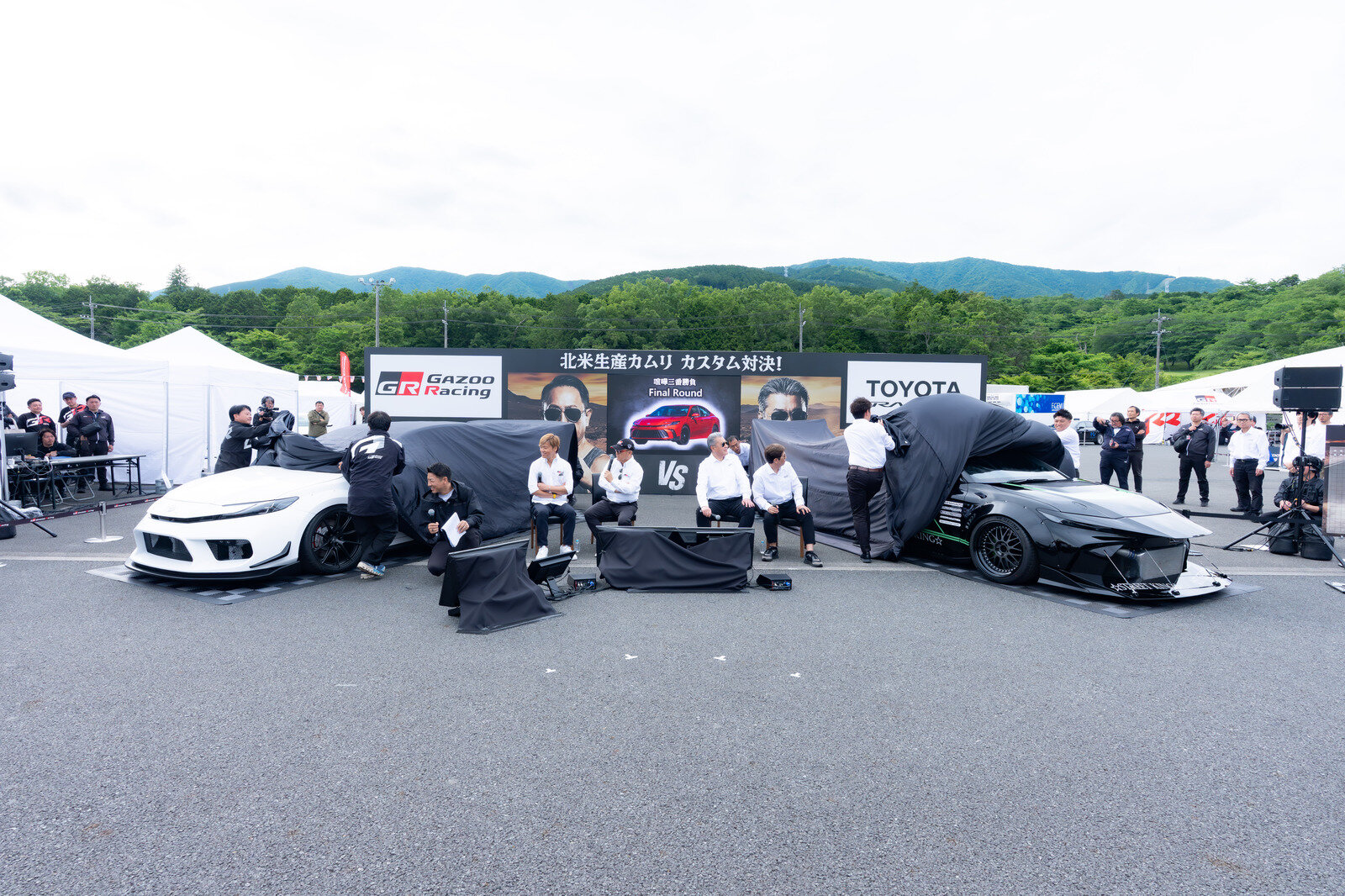
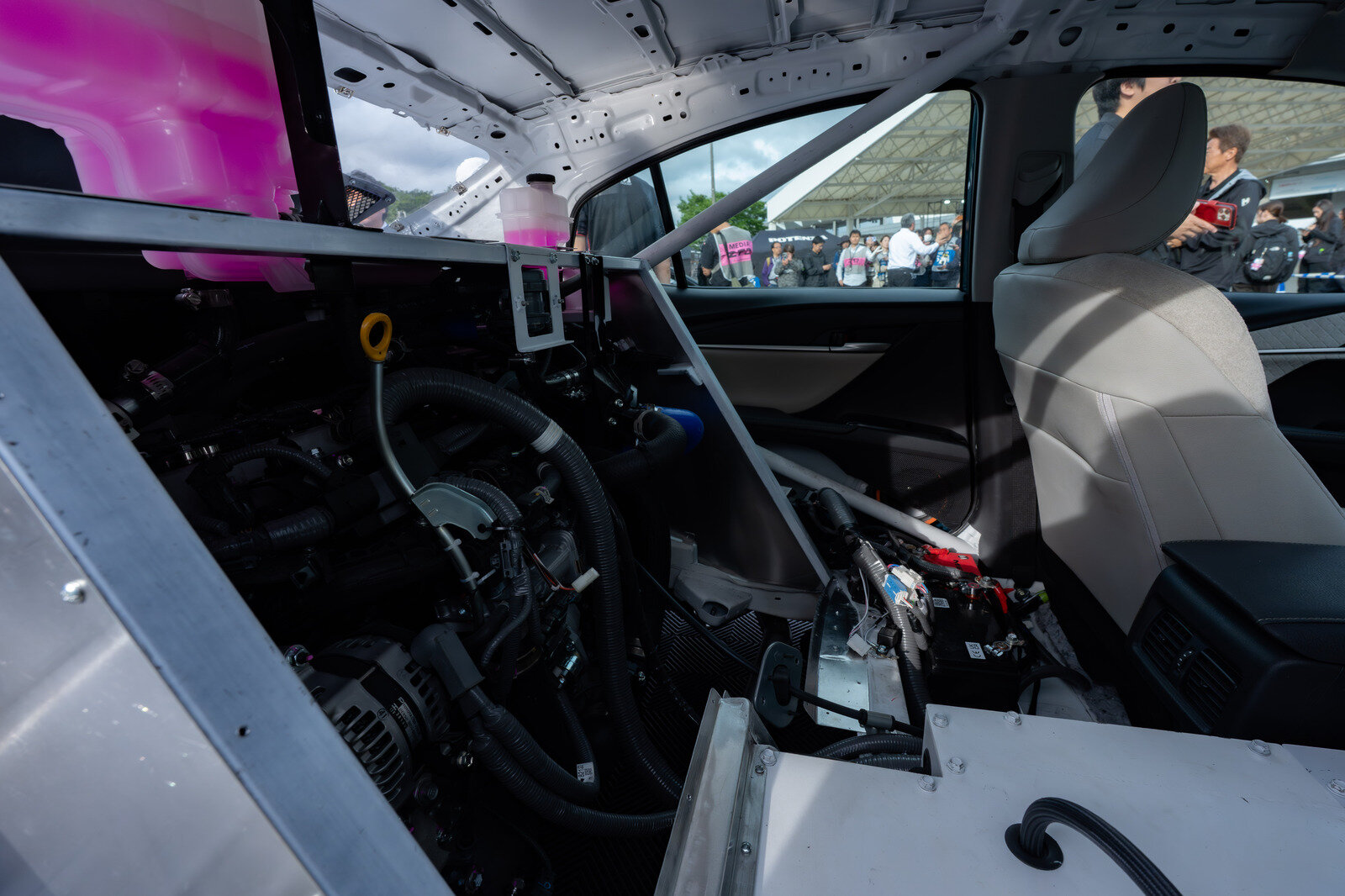
Team GR had opted for a race car aesthetic, adding an aerodynamic bumper, fender flares, and a large rear spoiler. But the makeover was about more than just looks.
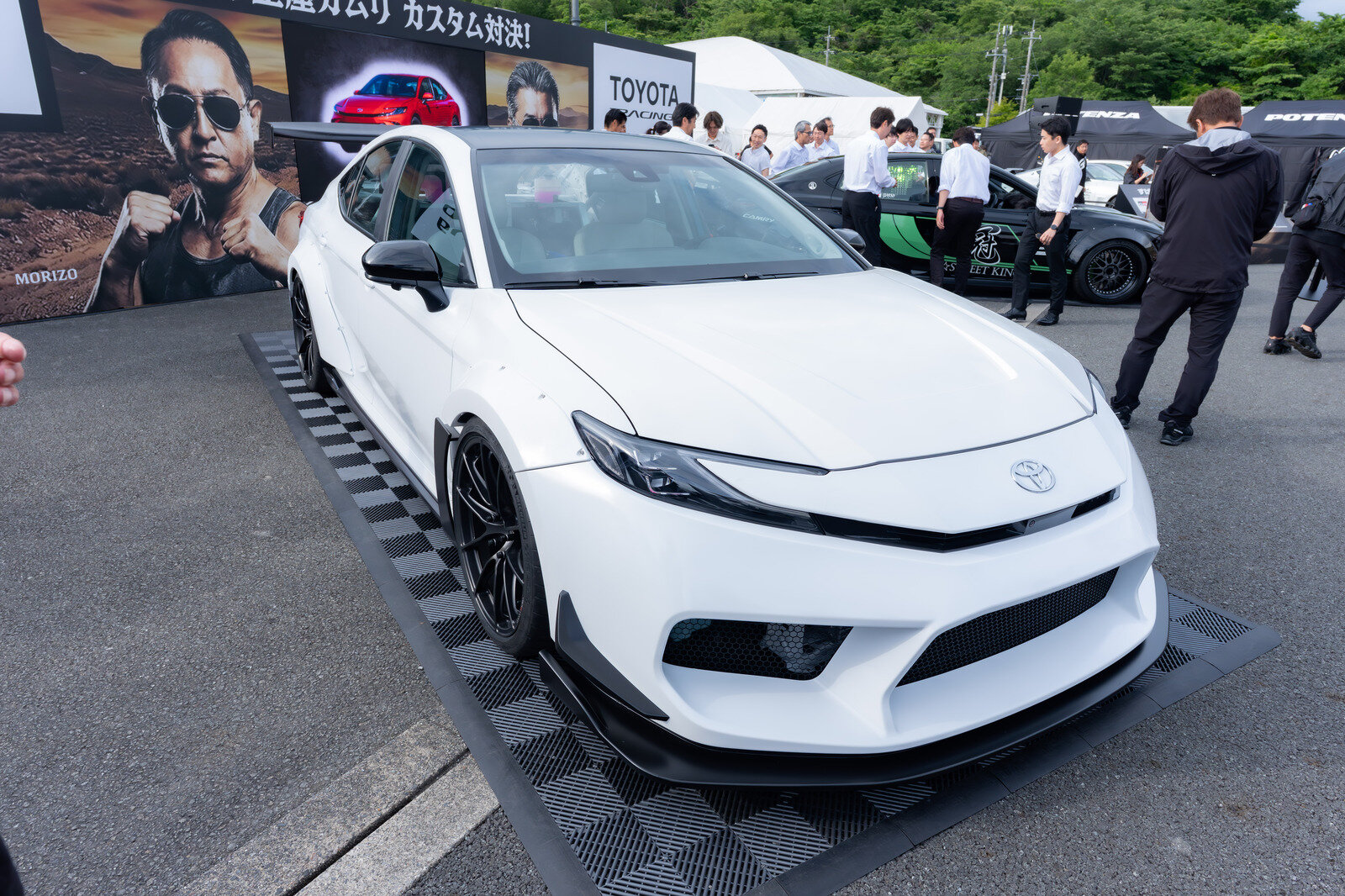
As Sasaki explained, Team GR put a great deal of thought into customizations that lay under the surface.
Sasaki
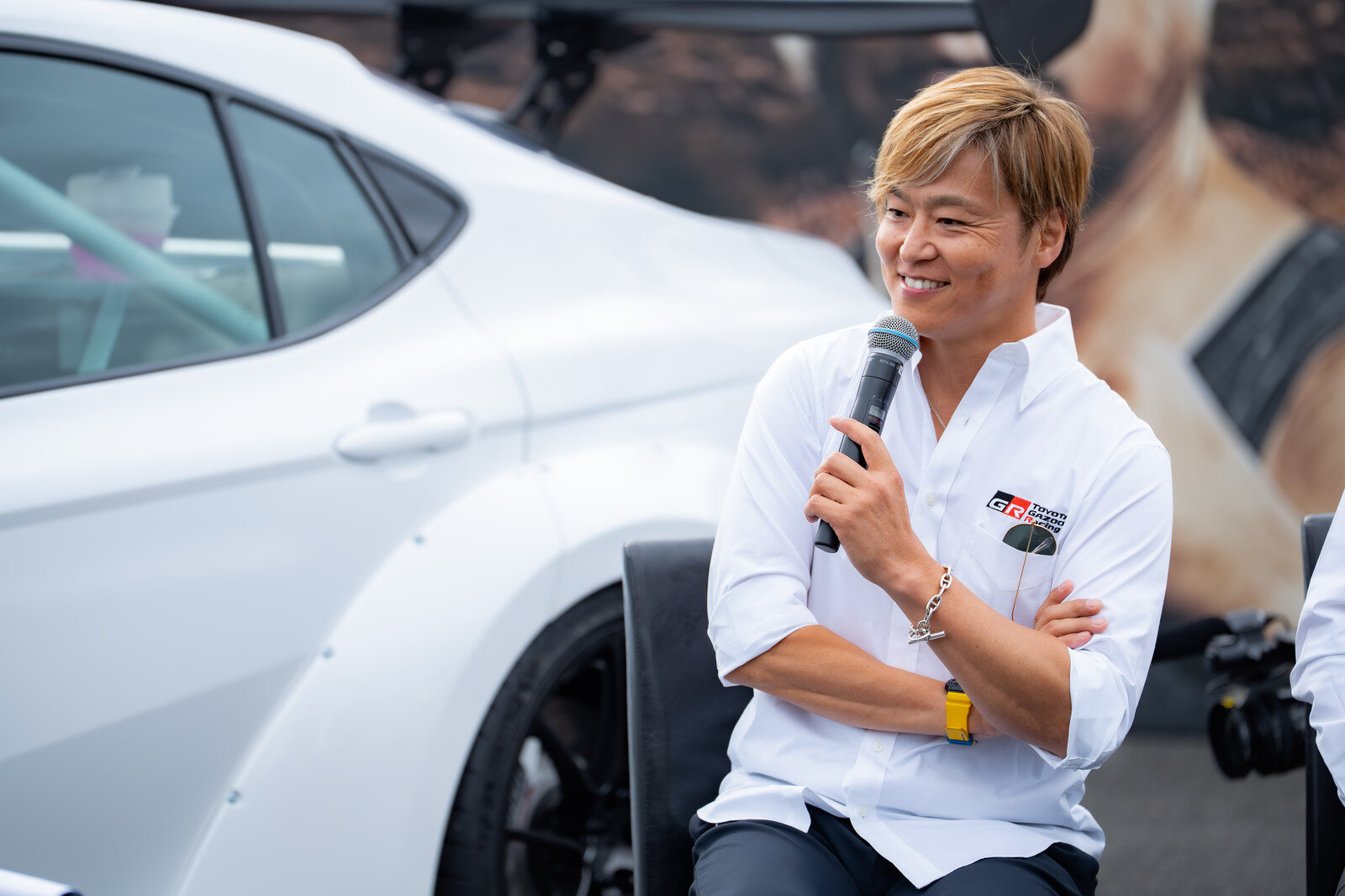
Our aim is to create something stylish that also makes you think, “Wow, that’s a cool Camry,” the moment you lay eyes on it. We want a car that’s ready for production.
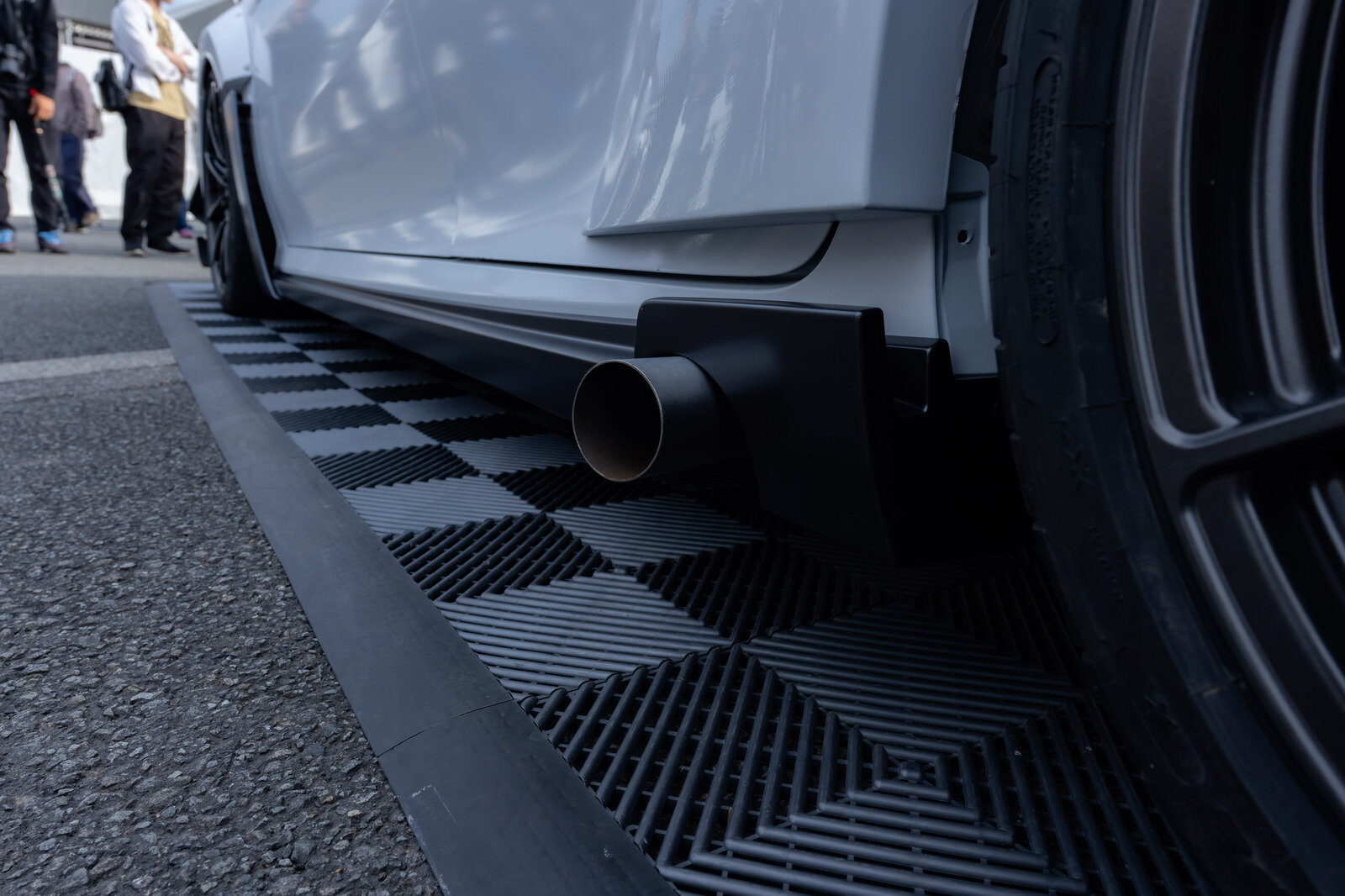
What’s under the hood is incredible. You wouldn’t know just by looking at it, but this car is packing a seriously impressive 7-cylinder setup.
Seemingly caught off guard, the session’s host, Tomikawa, jumped in with a question: “Hang on, shouldn’t there be an even number of cylinders?”
Sasaki
We’ve got a 3-cylinder engine in front and a 4-cylinder in the rear. Twin engines.
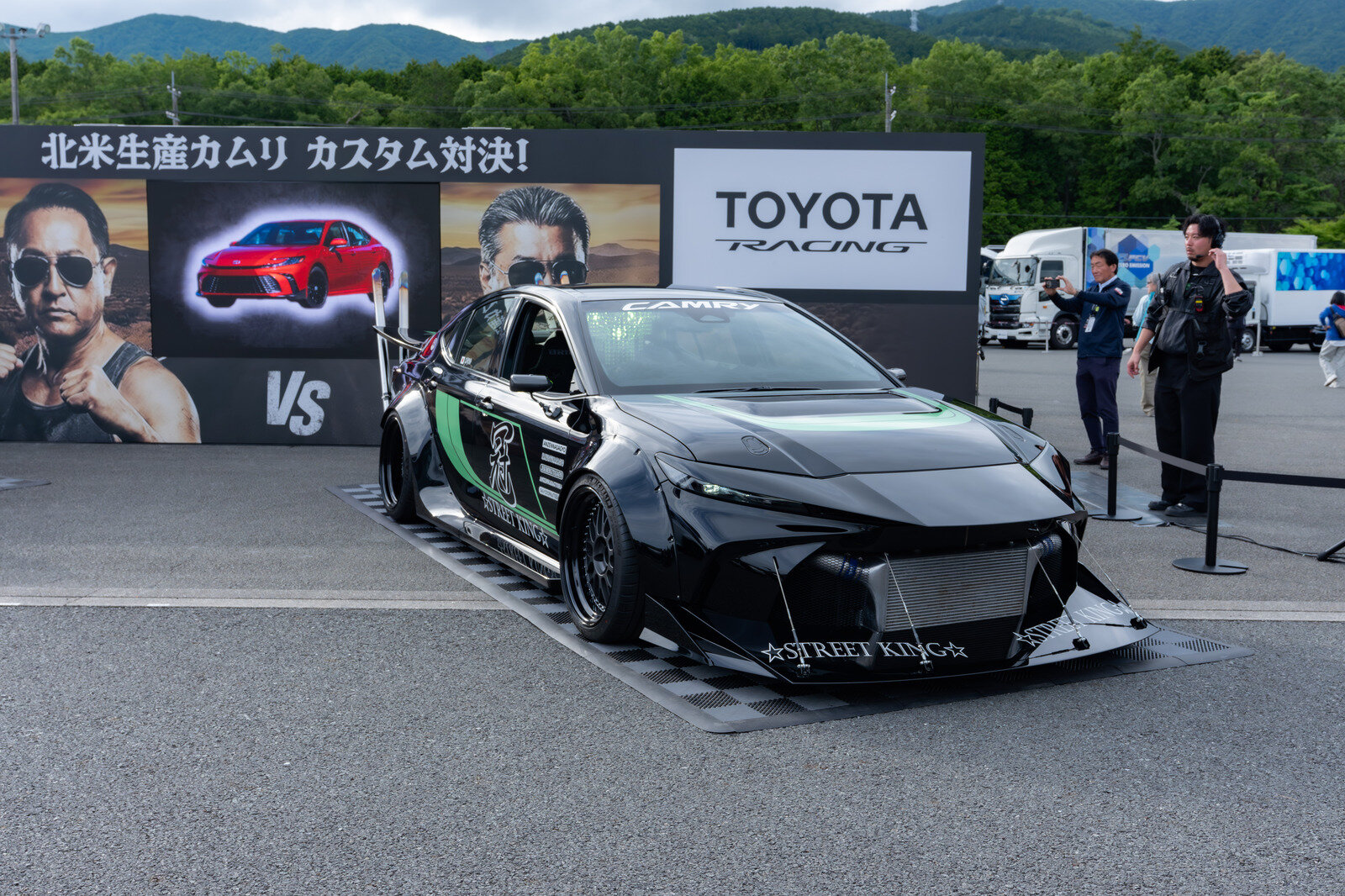
Over on the other side, Team TR fitted their Camry with a maxed-out hood and chin spoiler, stretched tires on deep-dish rims encased in bolt-on fender flares, as well as a rear complete with extended spoiler and exhaust pipes that sweep sharply skyward.
With its “bamboo spear” exhausts and huge chin spoiler, the TR team’s flashy body kit completely transformed the Camry in a style reminiscent of the Japanese street racers of yesteryear. Excitement rippled through the crowd.
The car’s key points were outlined by Team TR’s secret weapon, MS Company Project Manager Izumiya.
Izumiya
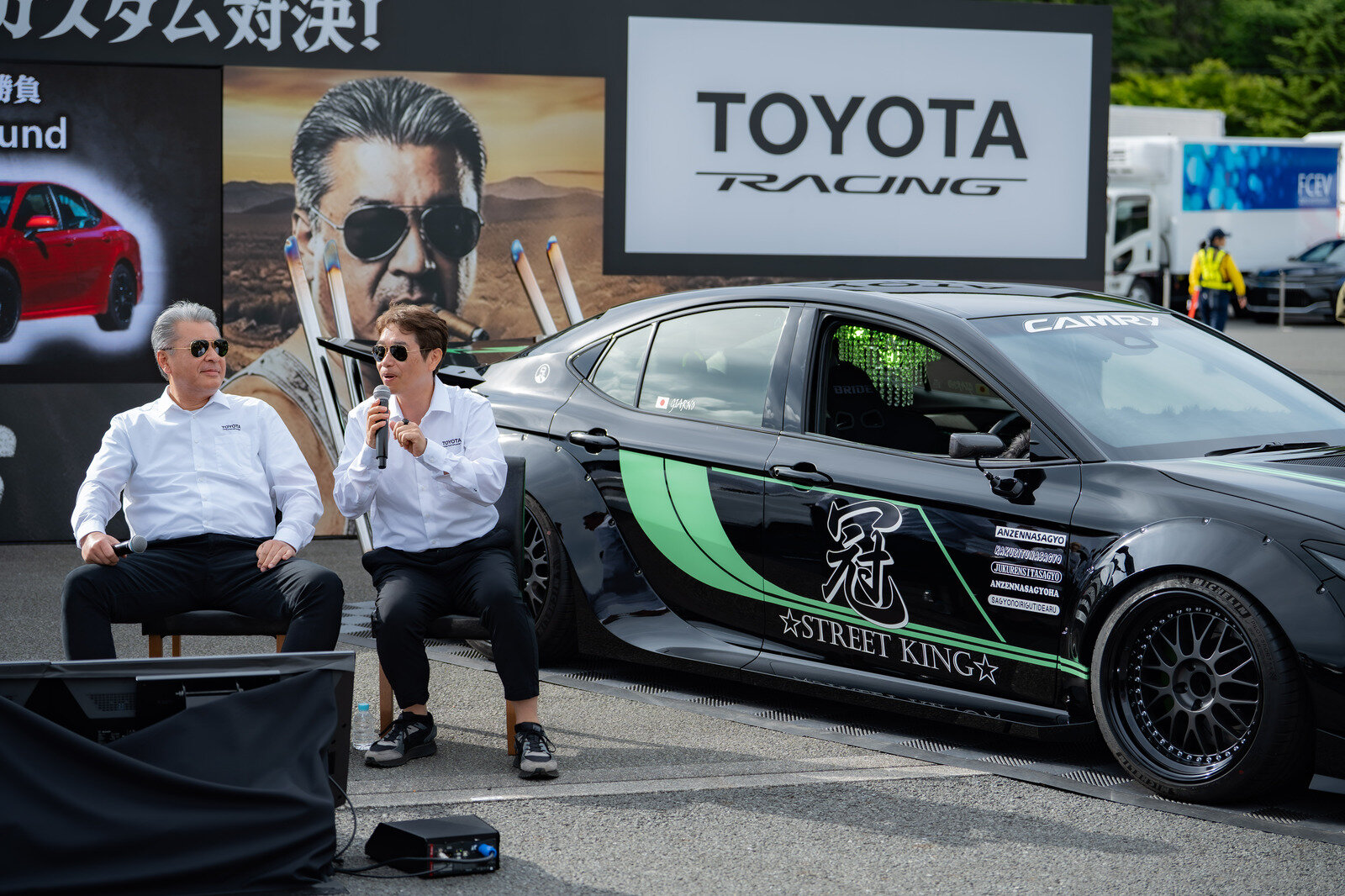
An oversized hammerhead, coupled with a jutting chin spoiler. On the sides we’ve got super wide bolt-on fender flares.
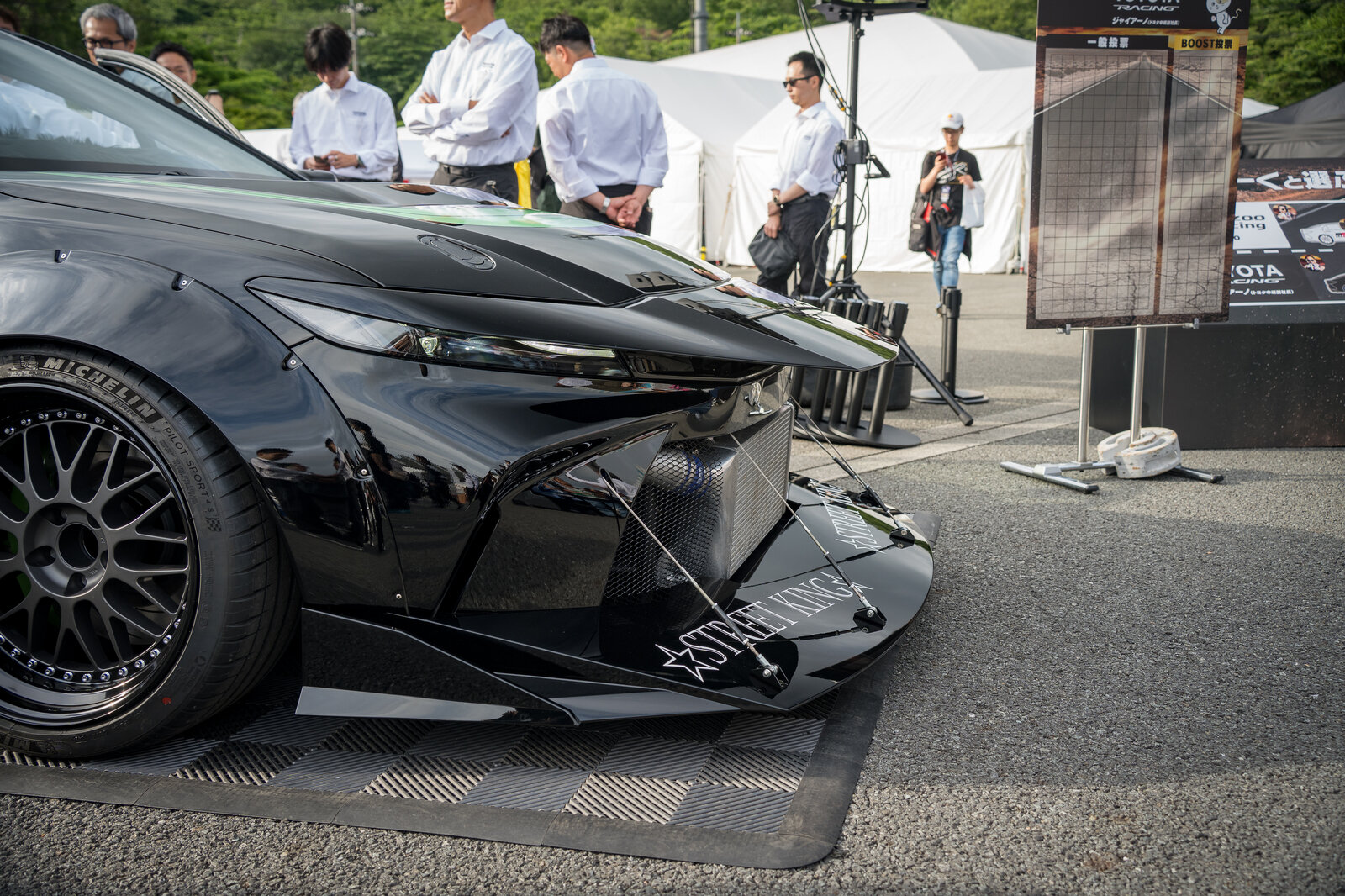
Then there’s the rear spoiler, featuring a shooting star. Add to that the towering bamboo spear exhausts and it really captures the old-school “Grachan*” racer style.
*Japanese custom car style inspired by the Grand Champion racing series of the 1970s.
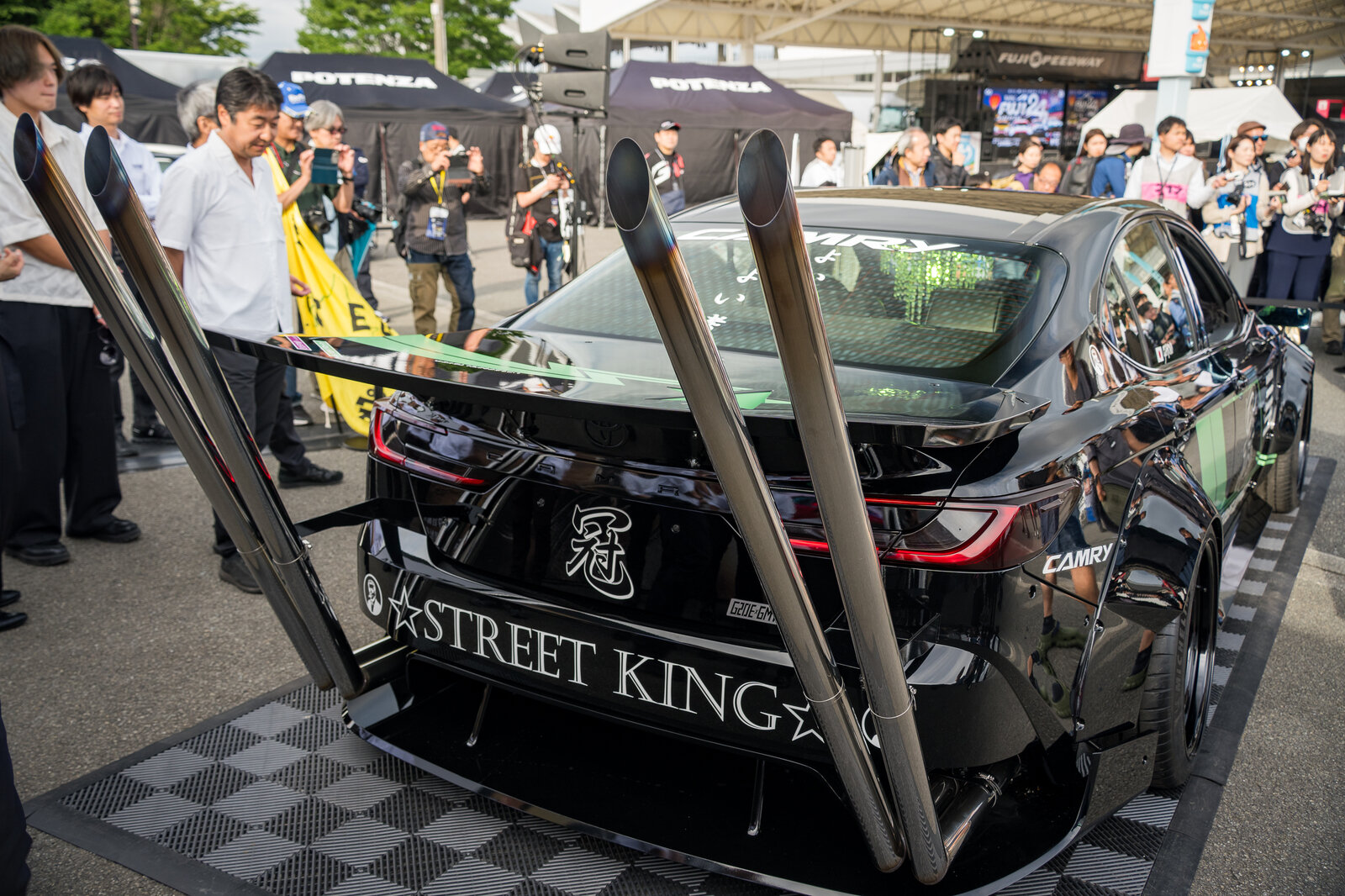
Inside, the first thing that catches your eye is the chandelier, while the rear seats have built-in twin speakers.
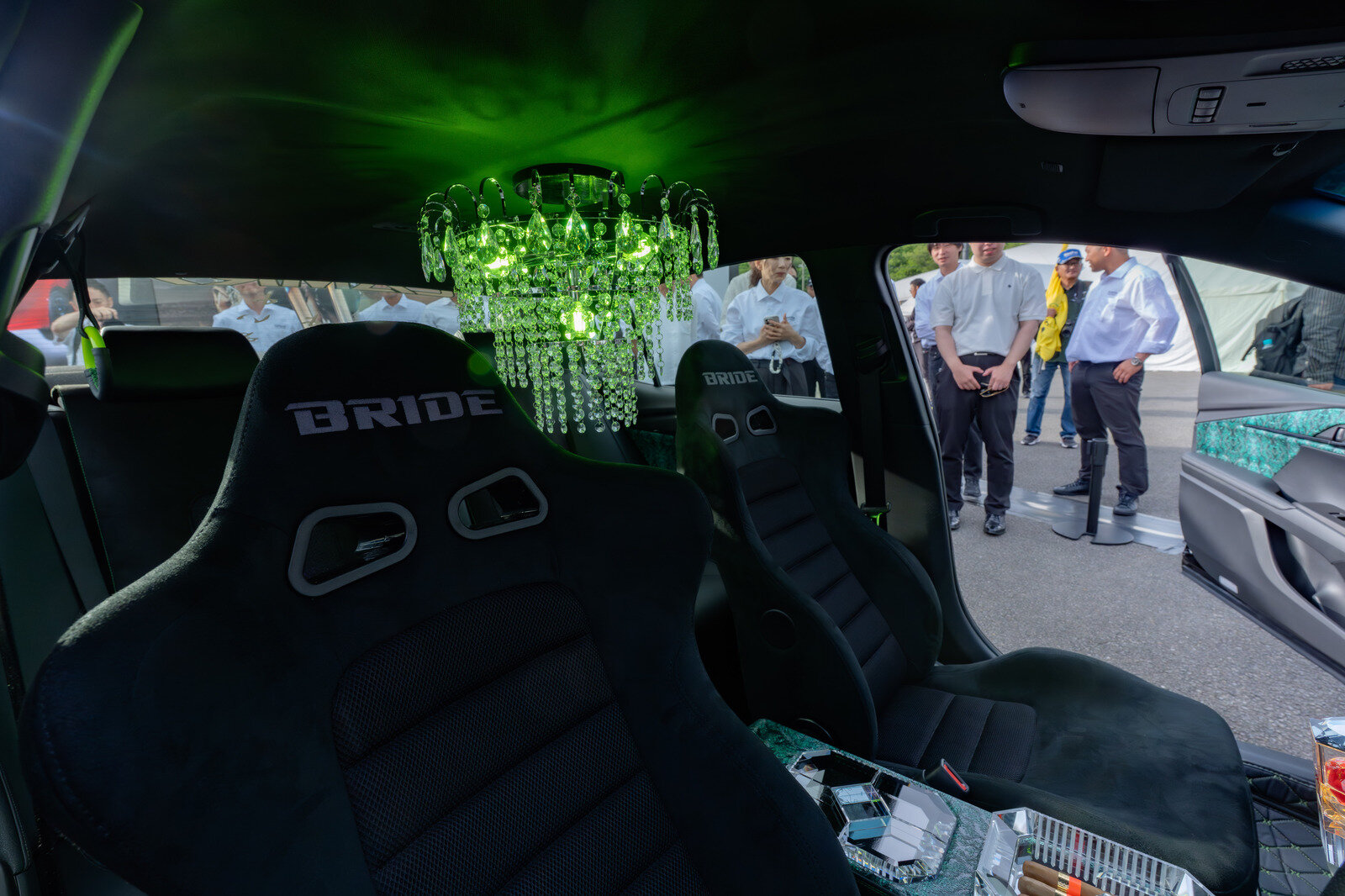
And of course, we also completely redid the gauges. Lastly, if you turn to the center console, you’ll notice the crystal storage case and crystal shift knob.
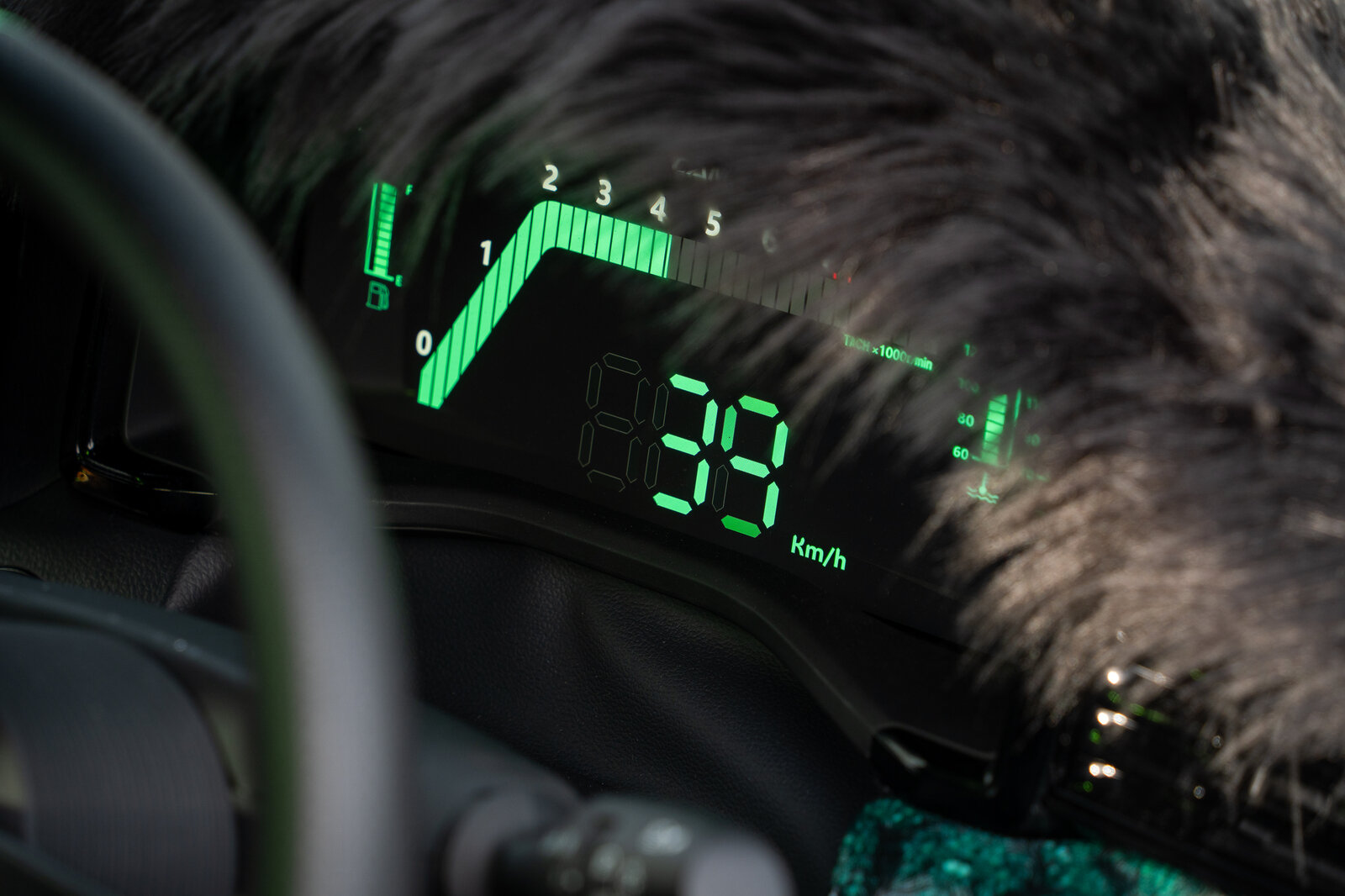
As a tribute to Kentucky, where the Camry is made, the crystal shift knob is filled with bourbon.
“If it’s Kentucky, shouldn’t it be a horse?” Morizo chimed in.
Izumiya
Since Giaiano likes to take his bourbon on the rocks, we also added an ice cube with a rose inside.
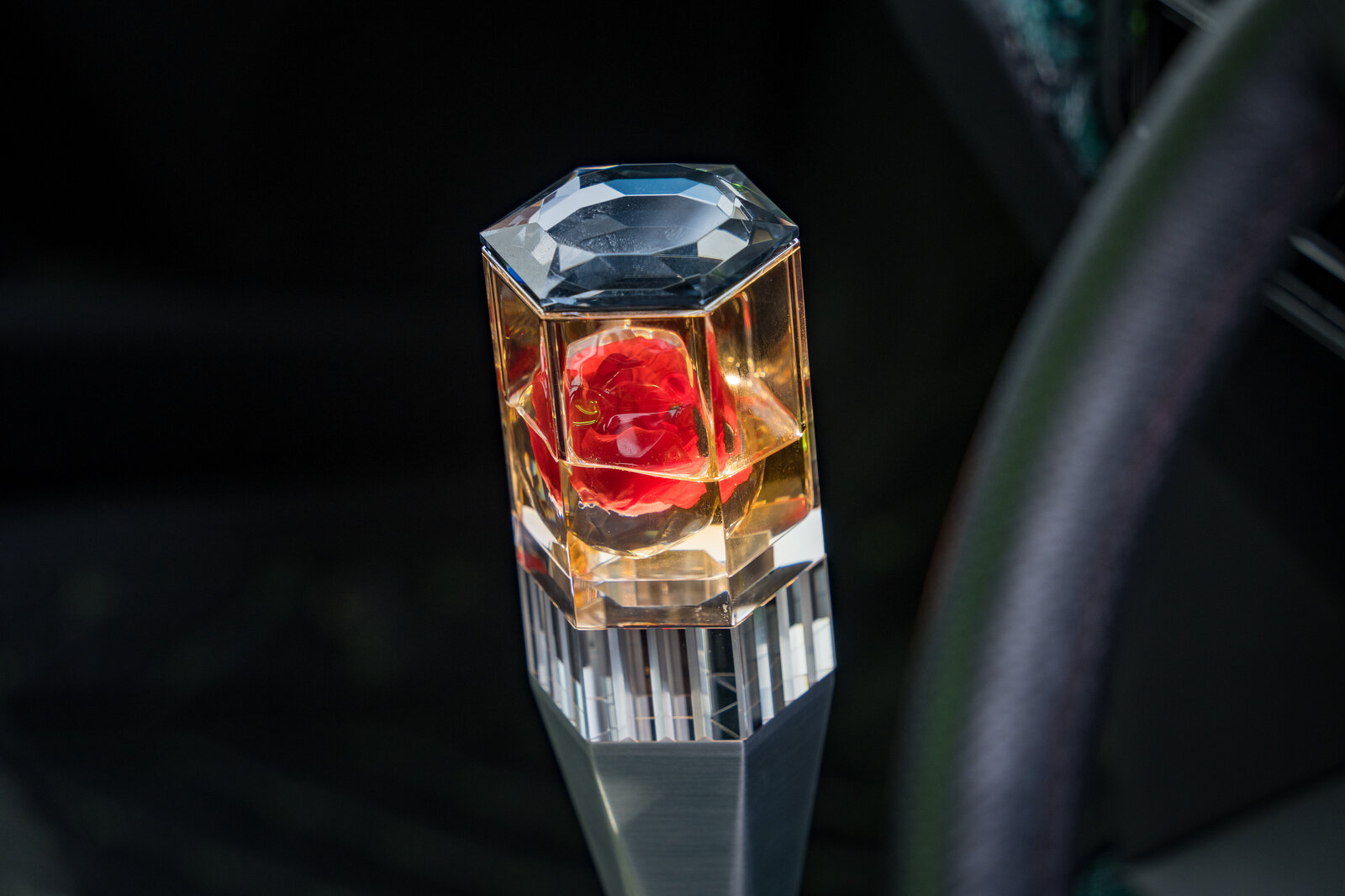
As you can see, for this customization we’ve paid attention to every detail.
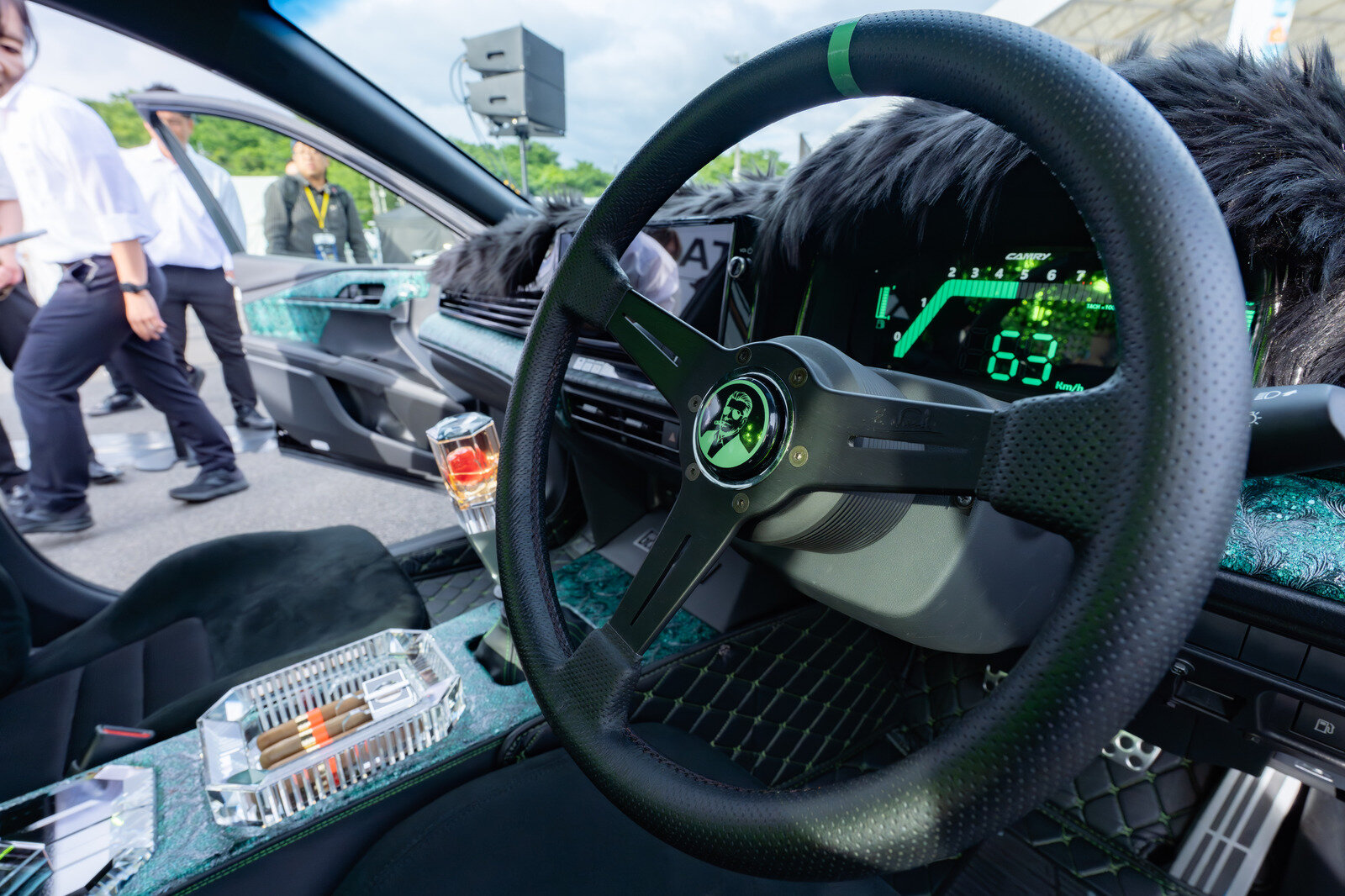
The whole concept is that this is Giaiano's executive lounge. The only thing missing is Giaiano himself.
The TR Camry’s hidden secret
At this point, Giaiano revealed that “there’s one more secret no one has noticed yet”—the position of the steering wheel. Taking off his sunglasses, he proceeded to explain as Vice President Nakajima.
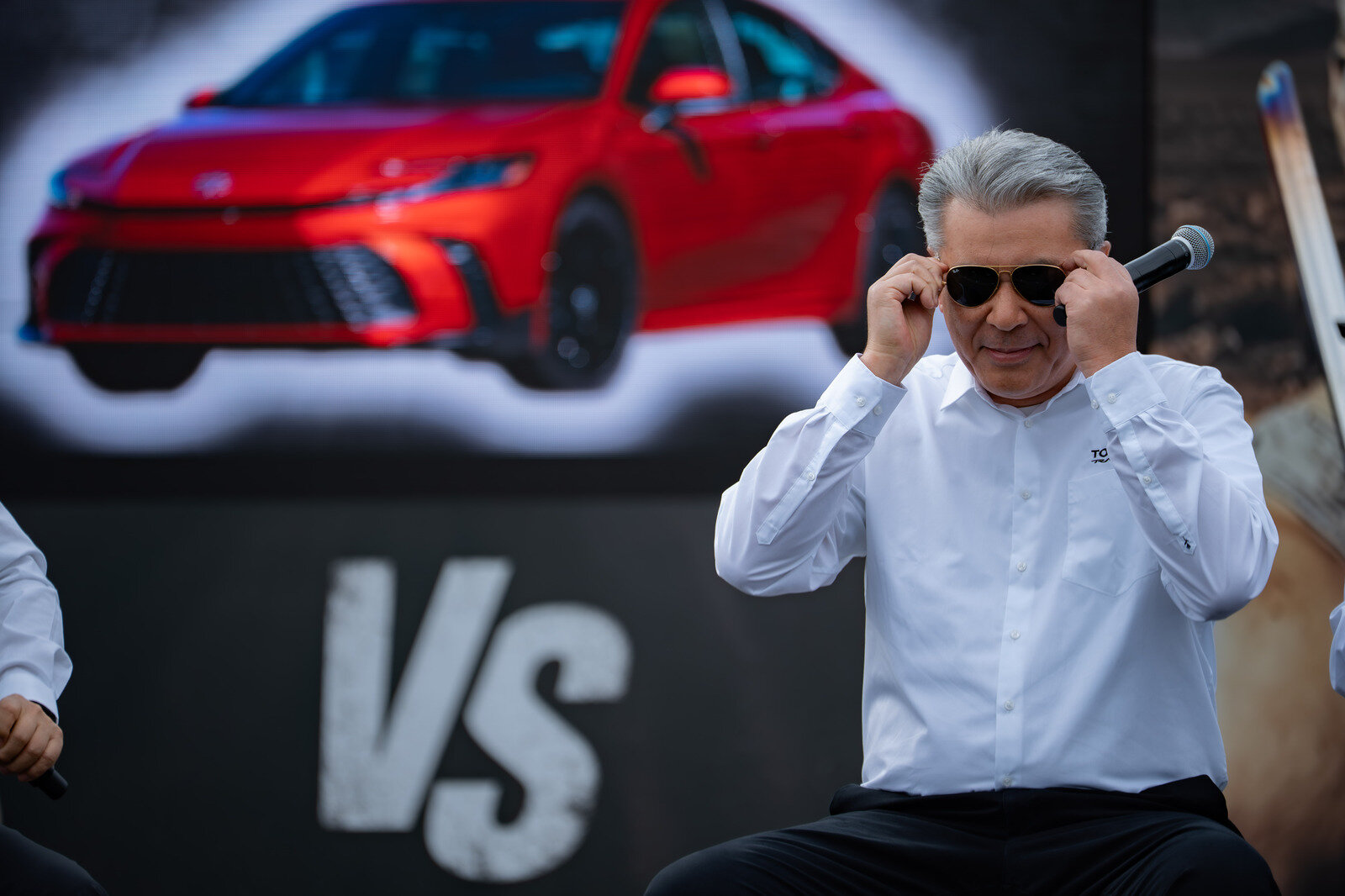
Vice President Nakajima
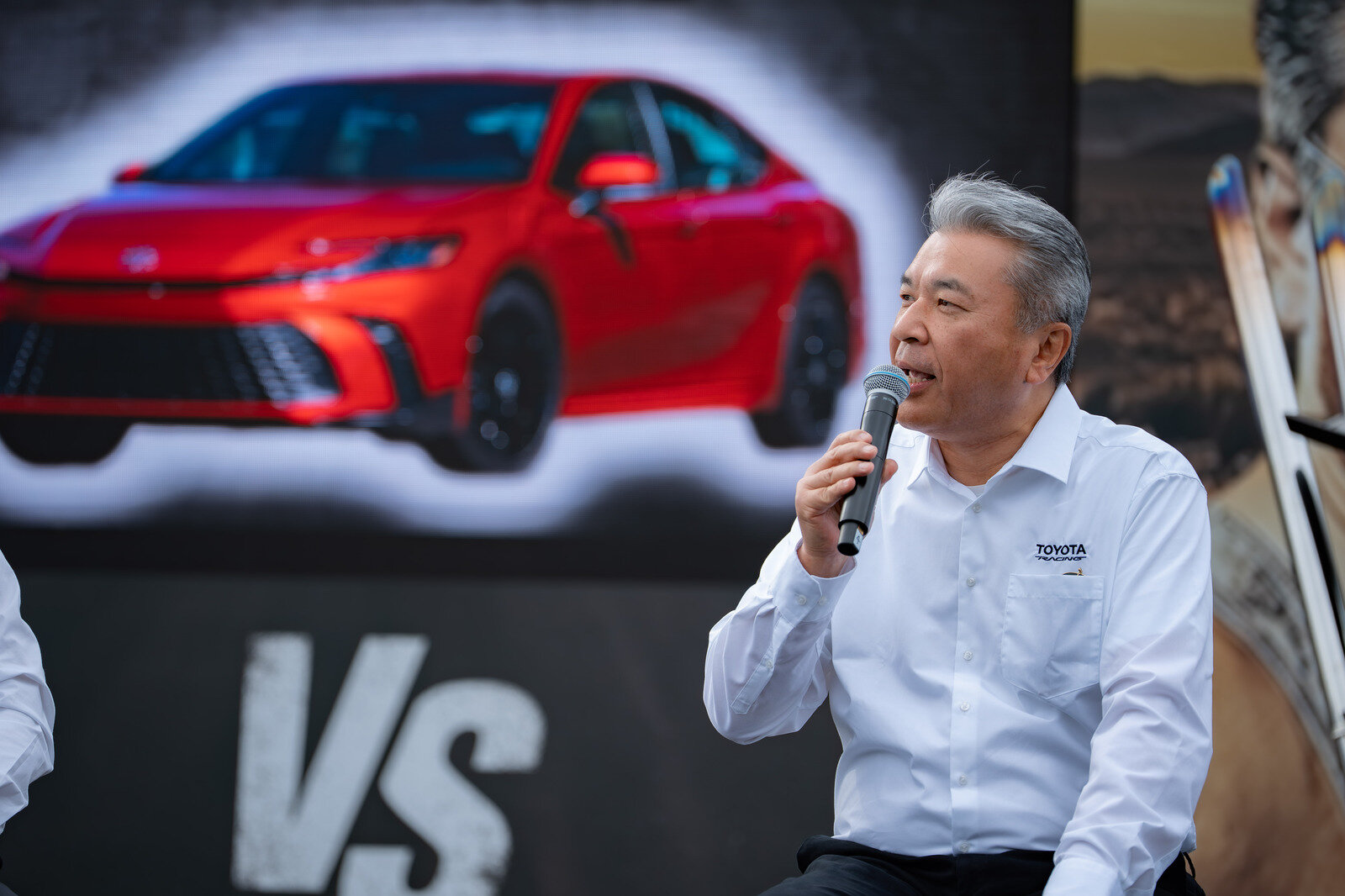
Let me jump in as Toyota’s Hiroki Nakajima. Back to my regular, serious self.
We want to bring the Camry to Japan. The Tundra and Highlander have already received approval from the Minister of Land, Infrastructure, Transport and Tourism, and are available in the country.
I am very pleased to report that we’ve also begun receiving orders. Our plan for this U.S.-produced Camry is to ensure that the model can pass all necessary inspections and be driven on Japanese roads as a right-hand drive vehicle. We hope to begin delivery to customers in the fall.
Here, Morizo jumped in to ask, “If that’s your message, why did Team Giaiano bring a car that’s not even close to being street-legal?”
Vice President Nakajima responded by donning his sunglasses and turning back into Giaiano.
Giaiano
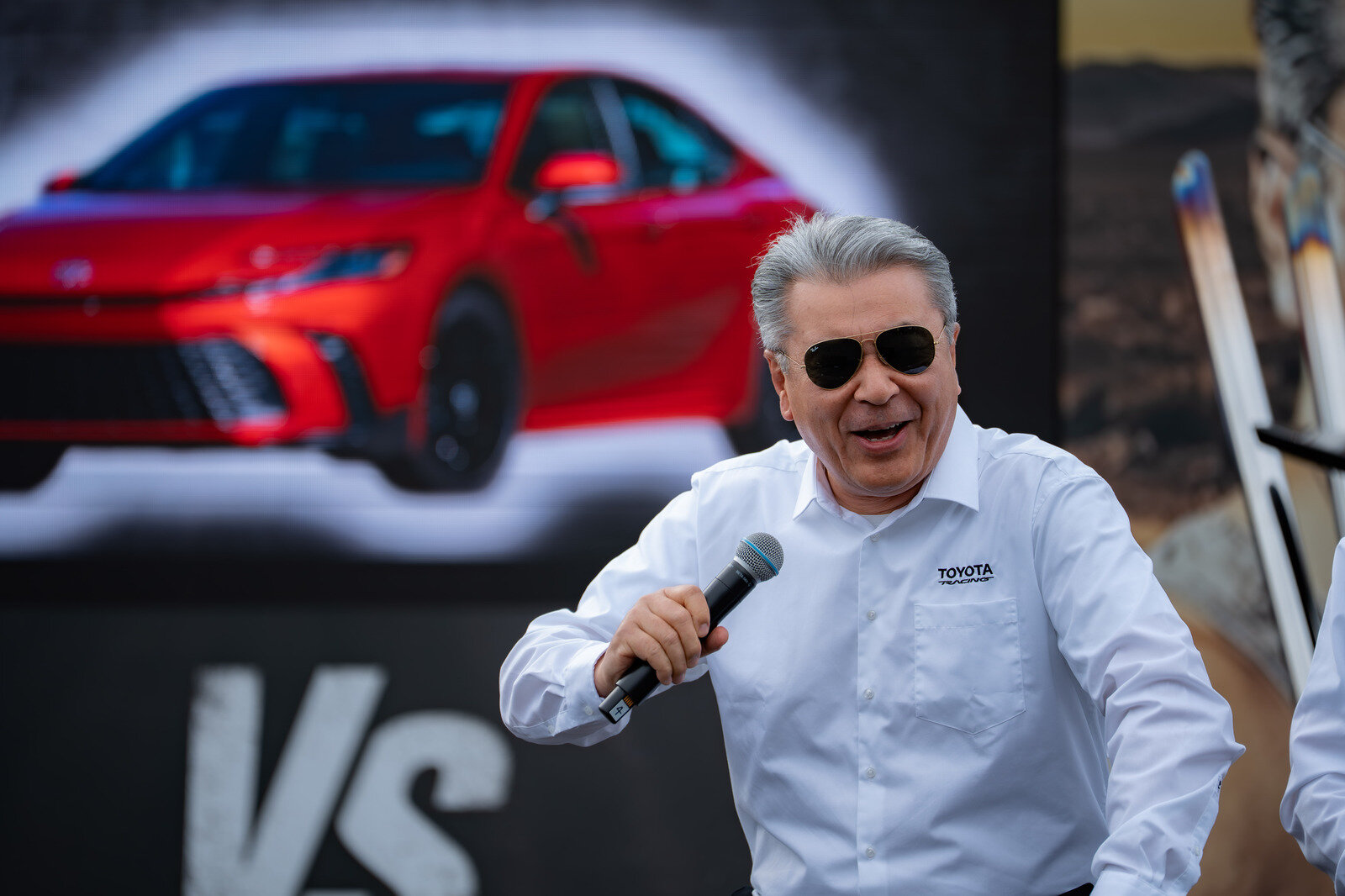
What are you talking about? Because we wanted to, that’s why! (laughs)
He removed the sunglasses again before continuing:
Vice President Nakajima
Of course, we cannot sell the car in this state, so what we deliver to customers will be a production Camry.
We have set ourselves a goal: we hope to sell around 10,000 per year.
When I told Vice President Yoichi Miyazaki, who oversees sales, “I’m gonna reveal it today,” he gave me the thumbs-up. He’s ready to go.
So while we can’t offer you this exact version, I sincerely hope that you will take this chance to drive the base Camry in Japan again.
Everyone’s a winner
In addressing the tariff issue, Morizo is striving to create a win-win situation for all stakeholders. At the event, he reiterated his reasoning for bringing U.S.-made cars to Japan.
Morizo
Toyota currently makes cars all around the world. To sustain Japan’s automotive industry, we need to ensure a certain level of domestic production. Without this, you cannot build an industry that has such extensive ripple effects throughout the economy.
When we talk about something like tariff issues, however, we have to remember that we also make cars in the United States.
Our cars are not merely “made by Toyota”—they might be made by Toyota in America, made by Toyota in China, or made by Toyota in Asia.
We want to make these cars available in Japan. The Camry, in particular, has many fans in Japan, but unfortunately is no longer produced here.
Since domestic sales have stopped as well, in a sense we want to show that other possibilities exist. If that goes some way to improving the trade balance, then perhaps the tariffs will also be revised.
As I have said, on the issue of tariffs, I want to make sure that all the stakeholders can come away as winners. Above all, I want customers to be the winners.
I also want our respective governments to win, as well as other manufacturers. This is one possible approach to achieving that goal.
Regular tariff negotiations are also important, but given how many people are involved in the automotive industry, I think we can go further, drawing on their respective strengths to figure out a win-win solution for both sides.
American machines on show
Not far from the Camry contest, Morizo’s message was brought to life at America Park, an area set up to showcase Japanese models made in the U.S.
Alongside the Toyota Tundra, which is already on sale, the lineup included the Subaru Ascent, a midsize three-row SUV currently being considered for the Japanese market, the Honda Passport TrailSport Elite, scheduled for release later this year, and the Nissan Murano, announced for early 2027.
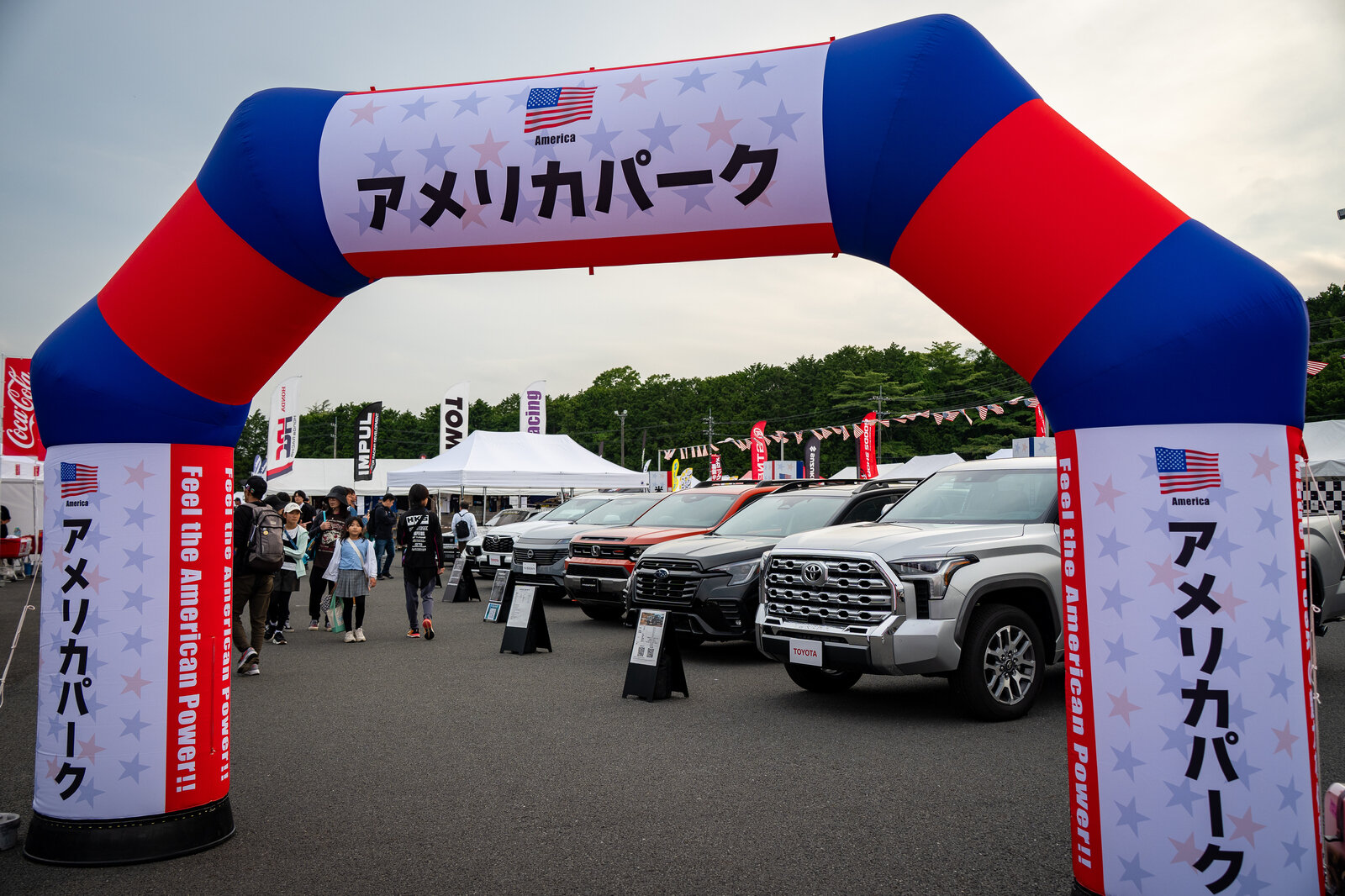
Spotting an American-made Murano after his practice run on June 5, Morizo posted a video on social media introducing the car while waving Nissan flags in both hands: “This is one of the models brought over from the U.S. I would love to see Japanese customers get behind the wheel of the Nissan Murano.”
Mustang takes on ST-USA
When talking about the place where Toyota makes its Camrys, Morizo mentioned horses. This year, Super Taikyu also welcomed another car that takes its name from the free-roaming horses found in North America.
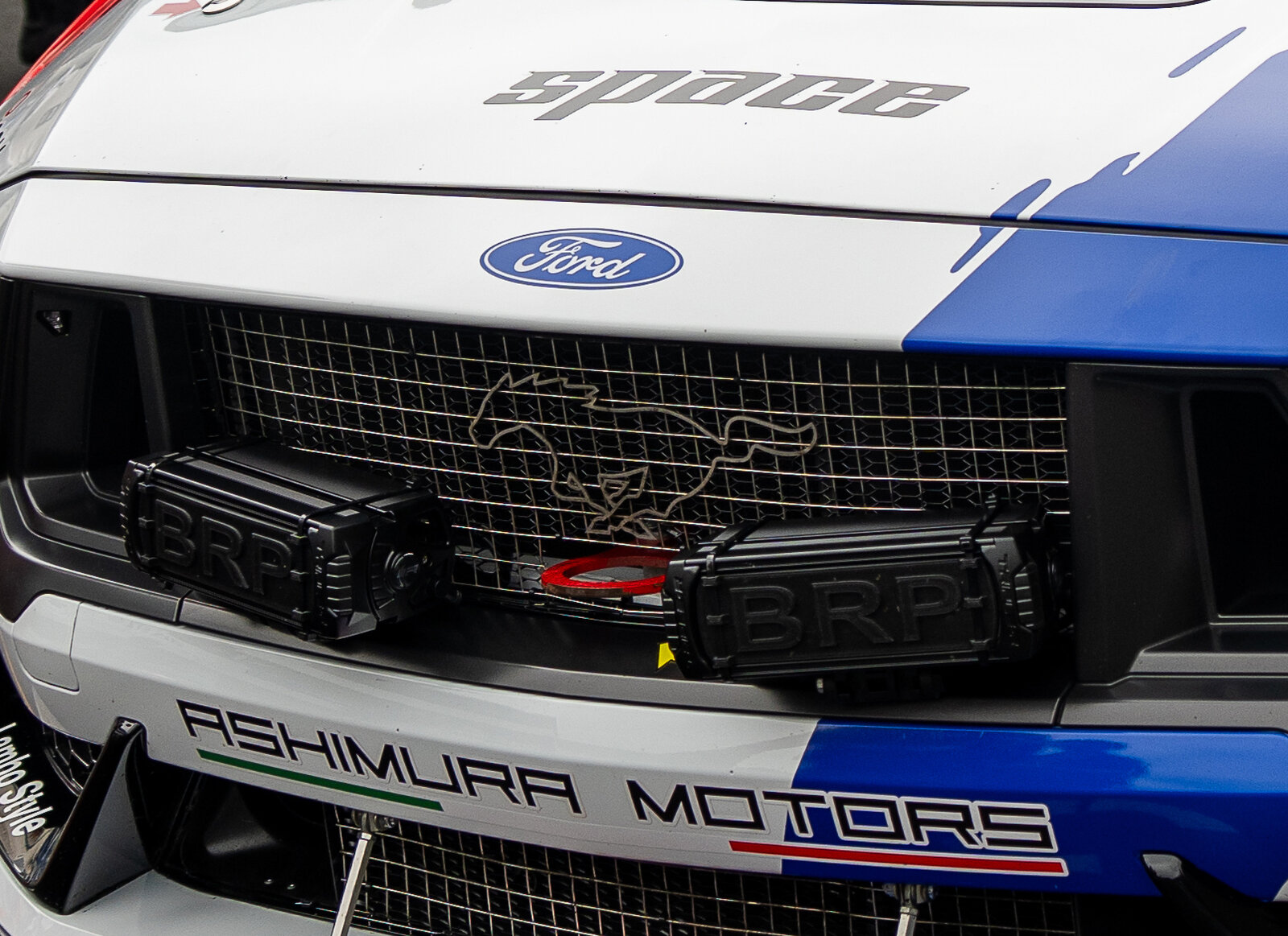
The Birth Racing Project’s #250 BRP★HOJUST MUSTANG DHR is competing in the ST-USA class.
With its iconic horse emblem, this Ford Mustang has taken the number 250 in honor of the 250th anniversary of the United States’ founding.
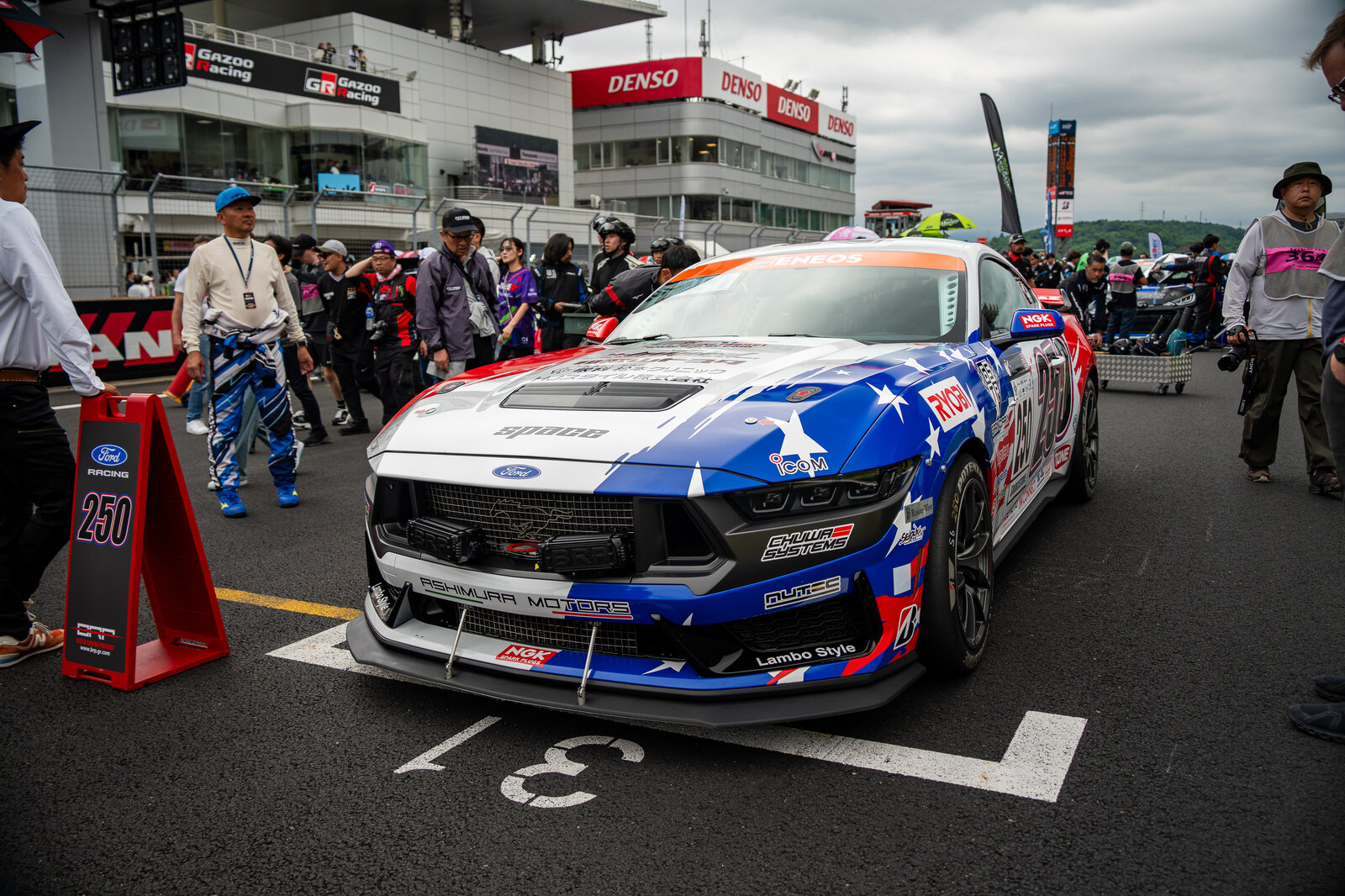
The ST-USA class was introduced at last season's final race as a way to promote motorsport and automotive cultural exchanges between the two countries, with American-made vehicles and teams invited to take part.
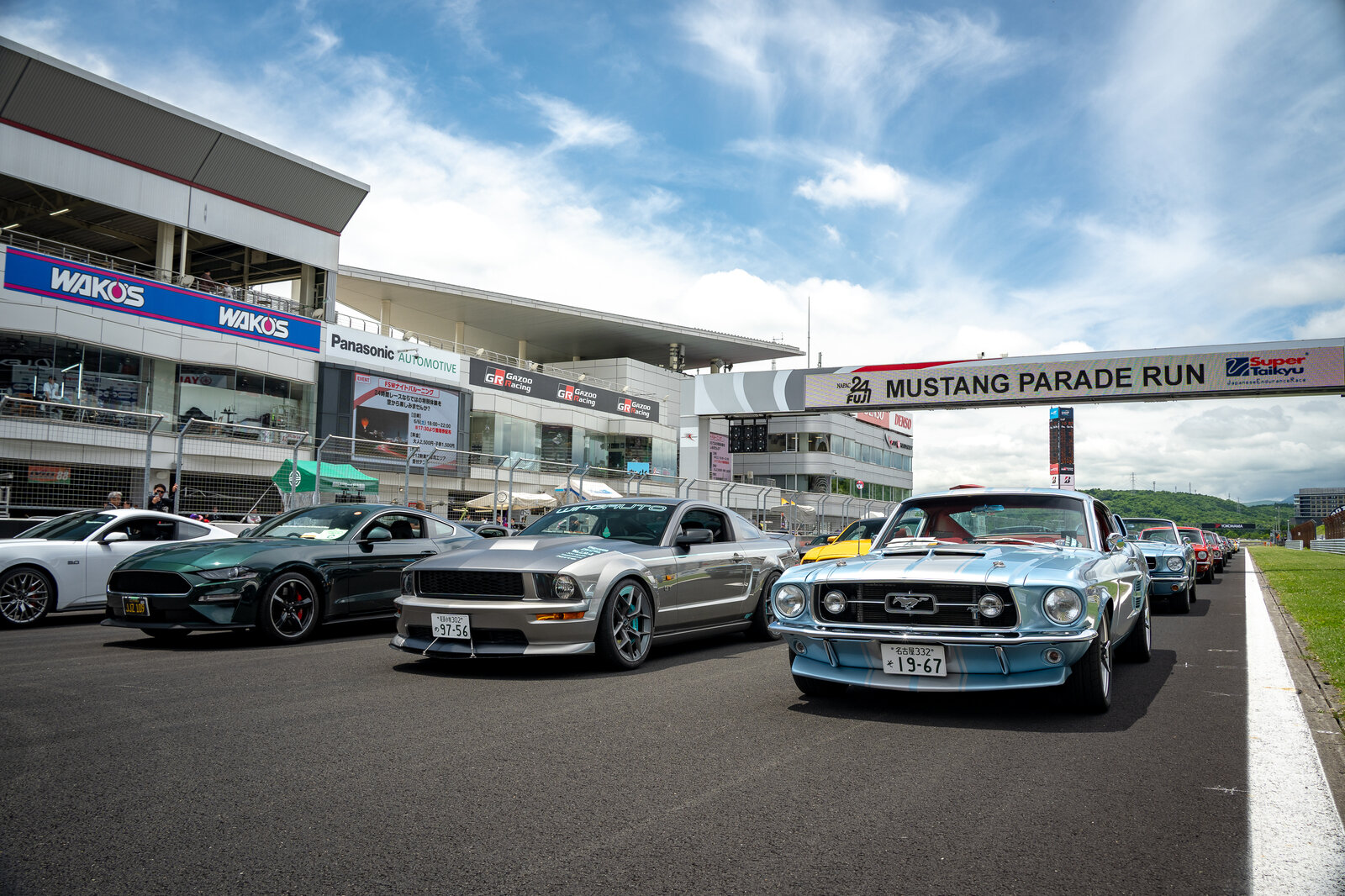
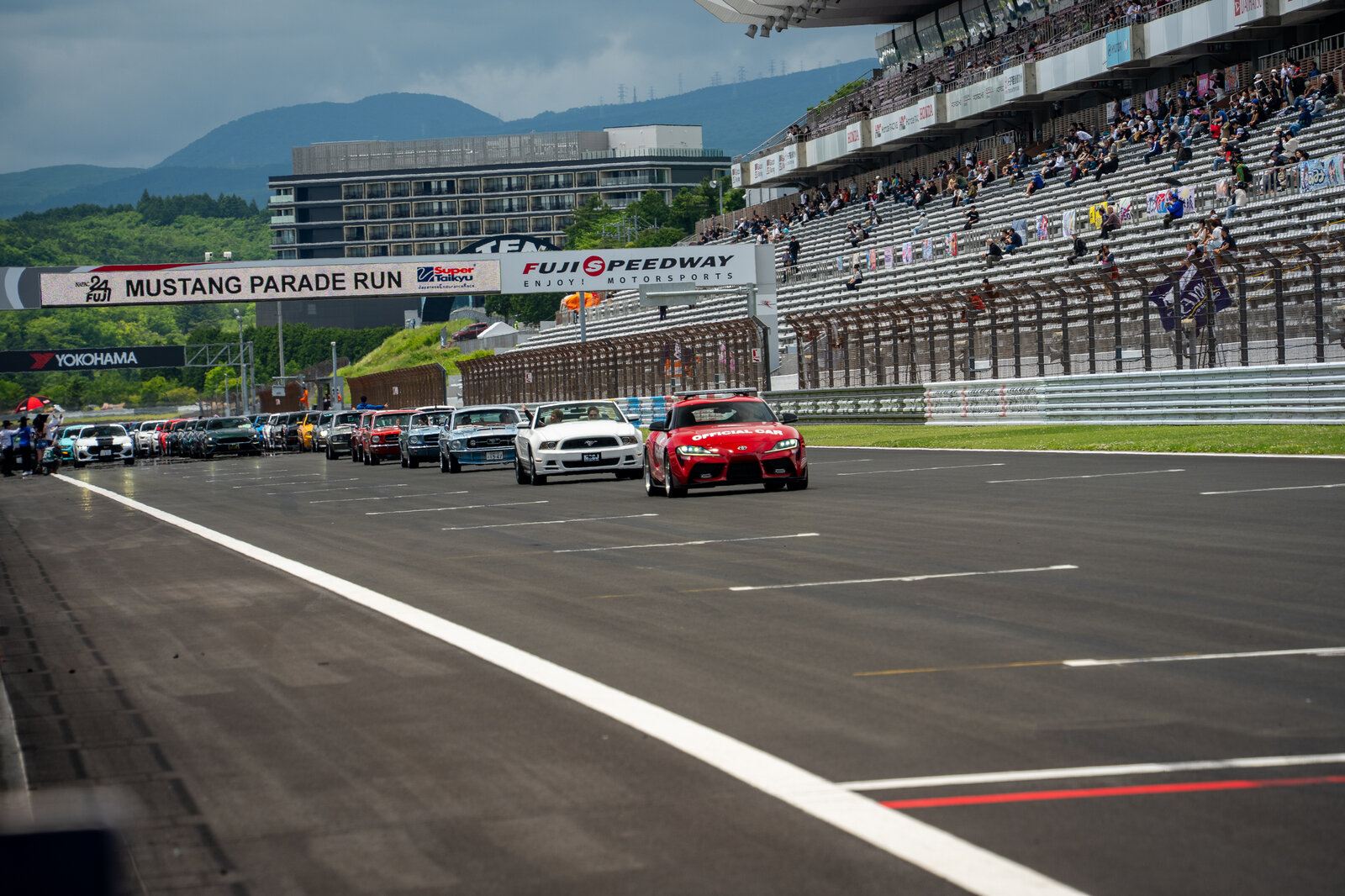
Before the start of the 24-hour race, Mustang owners from around Japan gave the crowd a sight to behold, coming together to support the #250 car with a 68-strong Mustang parade.
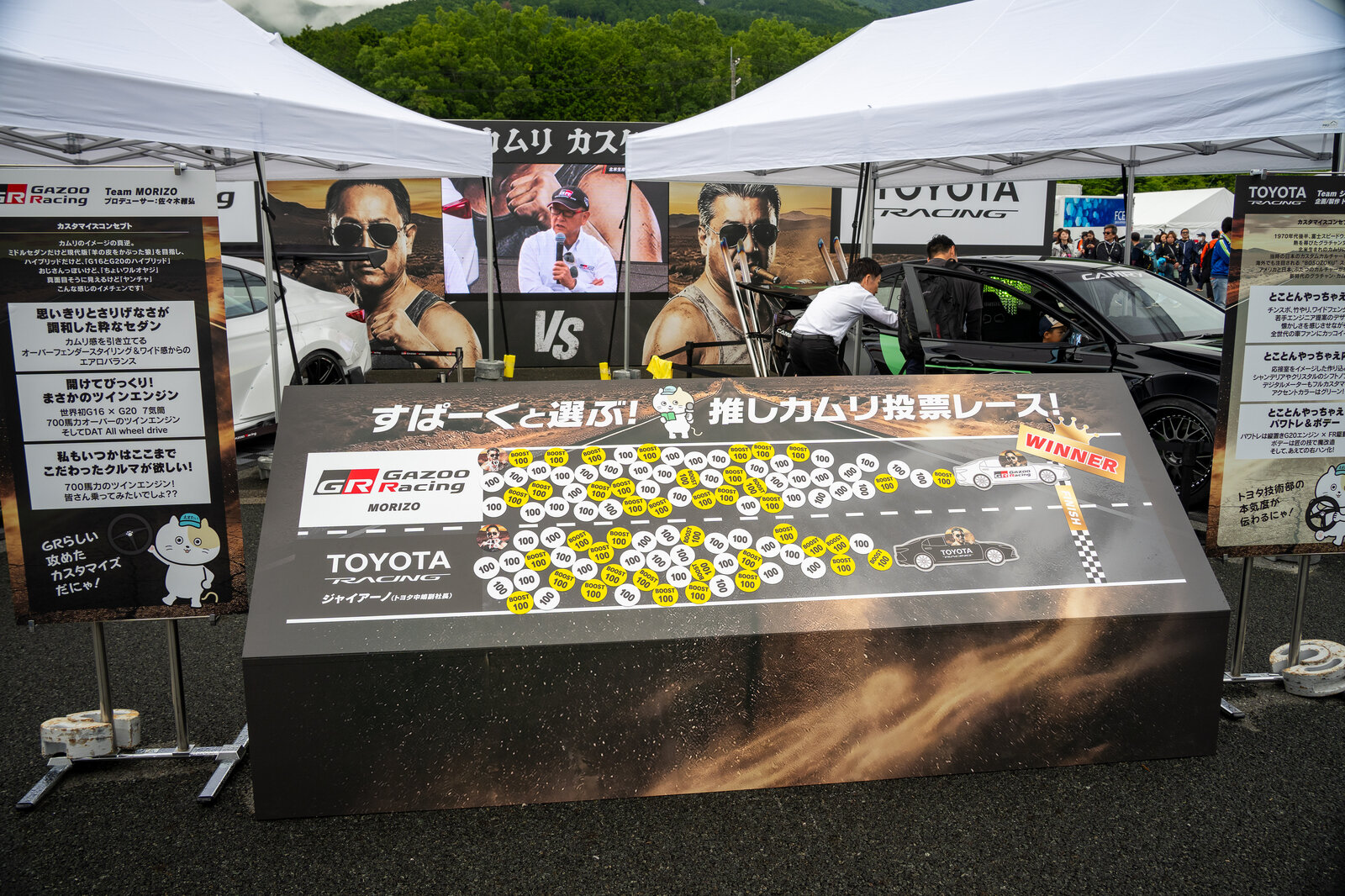
As for the result of the all-important U.S. Camry Customization Showdown, Team GR’s “Morizo” custom earned 5,812 votes against Team TR’s 4,670 for the “Giaiano” build, giving Team GR victory by a margin of 1,142 votes.
As it happens, at Tokyo Auto Salon TR had thrown down another challenge to the GR team.
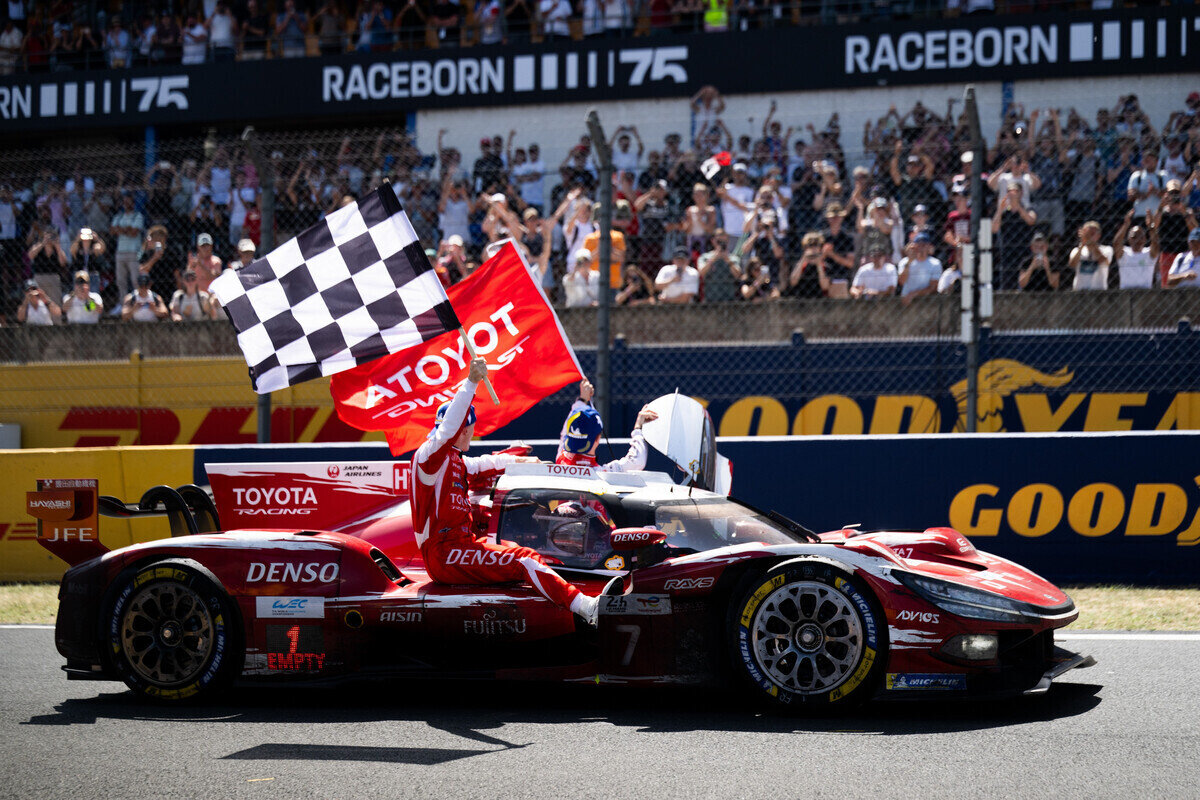
“We are going to win this year’s 24 Hours of Le Mans with Toyota’s engineers alone, without any help from Morizo, and slam the trophy down right here in front of you,” declared Giaiano. TR lived up to that promise, finishing first and third at the 24 Hours of Le Mans the following week.
We’ll save the story of Giaiano’s trophy-slamming for another day.