



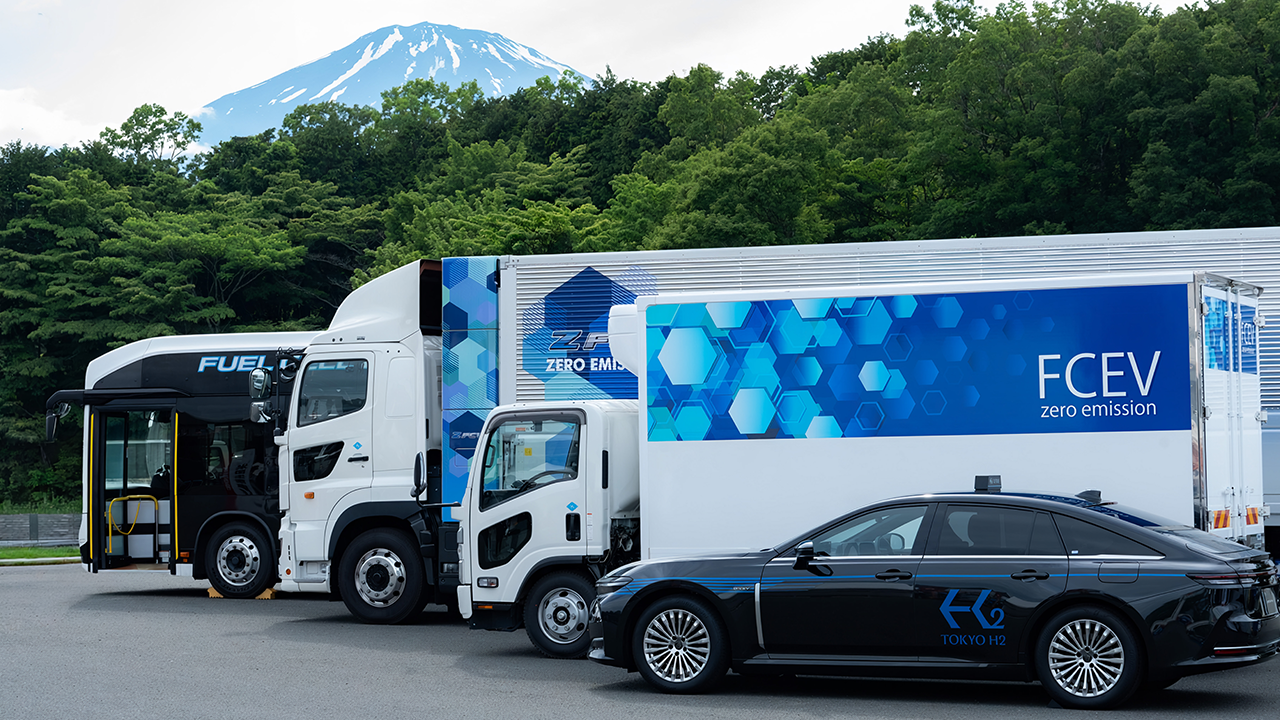
Equipped with a superconducting liquid hydrogen pump, Toyota's hydrogen-engine Corolla took on the Super Taikyu Fuji 24 Hours. Trackside, Executive Vice President Hiroki Nakajima and colleagues spoke to the media about their plans for a hydrogen-powered future.
How to get more hydrogen stations
A critical part of the Hydrogen Backbone Network is setting up refueling stations along major transport routes. However, since hydrogen stations handle high-pressure gas, they are bound by different regulations than regular filling stations. In some cases, facilities may have to cease operations for two to three weeks to accommodate equipment maintenance and safety inspections.
As well as the price of hydrogen itself, these maintenance expenses and procedures pose a challenge for anyone trying to sustainably run a hydrogen station. While continuing discussions with related organizations, operators are pursuing various measures to drive down costs, such as streamlining maintenance through the Toyota Production System (TPS) and improving the durability of refueling hoses.
Vice President Nakajima and President Yamagata highlighted the need to consistently demonstrate the safety of hydrogen in order to encourage widespread adoption.
Vice President Nakajima
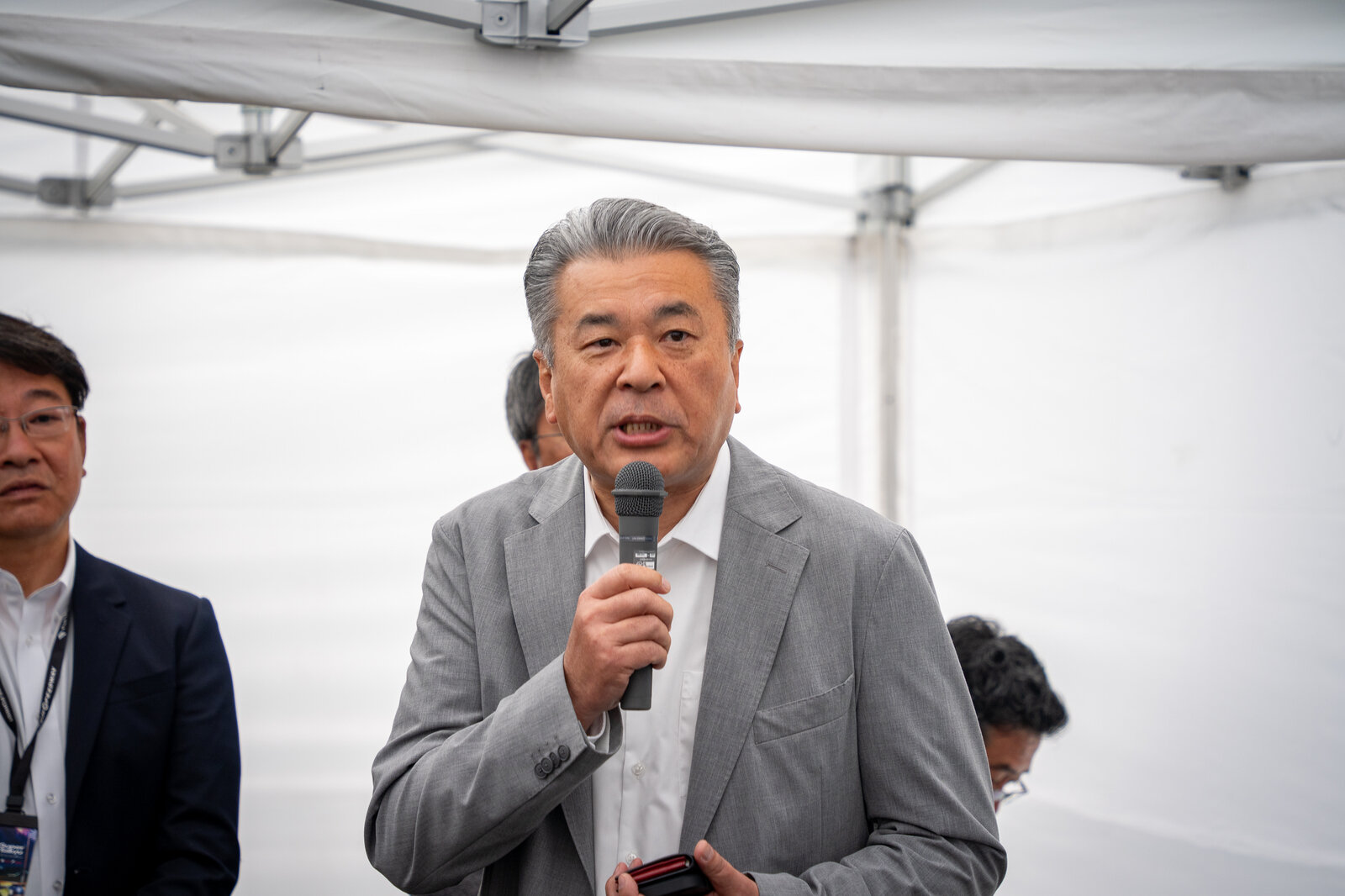
Japanese hydrogen stations face strict safety requirements, which make it difficult to roll out self-service facilities. As a result, in Japan we have only a handful of 24-hour self-service stations like those found across Europe and the United States. We want to work towards greater convenience by building a track record backed by data, to demonstrate that we can ensure safety.
President Yamagata
When managed properly, hydrogen can serve as a very safe source of energy. As more people come to understand hydrogen, and the infrastructure increasingly allows us to use hydrogen as we do other fuels at gas stations, we expect it to become a more familiar and convenient part of life.
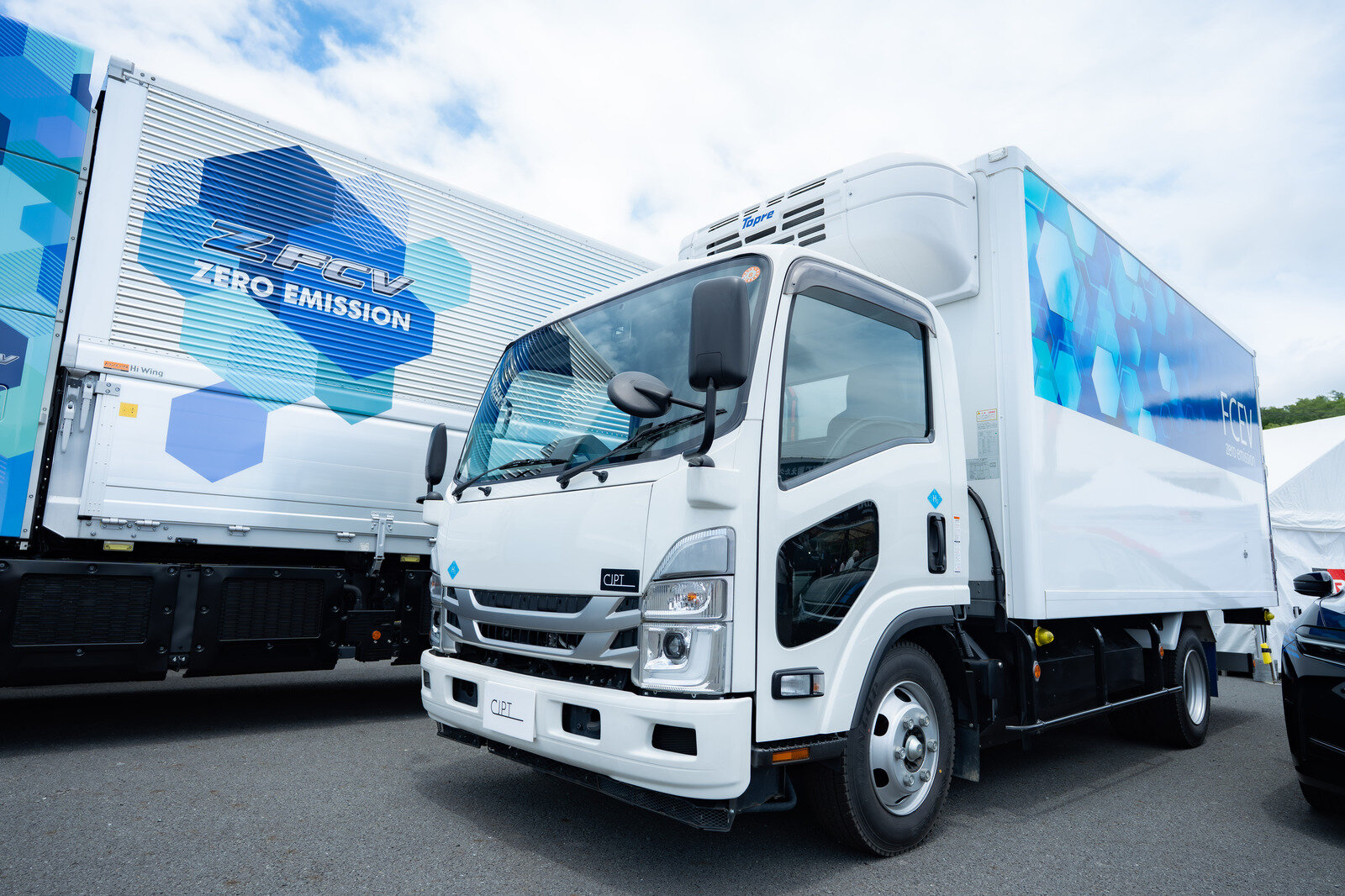
As for the price of hydrogen, the Hydrogen Backbone Network devised through public-private collaboration seeks to generate demand by using hydrogen trucks for trunk-line transport, thereby helping to stabilize the operations of hydrogen stations. From there, hydrogen use is expected to spread to light trucks, taxis, and passenger cars.
Vice President Nakajima believes that using gray hydrogen is important initially, while also continuing to develop the blue, green, and white* varieties.
*Also known as natural hydrogen, referring to hydrogen that occurs naturally underground, where it exists in gaseous form. Unlike artificially produced green and blue hydrogen, white hydrogen can be obtained by extraction from the ground.
24 Hours of Le Mans
Reporters also had a question for TOYOTA Racing’s Giaiano (Vice President Nakajima): “Going into the 24 Hours of Le Mans, what message do you hope to convey?”
The World Endurance Championship (WEC) 24 Hours of Le Mans took place one week after the Fuji 24 Hours, with TOYOTA Racing in the TR010 HYBRID finishing on top for the first time in four years.
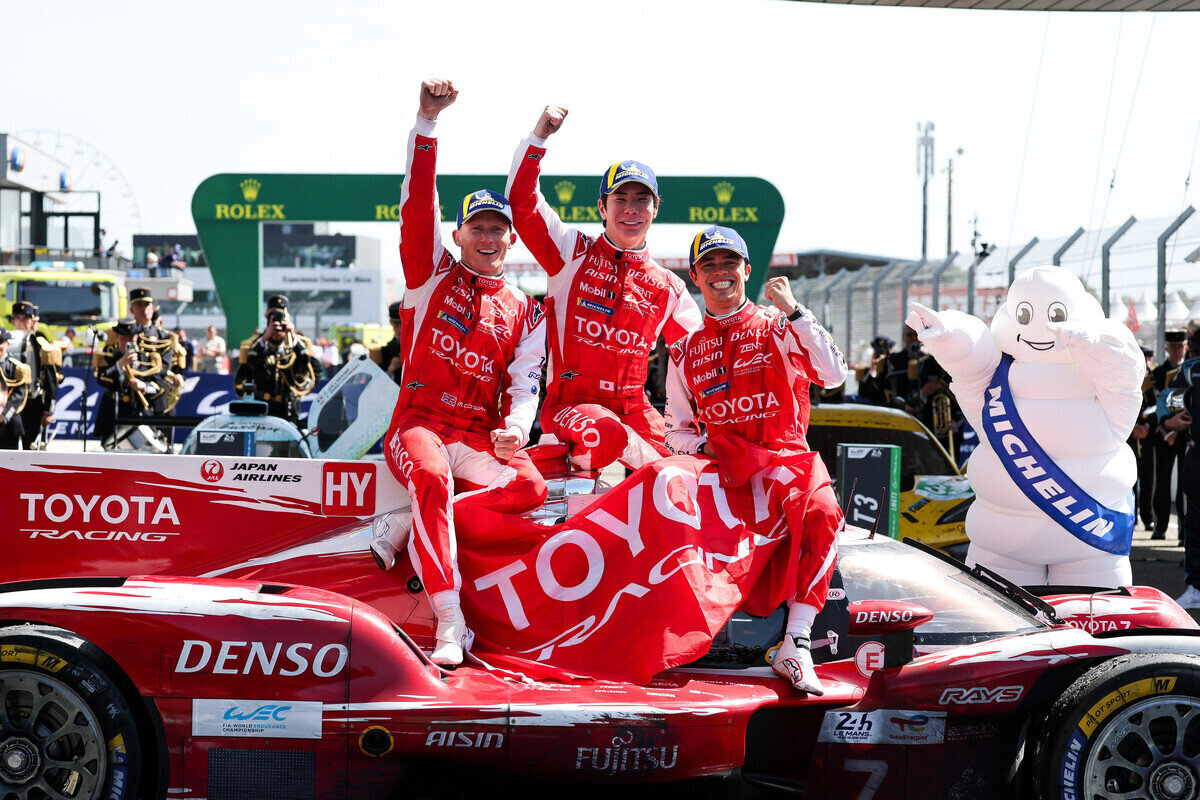
At the event, Toyota’s liquid hydrogen-fueled TR LH2 Racing Prototype was unveiled to the world, performing a demo run at Circuit de la Sarthe.
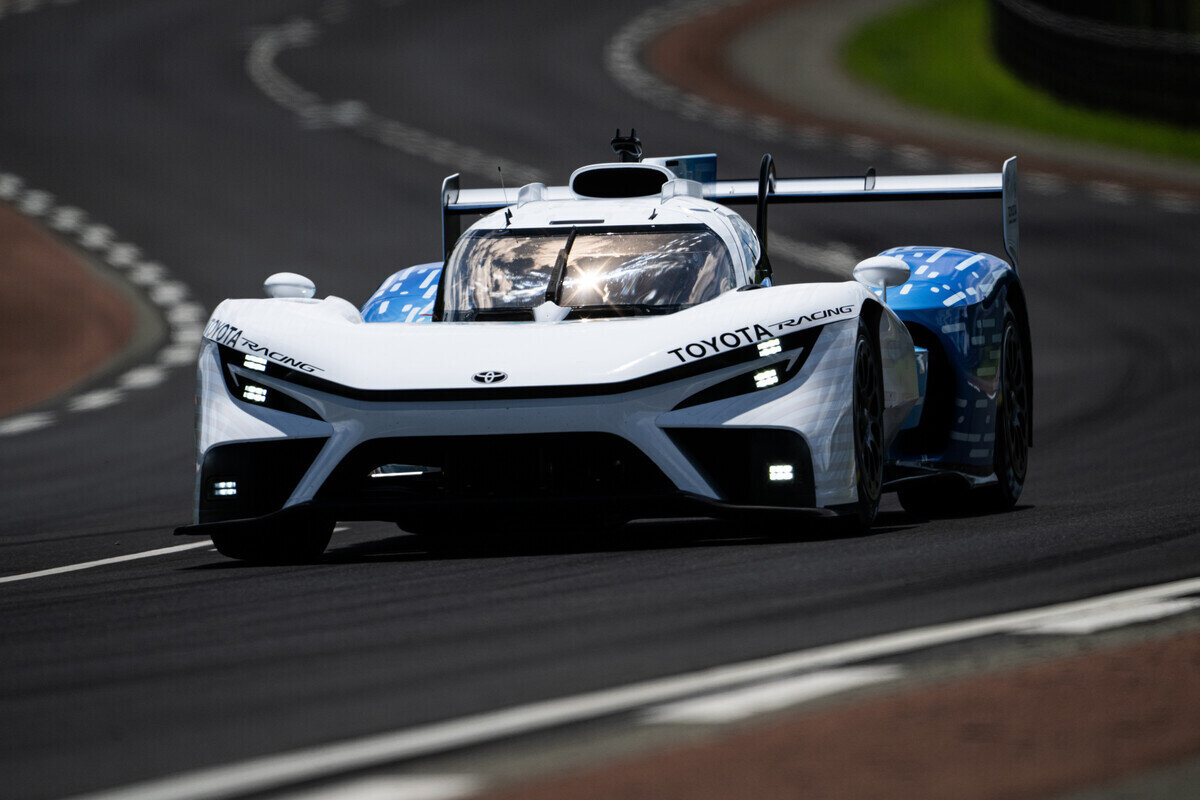
Vice President Nakajima explained the company’s aims:
Vice President Nakajima
By actually getting out there on the track, perhaps we can pave the way for the next step of racing with hydrogen.
We want to take what Morizo is already doing in Super Taikyu and expand it to the wider world. In this case it is also an entirely different category of vehicle, hypercars.
The car is also extremely fast. I don’t think it has been announced, but we’re setting it up to hit speeds of over 250 km/h. Whether it will actually drive at those speeds remains to be seen, but that’s the level of performance we’ve built in.
I’ve watched footage of the car in practice, and it sounds great. Sound is central to the thrill of racing, and now we can enjoy it in a clean way. This feels like a tremendous step forward, and I can even imagine a time in the near future when hydrogen-powered cars are battling it out at Le Mans.
That said, for a 24-hour race it’s all about reducing the number of refueling stops, and to that end we’ve tried running the hydrogen Corolla with a new superconducting pump system here in Super Taikyu. I believe each of these technical developments brings us closer to the possibility of big races such as Le Mans in the future.
Third-generation FC system
こOn this day at Fuji Speedway, the briefing venue also featured a third-generation FC system intended for heavy-duty commercial vehicles.
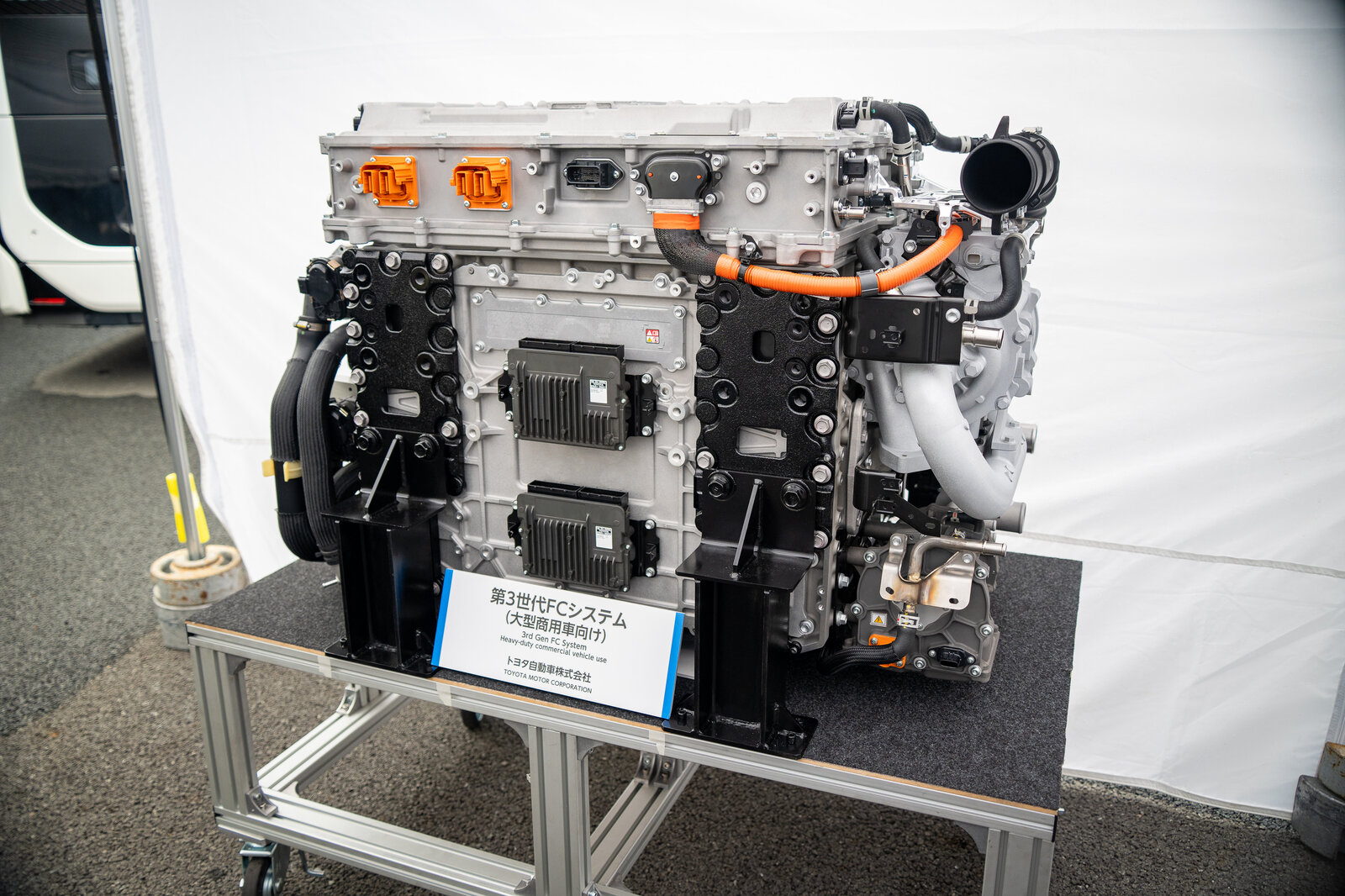
This system, whose development was announced in February last year, doubles the durability of previous models and requires no maintenance even in commercial applications. It also delivers improvements in both fuel efficiency and cost, as part of an evolution geared toward full-scale deployment.
As yet, Toyota cannot reveal a timeframe for commercial release. However, Chief Engineer Ota declared, “We want to have it launched in time to contribute to the Hydrogen Backbone Network. From here, we’re going to speed up development even further.”
The circle of shared purpose has expanded beyond the racetrack, transcending industry boundaries and spanning both the public and private sectors. Collaborative efforts to create a hydrogen society continue to accelerate.