


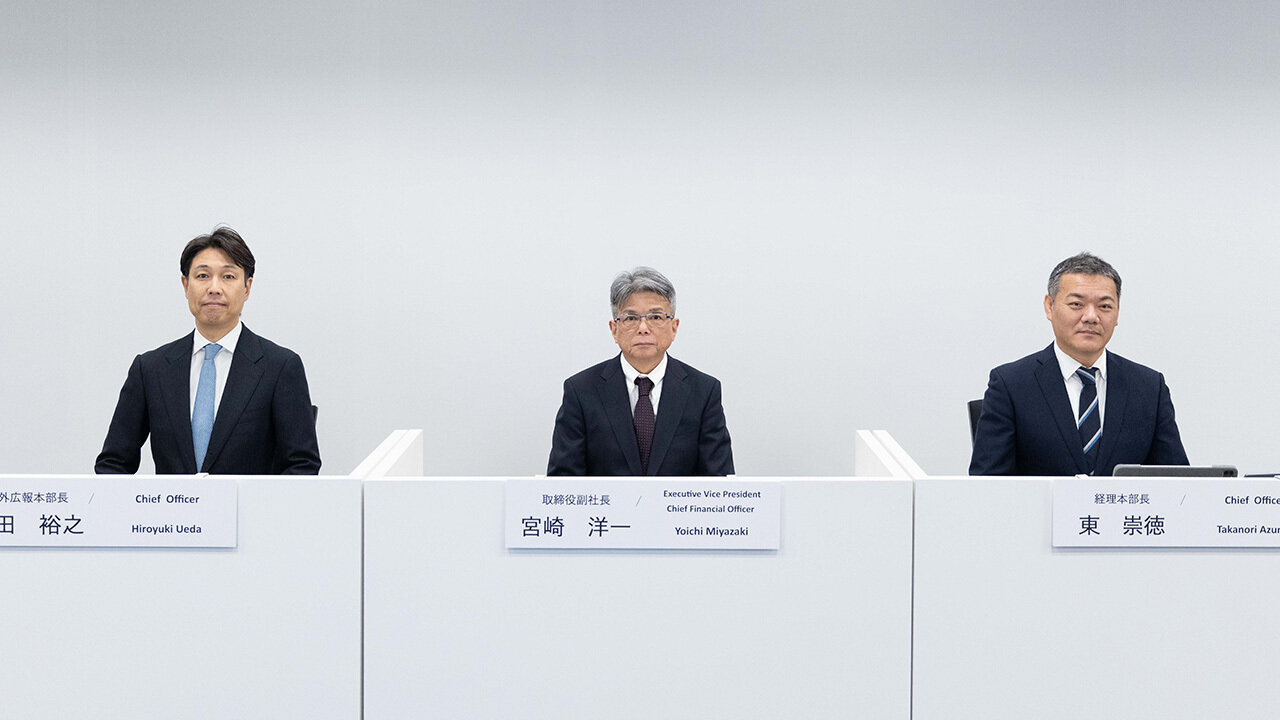
Toyota's financial results for the second quarter of FY2027 showed a year-on-year increase in profit for the first time in three years. We break down Vice President Yoichi Miyazaki's explanations, as well as the outlook for the company's structural reforms.
[New vehicles] On the counteroffensive with NEVs in China
In the new vehicle business, Toyota will seek to enhance product value across the company through its five-brand strategy.
On the production front, which holds the key to boosting earning power, Toyota will maximize the capabilities of existing plants through initiatives such as AREA35, while also establishing new facilities where necessary. The aim is to strengthen the company’s supply capacity with a focus on electrified vehicles, amid growing demand.
Looking toward 2030, Toyota will build a robust business foundation of 10 million vehicles centered around HEVs, while scaling up battery electric vehicles (BEVs) based on actual demand.
The company will also further enhance the earning power of every vehicle by continuing to restructure its model lineup, increase local procurement of parts, and reduce costs.
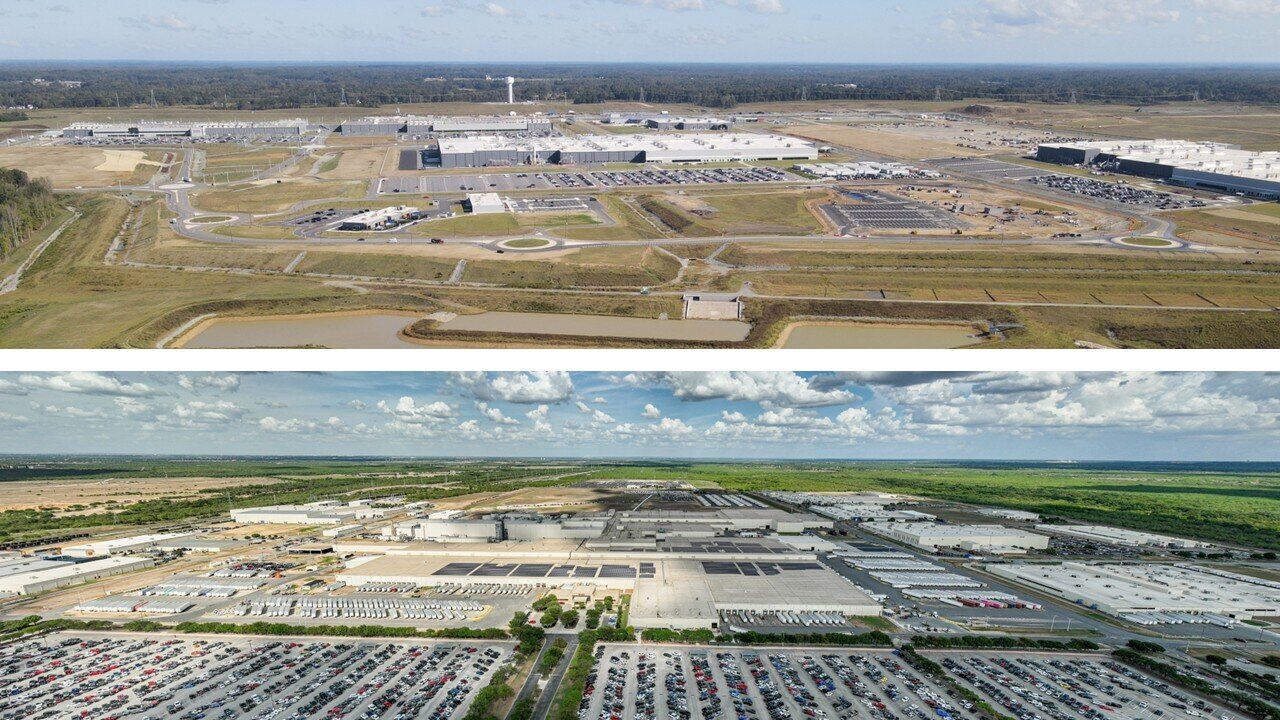
Looking at key regions, in North America plant employee retention and operational efficiency rose between 2023 and 2025. Attractive products continue to underpin strong performance in HEVs. In FY2026, sales incentives were 60% lower than in FY2020, while days of inventory—an indicator of product demand—remained low at 11 days.
Moving forward, Toyota will seek to restore profitability and return to a growth trajectory by increasing hybrid battery production at its North Carolina Plant, reducing external outflow costs by moving Tacoma production to the San Antonio Plant, and advancing automation through robotics.
In China, amid the rapid expansion of the so-called new energy vehicle (NEV) market, Toyota has faced fierce competition. However, by introducing cars tailored to local needs, the company has managed to halt the decline in market share in recent years.
Building on this foundation, in 2027, Toyota will go on the counteroffensive.
In October, the company announced a framework agreement on a new strategic alliance with China FAW Corporation Limited (FAW) and Guangzhou Automobile Group Co., Ltd. (GAC).
Leveraging the assets of joint-venture partners such as FAW and GAC, Toyota will accelerate the rollout of new products in the NEV market.
Led by local chief engineers, the company is swiftly incorporating market feedback into its planning, development, and improvement processes. Meanwhile, on the procurement side, suppliers are being selected on competitiveness, regardless of nationality or connection to the Toyota Group.
At Lexus Electrified Shanghai, which is scheduled to begin operations in autumn 2027, Toyota is responding to the speed of Chinese automakers by implementing concurrent development processes that will shorten development times by 18 months.
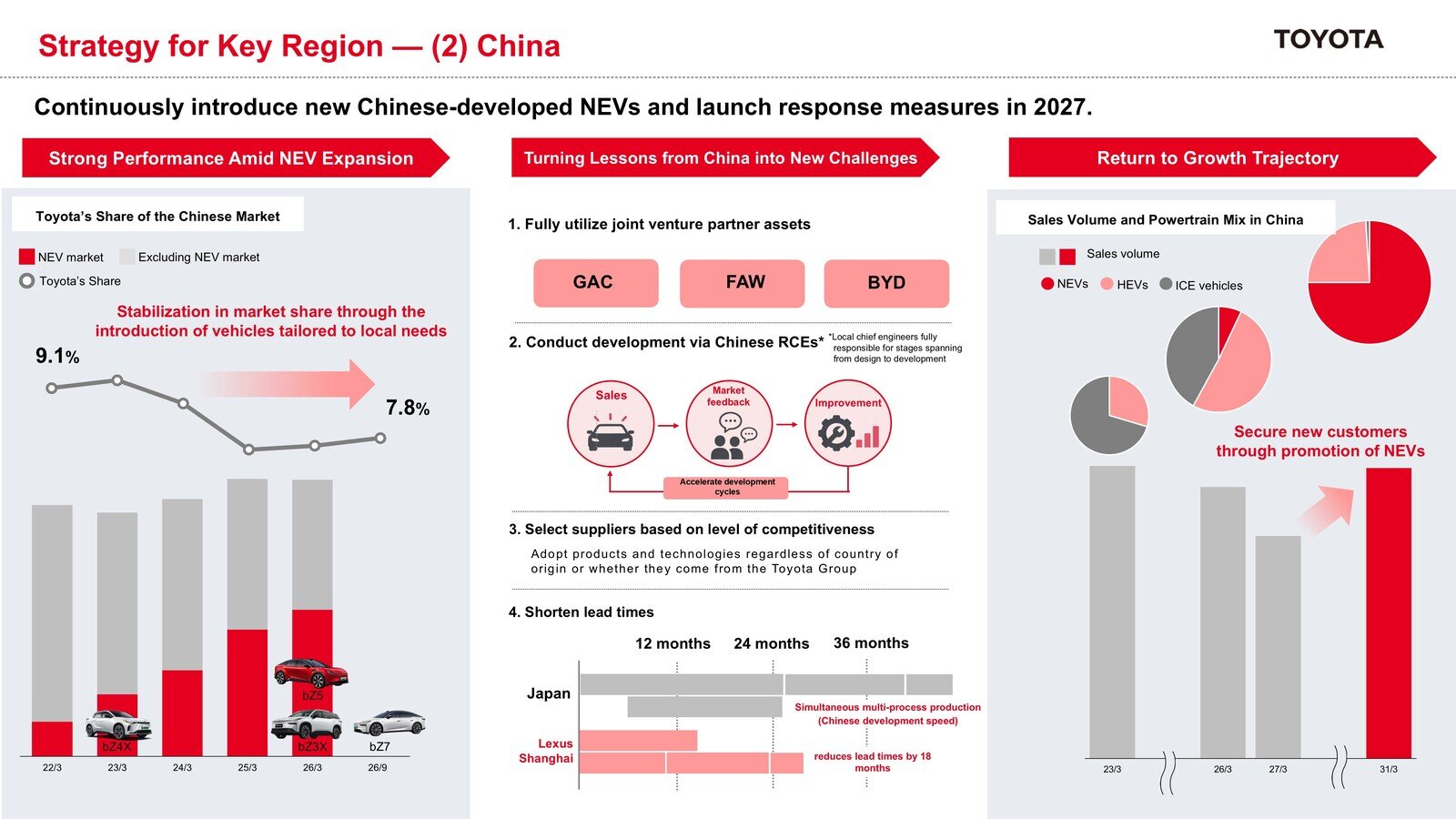
While acknowledging that the market slowdown has put the sales network in a challenging situation, Vice President Miyazaki described this as a time to “sharpen our tools and prepare.” From here, Toyota aims to regain market share through vehicles developed “With China, for China.”
Vice President Miyazaki
“With China, for China” does not mean making the same cars as Chinese OEMs.
To me, it’s about delivering the distinctive Toyota driving feel, and the quality of vehicles honed by our master driver, in cars that are made “With China, for China.”
We want to use parts that can deliver the necessary quality, performance, and—of course—price to properly support those vehicles.
Although, as I explained, we are not concerned with nationality or corporate group, we do want our suppliers to be committed to learning and moving forward together with us.
For the first vehicle developed with our Chinese partners, the share of Japanese suppliers was only around 10%. The figure rose to around 30% for the second model, and for vehicles currently in development it is between 40% and 50%. This indicates productive competition among suppliers, driving evolution.
Not to be outdone by our suppliers, we too intend to keep learning and evolving to fuel our recovery in the Chinese market.
In Asia, Toyota plans to expand product offerings built on a new multi-pathway platform* that will serve as the foundation of its electrification strategy.
*A single platform that accommodates various powertrains (BEVs, HEVs, PHEVs, etc.) and covers the A, B, and C segments, which account for roughly 60% of the market in Asia.
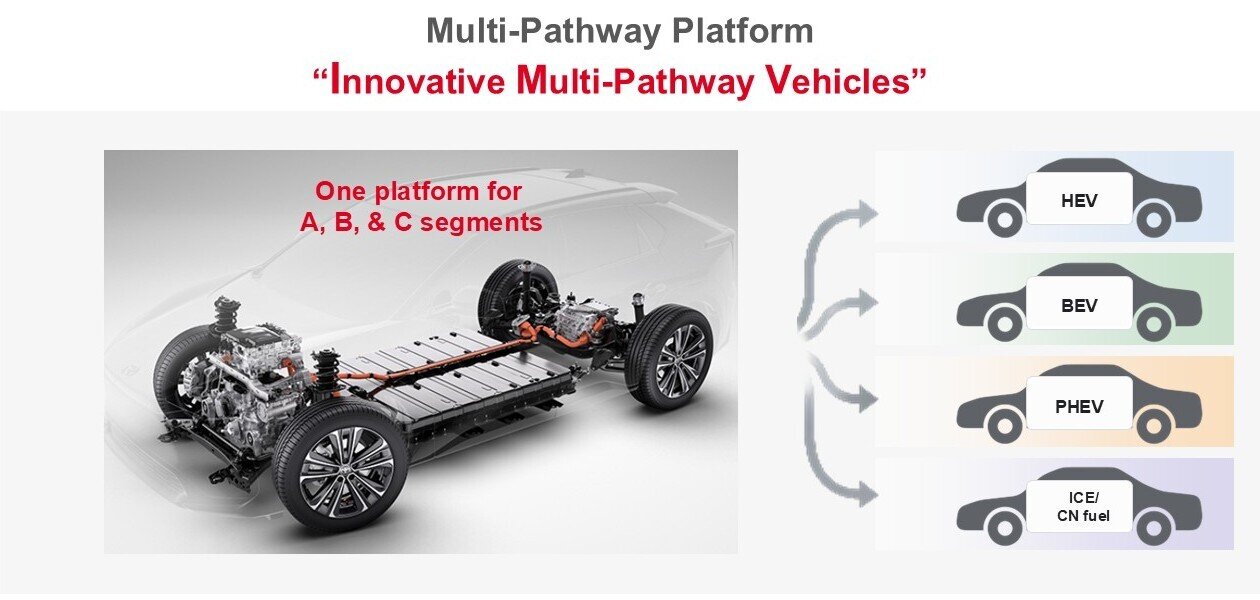
The multi-pathway platform will cater to the region’s diverse energy scenarios, while also boosting cost competitiveness by providing a common base across A–C segment models.
In rolling out new models, Toyota will draw on lessons learned in China to boost cost competitiveness, while harnessing the procurement foundation built up through the IMV series to expand across the Global South.
“Through regional R&D, we will develop quality products with vehicle silhouettes tailored to each region’s needs, while standardizing a base platform across 1.5 million units in the Global South,” emphasized Vice President Miyazaki.
[Value chain] Making the most of 150 million Toyotas worldwide
In FY2026, Toyota’s value chain businesses grew to generate 2.1 trillion yen in earnings. Driving this growth are the approximately 150 million Toyota and Lexus vehicles owned by customers around the world, and Vice President Miyazaki believes there is still room to grow further.
While continuing to increase the number of owned vehicles through new car sales, Toyota is also expanding customer engagement throughout the car-ownership journey, from replacement parts and maintenance to leasing. In addition, the company hopes to build longer-lasting relationships with customers through offerings such as connected services.
By expanding and harnessing the synergy between the number of owned vehicles, retention rates, and retention periods, Toyota aims to sustain annual growth of around 150 billion yen, adding another 1 trillion yen in earnings by 2030.