




This is an ongoing series showcasing Toyota's activities in non-automotive fields. This time, we turn to pig farming...
In fact, the number of teats varies from pig to pig. Although they typically give birth to 13 or 14 piglets at a time, a sow may not have enough teats to feed all of them. That’s why the carts are used to provide vital care to these young ones.
Ingrained ideas stand in the way of kaizen
Beyond the farms, kaizen initiatives are also underway at meat processing facilities.
Revising box quantities and placements to reduce walking time
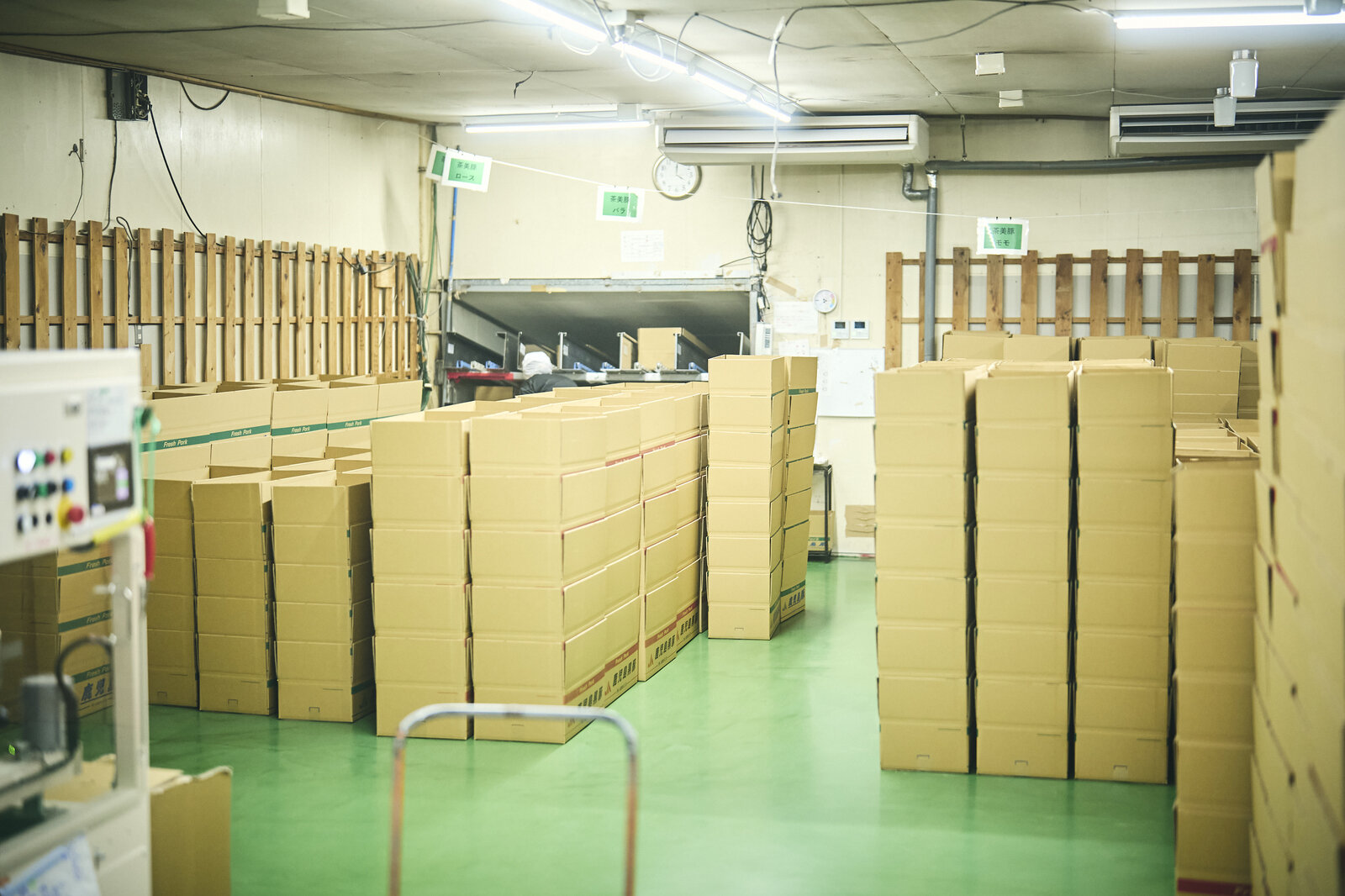
The facility used to keep a large stock of empty cardboard boxes for packing, but now only prepares the number actually required. Placing frequently used supplies close to workstations has shortened walking time by 2 hours a month. Additionally, coating the floor has made it possible to slide the boxes around, saving a further 23 minutes per day.
Steps and ladders make work easier and safer

Steps and ladders were installed to improve access to raised platforms. They were also coated with a non-slip finish to prevent staff losing their footing on greasy surfaces, making work both easier and safer.
“We never thought about things like step counts. Why did we prepare so many boxes...?” commented one staff member from the JA Shokuniku Kagoshima Kanoya Plant with a laugh.
By turning tasks that relied on individual ability into something anyone can do, the initiative also reduced early-morning work. Being busy is no excuse for putting off improvements—indeed, it’s a very good reason to focus on kaizen efforts in order to make work easier.
Lastly, let’s take a look at some examples in food processing.
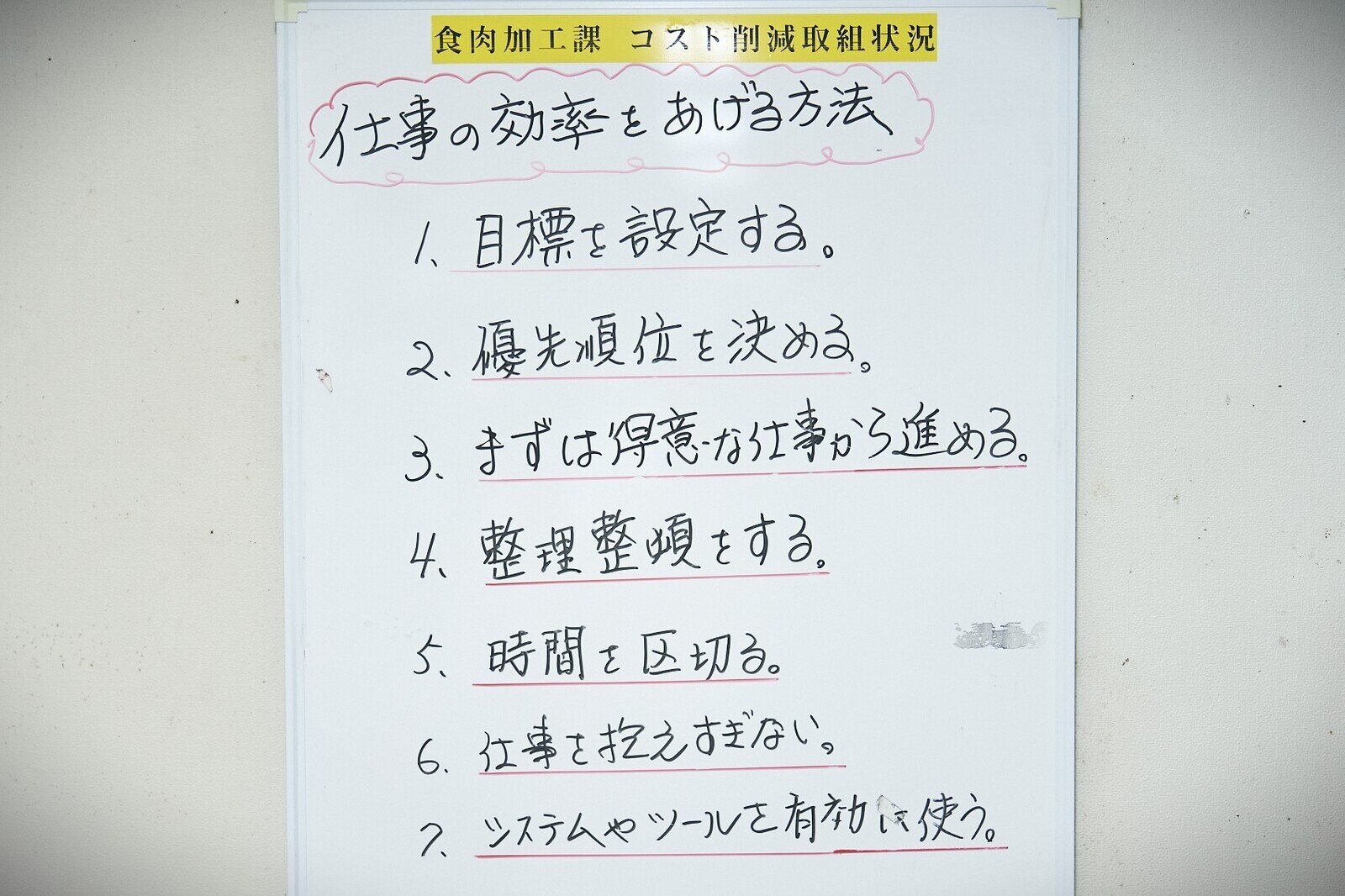
Task-tracking board ensures everyone stays informed
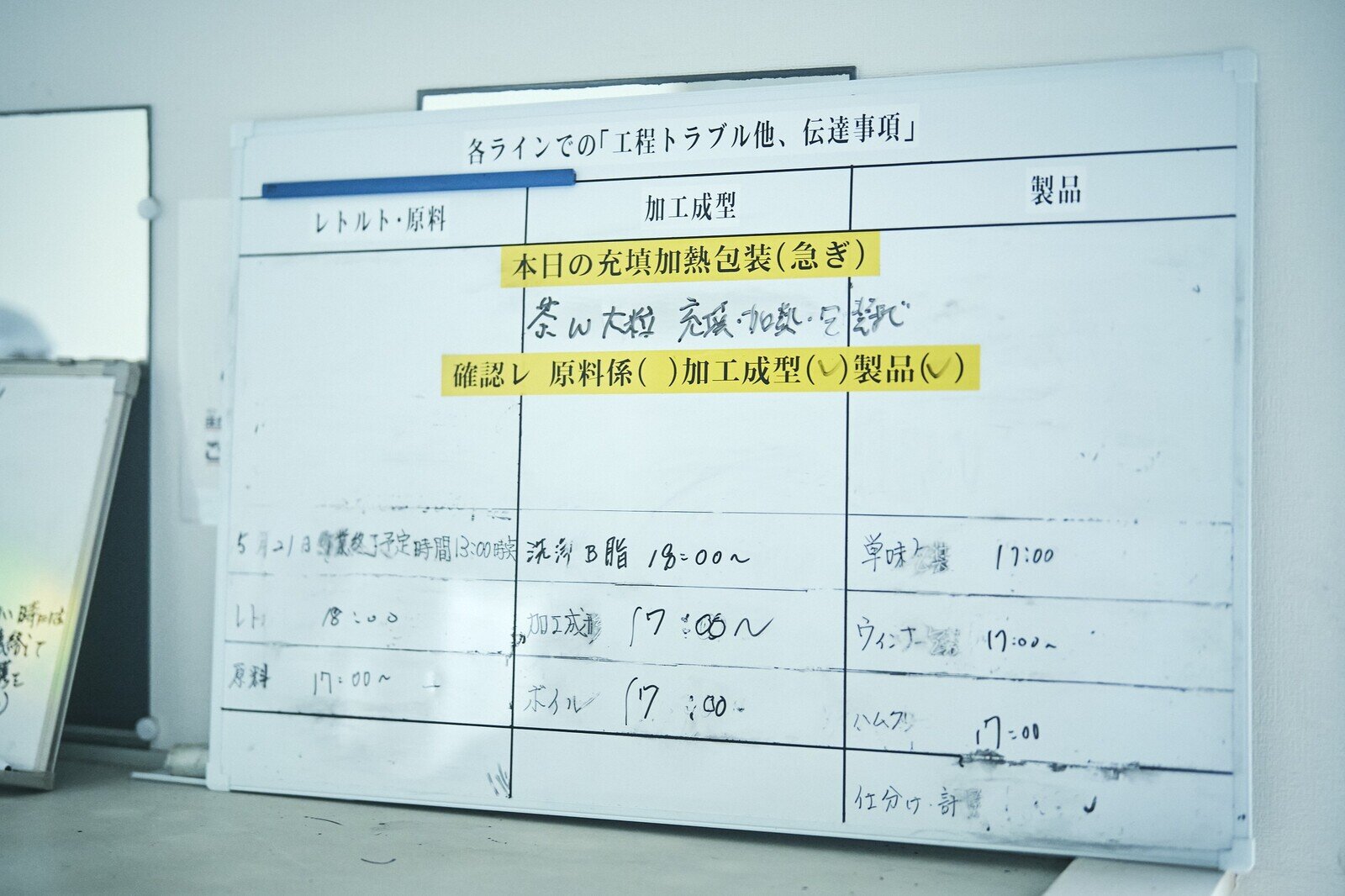
A whiteboard was set up in a location visible to all staff, clarifying the order of priority. Even last-minute changes to the day’s plan can now be dealt with flexibly rather than causing confusion. This streamlined information sharing saves the equivalent of 10 hours per month.
Shrinking stack heights to keep the process flowing
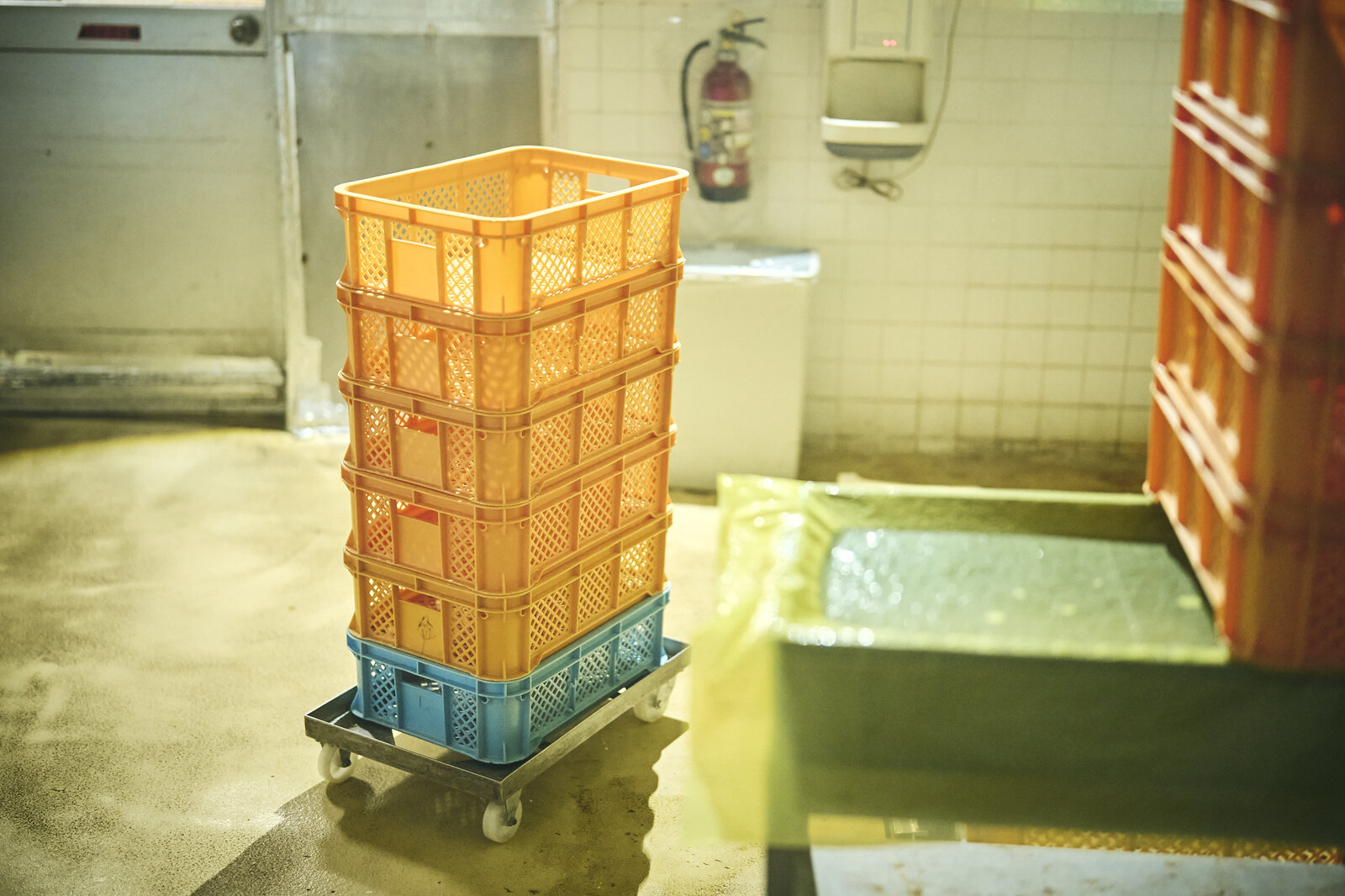
Previously, eight crates were stacked on a trolley before being moved to the next stage of the process, but this was changed to smaller lots of four. Less waiting downstream saves 5 hours a month, helping reduce overtime.
Building shortcuts through walls
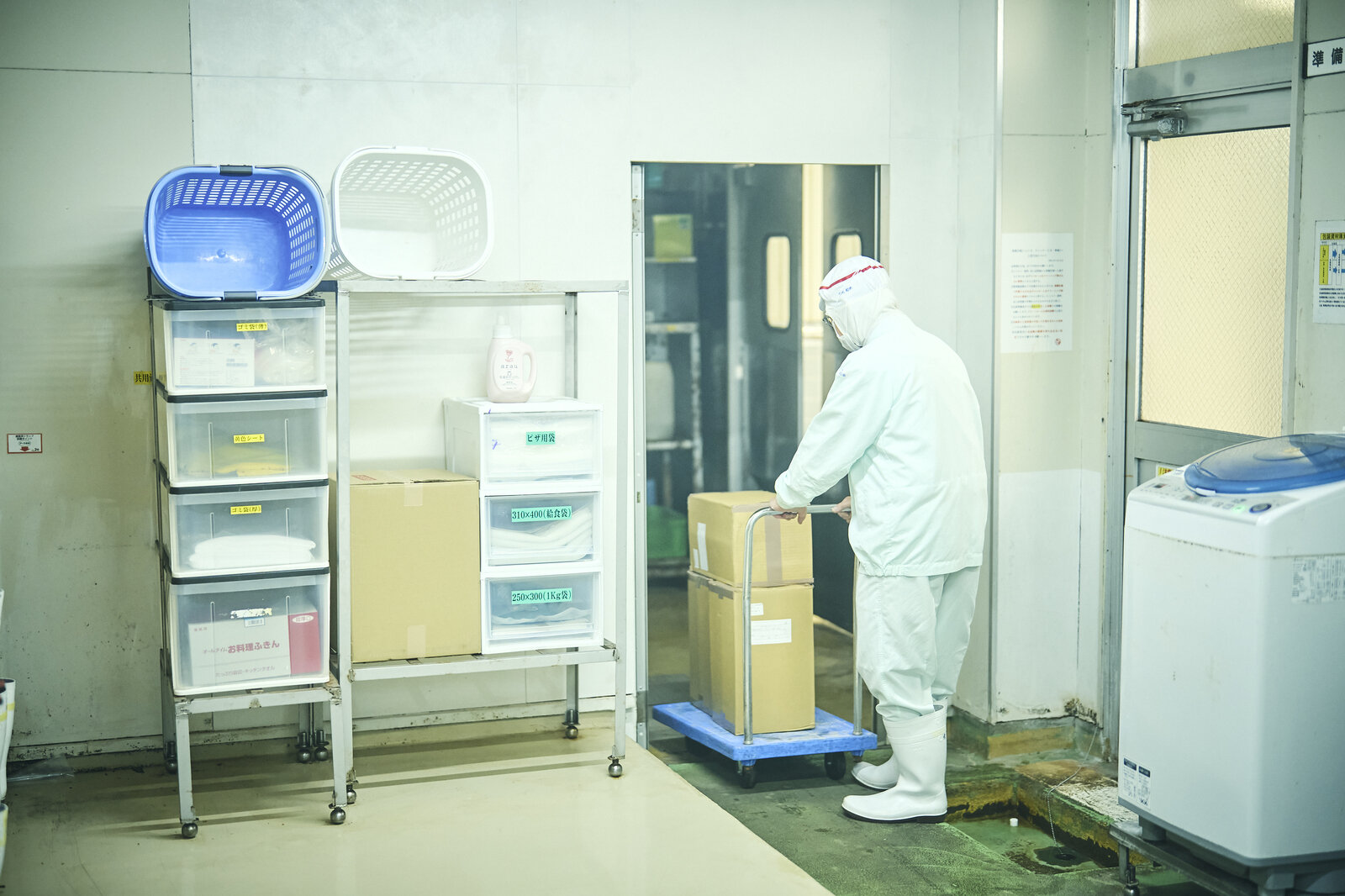
Before a shortcut was opened up to allow cart access, staff carried heavy materials into the rear area via a separate room through the door on the right. This improvement has lowered back strain and the risk of injuries. Relying less on physical strength, the task is now easier for female employees and older staff, while also saving 1 hour of work per month.
Doing away with cardboard boxes saves work on both ends
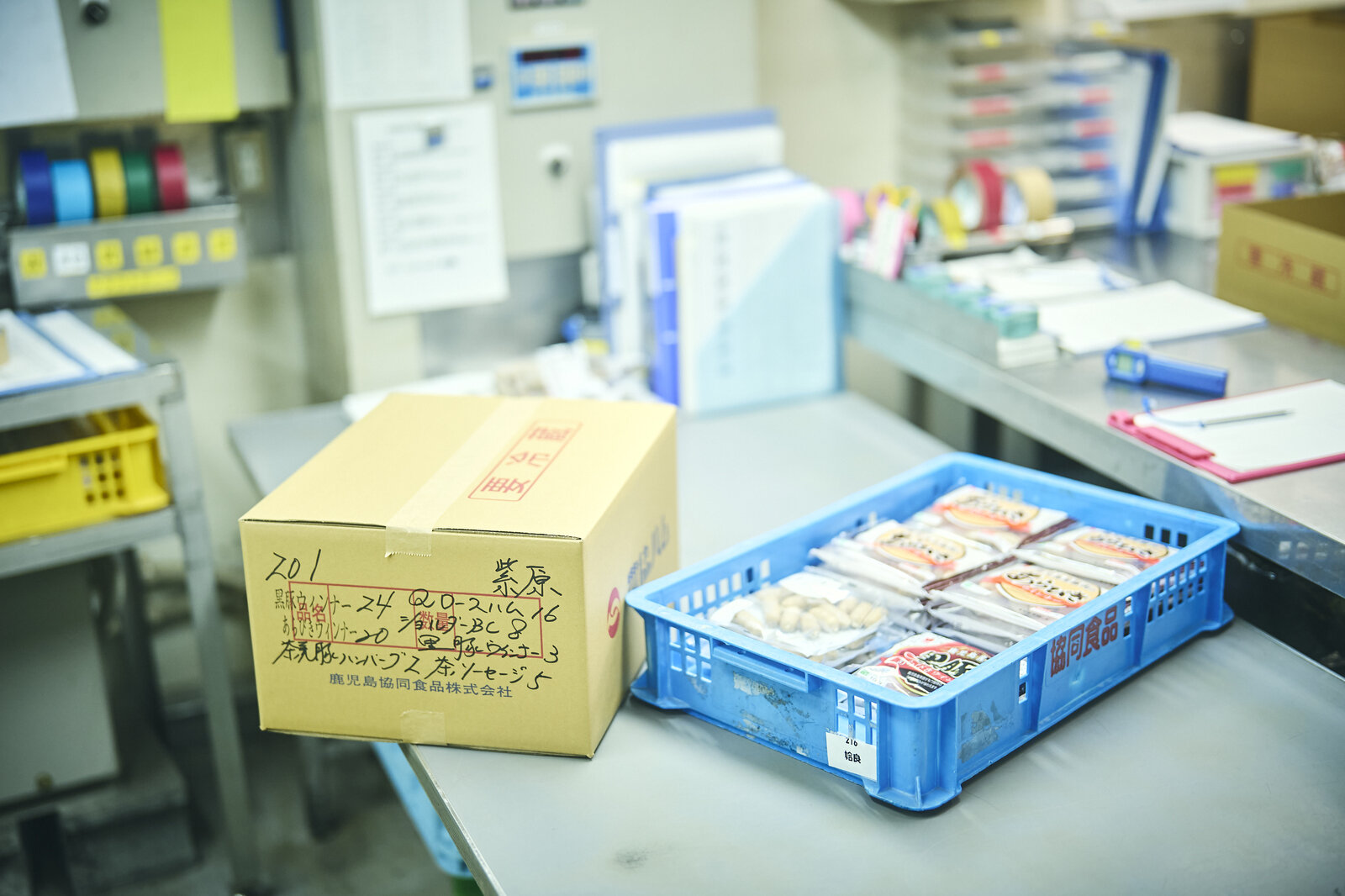
Shipping used to involve folding and packing cardboard boxes, then writing out the contents with a marker, until the team realized they could just send products out in their original crates. Doing so saves 9 hours of work and 30,000 yen every month. It also creates a win-win situation, freeing supermarkets on the receiving end from the effort and cost of cardboard disposal.
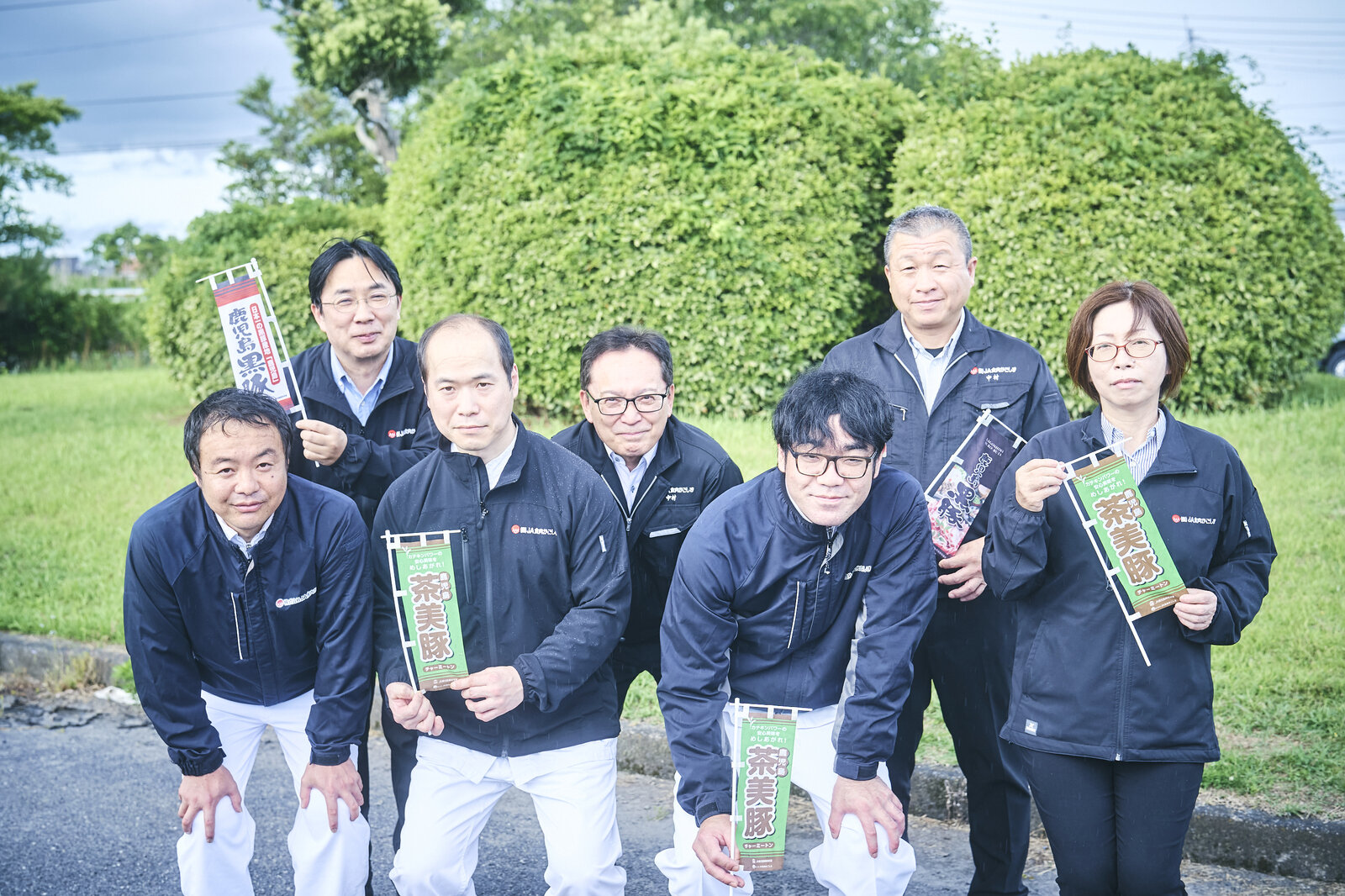
“Being able to question our long-standing practices and see the results of improvement efforts has made a tremendous difference,” reflects Kazuyuki Yonemaru, a section manager in the production division of Kagoshima Kyodo Shokuhin Corporation which makes Kurobuta pork and Chamiton sausage.
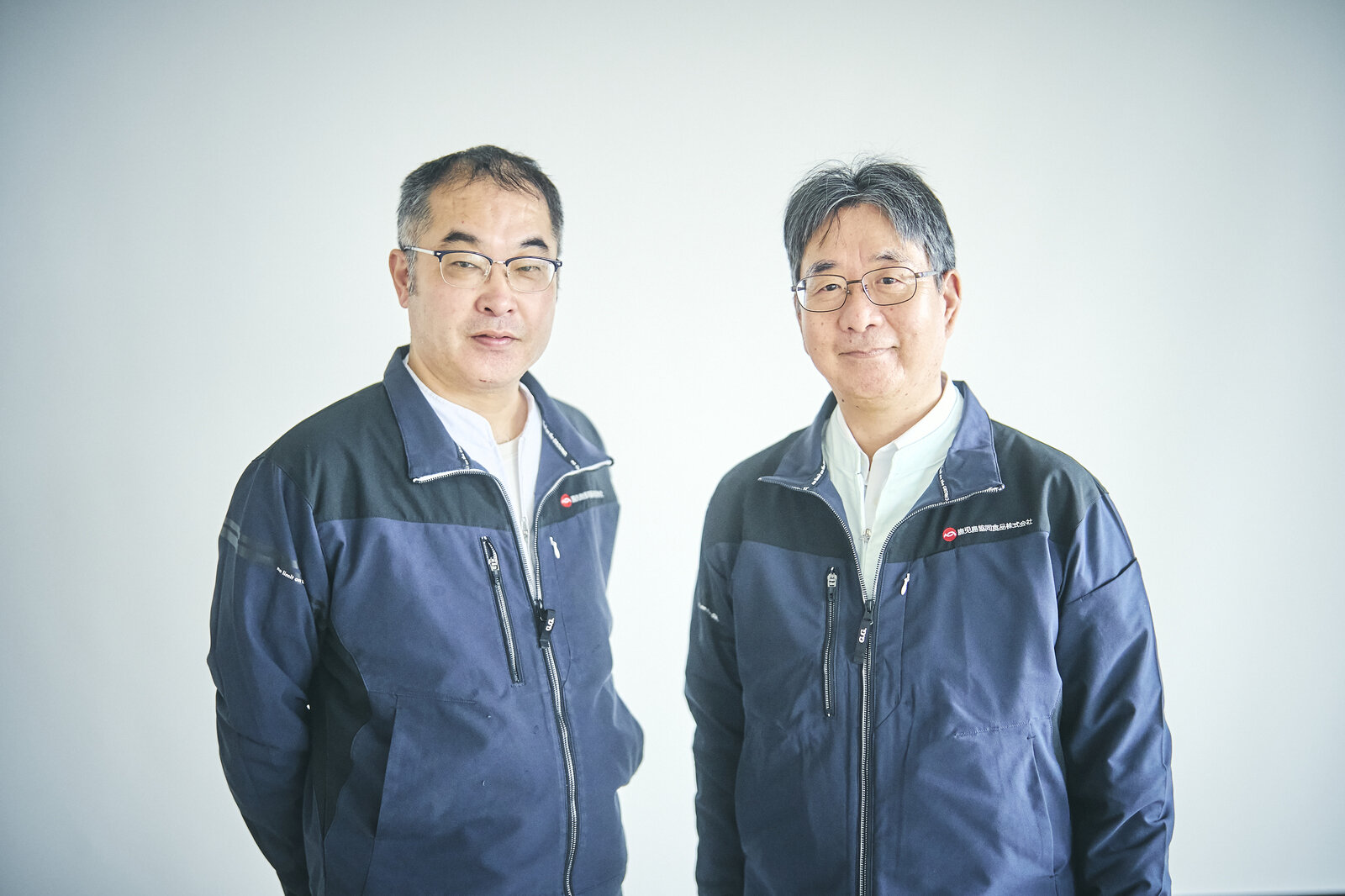
Toshio Ikeda (left), who heads the company’s administration division, shared his hopes, saying, “By eliminating waste, teams that get their work done quickly could assist in other areas, helping everyone finish faster. In this age of staffing shortages, we want to create a more enjoyable work environment for younger employees.”
While both men noted “there is still room for improvement,” this in itself shows that the kaizen mindset has taken root. It’s not about one-off upgrades, but continuous improvement.
Senior Expert Kawate, Agriculture & Biotechnology Business Dept.
With cleaning, for example, there were no guidelines for how thorough staff should be, so they spent a lot of time on it. Then one day they stopped, and it turned out that some of the work was not necessary. They can save on water costs and cut down on early morning shifts, which really pleased me.
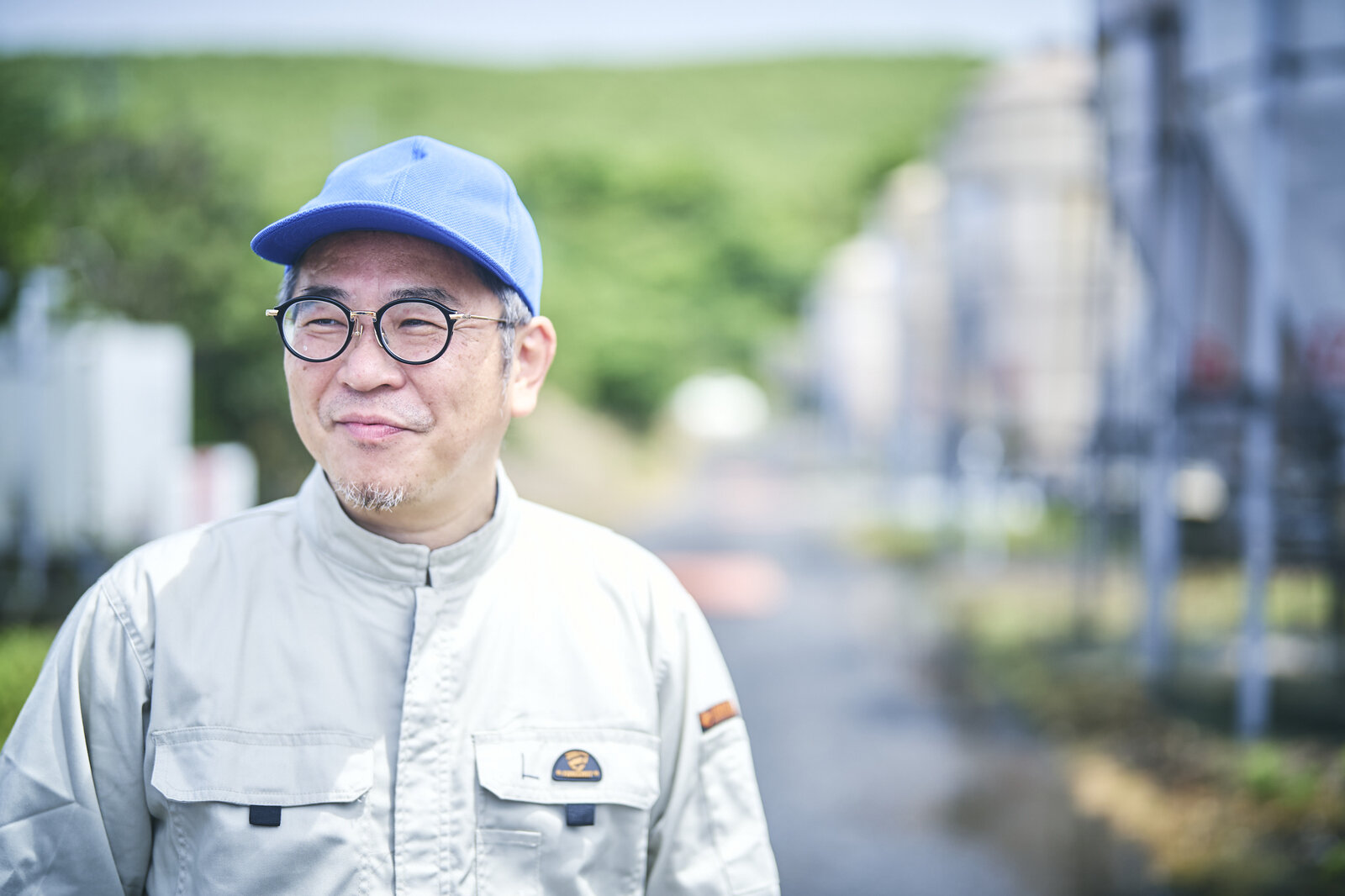
Okumura, a Toyota colleague, also beamed as he added, “The biggest joy is hearing people say, ‘Thank you, that made my job easier!’”
The kaizen techniques that Toyota has cultivated through carmaking can benefit any number of industries. We hope you found some useful tips to try out in your own workplace!