


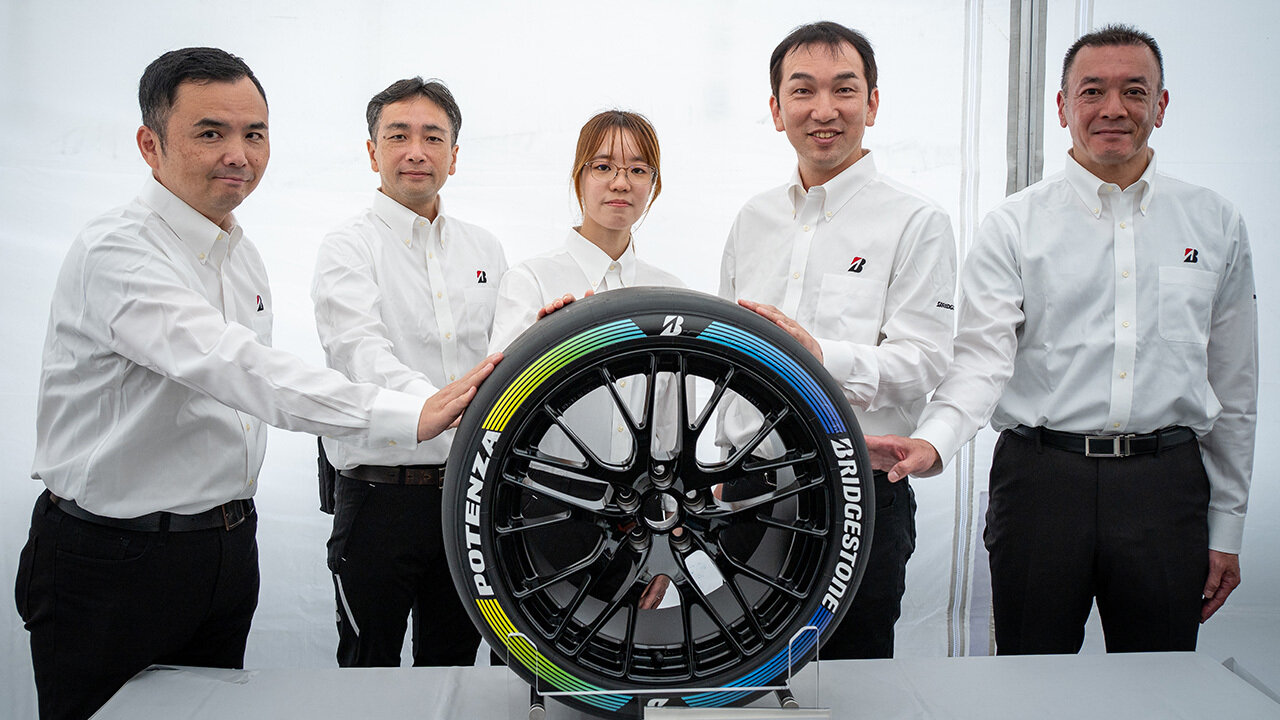
At the recent Super Taikyu event in Okayama, Bridgestone showcased a decarbonization initiative aimed at giving worn tires a new life.
Roads build cars. This philosophy has played an important part in Toyota’s efforts to make ever-better cars through motorsports.
Those same roads and cars are connected by just a single component, which needs only the slightest contact area to deliver a wealth of information to the driver—the tires.
But do you know what happens to tires that are worn out through friction with the road surface and can no longer be used?
In Japan, more than 99% of end-of-life tires are effectively utilized, with many serving as heat sources in factories.
Despite being a very effective reuse option, this approach involves burning the tires, emitting greenhouse gases in the form of CO2.
As part of its Evertire Initiative, Bridgestone is working on an alternative solution: horizontal recycling, giving tires a new life as tires through precise pyrolysis technology.
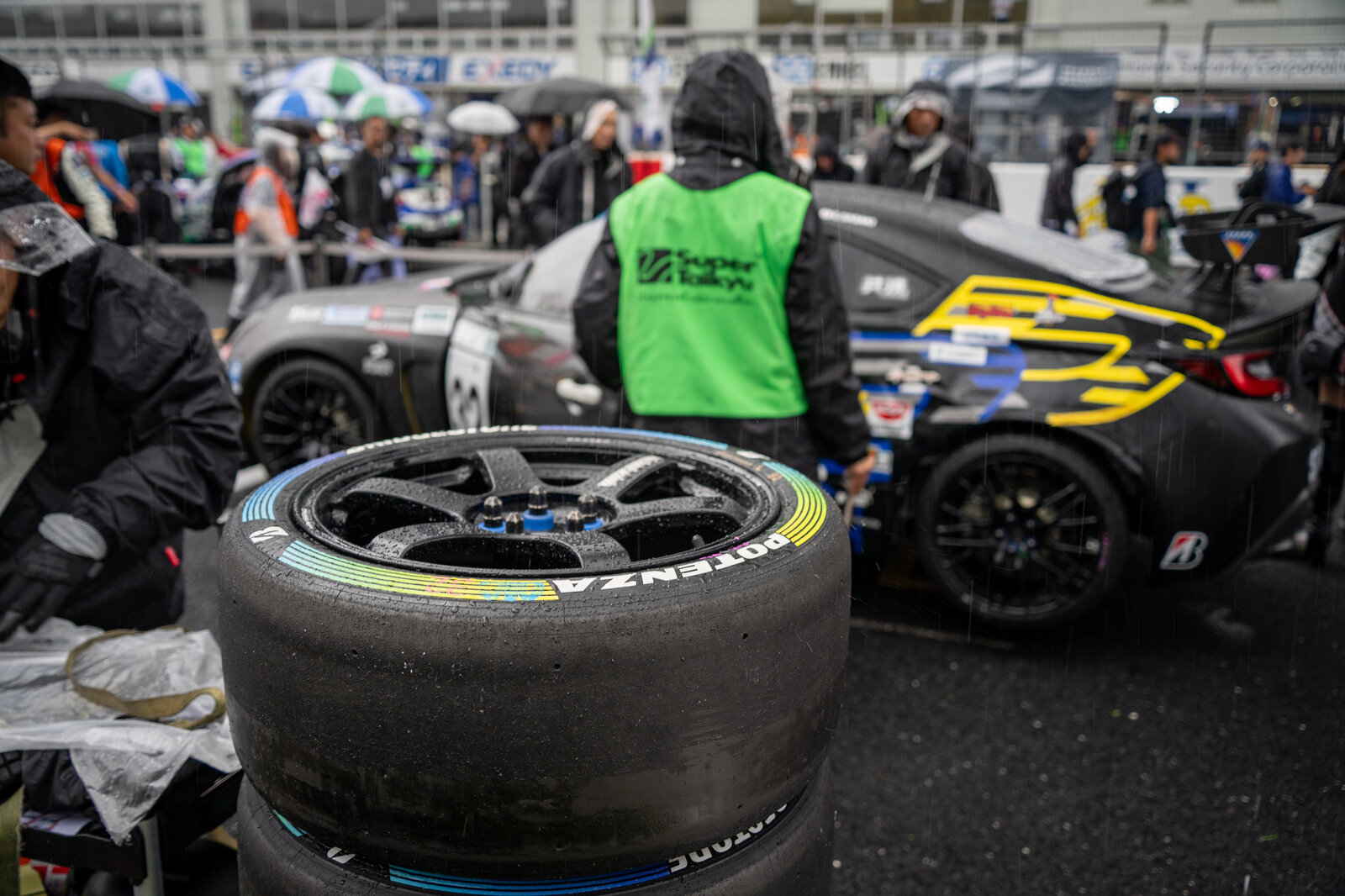
Tires made using this technology took to the track at Round 6 of the ENEOS Super Taikyu Series 2026 Empowered by BRIDGESTONE, held at Okayama International Circuit (Mimasaka) on October 24 and 25.
Unscrambling the okonomiyaki
Precise pyrolysis involves heating organic compounds in an oxygen-free environment in order to break them down into their original materials.
Car tires are composites consisting of natural and synthetic rubbers, fillers such as carbon black, compounding agents, reinforcing fibers, and steel. According to Bridgestone, extracting these raw materials from end-of-life tires is “like getting the flour, eggs, and cabbage out of cooked okonomiyaki (Japanese savory pancake).”
At a briefing held during the Super Taikyu event in Okayama, the company displayed a tire made with “recovered carbon black” that had been extracted using this precise pyrolysis method.
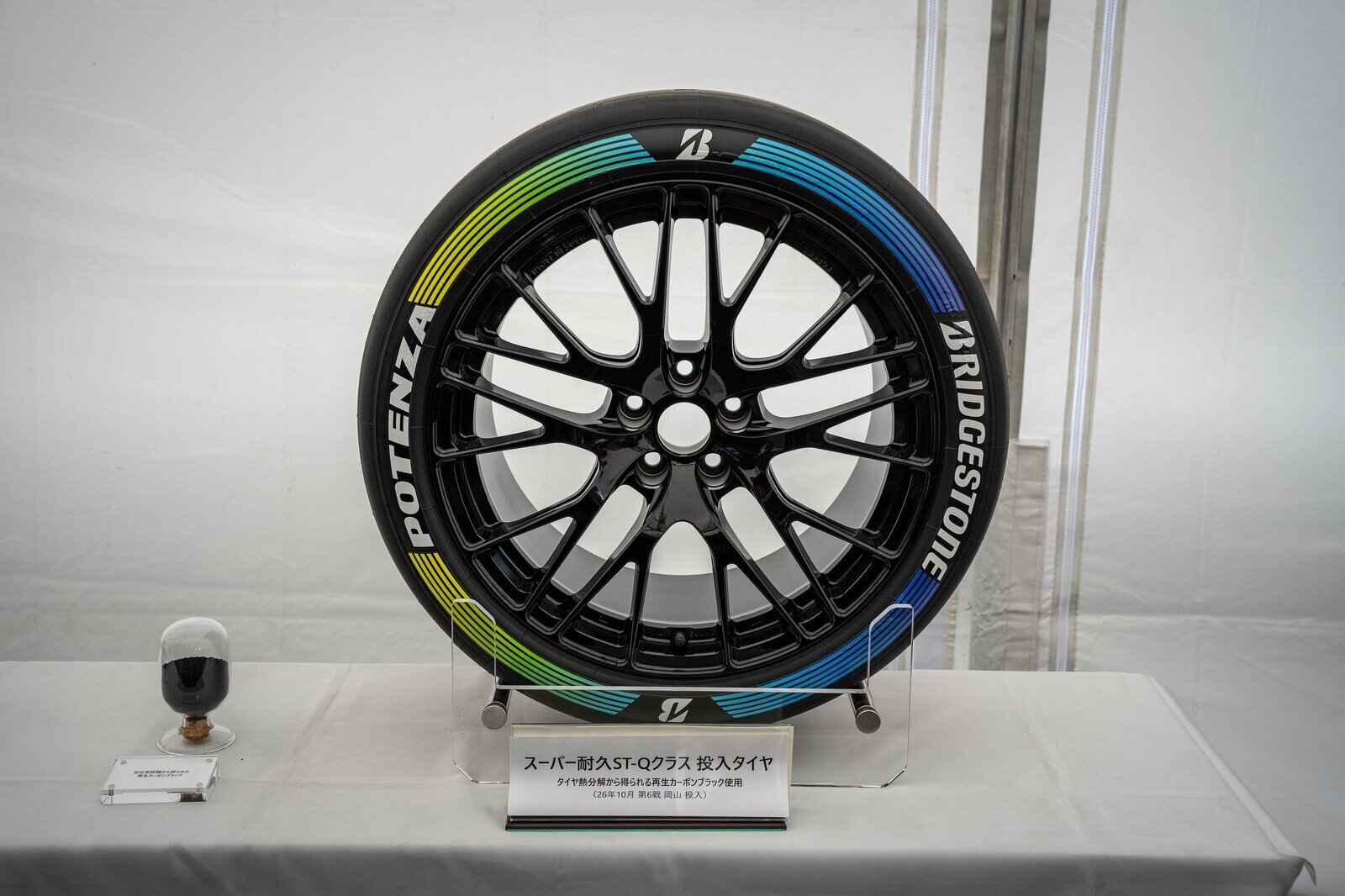
Without additives, tire rubber would quickly wear away under friction with the road surface. To prevent this, the rubber is strengthened by mixing in carbon black. Literally powdered carbon, this material gives the various tires that we see on our streets their black coloring.
At Bridgestone, end-of-life tires are shredded into small pieces, the steel is removed with magnets, and the remaining material is then put through the precise pyrolysis process. Naturally, the retrieved steel is also recycled separately.
During precise pyrolysis, heated rubber and other materials are converted into pyrolysis oil*, leaving behind recovered carbon black.
*Tire pyrolysis oil is sent to ENEOS, where it is turned back into naphtha and other substances that serve as raw materials for synthetic rubber.
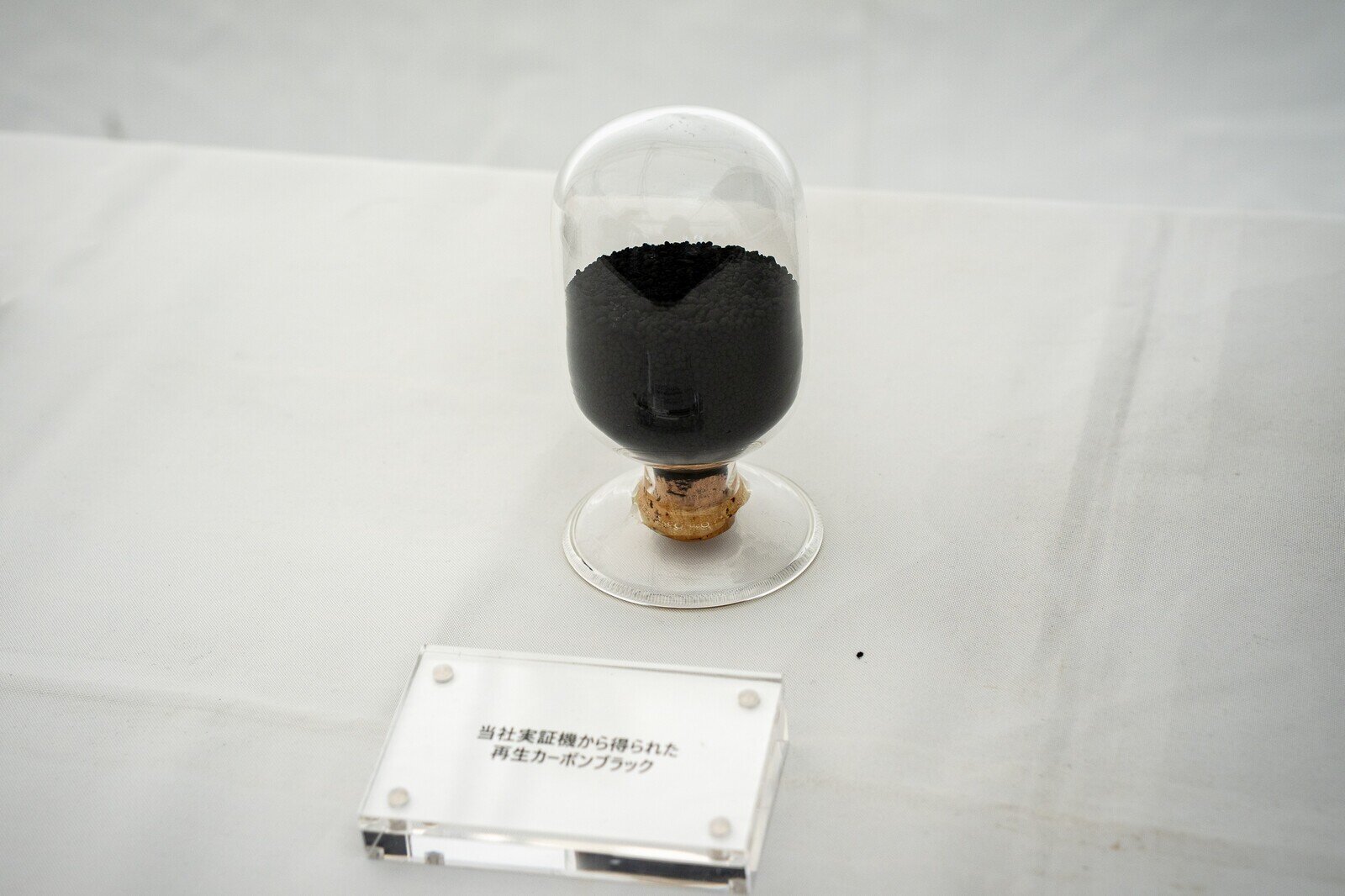
Any undecomposed rubber or coarse particles remaining on the surface of the carbon black will become potential fracture points when the material is once again mixed with rubber.
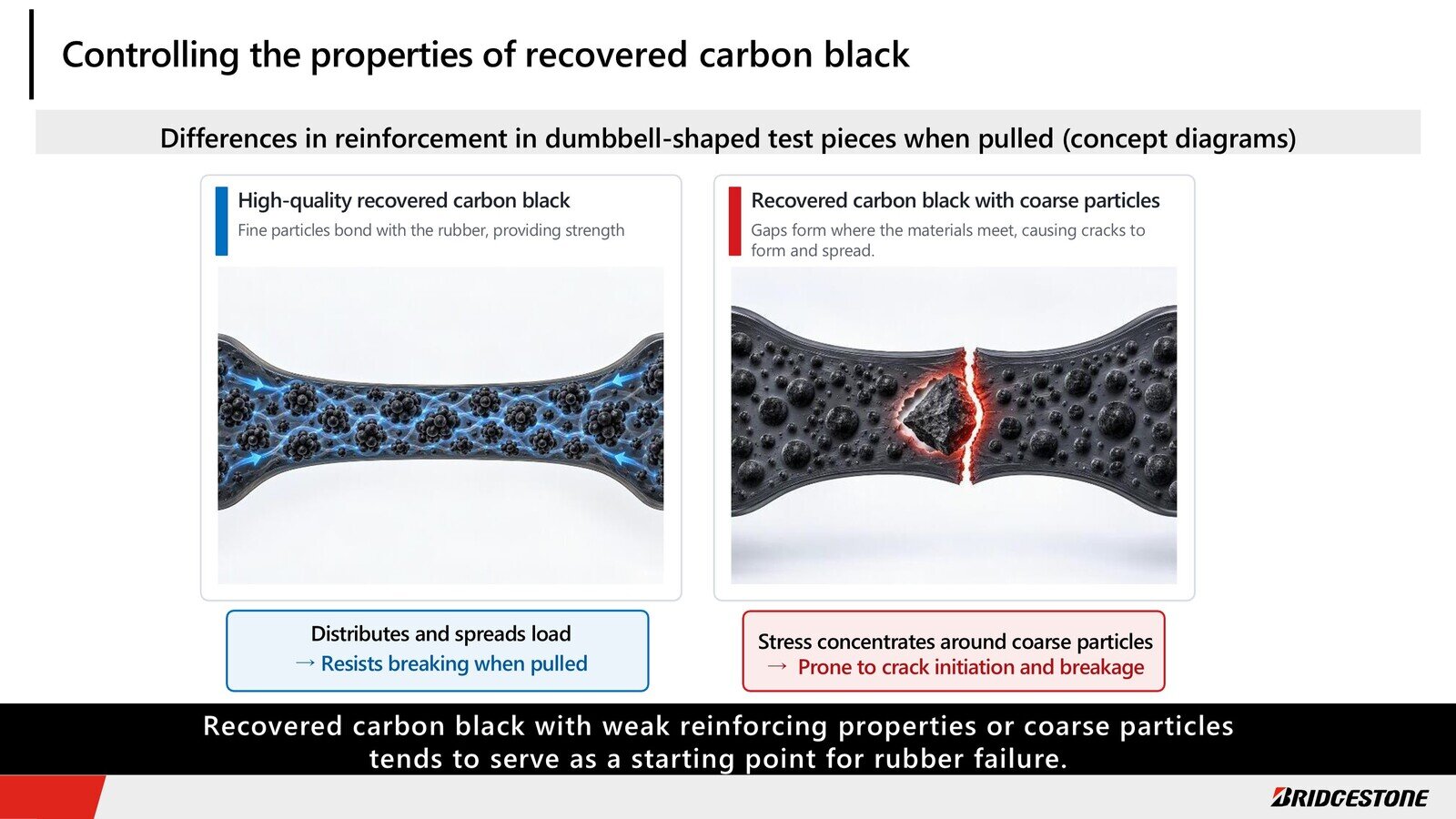
To extract higher-quality raw materials with fewer impurities, factors such as heating temperature, time, and pressure must be meticulously controlled during the process.
Bridgestone, which not only makes tires but also operates natural rubber plantations and factories producing raw materials such as synthetic rubber, embarked on the challenge of recovering materials from end-of-life tires in 2022. The company began experimenting with pyrolysis the following year and has continued to use motorsports as a “laboratory on wheels” to refine its technology.
With these advances, the precise pyrolysis process is now able to extract carbon black pure enough to be used in racing tires, which Bridgestone decided to debut at the recent Super Taikyu event.
Incidentally, while tires that are no longer fit for the road are generally called “waste” tires, Bridgestone prefers the term “end-of-life,” viewing them as resources that can be reborn into new tires. We’ve done the same for this article.
The source of Bridgestone’s passion
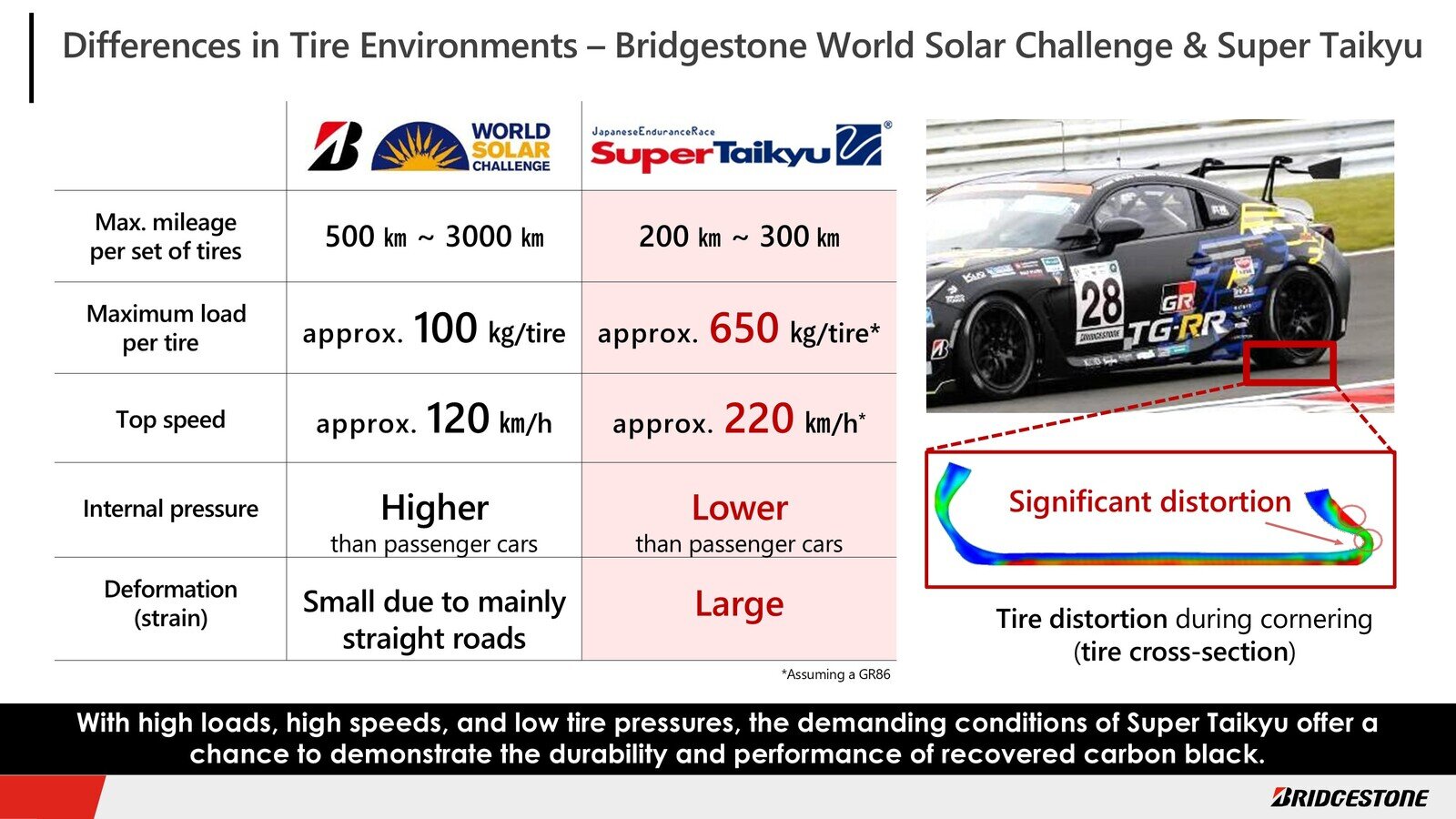
Bridgestone first used tires containing recovered carbon black in 2025 during the Bridgestone World Solar Challenge, in which solar cars attempted to drive across Australia.
This time, taking on Super Taikyu was about testing durability and grip in even more demanding conditions.
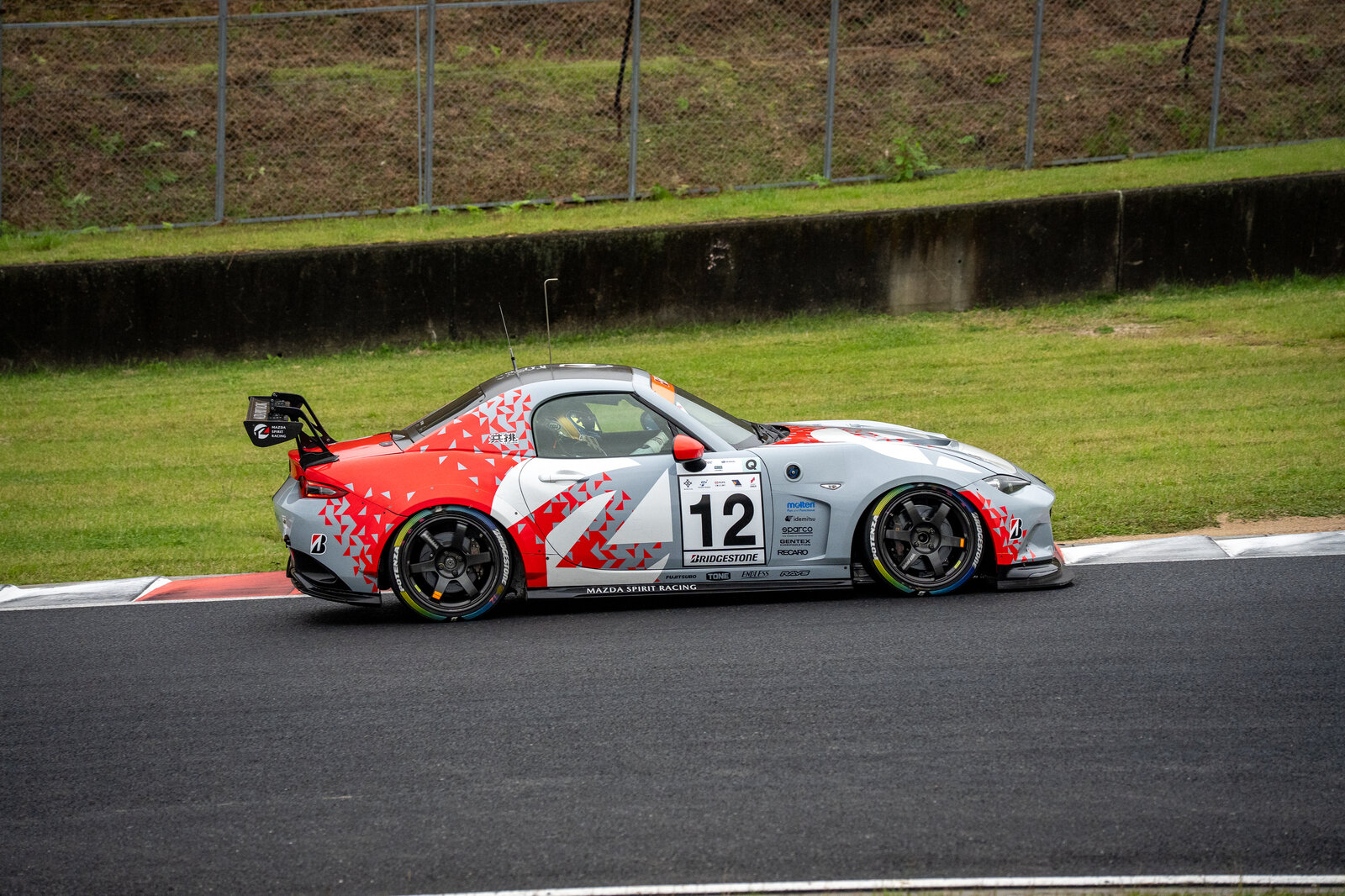
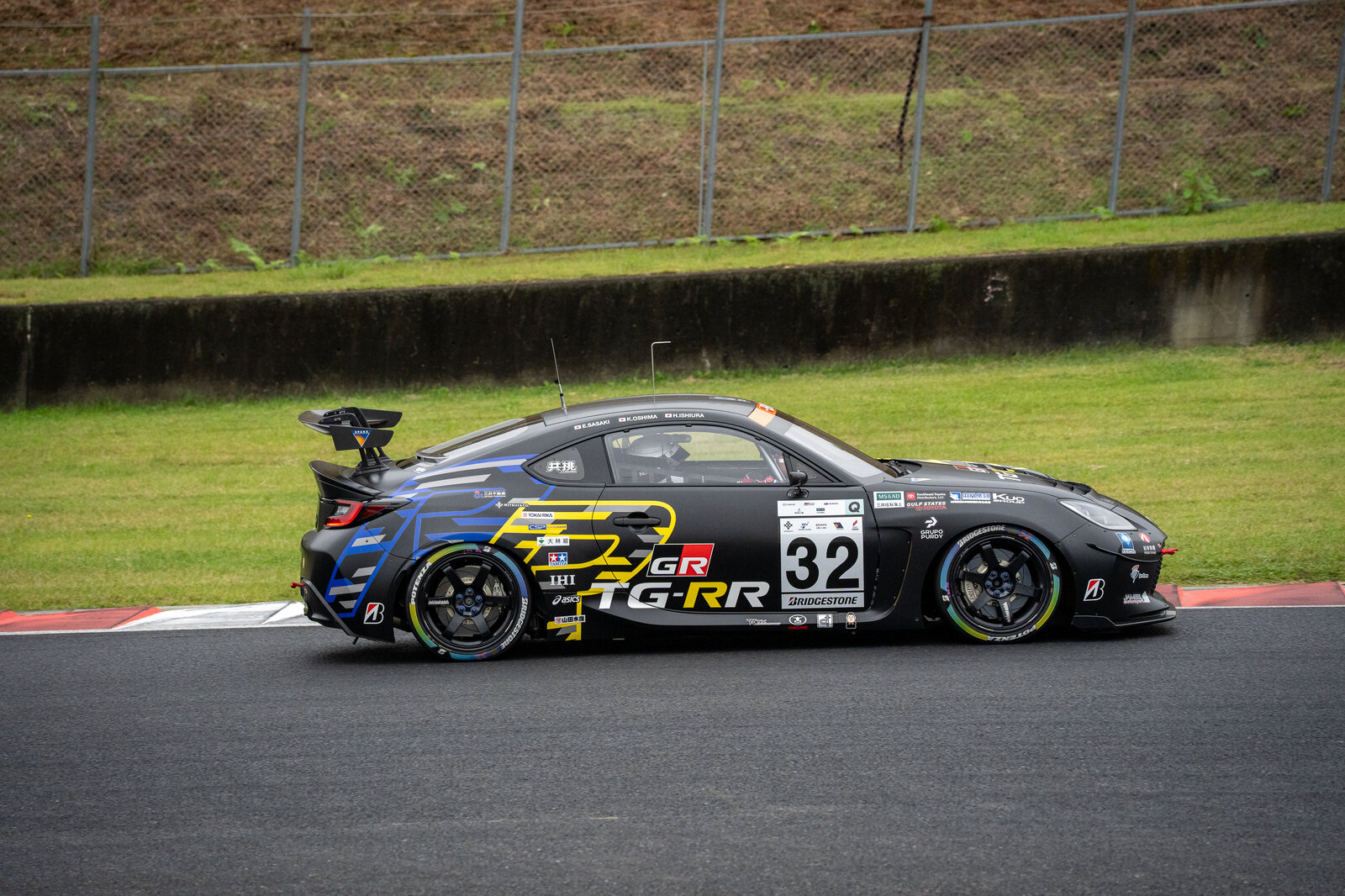
The tires developed by Bridgestone were used by two cars in the ST-Q class, the #12 MAZDA SPIRIT RACING RS Future concept and the #32 TGRR GR86 Future FR concept.
A regular feature on Toyota Times, the ST-Q class was established as a way for companies to test various automotive technologies on the racetrack, regardless of whether they are carmakers.
As part of its pursuit of carbon neutrality, Bridgestone also borrowed one of Toyota’s fuel cell-powered FCEV trucks to transport a total of 60 tires to the Okayama International Circuit. The journey spanned some 700 kilometers from Bridgestone’s motorsports logistics hub in Musashimurayama, Tokyo.
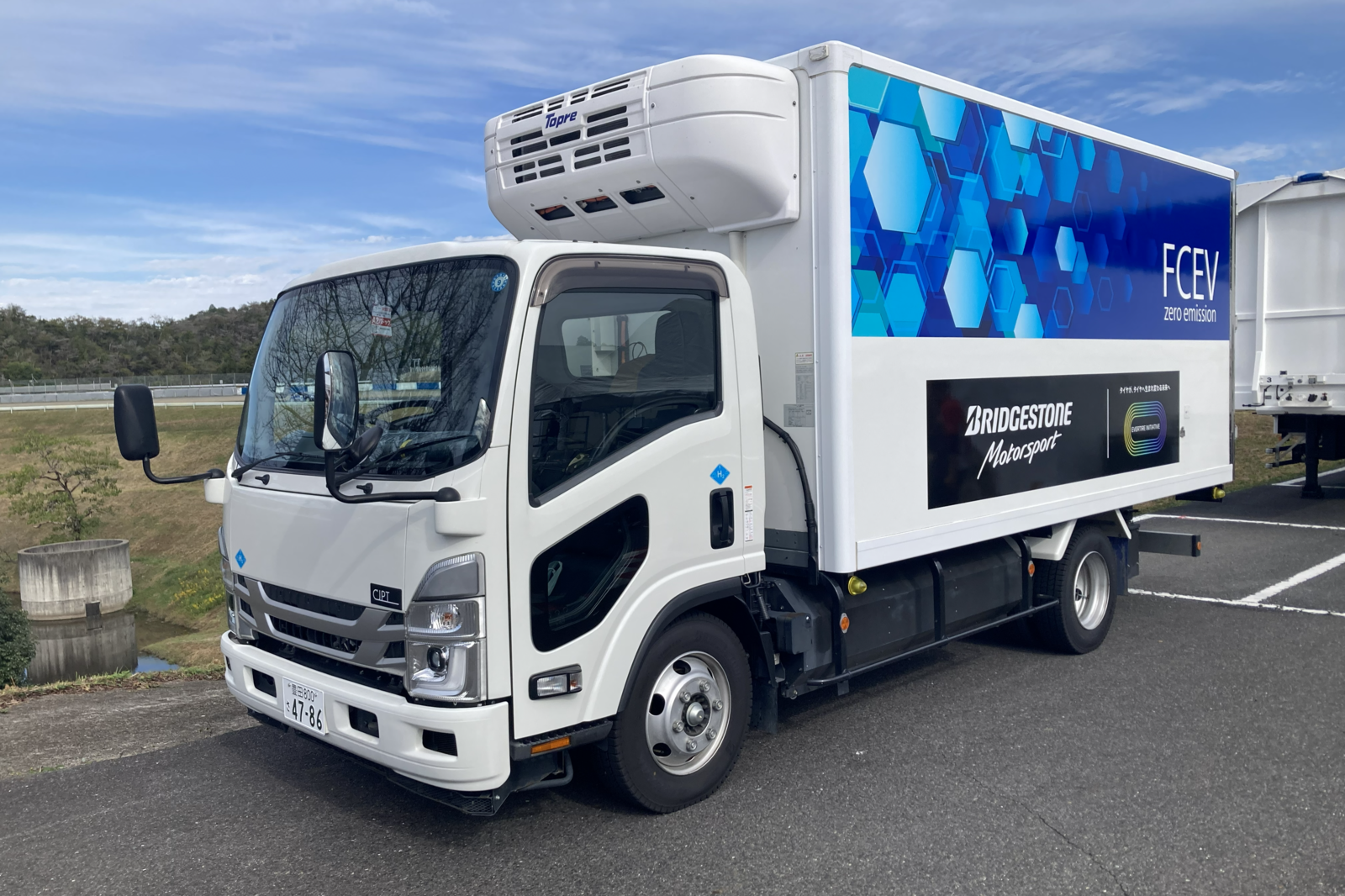
Both the #12 and #32 cars ran on tires made with recovered carbon black, from practice through to qualifying and the main race.
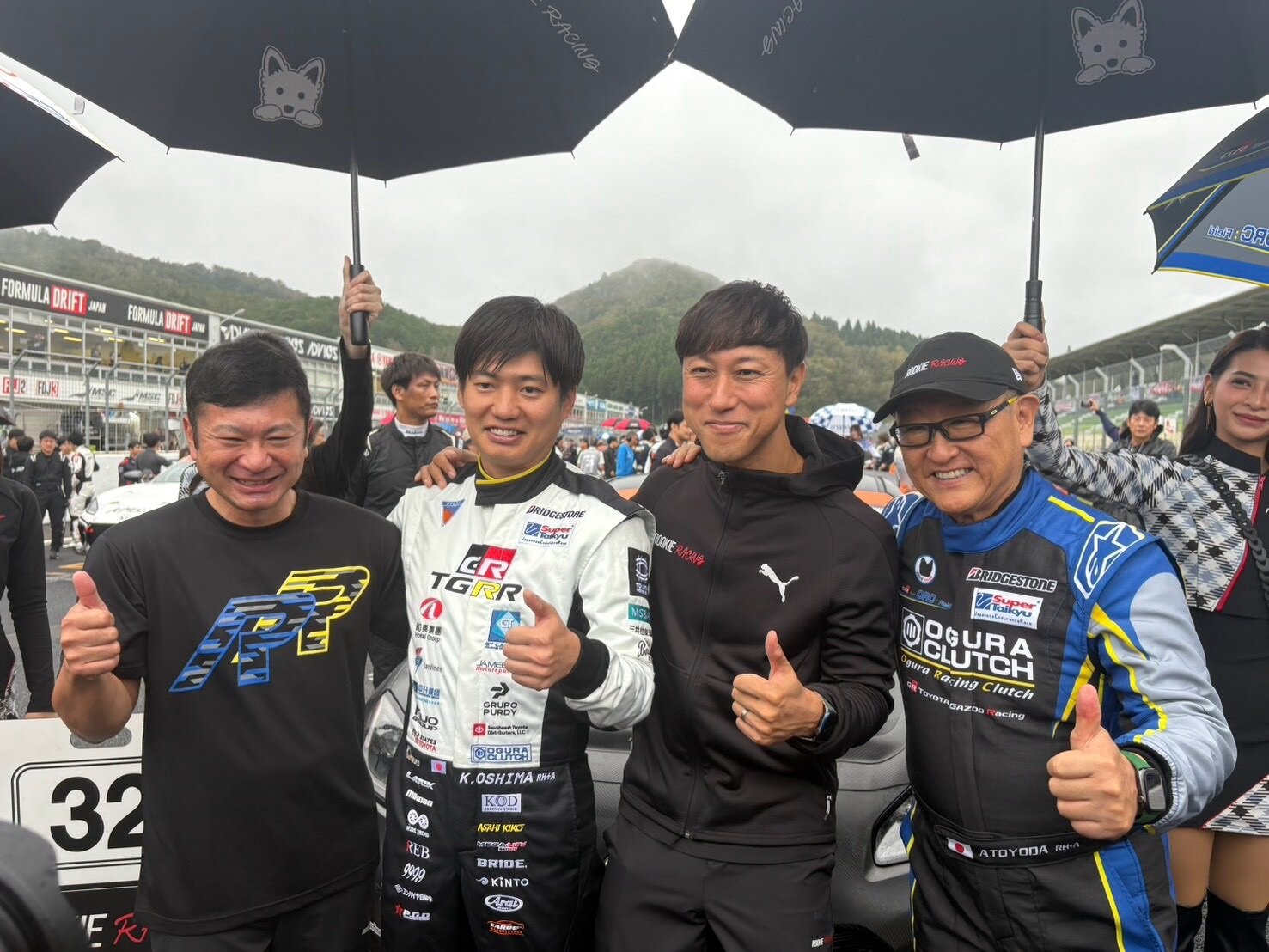
After the race, we spoke with driver Hiroaki Ishiura from the #32 team.
Ishiura
I’ve tried carbon-neutral tires in many kinds of categories, and for us the ideal situation is having something that feels exactly the same as regular race tires.
This time around, they didn’t feel any different from standard tires in terms of grip or performance over time. In that sense, I think these tires are quite an achievement.
Eiichi Suzuki, who heads Bridgestone’s Motorsports Operations Division, explained the role that motorsport plays within the company.
Manager Suzuki
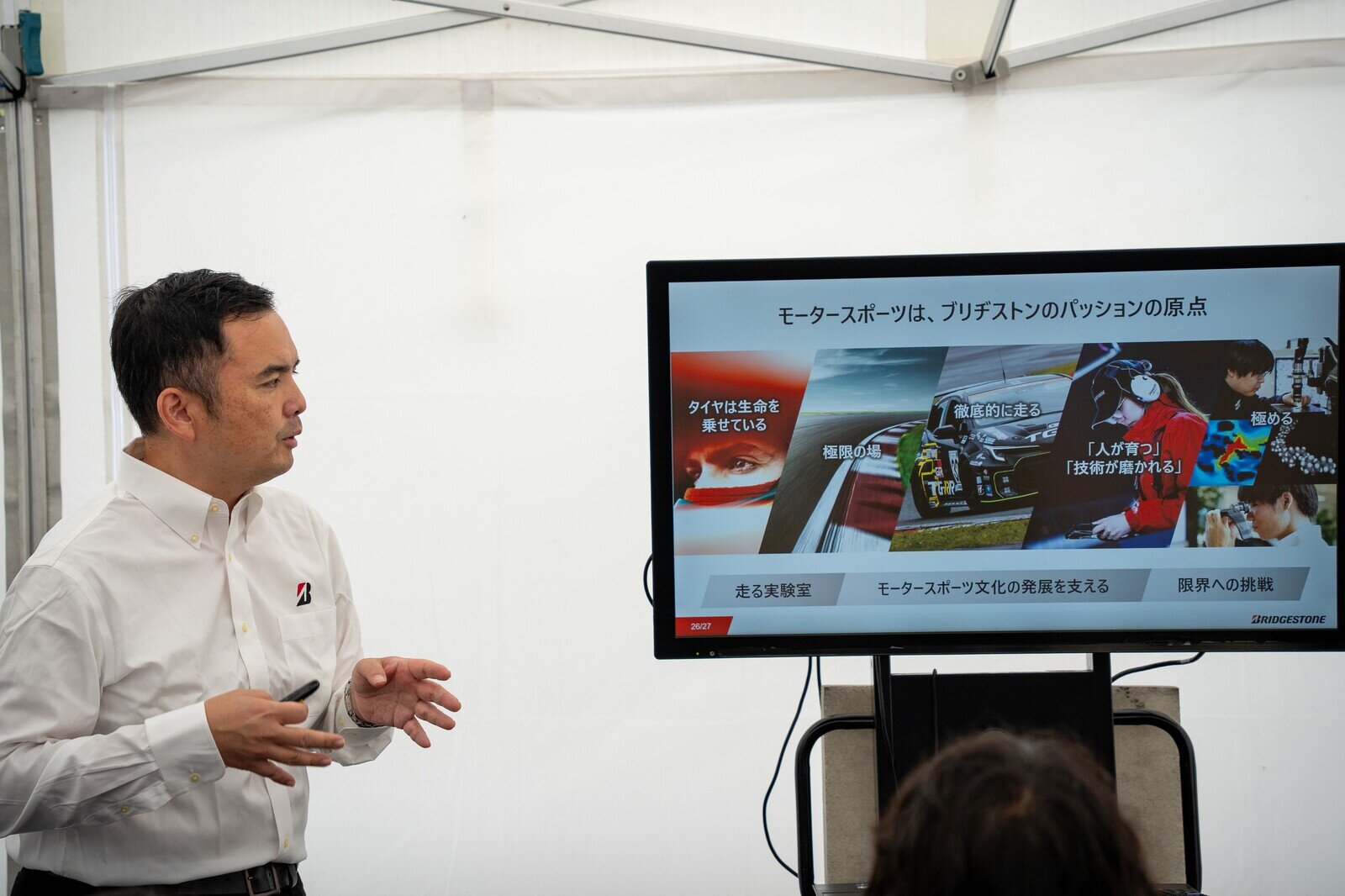
Motorsport is the source of our passion.
At Bridgestone, we strive to develop technologies that will move beyond motorsports out into the wider world.
We look forward to sharing more of these initiatives in the future.
This approach may well be summed up as “making ever-better tires through motorsports.”
Although hurdles such as the proportion of recycled materials and costs remain, Bridgestone is continuing to pursue new possibilities in tire recycling.
The company plans to begin operating a pilot demonstration plant for precise pyrolysis in Gifu Prefecture in September 2027.
“The enemy is carbon.” Out on the racetrack, many like-minded peers are working together toward a carbon-neutral future.