



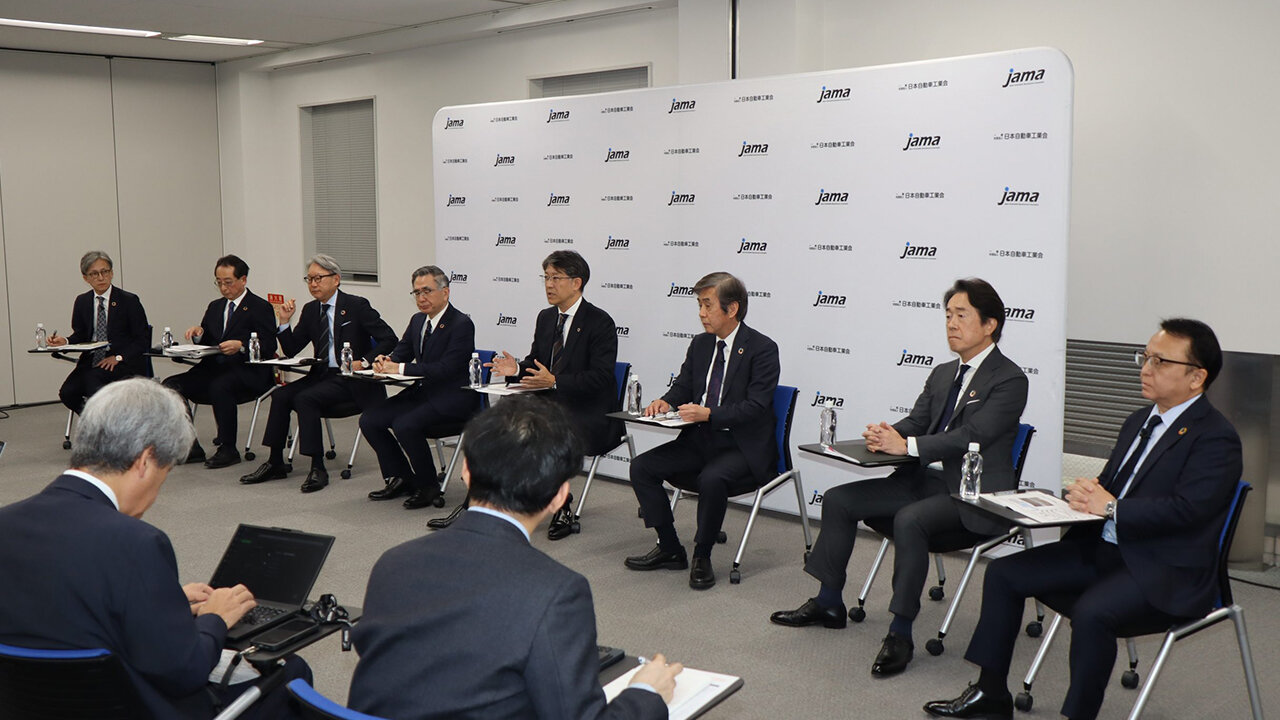
The Japan Automobile Manufacturers Association's new leadership gathered for their second board meeting, sharing a sense of urgency about strengthening Japan's international competitiveness.
On February 18, the Japan Automobile Manufacturers Association (JAMA) held a special board meeting, followed by a briefing for the press.
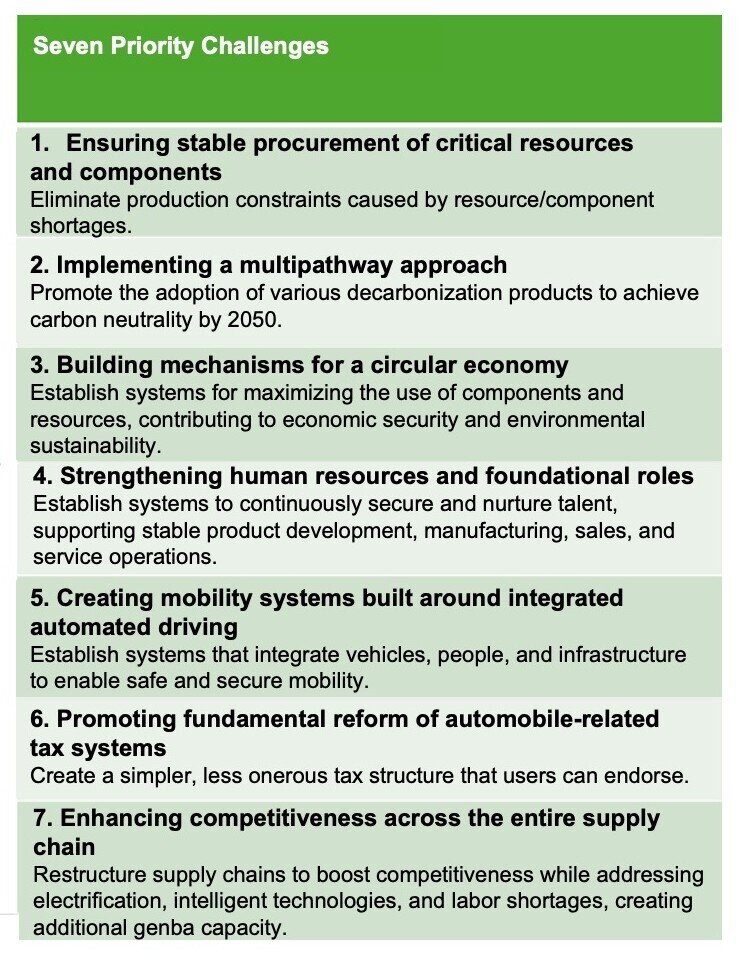
With Toyota’s Koji Sato taking over as chairman in 2026, the new leadership team had convened its first meeting and briefing on January 23. There, they outlined seven priority challenges aimed at making Japan’s automotive industry more competitive on the global stage.
Chairman Sato also indicated that JAMA would reassess how it worked with the media, saying, “We need to ensure that issues are viewed not only as isolated points, but also in their broader context.”
The second session took place little more than a month later.
At the board meeting, the members all acknowledged a sense of urgency that lies at the heart of those seven challenges.
We highlight some key moments from the media briefing.
Sharing a sense of urgency
Chairman Sato
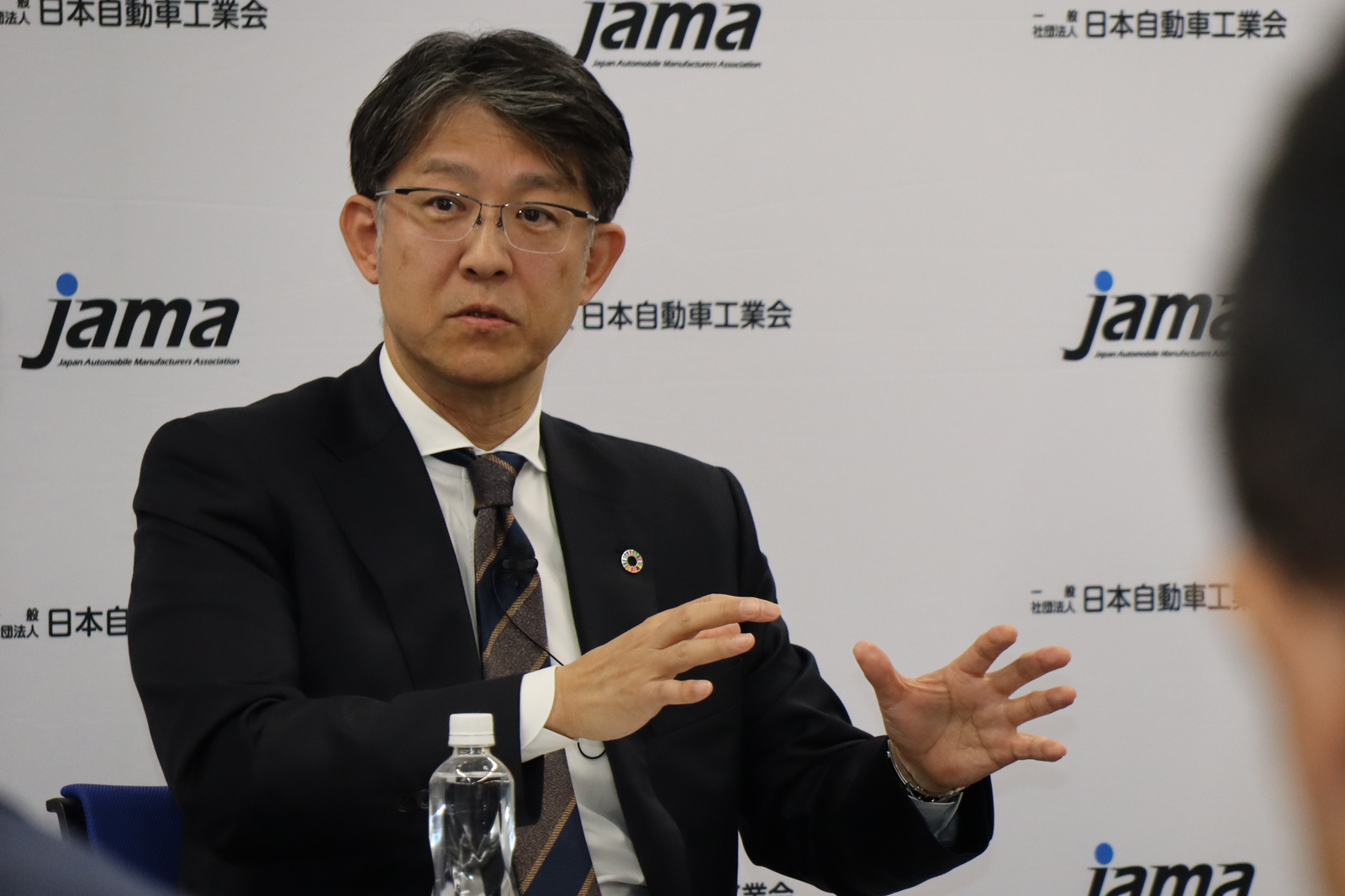
In addressing these seven priority challenges, what we have felt most keenly through our discussions is a renewed sense of urgency: unless we move on to concrete discussions grounded in that shared urgency, the goal we ultimately reach may be different.
For instance, as you may recall from our previous briefing, Vice Chairman Suzuki cited a specific example related to parts standardization. His company discussed standardizing parts with partners, but ultimately only managed to standardize a single ashtray. Realizing that such pitfalls exist filled me with a renewed sense of urgency.
What sense of urgency will we bring to these seven priority challenges? If we fail to get on the same page, our destination is going to look very different.
Collaboration must be more than just symbolic. This second meeting centered on establishing a collective sense of urgency.
At the board meeting, Vice Chairman Masanori Katayama (Isuzu) also stressed that, when it comes to the seven priority challenges, the value lies not in the initiative itself but in delivering results.
As JAMA explores which efforts to pursue further, it was Executive Director Masahiro Moro (Mazda) who presented the new leadership team with a strongly worded proposal.
Executive Director Moro explained his intention.
Executive Director Moro
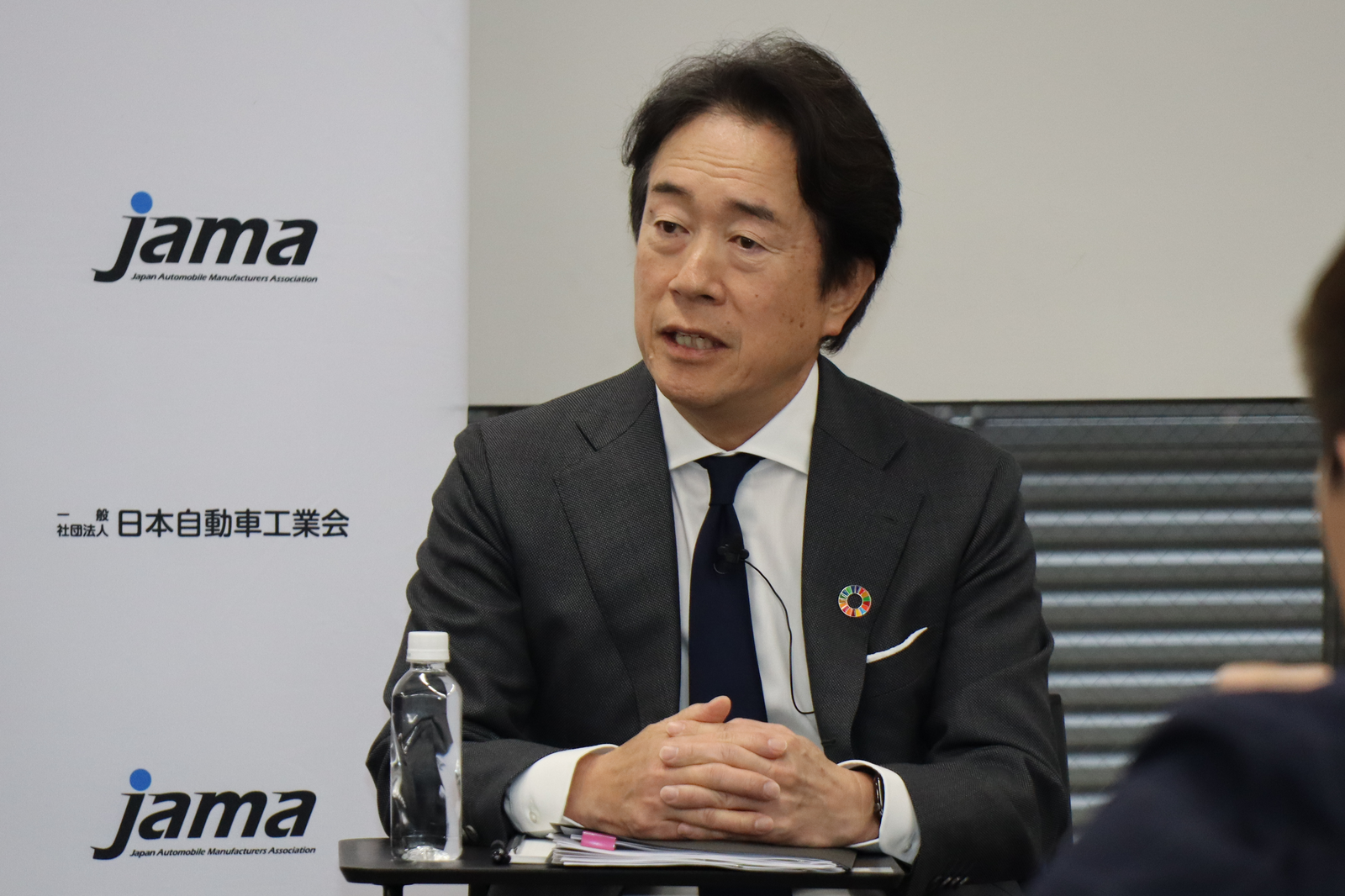
Before we begin delving into the specifics of these seven priority challenges, I felt it was crucial that we bring into sharper focus the sense of urgency underlying them all, which I spelled out in a kind of written proposal.
We must squarely confront the question of whether individual companies continuing to do their best and pushing each other to excel, as they do now, will secure the future international competitiveness of Japanese monozukuri as a whole.
The days when our competitors consisted solely of free private enterprises are over, and we are seeing the emergence of competitors with their own industrial systems, to great effect. At the same time, we increasingly find ourselves in an era where politics influences trade and other areas.
Given these fundamental changes in the environment, can we simply carry on growing stronger in the same way, as a collective of individual companies?
Perhaps we need to go so far as to reexamine the industry structure itself and boldly redefine the boundaries between areas of cooperation and competition.
At a time when the nature of global competition is changing and politics exerts a growing influence, there are limits to what can be achieved simply through the best efforts of individual companies. The lines of cooperation and competition need to be boldly redrawn.
In light of Executive Director Moro’s proposal, JAMA has set out three focal points for pursuing its seven priority challenges.
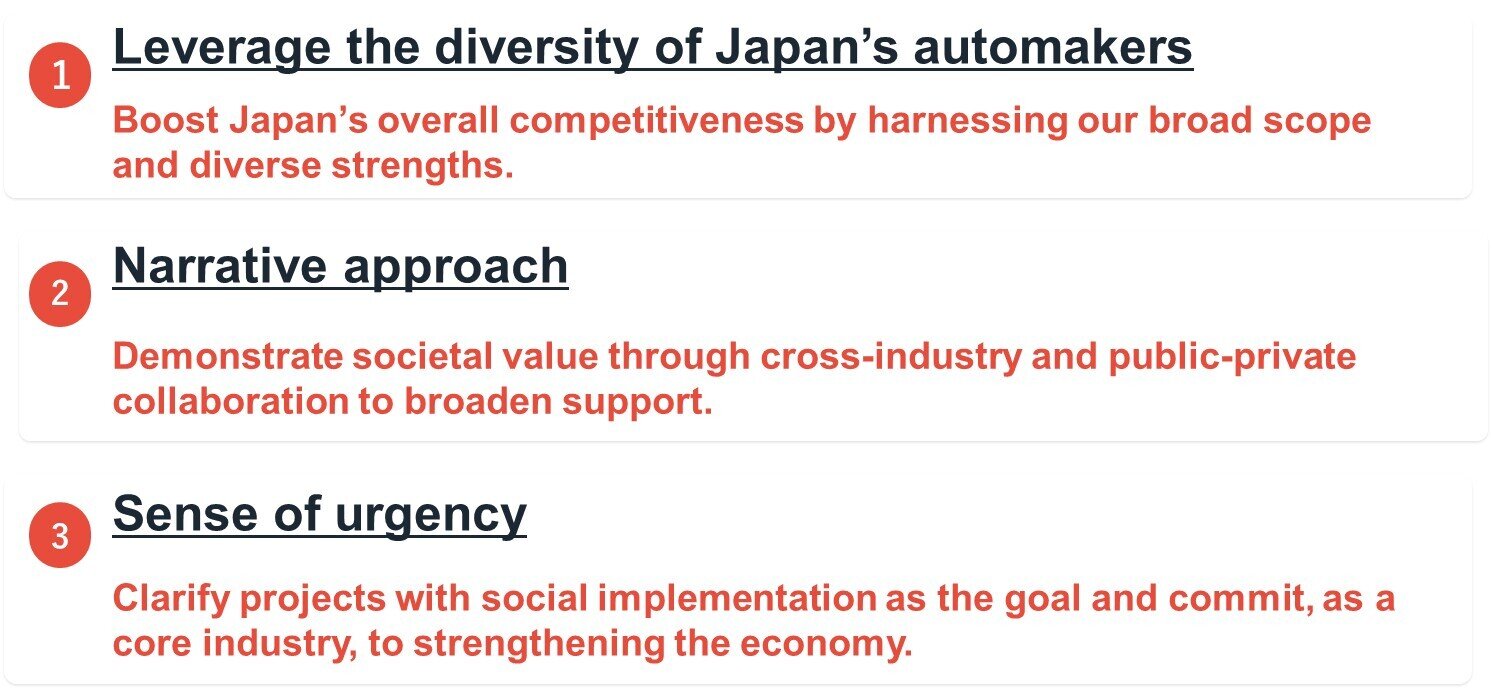
On the third point, regarding the speed of implementation, the auto industry has not been designated as one of the Japanese government’s 17 strategic sectors for building a strong economy.
In Chairman Sato’s view, however, this means that “the auto industry is seen as being uniquely positioned to engage with these 17 technological sectors in multifaceted ways.” He explained that the industry needs to encourage strategic government investment by demonstrating a serious commitment to working with these 17 sectors on R&D and social implementation.