


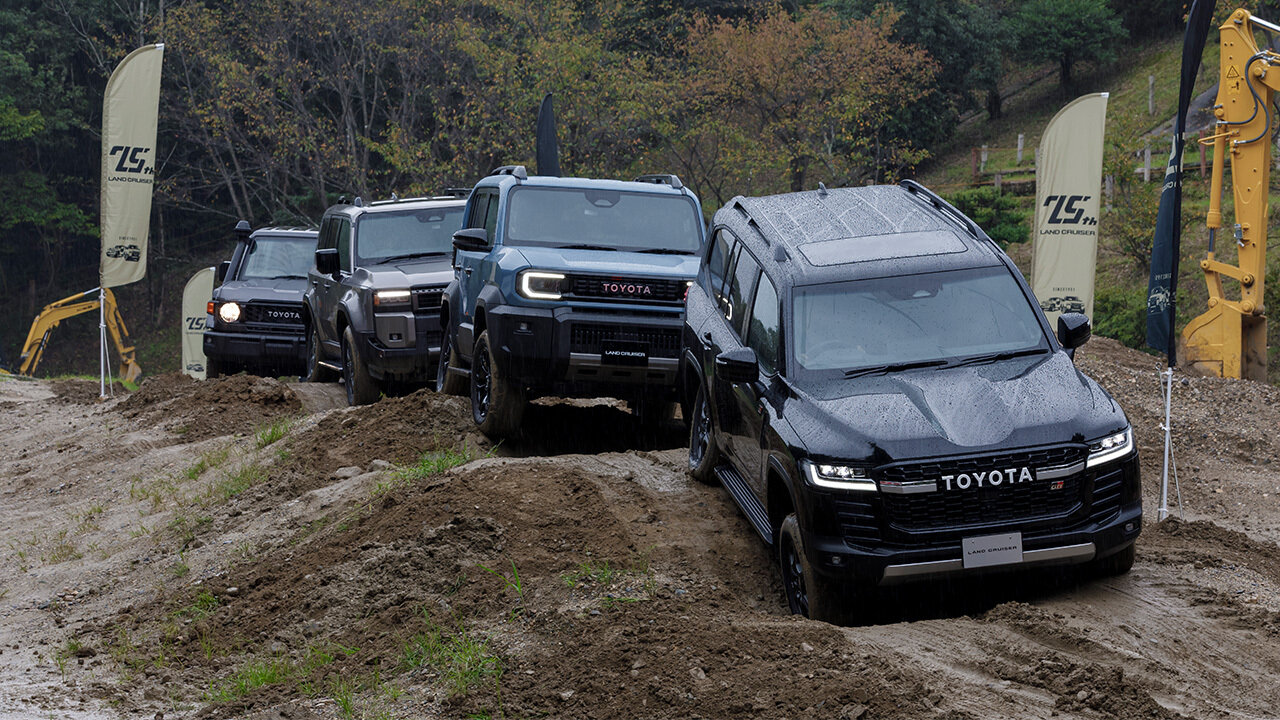
To respond to Chairman Akio Toyoda's call to go back to the Land Cruiser's roots, engineers and designers delivered not one but four vehicles, each more "Land Cruiser" than the next, in its own way.
Passing the Spirit On
Over its 75-year history, the Land Cruiser has changed with the times. Beginning with the Toyota Jeep BJ, the Land Cruiser continued to evolve into three distinct series: Station Wagon, Heavy-Duty, and Light-Duty. Today, its lineup has expanded to include the 70, 250, 300, and FJ. How, then, does the development team view the Land Cruiser’s future evolution?
Uchiyama says heritage in Land Cruiser development does not mean preserving a particular structure or technology.
Masaya Uchiyama
Heritage means properly protecting what we have built over time. But that is less about a specific structure than about faithfully living up to customers’ trust and supporting their lives. That, to me, is what heritage means. If we can protect that, I believe everything else can change.
Forms and functions may change, and indeed should change, if doing so allows the Land Cruiser to continue earning customers’ trust. What must be inherited is not a particular technology, but the commitment to supporting customers’ lives. Evolution is the challenge of fulfilling that commitment at an even higher level.
Even when we adopt the latest technologies, we want to incorporate them in a way that makes people say, “That is truly Land Cruiser,” and, “The Land Cruiser has become even better.” Imagine, for example, autonomous driving that could bring you home from the middle of a desert. In that situation, customers might feel genuinely grateful that their Land Cruiser had the technology. New technology only has meaning when it serves distinctly Land Cruiser values: supporting people’s lives and bringing them home safely even from harsh environments.
Ueno describes the difficulty of evolving with the times.
Kazuyuki Ueno
We must adapt to changing environmental requirements and regulations while preserving as much as possible of what our predecessors created and generations have cultivated -- andeven surpass it. That is extremely difficult, but we have no choice.
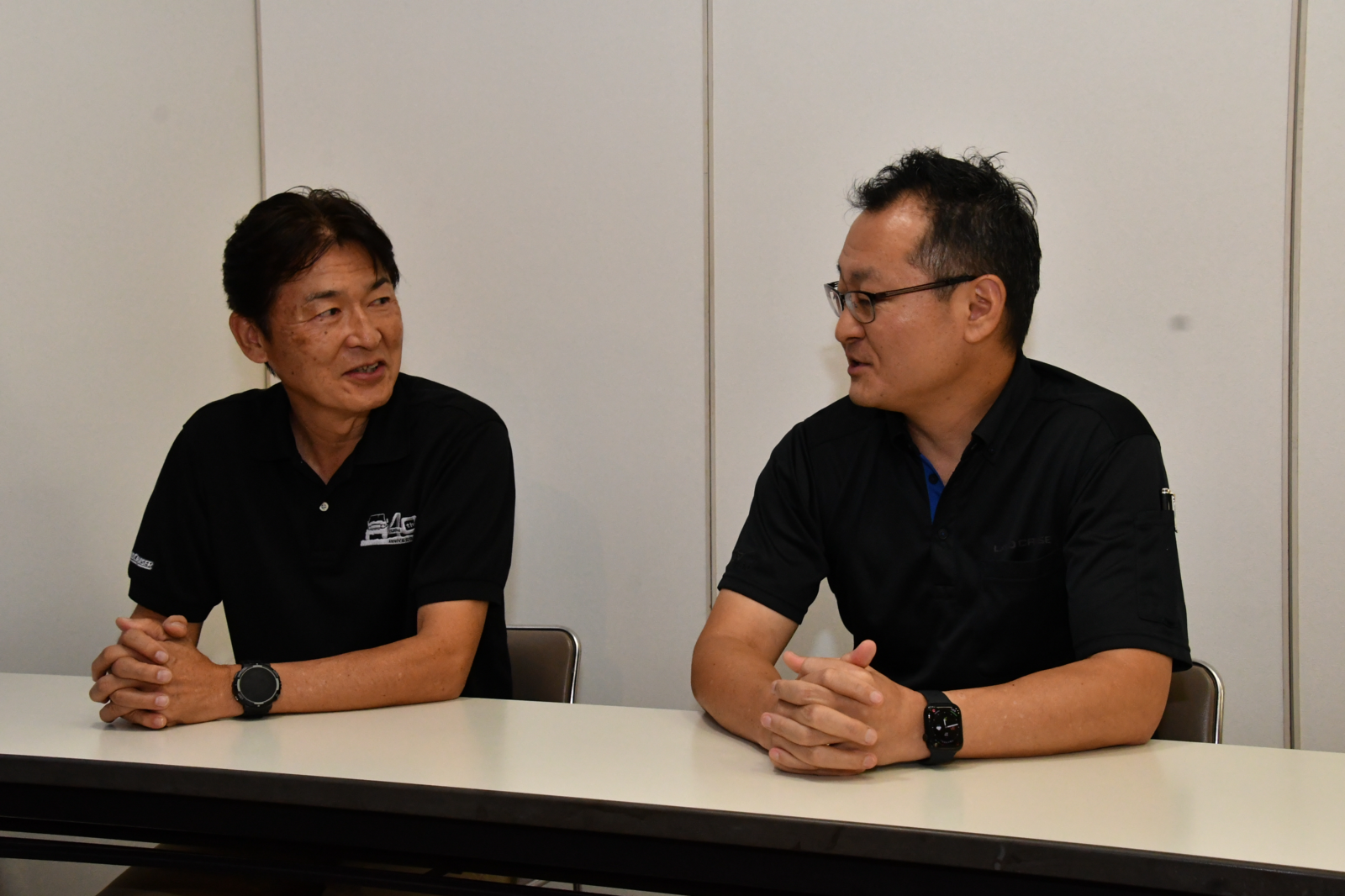
Bringing in new ideas while protecting the essence may appear contradictory. Achieving both is precisely the mission entrusted to Land Cruiser development.
Yamada, who breaks and toughens vehicles in real-world evaluation, emphasizes the importance of thinking when passing this philosophy to the next generation.
Taro Yamada
I want people to keep asking themselves, “Could this be made better?” and, “Would this make it a better vehicle for customers?”
There are many capabilities we cannot fully verify on test courses in Japan, and we cannot travel overseas for every evaluation. Rather than saying we cannot build something because we cannot verify it, I want engineers to use their imagination: “How would it behave on that road we drove in that country?” or, “How would it feel when used the way that customer uses it?” I want them to keep toughening the Land Cruiser through the tool of off-road driving.
Naoki Harada
Yamada taught me an extraordinary amount. He took me along on overseas evaluations and offered extensive advice in every aspect of vehicle assessment. I believe the way to repay what I have learned is to preserve the performance built by generations of predecessors and improve it even further.
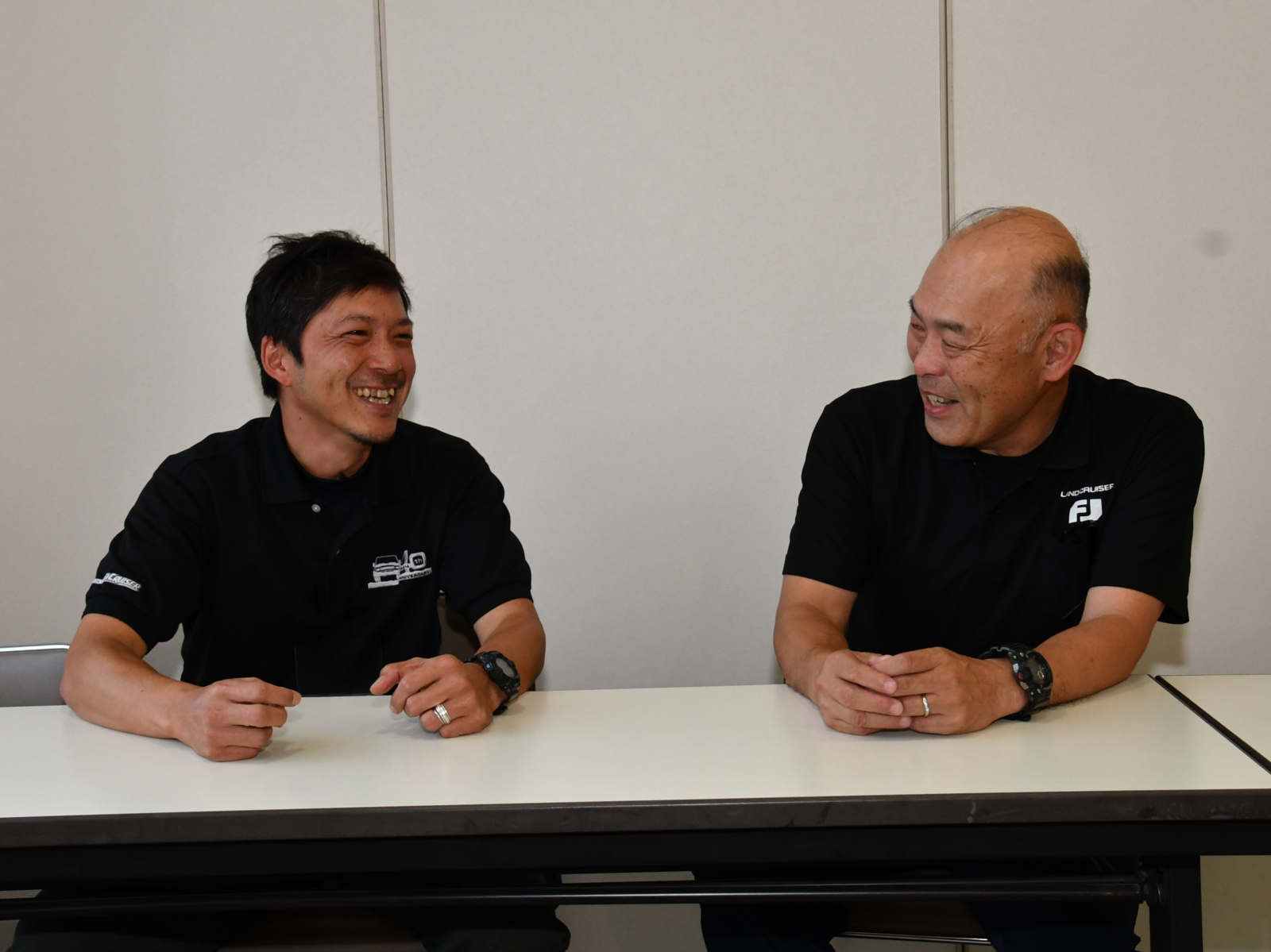
Reliability, durability, and off-road capability are not the only things the Land Cruiser has inherited. Underlying them is a determination to keep supporting customers’ lives. Learning from predecessors, being toughened by customers, and entrusting that knowledge to the next generation: the accumulation of those efforts has created 75 years of history.
For the Land Cruiser, inheritance does not mean preserving the past. It means continuing to face an unchanging mission. That challenge will continue for as long as people need to go places.