


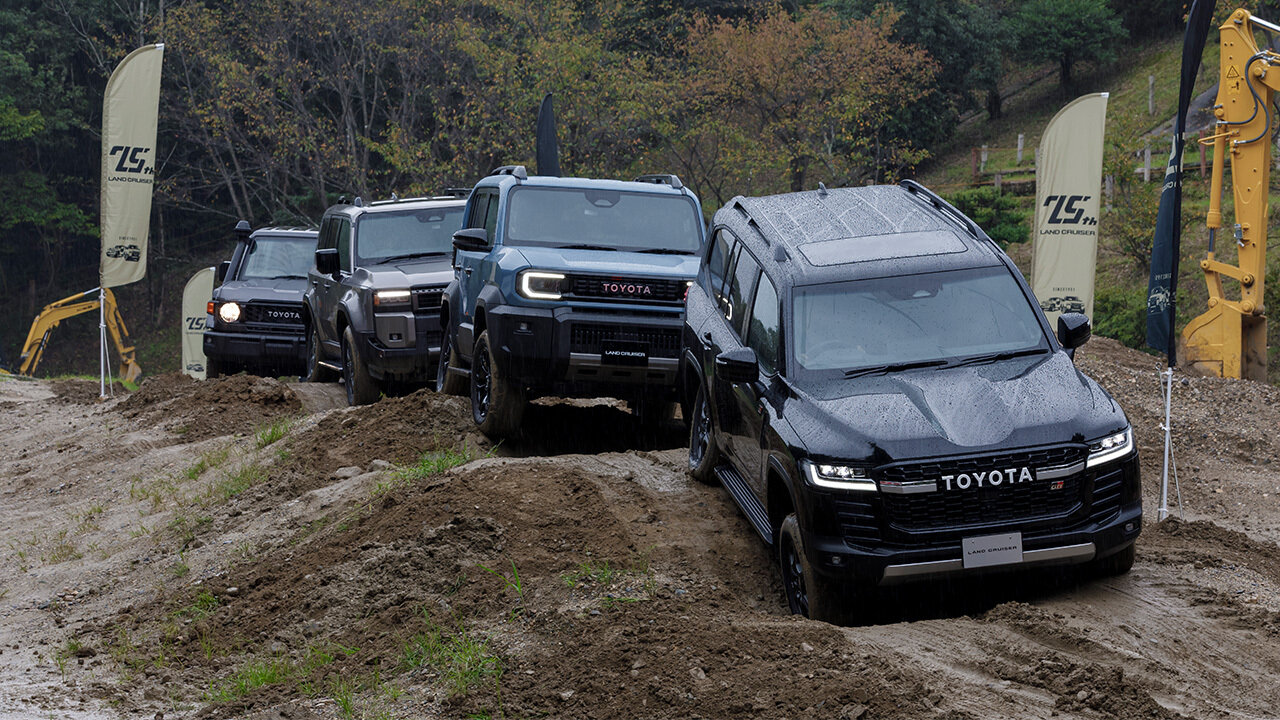
To respond to Chairman Akio Toyoda's call to go back to the Land Cruiser's roots, engineers and designers delivered not one but four vehicles, each more "Land Cruiser" than the next, in its own way.
The Land Cruiser 250 made its world premiere in 2023. Two years earlier, the development team had received a mission from Chairman Akio Toyoda:
“Back to the Origin”
That mission ultimately prompted Toyota to reconsider the Land Cruiser as a complete series, marking a turning point for the nameplate. To learn more about the role of each model in the series, please see Part 1 of this story.
In Part 2, we hear from the development team. How did they respond to Chairman Toyoda's mission, and how are they working to carry the Land Cruiser spirit forward for generations to come?
Back to the Origin: What Toyota Car making Is All About
Chief Branding Officer Simon Humphries described the “return to our roots” brief as giving the development team "an opportunity to hit the reset button." Why was a reset needed? In 2021, when development of the 250 began, then-President Akio Toyoda spoke about the Land Cruiser:
Akio Toyoda, then President
There is an order of priority to what Toyota must value. That is, we must prioritize safety, quality, quantity and profits in that order, as we promised during our public hearing (at the time of the 2010 recalls).
But I think it was the other way around before the public hearing period.
We used to prioritize profits above all else, followed by quantity. Boosting quantity would also boost profits. I think Toyota used to prioritize making cars that would sell well, leading to greater profits.
Meanwhile, cars that didn’t sell well and were not very profitable, but were sought after by the market, such as the Coaster commercial vehicle , or the Land Cruiser, which is a strong part of people’s daily lives, became subject to longer model change cycles.
Only cars that sell well underwent model changes every four years. I think everyone used to take this for granted and no one ever questioned it.
…
in 2016, Toyota adopted an in-house company system centered on products. We did this because we wanted to establish a system that would allow Toyota and its affiliated companies to focus with passion on their own models, instead of prioritizing models based on how well they sold or how profitable they were.
This resulted in Century, Coaster and Land Cruiser undergoing model changes.
(From the December 23, 2021 Toyota Times article, Akio Toyoda on Quality: Communication and Priorities Are Key (Part 2))
The reset was about restoring the priority of making vehicles that are needed, rather than merely vehicles that generate large profits. Yet determining why a particular vehicle is needed is not as simple as it sounds. That is especially true for a vehicle like the Land Cruiser, whose history has unfolded alongside Toyota’s own.Land Cruiser Chief Engineer Masaya Uchiyama, who oversees the development of the entire series, recalls the challenge.
Masaya Uchiyama
We struggled with the assignment Chairman Toyoda gave us to “return to our roots.” We knew it could not simply mean going retro or indulging in nostalgia, so we first had to wrestle with the question of what those roots actually were.As we considered the role of each model in the Land Cruiser series, and the particular role the 250 should play, we reflected and came to recognize that as the 40 Series spread around the world, it grew beyond its workhorse role to become part of people’s daily lives. We realized that this was where the 250’s roots lay.
The time the entire team spent grappling with what “returning to the roots” meant for the 250 was invaluable. It allowed us to trace the history of the Land Cruiser series, understand the positioning of each model, and consider what the series should become in the future.
Not Only Inheriting from Predecessors: A Vehicle Shaped and Toughened by Customers
Uchiyama sums up the Land Cruiser in two words: trusted partner. To earn that place, the vehicle inherited as much from customers around the world as it did from its predecessors.
Masaya Uchiyama
Of course, there are things we inherit from our predecessors. But we also inherit from the image customers hold of what a Land Cruiser should be. I believe there are two sides to inheritance: what is passed down within the company and what is passed on to us by customers.
Developers travel to markets around the world to see how Land Cruisers are used and hear directly from customers. What they hear is not all praise. Customers also offer frank feedback about failures and areas needing improvement.
Kazuyuki Ueno, Grand Expert, has worked on Land Cruiser development for around 30 years and has owned 40, 70, and 80 Series models himself. For Ueno, inheritance means more than carrying forward past designs and structures.
Kazuyuki Ueno
When traveling overseas, we often visit dealers and hear comments such as, “It is a good vehicle, but we want this fixed,” or, “Couldn’t this be improved further?” We bring that feedback home and reflect it in evaluation and development. Repeating that process has shaped the Land Cruiser.
Customers sometimes use their vehicles in ways that exceed the developers’ assumptions, and those experiences become the starting point for the next development program.
Taro Yamada, Chief Expert responsible for off-road vehicle performance evaluation, was struck by just how high customer expectations could be.
Taro Yamada
There was once a customer in the Middle East who was following a falcon overhead in a Land Cruiser while falcon hunting. The vehicle became airborne, and the front end was damaged. When the customer complained, “How could a Land Cruiser break?” I realized just how high expectations for the vehicle were. It may sound unbelievable, but that incident led us to establish a new test method: the jump test.
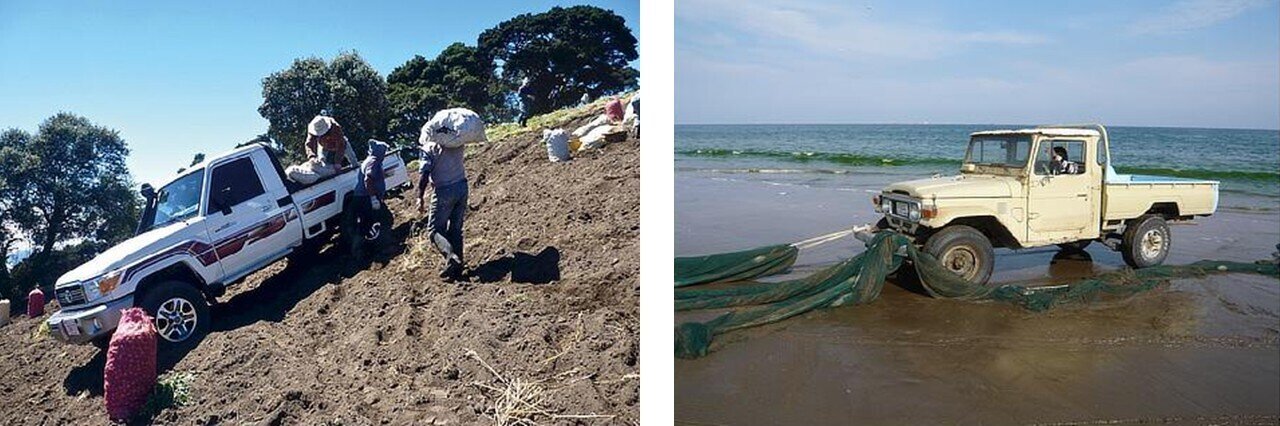
In Oman, the 70 carried ice, fish, and salt in its cargo bed from fishing villages to towns. By confronting the issues that emerged through continued driving on unpaved roads, Toyota improved the strength of the frame and axles, as well as welding methods.
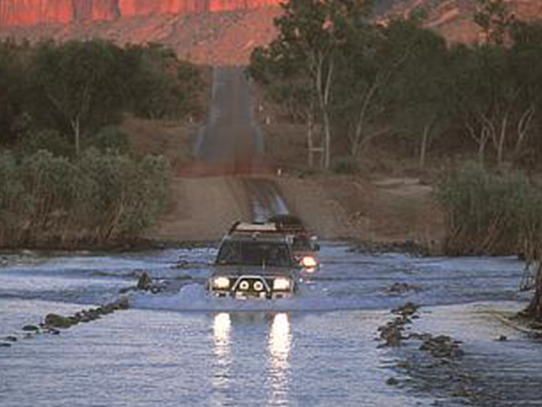
In the middle of a desert or Australia’s remote outback, a stopped vehicle can directly endanger people’s lives and livelihoods. In Japan, “go anywhere and come back alive” may sound like a powerful slogan. On the ground in such places, however, those words carry an entirely different weight.
Kazuyuki Ueno
Particularly in places regarded as remote, the Land Cruiser is indispensable to people’s lives. That is why we think not only about making it resistant to failure, but also about how it should fail and how it can be repaired so that it can keep moving. Continuing to build vehicles while passing on that way of thinking is, I believe, the Land Cruiser tradition.
Masaya Uchiyama
When you hear the phrase “always come back alive” in an overseas setting, it sounds extremely serious. In those places, reaching your destination or coming back from it is something you can’t take for granted. Colleagues who are more experienced than me often ask, “How are you going to break it?” The Land Cruiser is a vehicle whose development considers what to do even after something breaks.
That’s why Toyota conducts a wide range of tests intended to push the Land Cruiser to failure.
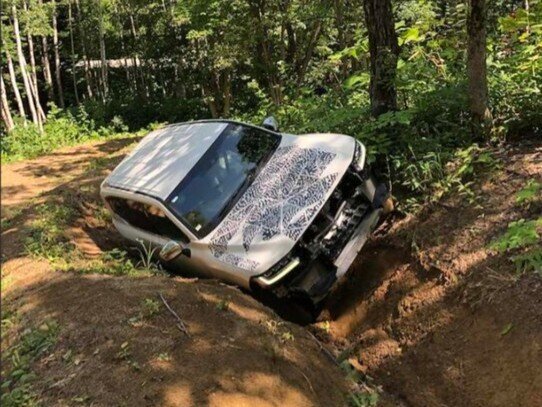
With each model change, customer expectations for rough-road durability rise, and development targets rise with them. Yet, just meeting those expectations is not enough. Test vehicles are driven to twice the target distance so that engineers can identify the point at which they fail. Only after confirming the vehicle’s limits is it ready to be released. This philosophy has been passed down through generations of Land Cruiser development.
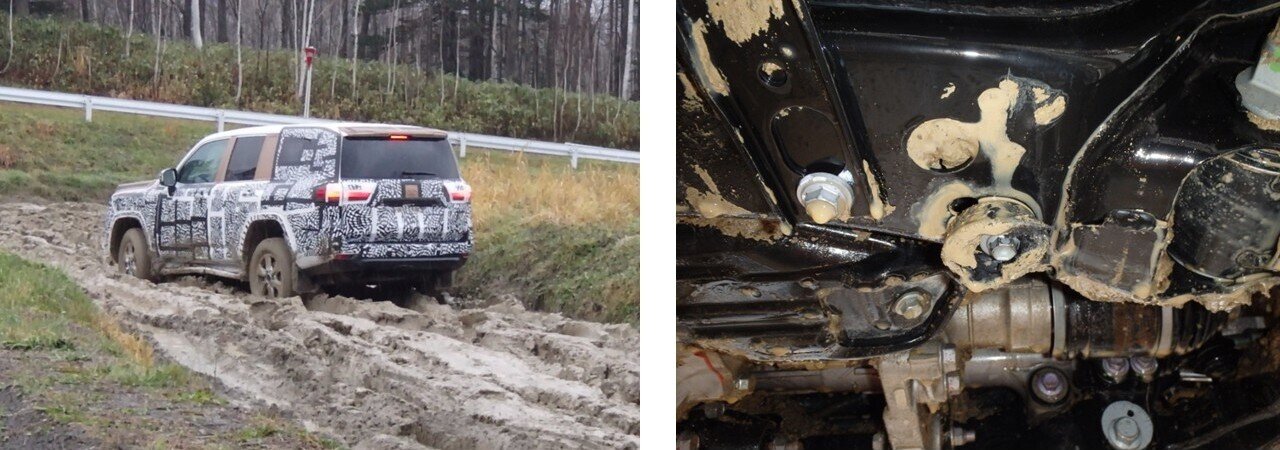
It's not simply a matter of passing a test and meeting a certain standard. The development philosophy is that a vehicle is ready to be released only after pushing it to its limits and finding out what it takes to break it.
Naoki Harada, Team Leader responsible for performance evaluation of the 300, explains.
Naoki Harada
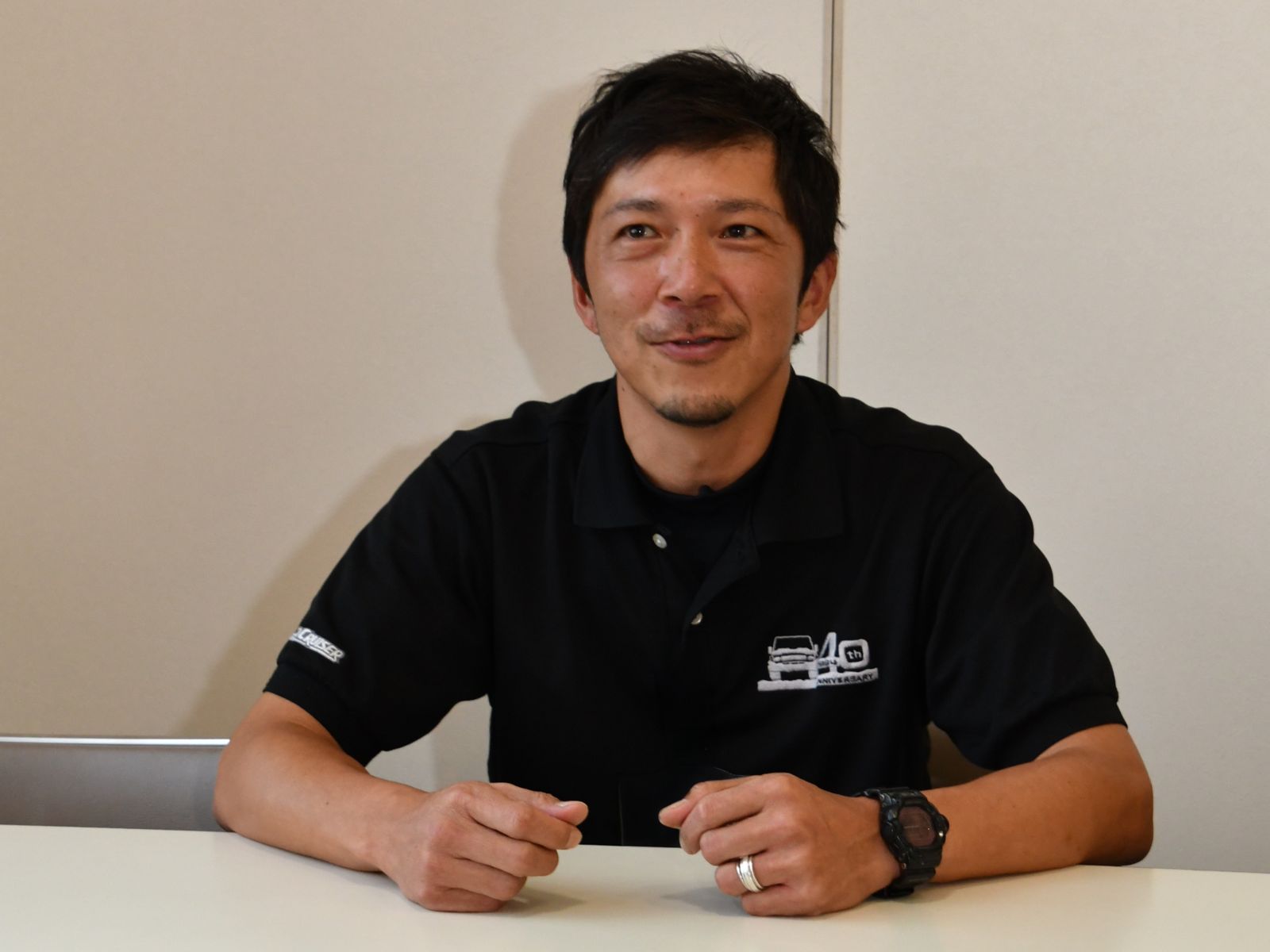
There was a time when I wondered whether that level of performance was really necessary. But as I learned how Land Cruisers are used around the world and listened to customers, I came to understand that people genuinely need it. For customers in Japan too, I believe the Land Cruiser’s value lies in the peace of mind that it can take them anywhere.