


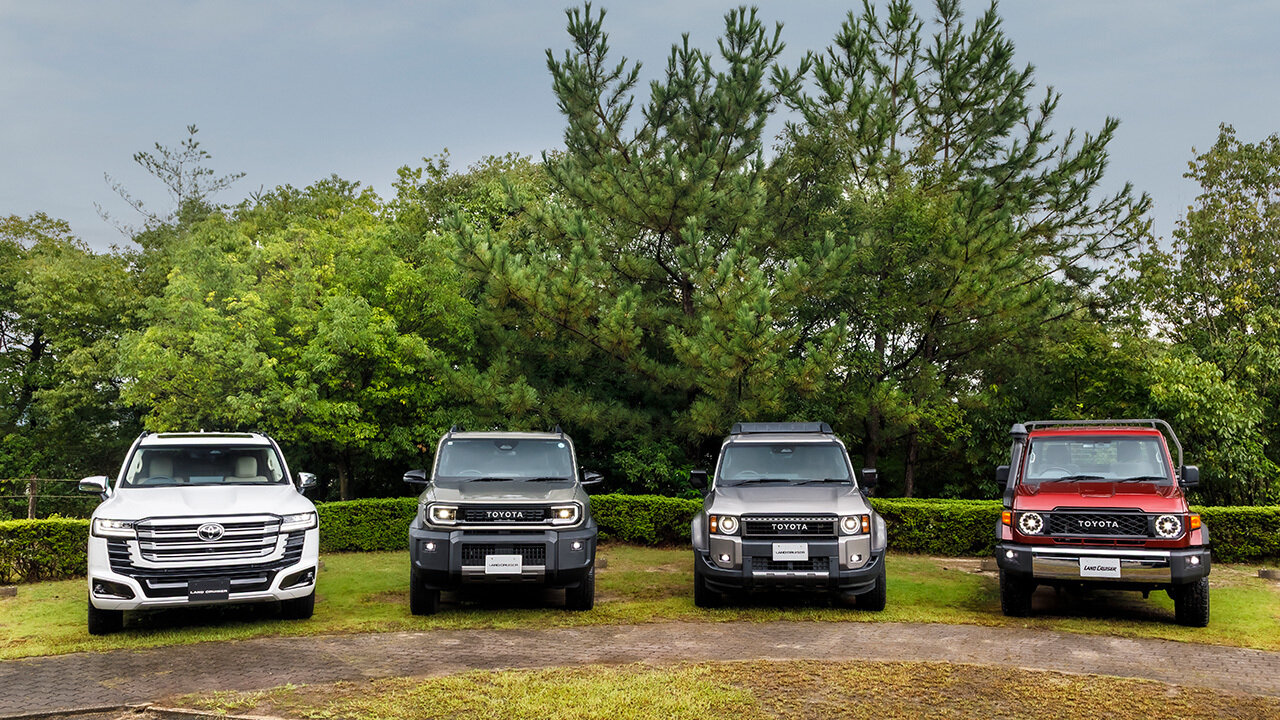
An icon. A legend. It will never let you down. The Land Cruiser turns 75 this year, and with the addition of the Land Cruiser FJ and a hybrid powertrain, its journey is far from over.
What Emerged from Reexamining the Essence of the Land Cruiser
The Land Cruiser Returns to Its Roots: The 250 as the Core Model
In response to Chairman Toyoda’s call to return to the Land Cruiser’s roots, the development team asked: Who is the Land Cruiser for, and what is it meant to protect – clarifying in the process the place of each model in the lineup, including the 300 as the flagship and the 70 as the workhorse.
As for the Land Cruiser 250, its role was to be the core model of the range, and be the Land Cruiser, a trusted vehicle that pursues functional simplicity and ruggedness while supporting customers in both life and utility.
While retaining the strength to traverse rough terrain, the 250 set out to become a Land Cruiser that stays close to people. It adopted the same robust GA-F platform as the 300 Series, dramatically improving the fundamental off-road performance expected of a true off-roader. Its functional packaging and interior and exterior designs blended tradition with modernity, expressing the character of the Land Cruiser. At the same time, ease of use evolved through clear outward visibility and the Land Cruiser’s first adoption of electric power steering (EPS) and Stabilizer with Disconnection Mechanism (SDM)*
*a feature that allows the wheels to follow the terrain more effectively off road, and on paved roads, suppresses body roll.
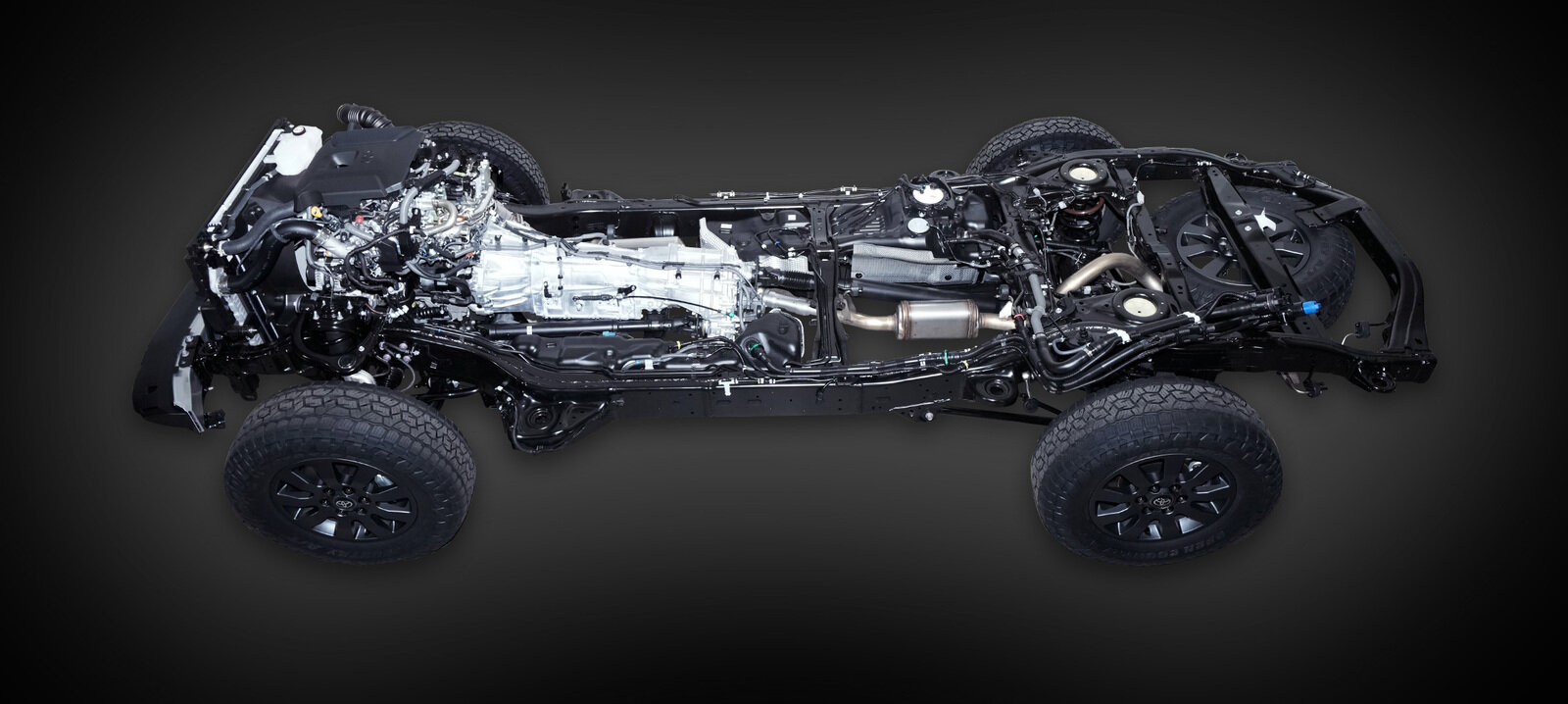
In short, the 250 evolved into a practical partner for both the road to work and everyday life.
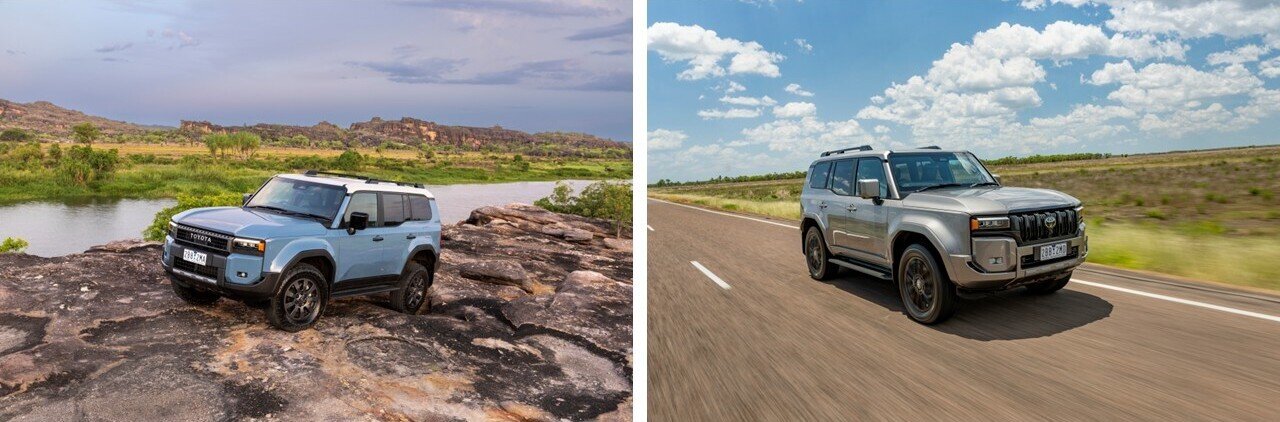
Evolving with the Times While Carrying on Tradition: The 70 Inherits the Role of Workhorse
Born in 1984 to inherit the BJ’s role as a working vehicle, the 70 is the original Land Cruiser’s direct descendant. For roughly 40 years, it has continuously pursued the vehicle’s timeless values of reliability, durability, and off-road performance without compromise. As a workhorse supporting customers’ lives across the globe, it is active mainly on severe terrain, including Middle Eastern deserts and African savannas. Agriculture, mining, relief operations, and community healthcare all rely on it to carry people and supplies. In some regions, it is described not merely as a vehicle, but as infrastructure.

In its birthplace of Japan, the 70 enjoyed particularly strong popularity among cross-country driving enthusiasts. In the 2000s, however, that market contracted and stricter emissions regulations created additional challenges, leading to the suspension of sales in 2004. It returned in 2014, but only for a limited period. Even then, demand from fans remained strong. In 2023, the 70 finally returned in full compliance with current regulations, attracting considerable attention alongside the 250.
At the world premiere, Humphries described the value of the Land Cruiser as follows.
Simon Humphries, CBO
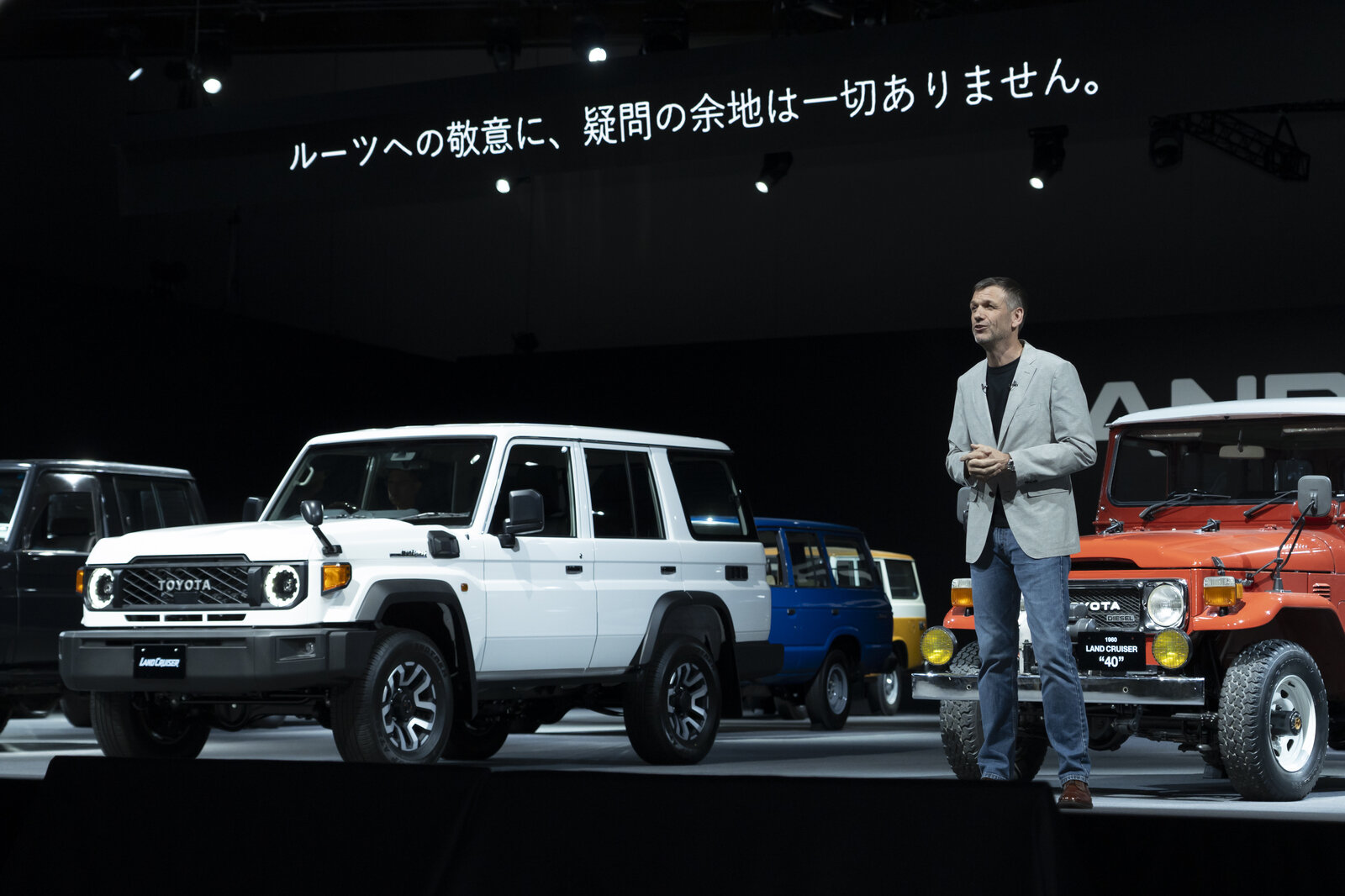
If a Land Cruiser breaks down, the consequences go far beyond inconvenience. Irreplaceable human lives may be placed at risk. If the Land Cruiser’s value could be expressed in a single word, it would be trust: the trust that people can place their lives in it. The Toyota BJ, which laid the foundation for that trust, has a direct descendant linked by blood: the 70 Series.
Compared with its 2014 predecessor, the latest 70 delivers a 40 percent increase in maximum torque, improving towing capability. In addition to the ease of operation provided by a six-speed automatic transmission, it adopts advanced safety features, further strengthening both the toughness and safety required of a vehicle that works in demanding environments.
Tradition is carried forward, while the vehicle continues to evolve.
If the 250 is a vehicle that stays close to people’s lives, the 70 is one that continues to support work and the places where it happens.
Making Ever Better Cars
The Flagship Opens the Way to the Future: The 300 Expands Possibilities
What, then, is the role of the 300? While the 70 has evolved as a direct descendant of the original, the 300 is tasked with expanding the possibilities of the Land Cruiser.Its purpose is not simply to respond to needs. It is to provide new value while preserving the reliability, durability, and off-road performance cultivated over 75 years, thereby advancing the entire Land Cruiser family.
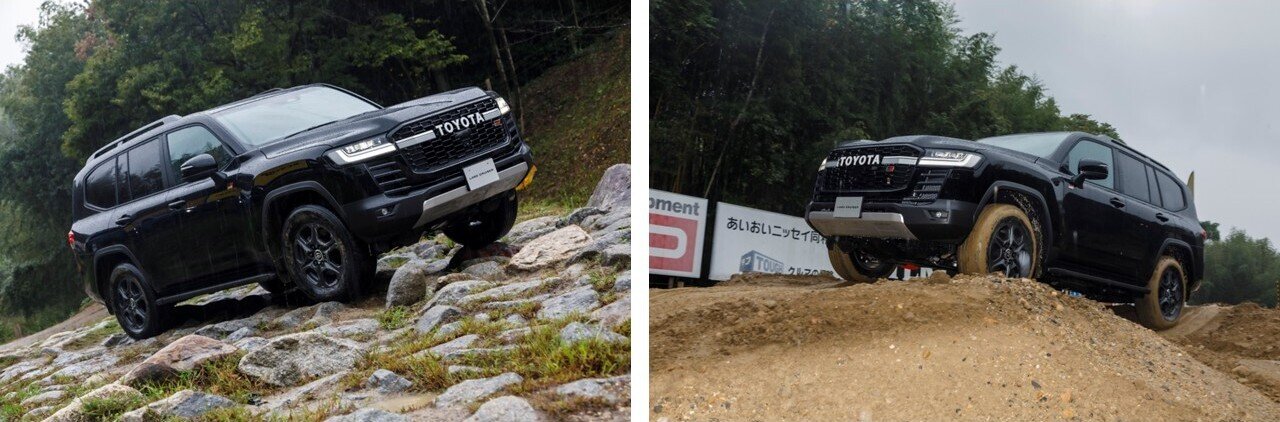
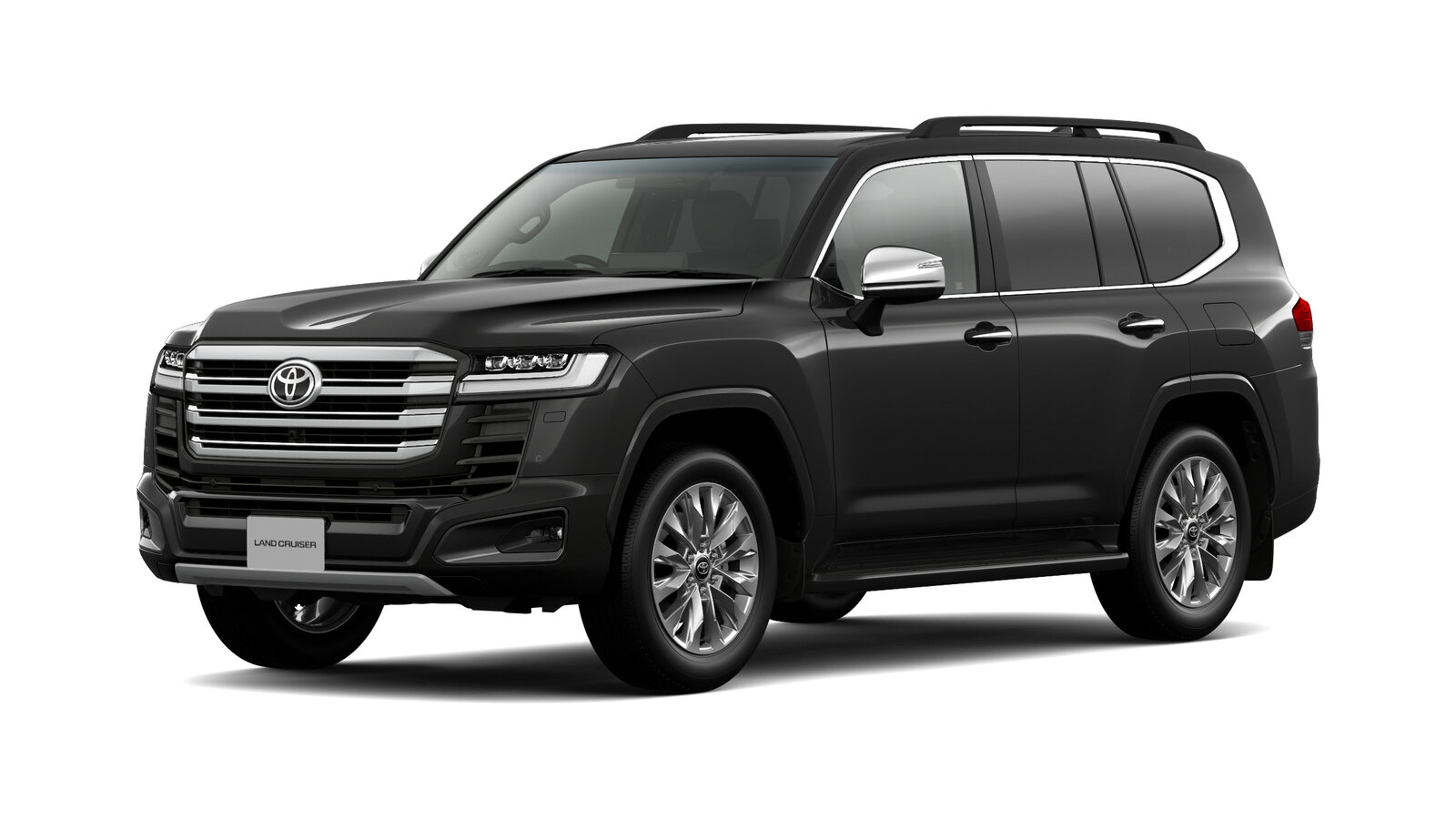
Following the Station Wagon lineage, the 300, introduced in 2021, has evolved to provide customers with more comfortable mobility. Before it, the Land Cruiser 100 combined a V8 engine and independent front suspension to deliver both greater power and a more refined ride. Its successor, the 200, adopted advanced off-road control technologies to further enhance safety and peace of mind. In 2026, the 300, became the first Land Cruiser in Japan to offer a model equipped with a hybrid system worthy of a true off roader.
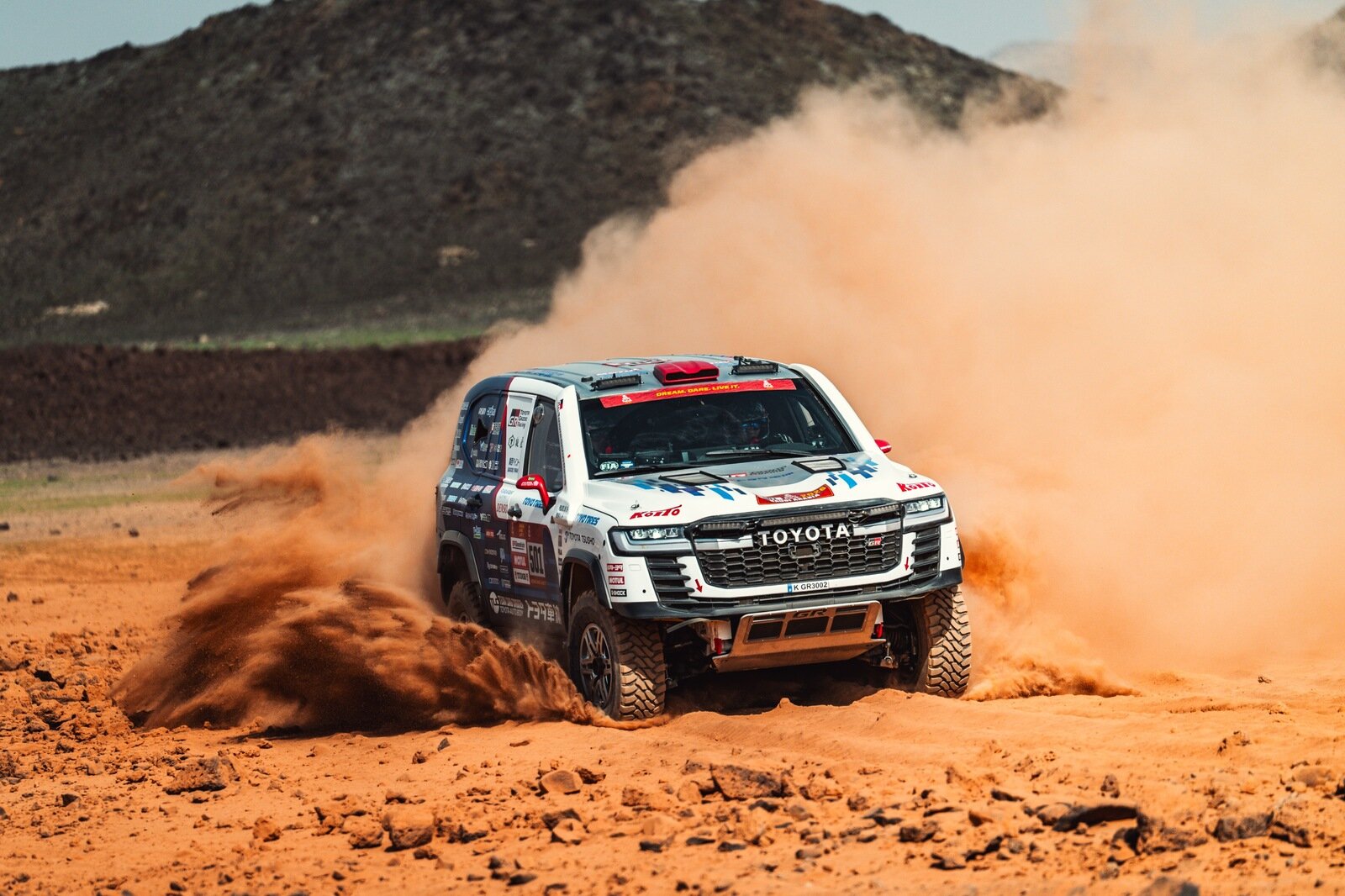
Because it is a Land Cruiser, the 300 has strengths not found in other hybrids, and remains capable of “going anywhere and coming back alive,” even if the route leads beyond the road. For example, even in the unlikely event of a hybrid-system malfunction, the vehicle can continue driving using the engine alone. And despite being an HEV, it can also pass through water up to 700 mm deep. Such advances are built by continuously testing and strengthening vehicles in severe environments around the world, such as through its participation in the Dakar Rally, the world’s toughest rally. The Land Cruiser is no exception to Toyota’s commitment to making ever-better cars through motorsports. As the flagship, the 300 stands at the forefront of the Land Cruiser family’s evolution. The knowledge gained through the 300 will then be applied across the wider Land Cruiser family.
Reaching More Customers: The FJ Brings Freedom and Joy to Mobility
As Land Cruiser developers re-clarified the role of each model line, they just felt they needed to bring the appeal of the Land Cruiser to even more people.
Their answer took shape as the Land Cruiser FJ: Freedom & Joy.
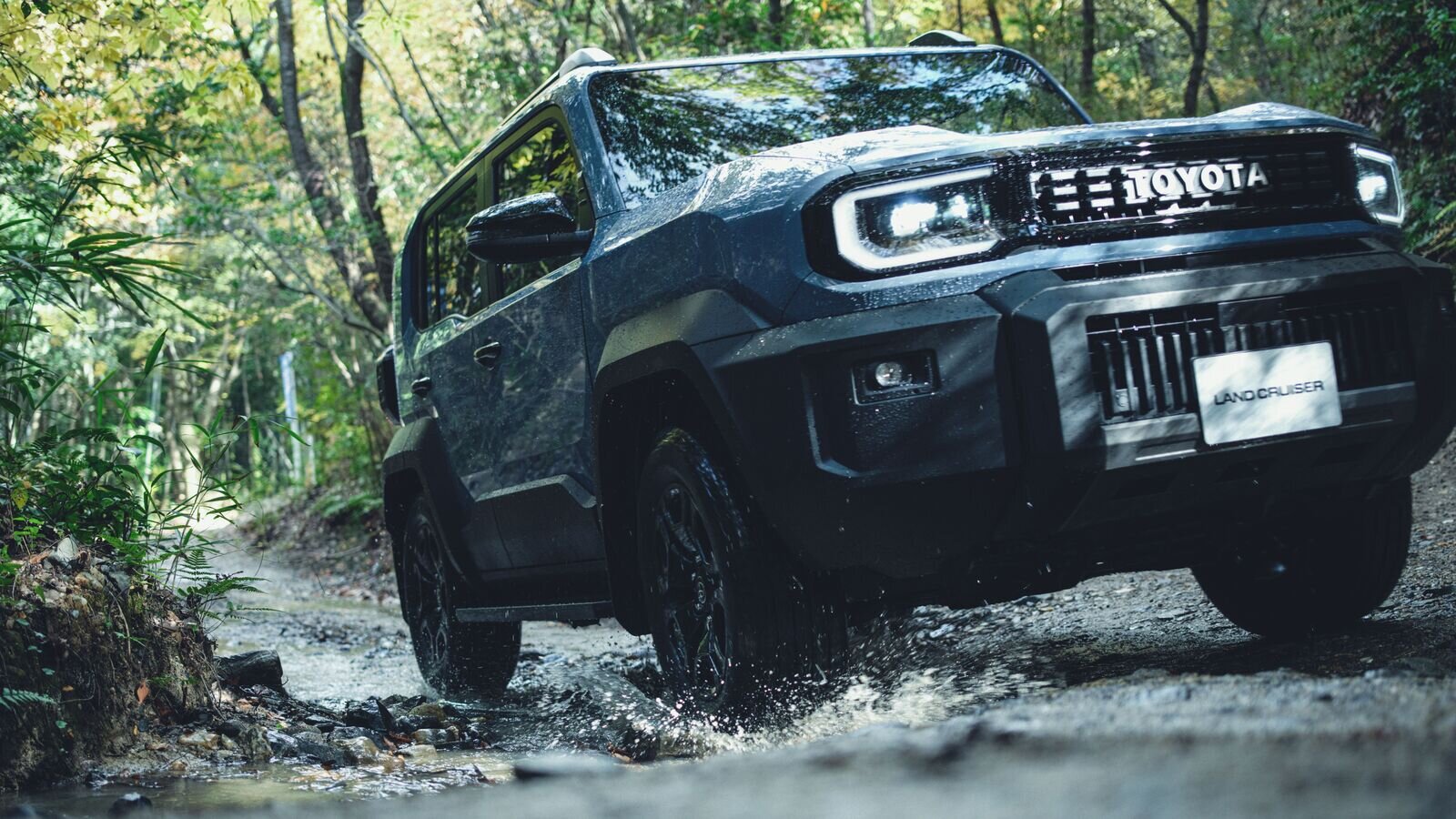
4,575 mm long, 350 mm shorter than the 250 Series, and 1,855 mm wide, 125 mm narrower, the FJ has a more compact body than the other three model lines. Its 2,580 mm wheelbase is also 270 mm shorter than the 250’s, making it easier to maneuver.
Yet even in a more compact form, it remains unmistakably a Land Cruiser. It adopts the traditional ladder frame, renowned for durability and reliability. A dependable 2.7-liter gasoline engine delivering smooth performance is paired with a six-speed automatic transmission. Ease of use has been pursued not only off-road, but also in everyday driving on paved roads.
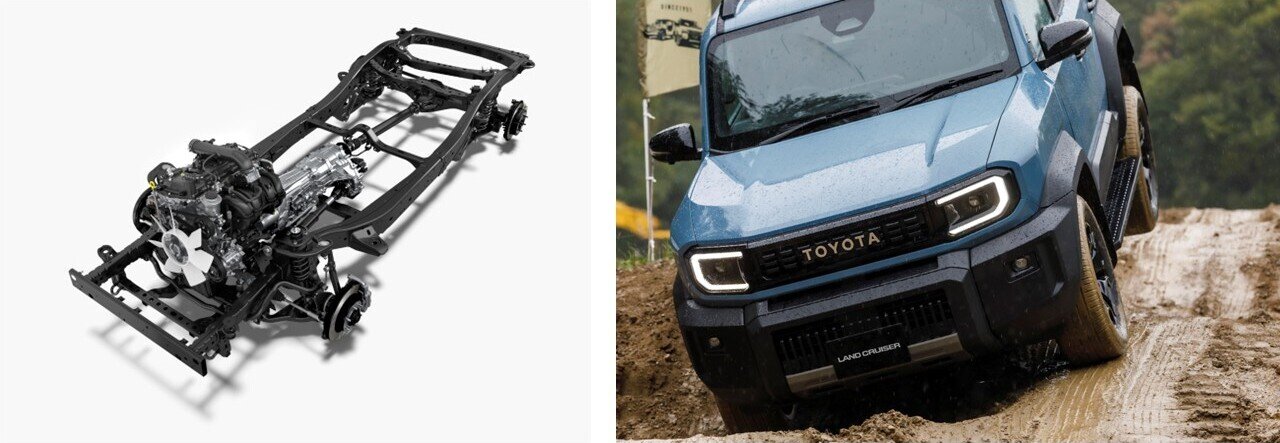
Another defining feature is its scope for customization, building on the repairability demanded of a Land Cruiser that travels in demanding environments. Customers can tailor the vehicle more freely and enjoyably to suit their preferences. In this way, the FJ inherits the Land Cruiser DNA in a character all its own.
Continuing to Change for an Unchanging Mission
To remain a vehicle that can “go anywhere and come back alive” while carrying that mission forward, the Land Cruiser will continue to evolve, embodying Toyota’s new brand commitment, “TO YOU.”
Who are the people who create the Land Cruiser? What aspirations guide them, and what kind of future do they envision? Stay tuned for the second part of this article, coming soon.