



In this guest article, automotive analyst Shinya Yamamoto explains why the recent NASCAR demo run at Fuji Speedway felt almost fated.
On November 16 at Fuji Speedway, the season’s final Super Taikyu race day featured a NASCAR demo run.
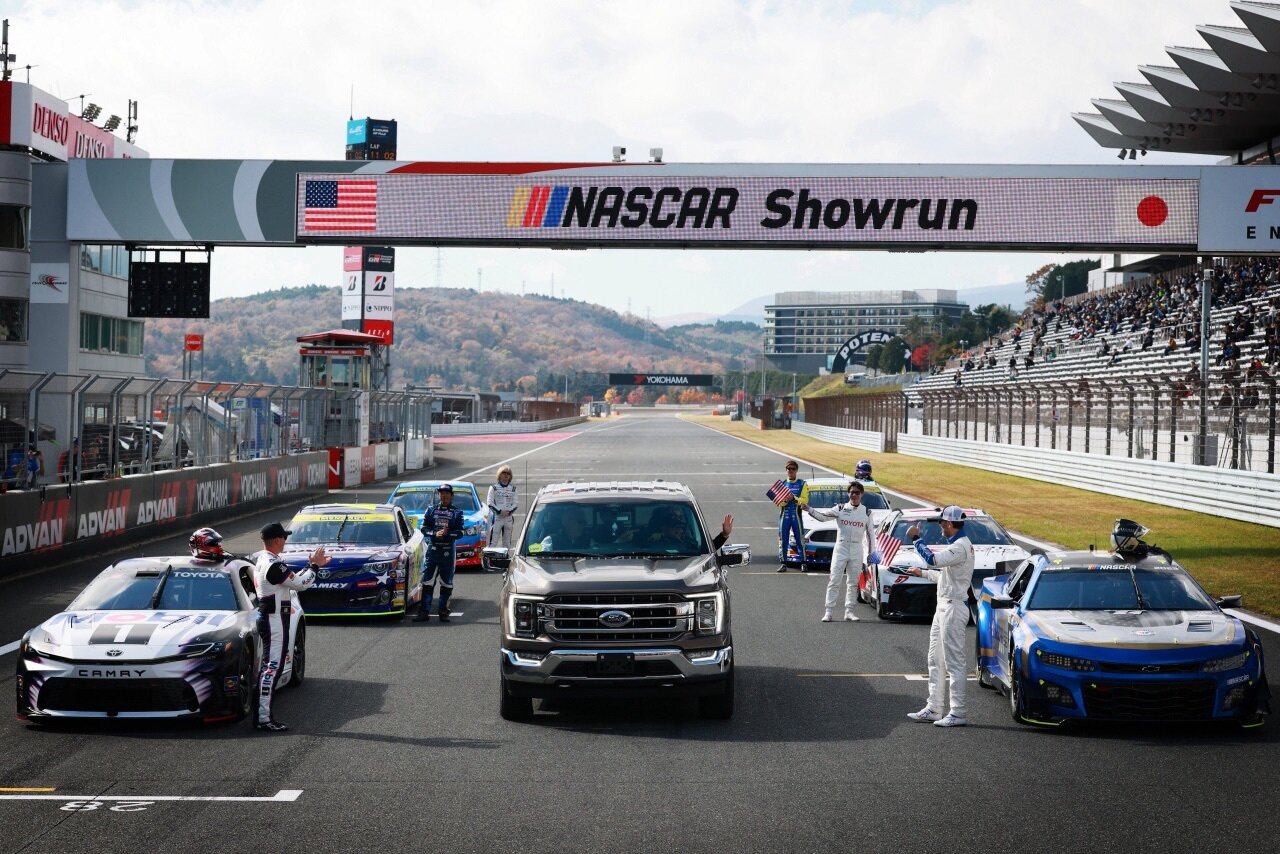
Although Toyota Times has already reported on the event, I (Shinya Yamamoto) wanted to retrace the story that was created in the process, spanning across 60 years.
Toyota began competing in motorsports in 1957, when it entered a Toyopet Crown Deluxe in the 10,000-mile Mobilgas Round Australia Rally—the world’s longest motoring race, and at the time regarded as the toughest.
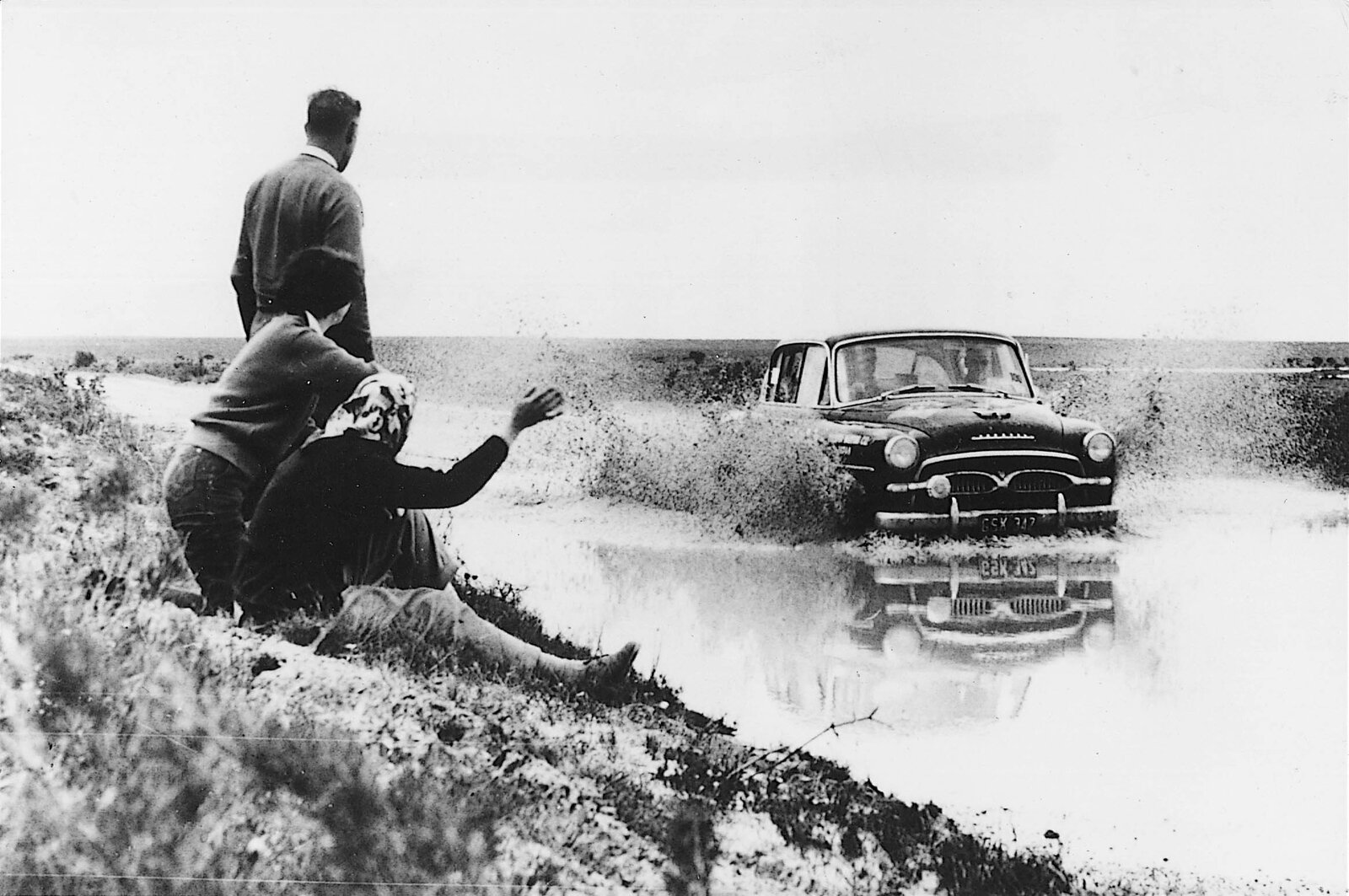
Even though 50 of the 102 starters retired or were disqualified, the Crown completed this grueling race, demonstrating Toyota’s technical prowess to the world. Yet that was not the only objective.
Diplomatic relations between Japan and Australia had just been restored, and the rally formed part of non-government efforts to strengthen the friendship.
In many ways, the same can be said of the recent NASCAR demo run. The man who made it happen, Akio Toyoda, provided the following context while speaking to the media.

“Next year, the United States will celebrate the 250th anniversary of its founding. During a recent visit to the U.S. Embassy, discussions extended beyond industrial ties to include cultural and sporting exchanges between Japan and the U.S. I suggested motorsports as another avenue. Ambassador George Glass was delighted, saying, ‘That’s an excellent idea.’ Given that NASCAR is America’s most iconic motorsport, we got excited about the prospect of racing NASCAR cars at next year’s Fuji 24 Hours. But rather than jumping straight in the deep end, we decided to start with a trial, which became this demo run.”
As it happens, that conversation took place in September, and the fact that everything came together within just two months is nothing short of astonishing. During that preparation period, Chairman Toyoda thoroughly researched NASCAR, leading to a startling discovery: the Fuji Speedway was originally built to host NASCAR races.
Fuji Speedway’s forerunner, established in 1963, was the Japan NASCAR Corporation. Through technical partnerships with NASCAR, the firm secured exclusive rights to stage NASCAR-style races throughout the Far East, including Japan. Plans were announced to build an oval track at the foot of Mount Fuji.
Just as this grand plan began to get rolling, funding issues, coupled with a shift in direction following leadership changes, led to the contract being scrapped after only two years. Then in 1965, Japan NASCAR Corporation began operating under a new name: Fuji International Speedway Co., Ltd.
Converted to a road course, the circuit was completed in December 1965 and opened the following month.
The 6-kilometer course had a simple layout, with a 1.6-kilometer straight leading into the 30-degree bank of the first turn, followed by an S-bend, a 100R, a hairpin, and the final corner.
With its 30-degree bank, the speedway was a road course unlike any other and gave rise to many great contests. However, a fatal accident on June 2, 1974, during the Fuji Grand 300km, the second round of the Fuji Grand Champion series, led to the track’s closure. The banked section was abandoned and fell into disrepair until a 2005 refurbishment turned part of the road surface into the memorial park it is today.
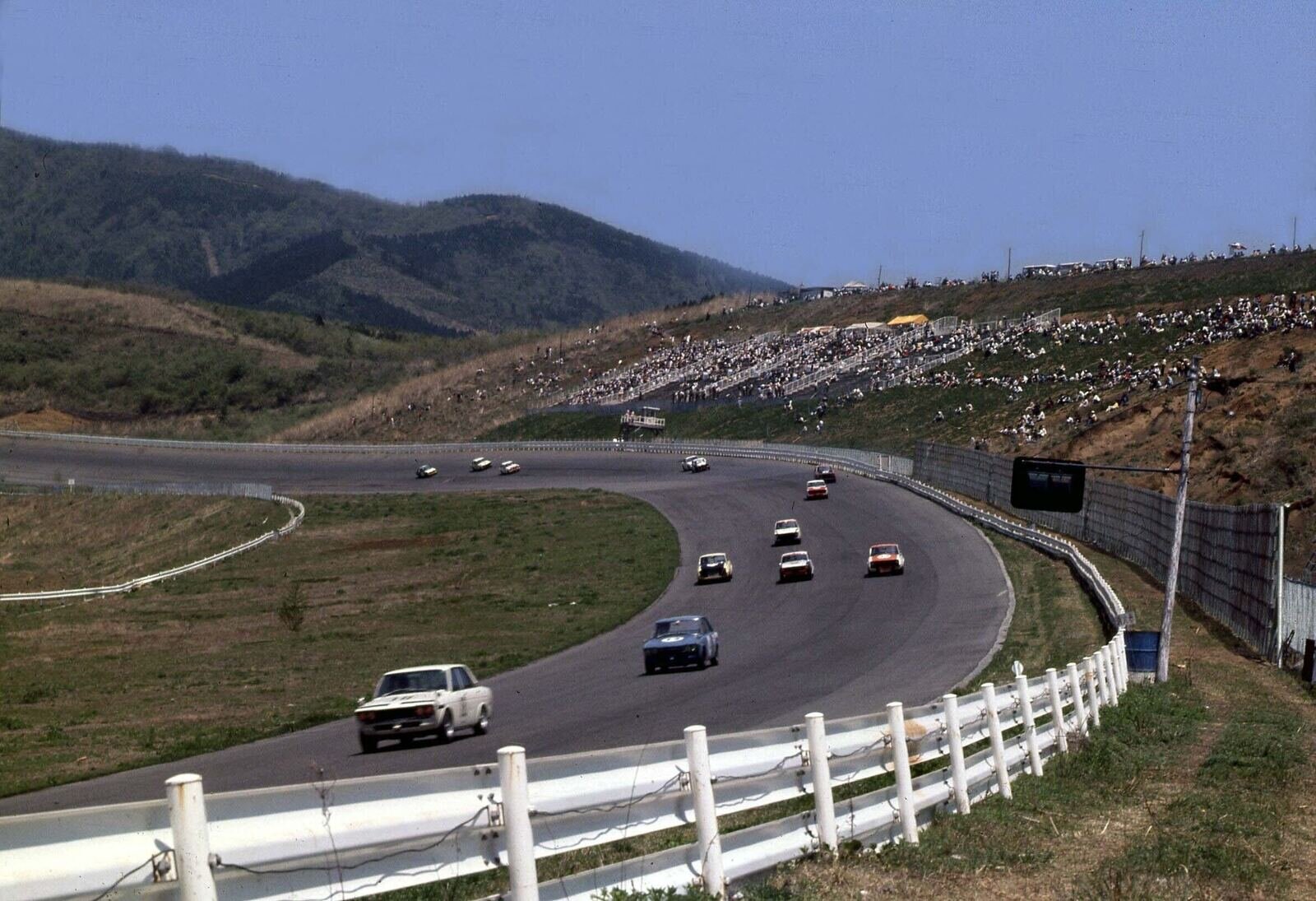
What was a 30-degree bank doing as part of a road course in the first place? This corner was a holdover from the original plan to create an oval circuit.
Experts at the time are said to have favored a flat corner rather than a bank. In my mind, the fact that those early developers pushed ahead with a 30-degree bank suggests one thing: they were determined to one day bring NASCAR to Fuji!
(Incidentally, initial renderings of the completed Fuji Speedway depicted a layout that could be used as both a road course and an oval track, with a back straight connecting the 30-degree banked turn to the final corner.)
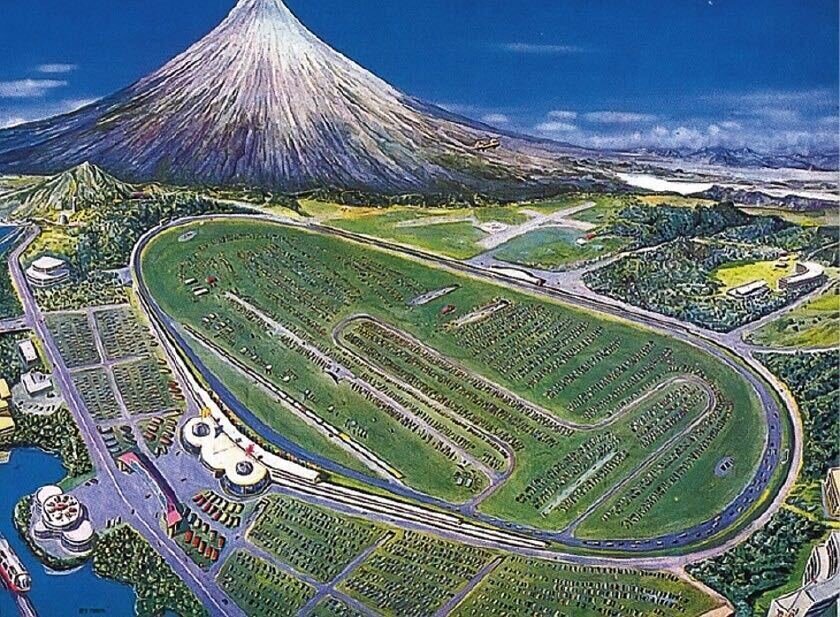
As it happens, NASCAR races have been held at Suzuka Circuit in 1996-97 and Twin Ring Motegi (now Mobility Resort Motegi) in 1998-99, but while Fuji Speedway has previously hosted Japanese versions of other American motorsports such as Indy and Can-Am, for some reason, it has never hosted a NASCAR contest.
Strictly speaking, NASCAR cars may have run at the TOYOTA GAZOO Racing FESTIVAL and other events, but there is no record of them ever hitting the 30-degree banked turn originally built for that purpose.
Upon learning of this history, Akio Toyoda had a flash of inspiration. Sixty years on, he set out to realize the unfulfilled vision of the Japan NASCAR Corporation, set up to bring NASCAR to Japan, as well as the people who went on to build a road course yet retained that 30-degree bank, a reminder of their oval track aspirations…
While racing on that banked turn was no longer possible, Akio Toyoda wanted NASCAR drivers to finally set foot on its surface.
“This is a chance for NASCAR organizers to learn about the fact that this banked corner existed at Fuji Speedway as well as the history of Japan’s efforts to bring NASCAR to our shores, and for the country’s racing fans to discover NASCAR, as Fuji Speedway prepares to celebrate its 60th anniversary next year. It’s one of my ‘car guy’ ideas for strengthening the U.S.-Japan relationship through motorsports.”
This mindset is pure Akio, always looking for the underlying story. The idea came to him on the Friday morning before qualifying, as we were chatting in a tent behind the pits after his practice session.
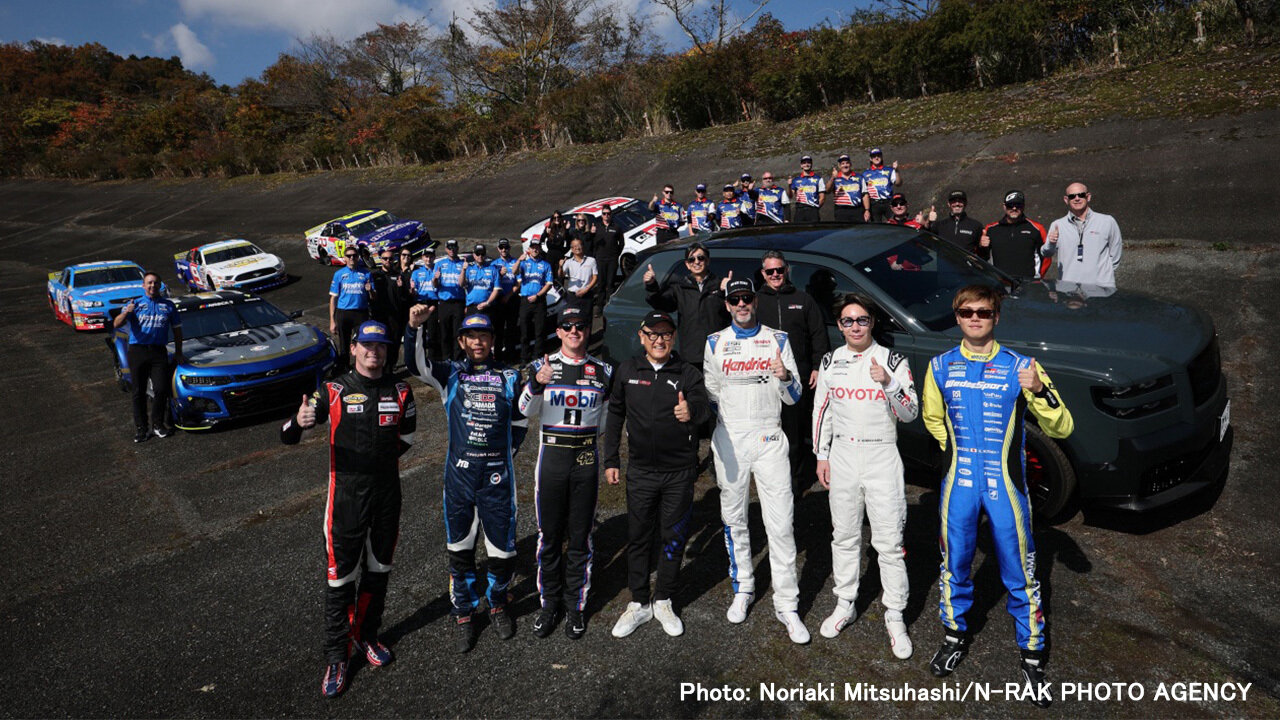
On the spot, Toyoda convened an impromptu meeting with the operational head of the Super Taikyu Mirai Organization (STMO), Toshiyuki Kato (rear left in the photo below); Fuji Speedway President Ryo Sakai (front left); and Toyota Vice President Hiroki Nakajima (far left), who informed us that he had “come to sample the Morizo Curry.”
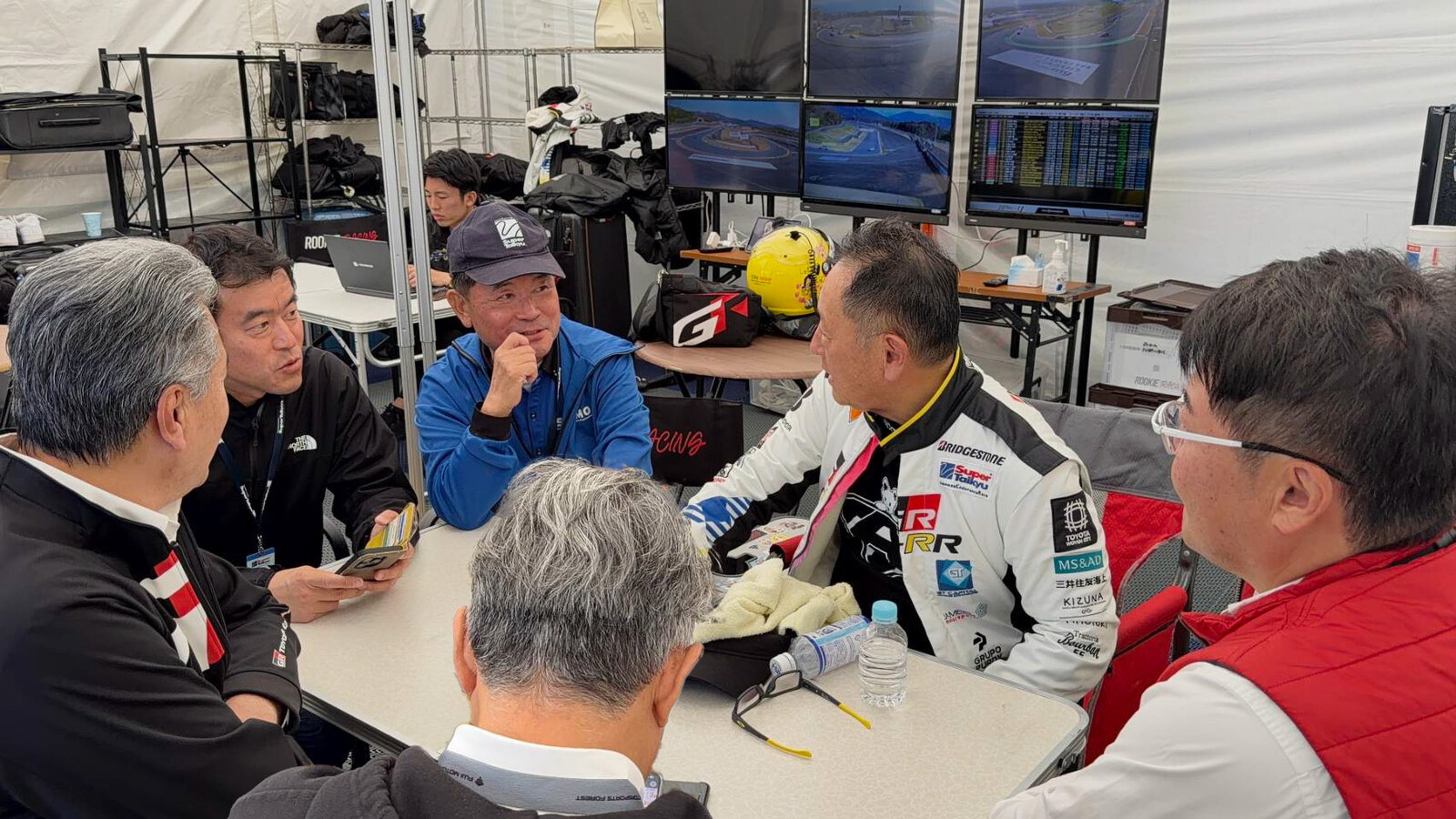
When Akio outlined the concept above, everyone agreed and leaped into action: “Nice idea, let’s do it right away!”
Naturally, there were some concerns: Would NASCAR be on board? How many machines could be moved over? Could NASCAR vehicles be brought onto the 30-degree bank? Would there be enough time for the photo shoot? Thankfully, everything was cleared up in time.
However, since the NASCAR teams were out sightseeing in Tokyo, the shoot was scheduled for Saturday morning, the day of qualifying.
On that day, when we headed to the 30-degree bank, the NASCAR machines were already being positioned for the camera. Six cars were trucked over from the pits and maneuvered into place in a massive effort involving both Japanese and American staff. The layout was fine-tuned under the direction of photographer Noriaki Mitsuhashi.
Moving the machines around on the bank was quite an exhausting exercise, but the NASCAR teams eagerly cooperated with the shoot, accommodating Mitsuhashi's detailed requests without complaint.
Just as we had anticipated, they were fascinated by the 30-degree bank and seemed to have a great time, taking photos and running up to the top of the incline.
With preparations nearly complete, Akio Toyoda made a splendid entrance in a Century SUV GRMN. Here is the photo we captured:
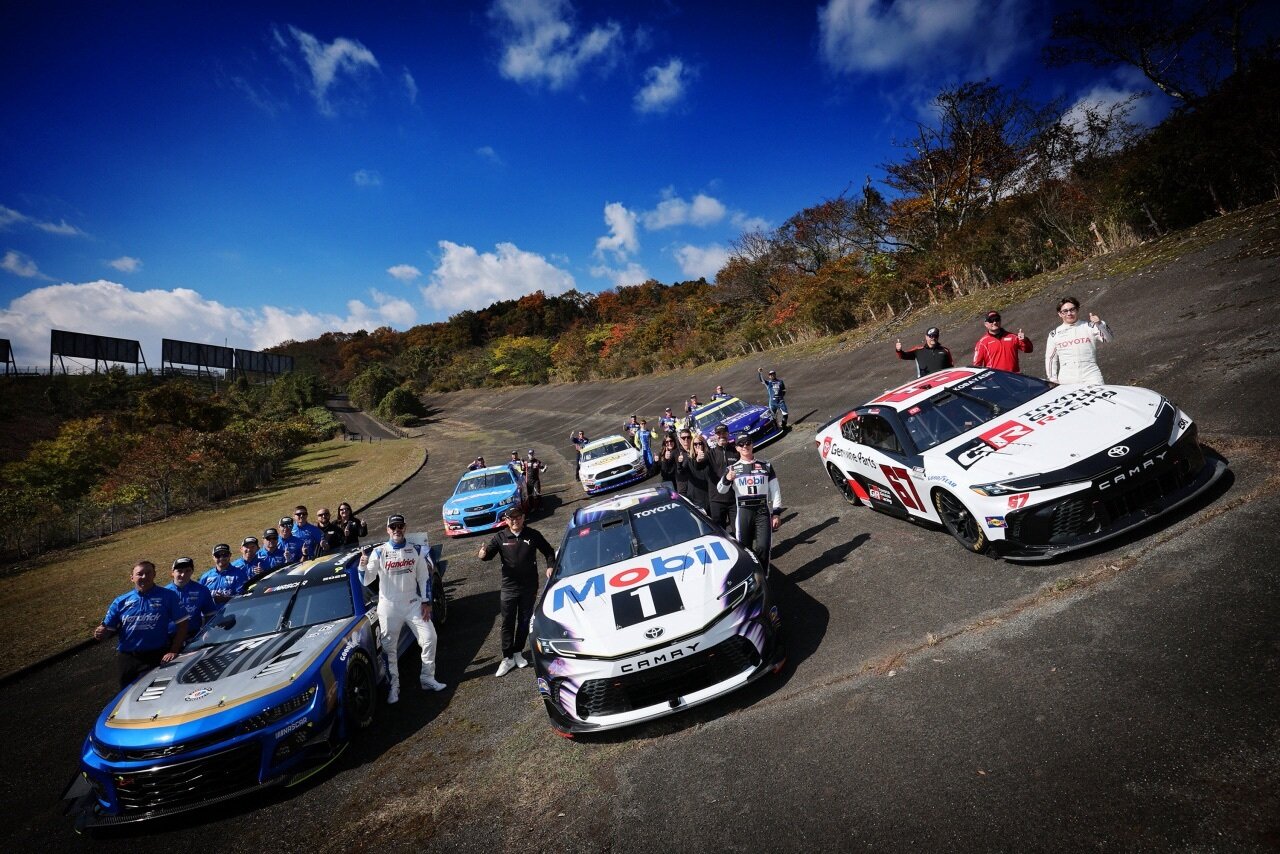
With the blue skies and vibrant foliage of autumn providing a stunning backdrop, the historic 30-degree bank and modern NASCAR machines made for a perfect pairing, coming together across a span of 60 years.
For a bonus shot, the Century SUV GRMN was captured leading the pack like a pace car, holding its own among the NASCAR vehicles in terms of both presence and size. Akio looked very pleased as he shared his thoughts.
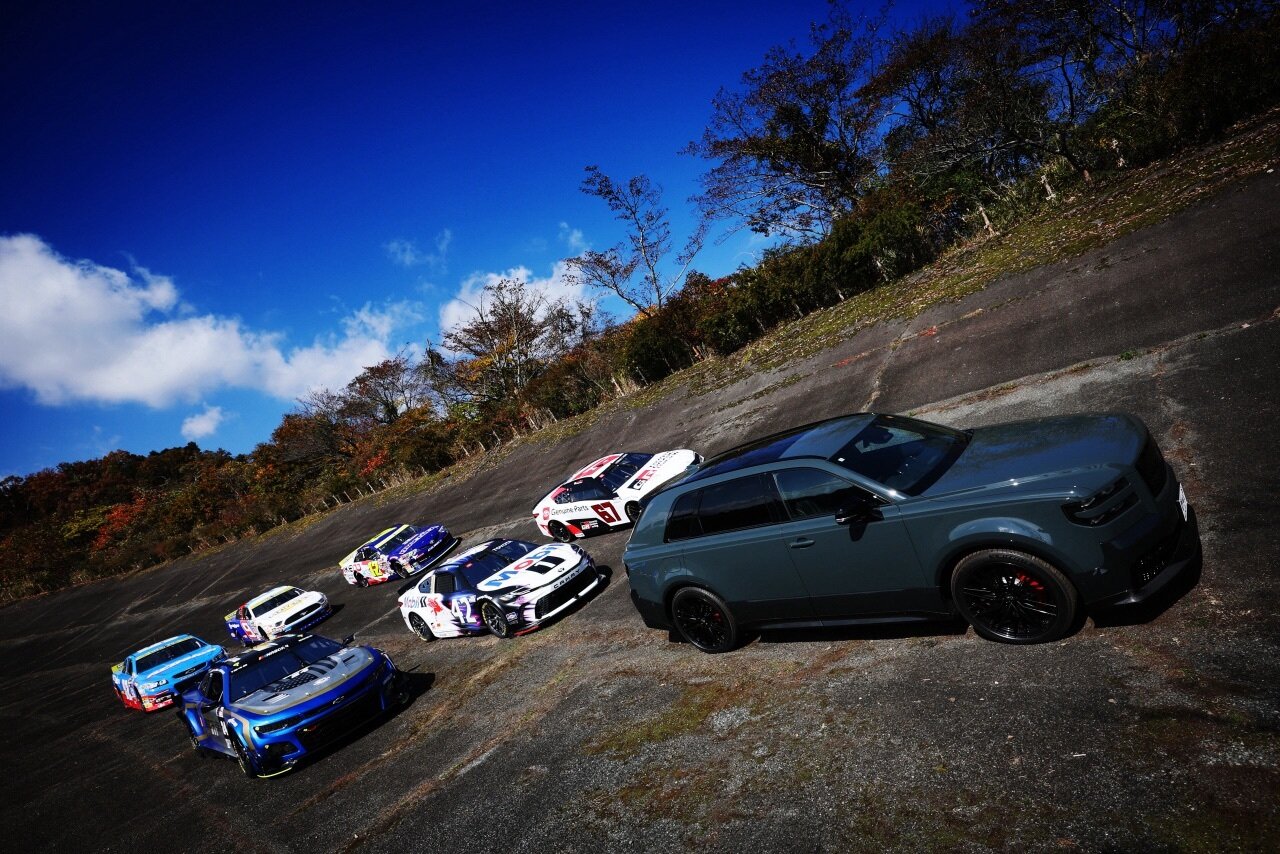
“As we were taking photos, it was very moving to think that NASCAR had finally come to Fuji Speedway, and these cars were finally standing on the bank. I hope the pioneers who established the Japan NASCAR Corporation and dreamed of bringing NASCAR to Japan are also pleased.”
Fuji Speedway has been operating under the Toyota umbrella since 2000. Though Akio’s actions were indirect, I can’t help but feel that they stemmed from a sense of responsibility, as a descendant of the company’s founder, to reward the efforts of those who came before, carry on their vision, and accomplish the mission they reluctantly abandoned.
The NASCAR demo run that took place at Fuji Speedway was not simply a matter of fortunate timing; in fact, I believe it was a product of history, of something fateful drawing the two sides together.
To put it another way, this demo run did not happen by chance; it was inevitable. This too feels like another quintessential Akio Toyoda story, in which an unexpected catalyst connects the past to the future.
Is there a reason why Chairman Akio Toyoda is so committed to NASCAR?
“When the Camry first began to be regarded as an ‘American car,’ I went to meet with the France family that founded NASCAR. Since then, I have been supporting NASCAR, indirectly but regularly.”
While chatting with NASCAR staff after the photo shoot, Akio hit upon another idea. “Let’s mount this photo as a present to Ambassador Glass and NASCAR CEO Jim France. I’m sure they’ll be surprised.”
This photo will no doubt go down as one of the more significant images in the history of NASCAR. Let us hope that it sparks a more dynamic motorsport connection between Japan and the U.S., giving rise to superstars who, like the Dodgers’ Shohei Ohtani, are beloved on both sides of the Pacific.
Super Taikyu, the series that hosted the recent NASCAR visit, is the pinnacle of inclusive, open-entry racing in Japan, welcoming all comers with an array of different entry classes.
One such class is ST-Q, established in 2021, which enables development vehicles to compete. Another is the ST-USA class (est. 2025), set up with the Automobile Business & Culture Association of Japan for the NASCAR demo run, contributing to cultural exchange with the United States.
These two initiatives have been highly praised as representing “the future of motorsport,” earning STMO a Special Award from the 2025-2026 Japan Car of the Year organizing committee.
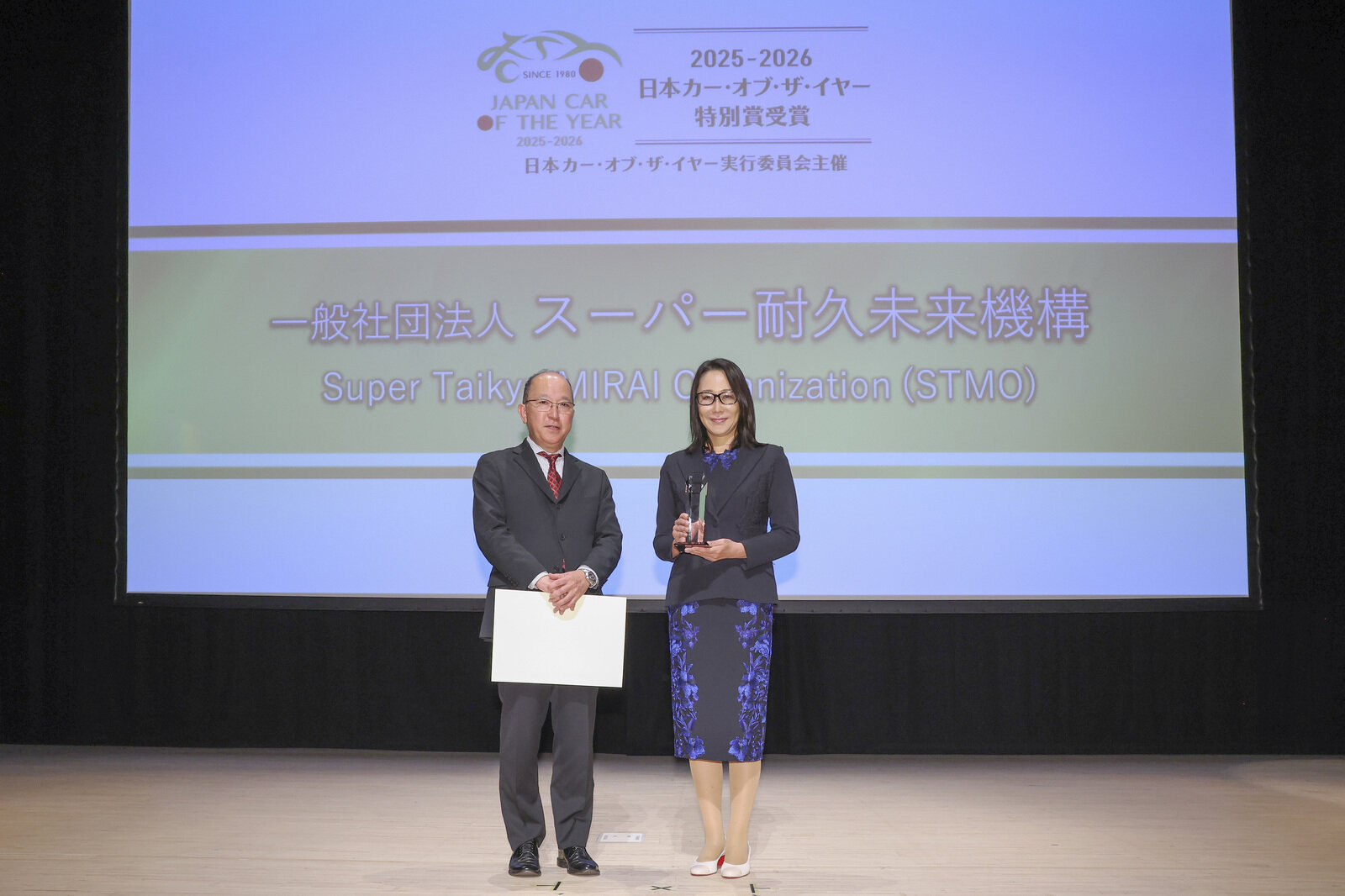
The result suggests that the efforts of Akio Toyoda, who holds roles within both STMO and the Automobile Business & Culture Association of Japan, have resonated with many people.
It may also be a sign that motorsports are starting to take root in the country’s culture.