



Starting out as a mutual aid association in the turmoil following WWII, TOYOTA CO-OP now operates employee cafeterias, supermarkets, and a whole array of services. To mark its 80th anniversary, we look back at the organization's history.
The orange bird in our top image will likely be familiar to many Toyota employees, as well as the residents of Toyota, Miyoshi, and Okazaki cities.
It is the MEGLiA Bird, the logo of TOYOTA CO-OP, more commonly known as MEGLiA, which everyone at Toyota has used at some point.
The name MEGLiA comes from the Italian word meglio, meaning “better,” while also playing on the Japanese meguriai, a fateful meeting or encounter.
Besides the cafeterias and kiosks in Toyota’s production plants and dormitories, MEGLiA’s wide-ranging business extends to large supermarkets and various services that are also open to nearby residents, making it an invaluable presence for company staff as well as their families and local communities.
This December, MEGLiA celebrates its 80th anniversary.
To mark the occasion, this article retraces the co-op’s history and looks at how Toyota’s kaizen spirit comes to life in the supermarkets that are central to MEGLiA’s business.
A mutual aid association set up by Toyota employees
The Toyota Motor Company Koromo Plant Gojokai (mutual aid association), the forerunner of today’s MEGLiA, was set up on December 15, 1945, just months after the end of World War II.
Amid the chaos and rampant black marketeering of the postwar era, the country’s welfare programs were insufficient to meet people’s needs. The Koromo Plant, which is now the Honsha Plant, did not even have any shops in the surrounding Ronchigahara area, so securing a supply of goods became an urgent priority.
Under those trying conditions, 438 Toyota Motor members decided to tackle the problem together, each contributing 50 yen (worth around 10,000 yen today) in capital. They set up an office in a corner of the Toyotomo Shoji dining hall, located on Toyota’s premises.
The following year, the Gojokai assembled a selection of groceries and other daily necessities and opened its first store near what is now the Honsha Plant’s west gate. By February, the association had also begun running cafes that served beverages and meals made from root vegetables and faux rice made from starch shaped to resemble grains of rice.
The founding charter of the Koromo Plant Gojokai includes the following statement:
Gojokai Charter (excerpt)
Automobile manufacturing ranks among the nation’s core industries, essential to the lives of its citizens and contributing enormously to its reconstruction. In this regard, it must be noted that this company bears a tremendous responsibility.
At the same time, at the level of everyday life, the systems for distributing basic necessities are in a state of chaos and ruin, having virtually ceased to function. Although restrictions have been lifted and goods are circulating, the exorbitant prices put them far beyond the reach of people living on fixed salaries. As a result, consumers’ lifestyles are on the verge of collapse.
Faced with this situation, the company’s administrators refuse to stand idly by and have substantially raised salaries this year. However, since these increases cannot hope to keep pace with soaring prices, more robust material support is necessary to stabilize the lives of employees.
Despite being set up for Toyota Motor employees, the kiosks and cafes could also be used by nearby residents. Many members believed they should serve the wider world, and in 1947, the Gojokai began mobile vending in the local community.
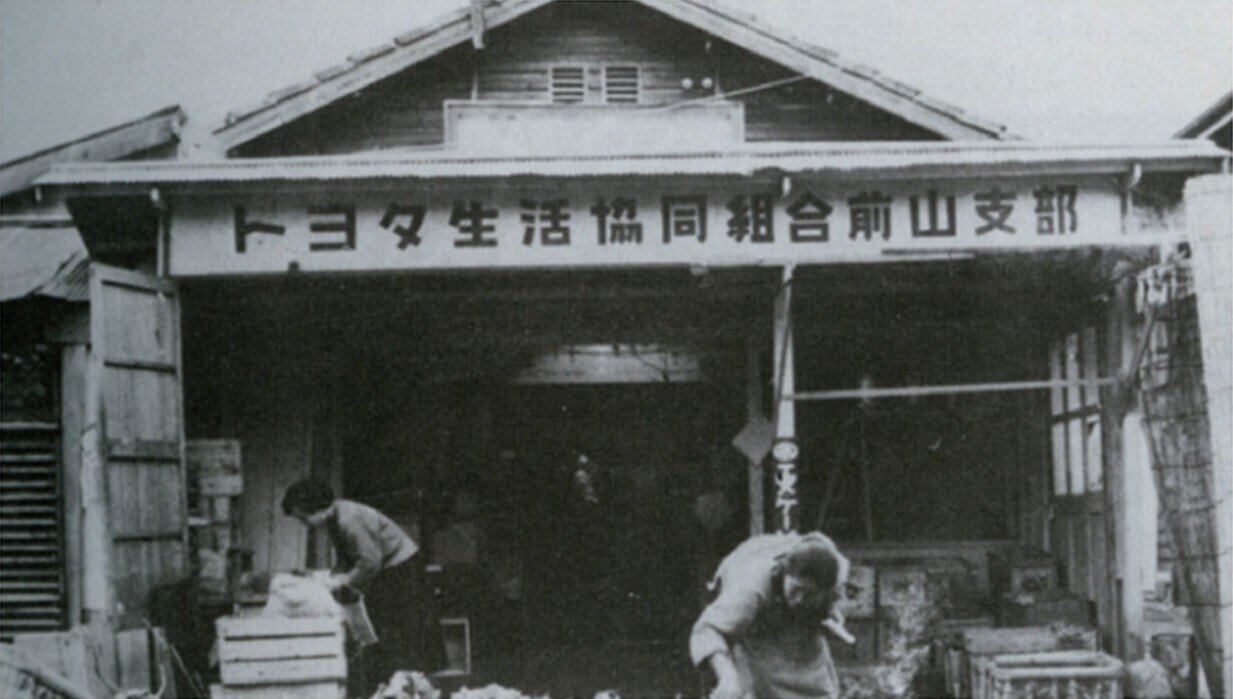
In 1948, with the enactment of the Consumers' Livelihood Co-operative Society Law, the Koromo Plant Gojokai changed its name to TOYOTA CO-OP. A succession of new shops were opened in areas around the Koromo Plant where company housing had been built, including Maruyama and Maeyama.
Workplace co-operatives
Consumers’ co-operatives, or co-ops, are enterprises managed and used collectively by their members, with each contributing capital.
“Co-op” is a catch-all term for several different types of organizations. Readers would probably be most familiar with regional co-ops, which operate stores providing goods and services within a given region. Other examples include university co-ops, serving students and faculty, and health & welfare co-ops organized by residents and healthcare professionals.
TOYOTA CO-OP is what’s known as a “workplace co-op,” defined as “a consumer co-operative whose members are, in principle, individuals working within a specified area; in some cases, however, those who live near these places of work and are deemed to be suitable users of the co-op’s facilities may also become members.”
Essentially, people living around Toyota City, where the company is headquartered, can also become co-op members alongside Toyota employees. Within the Tokai region, which includes Aichi Prefecture, similar co-operatives also exist for Suzuki and prefectural government employees.
Developing the services that Toyota employees need
In 1956, as Japan entered its postwar period of rapid economic growth, Toyota’s monthly production hit 5,000 vehicles. The Motomachi Plant started up in 1959, followed by the Kamigo Plant in 1965. And as the company continued to grow, TOYOTA CO-OP also expanded its business.
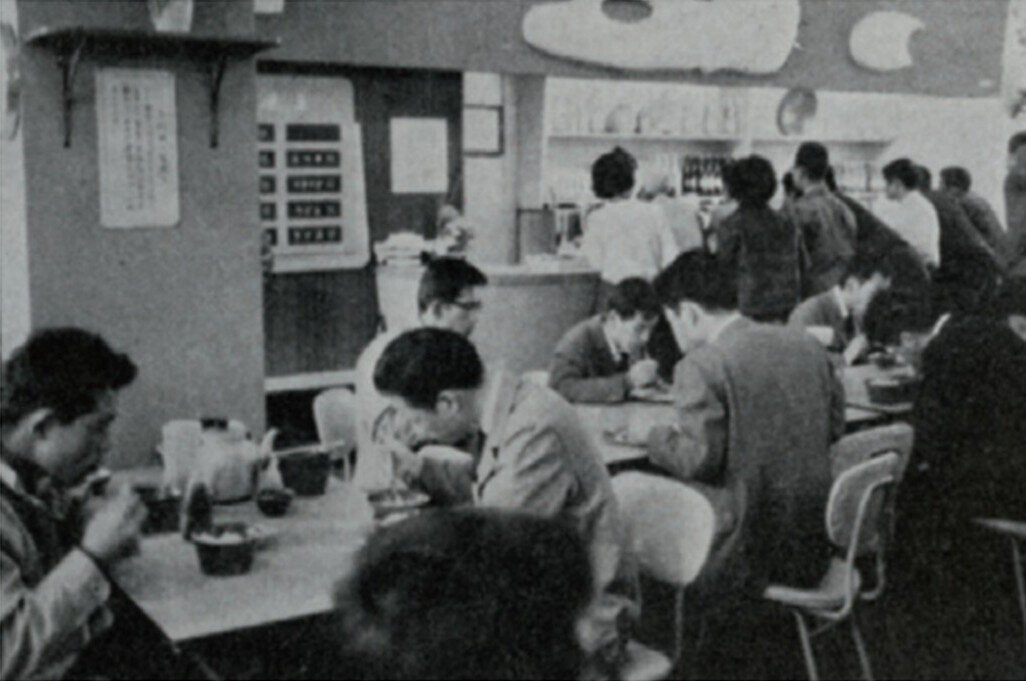
After taking over staff dining hall operations from Toyota, the co-op set up 16 locations from 1962 to 1966, including at production plants and dormitories.
In those days, the menu consisted of traditional set meals, as well as rice-bowl dishes and curry. These last two proved particularly popular among the predominantly young employees, who were keen to eat quickly and make the most of their leisure time.
The current cafeteria-style format, where diners are free to select their preferred dishes, was introduced in 1989.
Today, MEGLiA turns select cafeteria items into products for wider sale. Special dishes are developed by interviewing plant managers and recreating foods from their hometowns, or as tie-ins with events.
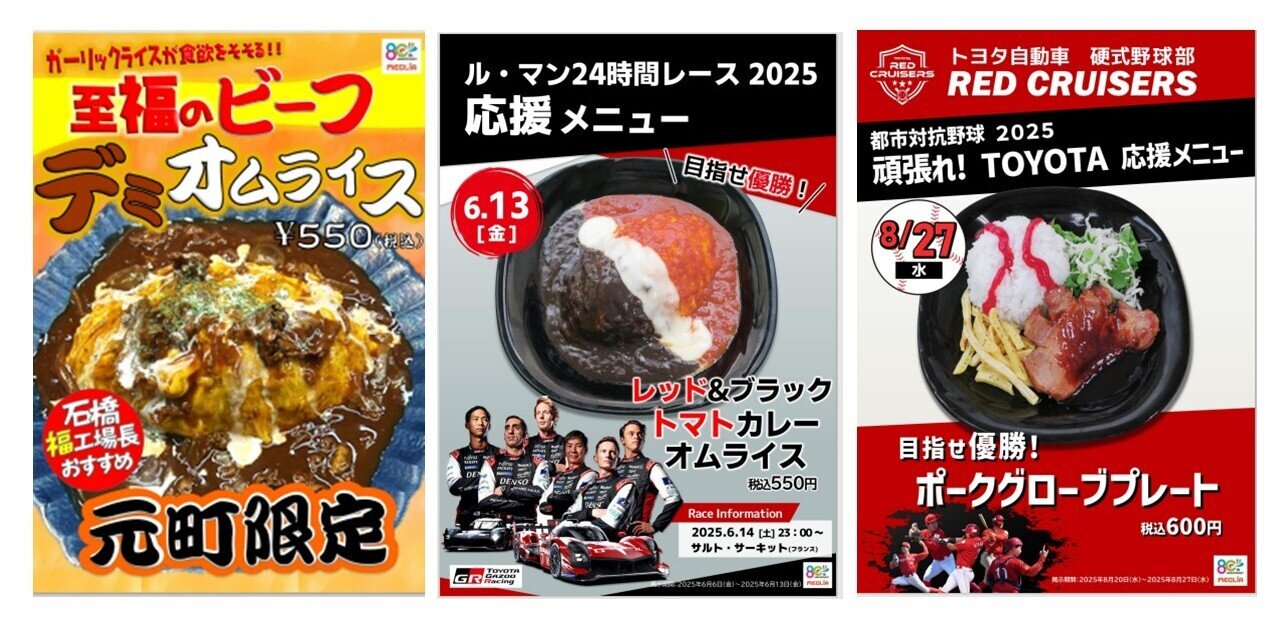
Each season, the co-op also holds contests that bring together new dishes developed by the nearly 100 nutritionists employed in its cafeterias. Toyota employees take part in judging the creations, with some calling for the chairman and president to join in too.
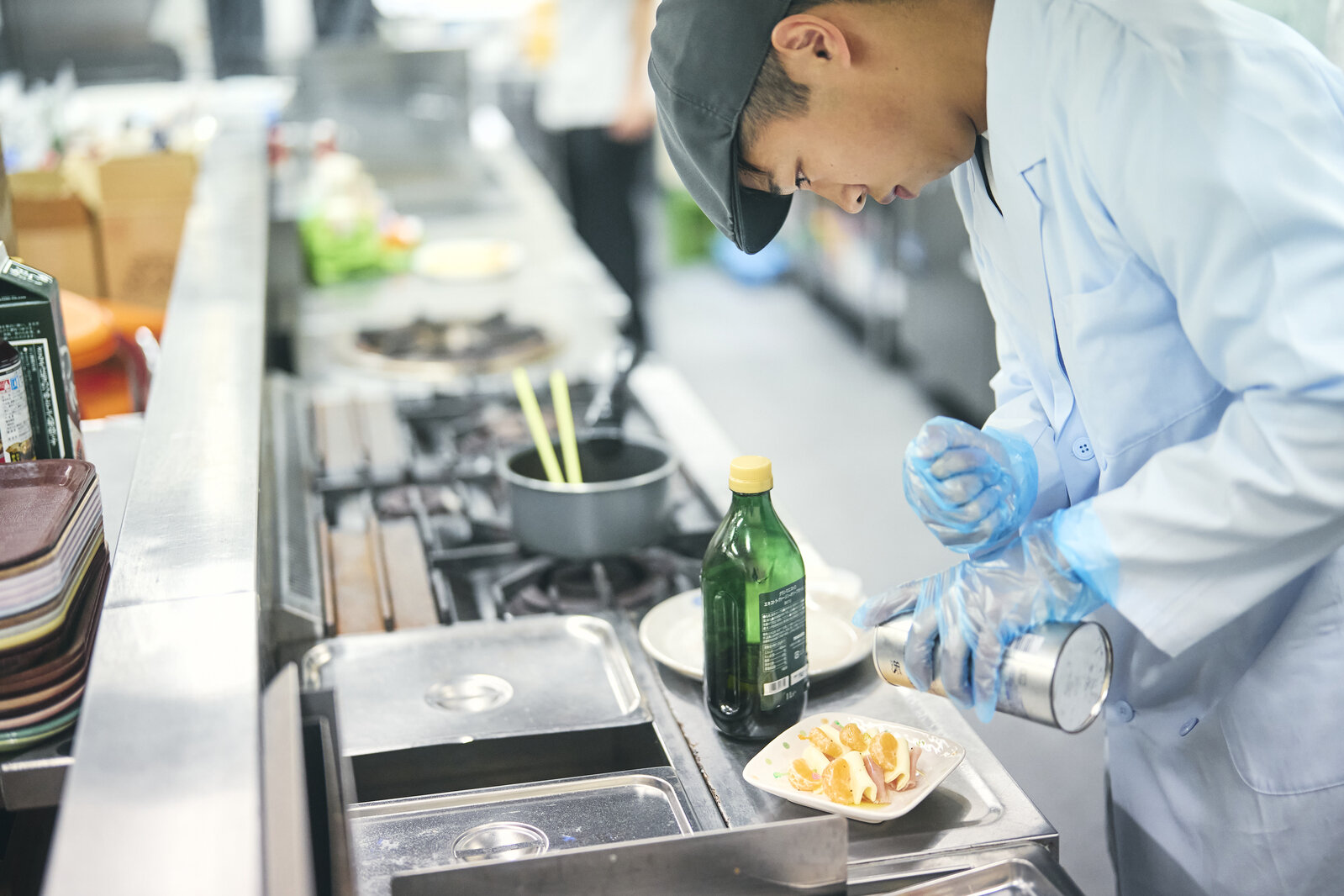
In the retail store business, the surge in housing complex construction during Japan’s rapid growth period spurred demand for more locations. Over the decade starting in 1966, the co-op’s regional stores rose to 14, and their offerings transformed to include everything from groceries to clothing, appliances, toys, and jewelry.
As lifestyles changed, MEGLiA likewise moved into new lines of business. It was around this time that the co-op began building and operating gas stations in conjunction with Toyota’s support for commuters.
This service lineup now covers a wide array of business areas, from dispensing pharmacies and funeral halls to nursing care-related consultation and products, as well as mobile shops to serve customers who have difficulty getting around. The co-op even runs a handyman service for tackling everyday tasks like gardening.
Some of these ventures bring little in the way of profits. So why has MEGLiA continued to expand and sustain such businesses?
Vice Chairman Osamu Ikeda, who has devoted his career to TOYOTA CO-OP since joining in 1984, speaks about an underlying “spirit of service.”
Vice Chairman Ikeda
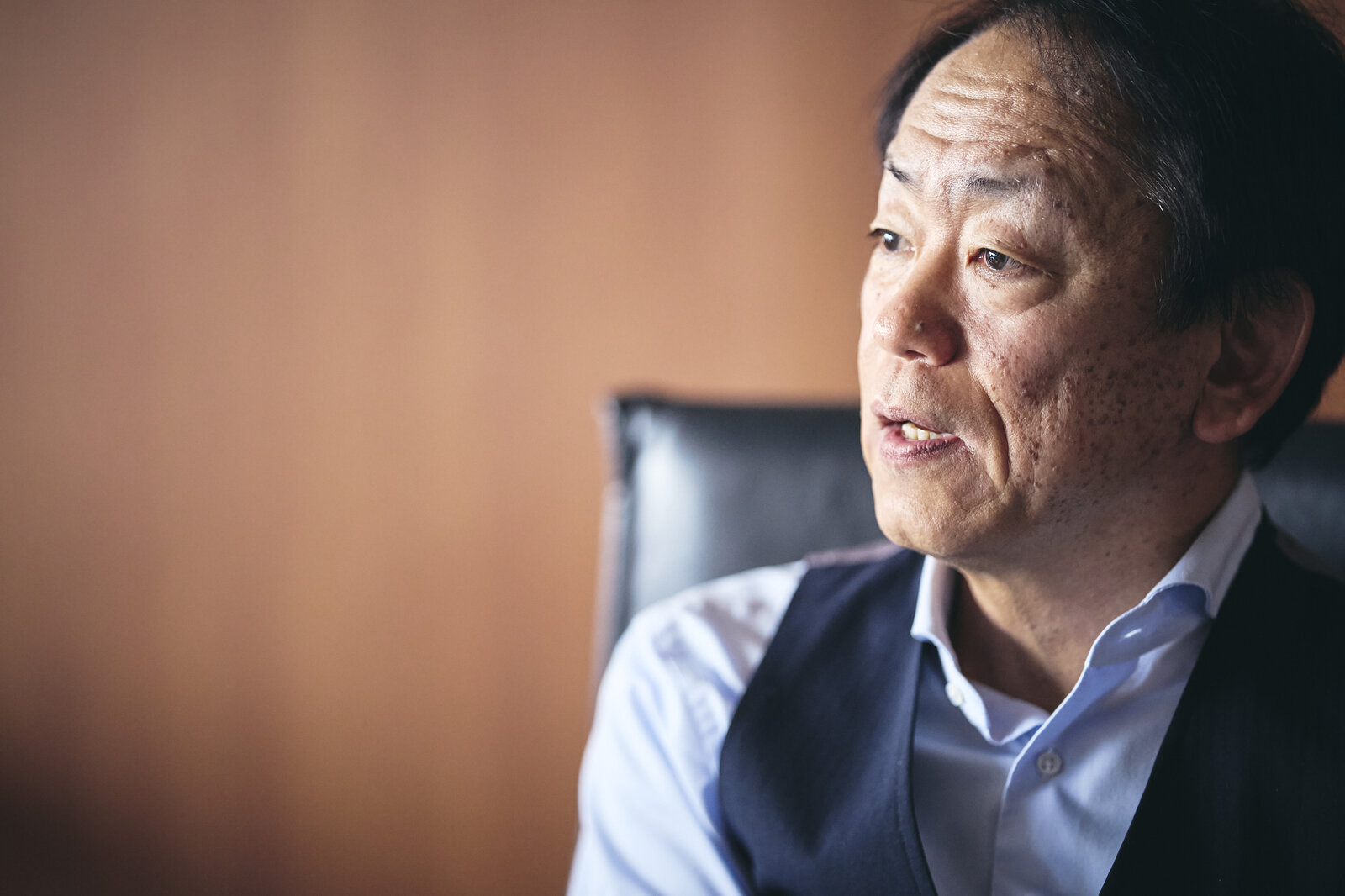
From the time I first started here, I was told about our “spirit of service.” The words were even written on our pay envelopes.
In this case, they are not used in the common sense of “voluntary service,” but instead mean providing “the utmost service to our members.” What we do is underpinned by a spirit of mutual assistance.
Reading through the historical records and other old documents, you can see that even back in the Gojokai days, members procured goods themselves and distributed them fairly. Those texts also emphasize doing so with a spirit of service.
Being a Toyota Motor Corporation workplace co-operative, ultimately, we are here for the benefit of the company’s employees and our members in the local community. This means we don’t really set out to keep boosting profits or growing our presence—rather, our basic philosophy is to conduct business with the sincere aim of bettering members’ lives and contributing to local communities.
As any of our staff will tell you, we approach our work “earnestly, diligently, and wholeheartedly.”
“We bring together everything that Toyota employees and their families might need,” Vice Chairman Ikeda added. “The idea behind our business has always been to provide for every stage of life, from the moment you are born to your final days.”
From the Gojokai started by 438 like-minded individuals, today the renamed TOYOTA CO-OP has grown to 277,377 members (as of November 30, 2025). MEGLiA now operates more than 200 kiosks and cafeterias in Toyota’s production plants and dormitories, along with 15 retail stores also used by local residents.