



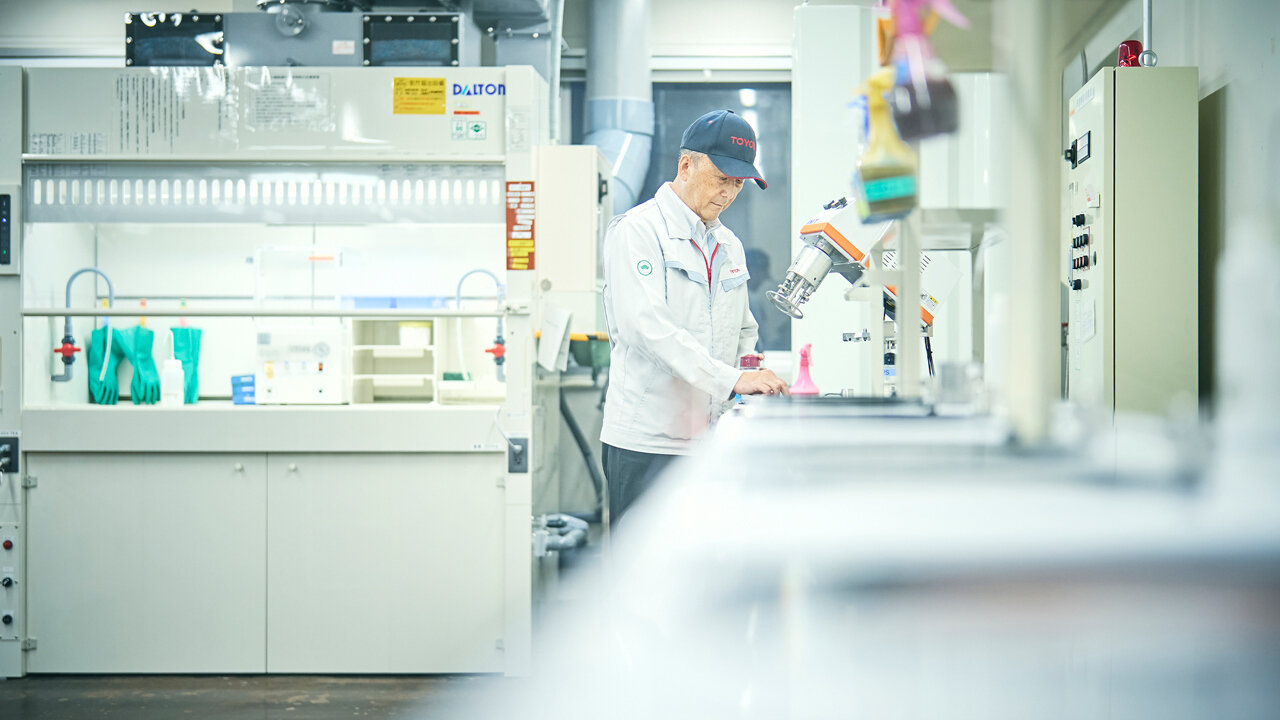
This is an ongoing series looking at the master artisans supporting the automotive industry. For our 23rd installment, we spoke to a master of materials research who contributes to Toyota's ever-better carmaking by deciphering the sectional structures of various materials, from metals to plastics.
Handwork still plays an important role in today’s car manufacturing, even as technologies like AI and 3D printing offer more advanced methods. This series features the craftsmanship of Japanese monozukuri through interviews with Toyota’s carmaking masters.
In this two-part article, we shine the spotlight on master materials researcher Mitsuo Takano, who uncovers the truth within broken parts by deciphering the sectional structures of various materials, from metals to plastics and ceramics.
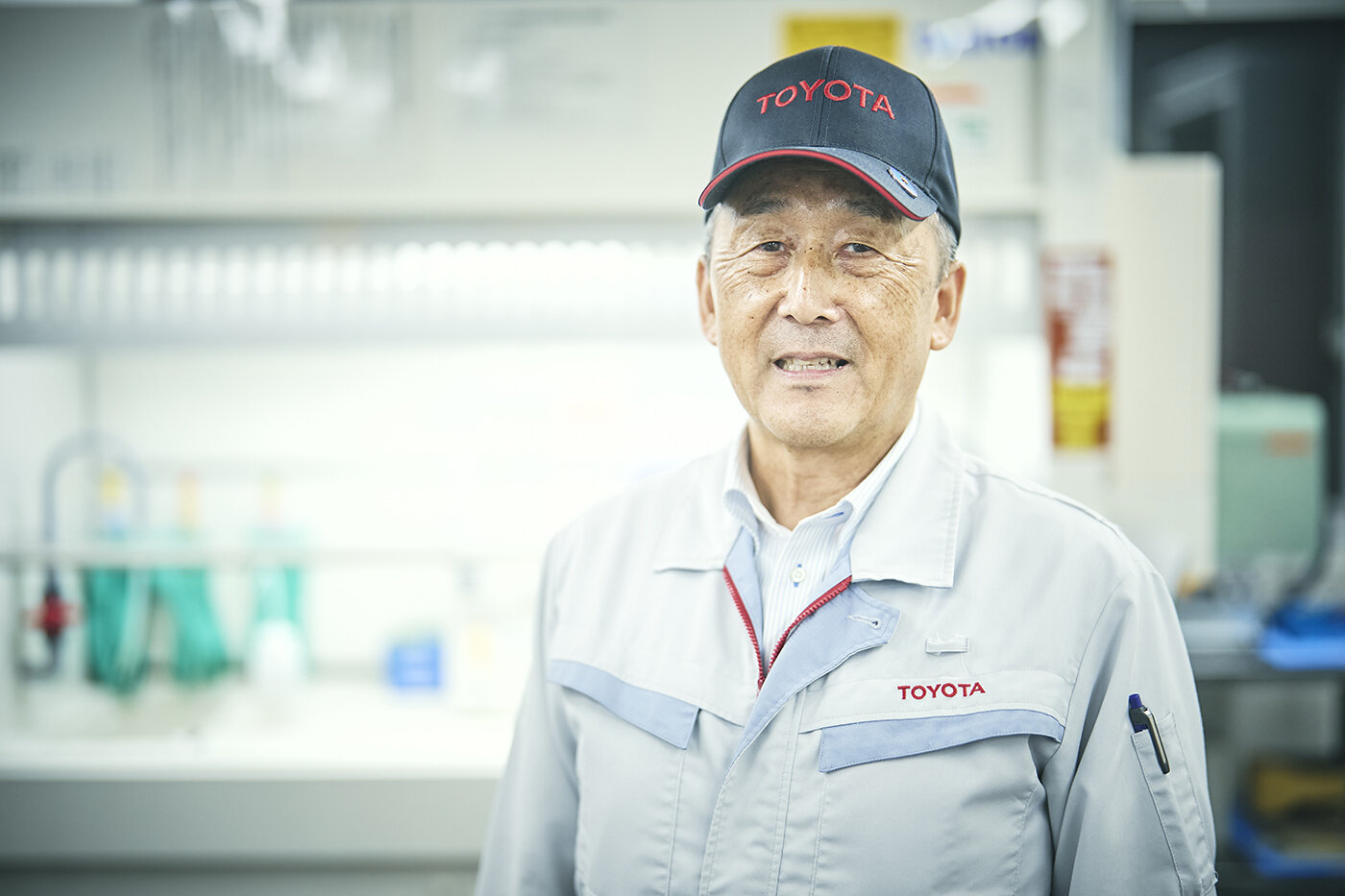
#23 Mitsuo Takano, the master researcher who handles all kinds of materials
Grand Expert Takumi, Mobility Material Engineering Division, Advanced R&D and Engineering Company, Toyota Motor Corporation
A lesson in genchi genbutsu
From 1991 to 1994, Takano worked within the Personnel Development Division. His job was to provide lectures on mechanical materials for students at the Toyota Technical Skills Academy and the company’s partner manufacturers.
This period provided a turning point for Takano. It came while taking Toyota Technical Skills Academy students for hands-on training at the Forging Division. The spark was a comment from Oyaji Kawai, then an assistant manager within the division.
Oyaji Kawai
How can you teach others when you’ve never done any forging yourself?
Takano
I can do it well enough to teach academy students.
Oyaji Kawai
That won’t do. What good is an instructor who has no experience? Go work on your forging.
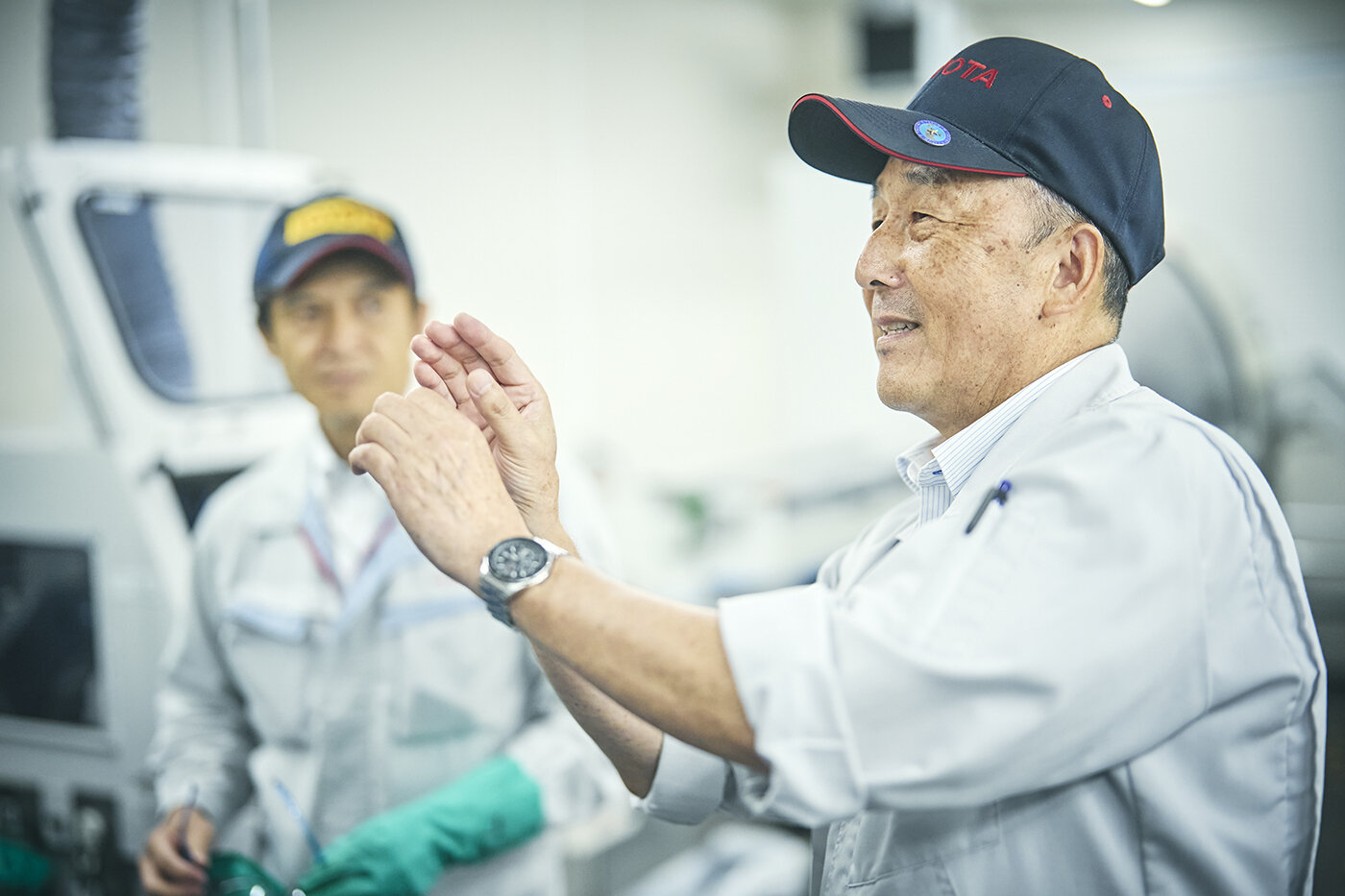
At Oyaji Kawai’s suggestion, Takano ended up doing the forging work alongside the high schoolers. He says the experience was etched in his heart.
Takano
For the first time, it really got through to me how important genchi genbutsu is in manufacturing.
Genchi genbutsu. One of Toyota’s core principles, it states that true understanding can only come from setting foot in the genba, seeing and touching things for yourself. That’s what Oyaji Kawai wanted the young Takano to learn.
One of only 13
From there, Takano embraced genchi genbutsu as he continued honing his skills, and in 2012, was himself promoted to assistant manager. Then, in 2019, he was bestowed the title of Takumi. Toyota has roughly 40,000 technical employees; among them, just 13 master artisans are honored as Takumi.
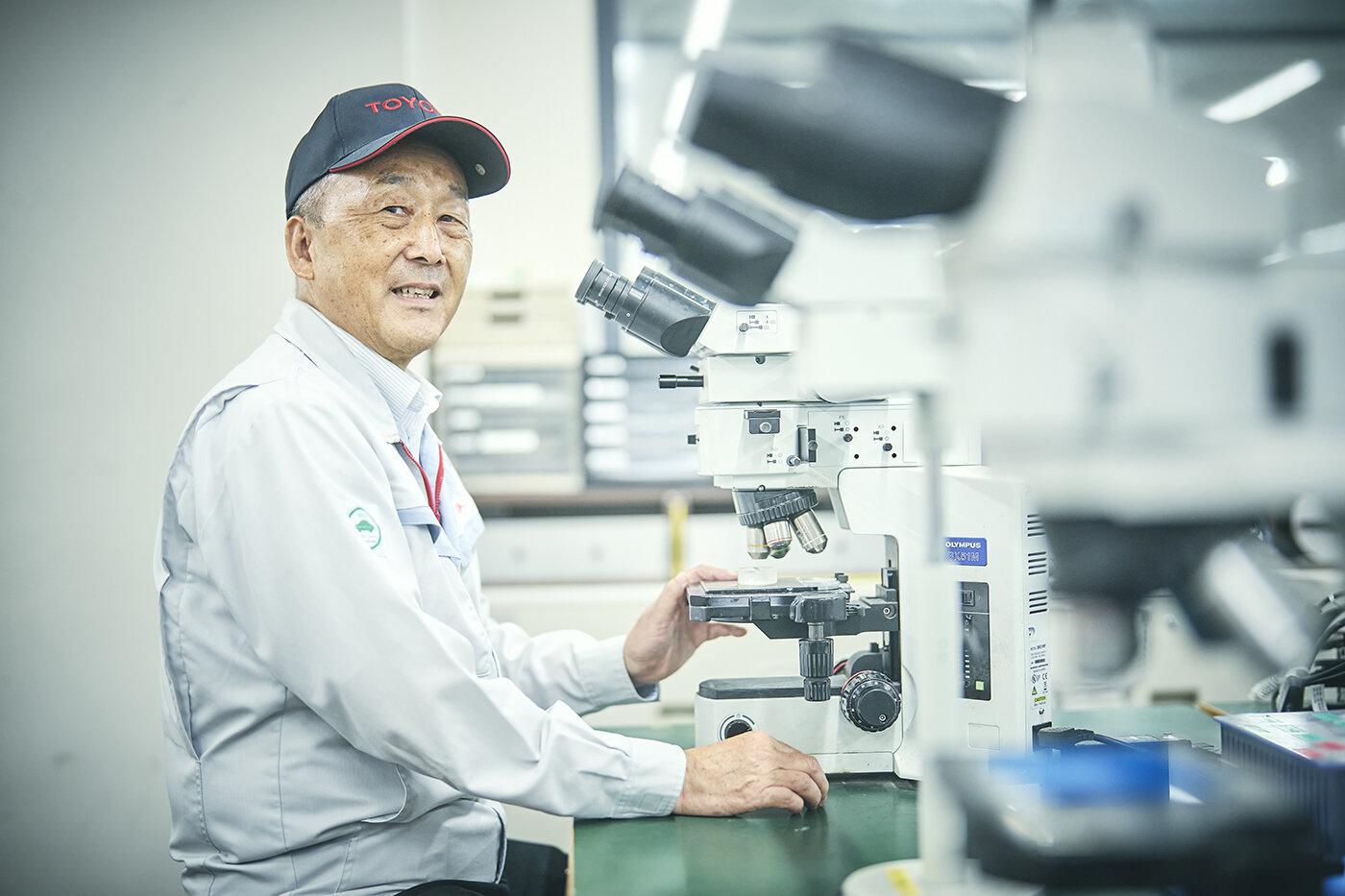
The Takumi title is given only to those recognized by Oyaji Kawai, who was Toyota’s vice president at the time. Of the 13 current holders, 10 are test drivers in the Advanced Technical Skills Institute Division. Takano is one of just three Takumi working in technology development.
Takano’s official position is Grand Expert assigned to the Mobility Material Engineering Division. Normally, technical staff belong to a section and work under the direction of the section manager. In Takano’s case, however, he reports directly to the division’s general manager. Requests concerning any type of material, not only metals, come directly to him. Takano handles everything from evaluating new materials to analyzing failures related to market defects.
Assisting design as an analysis expert
One of Takano’s most important tasks as a Takumi is failure analysis.
Chairman Akio Toyoda champions motorsports as a platform for making ever-better cars. On the racetrack, parts are pushed to their limits until they break. The lessons learned in the process are used to build something better next time.
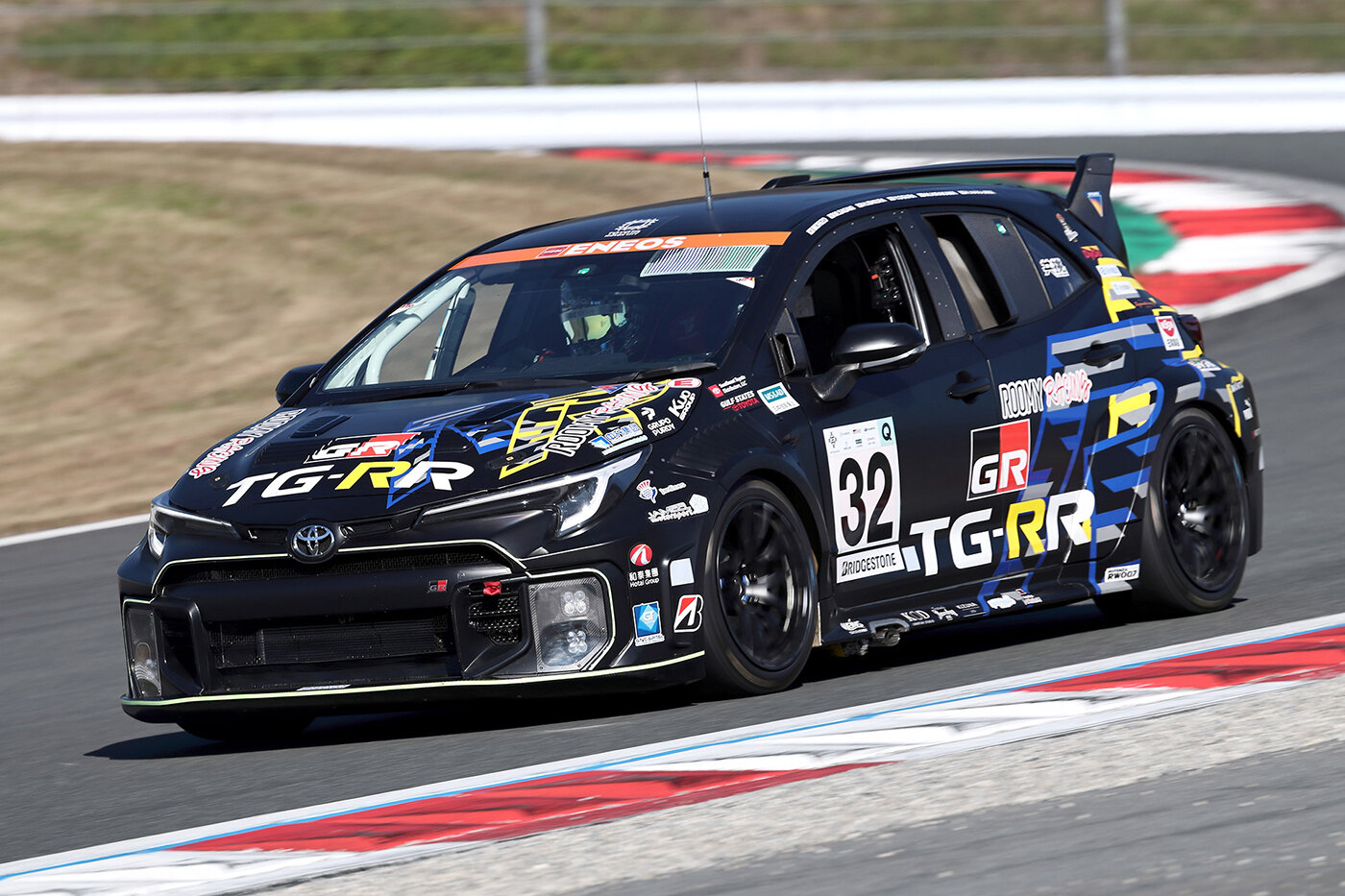
At times, Takano accompanies the team to Super Taikyu events. When situations arise—a bent suspension arm, a broken connecting rod—he brings the parts back for materials analysis.
On one occasion, Project General Manager Naoaki Ito, who heads the development of the hydrogen-powered Corolla, spotted Takano at the circuit and remarked, “Our analysis expert is here!”
Takano says he will never forget that moment.
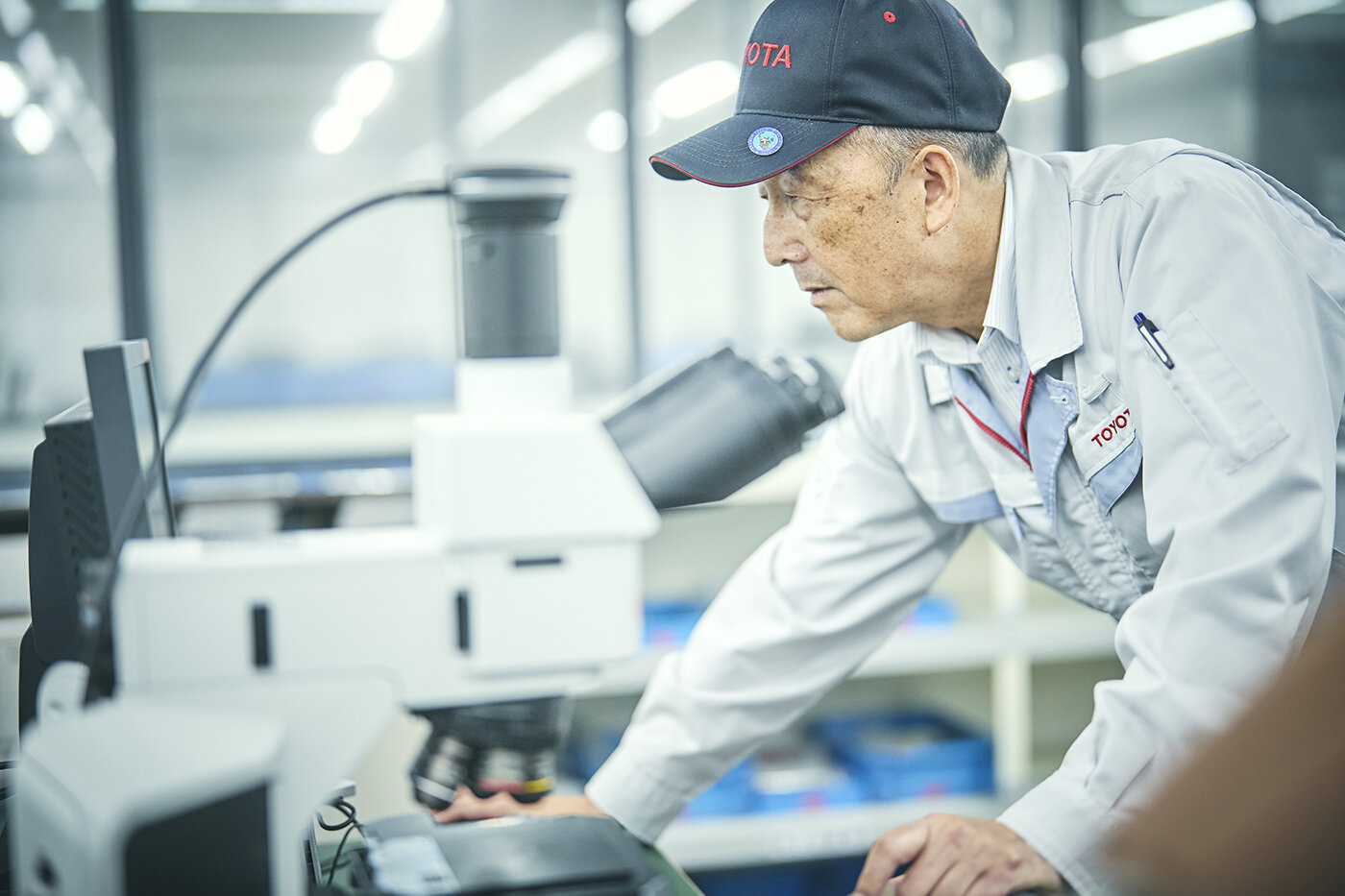
Takano
That was my happiest moment since joining the company. Before that, I was generally known as one of the “materials guys.” Of course we are the materials guys, and we’re not directly involved in design, but Project General Manager Ito acknowledged me as a specialist who can solve problems. That made me really happy.
When analyzing part failures, Takano may sometimes visit the production facilities of partner companies. If a fuel tank is defective, for example, he must investigate the causes.
While these kinds of visits are generally referred to as “inspections,” Takano and his team approach the situation as a problem to be solved together, with both sides jointly responsible for developing materials technologies.
Takano
If you go in with the mindset of performing an inspection, you’re not going to see the real picture. Adopting an attitude of “please let us study your genba” allows you to build trust with the partner companies and solve problems more smoothly.
In this way, the results of materials research are fed back to the design team and harnessed in the making of ever-better cars.
Takano
We give the design department concrete suggestions—for example, “This material lacks durability, so let’s use something different,” or “This section seems to be under excessive load, so let’s mitigate those forces.”
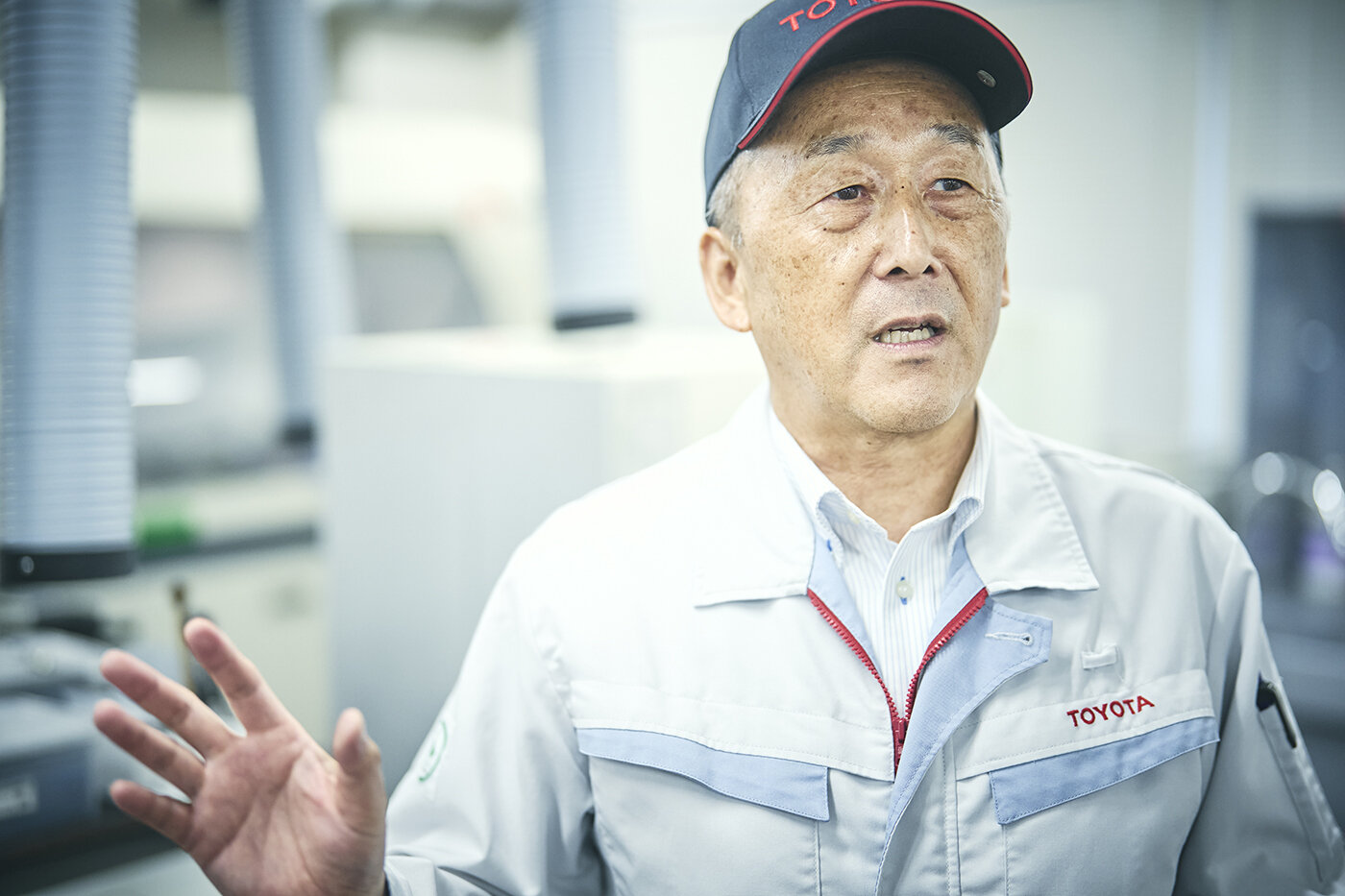
Modify the design. The materials. The manufacturing methods. Being able to propose such improvements is the true value of materials research skills.
Takano’s skills are also put to use in analyzing the products of competitor companies, in a practice known as benchmarking.
Take aluminum alloy components as an example. If you cut a cross-section and examine its structure, the precipitate patterns reveal whether the part was cast or forged. You can also identify the heat treatment history. Such insights are then incorporated into future development.
Commitment to the fundamentals
As we’ve already noted, the Material Engineering Division handles a wide range of materials: metals, polymers, catalysts, battery materials, tribology materials, coating and anti-corrosion materials. Every type of material that goes into a car falls within the division’s territory.
Upon joining Toyota, Takano received a lesson that has stayed with him: “In materials engineering, fundamental principles are key. If you master the underlying principles, you can develop any material.”
What are these fundamental principles? They are the basic properties and laws that govern how a material behaves. In metals, heating changes the structure, while cooling method affects hardness. Applying force causes deformation. With a grasp of these principles, one can approach other materials—from plastics to ceramics and catalysts—in the same way.
Senior Expert (SX) Takeshi Yabutani, who is being mentored by Takano, says he is astonished by the depth of the principles Takano imparts.
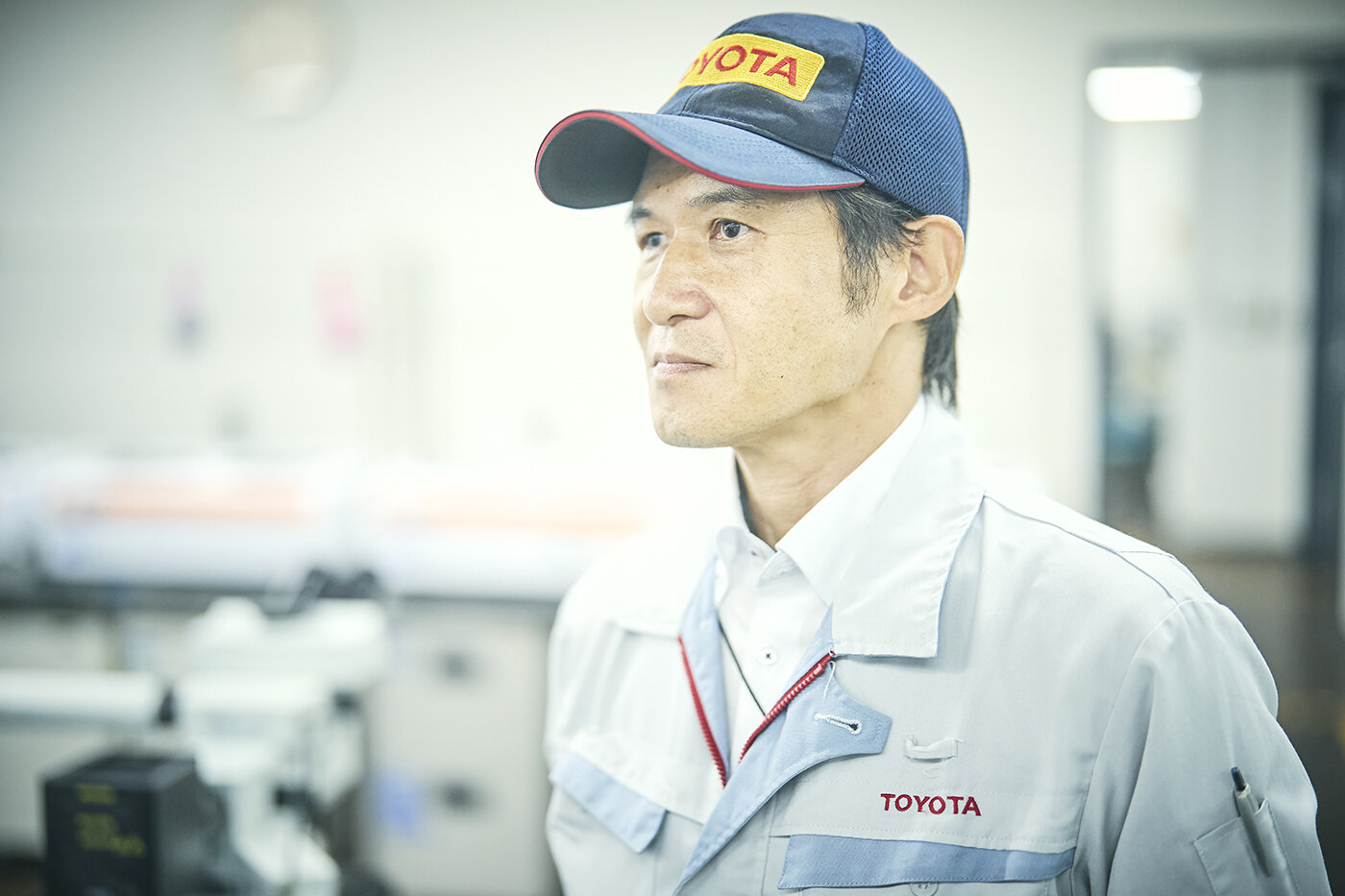
Yabutani
Since coming to work under Takano, I’ve realized how limited my understanding of fundamental principles really was. Takano doesn’t just consider what’s there in front of you—he grasps what lies beyond that, and then beyond that. That’s what I discovered by watching his work up close.
In what is considered a once-in-a-century transformation, the automotive industry is currently undergoing profound shifts. Alongside the electrification of powertrains, hydrogen engines and fuel cells are also emerging. These changes bring with them the need for new materials, such as all-solid-state batteries, hard magnetic materials for motors, and carbon fiber-reinforced plastics (CFRP) hydrogen tanks.
Yet even as new materials continue to appear, the underlying skills remain unchanged: cutting, grinding, polishing, etching, structural assessment. These five processes are essentially the same for any material. In this sense too, materials research is all about principles and fundamentals.
A mentor’s hopes
Yabutani, whose motto is “honesty and hard work,” completed an information processing program at a commercial high school in his home prefecture of Shizuoka before joining Toyota in 1991. Since then, he has worked at the Higashi-Fuji Technical Center, gaining experience primarily in the development of functional materials.
Functional materials are materials with specific functions, such as batteries and magnets. Yabutani has been involved in establishing Toyota’s all-solid-state battery development and evaluating magnet materials for motors.
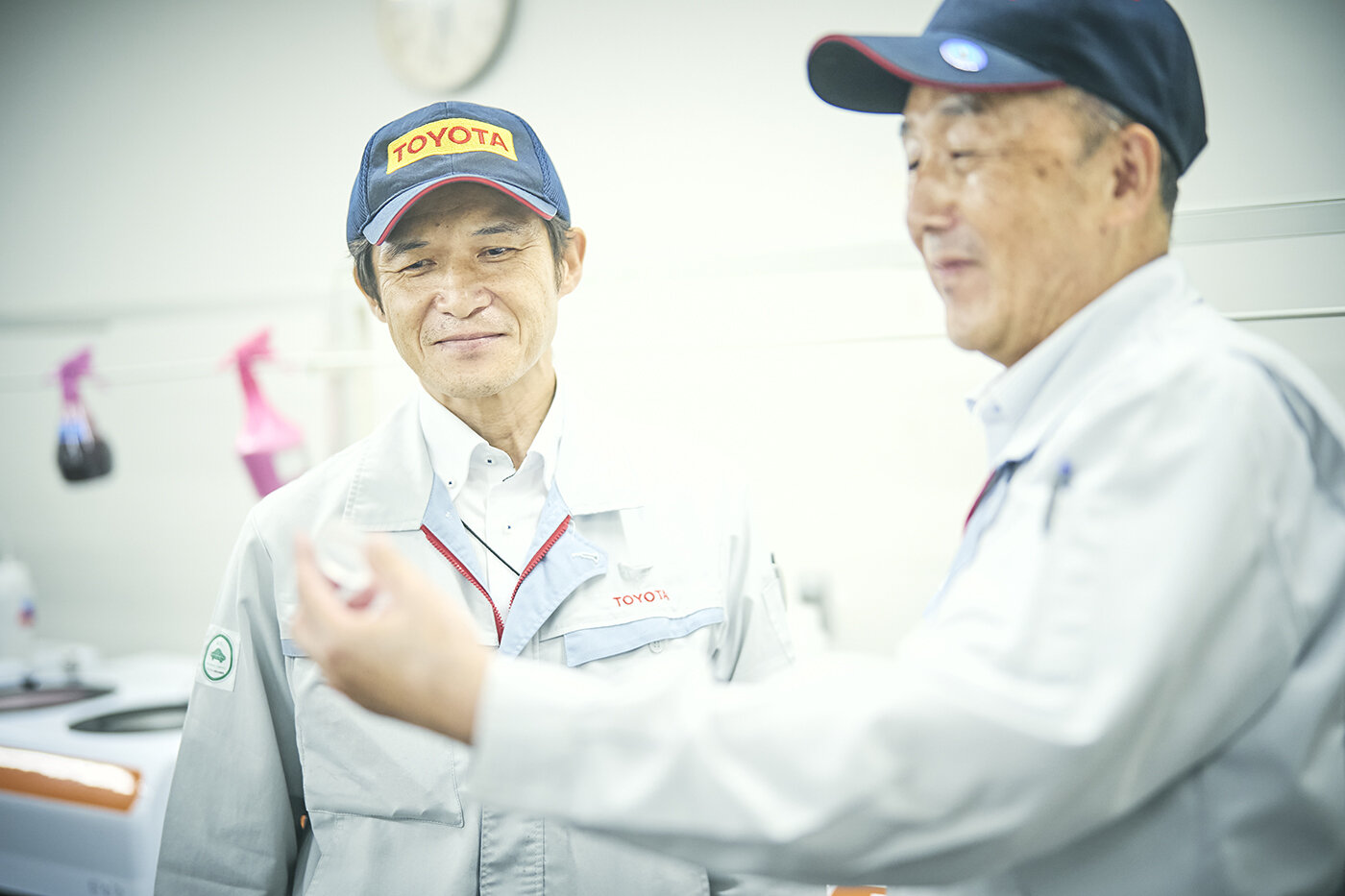
In 2022, under the company’s training program for specialized skills, Yabutani obtained an M-class qualification in magnet materials—the mark of a seasoned technician. On that occasion, Yabutani was recommended by Takano, a member of the specialized skills panel.
Takano
An M-class can’t be obtained by just anyone. You have to be a specialist in the field. I happened to be on the specialized skills panel at the time, so I was in the position to recommend M-class candidates. And I was insistent in recommending Yabutani.
Why did he choose Yabutani?
Takano
I believed he was someone who would openly speak his mind. The criteria for technician qualifications are about much more than just skill. Toyota’s company rules include the words “honesty & integrity,” and that ethos remains part of who we are today.
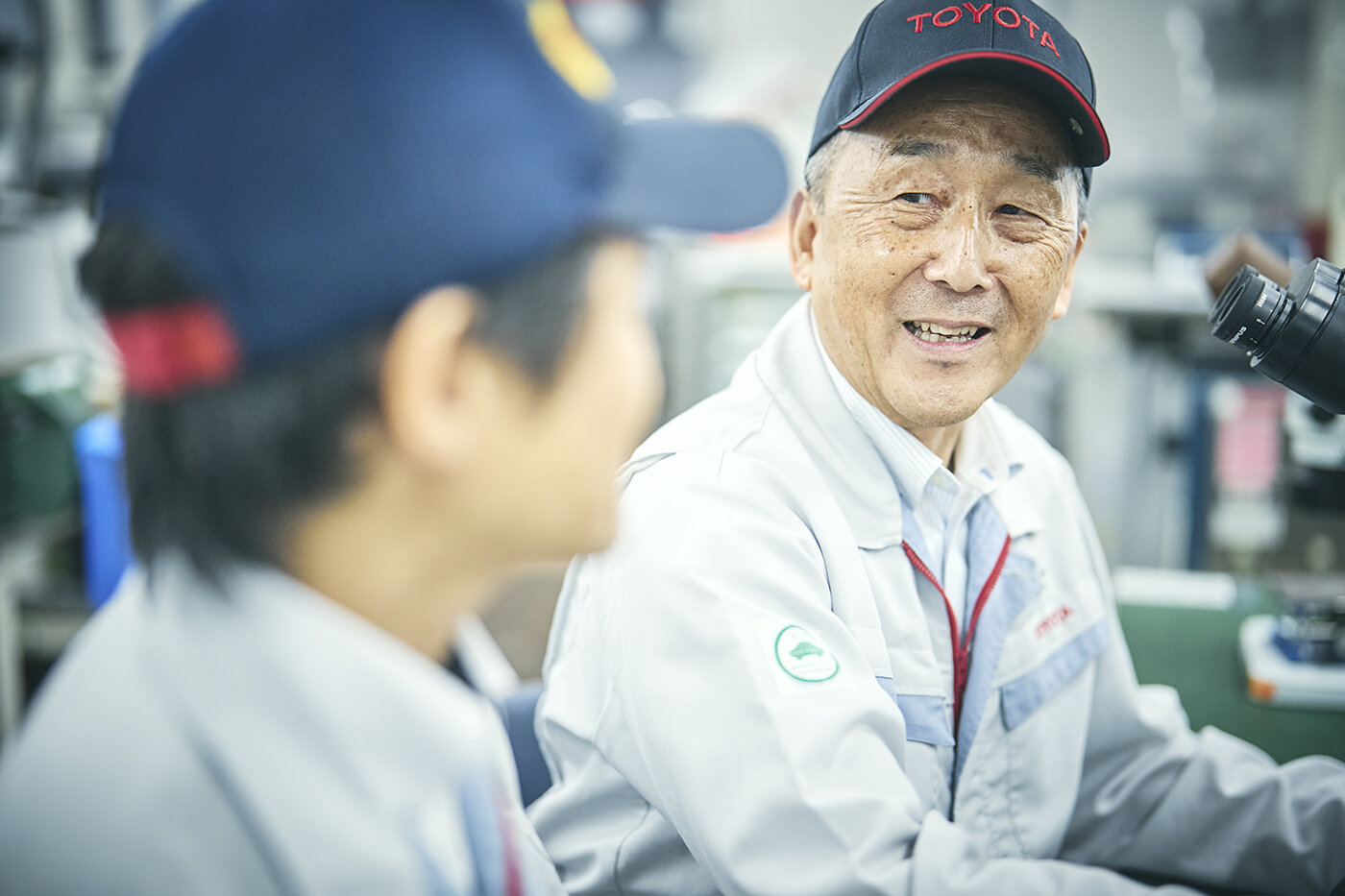
In January 2025, Yabutani transferred to the Mobility Material Engineering Division at Toyota’s head office.
Yabutani
Having worked for many years at the Higashi-Fuji Technical Center, I was told by my supervisor to go out and broaden my experience.
The main purpose of the transfer was for Yabutani to learn from Takano’s work by observing him up close. From a personnel perspective, he was also being considered as Takano’s successor.
Yabutani
In terms of both skills and knowledge, Takano is truly in a league of his own in the Material Engineering Division. That said, Takano is human like the rest of us. If he can do that much as one person, even if I can’t reach his level, I’m sure I can contribute in some way—that’s the mindset I bring to work each day. Maybe I'm a bit too optimistic... (laughs).
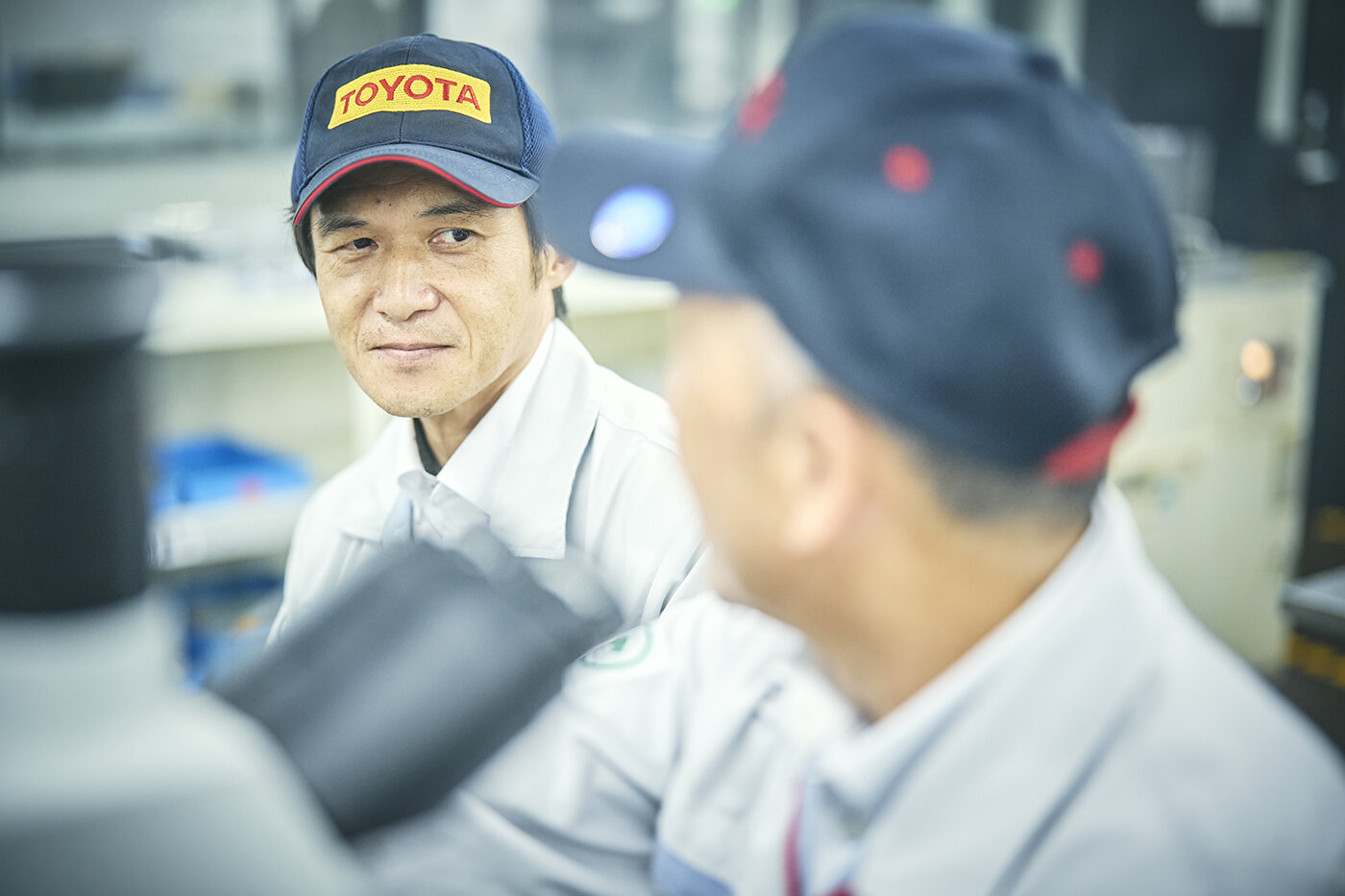
Meanwhile, Takano’s hopes for Yabutani are about more than just mastering skills.
Takano
Part of the Material Engineering Division’s role is as a design department for coatings and catalysts. Within that, our main job is to support the design team and ensure market quality. Some say we should avoid using the word “support” because it lowers motivation. But these support efforts are essential for making ever-better cars. I want to entrust this work to someone who can take pride in that fact.
Entrusting to the next generation
Takano has around two years left until retirement. He is conscious of how little time remains. What will he accomplish in this period? Likewise, for Yabutani, the days of learning from Takano are limited. Despite that, Takano has faith in Yabutani’s abilities.
Takano
My feeling is purely, “I am handing all this over to you. You can take it from there. You have the ability.”
What Takano wants to entrust to Yabutani is more than merely skills. Another key asset is his network of personal connections. Design teams, quality assurance departments, suppliers, group companies—countless people who can be relied upon in times of need.
Takano
When you find yourself in a tight spot, there are engineers who reach out. I hope that I can pass on these sorts of personal relationships as well.
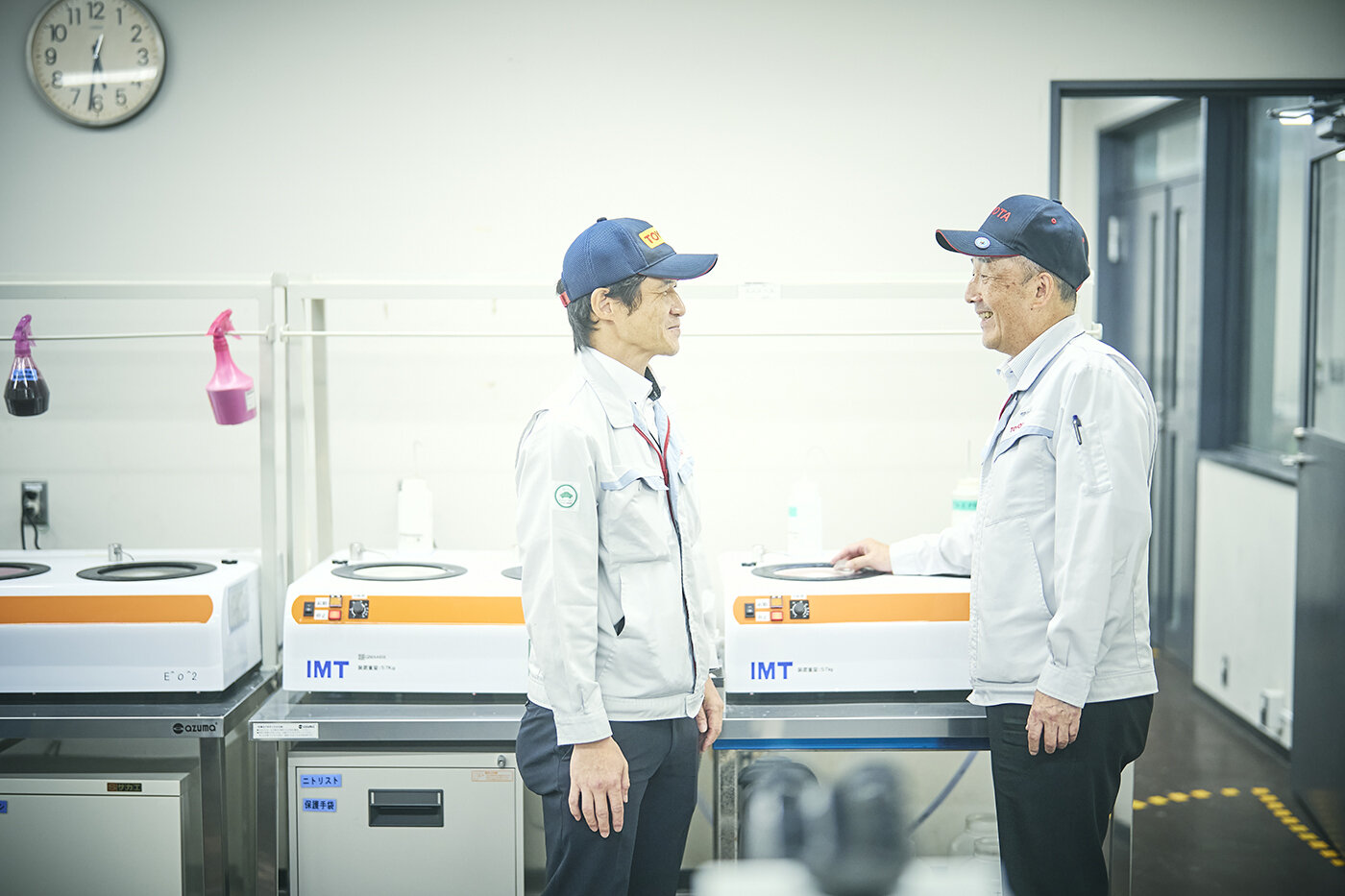
Crystalline metal structures, plating layers, alloy precipitates—this is the language of materials that Takano has been immersed in for 44 years.
As the auto industry undergoes a period of once-in-a-century transformation, materials engineering is becoming increasingly important. Against this backdrop, the skills, connections, and trust that Takano has built up over 44 years are being passed on to the next generation. Committed to fundamental principles and capable of handling any material, the work of this master will continue to underpin Toyota’s ever-better carmaking.