


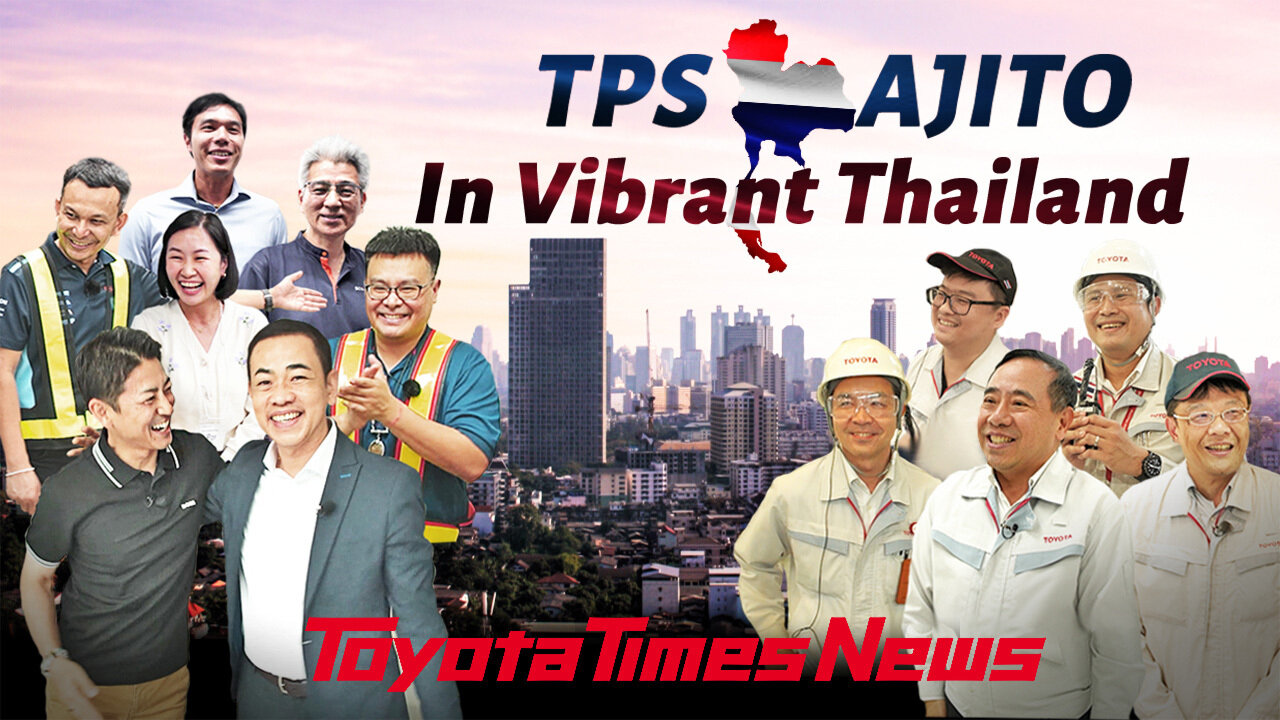
When a Thai company adopted the Toyota Production System (TPS) to improve operations, mixer truck wait times were cut in half. How has this changed the way employees work?
Siam Cement Group (SCG) is one of Thailand’s leading companies, with businesses ranging from cement and construction materials to chemicals and packaging. In 1987, SCG teamed up with Toyota to establish Siam Toyota Manufacturing, an engine manufacturer.
Last year, SCG employees visited Toyota Motor Corporation’s headquarters for training in the Toyota Production System (TPS). The opportunity came about after the group’s CEO, Thammasak Sethaudom, received a firsthand explanation of TPS from Chairman Akio Toyoda.
Following the six-week program, SCG was able to reduce waste, inconsistencies, and overburden in the workplace, while also raising efficiency and product quality. So what exactly changed? Yuta Tomikawa reports on the TPS training and how it transformed the work environment.
CEO Thammasak described the results:
“At facilities that have adopted TPS, I could clearly see that work has become easier and there are more smiles... Making life easier for workers on the ground and ensuring they are happier in their jobs ultimately leads to greater sustainability.”
Later in the episode, Tomikawa drops by Toyota Motor Thailand’s Gateway Plant, which produces models such as the Yaris, Camry, and Corolla.
As it pushes the possibilities of TPS even further, the plant has been recognized with the 2026 Good Factory Award, presented to outstanding production and business facilities operated by Japanese companies in Japan and across Asia.
The plant’s keyword is “Ajito” (hideout). Watch the episode to discover how the team has achieved dramatic improvements in both production and logistics.