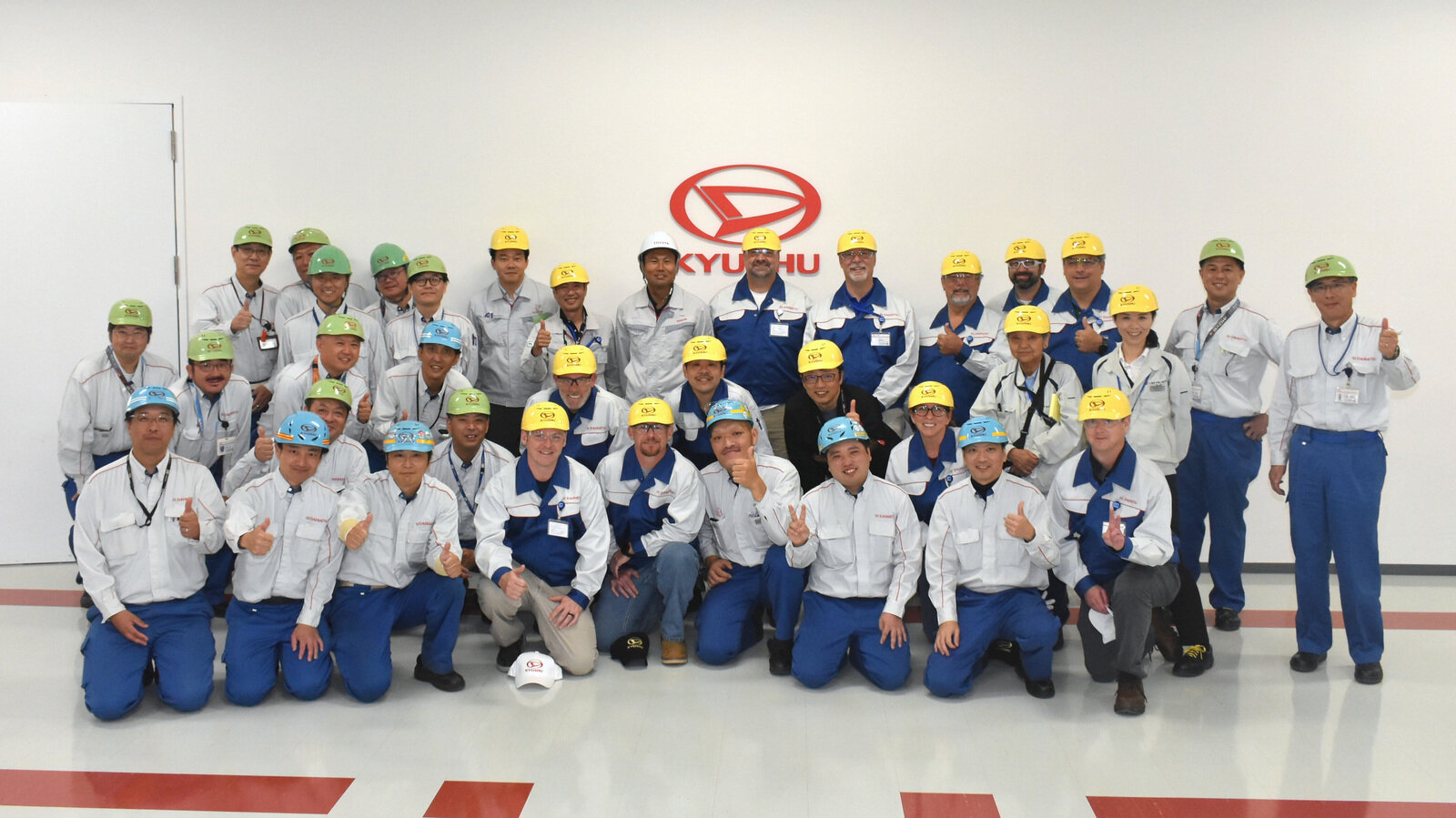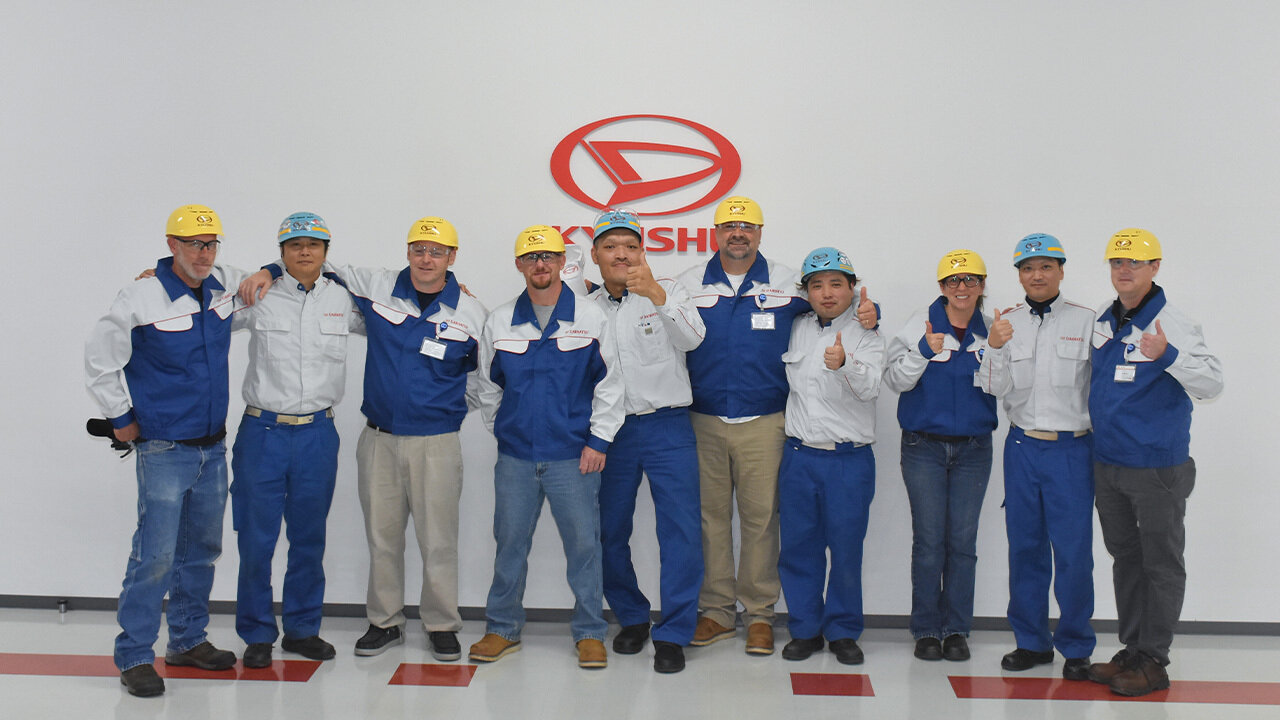
Born in Japan. Soon to be built in America. But how do you bring a distinctly Japanese truck to life on the other side of the Pacific? Teams at Daihatsu Kyushu and Toyota Motor Manufacturing Indiana (TMMI) are working together to answer that question.
TMMI Wasn’t the Only Side Learning
The Daihatsu side was learning as well. One area that stood out was TMMI’s approach to ergonomics.
At Toyota plants in North America, including TMMI, processes and equipment are designed with the operator in mind. Posture, reach, and other ergonomic factors are carefully assessed to reduce physical strain as much as possible.
Kiyoteru Otsubo, General Manager, Production Engineering Office, Daihatsu Kyushu
We had taken it for granted that people would adjust their posture to match the work. If the job was low, for example, the operator would crouch down.
The TMMI members suggested that instead of asking the operator to crouch, we should raise the part or the work itself so that the person can maintain a more natural posture. It made us realize just how much thought they put into reducing the physical burden on the operator.
The engine-marriage process—where the powertrain and body come together—became another example of the two plants bringing their own methods to the table.
Lanny Mendenhall has worked at TMMI for 26 years and for roughly six years has been part of Pilot integration, improving processes and production lines for new-model launches. In his words, Pilot is "the kaizen part" of the launch team.
Lanny Mendenhall, TMMI
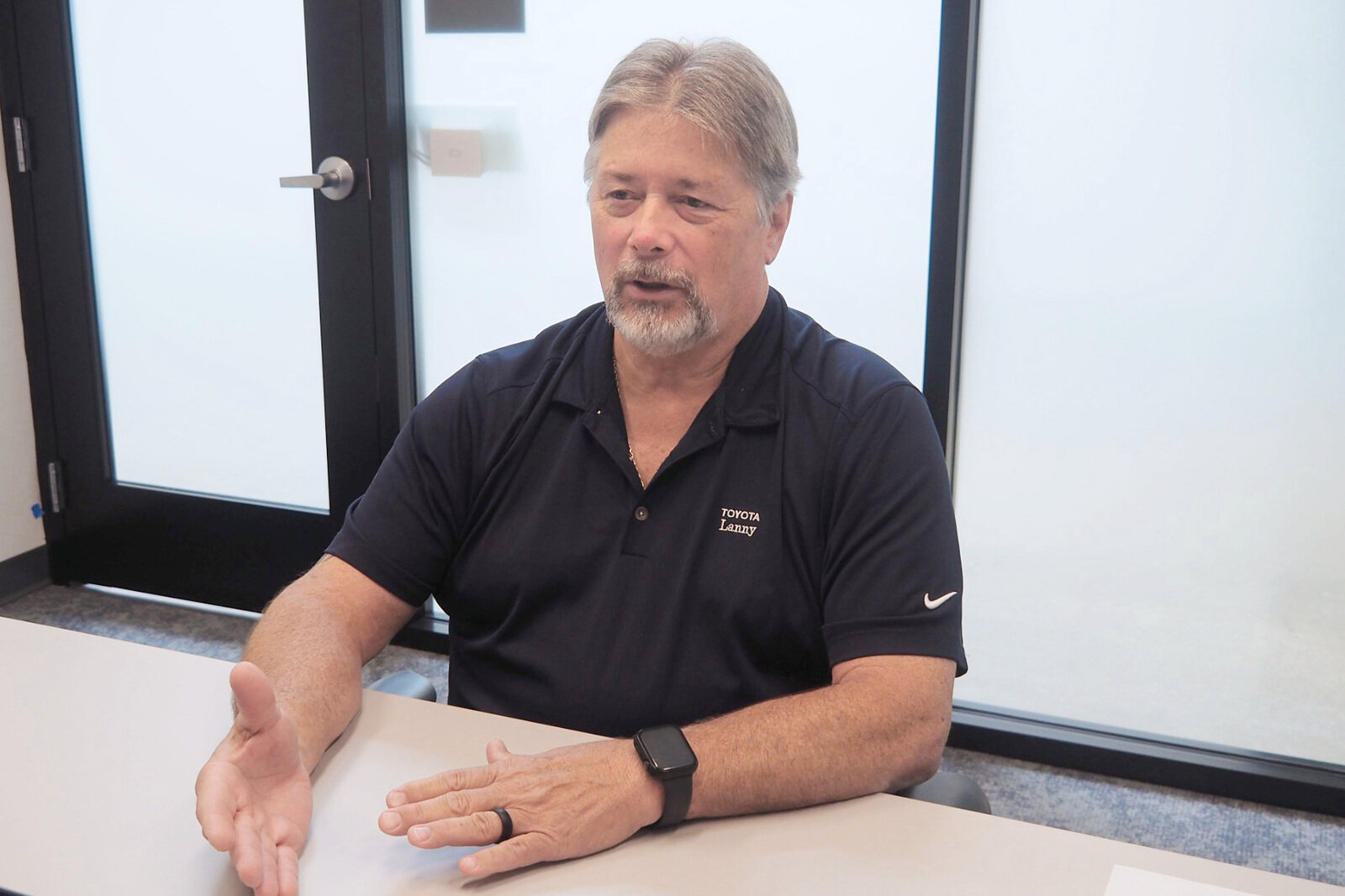
The way we marry the engine, front drivetrain, and front axle is different from the way they do it. At Daihatsu, the strut is already mounted to the body. At TMMI, we mount it to the front axle and front suspension and bring everything up together as one assembly. That can reduce the amount of work that has to be done in a tight space and make the job easier on the team member.
When we showed them how we do it, it gave them something new to think about.
The answer, however, was not simply to replace the Daihatsu method with the TMMI method. Andy Kissling, who worked on the same process, describes what emerged instead.
"We were able to tighten the strut right in front of us, at about waist level, instead of working in a very tight space inside the wheel well. We combined that with some of the things Daihatsu was doing. We kind of made a hybrid process. We took some of their ideas, they took some of ours, and it worked out better in the end."
Asking in English, Answering in Japanese
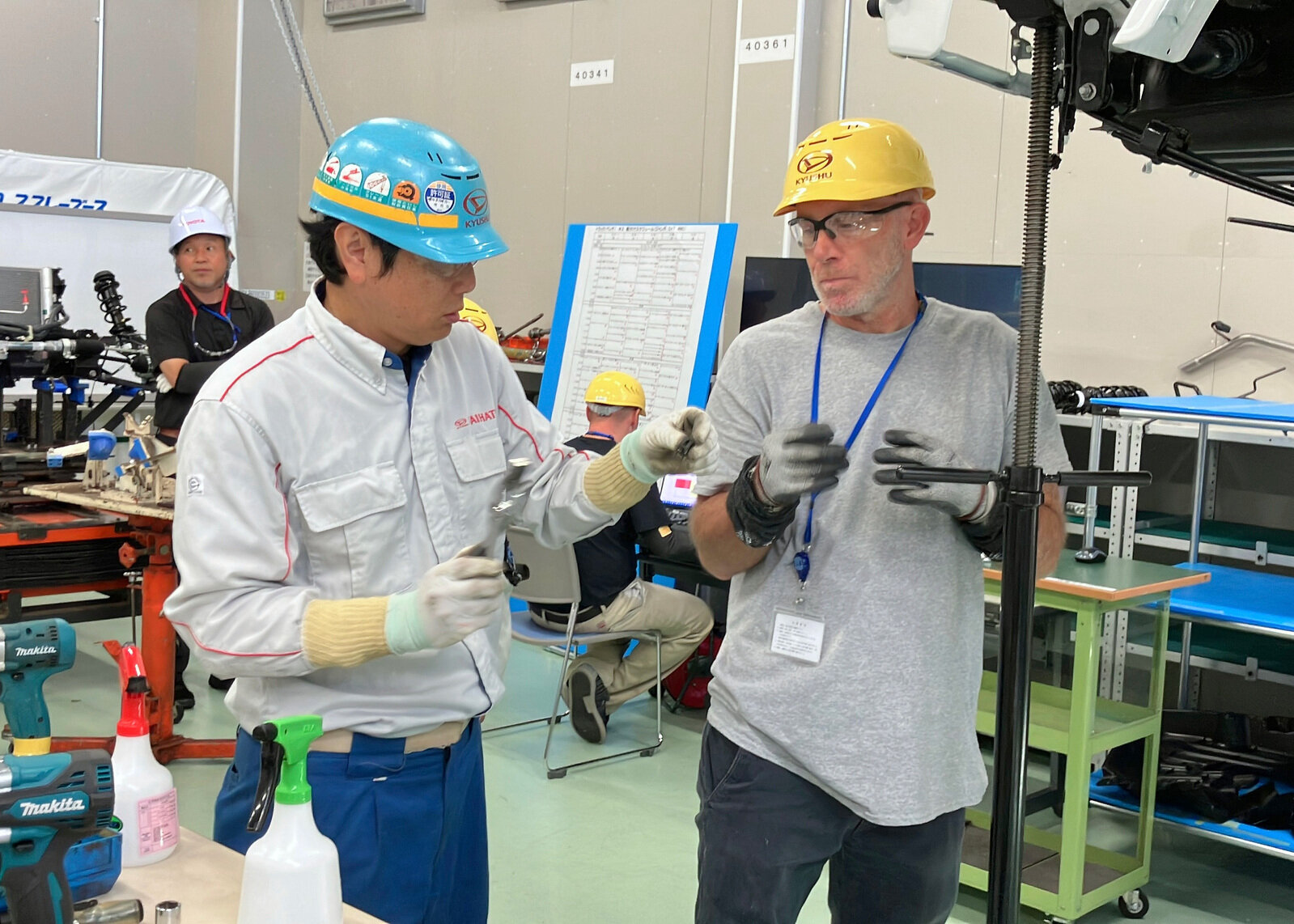
As the teams worked side by side, their communication gradually began to change.
Hiroaki Okuma of Daihatsu Motor’s Vehicle Project Office recalls the difference after two weeks.
Hiroaki Okuma, Project General Manager, Daihatsu Motor
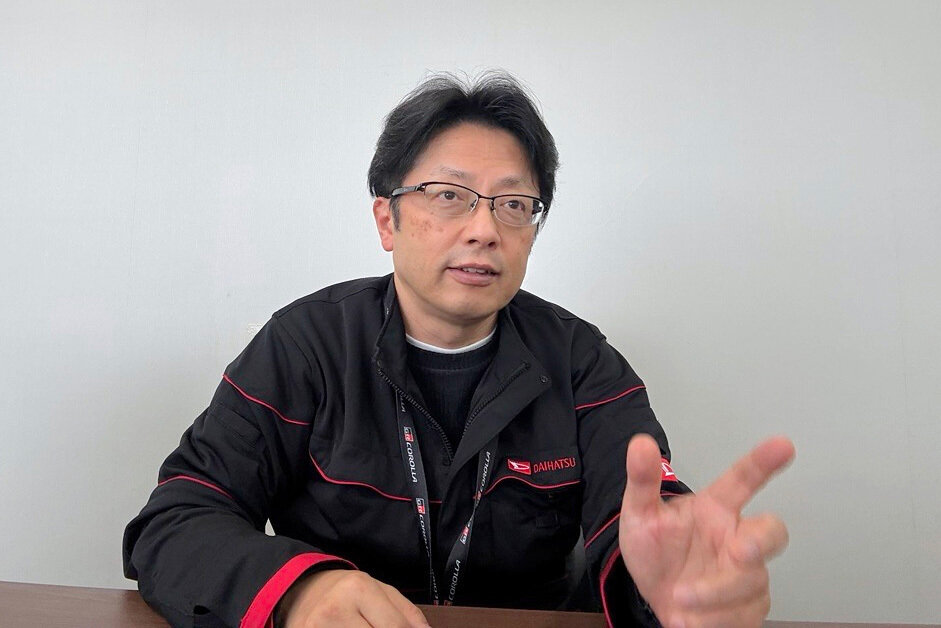
At the beginning, things felt a little awkward. Two weeks later, a TMMI member would ask a question in English and a Daihatsu Kyushu member would answer in Japanese. There was no interpreter in between, but somehow, they understood each other anyway.
It was a slightly strange scene—but a very nice one.
Angela Ruggles felt the same. The Daihatsu Kyushu member who trained her had also spent roughly 24 years building vehicles, almost exactly the same length of experience as Ruggles herself.
"Even though we had a translator, it was like me and him—we just knew. I could tell what he was trying to say without even knowing the words, because he was showing me how to put the parts on. By the end, it felt like we really didn’t even need the translator."
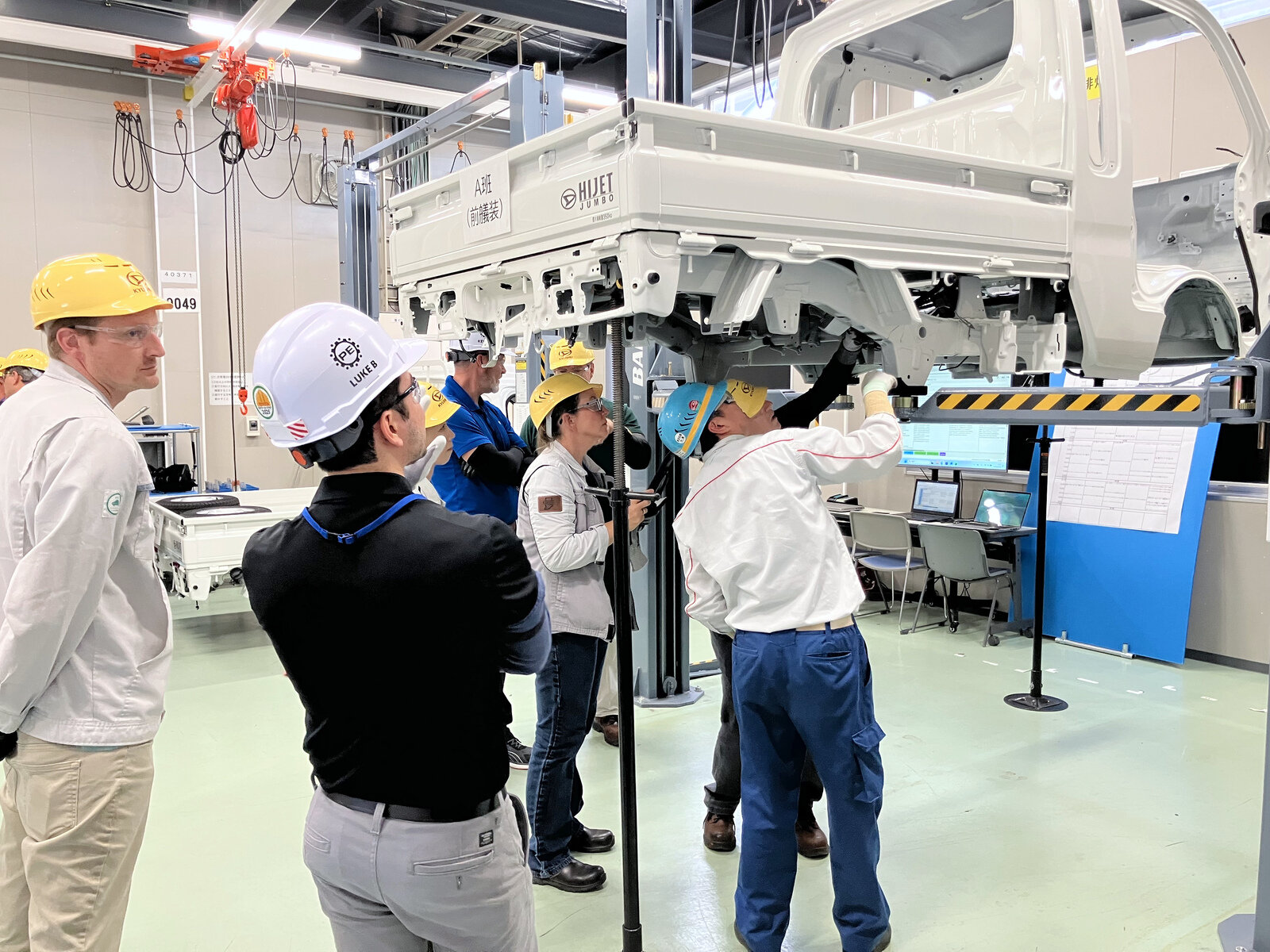
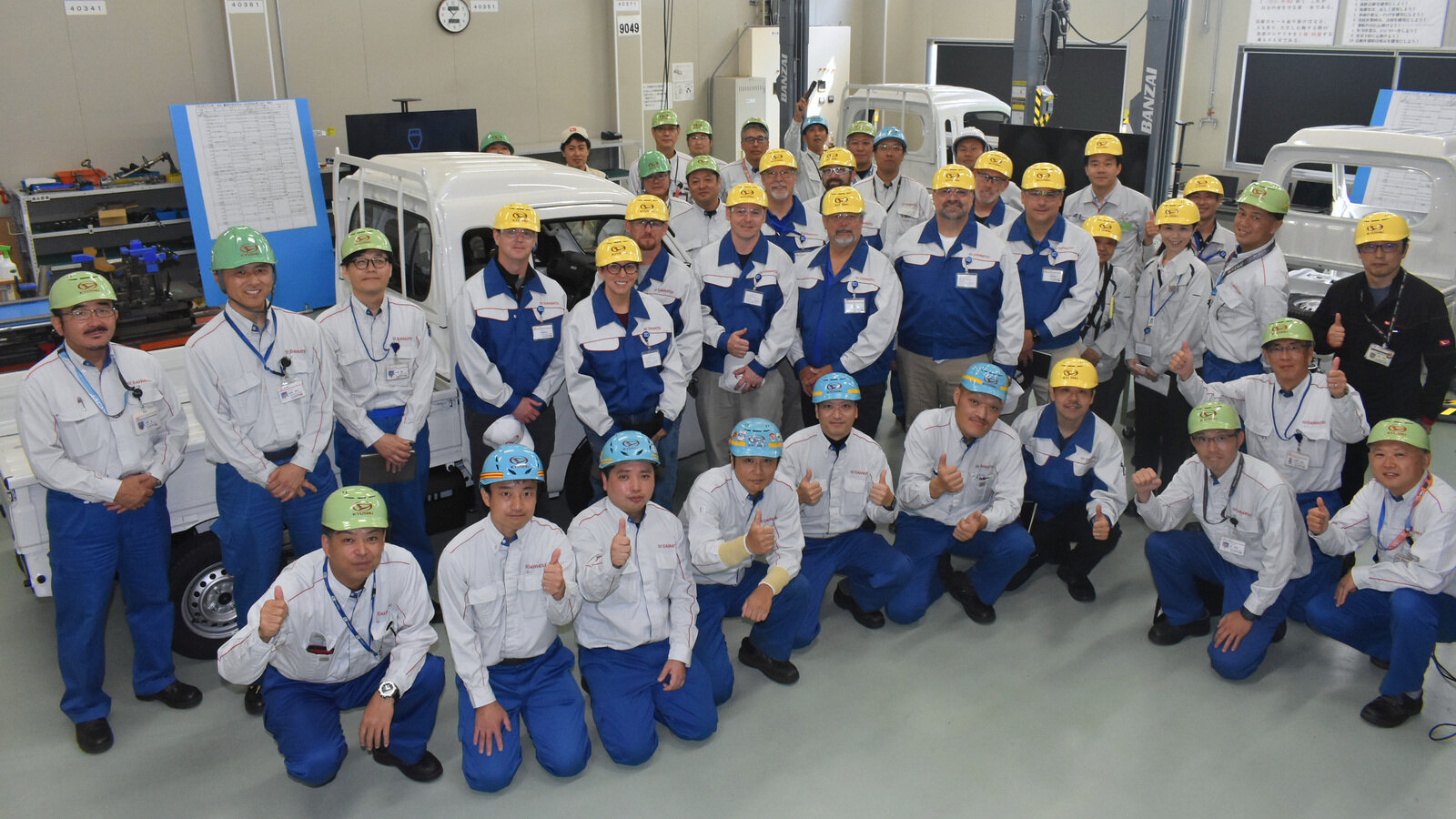
Before the visit, the Daihatsu Kyushu side had wondered whether two weeks would be enough to teach the production sequence for such a distinctive vehicle. In practice, the TMMI members absorbed it faster than expected.
Kiyoteru Otsubo, General Manager, Production Engineering Office, Daihatsu Kyushu
Honestly, before they arrived, I thought we might only have enough time to go through each process once in two weeks.
But after we showed them the assembly the first time, from the second round onward the TMMI members built it themselves while we supported them. Some processes went through three full cycles—build it, take it apart, build it again. Their speed of learning surprised us.
The effort began with Daihatsu Kyushu teaching TMMI how to build a kei truck. But the exchange did not remain one-way. Hiroaki Okuma recalls that the Daihatsu side was also determined to learn from the TMMI members and take something back from the experience.
Hiroaki Okuma, Project General Manager, Daihatsu Motor
On the Daihatsu side, too, I felt a stronger-than-usual determination not just to teach the TMMI members, but to learn something from them and take it back with us.
We do not get many opportunities to work side by side with colleagues from overseas. I think this experience will remain valuable for the Daihatsu Kyushu members as well.
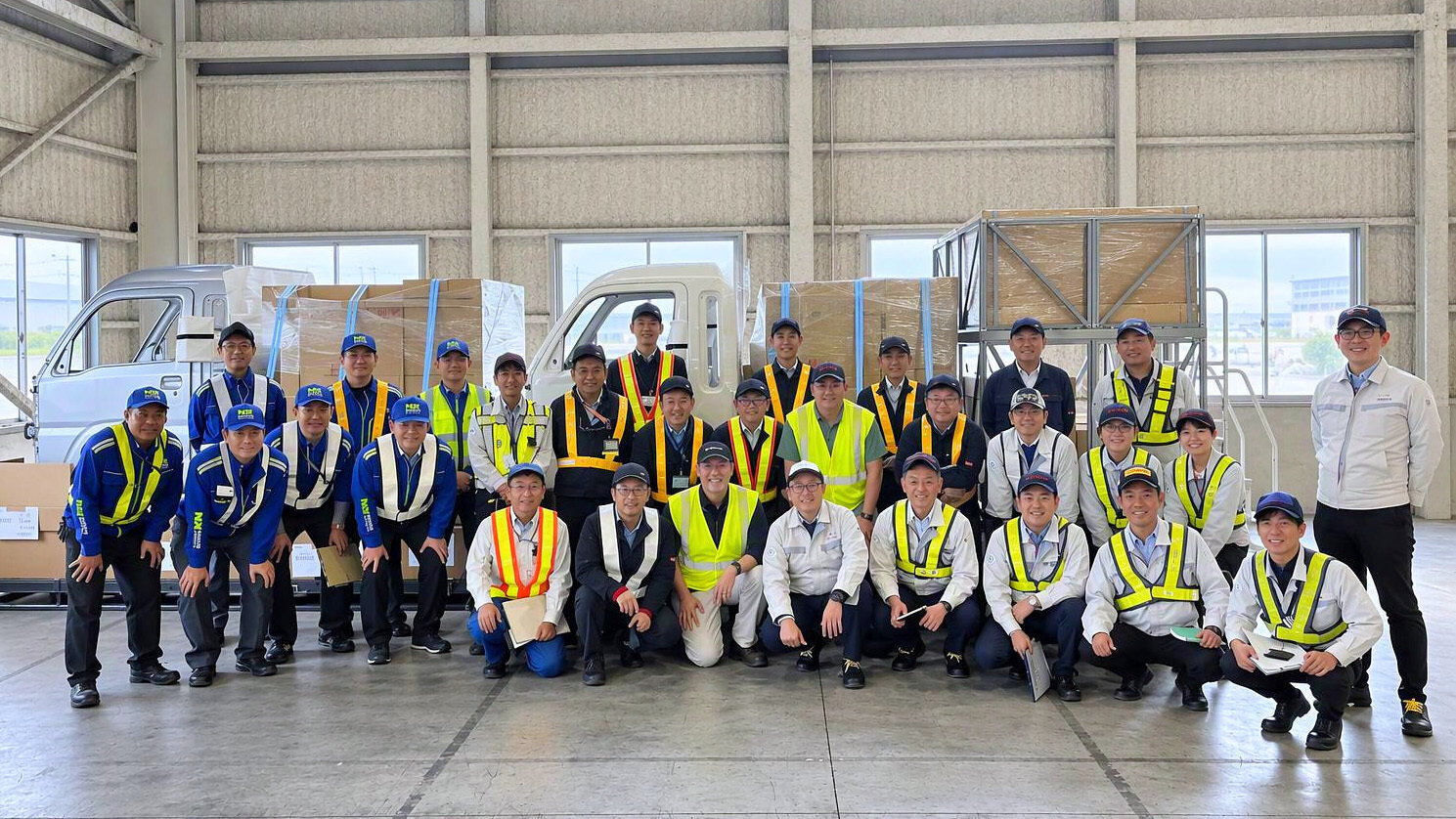
Production preparation is not only about how to build the vehicle. Another major challenge is how to move the parts from Japan to the United States.
The parts must be packed in Japan, transported without damage, unpacked at TMMI and then fed smoothly into the assembly process. Packing, unpacking and production therefore have to be designed as one continuous flow.
Lanny Mendenhall, TMMI
They’re going to have to have standardized work to pack it, just like we’re going to have to standardize how we unpack it.
We need to understand where each part comes out, in what order and where it goes. We also need to know the size and weight of the boxes and whether anything is too heavy to pick up without an assist.
And we have to make sure the way it is packed does not damage the parts. If something arrives damaged, we may not have a replacement part readily available.
A smaller group of members later returned to Daihatsu Kyushu to study how the parts would be packed on the Japan side. Mendenhall expects that the unpacking process alone could require several thousand additional work instructions.
Growing the Learning in Indiana
Back in the United States, the members who learned in Japan now have to pass that knowledge on.
Senior Engineering Manager, Gary Gardner, who leads the production-preparation effort, says the work instruction sheets were refined with what the team learned at Daihatsu Kyushu, eventually reaching 2,484.
Gary Gardner, TMMI
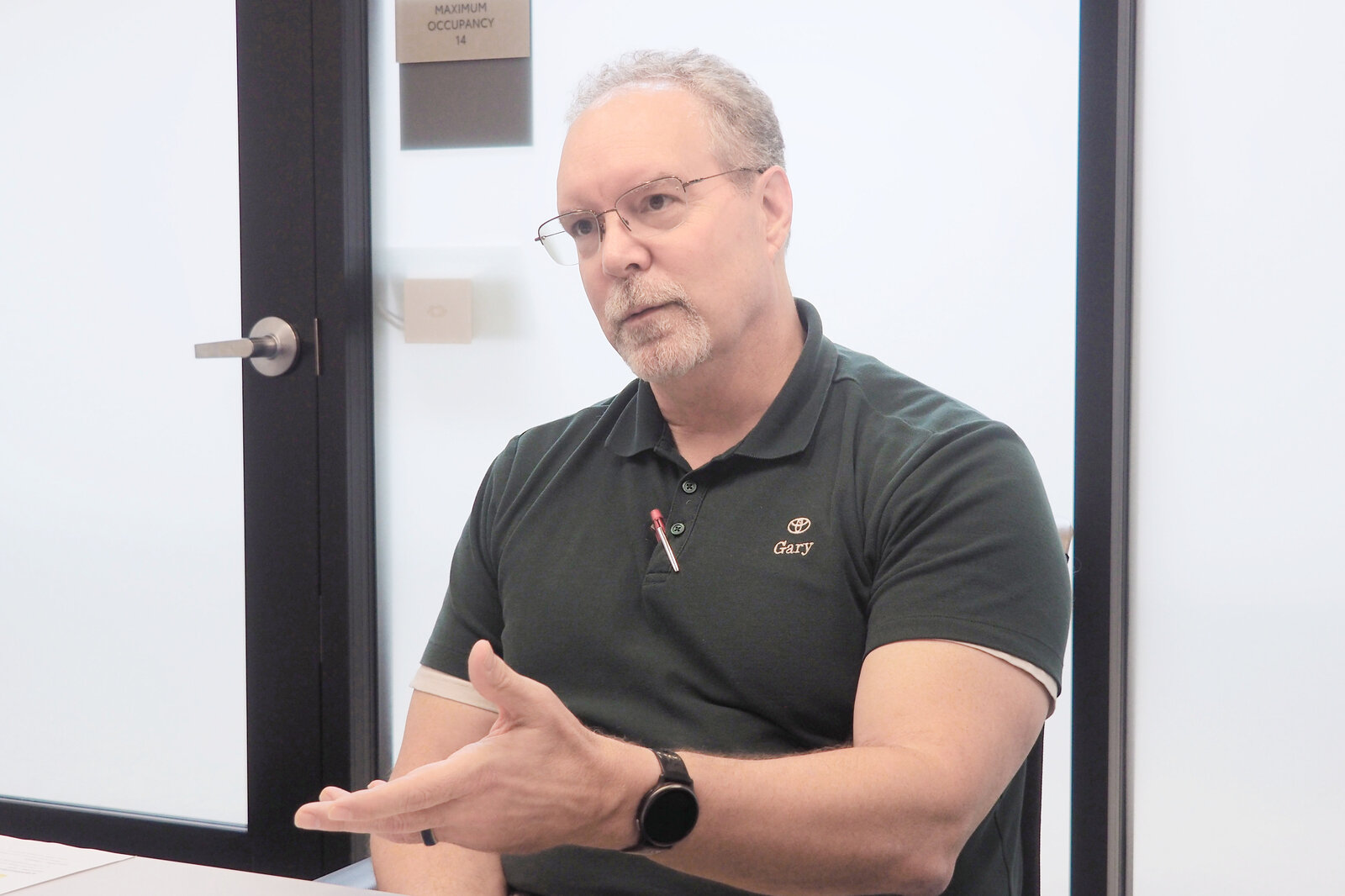
We kept a very small team because we wanted to move quickly and make decisions quickly. Every member you interviewed is empowered to make decisions. They’ll be the future trainers. They will train the trainers, and they’ll be heavily involved in passing on what they learned in Japan and what we put into the work instructions to the team members who will actually build the vehicle.
Going forward, we’ll respect the basic work sequence Daihatsu has refined over years of production. From there, we’ll add the kaizen that is unique to TMMI—looking for ways to work more efficiently, improve quality and reduce muda.
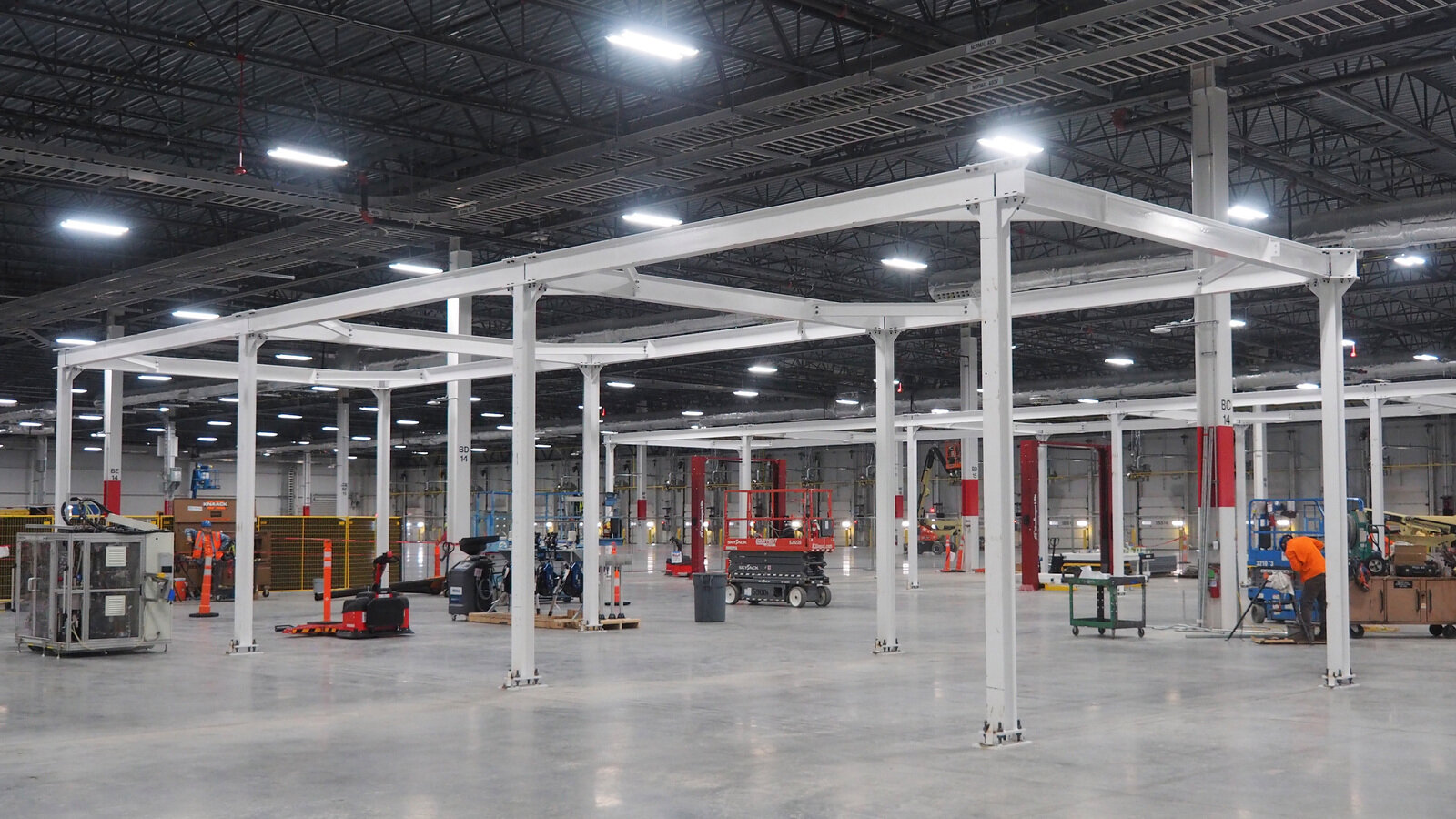
Looking back on their time in Japan, the TMMI members say the trip offered more than shop-floor learning. It was also a chance to experience Japan itself.
Aaron Loudermilk reflected on his experience:
"While I was in Japan, I was amazed to see kei trucks everywhere—being used for deliveries, groundskeeping and all kinds of everyday work."
TMMI President Jason Puckett reflects on the exchange.
Jason Puckett, President, TMMI
I wasn’t able to go on the trip, but I heard very positive feedback from our members. We really appreciate all the support from Daihatsu.
We’ve been working for Toyota for a long time and understand the Toyota Way. Even so, working with Daihatsu and Daihatsu Kyushu gives us a chance to think from a slightly different angle and try new things. I think this has been a very good opportunity for us as well.
First and foremost, our job is to build a good vehicle. I’m very excited to see how customers in the United States respond to it.
Japan’s kei-truck manufacturing expertise is being passed from person to person as kei-truck production prepares to take its first firm step in the United States.