



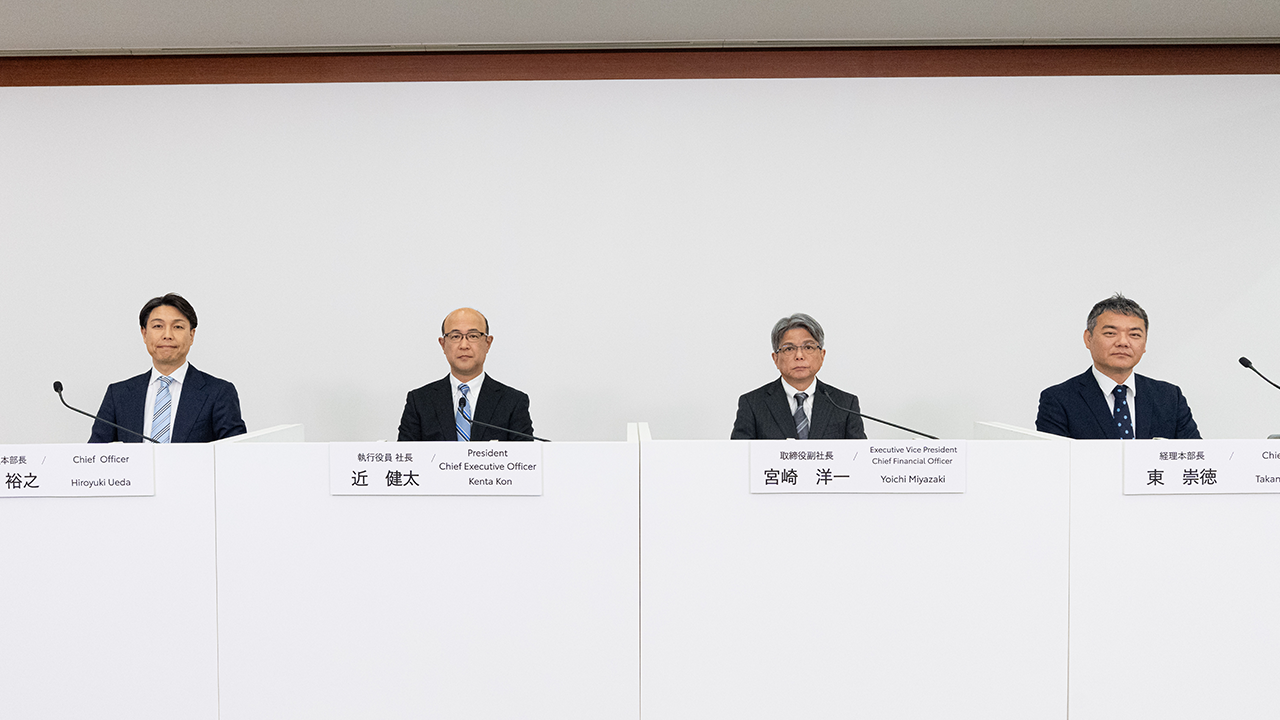
Toyota posted operating income of 3.8 trillion yen in its financial results for the fiscal year ending March 2026 despite the impact of U.S. tariffs. In a Q&A session with the media, the company outlined its path toward sustainable growth.
At Toyota’s FY2026 financial results briefing held on May 8, the company secured operating income of 3.8 trillion yen despite the impact of U.S. tariffs and rising material costs. Meanwhile, for FY2027, Toyota forecast a third consecutive year of profit decline, as improvements were not expected to fully offset the impact of the situation in the Middle East.
Alongside reporting the financial results, Toyota Times also published the full message from President Kenta Kon, who had assumed office just the previous month. President Kon spoke about his belief that “Toyota management is about sustaining growth.”
This article introduces part of the Q&A session with the media, including Toyota’s electrified vehicle sales strategy, efforts to strengthen earning power, and approach toward suppliers.
I. Reflections on FY2026 financial results
— As president, how would you summarize these financial results?
President Kon
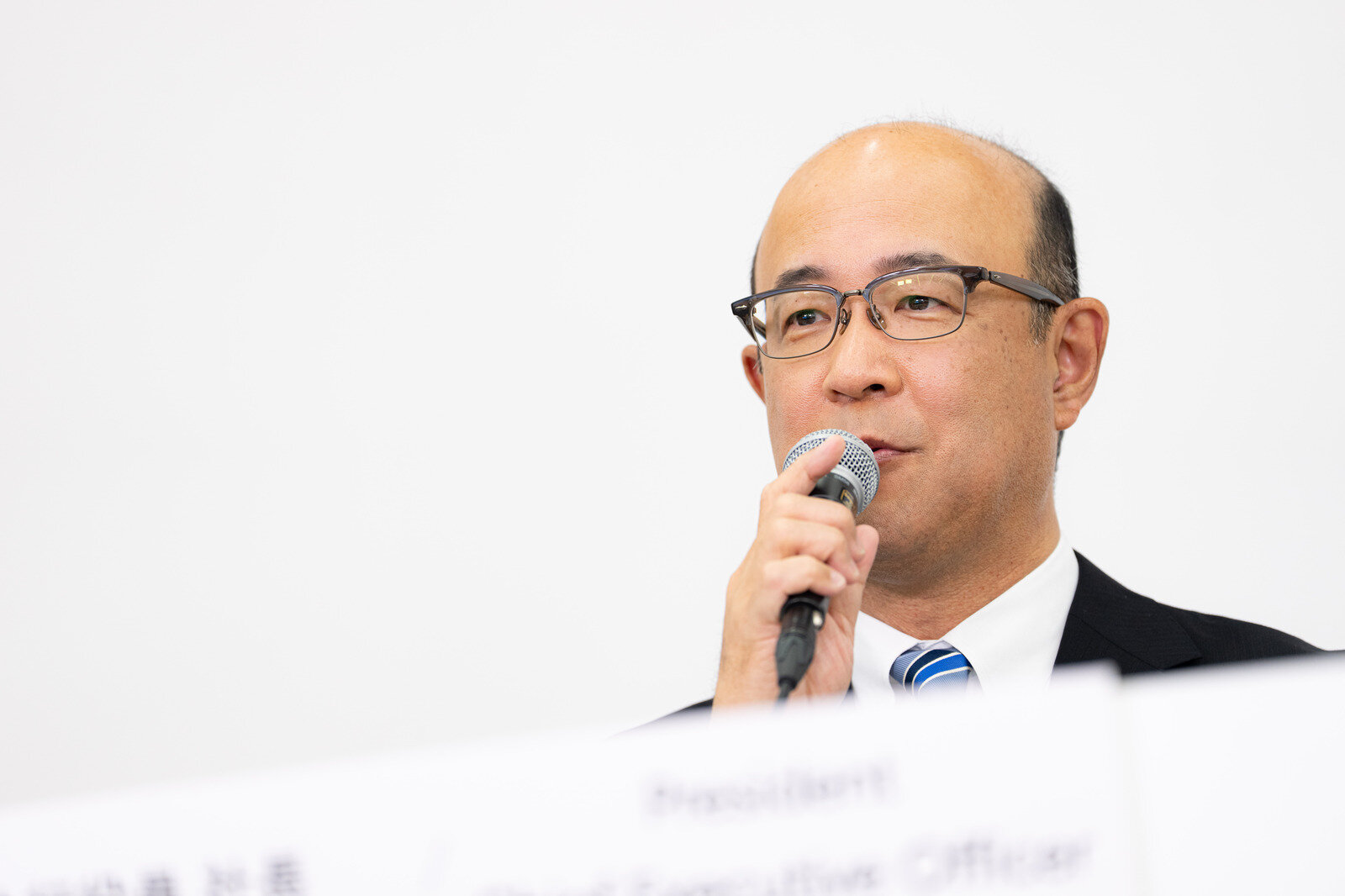
In the face of such major changes in the business environment, we were able to generate nearly 3.8 trillion yen in profit.
While these financial results represent Toyota Motor Corporation’s performance for a single fiscal year, they are also the accumulation of efforts built up over a very long period of time. They reflect not only Toyota’s own efforts, but also the collaboration, partnership, and initiatives undertaken together with many stakeholders.
I would like to express my sincere gratitude to our predecessors and to all of our stakeholders.
I am also truly grateful that we remain in an environment where we can continue making growth investments steadily, without having to apply the brakes.
As for the breakeven volume, the upward trend has not yet been halted. However, we have not reached a situation like that seen during the global financial crisis, when volumes exceeded 8 million units by a large margin.
That said, it is true that the trend is edging upward. As mentioned in today’s presentation, I believe we have already begun responding steadily with measures that can be implemented in the short term. These initiatives have only just begun this fiscal year, so naturally we will continue them over the remaining 11 months.
As for medium- to long-term measures, some initiatives have only recently begun, and in some areas the effects have not yet fully appeared in either the previous or current fiscal year. However, if we continue steadily, I believe the results will certainly come.
Overall, I believe we are in a position where we can continue making growth investments steadily—in other words, a position where we can step on the accelerator. Rather than applying the brakes across the board, these financial results allow us to identify unnecessary processes and inefficiencies one by one, transform our structure piece by piece, and continue driving reform.
— Toyota became the first Japanese company to surpass 50 trillion yen in operating revenue. What are your thoughts on this milestone?
Executive Vice President Yoichi Miyazaki
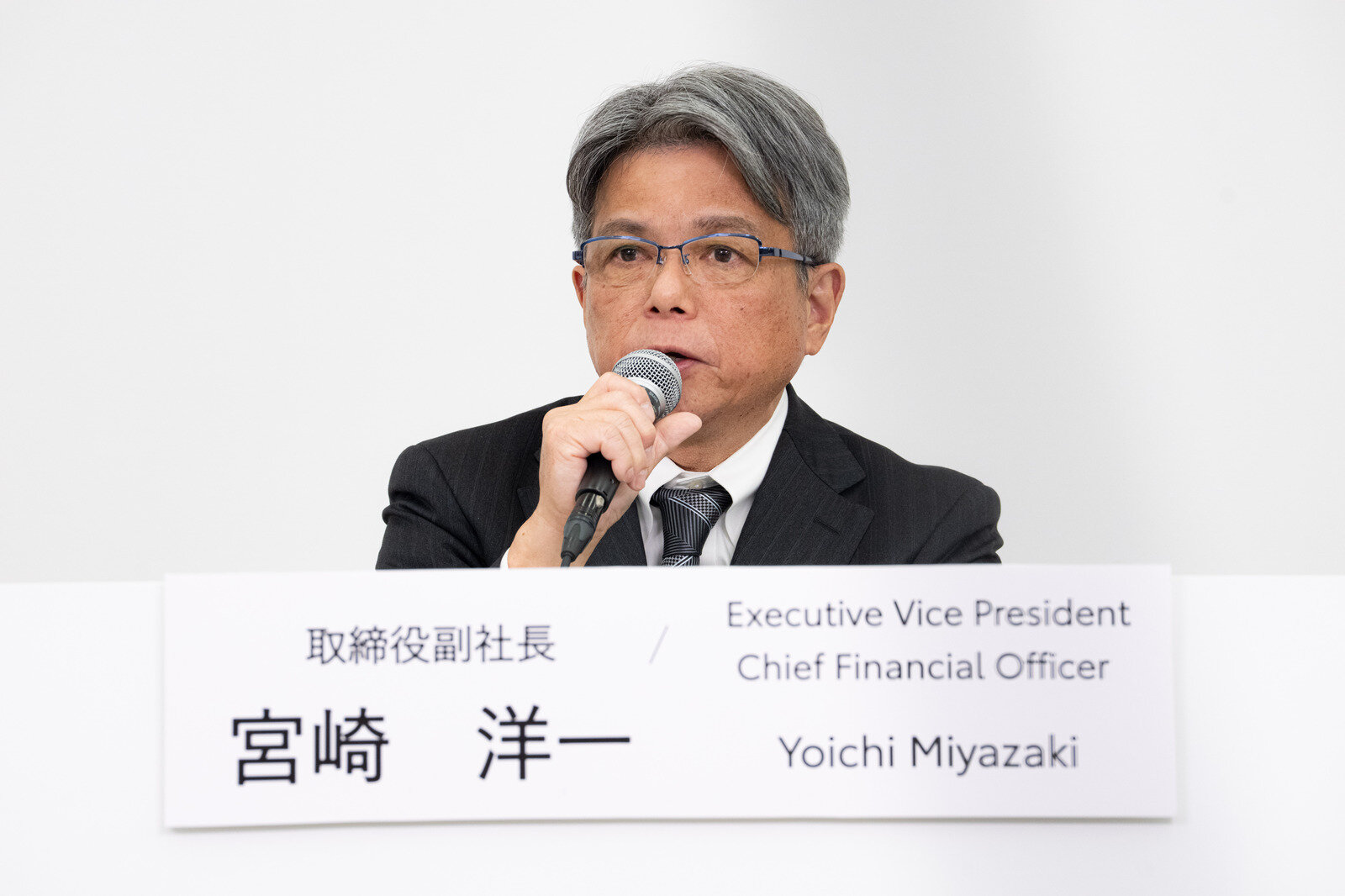
We have not been operating with the specific goal of reaching 50 trillion yen.
What we have focused on every day is how to deliver our products to each individual customer. I believe this figure reflects the steady accumulation of those efforts together with all of our stakeholders.
As overall sales volume continues to grow, it is true that hybrid vehicles are contributing significantly to that growth.
I believe these results reflect the fact that the wide variety of vehicles we have worked so hard to develop has reached customers thanks to the dedicated efforts of our dealers.
Going forward, we will continue working hard together with our stakeholders to provide the vehicles our customers choose and deliver those vehicles to them.
II. What is Toyota’s electrified vehicle sales strategy?
— How does Toyota plan to advance its BEV strategy from here?
President Kon
It is difficult to accurately predict what kind of market conditions we will see going forward, as they differ by country and region. However, what will not change is our commitment to listening carefully to customer needs in each region and reflecting them in our product and supply strategies.
We want to deliver good vehicles to all customers. For customers who want battery EVs, we want to deliver high-quality battery EVs. We will continue pursuing that strategy steadily.
— How will Toyota strengthen efforts to expand electrified vehicle sales?
Vice President Miyazaki
The reality is that, particularly in Japan, customers are still waiting for delivery. Electrified vehicles account for around 50% of sales. However, our first priority is to deliver vehicles where demand already exists.
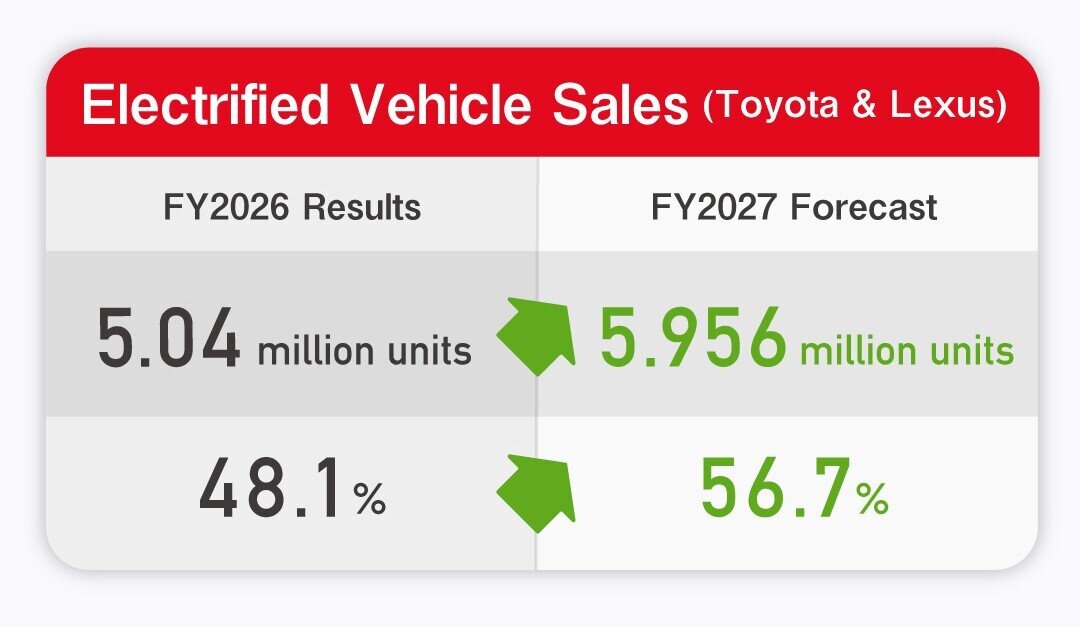
We now offer hybrid models across nearly our entire lineup, so first and foremost we will continue strengthening our hybrid lineup through ever-better carmaking. At the same time, I believe the key is establishing a production and delivery system that can keep pace with demand.
As a foundation for future earning power, we also want to fully utilize our production capacity as we continue preparing for further electrified vehicle growth.
When asked how Toyota intends to balance ever-better carmaking with strengthening earning power, Vice President Miyazaki replied, “The most important thing we must do is continue delivering affordable vehicles.”
Referring to the period before Chairman Akio Toyoda became president in 2009, he continued:
“We must never return to an era driven solely by volume. This is something all employees share and understand. Within that framework, we hope to steadily build earning power by delivering products that bring smiles to each individual customer.”
III. Lowering the breakeven volume
— What initiatives will Toyota undertake to lower the breakeven volume? And does the company have a target level?
President Kon
In Vice President Miyazaki’s presentation, there was a section on business structure reform and strengthening earning power. I believe a significant portion of our initiatives is summarized there.
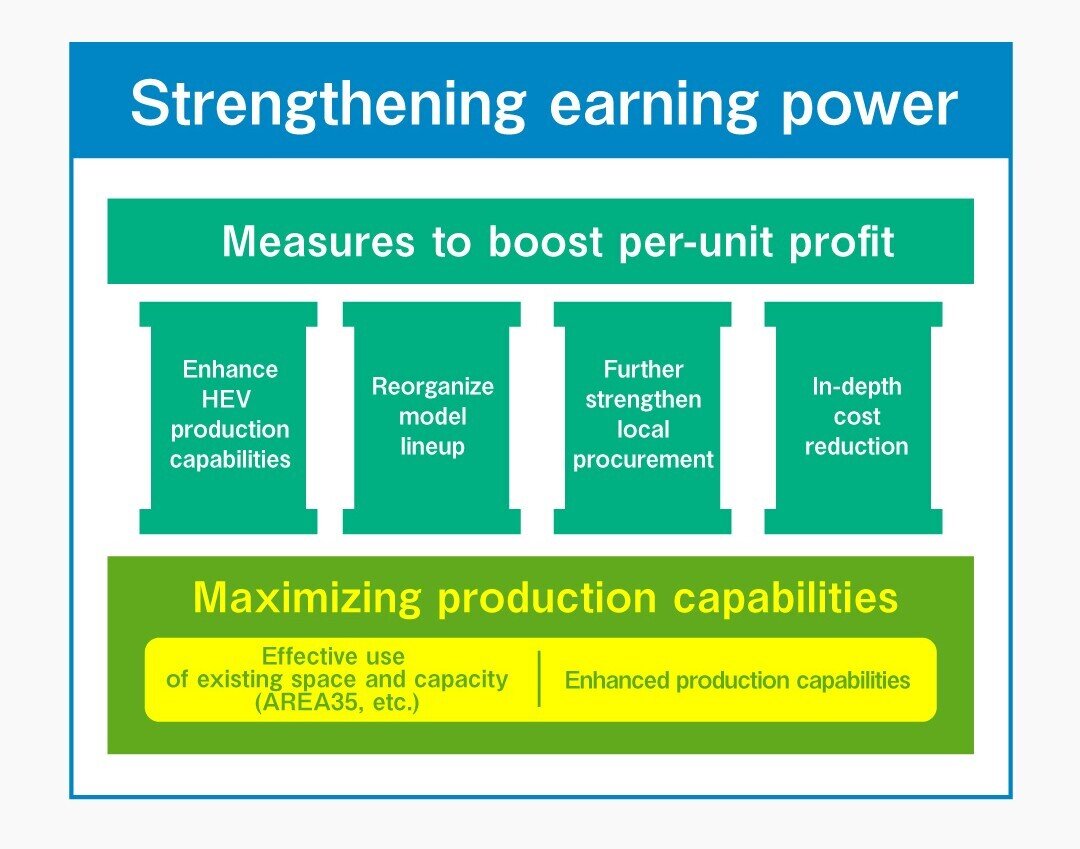
First and foremost, we must deliver the hybrid vehicles that customers are currently waiting for. As an automaker, that is Toyota’s most important mission.
As for reorganizing the production lineup, this includes reviewing and reducing the number of variants. As we continue pursuing a multi-pathway approach, the number of vehicle types has increased. If this continues, the number of parts and specifications will also increase significantly, ultimately making things more difficult for customers to understand.
By carefully assessing these issues, I believe we can achieve substantial results.
That also ties into cost reduction. Up to now, we have worked together with suppliers to build the foundation. From here, the focus will be on translating those efforts to productivity improvements, and we are continuing discussions with suppliers toward that goal.
Of course, there are still areas where the foundation has not yet been fully established. In particular, some suppliers may still require further support. In those cases, we will continue communication, while in areas where the foundation is already in place, we will address issues one by one and steadily accumulate cost improvements. I believe this is the stage we are now entering.
Through those efforts, we expect to see results, ultimately leading to an improvement in the breakeven volume.
We do not have a specific target level in mind. Rather than aiming for a particular number, the goal is to rebuild our earnings structure so that we have a framework capable of pursuing the next stage of growth.