Akio Toyoda has joined the Automotive Hall of Fame. Toyota Times looks at the significance of his induction and the message he delivered at the ceremony.
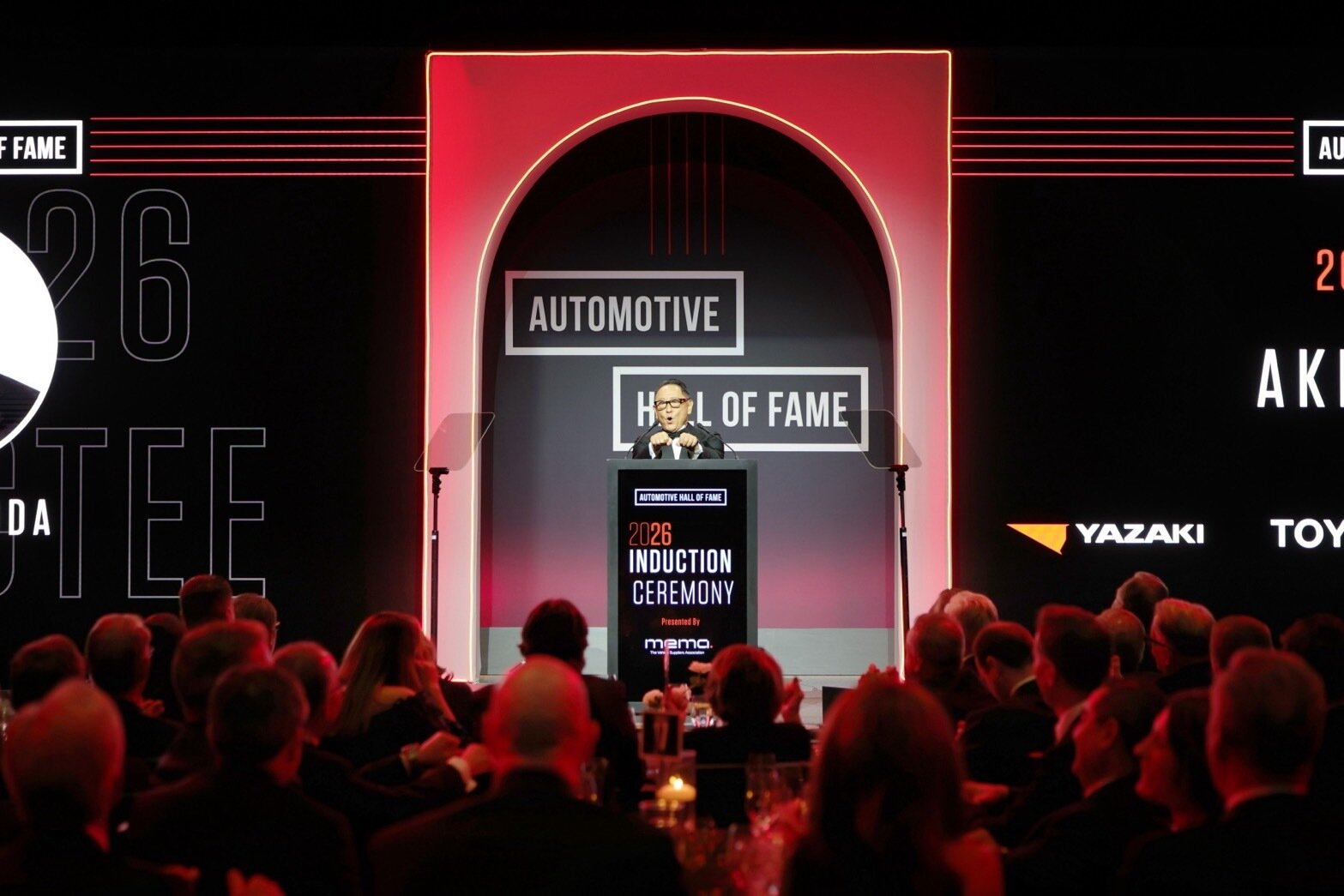
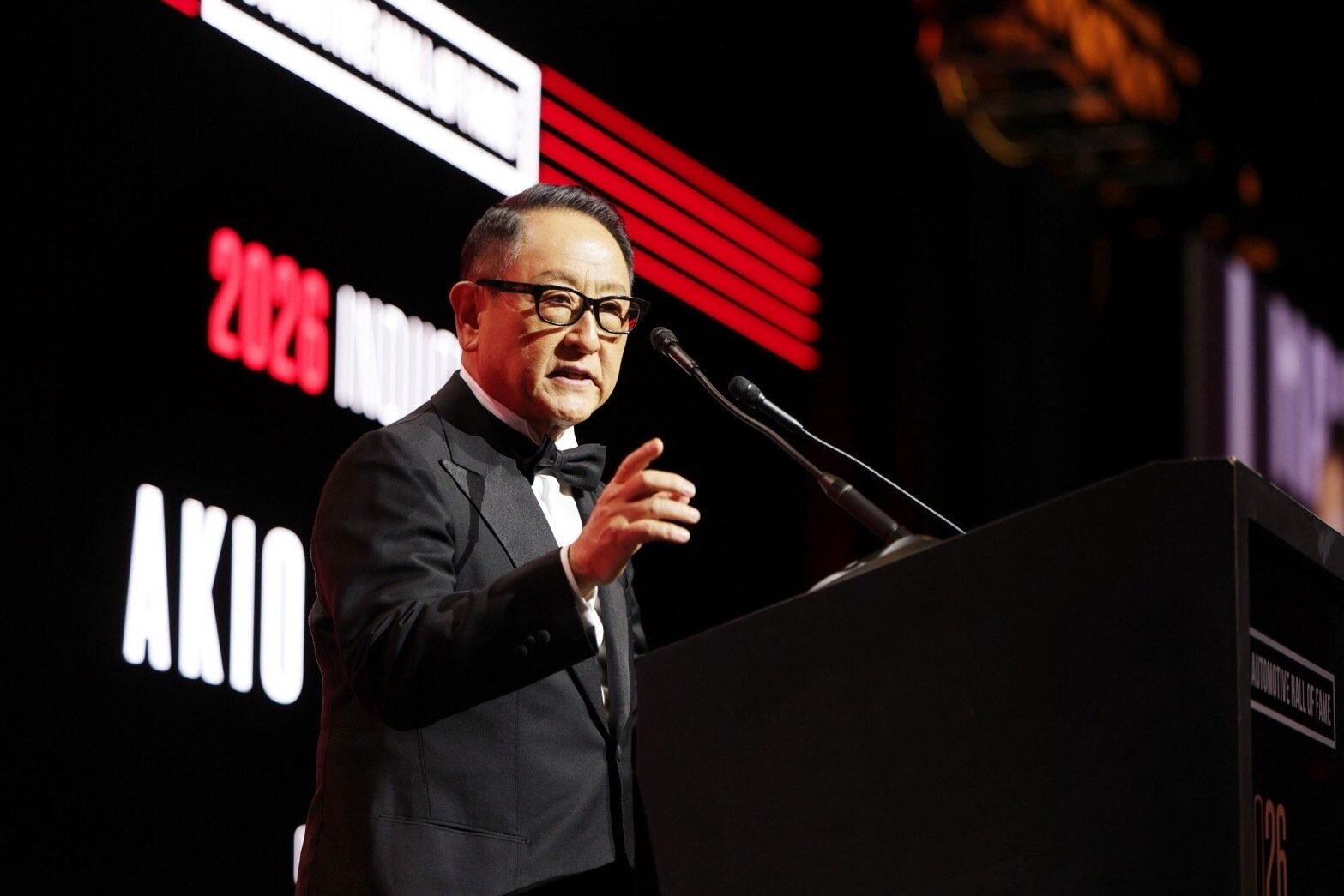
On September 23 in Detroit, Michigan, Akio Toyoda was among four honorees inducted into the Automotive Hall of Fame for 2026.
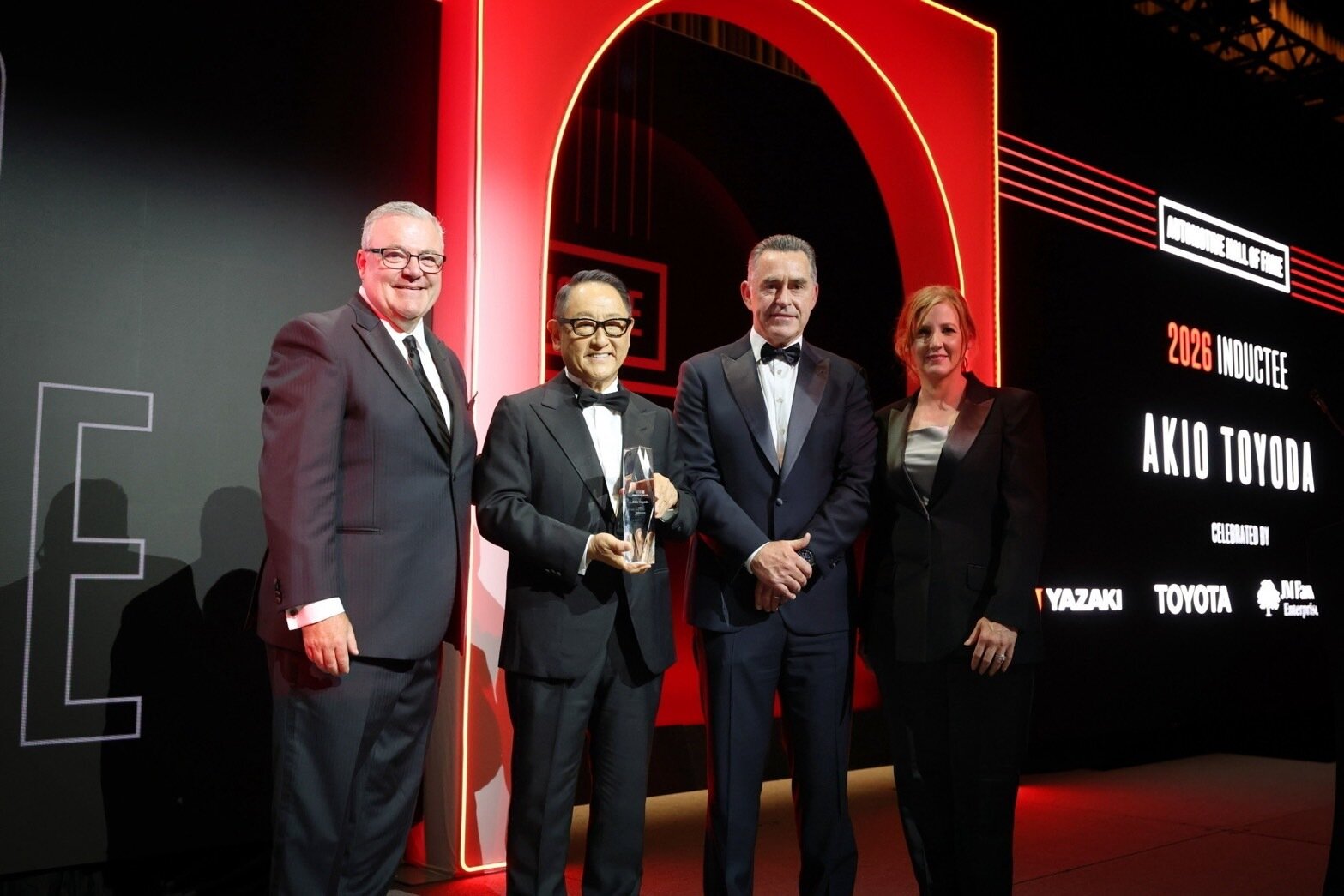
Addressing an industrywide audience of more than 700 people, including automakers, dealers, suppliers and motorsports professionals, Toyoda spoke of his deep respect for the United States and gratitude to the many people who had supported him. His message was also forward-looking: building the future together with colleagues across the automotive industry.
"The courage to trust his own instincts"
The ceremony began with a tribute video produced by the Automotive Hall of Fame. While acknowledging the legacy Toyoda inherited as a member of Toyota’s founding family the video emphasized his choice to earn the legacy for himself.
The video then looked back on his response to the recall crisis, his role as a master driver, and his motorsports participation as Morizo. The video concluded by describing how Toyoda had honored Toyota’s history while fearlessly shaping what the company could become.
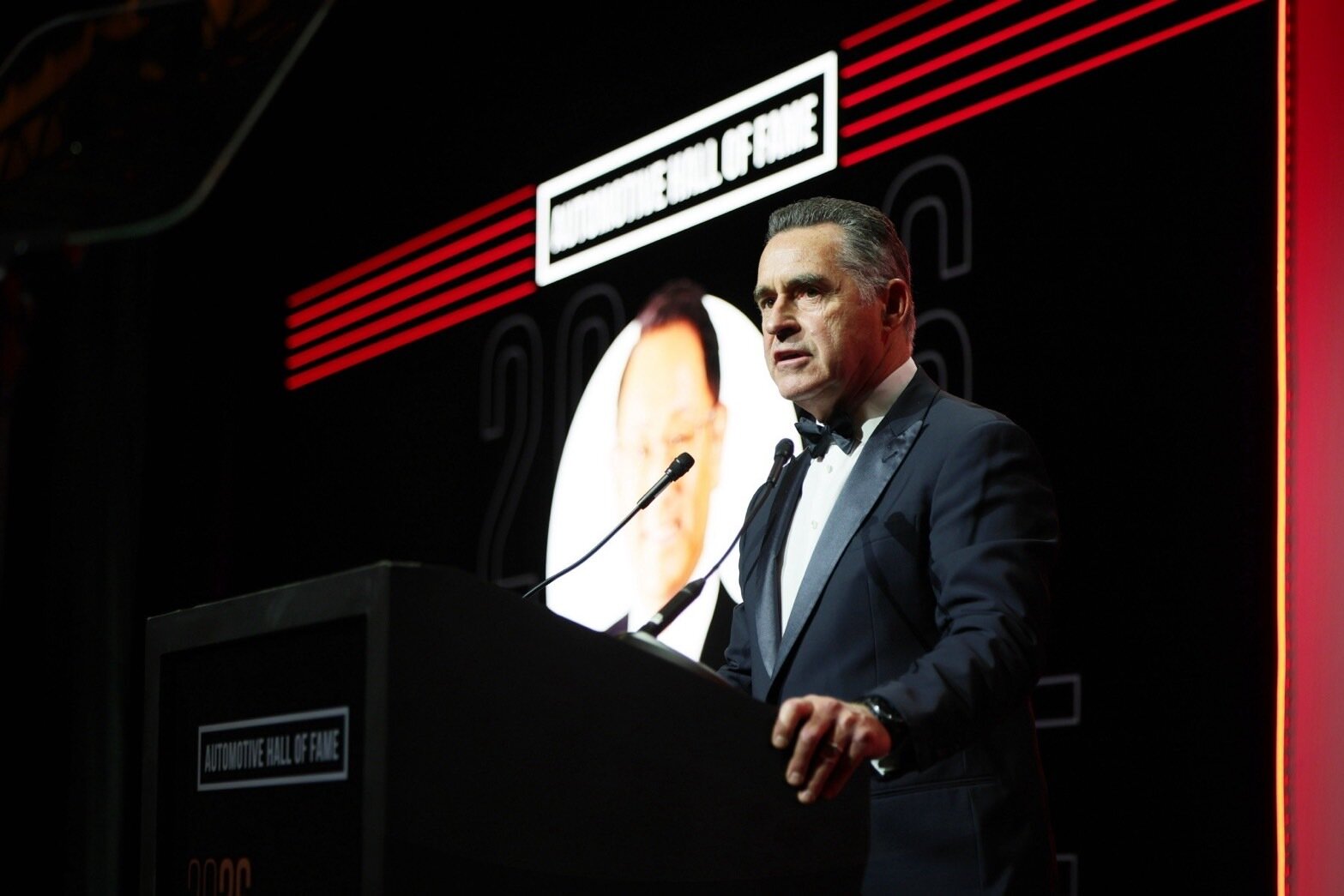
Introducing Toyoda was Greg Penske, Vice Chairman of Penske Automotive Group. Penske has led Longo Toyota, the world’s largest Toyota dealership, and has supported Toyota’s business in the United States for more than four decades.
Penske said that when looking back, “Akio’s presidency began as a trial by fire, with the one-two punch of the global financial crisis, followed by the recall that had him testifying in front of the U.S. Congress. Before the ink was dry on his new business cards.”
Penske went on to recall Toyoda’s strong declaration of “no more boring cars,” pointing to vehicles including the Lexus LFA and LC, Toyota GR86, Yaris and Supra, as well as the RAV4 and Prius.
He also spoke about Toyoda beginning training as a master driver at the age of 52 because he wanted to accurately communicate with engineers about what he was experiencing behind the wheel—and to play a direct role in vehicle development and tuning.
Penske said that Toyoda had transformed Toyota not by following conventional wisdom, but by having “the courage to trust his own instincts.” He concluded with a lighthearted comparison: “Known, even in Japan, by his first name only, Akio—like Beyoncé or Bono—is quite simply ‘an automotive rock star.’”
"This honor really belongs to all of them"
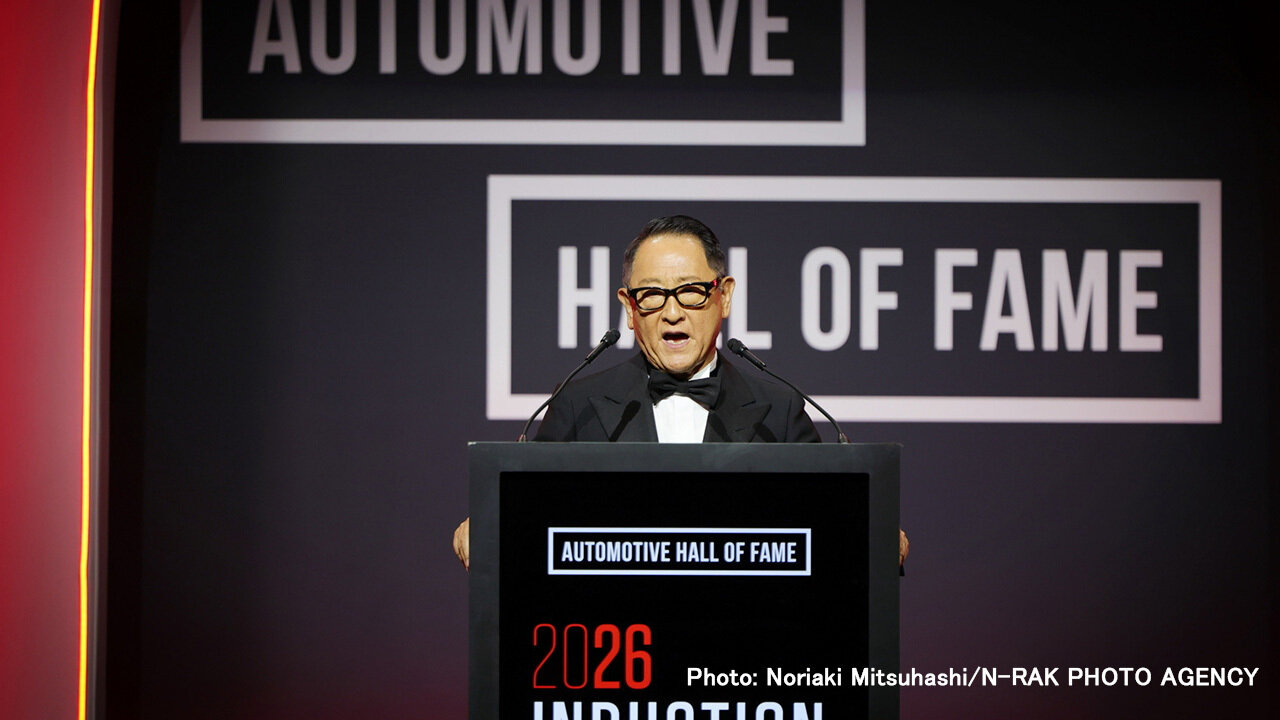
When Toyoda took the stage, he first expressed his gratitude to Penske. Then, he briefly let the audience in on a little secret: “Two days ago, I had an accident driving one of our off-road vehicles. So, if I look a little banged up, it’s because I am! But don’t worry, the car is fine!”
Though the injuries were hidden, the pain was real. As Toyota’s master driver, Toyoda had been evaluating vehicles right up until the ceremony—underscoring the seriousness of his commitment to making ever-better cars.
Toyoda then turned to Toyota and Lexus dealers around the world. “I may be biased, but I count myself lucky to have such exceptional partners.” He continued: “And it is their shoulders I stand on today, as well as their associates and the nearly 400,000 Toyota employees around the world. This honor really belongs to all of them.”
He went on to thank the customers, employees, suppliers and dealers who had sustained and inspired him through the challenges he faced as president. “Winning their hearts has always been my biggest motivation ... and my biggest reward.”
From there, Toyoda spoke about what cars mean to their owners. “How many cars we sell has never been the most important thing to me. What matters most is what those cars mean to the people that buy them. You see, what we sell is happiness.”
“Who in the world has ever been unhappy when taking delivery of a car? Cars are exciting, joyful, extraordinary things.”
Toyoda then widened his focus to the automotive industry as a whole: “We get to be part of the single greatest, most exciting, most rewarding, and in my opinion, coolest industry, in the world!”
Automotive Hall of Fame induction
The Automotive Hall of Fame was established in 1939 to recognize and preserve the accomplishments of pioneers who helped shape the automotive and mobility industries. It honors leaders, innovators, engineers, designers, suppliers, dealers, motorsports figures, and others from around the world.
More than 300 individuals and organizations have received its highest honor, induction into the Hall of Fame. Members include Henry Ford, Ferdinand Porsche, and Formula 1 driver Ayrton Senna.
Automotive Hall of Fame President Sarah Cook has described inductees as those who not only shaped the industry in their own eras, but have continued to inspire future generations of engineers, leaders, and automotive enthusiasts around the world.
Fellow 2026 inductees included Giampaolo Dallara, one of motorsports’ leading engineers and founder of the renowned racing car constructor Dallara.
A Toyota journey in America, from Kiichiro to Akio
Before Akio Toyoda, four people deeply connected with Toyota’s history have been inducted: Eiji Toyoda in 1994, Shoichiro Toyoda in 2007, Kiichiro Toyoda in 2018, and Taiichi Ohno in 2022.
For Akio Toyoda, the induction also marks a third generation of the Toyoda family entering the Hall of Fame.
Each of the four before him had a deep connection with the United States.
- Kiichiro was inspired by what he saw in America to pursue the creation of a Japanese automotive industry.
- Eiji learned extensively from Ford’s plants and later made the decision to establish NUMMI, Toyota’s joint venture with General Motors.
- Ohno helped build the Toyota Production System (TPS), which would eventually be studied throughout the United States and around the world.
- Shoichiro helped establish Toyota as a true member of American society by advancing localization and expanding the company’s North American operations.
Their achievements trace the history of Toyota learning from America, putting down roots there, and growing together with the country.
Akio Toyoda, too, has a deeply personal relationship with the United States. In his induction speech, he reflected on that history.
“My grandfather Kiichiro and my father Shoichiro were both inspired by this very place so many years ago. And now, as the third-generation Toyoda, I find myself here following in their footsteps.”
After university in Japan, he received an MBA from Babson College in Massachusetts. He has said that while his student life in Japan largely revolved around field hockey, his time at Babson became the final chapter of his youth spent immersed in study. Following that, he worked in New York in the financial industry. Yet wherever he went, he found himself treated as an automotive expert and eventually realized that he could not escape the Toyoda name. Later, the only extended overseas assignment of his Toyota career came in the United States, where he served as a vice president at NUMMI.
In 2010 when Toyota faced its recall crisis, he appeared before the U.S. Congress. For both Toyota as a company and Akio Toyoda as an individual, the United States has been present at major turning points.
I was not alone
The recall crisis eventually involved millions of vehicles worldwide and drew intense media scrutiny in the United States. The Congressional hearing lasted nearly three hours.
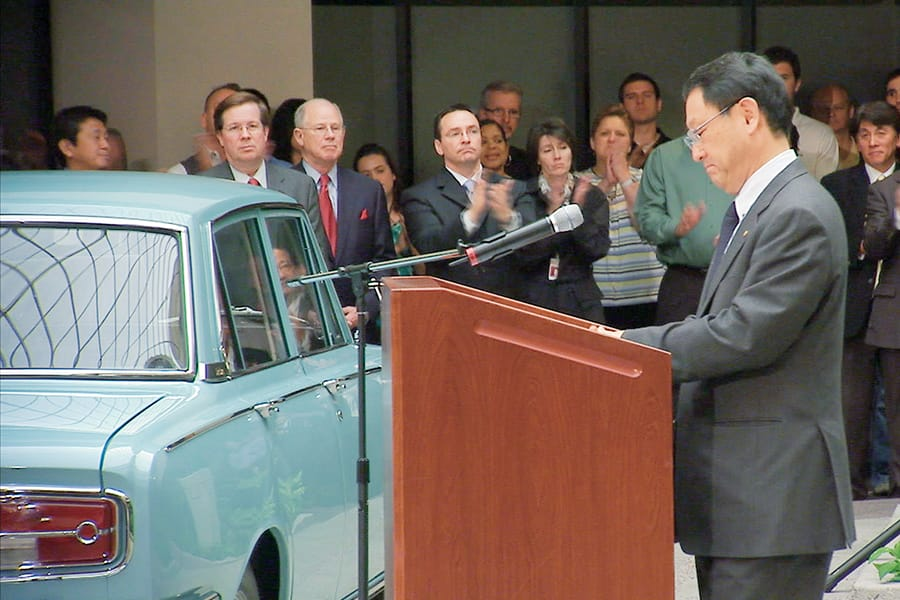
Immediately after testifying, Toyoda went to a gathering of dealers and Toyota employees who were in Washington to support him.
He told them: “In the hearing, I was not alone. You and your colleagues across America, and around the world, were there with me. Your presence was encouraging and inspiring. Words cannot express my gratitude, but please accept this simple phrase. Thank you.”
Toyoda delivered those words through tears. What was less widely known was that he remained emotional even after the gathering ended. One attendee told him not to let the experience make him dislike America. Toyoda had always loved the United States, and those words reassured him that he did not have to change that feeling.
Later that night, Toyoda appeared on CNN’s Larry King Live for his first interview after the hearing.
King pressed him on whether he had been treated fairly by Congress, who should take responsibility for the crisis, and whether Toyota could recover. Toyoda acknowledged that it had not been an easy day and said he was not sure how fully Toyota’s sincerity had been understood. At the same time, he repeatedly expressed gratitude to the dealers, customers, suppliers and employees who had supported him.
Asked who was responsible for what had happened, Toyoda clearly stated that he did not blame Toyota’s engineers, saying that as the company’s responsibility was his.
He also reflected on what had gone wrong inside Toyota. The company’s growth may have outpaced the development of its people, he said, and an organization fundamentally focused on making things may at times have come to be seen as one focused on making money. Toyoda said he wanted Toyota to return to its roots: making ever-better cars that customers could enjoy.
Near the end of the interview, the conversation turned to Toyoda himself. Asked about the cars he drove, he said he drove around 200 different ones a year. Then he added simply: “I love cars.”
King replied: “Thank you very much, Mr. Toyoda. I hope everything turns around.”
One person who remembers that period well from the dealer side is Michael Speigl, Principal at Toyota of Ann Arbor near Detroit.
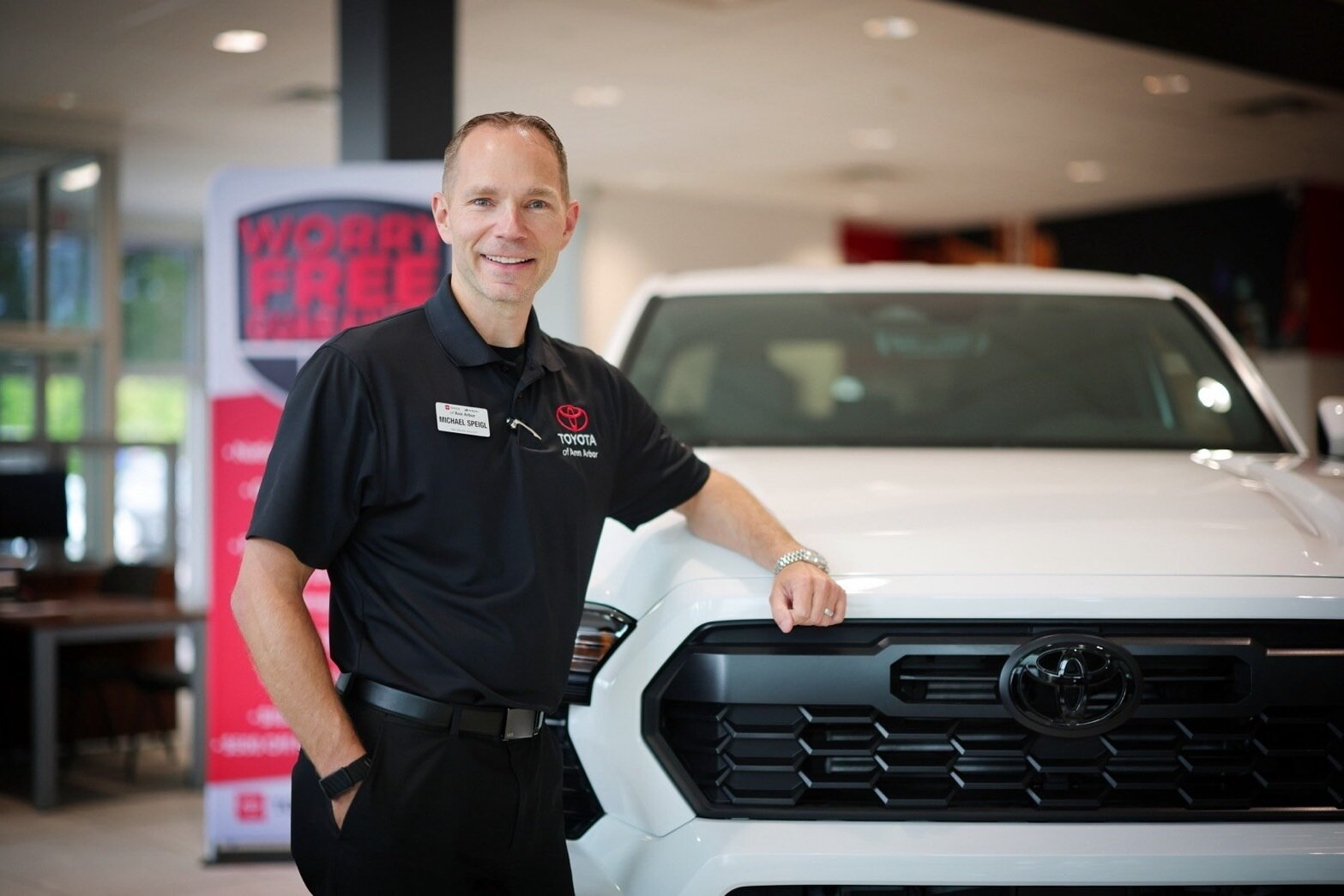
Speigl entered the automotive business in 2003 and has worked in dealerships ever since. He recalls a period of uncertainty, spending his days listening to customers concerned about the safety of their vehicles.
“Toyota did not take the easy way out,” he said. “The company took the situation extremely seriously, accepted full responsibility, and did what needed to be done despite the enormous cost.” Looking back 16 years later, Speigl added: “Toyota is still a benchmark for the industry. I think it earned back trust through the way it responded.”
Ann Arbor is in Michigan, home to the Big Three—GM, Ford and Chrysler. Toyota of Ann Arbor has grown into the state’s largest Toyota dealership, selling around 3,000 vehicles a year. On the wall of its training room is a reminder of the importance of teamwork: “Speak in terms of ‘we,’ not ‘I.’”
Joining forces for a better society
More than 16 years later, Toyoda’s words at the induction ceremony—“This honor really belongs to all of them”—carried the weight of that experience. He had taken responsibility himself. But rebuilding trust and returning Toyota to making ever-better cars was not something he could have done alone.
Speaking to the industry, Toyoda said: “Together, we have an extraordinary ability to make people’s lives better. And like all good superheroes, I believe we should unite strengths and use our collective power for good!”
“What if we focused a little less on competing and a little more on collaboration, on what we can do together to make a positive impact. I mean, wouldn’t it be great if we could just all row together? You know, like the Norwegian fans at the World Cup?” Toyoda raised both fists in front of his chest and called out, “Ro!”
“Together, there is nothing we can’t imagine, nothing we can’t create, and nothing we can’t overcome. So, wherever the road takes us, let’s enjoy the ride together!”