



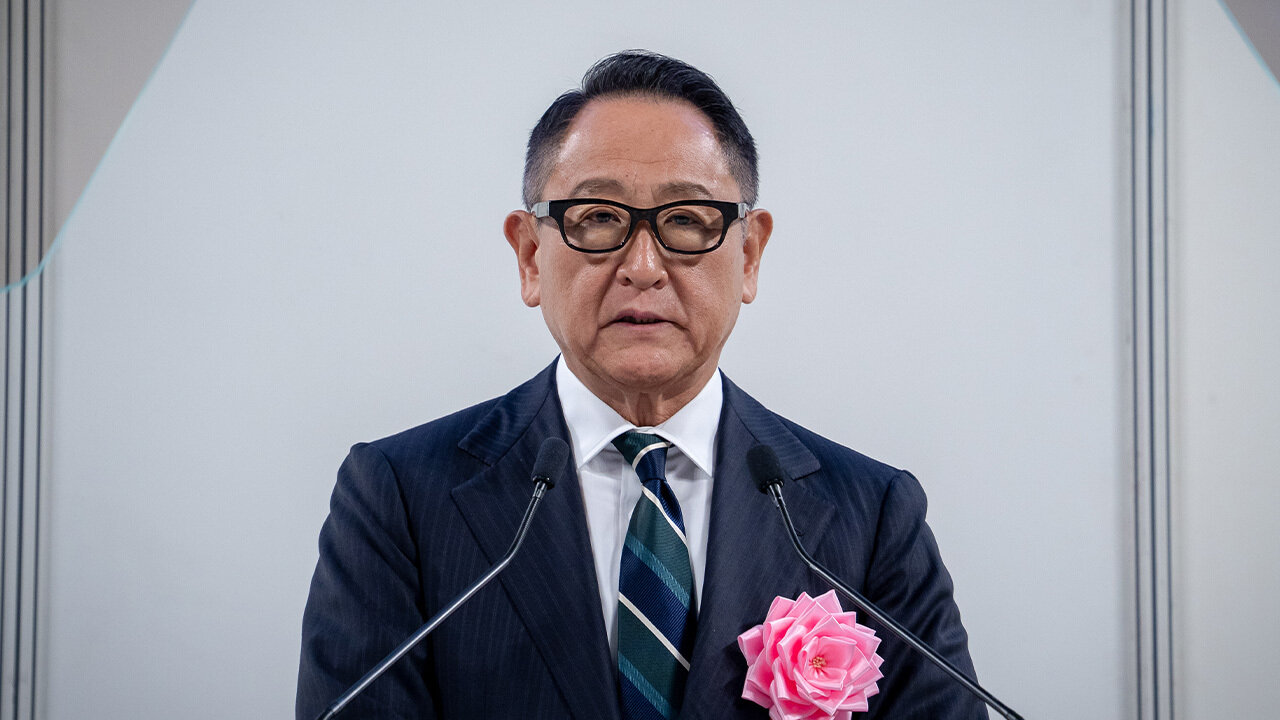
What will it take to make cars a more prominent part of Japanese culture? On the day of the Automobile Business & Culture Association of Japan's general meeting, Chairman Toyoda described his role as that of a lighting technician. What did he mean?
Questions from the press
After the reception, Chairman Toyoda also answered questions from the media. We share his responses below.
Q. In 2026, ABAJ marked its 80th anniversary. Could you reflect on the association’s purpose, and what you want to accomplish as chairman?
Chairman Toyoda
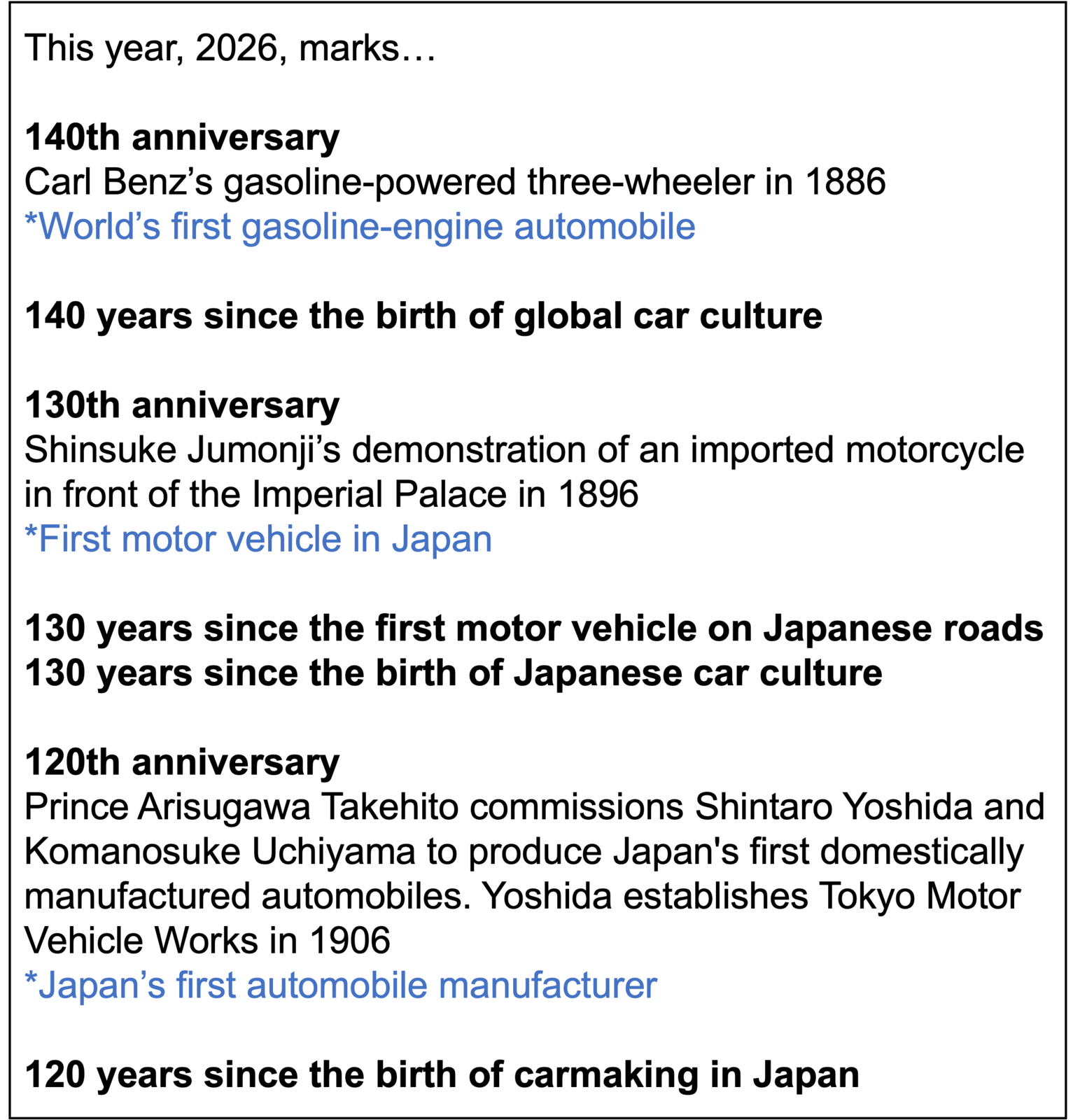
In addition to being 80 years since the association’s founding, 2026 is also a significant year for various other milestones.
Firstly, it marks the 140th anniversary of Carl Benz’s creation of a gasoline-powered three-wheeler (the world’s first automobile with a gasoline engine). It is also 130 years since Shinsuke Jumonji imported a motorcycle and gave the first demonstration run in Japan, outside the Imperial Palace.
In other words, 2026 marks 130 years since the first motor vehicle ran on Japanese roads, and 130 years since the birth of Japanese car culture.
I have called for making cars the pride of Japanese culture since 2025, but in my mind, this was where it all began.
This year is also the 120th anniversary of the birth of Japanese carmaking. It was 120 years ago that Shintaro Yoshida, together with Komanosuke Uchiyama, began building domestic automobiles at the company he established, Tokyo Motor Vehicle Works.
In this way, 2026 marks 140 years since the birth of gasoline-powered vehicles, and 130 years since motor vehicles began driving on Japanese roads. I believe our automotive industry today is built upon this history.
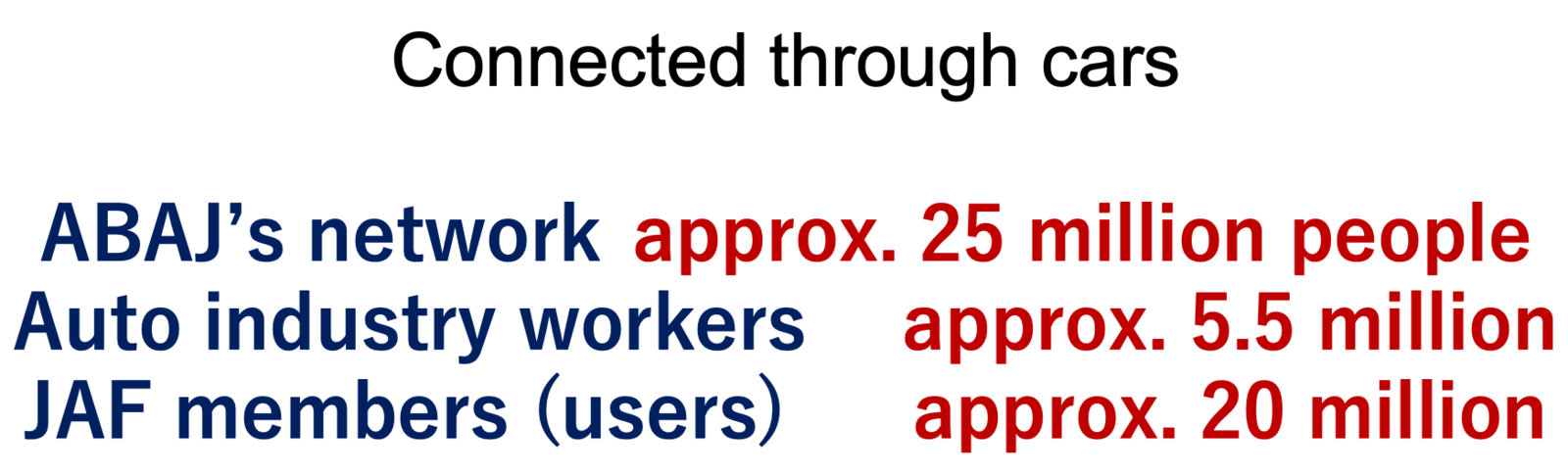
Whereas the first carmakers took on the task alone, today ABAJ alone has a network of some 25 million people. In addition to the 5.5 million working in Japan’s auto industry, this figure includes around 20 million car users.
We should take pride in the fact that our auto industry has welcomed more like-minded peers, and that Japan is now home to many globally renowned manufacturers and brands.
And in terms of Japan’s revitalization, how will people speak of this automotive industry, built up over the past 120 years, in another 120 years?
We certainly don’t want them to say that the Business & Culture Association turned automobiles into an ordinary industry. I will continue working hard to build upon this 120-year foundation, so that people will say, “This is how they have brought it into the future.”
As I mentioned during the reception, we have an incredible number of people giving their all on the front lines. However, their hard work often goes unrecognized. That’s not the kind of world I want to see.
For that reason, my role is to ensure that hardworking people get the recognition they deserve. I want to shine a spotlight on those in the automotive industry who are giving their all for someone other than themselves.
So in my second year as chairman, what I want to do is dedicate myself to being the lighting guy, shining the spotlight on our 25 million colleagues and supporters.
Many people are still putting in the effort. Speaking with them, I hear about the tremendous challenges they face. So, while it’s important to talk about our vision for the future, we first need to turn the spotlight on the problems at hand, illuminating each step as we search together for solutions.
If we take that approach, I think people in the years to come will be able to say it was a job well done.
Q. Although the automobile environmental performance tax was abolished at the end of March 2026, what further revisions do you consider necessary to Japan’s complex tax system?
Chairman Toyoda
I believe that Japanese car and motorcycle users are still paying the highest taxes in the world. The auto industry had long hoped to see the environmental performance tax permanently abolished, and I want to repay the efforts of those who made that happen by keeping this momentum going. I want to make owning a car simpler and more affordable.
Because cars are products that are regularly updated with new models, I think the ideal is for customers to replace them every five to seven years, which creates a healthy used-car market. Complex, costly taxes and various other expenses certainly hinder that process.
I also believe that spurring on the cycle of vehicle replacement and continuing to make improvements, including to car ownership, is good for decarbonization.
Scrapping one particular tax is not the end. Rather, I see this as the start of a discussion about how to radically reimagine the auto industry as a pillar for building the country’s future, and I want to keep exploring that further.
Q. You spoke about shining the spotlight on different areas of the industry. What would you like to highlight during your term as chairman?
Chairman Toyoda
Speaking with various organizations about their concerns brought to light many challenges. In the bus sector, for example, personnel shortages are leading some to push for the accelerated adoption of automated driving, but that is not going to happen right away.
We therefore need to organize the challenges into three categories: our ideal future vision, where we want to be in five years, and the issues that need immediate attention. I want to make the last of these, the immediate issues, our top priority.
In this way, we can show many people that if they speak up, things will happen. Even after I step down as chairman, I am sure the successes achieved in solving problems will continue to drive further efforts.
Q. Looking back on the association’s activities in fiscal 2025, one of the most notable was the NASCAR cultural exchange. In this time of conflict and division in global politics and economics, is there anything you want to pursue in terms of international cooperation?
Chairman Toyoda
As I have said with regard to decarbonization, we want to create situations in which everybody wins.
I want everyone involved in the automotive industry to be winners, including governments, manufacturers, and dealers. And above all, I want to ensure that the biggest winners are the customers.
I feel that our current situation demands such a mindset. Not conflict and division, but empathy. When we set out to do something, I hope we can lead the way in moving across the many hierarchies and territorial divisions that exist between competitors or countries, allowing people to recognize good work for what it is and to say, “Hey, that’s a great idea.”
It is not easy. It’s not easy, yet there is little happiness to be gained through conflict, even for the winning side. When empathy creates a win-win situation, the conversation becomes, “Next time, let’s work together.”
Although our capabilities are limited, these sentiments are shared by many people, and so we will continue to do what we can.
Q. Motorsports seem to be a key part of your efforts to make cars the pride of Japanese culture. What do you see as the appeal of motorsports, and how do they boost the prominence of cars in our culture?
Chairman Toyoda
The world of sports is borderless, with clear-cut outcomes defined by rules. And as we saw in yesterday’s Super Formula, when the contest is over, the competitors celebrate each other’s efforts.
Yesterday was a truly great race, and seeing such performances on the sporting field has the power to move and inspire. I strongly believe that reaching more people in this way leads to the creation of culture.
As someone with a sporting background, this is a way in which I can shape culture, and I believe that motorsport-led efforts can have a broader impact on other sports and cultural fields.
Q. What changes need to take place before you could confidently state that cars have become the pride of Japanese culture?
Chairman Toyoda
I would like to see greater cooperation, for example bringing together the capabilities of private companies and the rule-making that only the government and public officials can accomplish. Such efforts would make the automotive industry as essential as the air we breathe, and I believe that becoming indispensable would also make us a core part of the culture.
Raising the cultural prominence of cars will take time. This age of capitalism has long been defined by the pursuit of profit. On the other hand, without making profits we cannot invest in the future, or in things that will make everyone happy.
I don’t think you can create culture with a mindset focused on short-term profit. What matters is how we use that money.
Right now the focus is entirely on saving and spending, but I feel that if we set out rules encouraging profitable companies to make investments and donations, the auto industry can lead the way in sharing a new form of Japanese culture.
I’m not sure if I’ve answered your question, but that is my view.
ABAJ also announced two new public projects for the fiscal year ending March 2027, utilizing Japan’s My Number identification cards.
The first seeks to simplify vehicle registration by digitalizing the related procedures—which are currently performed manually, involving paperwork and official seals—while linking government and private-sector systems through the My Number card.
The second project, linked to Japan’s national health insurance via My Number, is aimed at ensuring professional drivers can perform their jobs in good health for longer through early detection of disease risks and systems that support continued safe driving.
By shedding light on genba concerns, the Automobile Business & Culture Association of Japan is continuing its efforts to make cars the pride of Japanese culture.