



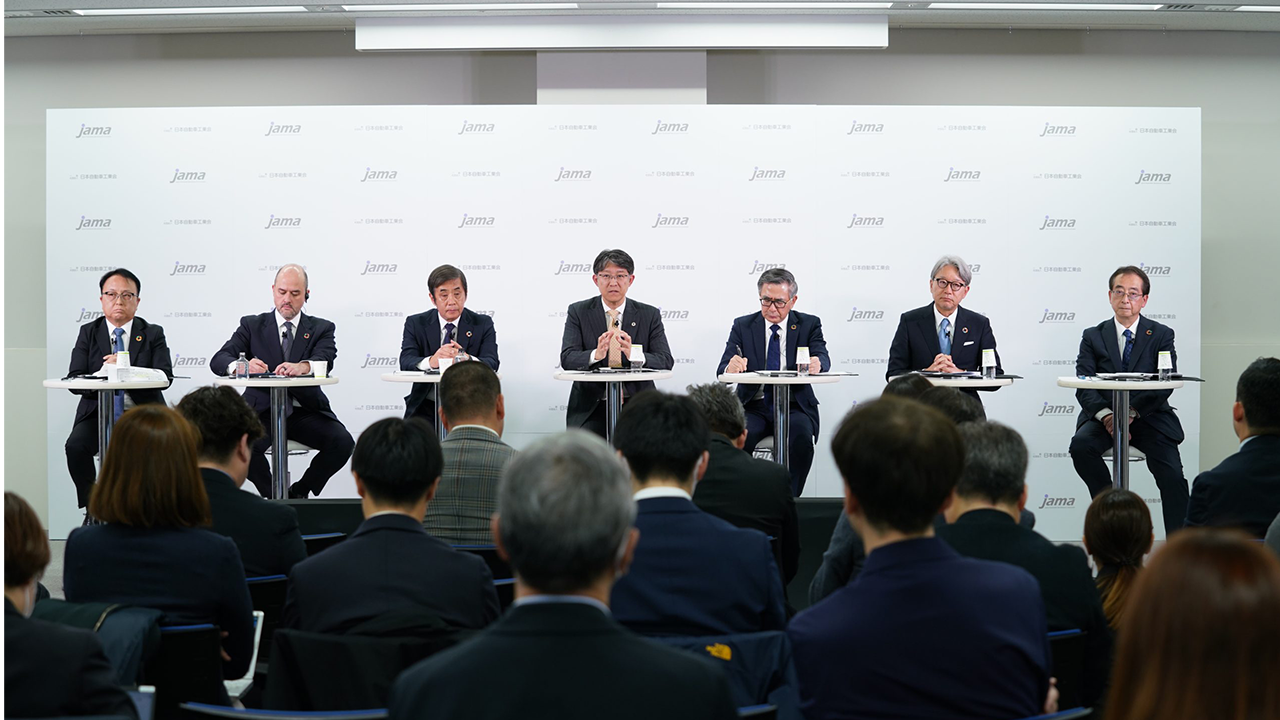
The "New Seven Priority Challenges" are moving from concept to action. At its first press conference under new leadership, the Japan Automobile Manufacturers Association outlined progress and the road ahead.
On March 19, 2026, the Japan Automobile Manufacturers Association (JAMA) held its first press conference under its new leadership, led by Chairman Koji Sato.
In December last year, JAMA adopted the New Seven Priority Challenges, building on its existing framework. With new leadership taking office in January, efforts are now moving into full implementation.
The press conference began with materials outlining progress based on initiative themes first presented at the extraordinary board meeting on February 18. Each theme was visualized in a circular format showing that several areas are already moving toward concrete implementation.
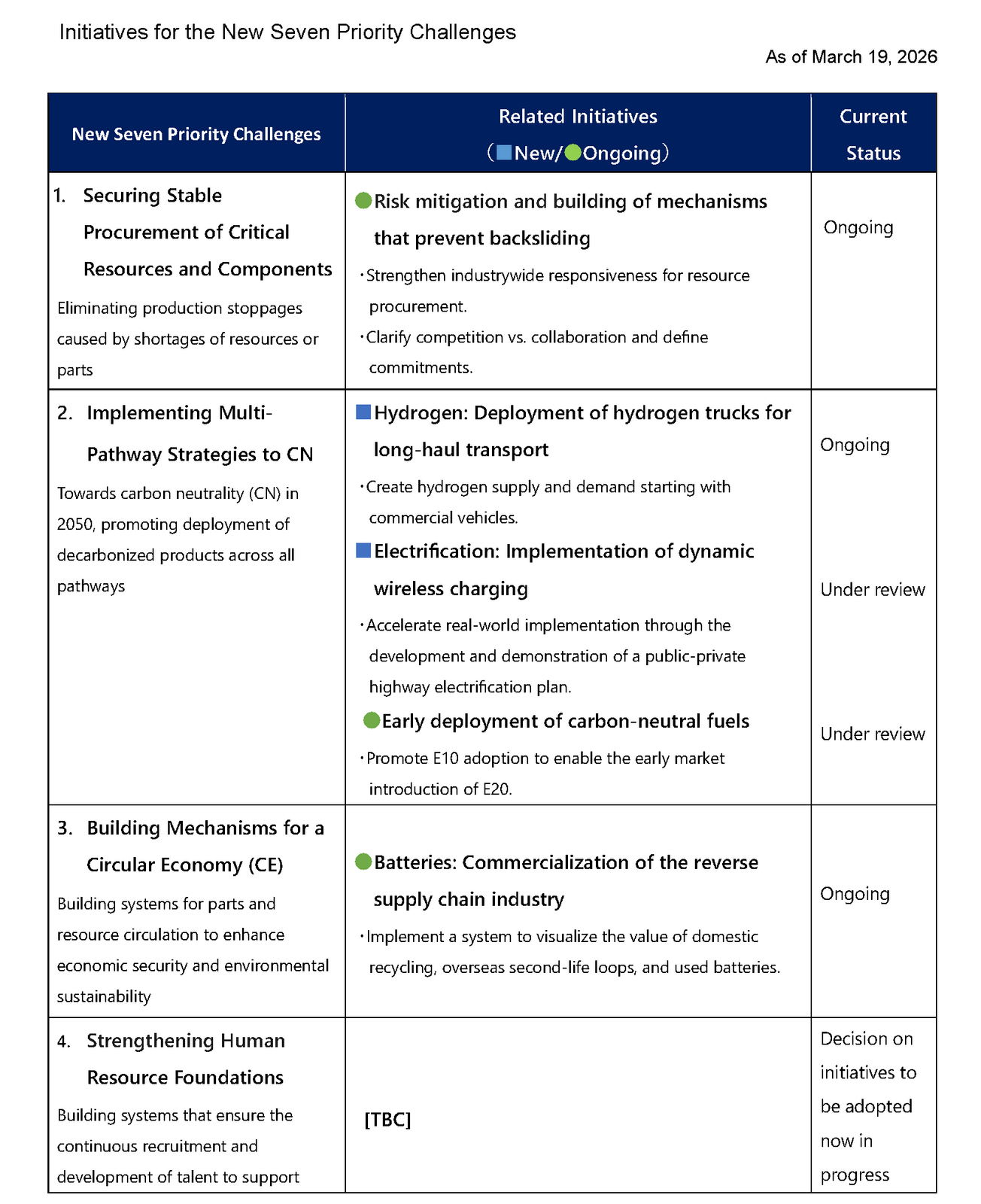
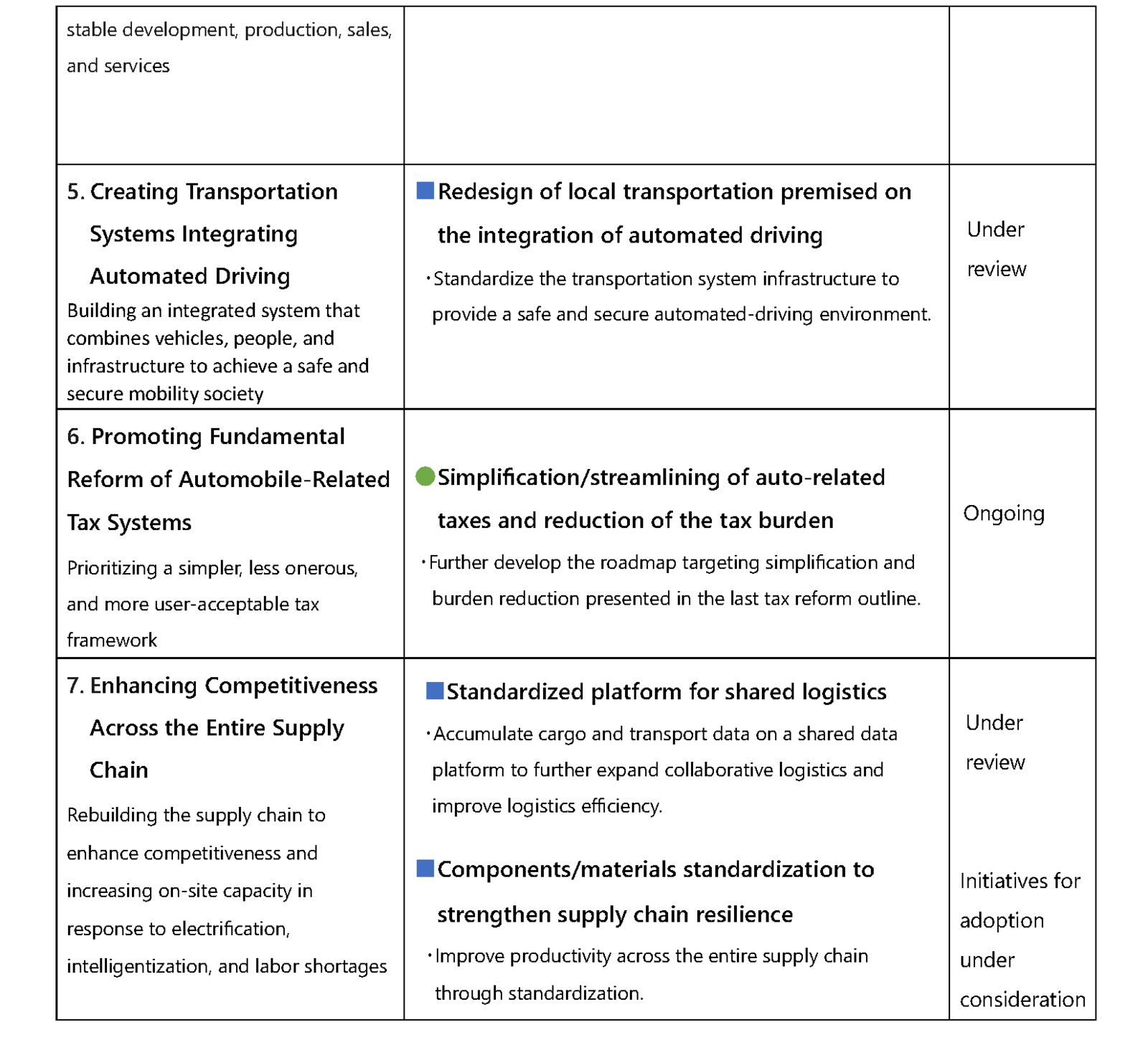
From "reactive" to "collaboration with intent"
Reflecting on the traditional role of industry associations, Chairman Sato noted that past efforts had been largely reactive, built around the initiatives of individual companies. He emphasized the need to identify and advance areas for collaboration, while maintaining competition among companies.
This shift reflects growing recognition that the industry faces large-scale challenges—such as decarbonization, geopolitical risks, and resource and energy constraints—that no single company can solve alone. It calls for clearly identifying areas for collaboration and committing to them over the long term.
Sato also highlighted three guiding principles underpinning the New Seven Priority Challenges:
- Co-creation beyond the automotive industry
- Focusing on societal implementation
- Leveraging diversity as a strength
In particular, he stressed the need to move beyond discussion and see initiatives through to societal implementation, emphasizing this as a key objective.
Chairman Koji Sato
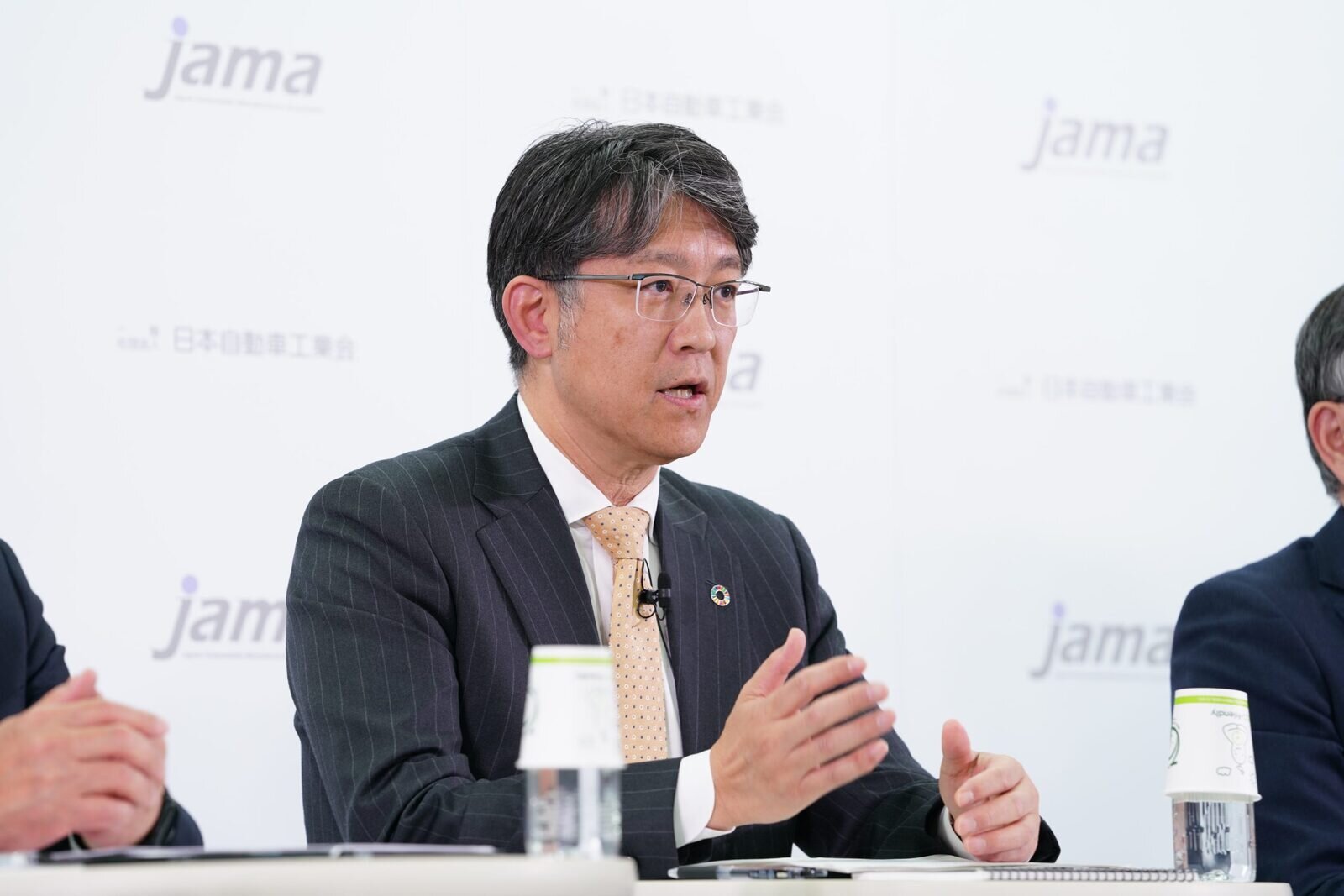
Japan’s automotive industry has made steady progress in areas such as environmental initiatives, safety, and technological innovation. However, challenges continue to accumulate, and a model driven solely by competition among individual companies is no longer sufficient. The question now is whether the industry can maintain its global competitiveness under the current model.
At the same time, there is a growing need to remain responsive to rising geopolitical risks—including developments in the Middle East. Strengthening resilience in energy and supply chains will require collaboration not only within the automotive industry, but also across industries and between the public and private sectors.
From this perspective, it is no longer enough to define the goal simply as “the development of the automotive industry.” Instead, we must ask: What role can the automotive industry play in society? What kind of society can it help create?
To engage with society, we aim to advance large-scale initiatives all the way to societal implementation—seeing them through, not just discussing them.
JAMA, comprising 14 major automakers, is a truly unique organization where companies across diverse mobility fields can collaborate toward a shared goal. This collective strength is a key driver of Japan’s future competitiveness.
Progress and challenges highlighted in the Q&A
During the Q&A session, reporters raised questions about both progress and remaining challenges.
Chairman Sato emphasized the importance of aligning on a shared vision of the end goal, noting that differences in assumptions and strengths among companies make such alignment essential.
Vice Chairman Toshihiro Suzuki pointed to progress under the previous framework, particularly in expanding dialogue beyond the automotive sector. He cited engagement with industries such as petroleum as an example of how cross-industry collaboration has deepened mutual understanding and helped clarify paths toward solutions.
Vice Chairman Toshihiro Suzuki
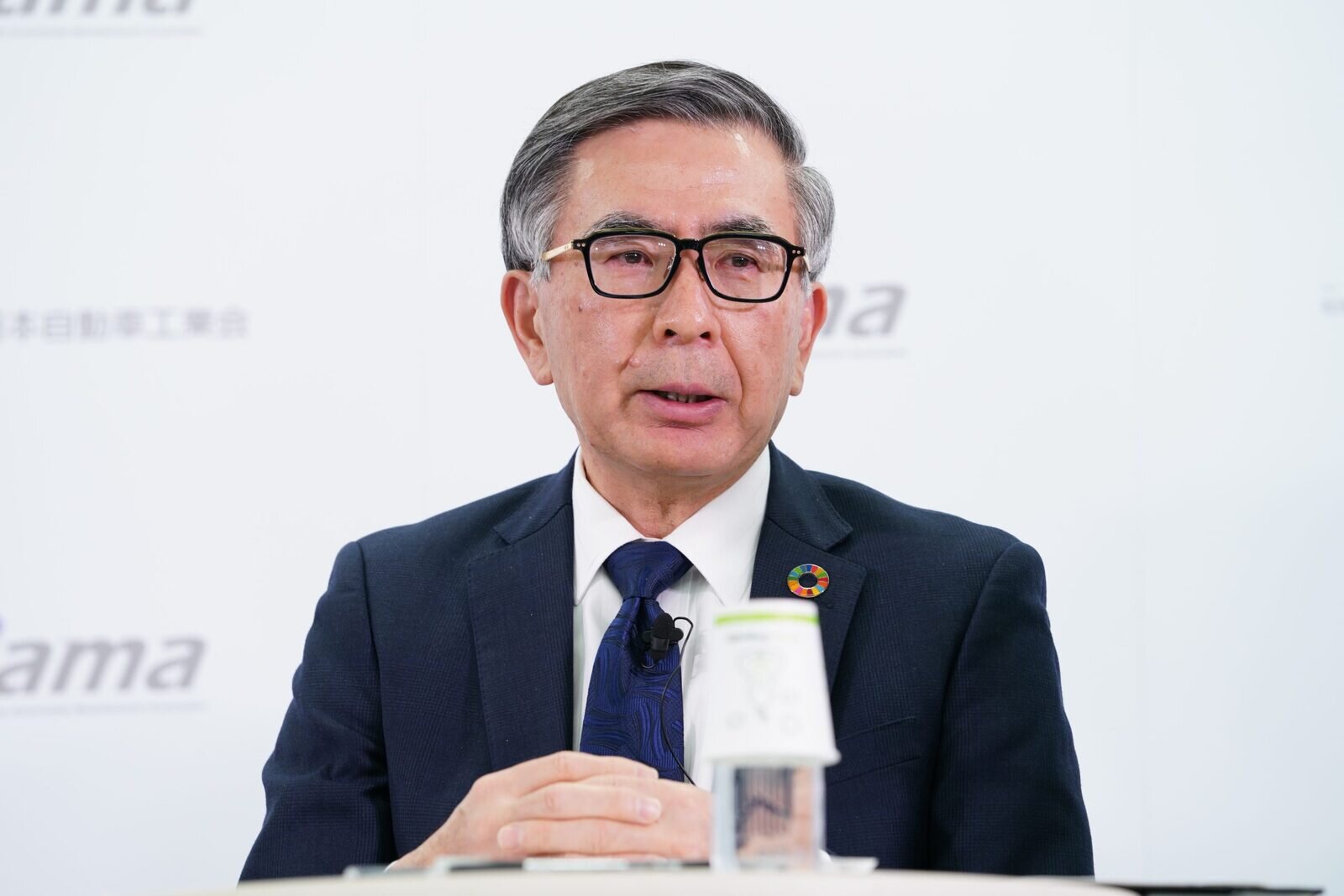
In the past, discussions tended to focus on how JAMA itself should move forward. However, through our initiatives under the previous Seven Priority Challenges, we have increasingly engaged with other industries. By holding in-depth discussions with related sectors, including the petroleum industry, we have deepened mutual understanding and enabled more substantive discussions on how to involve other industries in advancing initiatives such as clean energy.
Looking ahead, by involving not only related industries but also the government, we believe we can identify clearer paths toward solutions.
Vice Chairman Toshihiro Mibe, meanwhile, stressed that new competitiveness cannot emerge without breaking away from legacy structures, pointing to the challenges of redefining the balance between competition and collaboration.
Vice Chairman Toshihiro Mibe
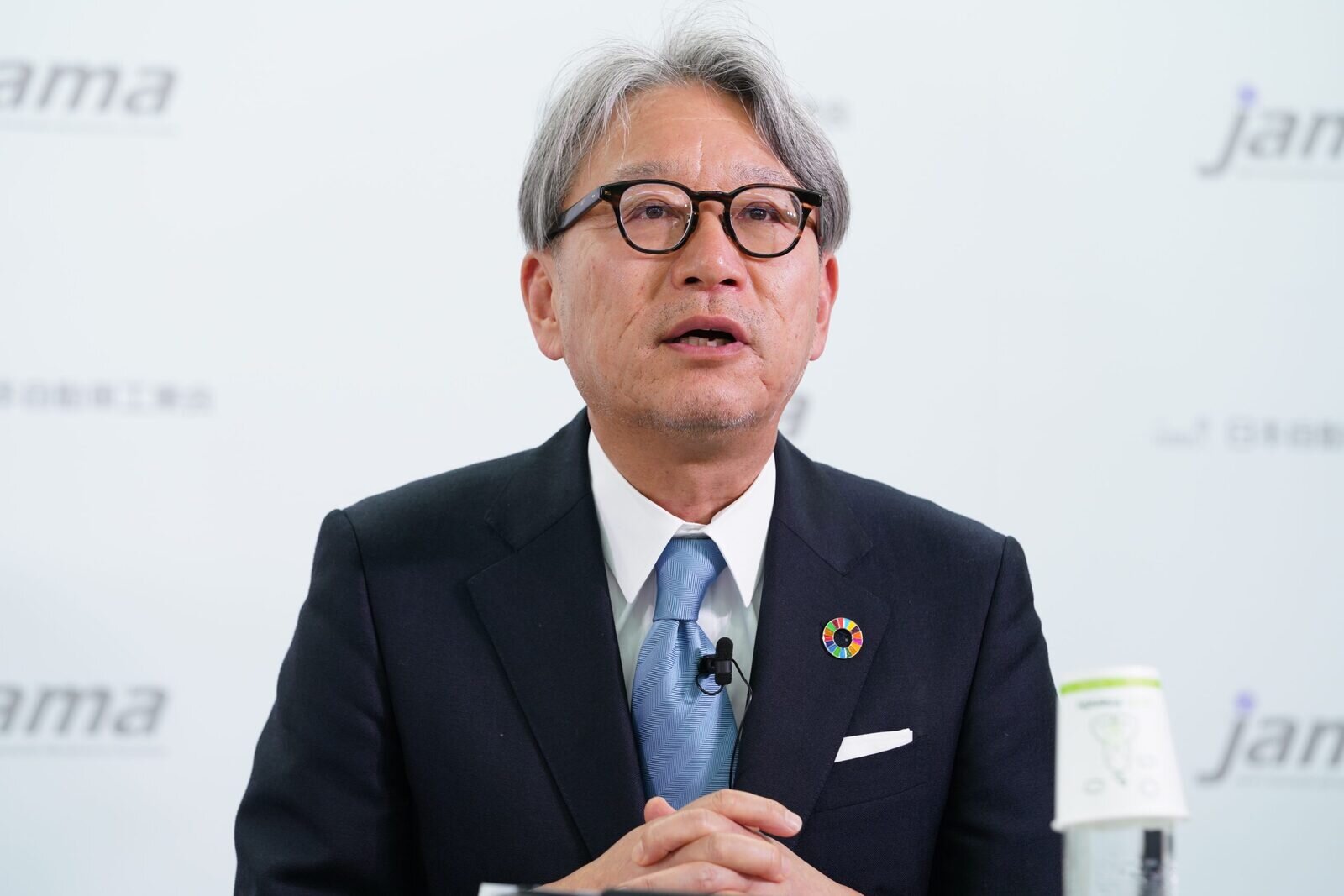
In today’s business environment, where global competition continues to intensify, we recognize that Japan’s automotive industry is at a critical juncture. How quickly we can move forward will be key to survival.
At the same time, unless we break away from long-standing industry structures, new competitiveness will not emerge. There is broad alignment among board members on this point, and under the new leadership, we are committed to moving forward with urgency to ensure Japan’s automotive industry maintains its global competitiveness.
As discussions and concrete initiatives under the New Seven Priority Challenges continue, how far they take shape in the real world will ultimately determine the future competitiveness of Japan’s automotive industry.