



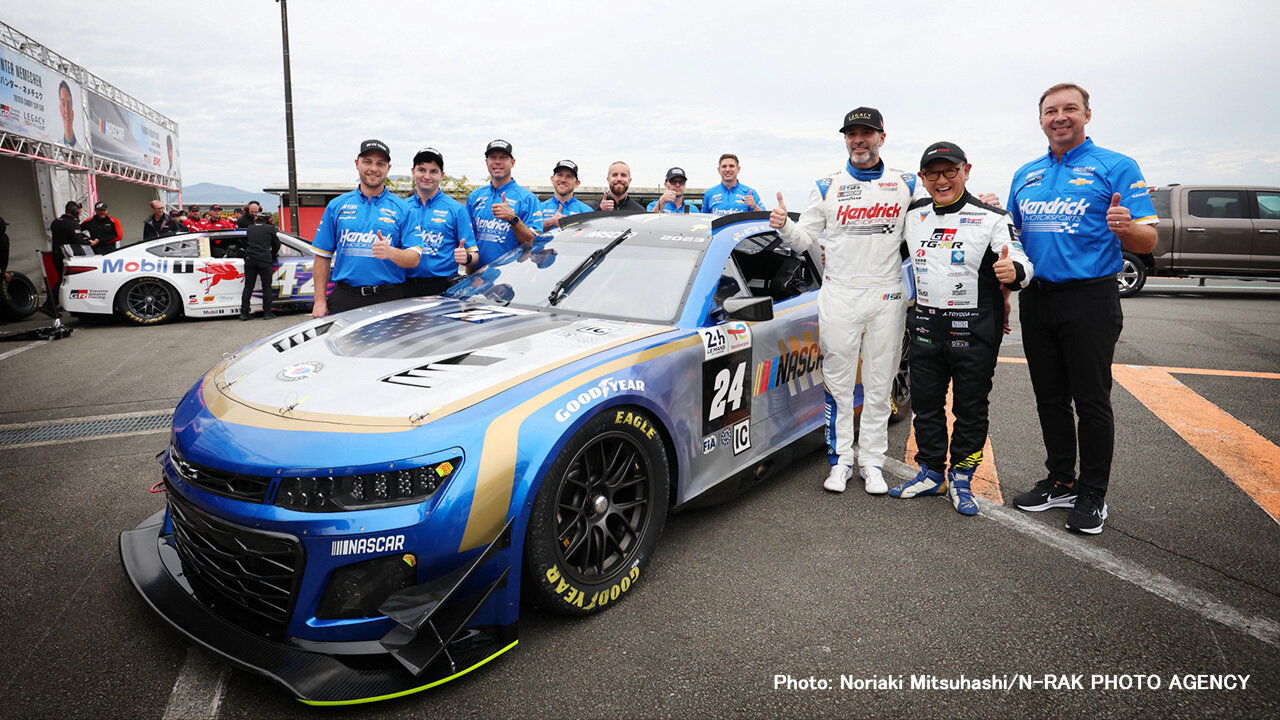
The Super Taikyu season finale in November had a distinctly American feel, with NASCAR machines taking the track. We went to see this cultural exchange through motorsports firsthand.
The new ST-USA class
Besides the NASCAR Showrun, the final round of Super Taikyu also saw the creation of a new ST-USA class for the race itself.
Through this class, organizers are aiming to promote exchange between the motorsports and automotive cultures of both countries by inviting American vehicles and teams to participate.
By bringing the allure of American-made cars to Super Taikyu, they also seek to attract a broader audience and new teams, boost the series’ reach in Japan and abroad, cultivate an international endurance racing culture, and deepen collaboration between the Japanese and American automotive industries.
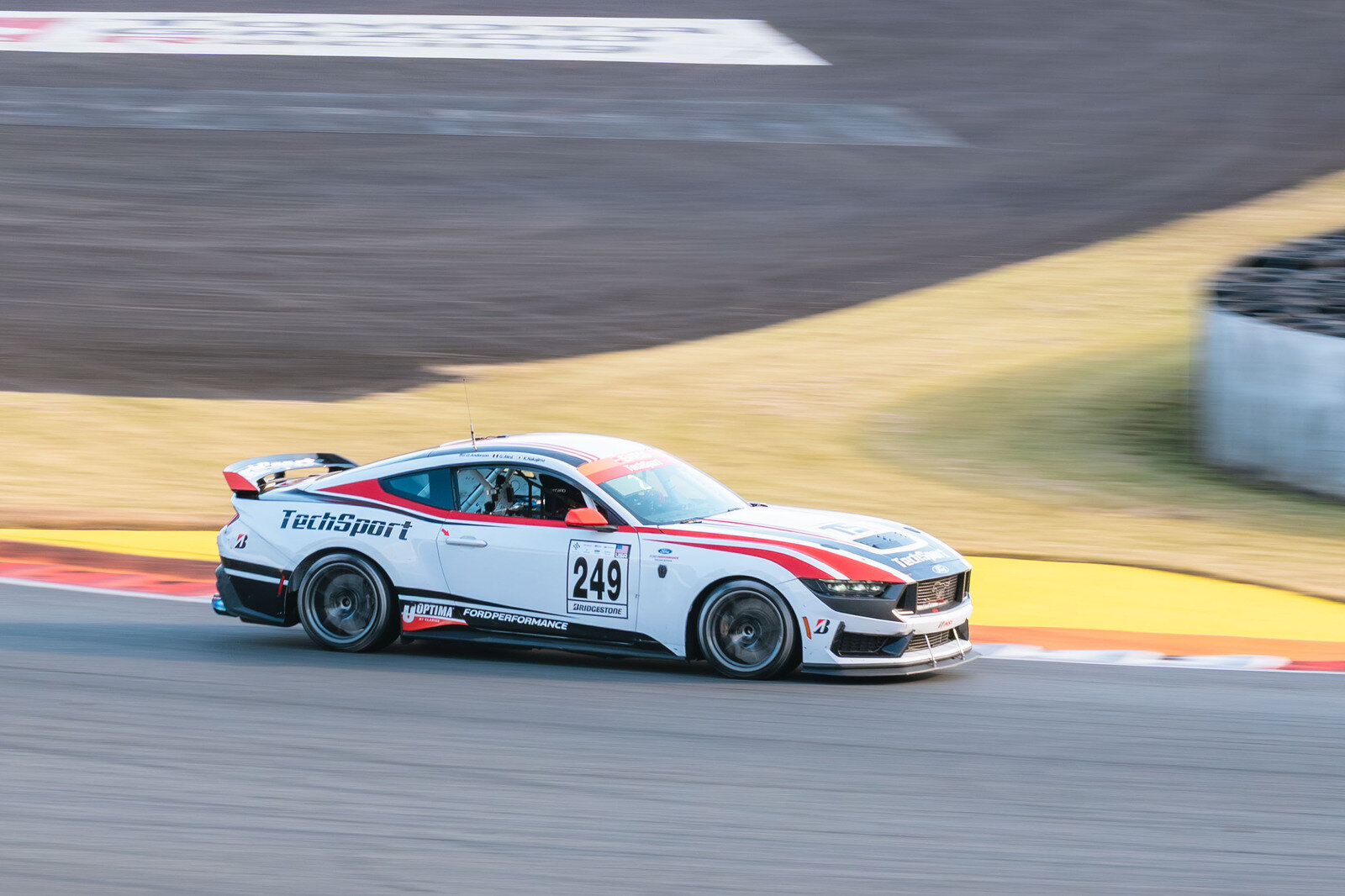
In the Super Taikyu season finale, two cars entered in the new ST-USA class. One was a Ford Mustang Dark Horse R from TechSport Racing, which competes in the Mustang Challenge, a series sanctioned by the International Motor Sports Association (IMSA), an American racing body.
The other car was the Callaway Corvette C7 GT3-R fielded by BINGO SPORTS, which competes in the SRO GT World Challenge Asia with Chevrolet Corvettes.
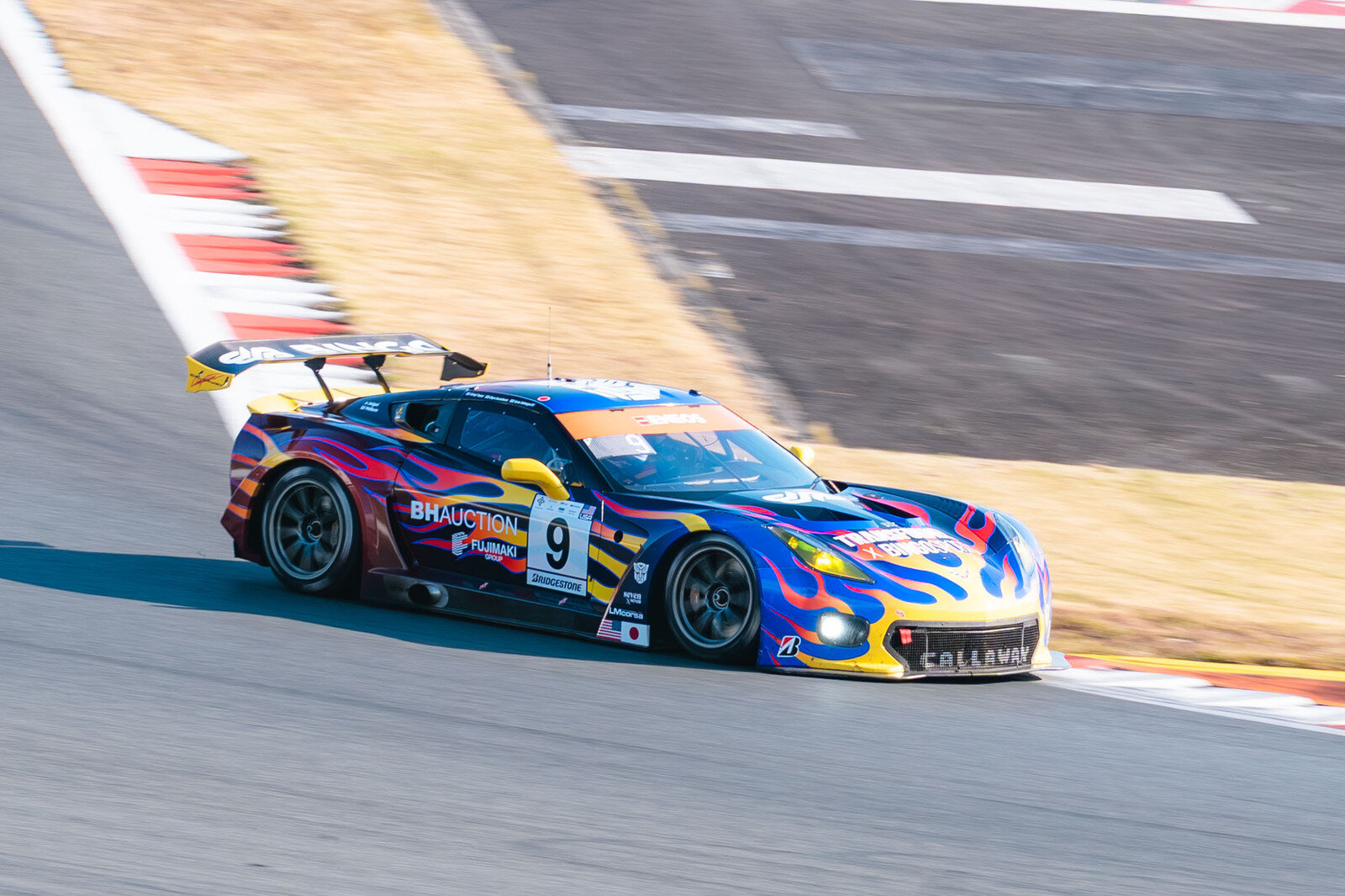
The U.S.-made cars were an exotic sight in Super Taikyu, bringing an American flair to the race.
This exchange of motorsports culture between Japan and the United States began in a year in which automobile tariffs dominated the headlines. When reporters asked about the importance of pursuing such cultural exchange amid high tariffs, Chairman Toyoda gave the following response:
Chairman Toyoda
The media talks only about tariffs, but it’s not about whether tariffs are good or bad. I think national leaders everywhere have the same desire to protect their country’s auto industry.
One means of protection is tariffs, and we are exploring ways to ensure that, even with tariffs, everyone can come away as a winner.
Above all, we want customers to be the winners. I hope you will appreciate that we have begun taking action to ensure that everyone—American and Japanese politicians, sponsors, and all stakeholders—emerges a winner and feels that the auto industry is a force for good.
It feels as though the conversation has become entirely about tariffs, but on the ground, we are determined to continue nurturing the auto industries that are core sectors on both sides.
This is what generates stable employment and sustainable investment. I believe this is a tremendously important vehicle for the country.
For national leaders, such measures have now become an obvious choice, but rather than just creating one winner, we want to create a win-win situation for customers and all stakeholders. I hope this initiative will be recognized as part of that movement.
In a follow-up question, Chairman Toyoda was asked whether these bilateral exchanges would be a long-term endeavor.
Chairman Toyoda
I believe so. That’s why I really appreciate you asking these questions.
When trying something, you don’t get immediate answers. In the past, present, and future, the automotive sector is expected to be an industry that sustains the country.
It creates jobs and provides long-term investment. To do that, a certain level of profit is necessary.
Since a world without profits is unsustainable, the media should monitor how these profits are used. Criticizing companies for making profits will spell the end for this country. Please report on how the profits are used.