


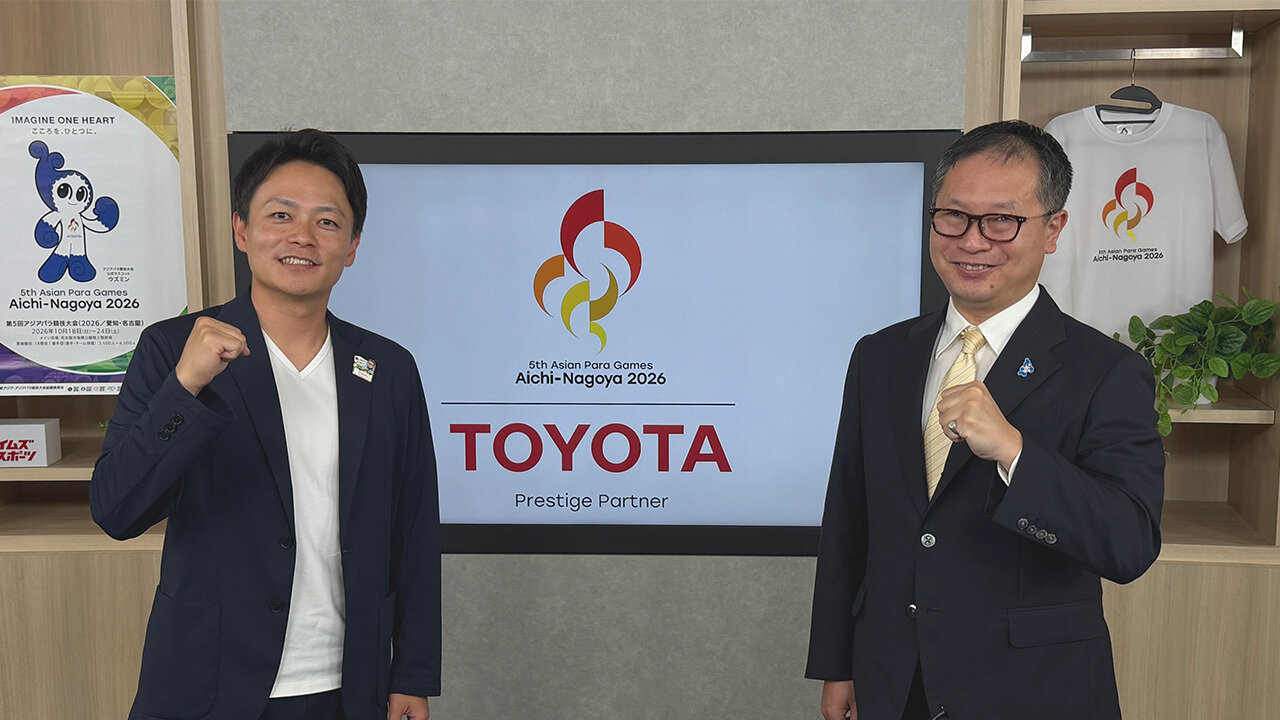
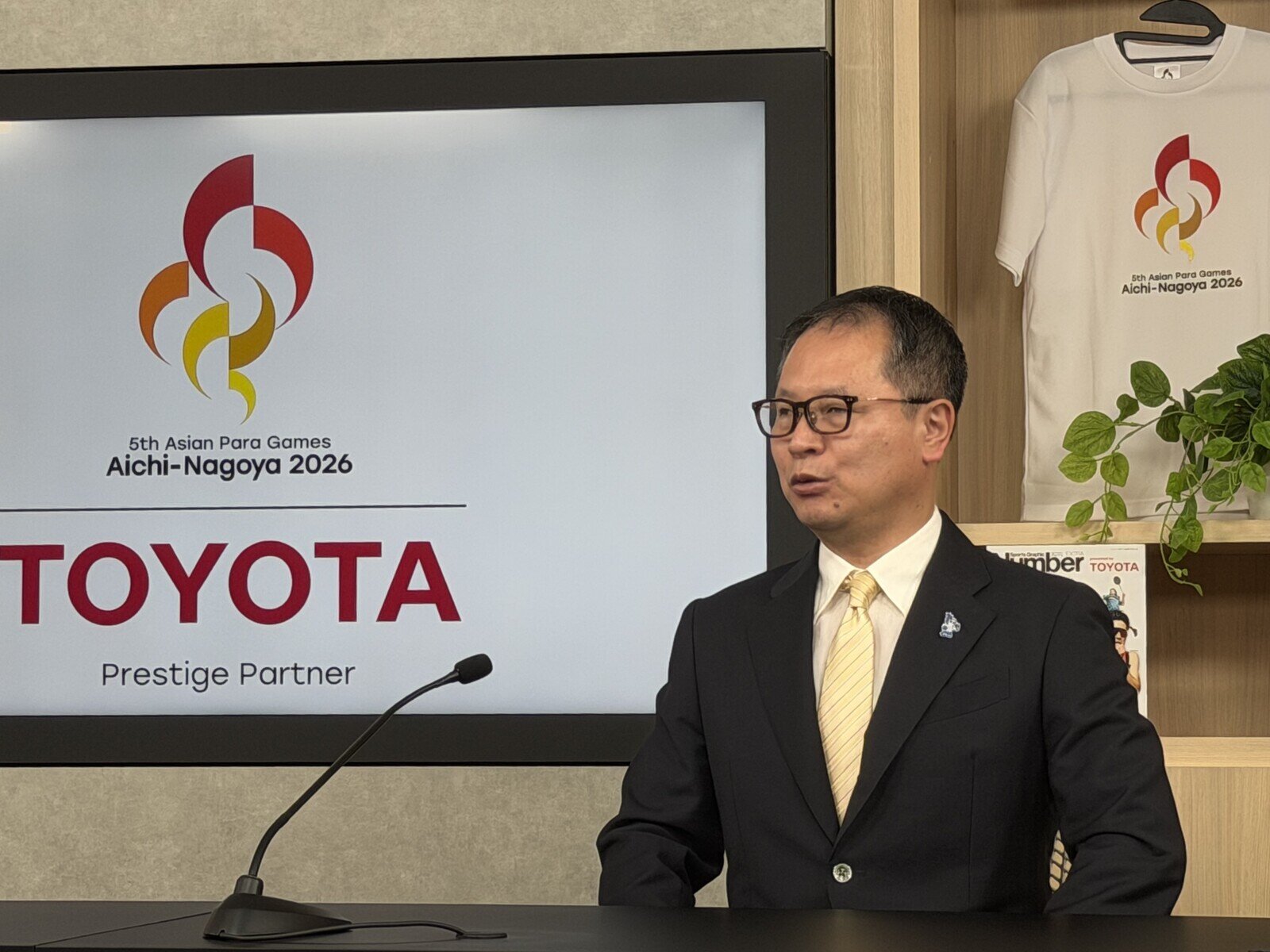
As the excitement of the Asian Games carries over into the opening ceremony of the Asian Para Games, Toyota Times Sports sat down for an interview with Junichi Kawai, head of the Japan Sports Agency. He spoke about the significance of Japan hosting the event for the first time and the thrill of competition.
The excitement is far from over.
The first Asian Para Games to be held in Japan opened on October 18, 2026, with events centered around Nagoya and Aichi Prefecture, though certain events began on October 16.
The Games are the latest major international para-sports event to be staged in Japan, following on from the Tokyo 2020 Paralympics and the Tokyo 2025 Deaflympics.
In the case of the Tokyo Paralympics, however, the COVID-19 pandemic meant that the competition was run without spectators. The passionate crowds that celebrated the athletes’ triumphs at the Paris Games in 2024 were simply not possible in Tokyo.
That makes these Asian Para Games a perfect opportunity for Japanese spectators to see and cheer on the efforts of para-athletes in person.
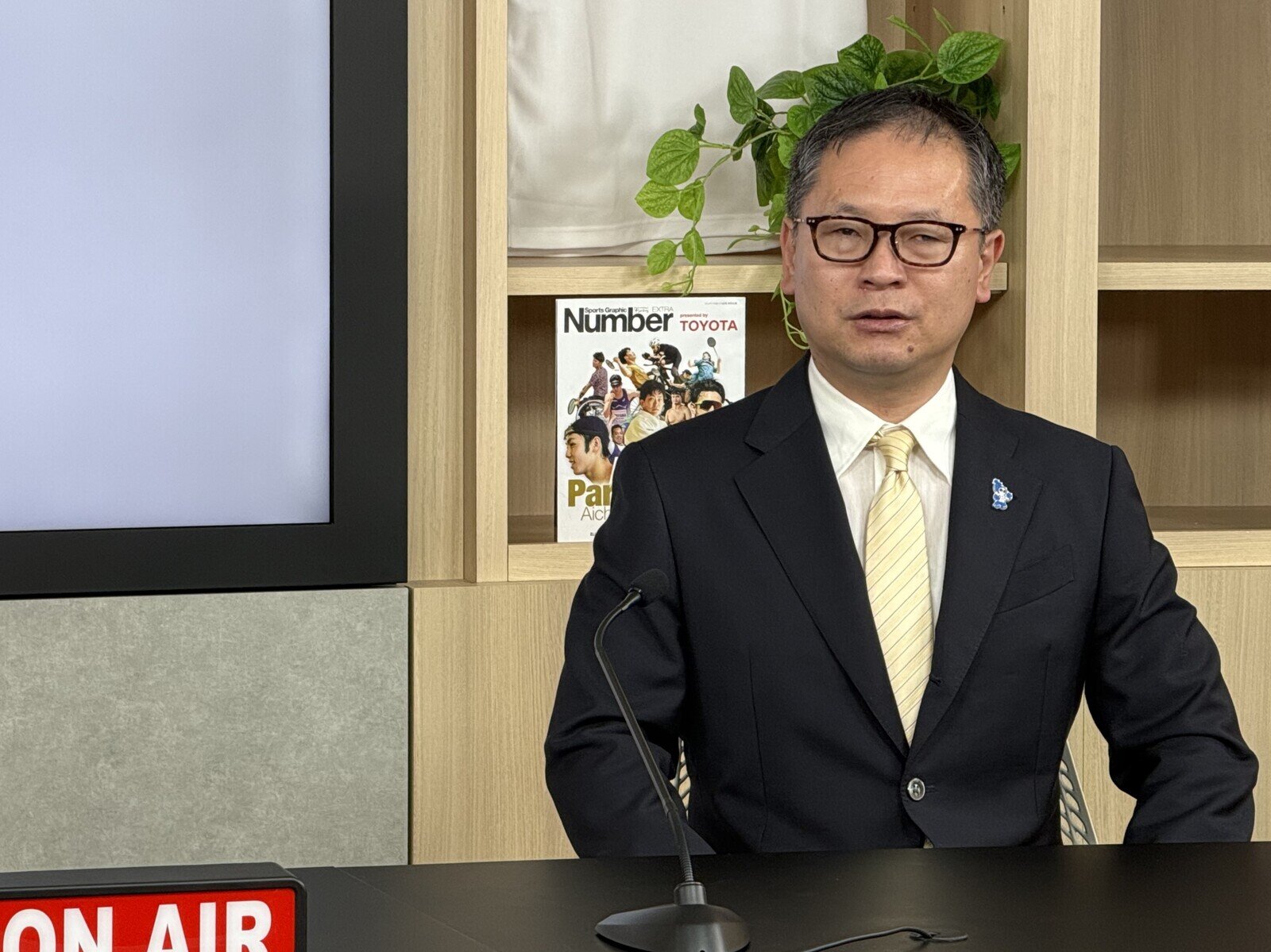
To share the thrill of both the Asian Para Games and para-sports in general, Toyota Times Sports interviewed Junichi Kawai, Commissioner of the Japan Sports Agency.
Kawai himself competed in six Paralympic Games as a visually impaired swimmer, winning 21 medals, including five golds. After serving as a junior high school teacher and chairman of the Japan Paralympic Committee, in October 2025 he became the first Paralympian to lead the country’s Sports Agency.
Having performed on the world stage as an athlete, Commissioner Kawai is now working to support sports behind the scenes. He spoke about his hopes for the Asian Para Games, and the power of sport.
Nothing like being there
Kyonosuke Morita
We are pleased to have you here for this Toyota Times Sports interview, but I believe you’ve worked with Toyota before.
Commissioner Kawai
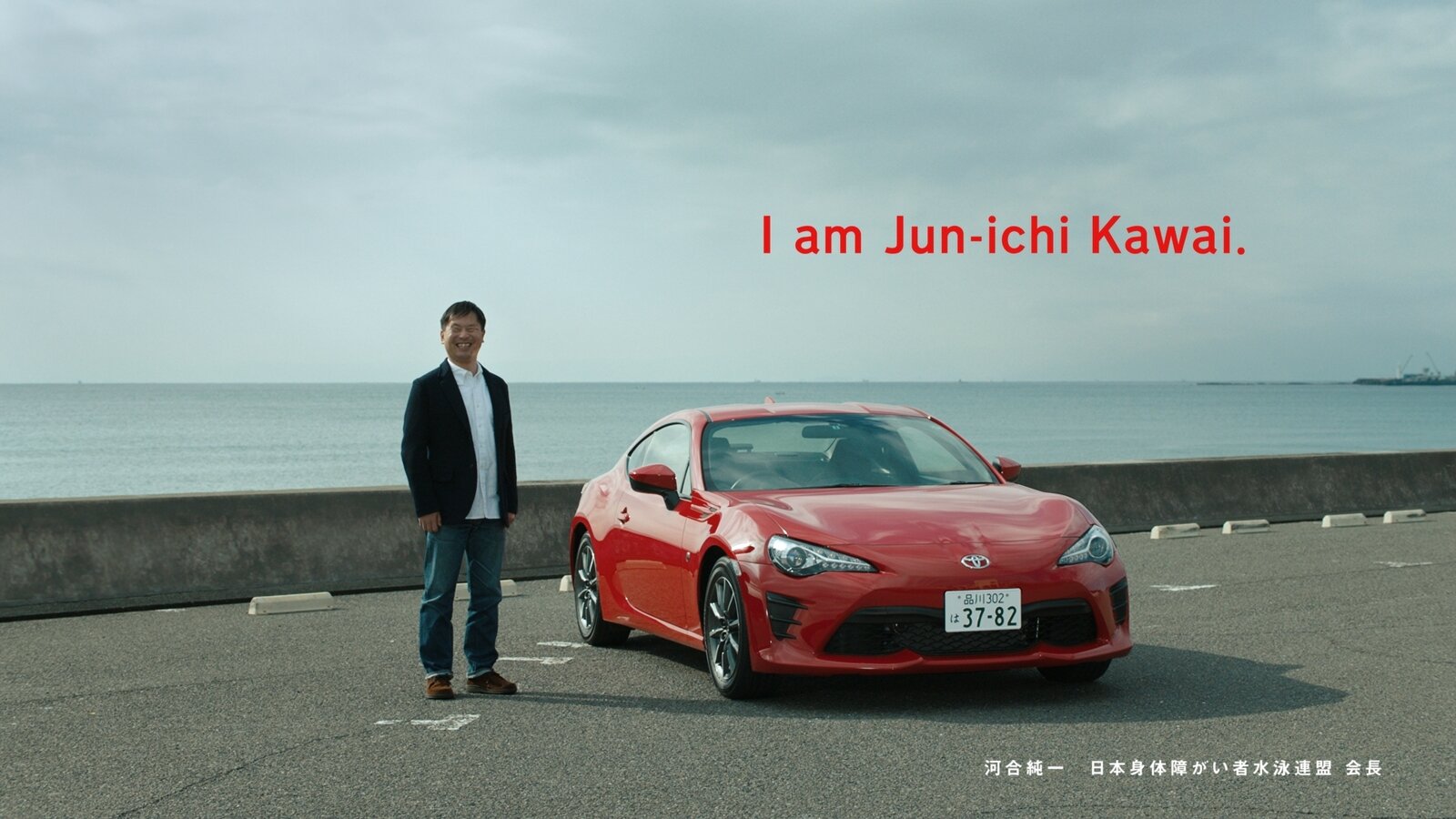
Around ten years ago, I made a speech at the Toyota Motor Corporation headquarters. As part of efforts to build employee excitement in the lead-up to the Tokyo Paralympics, I was given the opportunity to raise awareness about the Paralympics and para-sports. That also led to me appearing in Toyota commercials.
Morita
The message of that commercial from around ten years ago was that, if automated driving became a reality, it could enable you to drive a car.
Commissioner Kawai
That’s right. The production team was focused on how automated driving might be used to reduce accidents, and expanding from there, I suggested that the technology could allow visually impaired individuals such as myself, who lack freedom of mobility, to get out on the road. That idea really resonated with the Toyota staff and everyone involved. I was touched when they told me they wanted to work that into their direction for the commercial.
Morita
It was a very memorable commercial, with you standing beside an 86.
As a visually impaired swimmer, you yourself were a top athlete, and now as Commissioner of the Japan Sports Agency you are overseeing an international para-sports event in Nagoya, Aichi, the first in some time to be held in front of spectators. From your perspective, what significance do these Games hold?
Commissioner Kawai
As you note, unfortunately the Tokyo 2020 Olympic and Paralympic Games were held with essentially no spectators. By contrast, at the Asian Games that wrapped up recently, the Japanese athletes were spurred on by tremendous support and celebrated in the streets after winning medals. It was a truly unforgettable event*.
*The Asian Games concluded on October 4.
I hope our para-athletes will also be able to experience this energy and enthusiasm.
Morita
I first had the pleasure of meeting you at the Paralympic Games in Paris, and the atmosphere there was incredible, wasn’t it?
Commissioner Kawai
Yes, it really was electric.
You could often feel the venues physically shaking from the crowd cheering, clapping, and pounding their feet.
Morita
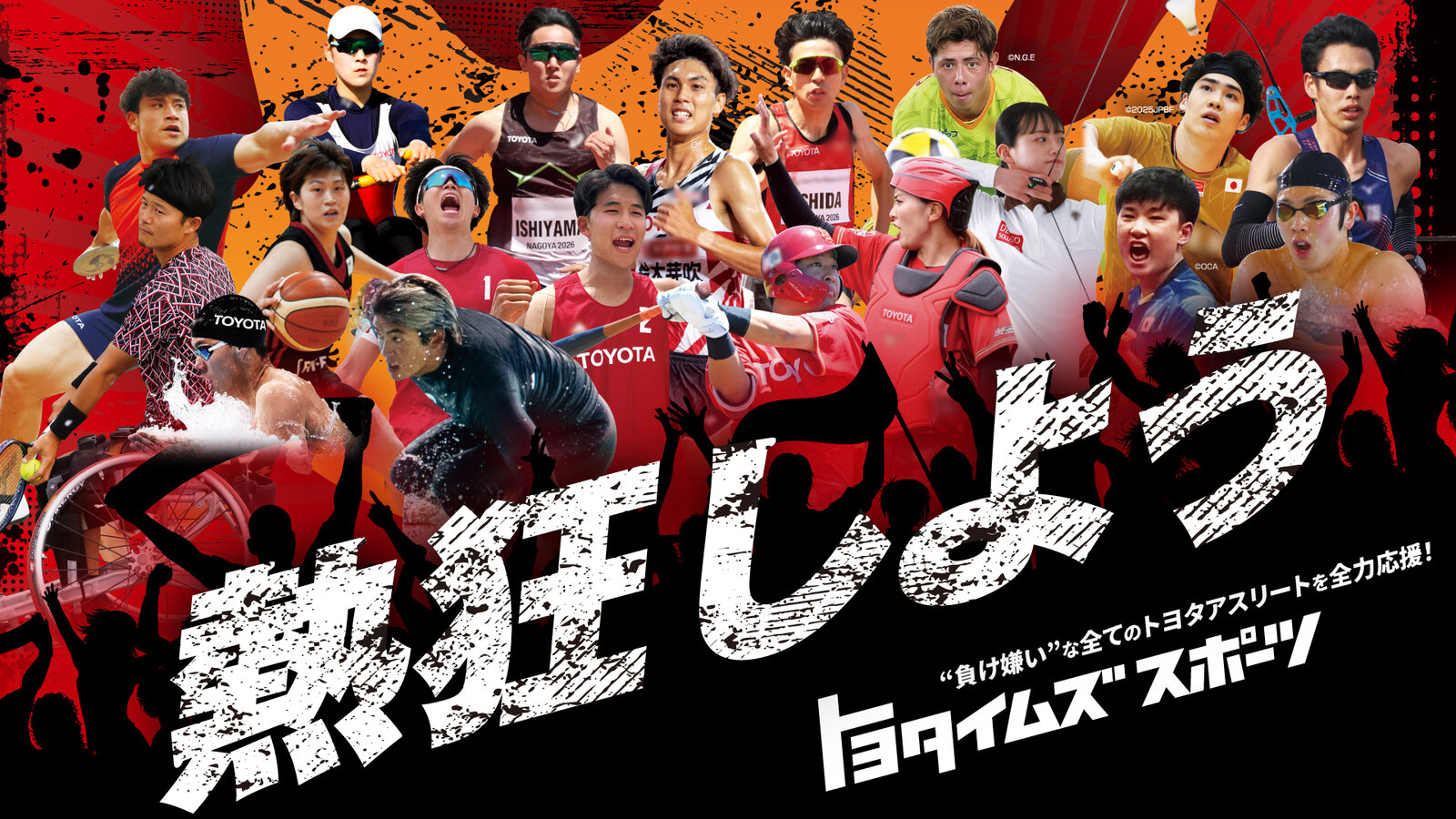
Speaking of energy and excitement, the theme for our Toyota Times Sports coverage of these Asian Games and Asian Para Games is “Let’s get fired up!”, directly inspired by what we saw at the venues in Paris.
Watching on a TV screen or monitor is very different from being there in person.
(Check out Morita’s reports from the Paris 2024 Paralympics)
Commissioner Kawai
It’s completely different.
When I speak to members of the media, I sometimes ask how they manage to write articles just from watching the video broadcast. How are they able to convey everything?
I think the real impact comes from being there on the ground, seeing and sharing the aspects that don’t show up on camera.
Inevitably, newspaper and television coverage captures only the performance, the moments when the athletes are competing, but how do they prepare right beforehand, how do they look during warm-ups, what do they wear during training? These are details you can only know by being there in person.
To experience every aspect, including the athletes’ faces immediately after competing, I really hope people will attend the event and see for themselves.
Gold medal memories
Morita
Although as Sports Agency Commissioner you now find yourself on the sidelines, many times in the past you were the one competing, swimming in front of those big crowds.
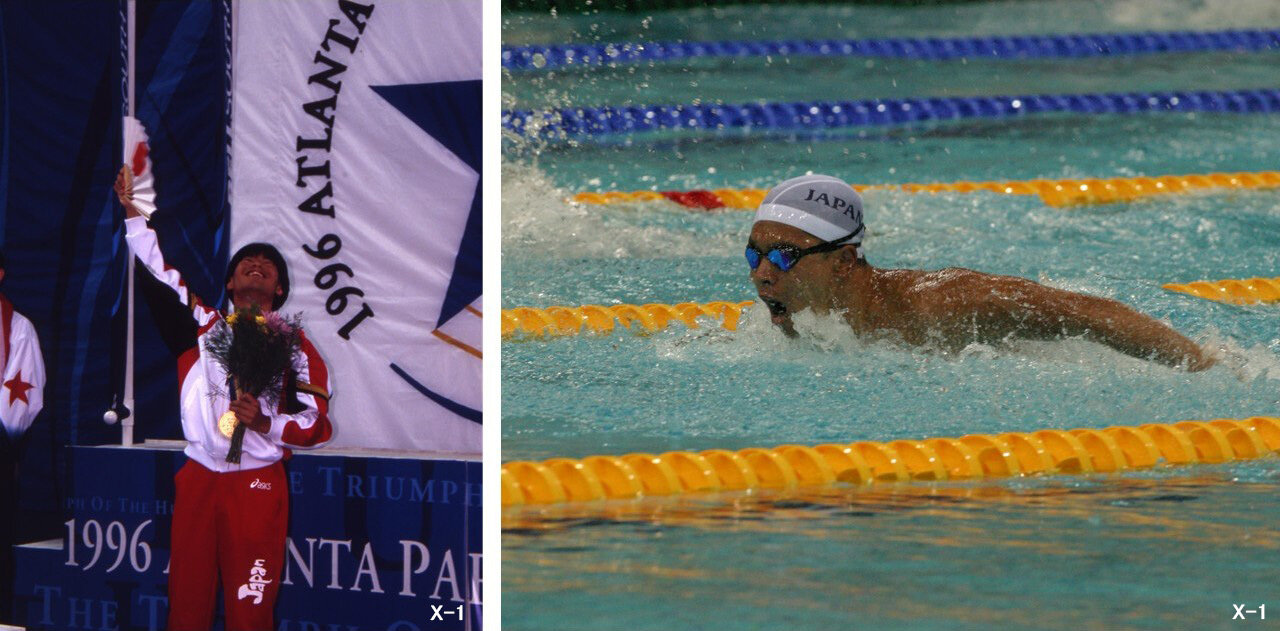
You clinched your first gold medal in front of a huge crowd at the Atlanta Paralympics. Do you remember the moment when the Japanese national anthem played?
Commissioner Kawai
I do. Four years earlier in Barcelona, even though I came away with five medals (two silvers and three bronzes), I wasn’t able to take home the gold. Those four years leading up to Atlanta felt as though I was swimming purely to win a gold medal. I can remember how momentous it felt to finally achieve that feat.
Morita
Yet I read one article that noted how, despite the thrill of winning gold in front of a massive crowd, even at Atlanta you also found yourself questioning why Japanese para-sports had not reached the same level.
Commissioner Kawai
That’s true. I felt the same thing in Barcelona.
Even in terms of volunteering, at that time in Japan few people had even heard of the Paralympics. While the Olympics were overseen by the Ministry of Education (now the Ministry of Education, Culture, Sports, Science and Technology), the Paralympics fell under the Ministry of Health and Welfare (now the Ministry of Health, Labour and Welfare), and you could sense the differences in various systems and policies.
Driven by the same spirit
Morita
Thirty years have passed since Atlanta. How do you feel about the changes made during this time?
Commissioner Kawai
Since 2000, as the Paralympics have been integrated into international Olympic bidding efforts, we have seen countries make concerted improvements aimed at boosting their Paralympic medal tallies, not only their Olympic results.
Previously, countries with robust welfare systems performed strongly at the Paralympics, but since 2000 these developments have spurred a shift. There has been a notable change, with nations typically regarded as sporting powers increasingly looking to strengthen their Paralympic programs as well.
This shift has gradually also taken hold in Japan. In the bid for the Tokyo Olympic and Paralympic Games, the country placed the Olympics and Paralympics on an equal footing, further fueling this momentum. When the Sports Agency was established in 2015, the two movements truly became one. I think that’s the general history.
Morita
As a Paralympian, do you get the sense that para-sports have gradually come to be treated just like any other sport?
Commissioner Kawai
I think it depends on your perspective, but in my mind, since going to Barcelona I’ve never approached it as anything other than a sport.
That said, I suppose the way they are viewed and appreciated by society has steadily changed.
Morita
You said that you have never viewed it as anything other than a sport, but do you think there is a difference between people with disabilities pursuing sports as athletes and people without disabilities doing the same?
Commissioner Kawai
Not at all.
I don’t think there is a millimeter of difference between, for example, the kindergartener who tries to run faster in the playground and the professional runner who always strives to be quicker, or the batter stepping up to the plate searching for that hit, or the athlete with a disability who wants to be faster, stronger—they are all driven by the same spirit and desire.
Morita
When fans are watching para-athletes compete from the stands, they forget all about such things (whether they have a disability).
Commissioner Kawai
That’s why I’d like people to experience the Games in person.
At present, there is no telling when the next major international event (such as the Asian Para Games) might be held in Japan.
I am sure that further improvements will be made in the future, but given that this event is being held here right now, I hope people will take this opportunity to visit the various venues, even just once, to cheer on the athletes from Japan and across Asia, and in the process perhaps gain a new perspective.
A celebration of human potential
Morita
On Toyota Times Sports we often cover para-sports, and within that category, we have tried to explore what insights can be gained by looking specifically at para-sports.
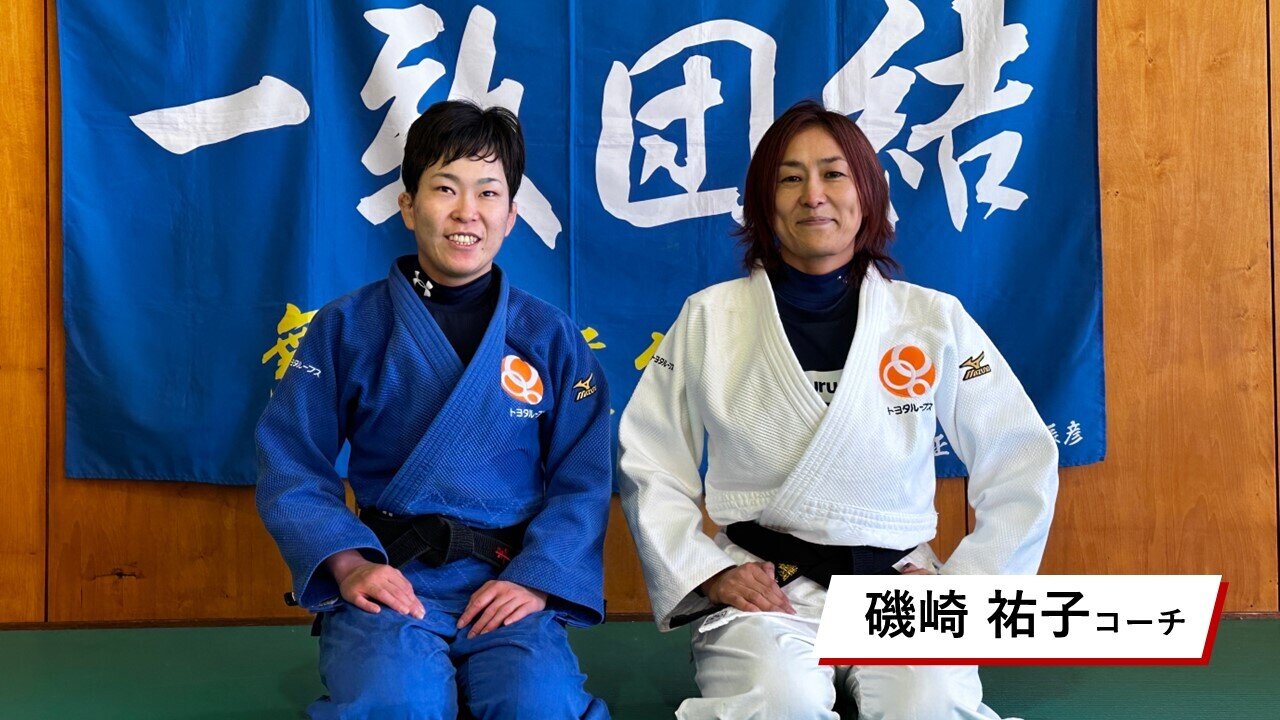
For example, when we spoke with visually impaired judoka Shizuka Hangai, she told us that while everyone else might be able to learn by watching how others practice, she cannot do that. Instead, she figures things out by feel, working closely with her coach to understand how the center of gravity shifts and gradually developing her own moves.
Her coach, who had previously competed as a non-disabled judoka, commented, “It made me realize that this is what I myself was doing when I practiced judo.”
In my mind, para-sports seem to reveal the essence of the sport itself. What are your thoughts?
Commissioner Kawai
I think there is a lot of truth to that.
For instance, try walking blindfolded. Running might be difficult, but when you walk, you’ll find that you tend to lean to one side. While it’s not a conscious effort, your body adjusts and corrects according to what you see, and that’s what enables you to walk straight.
To put it another way, if you can get the balance right so that you walk straight even while blindfolded, more of your energy may be directed into forward motion, with less waste. This kind of potential exists.
Morita
And that could help you become stronger and perform better in sports.
Commissioner Kawai
I think you can certainly approach para-sports from that perspective.
Another key point is that coaches and Olympic athletes also bring a different perspective to para-sports, one which allows them to identify things that only they can see.
In marathons and other long-distance events, for example, thick-soled shoes have become very popular. They contain carbon plates, an idea which may have been inspired by the springiness of prosthetic legs. I think that’s certainly a possibility.
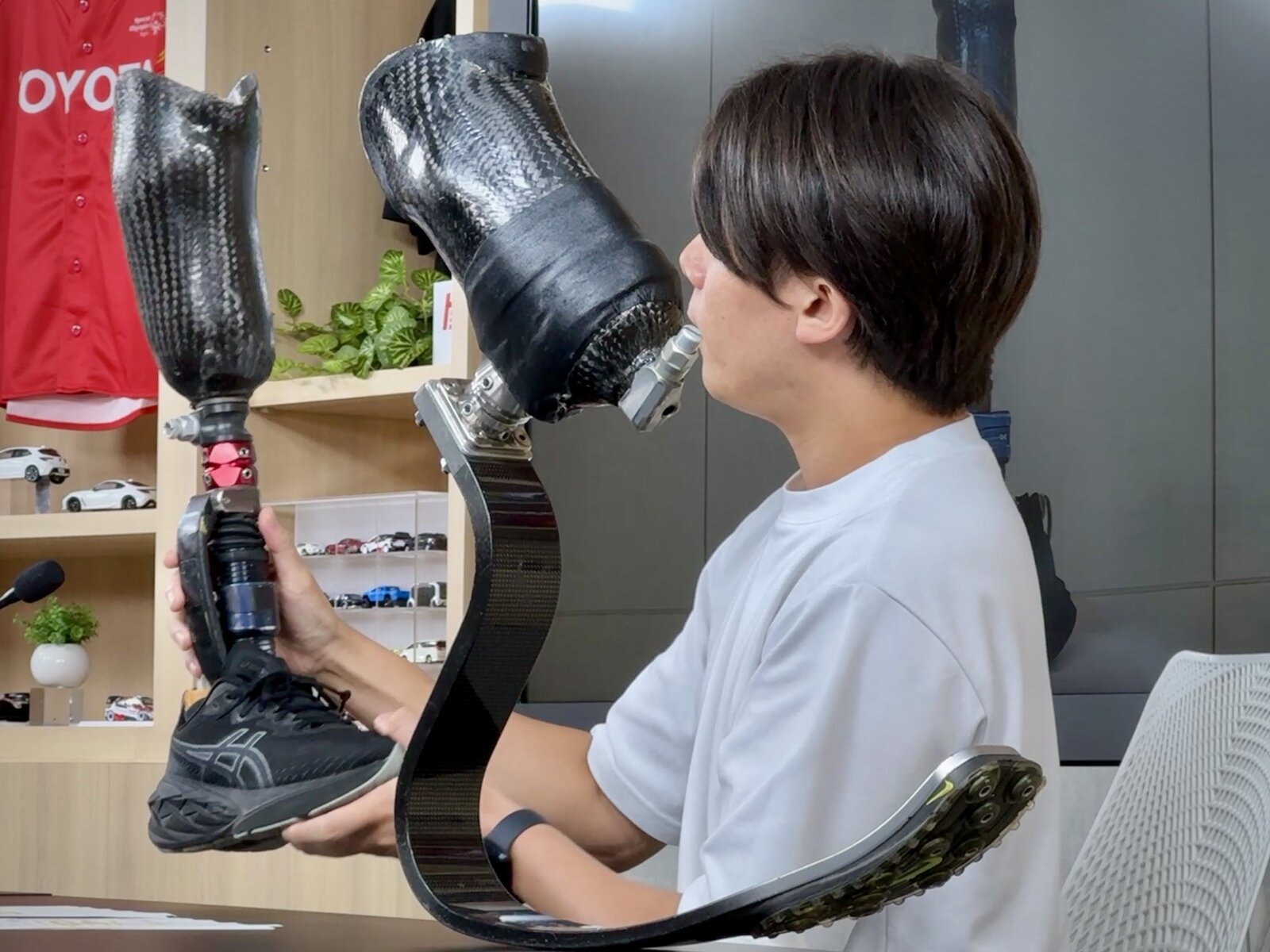
The idea that more people might be able to combine these various elements and multiply their effect is a fascinating prospect, even just in the sense of boosting the appeal and possibilities of sport.
That’s why I describe para-sports as a “celebration of human potential.”
I believe they have the power to open our eyes to the unlimited potential that we each possess.