



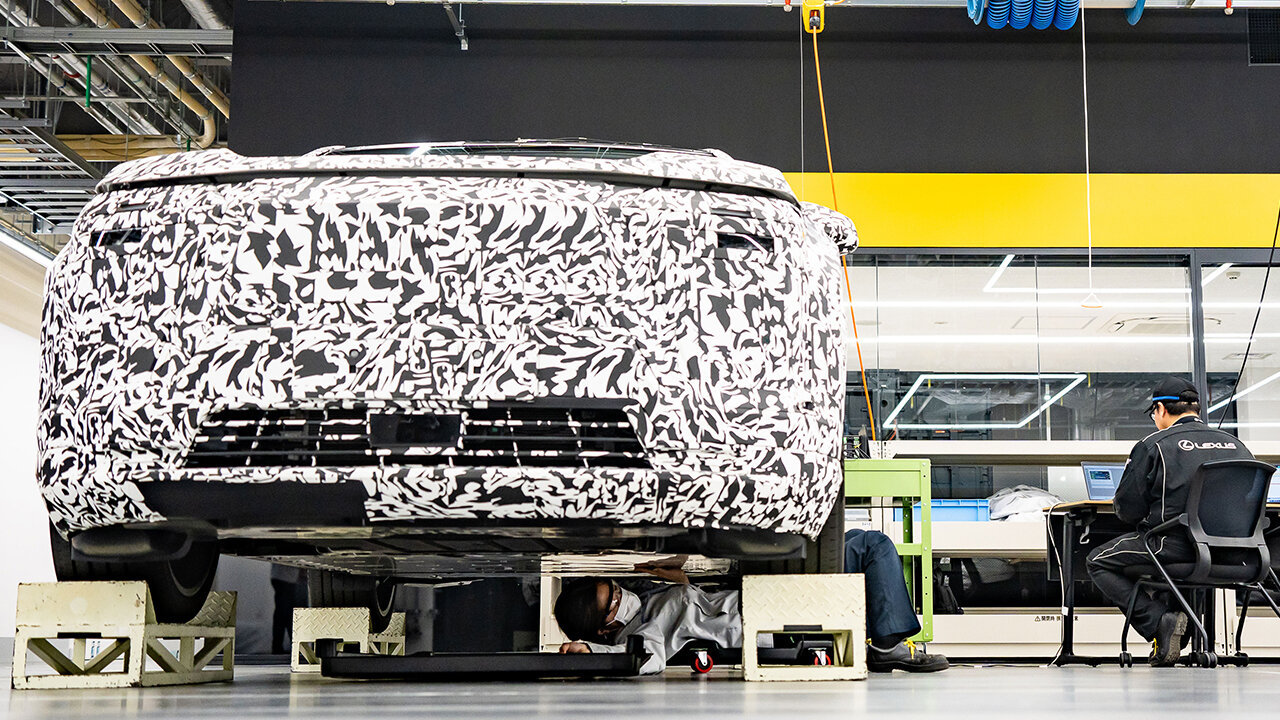
After the world premiere of the Lexus TZ, Toyota Technical Center Shimoyama (TTC-S)--the genba for ever-better carmaking, where design, test courses, and development garages come together--was opened to the media.
What is TTC-S?
Straddling the cities of Toyota and Okazaki in Aichi Prefecture, TTC-S is the development genba for Lexus and GAZOO Racing. As of May 2026, around 3,000 people work there every day in pursuit of ever-better carmaking.
At the root of TTC-S lies a question once posed by Chairman Akio Toyoda—also known as Morizo—when he was president: “Why can’t we do in Japan what can only be done at the Nürburgring?”
The vision was to create a place where cars could be honed through an agile, unified process: driving on punishing roads like those at the Nürburgring, identifying failures, fixing them, and driving again.
Nearly 30 years later, at the start of full-scale operations in 2024, Chairman Toyoda described TTC-S as “a place where we repeatedly drive, break, and fix cars over and over again, every single day.”
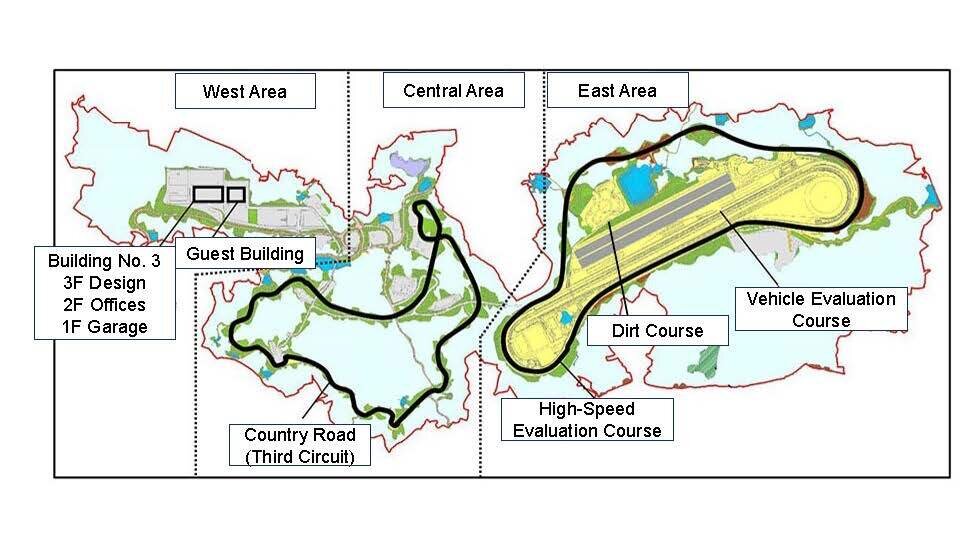
The vast 650-hectare site is divided into three main sections: the Central Area, home to the Country Road test course; the East Area, which features high-speed and vehicle evaluation courses; and the West Area, where Building No. 3 houses the guest building used for the world premiere, along with the design studios, offices, and garages.
Naturally, a test course requires a large site, but even from central Nagoya, TTC-S is more than an hour away by car—hardly what anyone would call convenient access.
That was precisely why, having chosen to hold the world premiere in such a remote location, Toyota also wanted the media who made the trip to experience TTC-S itself.
With that in mind, tours were held on May 7, the day of the world premiere, giving media visitors a chance to explore the test courses, the garages where vehicles are worked on, and the spaces where designs take shape. Toyota Times joined the media on the tour to report from inside TTC-S.
Garages packed with vehicles still under development
The facility tour began with comments from Takashi Watanabe, president of Lexus International Co., and Tomoya Takahashi, president of GAZOO Racing Company.
Lexus International President Watanabe
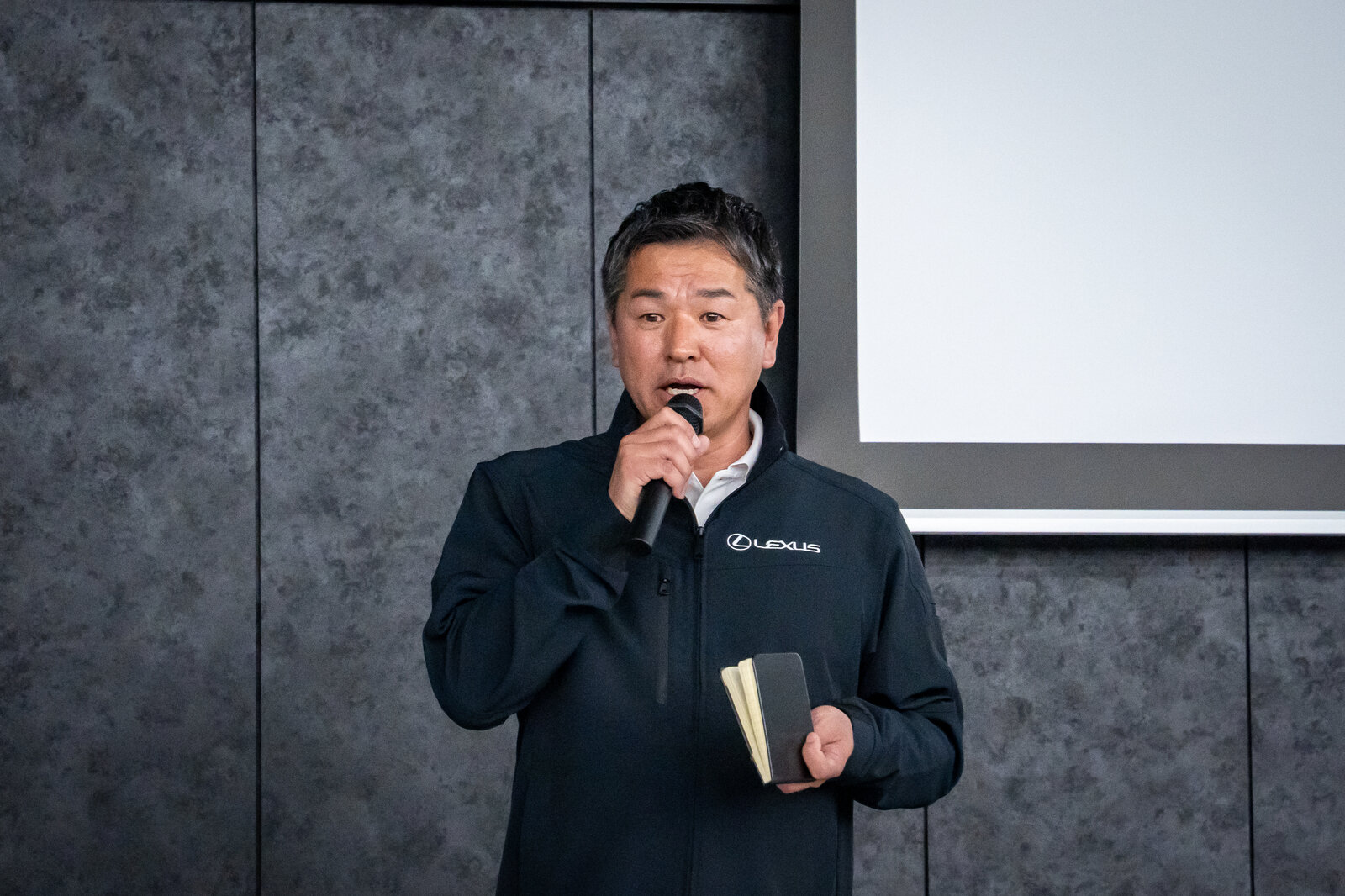
After the unveiling ceremony, Chairman Toyoda told us, ‘You’ve built an impressive facility, but this still hasn’t truly become a carmaking genba yet.’ It is the role of the two of us to turn Shimoyama into a true development genba.
GAZOO Racing President Takahashi
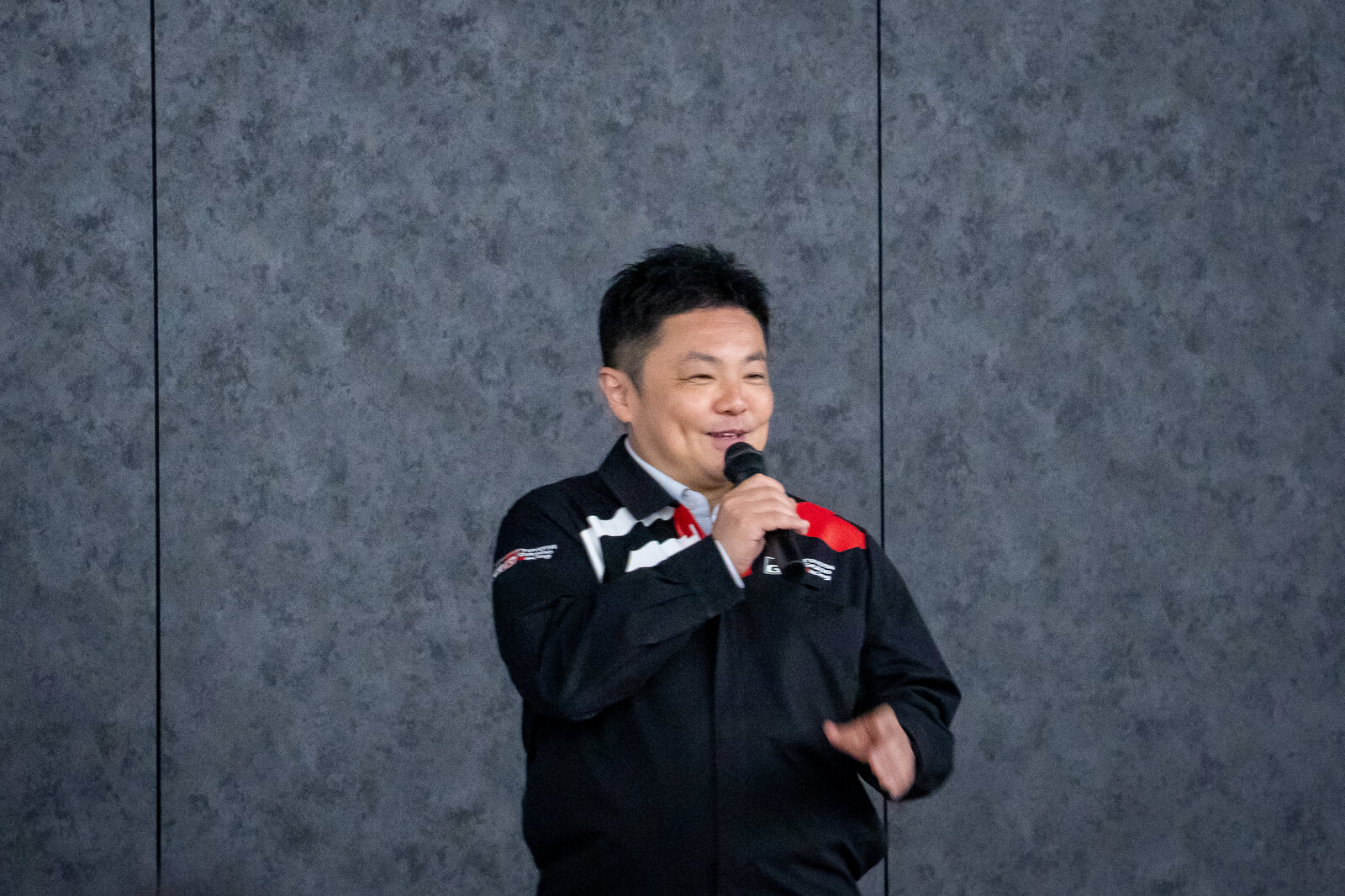
I want people to see that these guys are seriously committed to what they’re doing. We hope you’ll experience the real side of carmaking in the garage area on the first floor of Building No. 3.
It is an active development genba for vehicles that have not yet been announced, so we’ll ask that you refrain from taking photos during the garage tour. There are a lot of dangerous things in there. (laughs)
Building No. 3 houses the vehicle maintenance garage on the first floor, office space on the second floor, and the design area on the third floor.
Stepping into the garage area, visitors were immediately met by the Lexus zone, where vehicles still under development—with a distinctly hand-built, patched-together feel—were scattered across the floor.
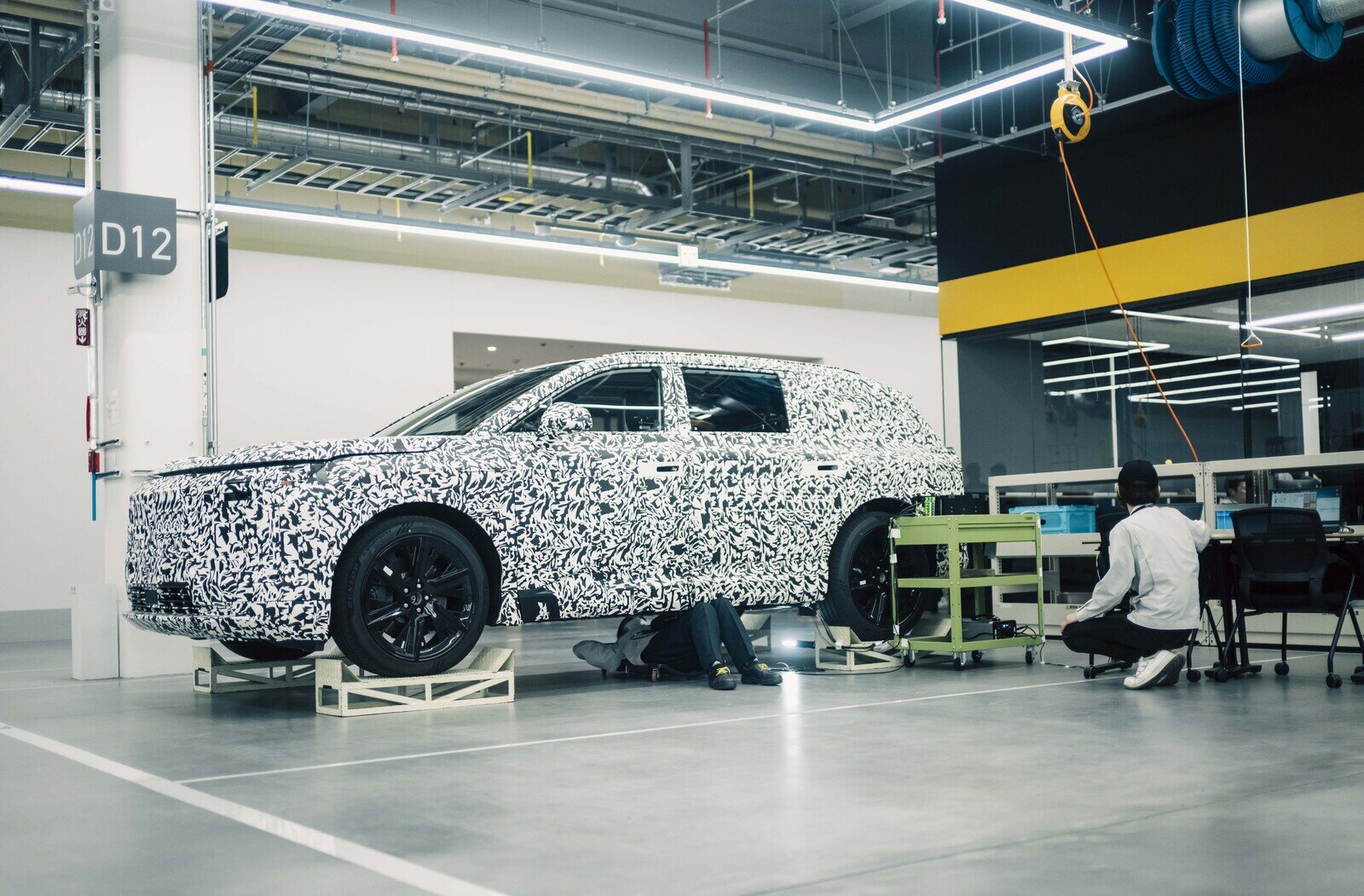
Nearby, engineers gathered around design plans, deep in discussion.
Meanwhile, in the GR zone, the turbo midship 4WD GR Yaris M Concept—fresh off the test course—had been lifted onto a hoist as engineers engaged in intense back-and-forth discussions with professional drivers Masahiro Sasaki, Hiroaki Ishiura, and Kazuya Oshima. It was exactly like a real motorsports genba.
President Watanabe
The third floor is the design area. Opening a space like this to the media is something I believe we have never done before.
Because the design area contains highly confidential information, even employees previously had to go through various approval procedures just to gain access.
But here at Shimoyama, anyone involved in development can come at any time and discuss vehicle development directly with designers.
Focusing on people in an age when AI can do almost anything
Moving from the rough-and-ready garage atmosphere on the first floor up to the third floor, visitors entered a futuristic space bathed in uniform white light beneath continuous grid lighting stretching across the ceiling.
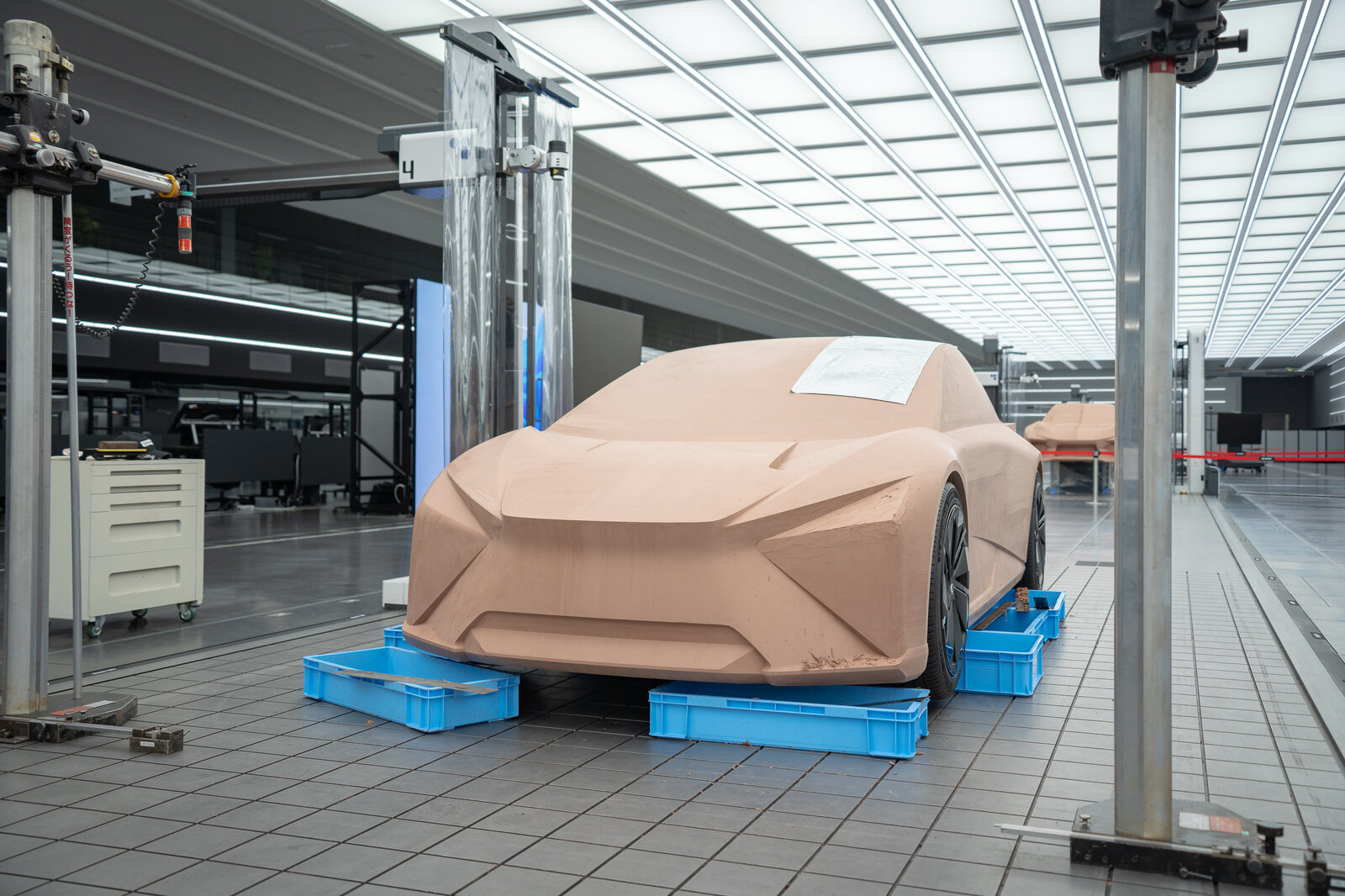
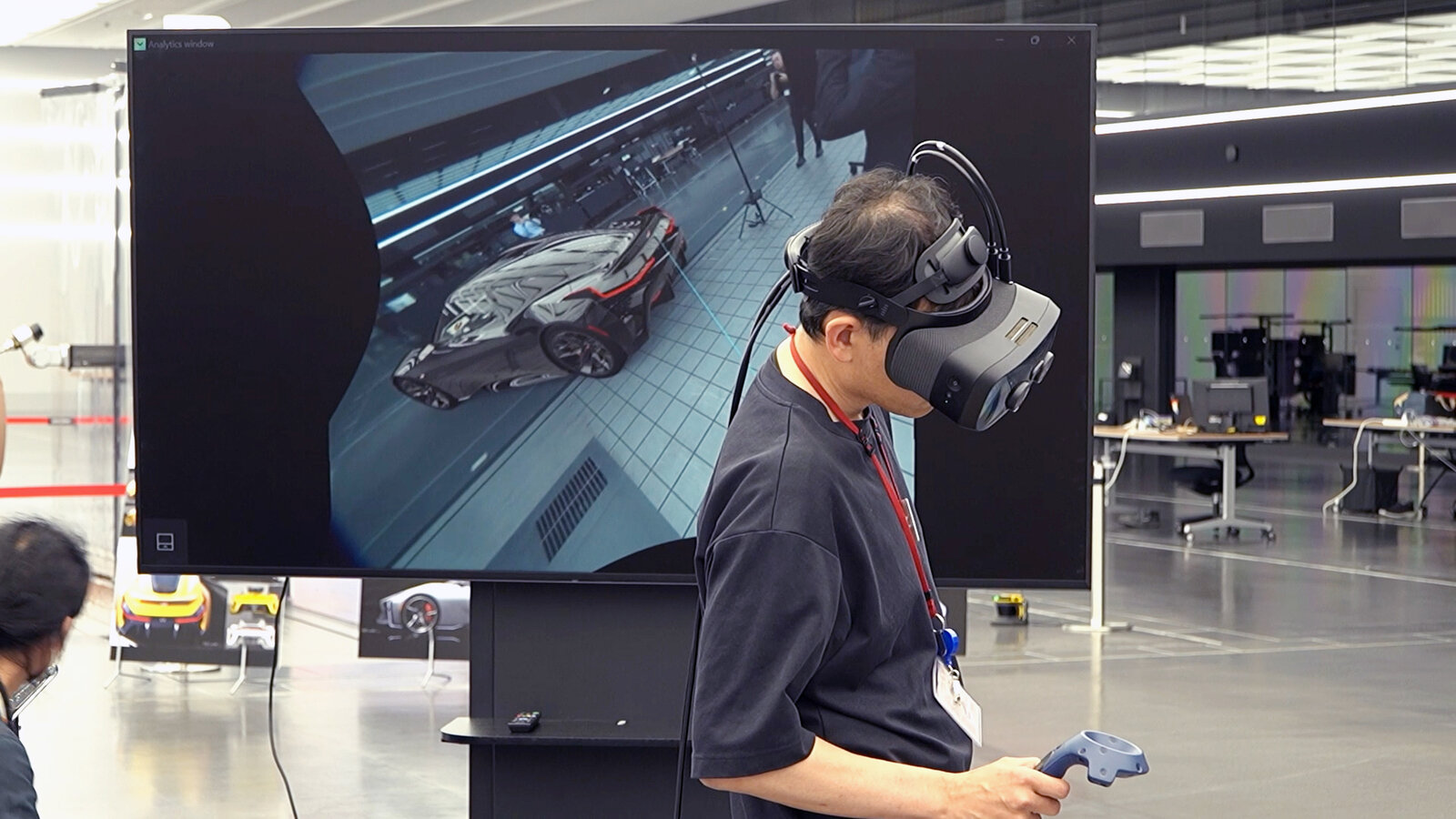
Clay models stood throughout the floor, while scanning devices, measurement gates, and other digital equipment lined both sides of the area. Nearby, vehicle development using VR was also underway. Yet Koichi Suga, general manager of the Lexus Design Division[y1] , said that people remain at the center of carmaking.
General Manager Suga
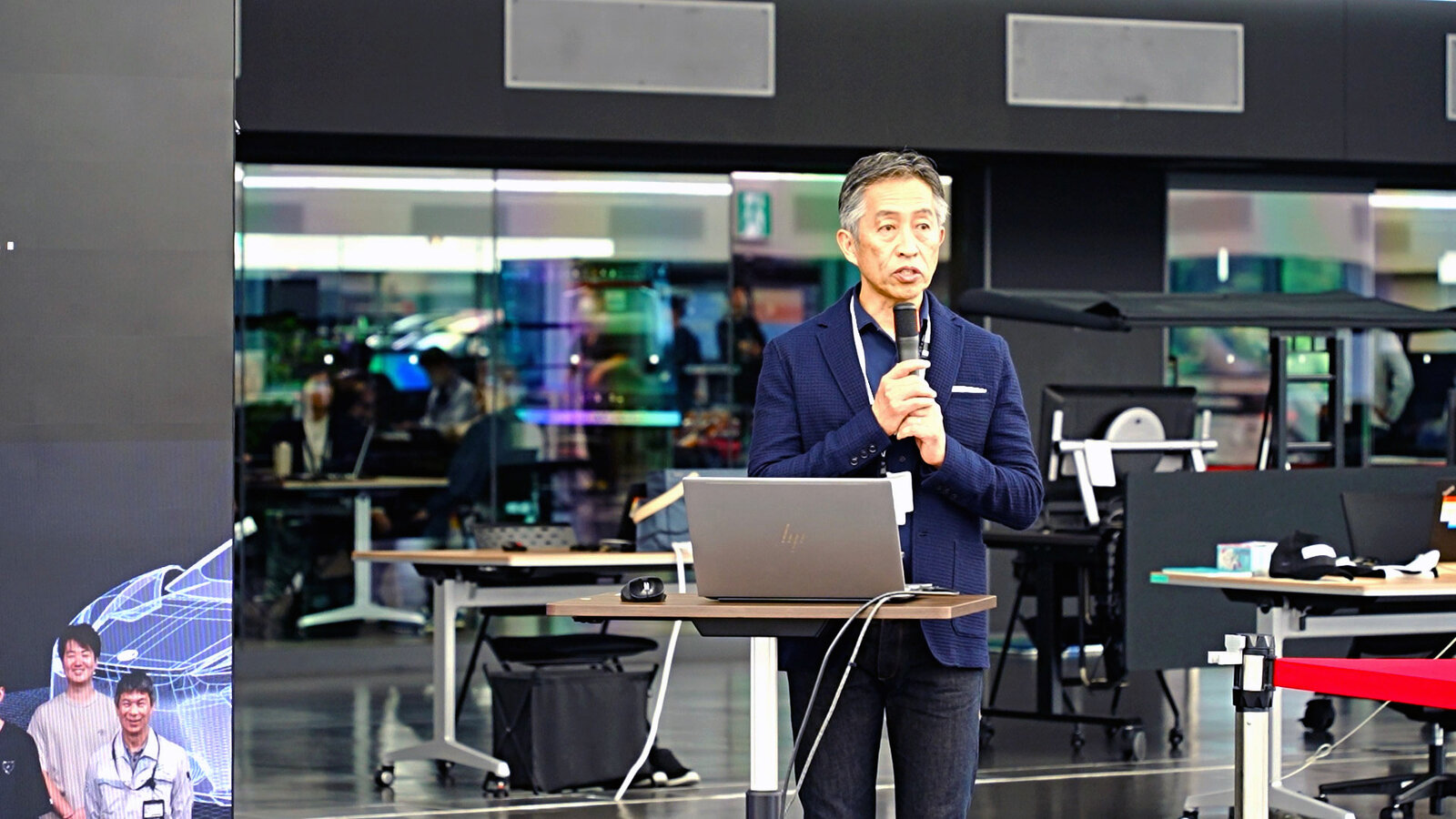
At Lexus, we are a brand centered on people, while GR pursues driver-first ever-better carmaking.
That same people-centered philosophy applies here in the design development genba as well. Even today, people remain at the center of carmaking.
We live in an age when people say AI can do almost anything. Even so, we continue to create products by bringing together the talents of designers, physical modelers, digital modelers, and many others, while valuing human sensitivity, creativity, and craftsmanship.
We are also committed to development based on genchi genbutsu, a principle long valued by Toyota. In car design, that means creating full-scale clay models.
Today, advanced virtual environments allow us to accurately verify shapes digitally. Even so, there are many things that can only be understood from a real vehicle—its sense of scale and presence, the way light falls across it, and the beauty of its contours.
That is why we continue advancing design development through genchi genbutsu, using full-scale clay models.
Also placed in the area was a mockup of the LFA Concept. The designer leading the explanation described it as “the sacred mockup—the very first one created for the show car.”
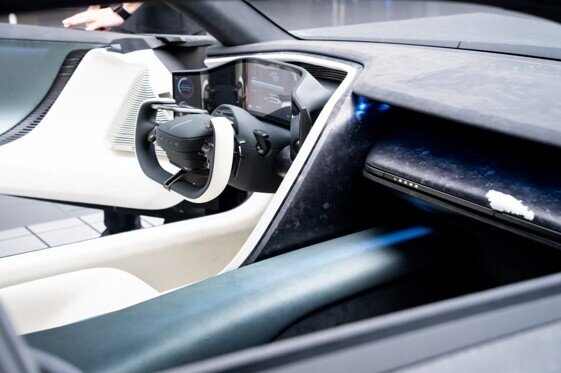
The designer explained that the show car was developed by verifying which elements from the original sketches should be retained. Because it had to be built in a short time, polystyrene foam was used instead of clay.
After using VR for virtual verification, the team refined the model with large-scale machining equipment and 3D printers. From there, people physically climbed into the vehicle and evaluated it by hand.
Wearing VR goggles, a digital modeler seemed to be viewing the vehicle from every possible angle in a virtual world, moving in curious ways while speaking with another team member watching a nearby monitor.
The clay modelers were craftspeople through and through, building up soft clay by hand before carving it away using one specialized tool after another.
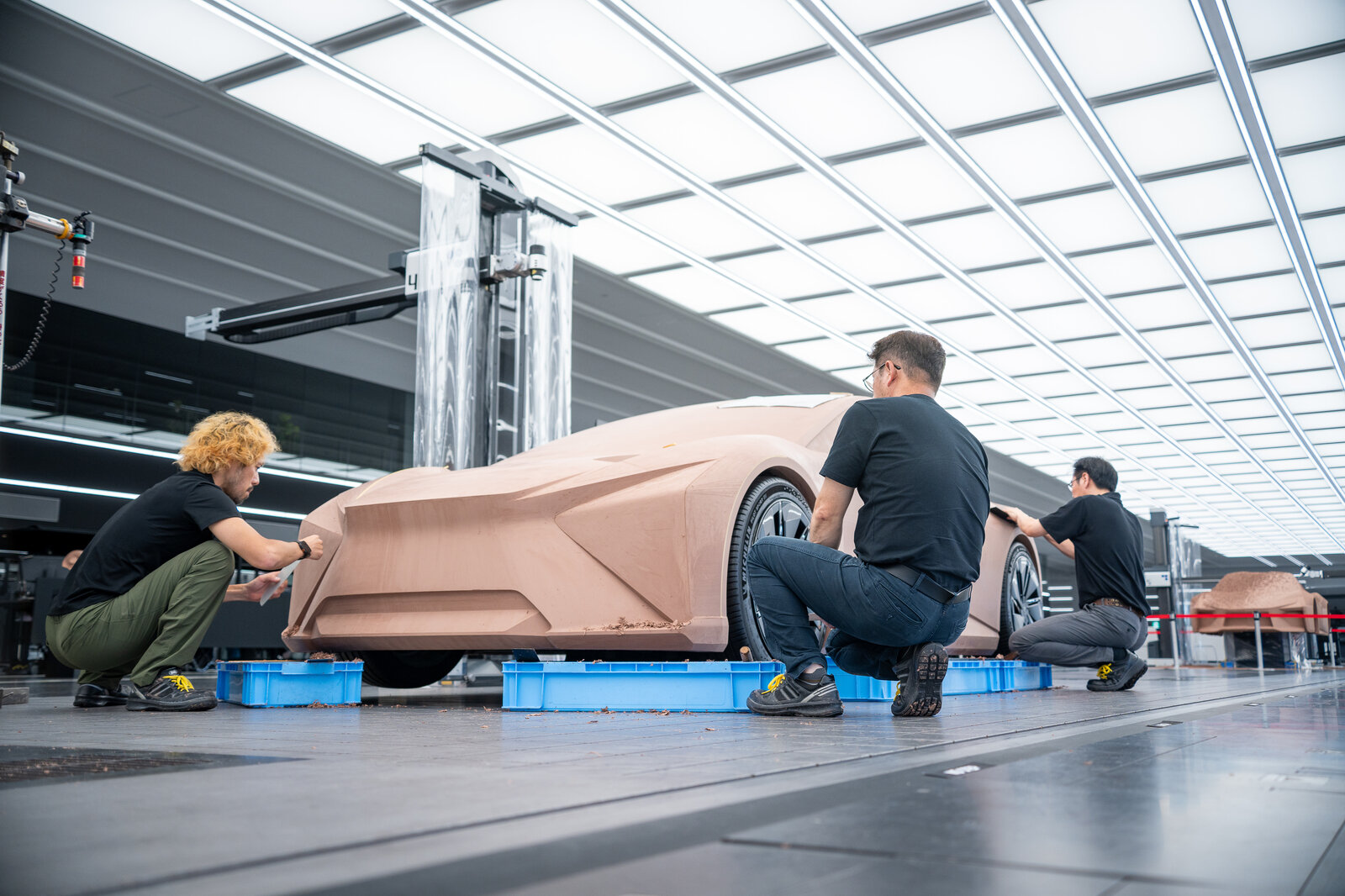
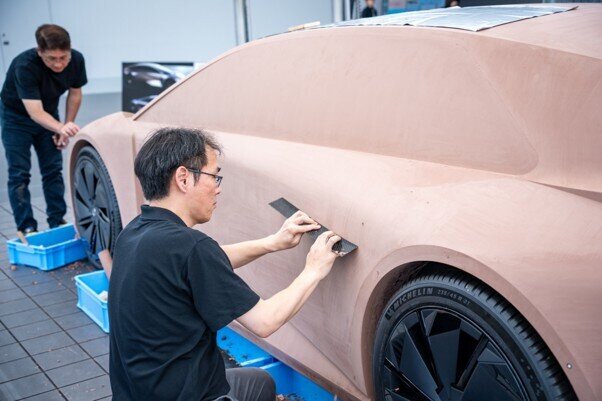
“I’ve been doing this for 40 years, but there is still so much to learn. Even now, I continue making new discoveries,” said one veteran modeler as he shaved the curve of a left-side fender. Across from him, a younger modeler used every tool available—data, eyes, and hands—to shape the opposite side into perfect symmetry. In this sterile and highly precise space, what stood out most was the sight of people working with their hands.
After touring Building No. 3, where design, engineering development, and garages come together, the group headed to the Third Circuit—the central feature of TTC-S.
The Third Circuit—A Grueling Course for Cars
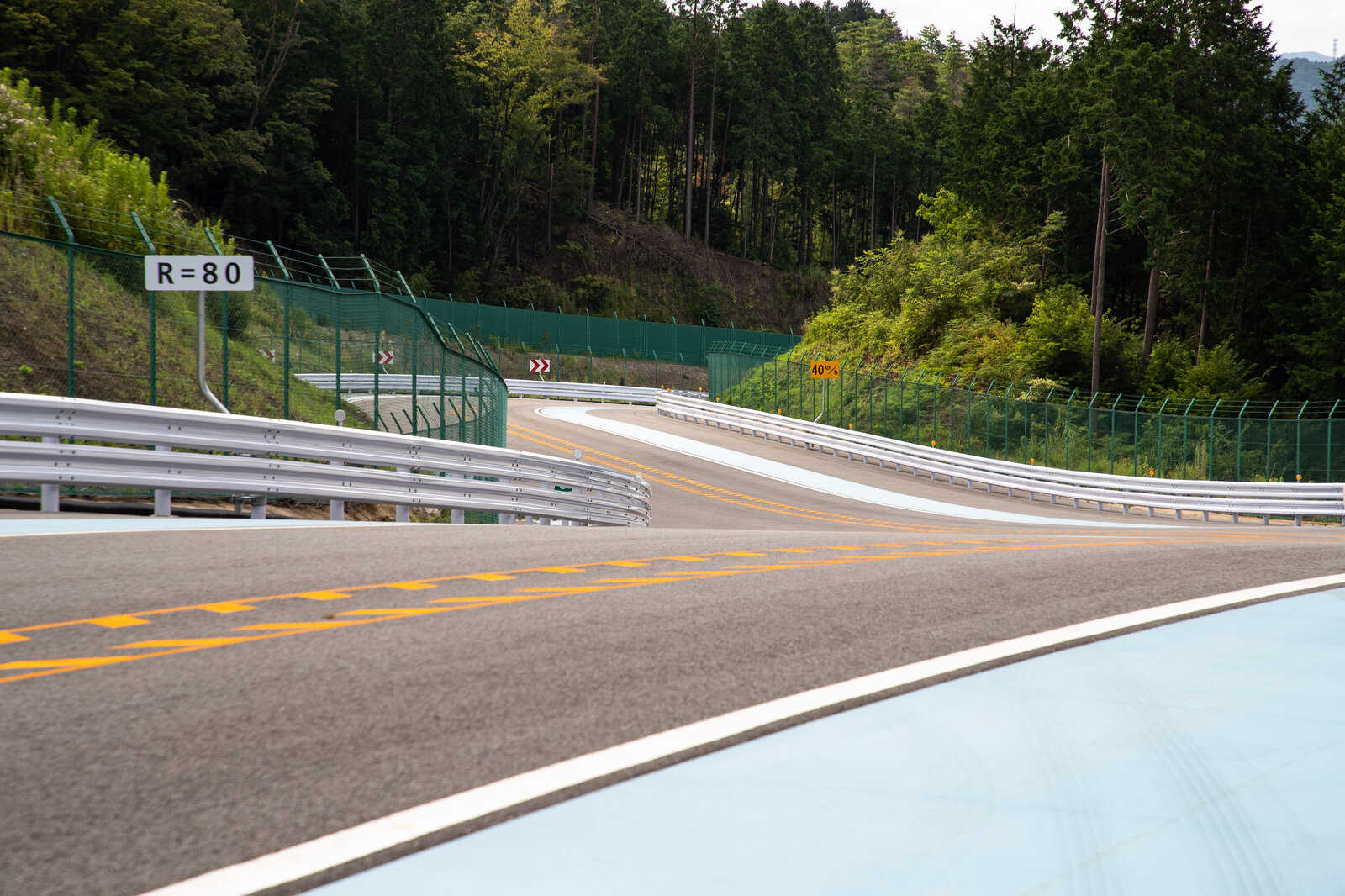
Nicknamed the Country Road course, the 5.3-kilometer circuit condenses the Nürburgring into roughly one quarter of its original scale. With 75 meters of elevation change, constant undulation, blind corners, and sections where traction drops to nearly zero, it provides a punishing environment for vehicle testing, one that closely mirrors the Nürburgring known as the “Green Hell.”
GAZOO Racing President Takahashi
At the end of the day, the roots of GR’s activities lie at the Nürburgring in Germany. The vision of the master driver—Chairman Akio Toyoda—was to create a course here that would capture the essence of that experience.
This truly is a harsh environment for cars, one that comes with real danger as well. The more you drive here, the more the cars break down. We bring those vehicles back to the garage, analyze the data, and fix them. We can now do all of that in a much shorter period of time.
Lexus International President Watanabe
Lexus development teams have also begun working in this environment, and now we repeatedly take those vehicles to the Nürburgring in Germany to evaluate and refine every development model.
People may associate the Nürburgring primarily with GR, but Lexus is there as well. The two of us are working together while pushing each other to improve.
A bus tour was held to give members of the media a firsthand look at the Third Circuit and the dirt course.
This “Third Circuit Safari”—Shimoyama’s take on a Circuit Safari tour—was guided by Naohiko Saito, chief engineer (CE) of the GR Yaris.
Chief Engineer Saito
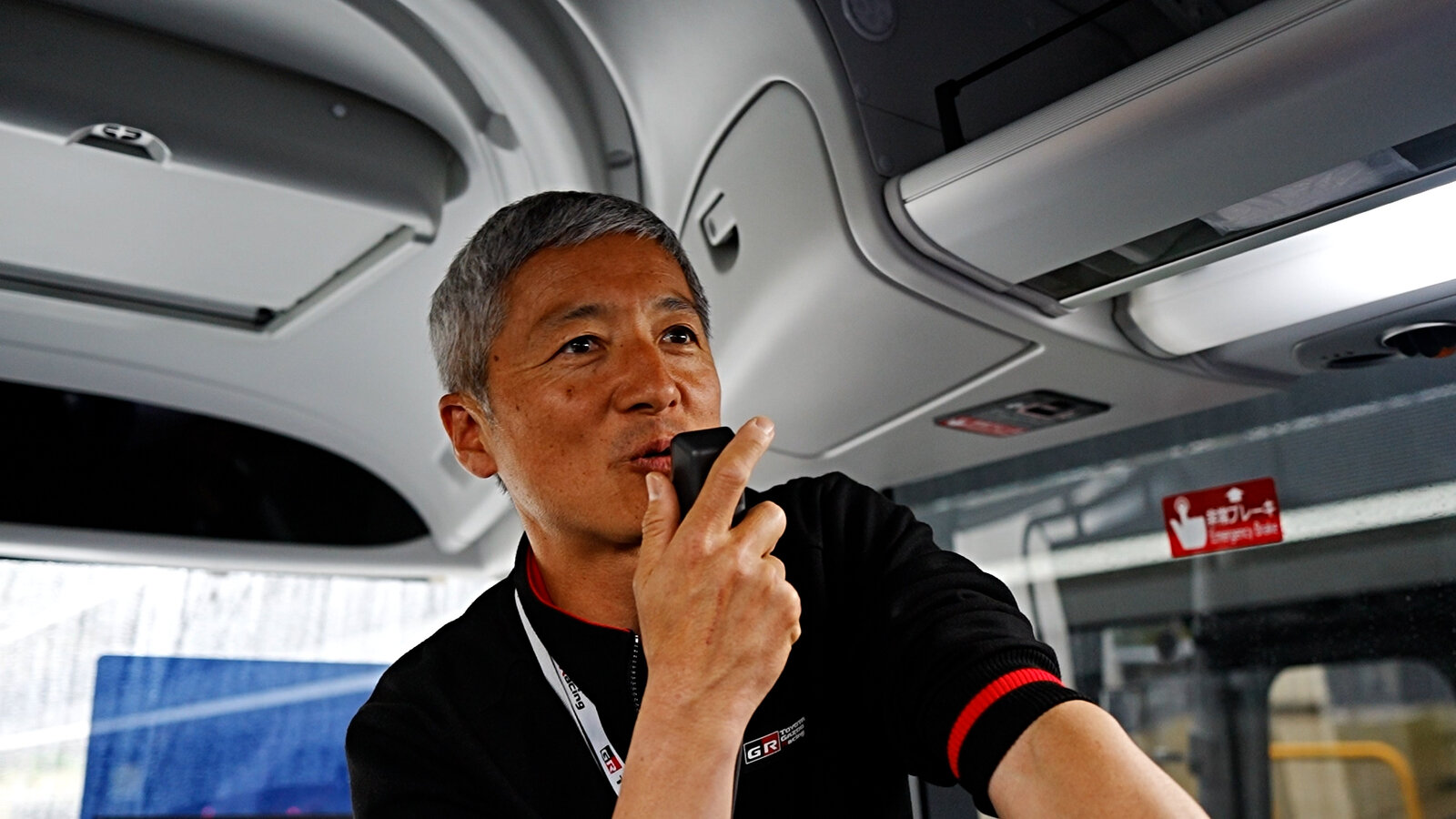
Shimoyama began operations in 2019, and the site is about the size of 140 Nagoya Domes…well, as someone from Aichi, I have to say Nagoya Dome instead of Tokyo Dome. (laughs)
You can still see traces of the struggles faced by generations of drivers. The scars on the road surface and dents in the guardrails show just how demanding this course really is.
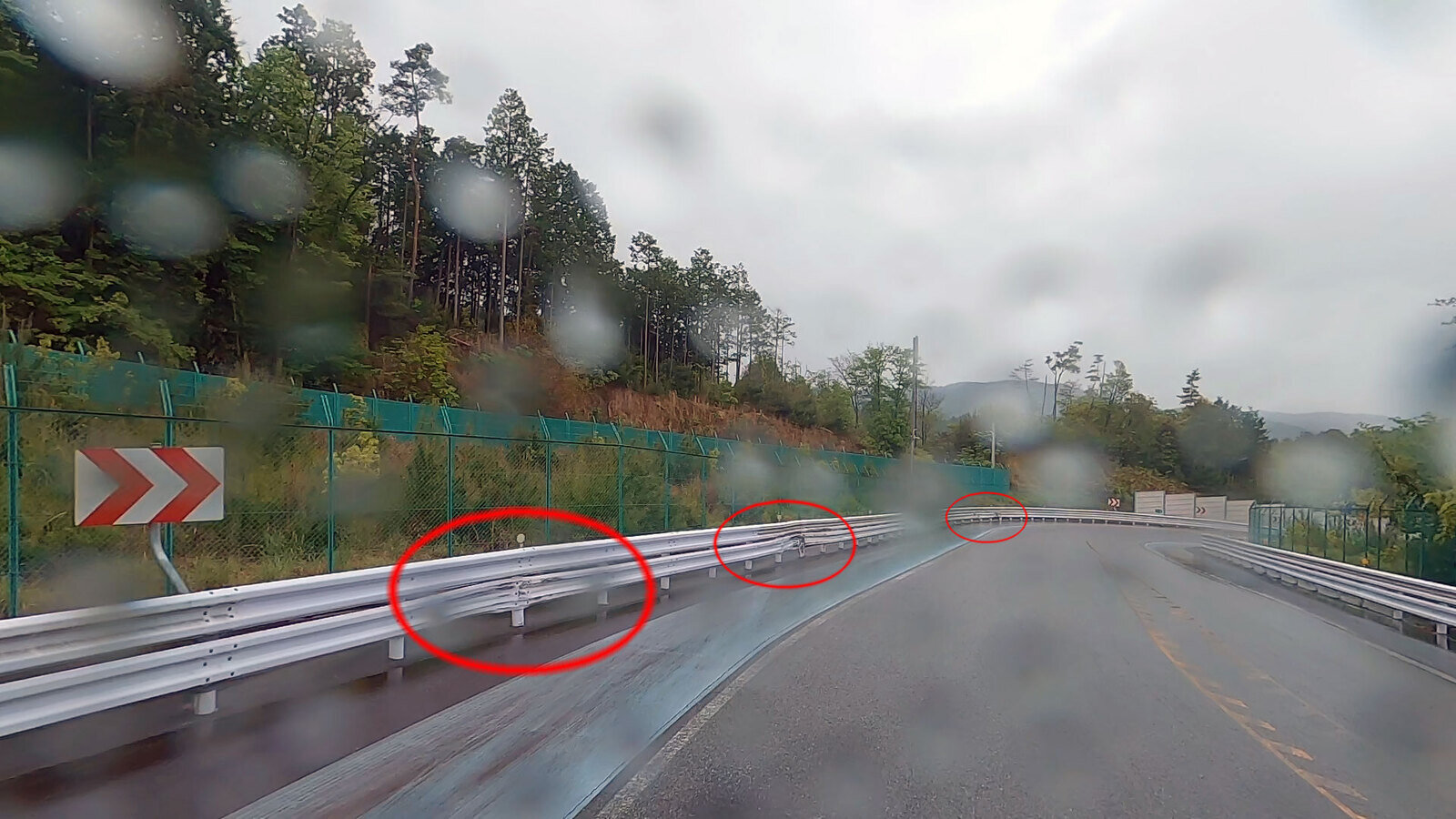
Morizo also told us to leave these marks as they are, as proof that cars have been honed here.
‘Break them and refine them on this test course. Expose every possible issue before customers ever get behind the wheel.’ That is the mindset we bring to our work here.
The nearby No. 1 Maintenance Building was the first facility at Shimoyama to begin operations in 2019, ahead of full-scale site operations. It is staffed full-time by our Advanced Technical Skills Institute Division.
Just like the garage area on the first floor of Building No. 3, it serves as a real development genba where cars that break down or develop issues on the Third Circuit are repaired and sent back out again.
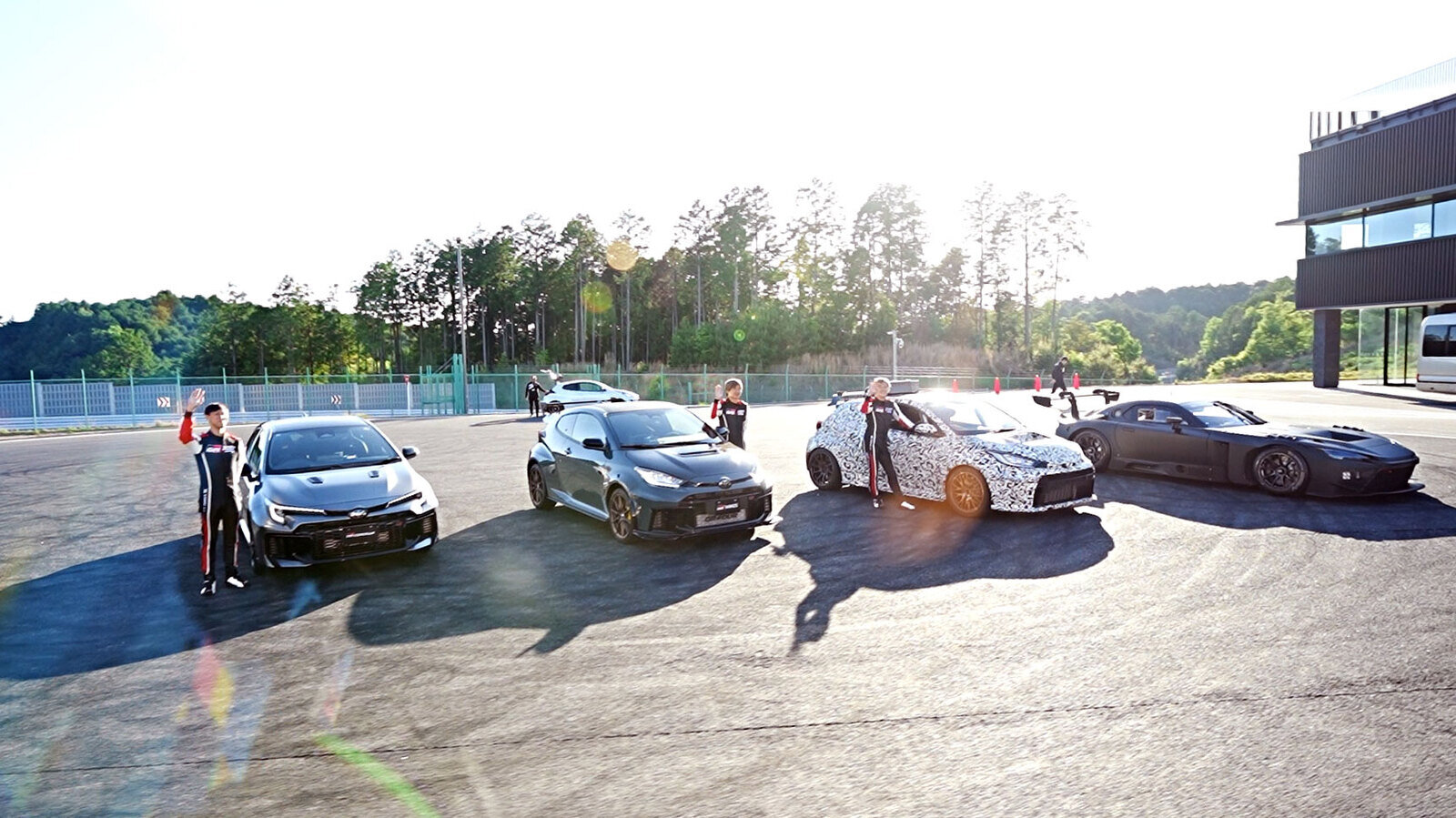
During the Third Circuit Safari, media visitors also caught sight of rare “beasts” such as the GR GT3, GR Yaris Midship Concept, GR Yaris MORIZO RR, and GR Corolla being driven aggressively around the course by professional drivers Ryuta Ukai , Sasaki, Oshima, and Ishiura.
The bus tour also featured feedback from an email sent by President Kon on the GR Yaris and GR Corolla.
Chief Engineer Saito
President Kon actually owns a GR Yaris, but since he’s thinking about buying another car, he wanted to evaluate both the GR Yaris and the GR Corolla. He drove them last weekend, and we later received his feedback by email. I’d like to share some of it with you.
The GR Corolla felt a bit heavy around town, so I found myself thinking the MT might suit it better than the DAT. On winding roads, though, it was very stable, and I actually preferred it there. The kickdown response was a little slow, and the brake feel could be better, so I’d like to try it again with different brake pads. Personally, though, I prefer the seats and steering of the GR Yaris.
Looks like President Kon even took it onto winding mountain roads. (laughs)
Now then, in front of the No. 1 Maintenance Building, you can see tire marks from donut turns left by Morizo and General Manager Satoshi Toyooka.
In winter, a light layer of snow sometimes settles here, and when that happens, Toyooka is usually out here drifting for fun.
Along the roads inside the facility, pipe racks stretch endlessly into the distance.
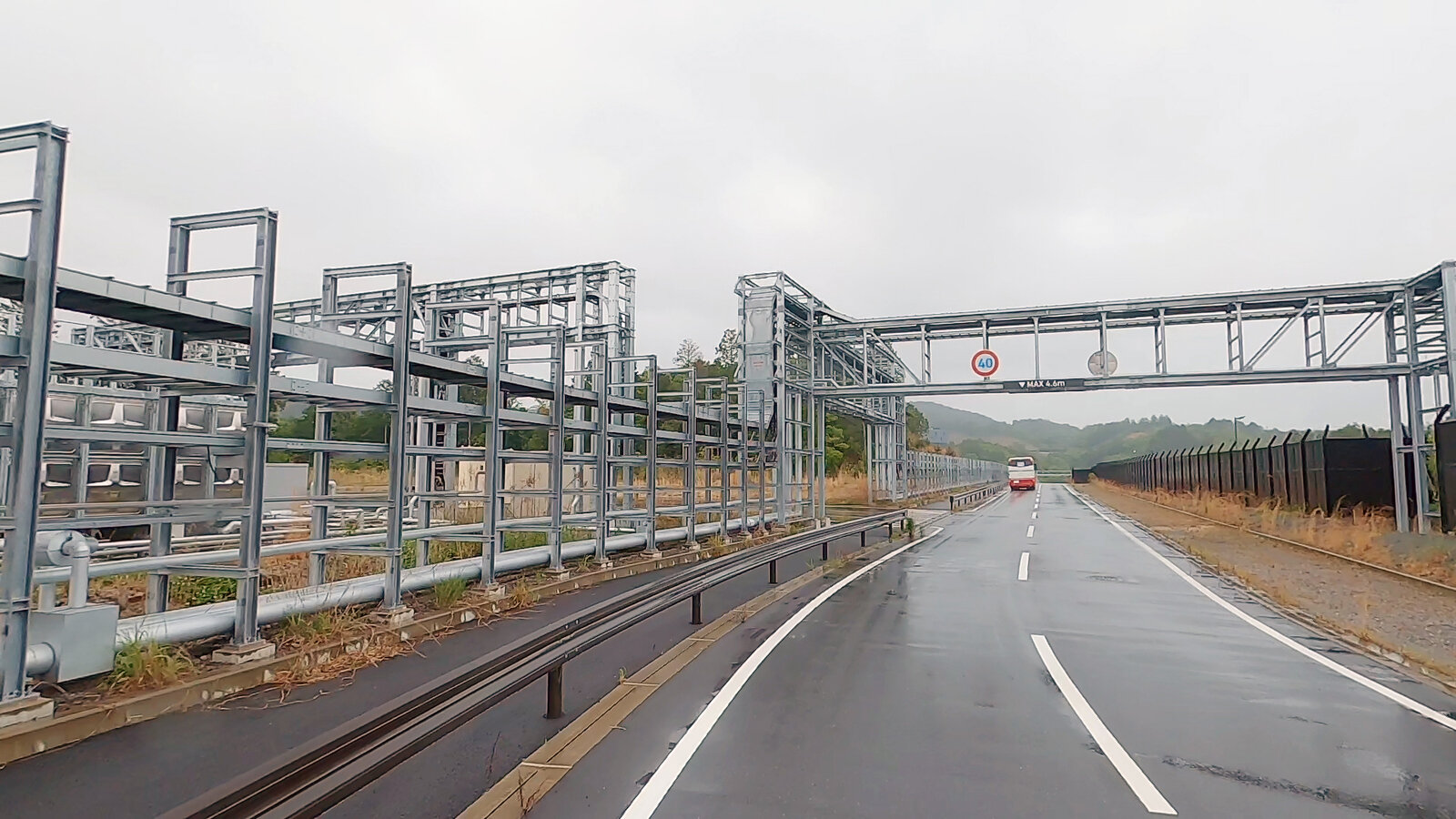
These pipe racks carry lifelines, including the power grid, connecting the various buildings spread across the vast site. They were intentionally built above ground rather than underground out of consideration for environmental conservation.
The test course includes not only tarmac sections, but gravel roads as well.
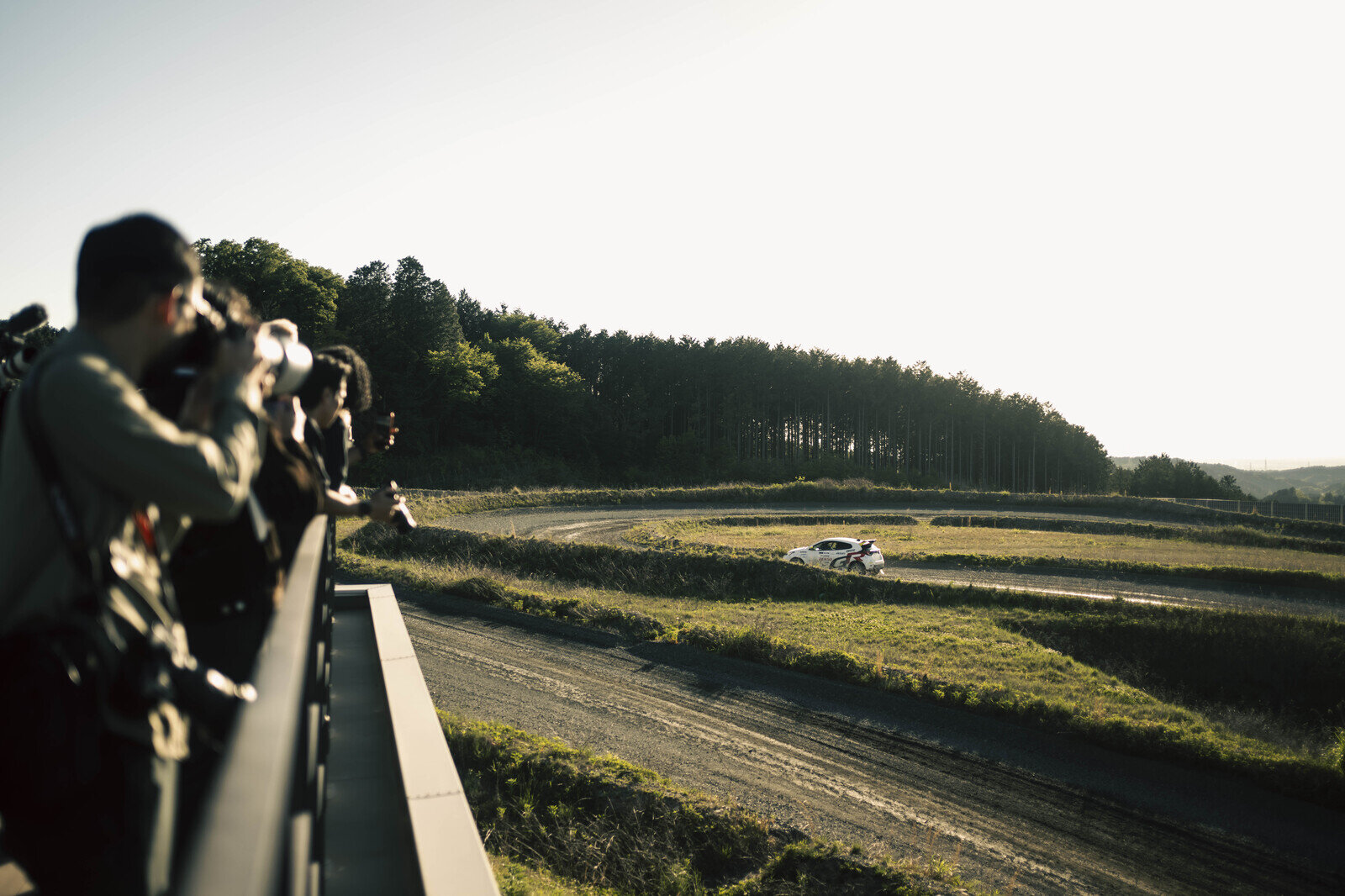
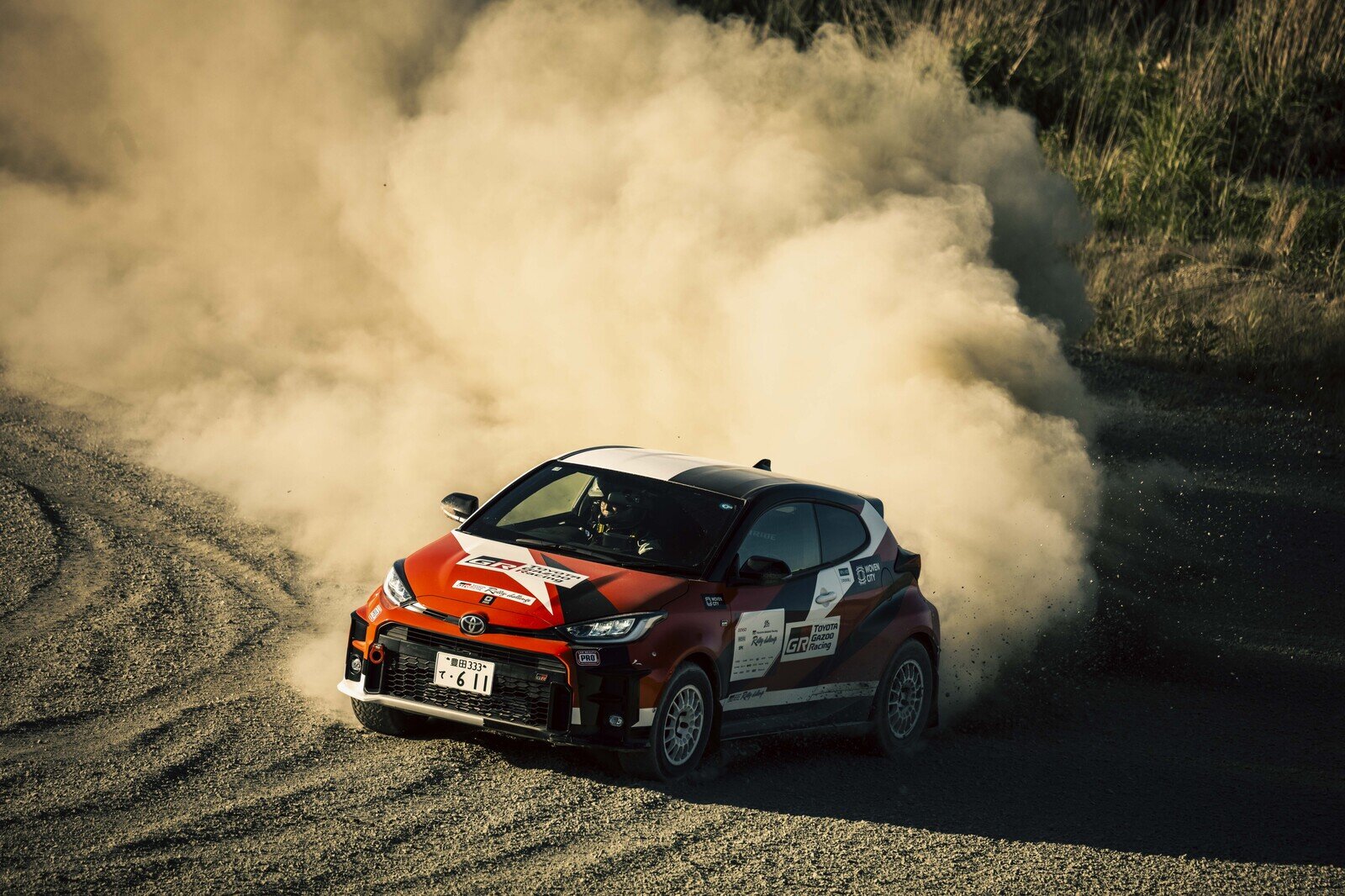
The dirt course consists of three interconnected layouts of roughly 800 meters each and is also used as a special stage for Rally Challenge events.
GAZOO Racing President Takahashi
Because grip limits are extremely low on dirt, we can observe vehicle behavior that cannot be seen on paved roads. We felt we absolutely needed a course like this, so the dirt course was added later.
Lexus International President Watanabe
Morizo actually rolled a car on this dirt course, and that vehicle is still displayed here.
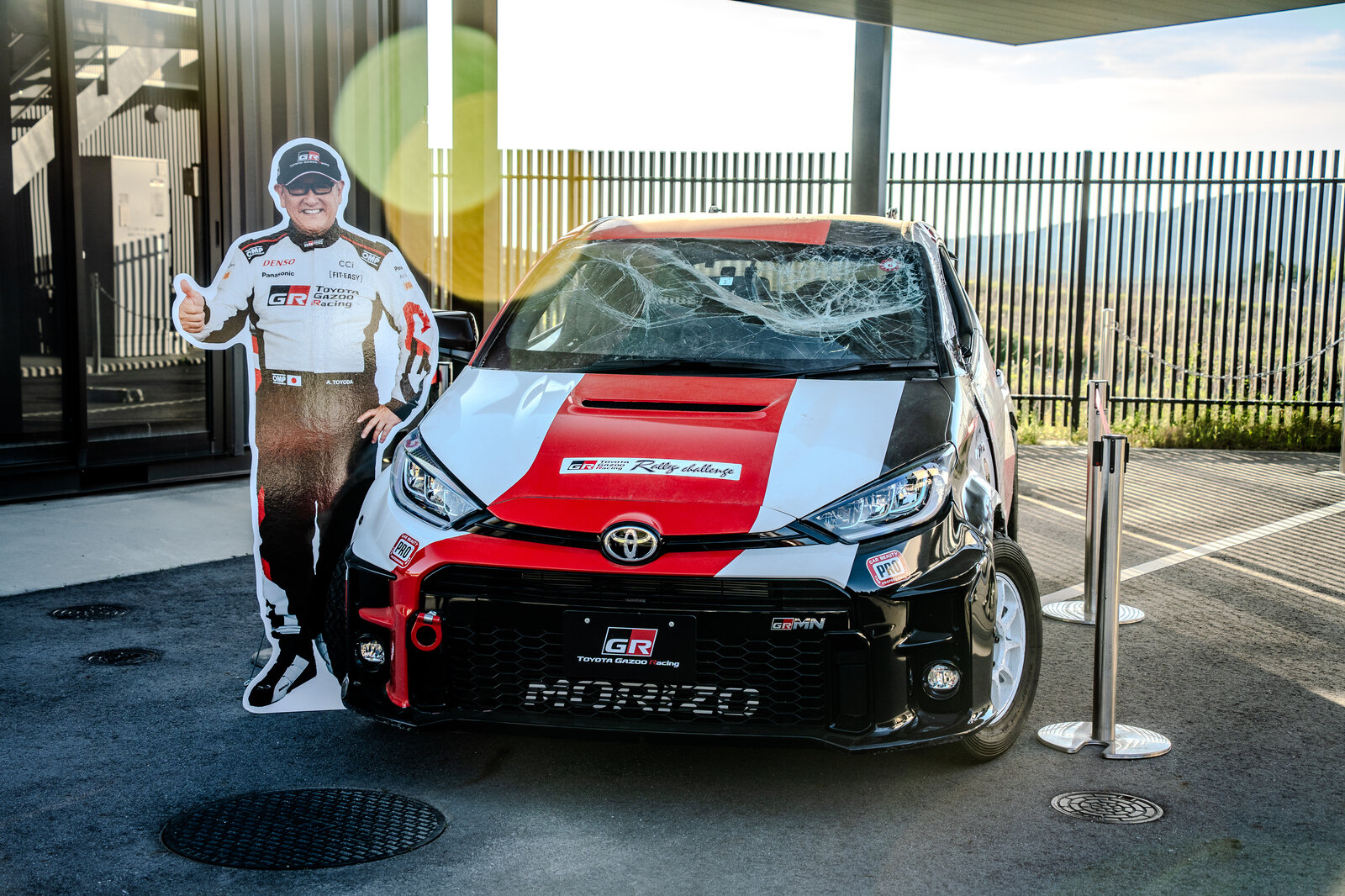
We also have Morizo evaluate Lexus vehicles, but if we let our guard down, he’ll end up driving them on dirt in ways we never anticipated. The cars come back covered in mud, and sometimes even with flat tires. (laughs) That is exactly the kind of environment in which these cars continue to be honed.
Chief Engineer Saito
Morizo is incredibly good at breaking things. Before the GR Yaris went on sale, he drove around a roughly one-kilometer dirt course in Gamagori for 1,000 laps. Transmission cables snapped, transfer gears chipped... (laughs) I secretly call him “the Destroyer.”
Unique issues also emerge on dirt courses. Small stones can get caught between the wheels and brake calipers, damage the wheels, or even crack them. By continuously drifting here, we can also create situations where airflow to the front of the vehicle is reduced, putting cooling performance under severe conditions for evaluation.
We also do time attacks here with Morizo and the rest of the team. And every single time, Morizo goes all out and wins.
If Toyooka could beat Morizo, he might finally become a real general manager. But for now, Morizo is the head of the Advanced Technical Skills Institute Division, and Toyooka is still only the acting general manager. (laughs)
GAZOO Racing President Takahashi
That’s right. Personnel decisions at Toyota Motor Corporation are based on lap times. (laughs)
Chief Engineer Saito
Something happens somewhere almost every day, so being able to rush straight to the genba is an incredibly valuable environment for us engineers.
And when something does happen, everyone comes running, practically drooling. (laughs) Days without incidents are honestly pretty boring. After all, failures result from taking on challenges.
Even in an age when AI and digital technologies continue advancing at an extraordinary pace, people remain at the center here at Shimoyama, where the pursuit of ever-better carmaking—driving, breaking, and fixing cars—continues day after day.