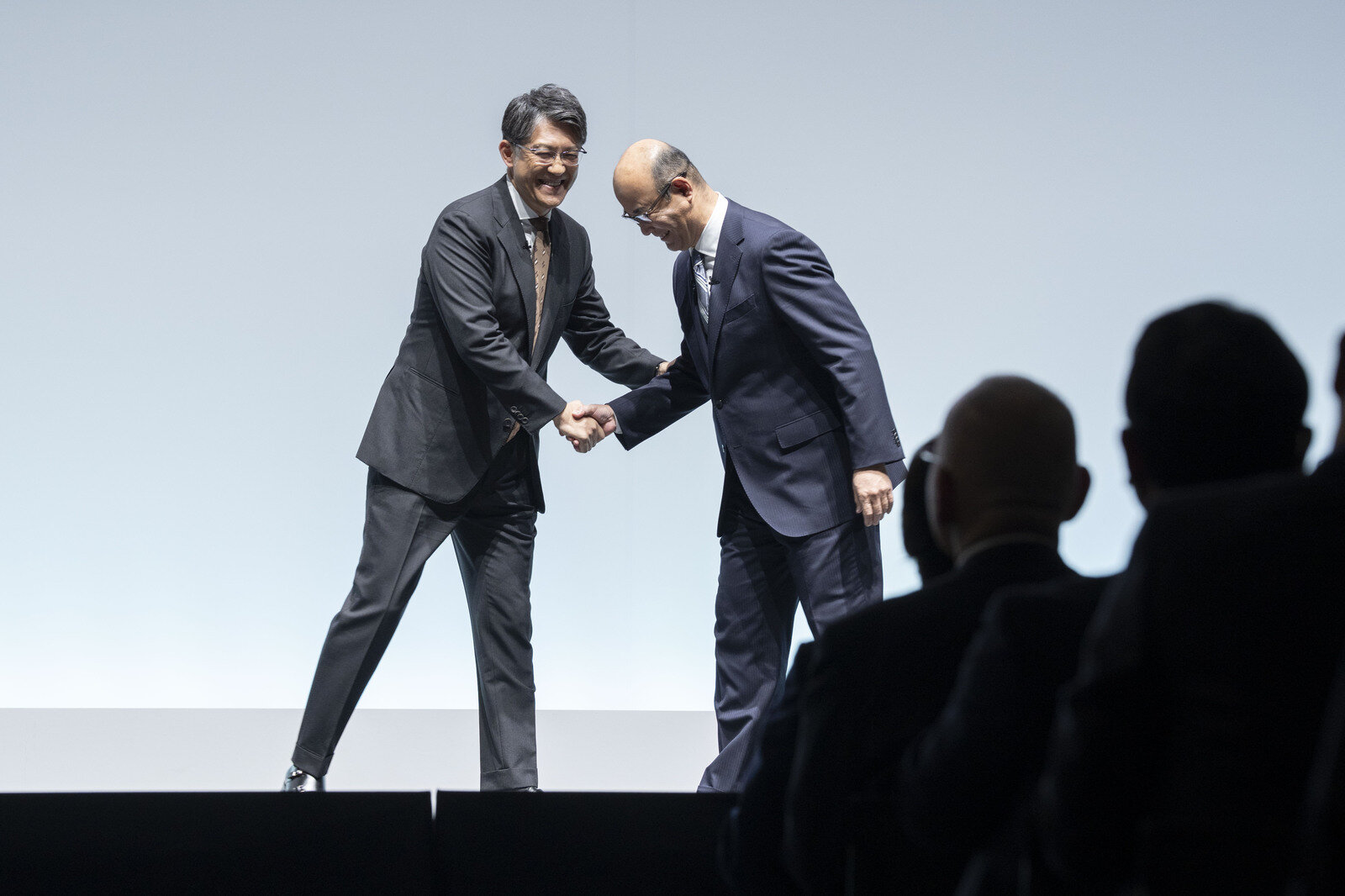
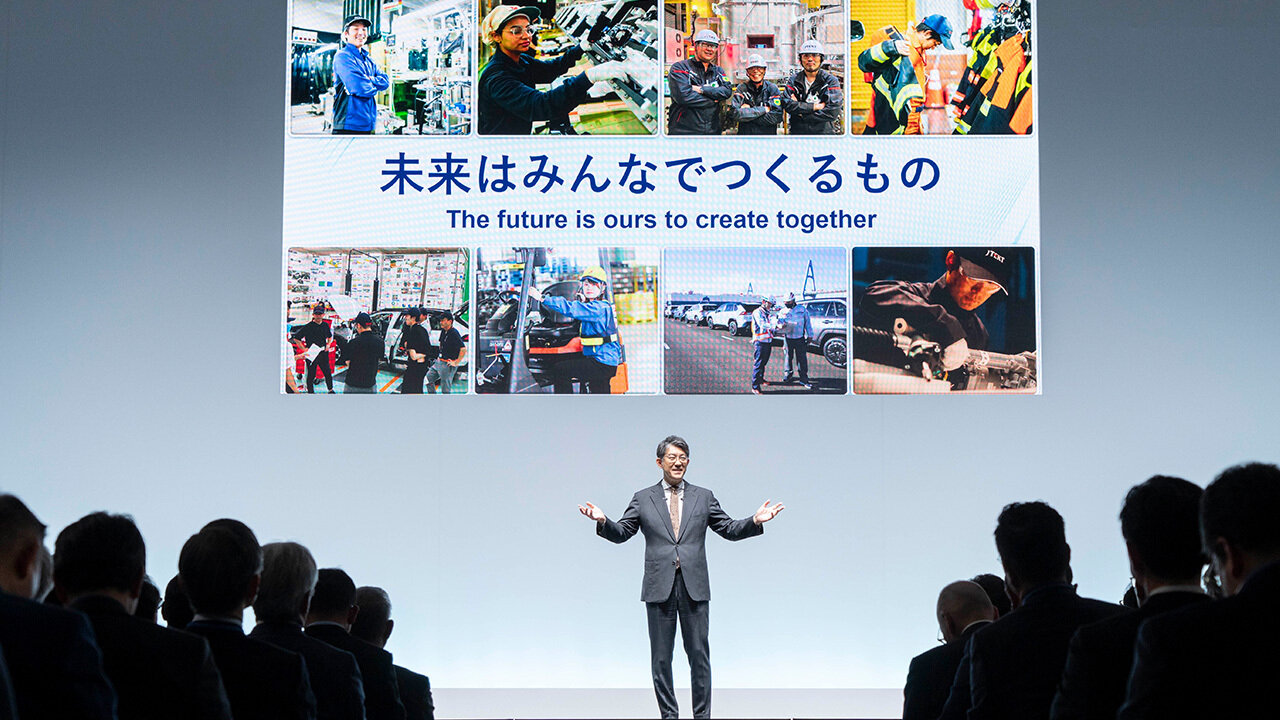
The survival of the Japanese auto industry requires an honest, candid relationship between Toyota and its suppliers--this was the defining message behind speeches given by President Koji Sato and Incoming President Kenta Kon addressing suppliers.
A shared sense of urgency
President Sato then spoke with a serious expression on the dire state of the Japanese auto industry today.
Increasingly uncertain trade conditions, mounting geopolitical risks, and emerging manufacturers who are winning over customers through sheer development speed and cost competitiveness are among the threats posed to the industry.
“If we let down our guard, it won’t be long before we Japanese carmakers lose our footing,” said President Sato, who then went on to outline Japan's strengths and the challenges it must overcome in order to prevail.
President Sato
The strength of Japanese monozukuri stems from its robust supply chain, which leverages the expertise of each individual company. We must continue to preserve this strength at all costs.
The issue, as I see it, is speed.
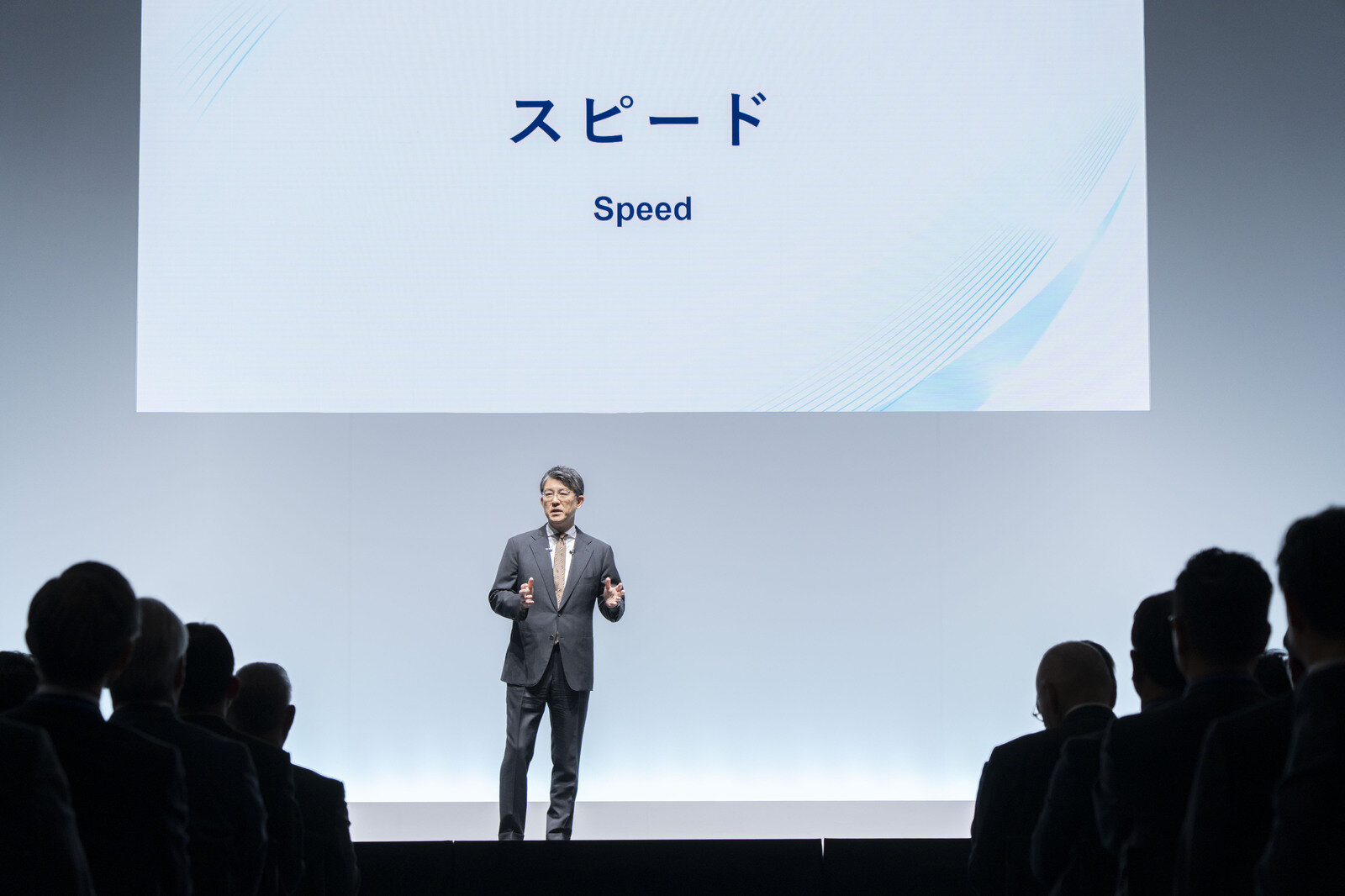
Differences in speed between manufacturers are directly linked to cost competitiveness and the pace of new technology adoption—essentially, the overall competitiveness of their vehicles as products.
If we don’t take action, I believe this gap will only continue to widen.
Unless things change, we will not survive.
To begin, I would like us all to acknowledge this sense of urgency.
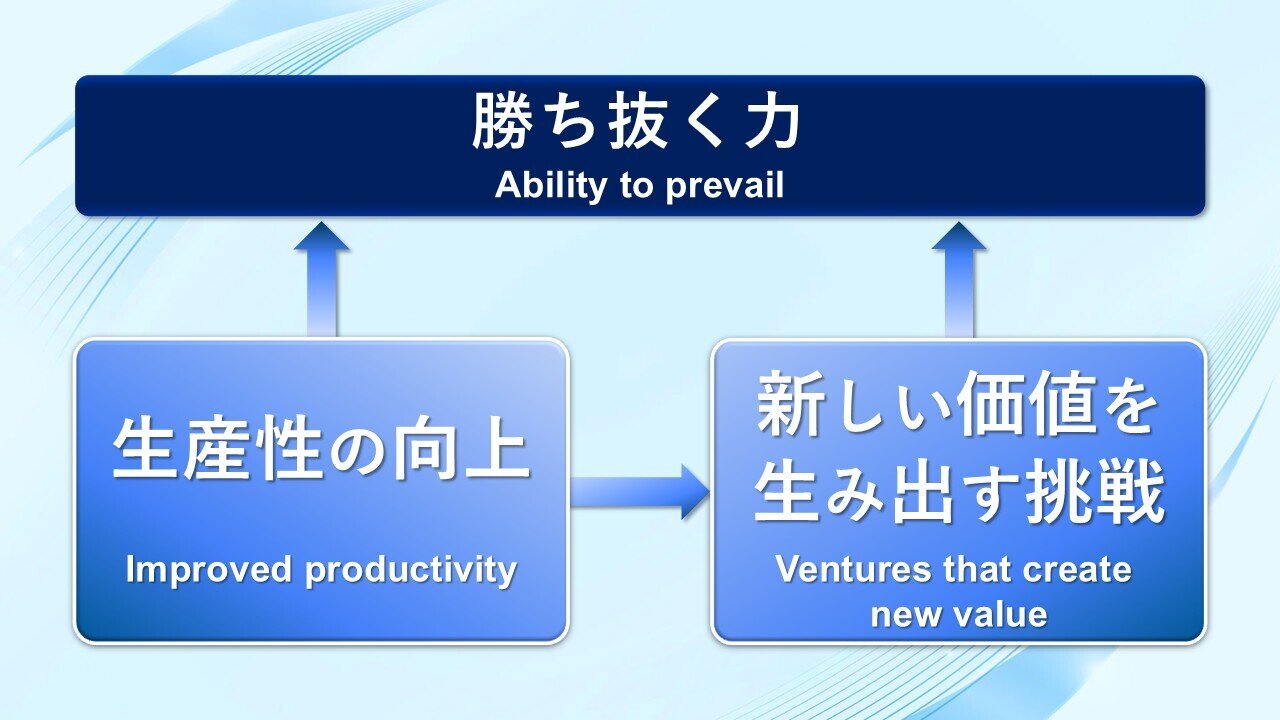
Difficult battles lie ahead. For that very reason, we must work together as one and strengthen our ability to prevail.
To do that, we need to improve productivity across the board, and ensure that we dedicate ample resources to ventures that will create new value.
The first step is to eliminate areas where we aren’t getting the basics right as quickly as possible.
“We aren't getting the basics right.” President Sato's frustration was evident as he spoke of customers kept waiting by production stoppages.
President Sato
We continue to keep many customers waiting. Many of these stoppages stem from equipment or quality issues at both Toyota and our suppliers.
Over the past two years, our entire supply chain has made comprehensive investment in human resources, creating an environment that allows our genba capabilities to flourish.
From here on, we need to translate this into results.
To enable us to make more cars, we must step things up a gear in areas such as building quality into every process, and together make a concerted effort.
Going further, in order to reach new levels of productivity, I believe we need to change our underlying work prerequisites—in other words, we must make the decision to stop certain practices.
I’m sure every genba has long-standing practices that people have come to view as unchangeable.
Even at Toyota, as we continue to add new tasks, we err on the side of caution and avoid the uncertainty of change. This mindset becomes an obstacle, and the things that “need to be done” pile up. As a result, many genba are unable to dedicate time to high-value-added tasks.
For example, in some areas of technological development, the Toyota Standards, which were intended as a tool for leveraging past insights to make development more efficient, have instead become “the rules,” turning into a vast to-do list. That is the reality.
To change this situation, we want to carefully review each item and streamline our development process in line with advances in technology.
What’s more, by changing prerequisites from the upstream stages of development, we will greatly reduce the number of software variations and powertrain combinations.
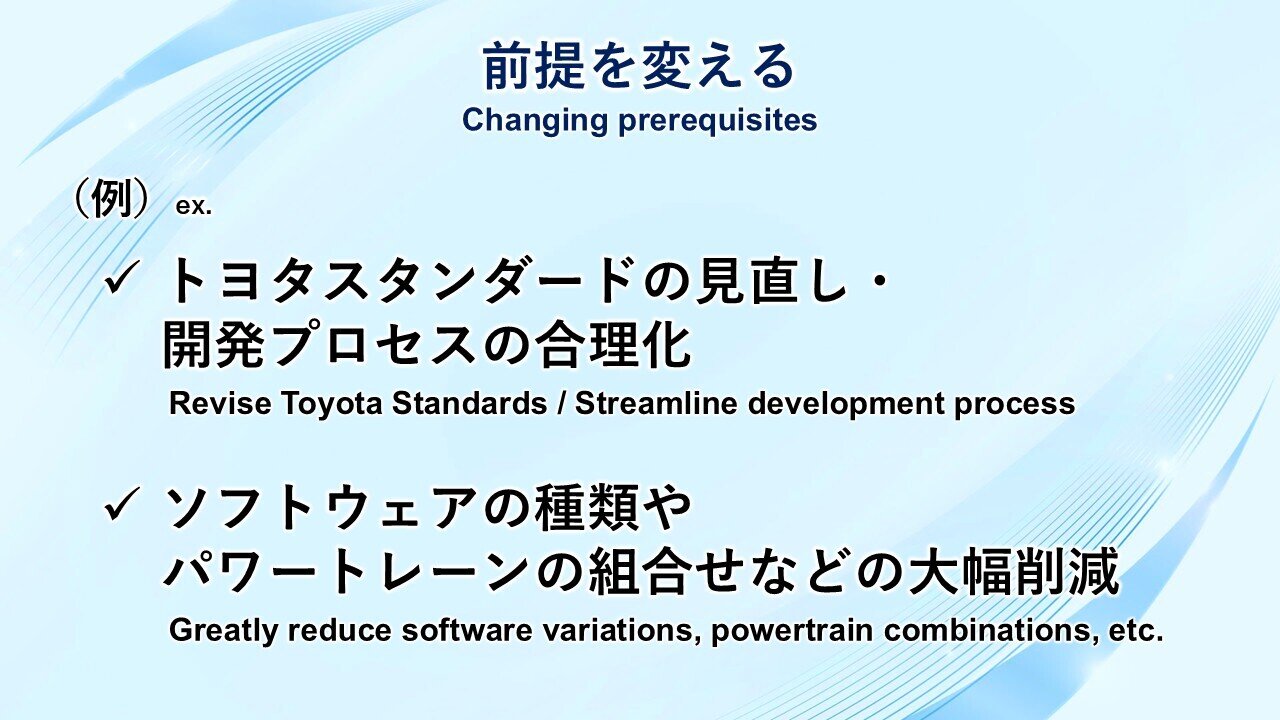
This will create additional genba capacity, meaning more time can be dedicated to honing our technical skills.
In the past, our limited understanding of the actual genba situation has no doubt placed considerable burdens on our suppliers.
We have taken this to heart, and will work with the entire supply chain to change our behavior in order to boost our work performance and productivity.
Across the entire carmaking process, I think there are various prerequisites that we should change by working together with our suppliers.
In initiatives such as SSA*1 and AREA 35*2, for instance, we have many cases where feedback from our supplier genba has helped to optimize quality or reduce variations.
*1: Smart Standard Activity. A special initiative in which Toyota works with suppliers to address concerns and optimize standards for quality and performance.
*2: An initiative aimed at accurately identifying customer needs and optimizing specifications and parts variations, with the goal of reducing parts variations and parts storage space by 35%.
We make cars as a team. I would like to take this opportunity to reflect on what this means.
At the genba, you often hear things like, “We’ll do it as Toyota says...”
Let’s put an end to that.
Let us engage with each other as professionals, share our ideas, and work together to rethink how we approach our work.
No doubt the answers are right there in the genba.
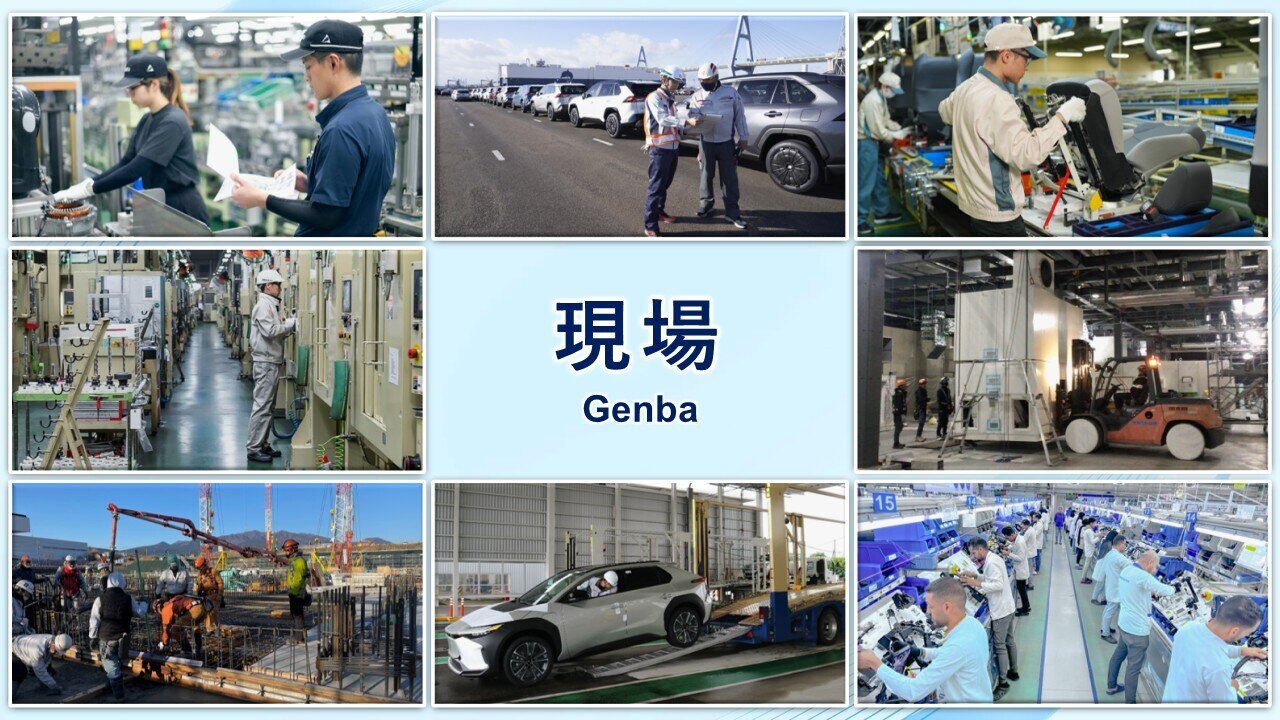
Together, I want to listen carefully to the genba’s voice, and turn those insights into action.
The ability to make proposals
President Sato
In order to prevail in the battles ahead, we will need your ideas, grounded in your expertise.
To ensure this ability can be used to its full potential, we must first raise productivity across the board. From there, we can accelerate ventures that create new value, helping all of us grow stronger.
We want to work with everyone here to forge this virtuous cycle.
In order to go up against our global rivals, we must then also foster this virtuous cycle at an industry level.
To improve competitiveness across the entire supply chain, deeper collaboration will be required among fellow carmakers and among suppliers.
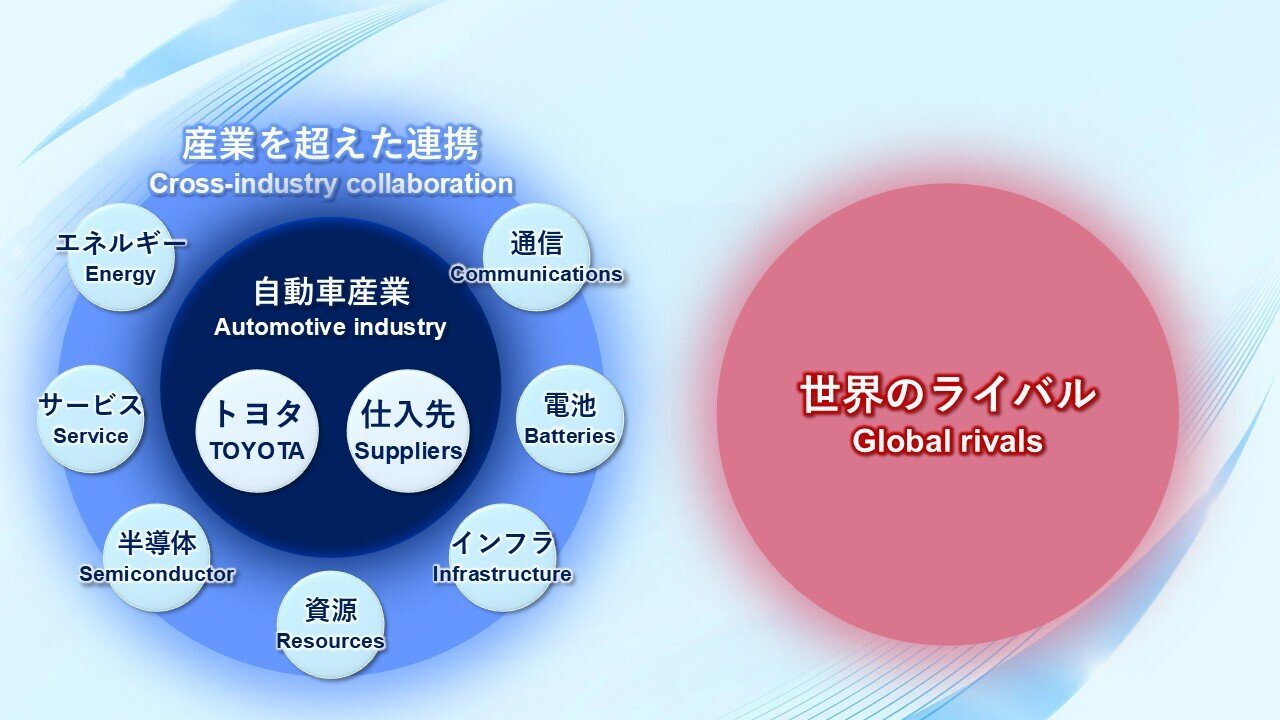
Moreover, to speed up the real-world implementation of new mobility solutions, collaboration with partners in other sectors such as energy and infrastructure is also essential.
Both as individual companies and as an industry, let’s transform how we fight to ensure our survival.
To enable us to execute these initiatives more swiftly, our leadership team at Toyota is undergoing a formation change.
Mr. Kon, who takes over as president from April, will focus on Toyota, while I myself focus on the industry as a whole. Together with everyone here, we will devote our energies to boosting the competitiveness of Toyota and the Japanese auto industry.
Now as ever, we remain unwaveringly committed to the mission we pursued under Chairman Toyoda—making ever-better cars.
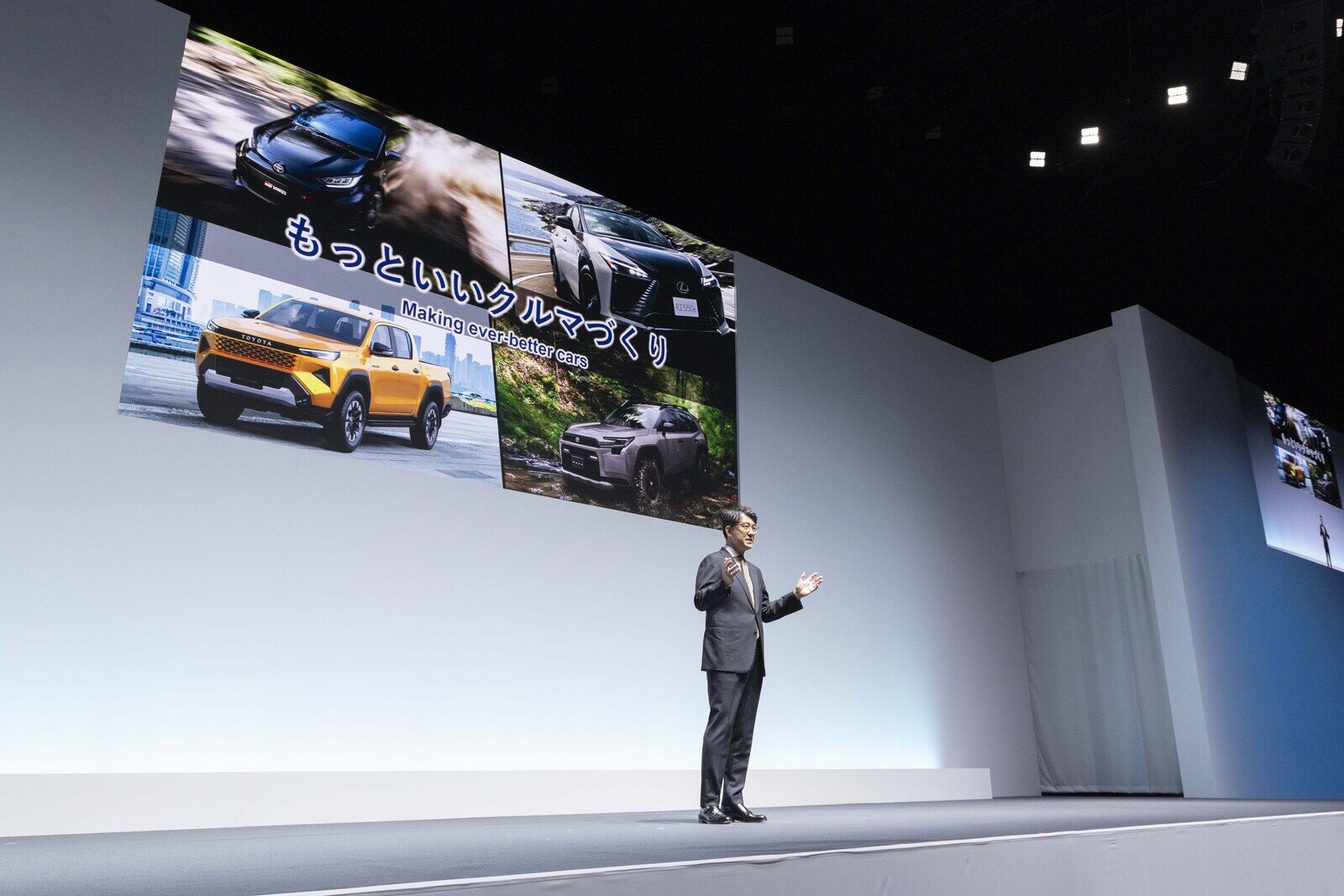
Toyota will hone our technical ability as a carmaker, while each of you continues honing your own areas of expertise.
With a relationship of open communication between us, we will pursue the creation of new value.
We want to continue cultivating and safeguarding this closely interwoven relationship.
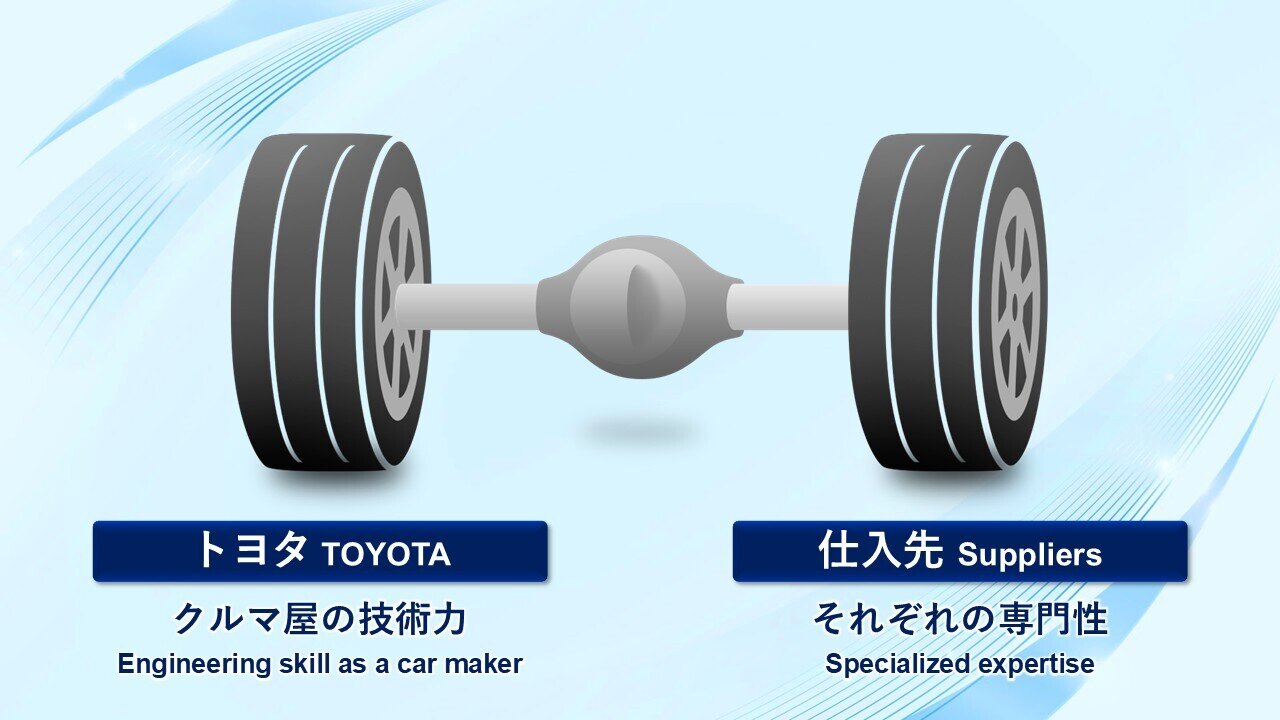
“The future is ours to create together.”
Let us put this belief into practice wherever we can, and accelerate our efforts to make ever-better cars and change the future of cars. We look forward to your continued support.
After finishing his speech, President Sato called Incoming President Kon to the stage. “Mr. Kon, the new captain of our leadership team, will now give his thoughts on the road ahead.”