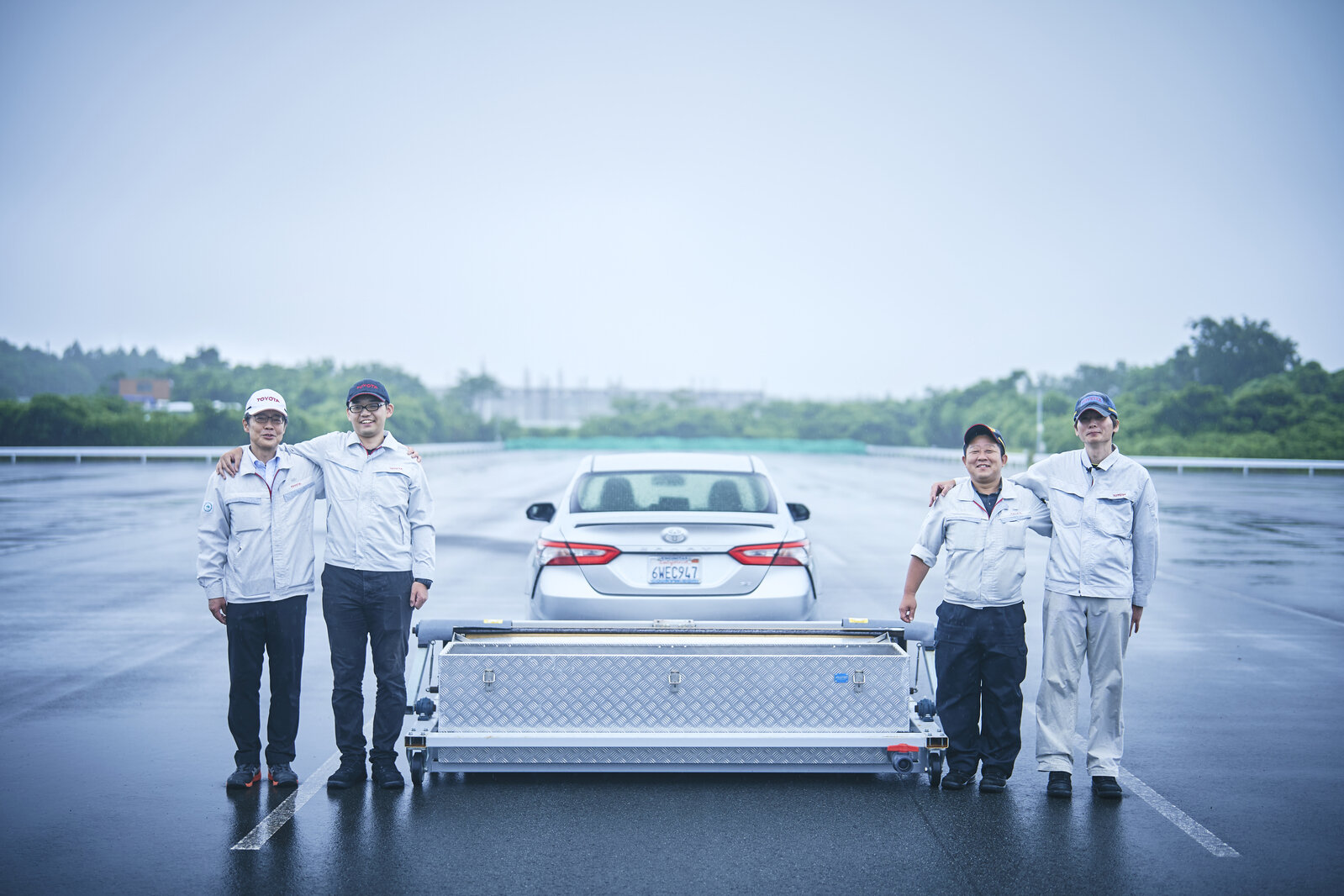
Toyota's Creative Idea Suggestion System makes work more fun and interesting. In this article, we share the story of one improvement that grew out of the company's QC circle activities and was recognized by the Creative Idea system for reducing the amount of work done on days off.
The rain has stopped. The sky is clearing up. Time to start testing! … Unfortunately, for those developing automatic braking systems, things are not that simple.
Straight No.3 at Toyota’s Higashi-Fuji Technical Center in Susono, Shizuoka, is where engineers test the company’s Pre-Collision System (PCS). Designed to mitigate impacts, the system uses sensors to detect potential dangers, assisting drivers with alerts and automatic braking.
Less work on days off
In tests, targets that stand in for cars and pedestrians are moved around the course, allowing engineers to check whether the automatic brakes respond as intended. Test vehicles are fitted with measuring instruments, as well as devices that precisely control the steering wheel, accelerator, and brakes. Toyota staff are also on board. Simply getting everything ready is a sizable task.
And testing has one more important requirement: the road surface must be dry.
While tests that simulate wet road conditions can easily be set up by spraying water, drying a wet track surface takes considerable effort. Even after the rain stops, testing cannot resume while the road is wet. In winter, when daylight hours are short and temperatures low, drying takes even longer than usual; on some days, the wait might be upwards of four hours.
Straight No.3 is used by three teams working on different aspects of automatic braking systems: advanced development, mass-production development, and certification testing. With each team handling a range of vehicles, the test course is almost always fully booked. Waiting for the surface to dry sometimes pushes the schedule into weekends; in 2023, these team members worked on days off more than three times as often as employees in other departments.
“We wanted to cut down the weekend work by maximizing the amount of time we have for testing,” explains Yuya Mizutani of the Mobility Safety Platform Development Div, who led this particular kaizen project. He is part of the mass-production development team and a member of the QC Circle “Good For You!,” which set out to create a karakuri that could quickly dry road surfaces after rain.
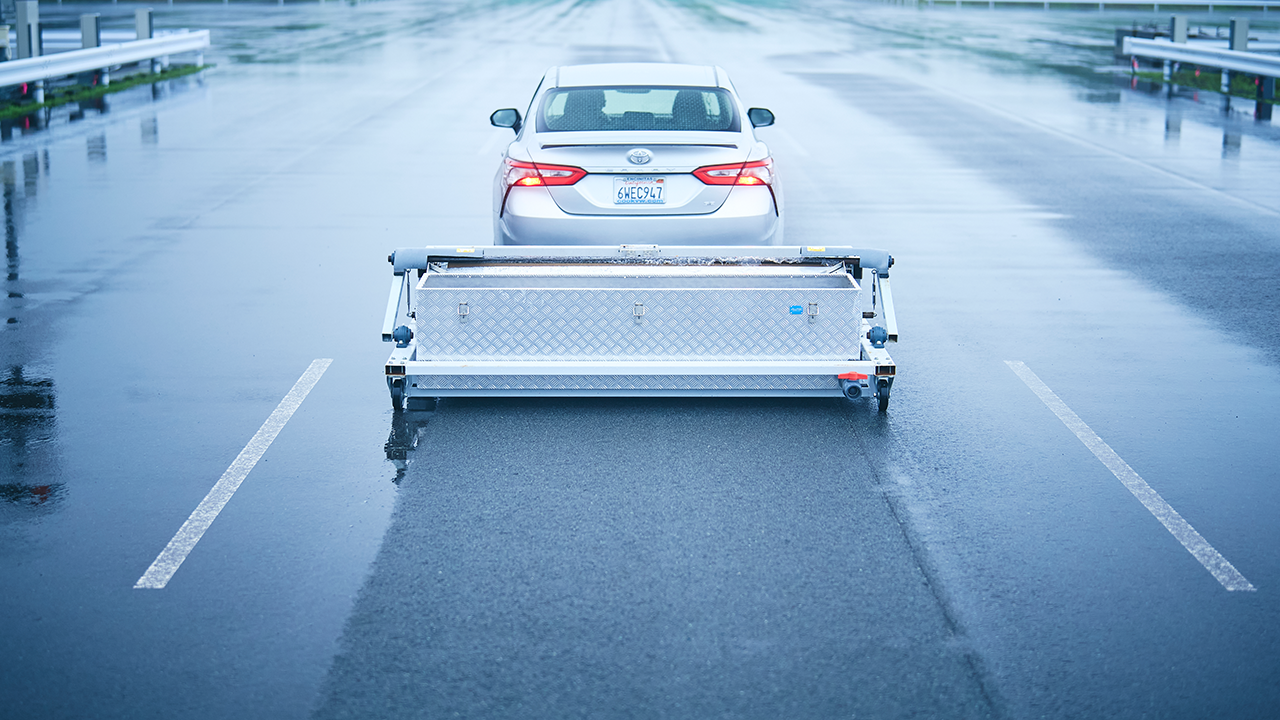
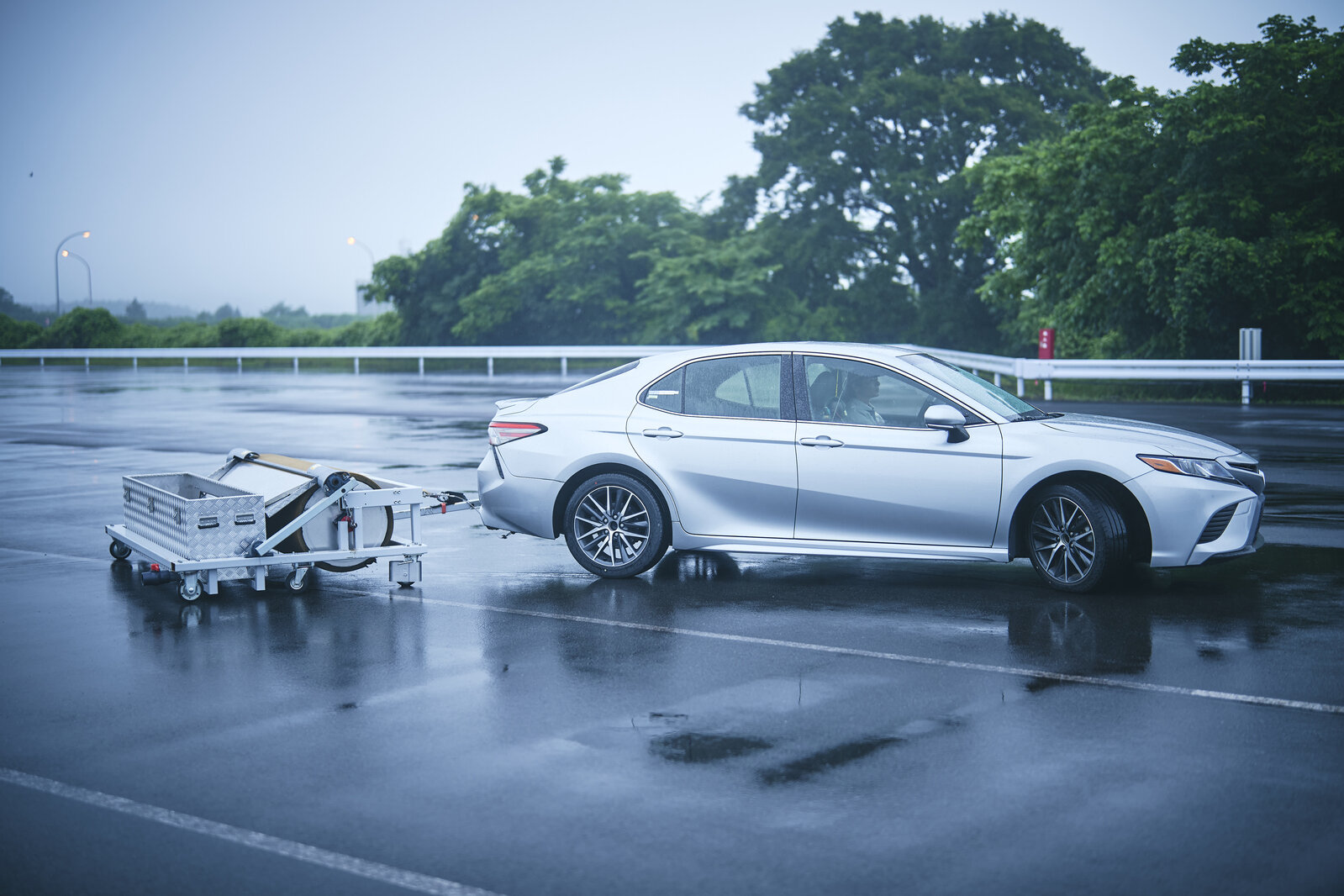
Mizutani and his colleagues came up with a giant sponge roller that is towed behind a car.
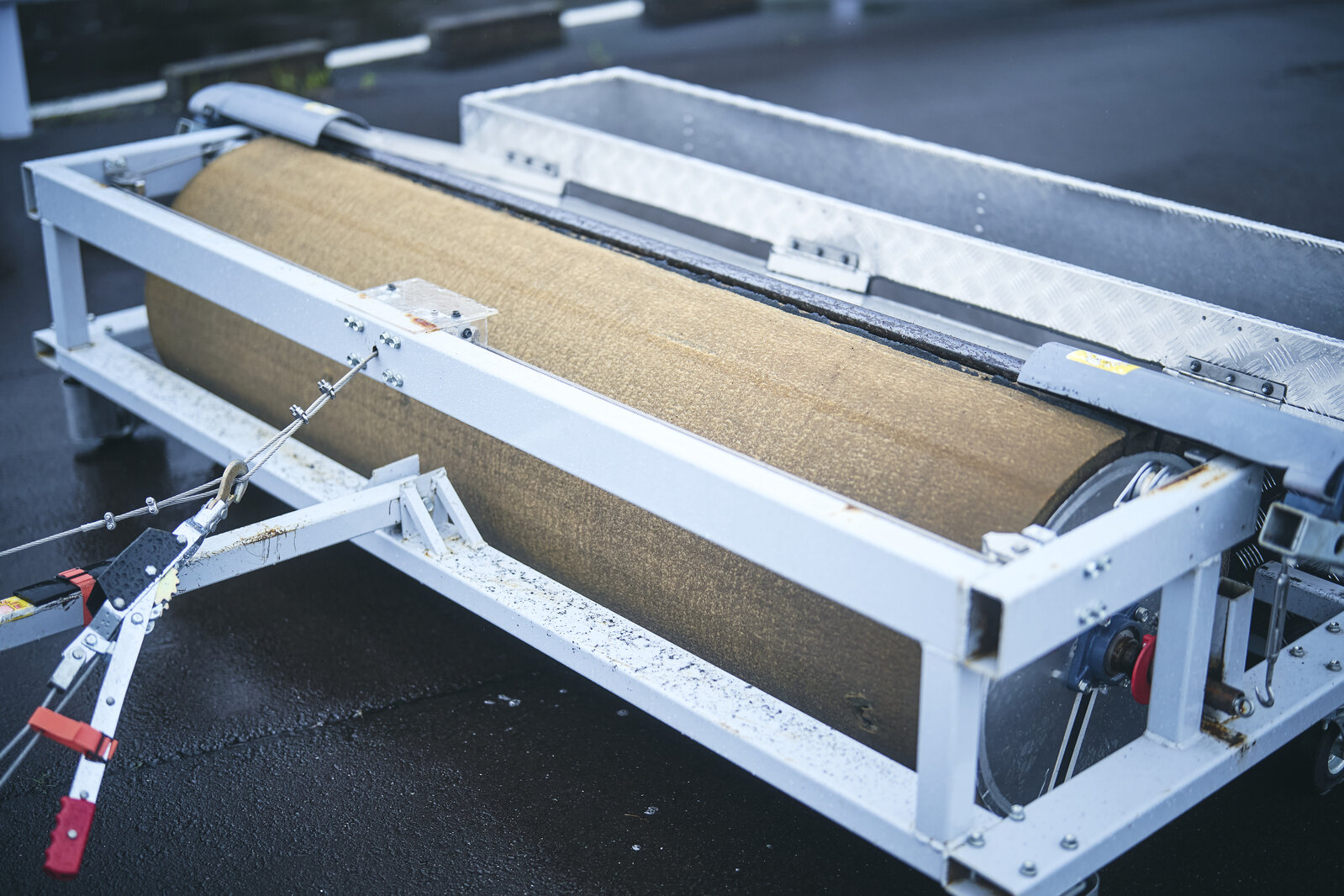
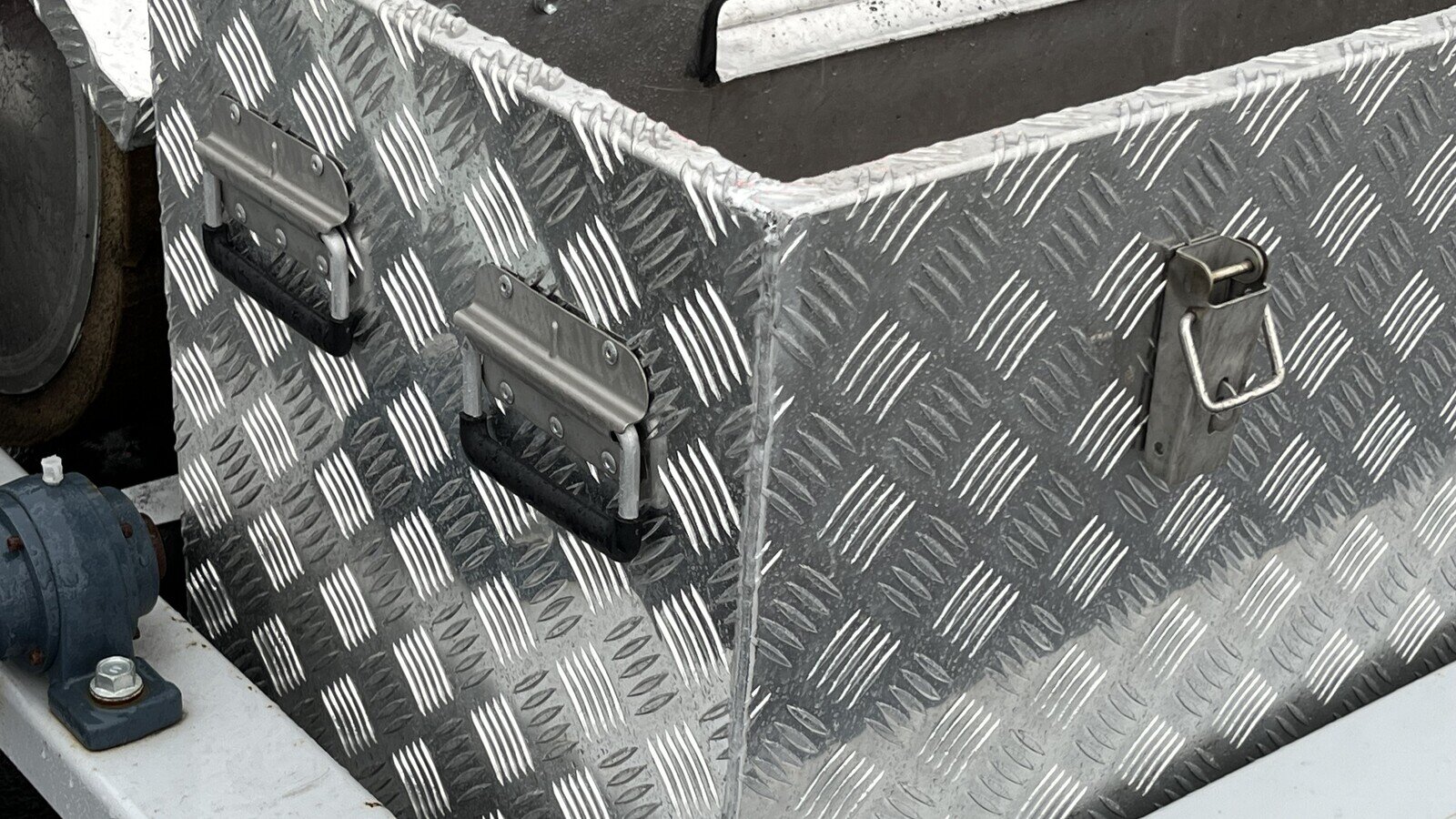
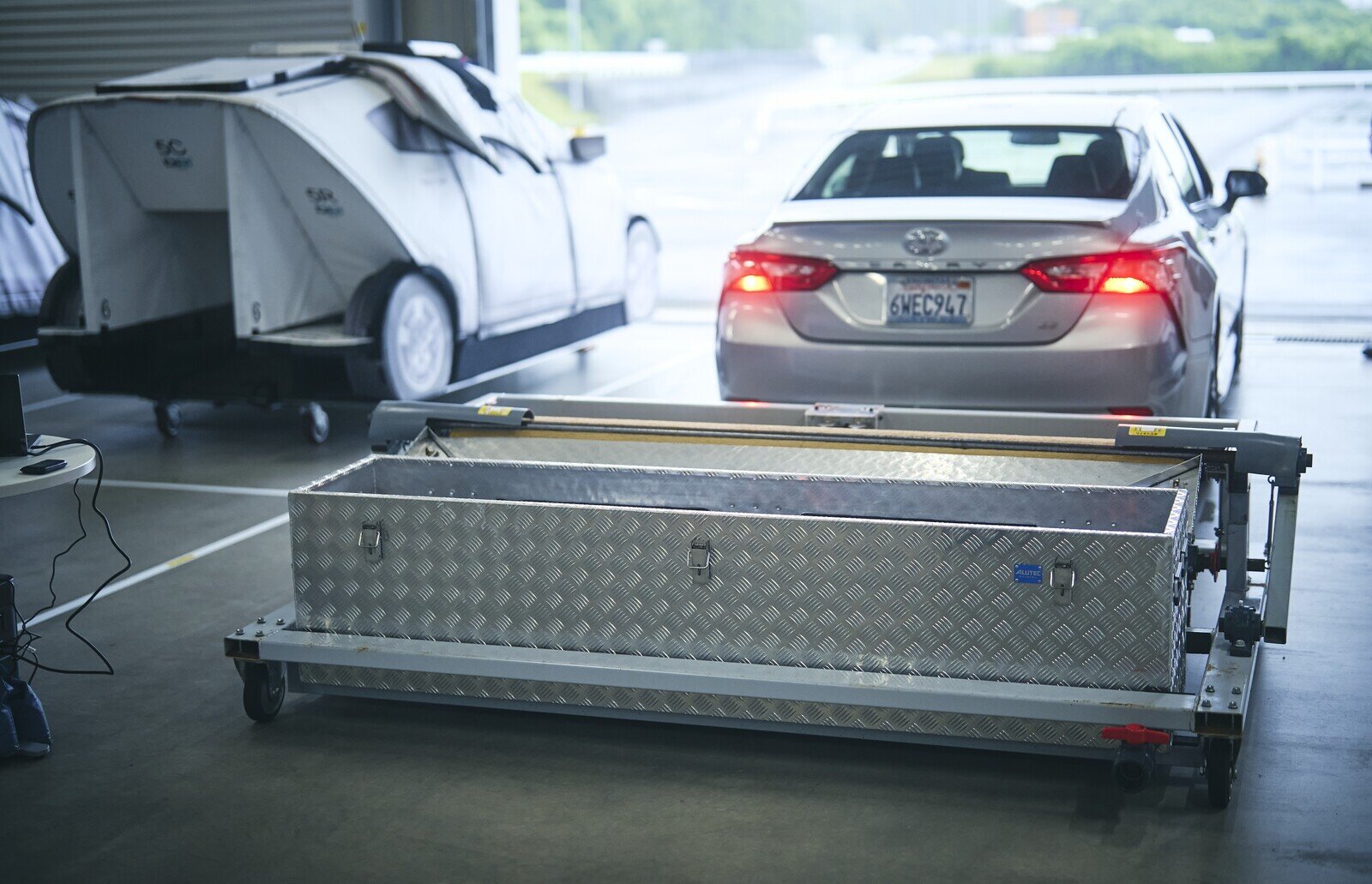
The roller is about 2 meters wide. Given that the lanes on Straight No.3 span 3.5 meters to match public roads, each can be dried in a single round trip. The water that is sponged up is squeezed out by a steel rod running across the top of the roller and collected in the rear tank. This aluminum tank can hold roughly 320 liters, and once full is emptied at the side of the track.
When you hear how the roller works, it sounds very simple: absorb water, squeeze, collect, dispose.
The astonishing part is that almost the entire setup was crafted by the team. They also managed to keep costs down by, for example, making the tank out of an aluminum case that had previously stored testing equipment.
Taking hints from high school baseball
The project idea came from Kazutoshi Takeda, a sub-advisor, who found inspiration in one of his favorite pastimes: watching high school baseball. One particular broadcast showed a field being dried after the rain to prepare for play.
“I thought, ‘This is amazing!’”
With play suspended, this would normally be the time when people switch channels. And yet, therein lay the seed of improvement.
As Mizutani struggled to come up with a project to pursue, Takeda pitched his idea for absorbing water from the test course. In that moment, scenes from a rainy baseball stadium were tied to the test track at Higashi-Fuji.
Of course, the team didn’t immediately settle on the single sponge roller solution. They tried various approaches, from road heaters to vacuum cleaners, blowers, and wiper-like contraptions.
In experiments, the vacuum proved to be the fastest drying method. However, the prototype was too small to dry the length of track necessary for testing, and scaling up would be prohibitively expensive. Road heaters would likewise be difficult for the team to build in-house, and potentially dangerous.
The last option standing was the sponge.
“A sponge seemed to offer the most scope for incorporating our own ideas,” says Mizutani.
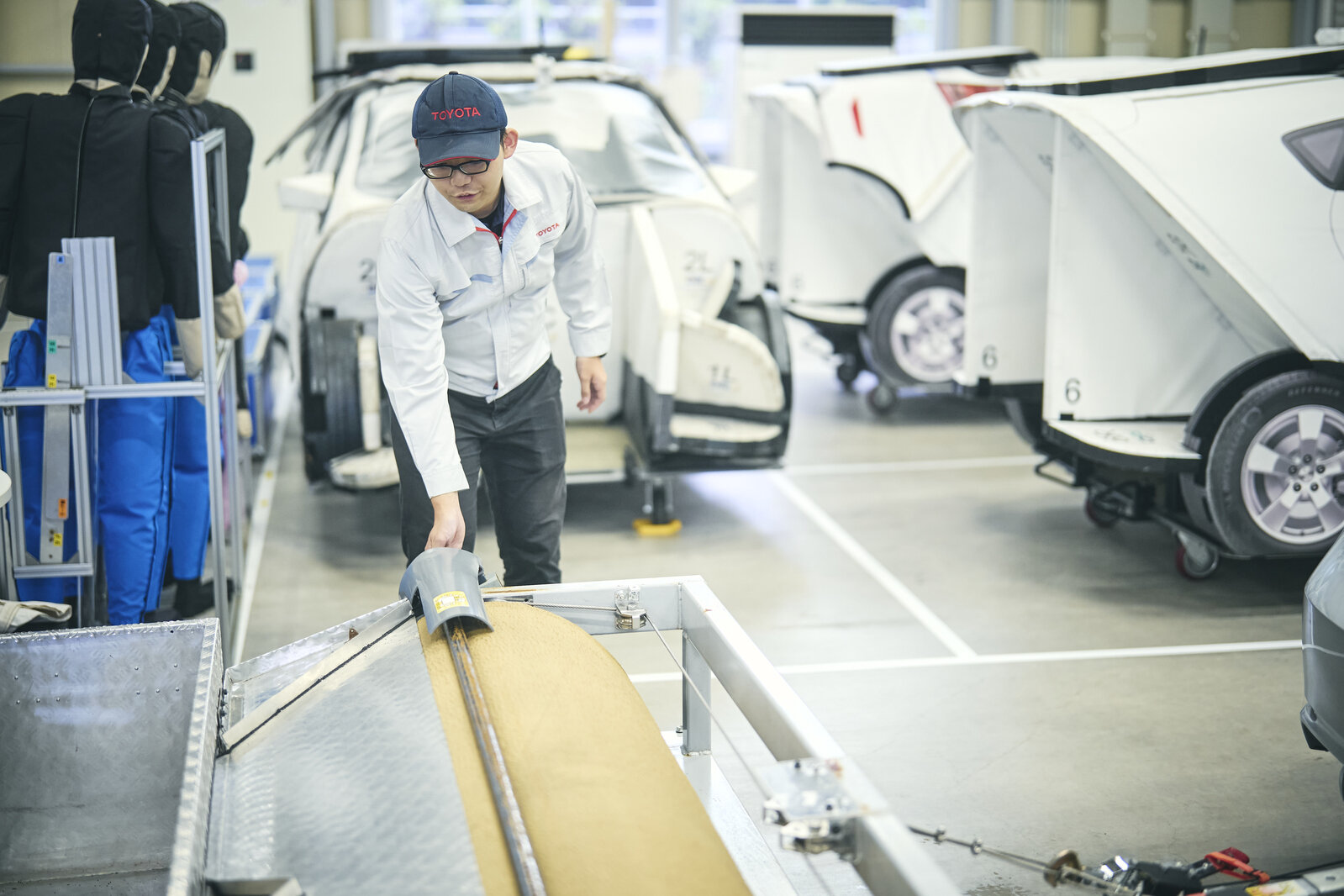
Mizutani and his team started by building a small-scale prototype. They rolled up sponge material that had been used as cushioning for measuring instruments and cobbled together some leftover frame pieces with spare screws. However, success was far from immediate, with improvements continuing to be made through seven different versions. From there, Mizutani used his CAD skills to draw up blueprints, and with veterans showing younger members the ropes in areas such as welding and machining, the project moved steadily toward completion.
A major hurdle was figuring out how to wring the absorbed water out of the sponge. Initially, the steel rod was fixed in place, but this proved ineffective. The team then allowed the rod to rotate along with the sponge and made it possible to adjust the gap between the two.
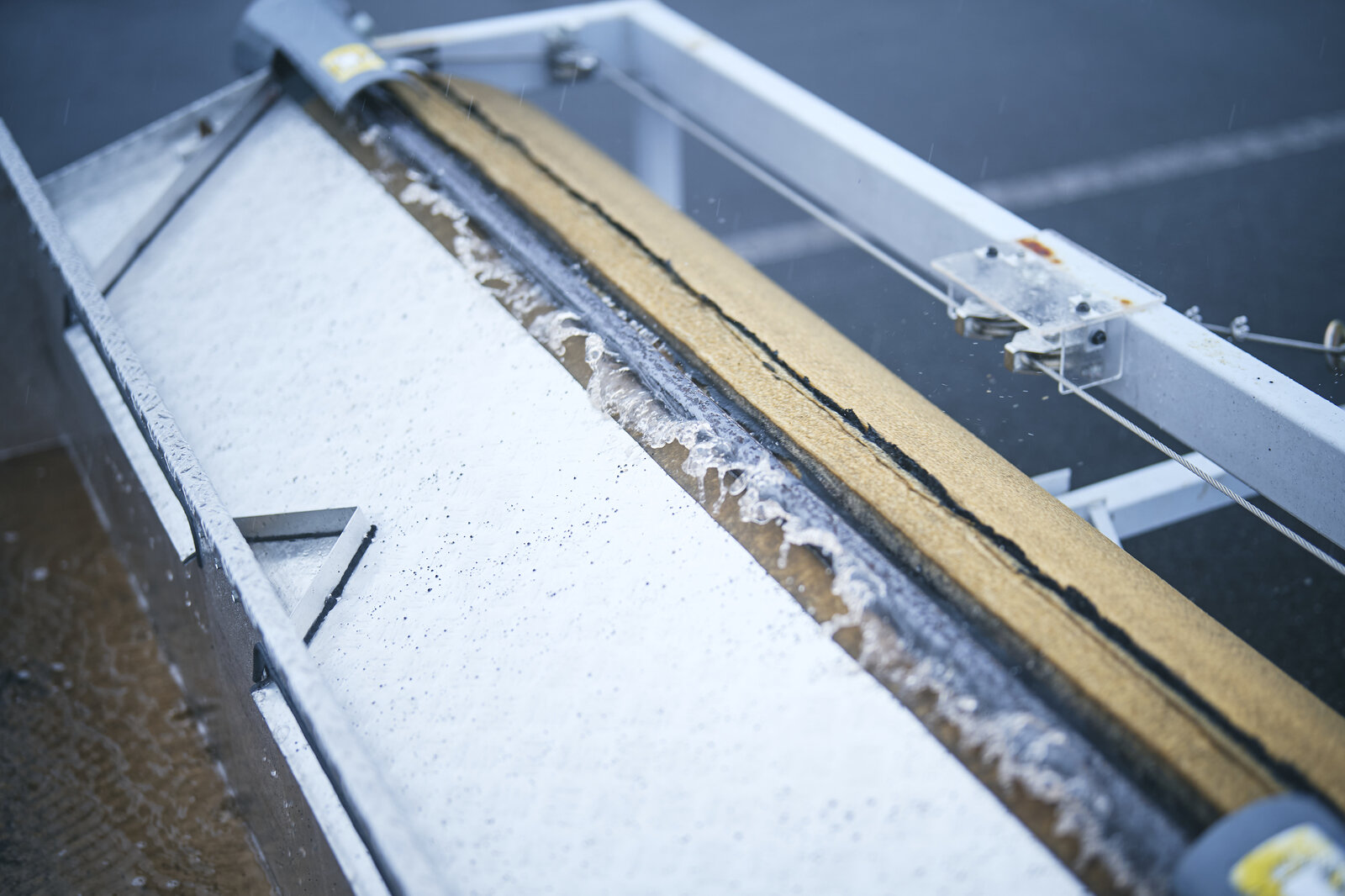
An even bigger challenge was navigating the U-turn for the return pass. Simply dragging the 2-meter-wide sponge behind the car while turning would quickly cause it to wear out from friction with the road.
The team came up with a karakuri solution that harnesses the force of the turning car. As the towing vehicle turns, a wire connecting it to the roller is pulled, lifting the roller off the ground. No motors, no gears—just the vehicle’s turning motion, converted into force that lifts the sponge. The team dubbed this the “turning lift mechanism.”
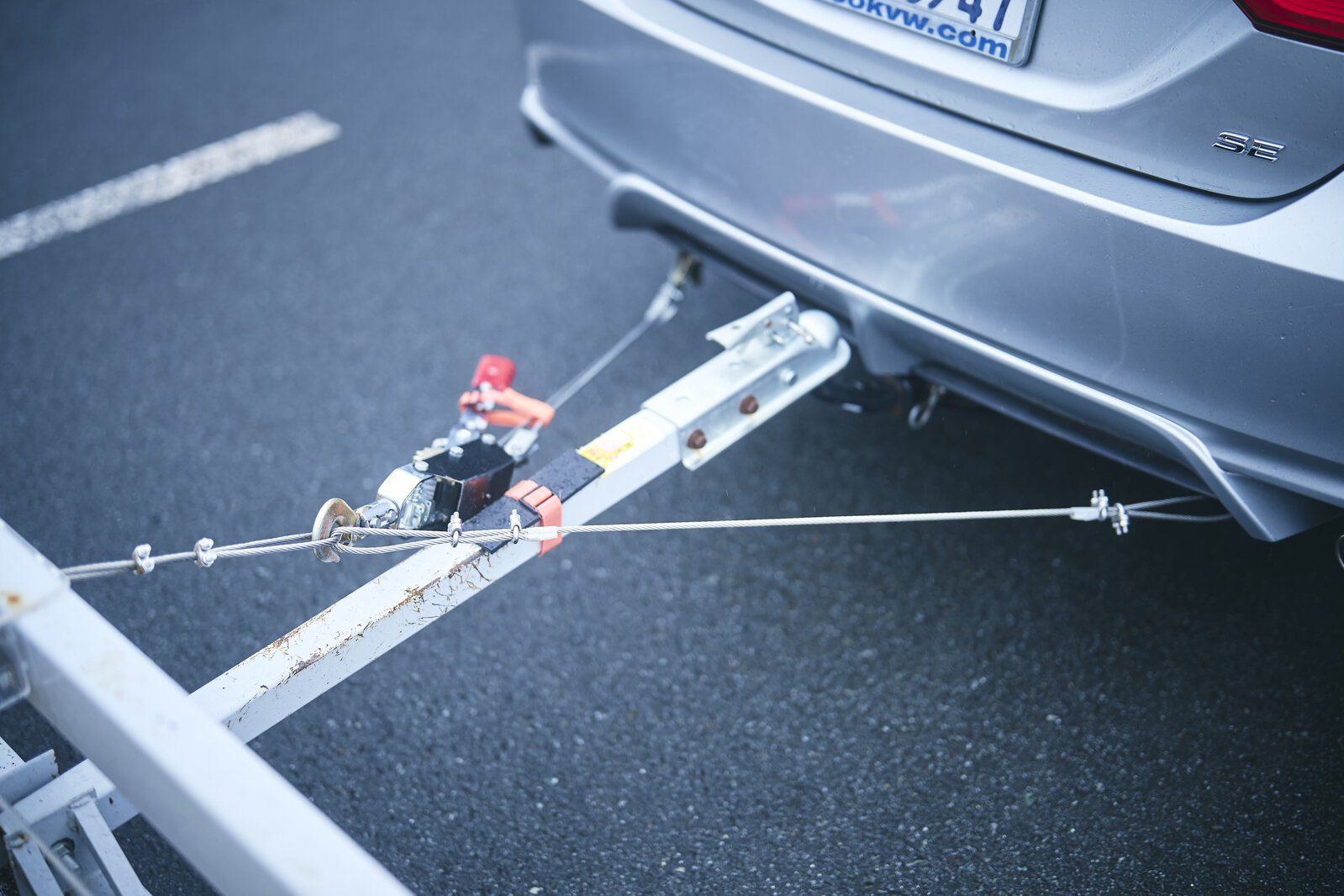
“We didn’t want to resort to an electric system,” says Takeda. “We all agreed that we wanted to use a karakuri mechanism instead.”
Relying on ingenuity rather than money. That’s what Toyota’s QC circles and Creative Idea system are all about.
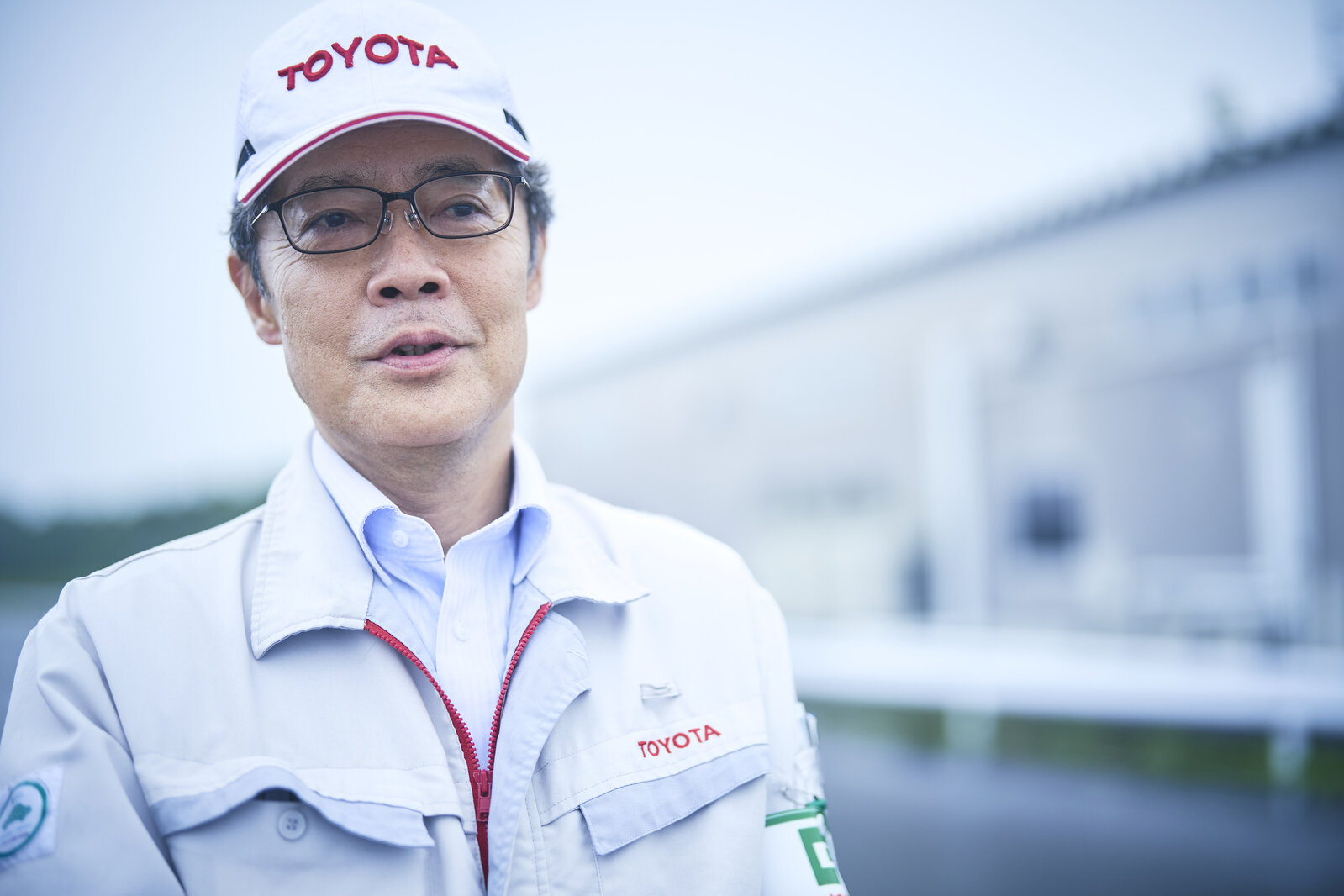
“If you wanted to go down the money route, obtaining budget approval might take one or two years, maybe even three for bigger projects,” says Yasuhiko Yamamoto, Takeda’s supervisor. “By that stage, you’d probably want to do something completely different. That’s why the first step is to tackle the problem with your own knowledge and expertise. That’s what makes our QC circle activities and the Creative Idea system so fascinating.”
Be that as it may, not everyone was optimistic from the get-go.
“That’s not going to work, is it?”
“We don’t have enough time before the QC circle presentation.”
This was the general sentiment.
Circle leader Koji Takaya also felt that the project might be doomed from the outset.
Takaya
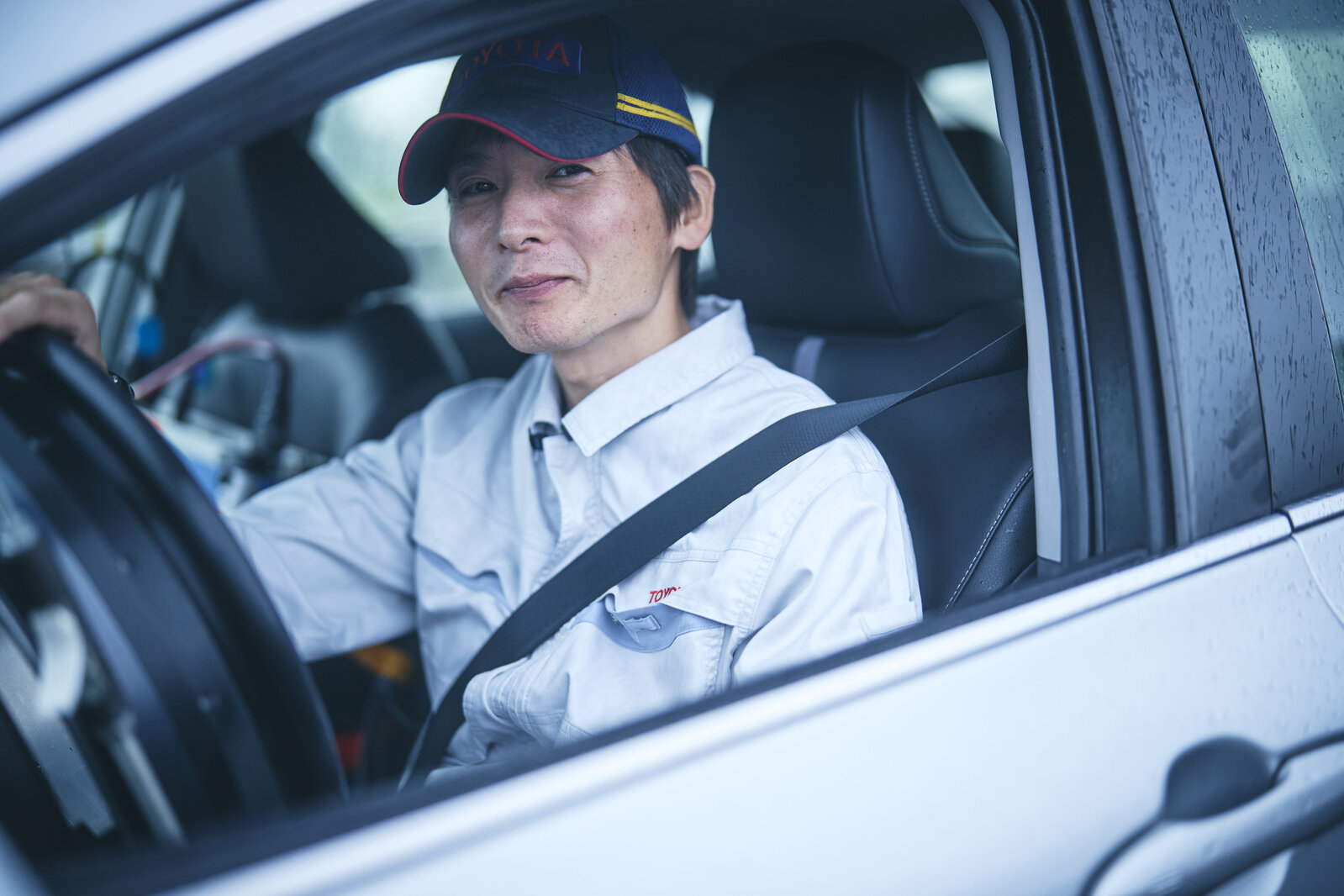
I felt that, when dealing with nature, human efforts often wouldn’t be enough. With no budget, how much could we really achieve with our technical skills alone? Even if we came up with something, I figured it wouldn’t actually get used.
But seeing the finished device in action instantly changed his mind.
“When I saw how much water was flowing into the tank, I thought, ‘Whoa, they did it,’” says Takaya. “It went way beyond my expectations.”
For Mizutani, that was also the most gratifying moment.
“Being able to blow away everyone’s doubts and say, ‘See, I told you it would work!’—that made me happiest of all (laughs).”
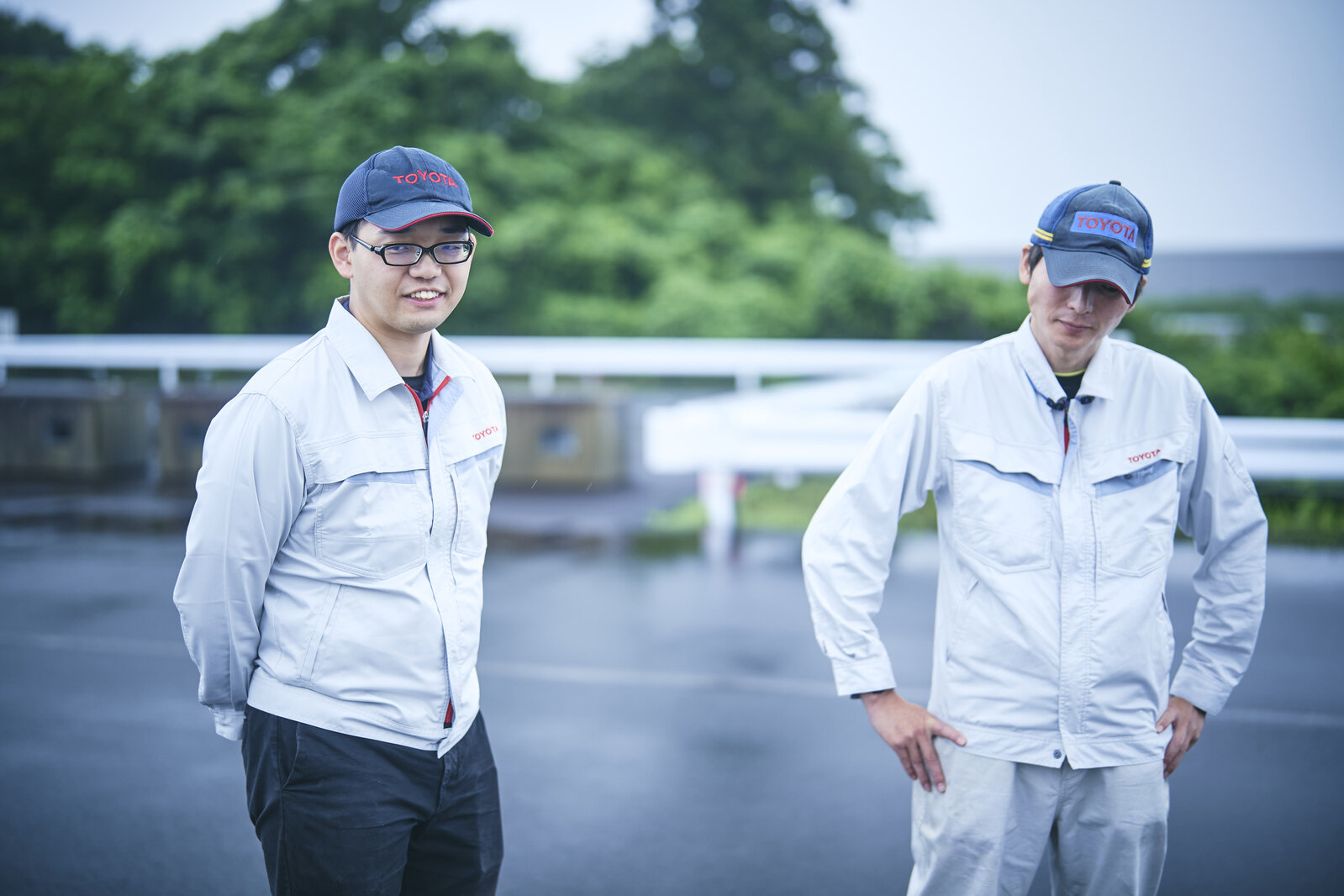
Development began in October 2023, and the unit was in operation by the end of March the following year. Currently, it is rolled out once or twice a month.
Though mostly used by the mass-production development team, the roller is now also increasingly requested by the other two teams. Certification tests, in particular, are a make-or-break affair in the presence of certifying officials. If things don’t go to plan, they can significantly impact the rest of the development schedule.
“No one is more grateful than the certification testing team,” says Mizutani.
The roller’s effectiveness can also be seen in the numbers. Winter track drying times have halved, from around 4 hours to two. Even in summer, the wait time is down to about 1 to 1.5 hours, saving roughly 91 work hours over the course of a year. And most importantly, fewer employees are coming in on days off.
Mizutani tells us that, around the time the sponge roller was completed, he also began dating the woman who is now his wife.
“We had more time for going out together. It was great to be able to take time for travel or just spend more time as a couple.”
There’s no stopping the rain. But the downtime that follows can be reduced.
Inspired by techniques used to dry a baseball field, the staff at Higashi-Fuji gathered leftover materials, made a small-scale prototype, and refined it through multiple iterations. The result is a 2-meter-wide sponge roller that can soak up water from the test track, freeing up more time for development and giving everyone back their weekends.
For Mizutani, kaizen is about building on what has come before.
“The skills used to make one improvement can contribute to the next. Likewise, seeing other people’s creative solutions helps fuel your own ideas. In this way, by building on what has come before, we can continue to make ever-better improvements.”